Security patrols
Lock-up patrols: what a lock up service covers, and how to know it happened
A lock up service, or lock-up patrol, is a licensed security visit after closing time that checks a building is empty, locks its doors, windows and gates and arms the alarm, and it is often paired with an unlock visit that opens the building again in the morning.
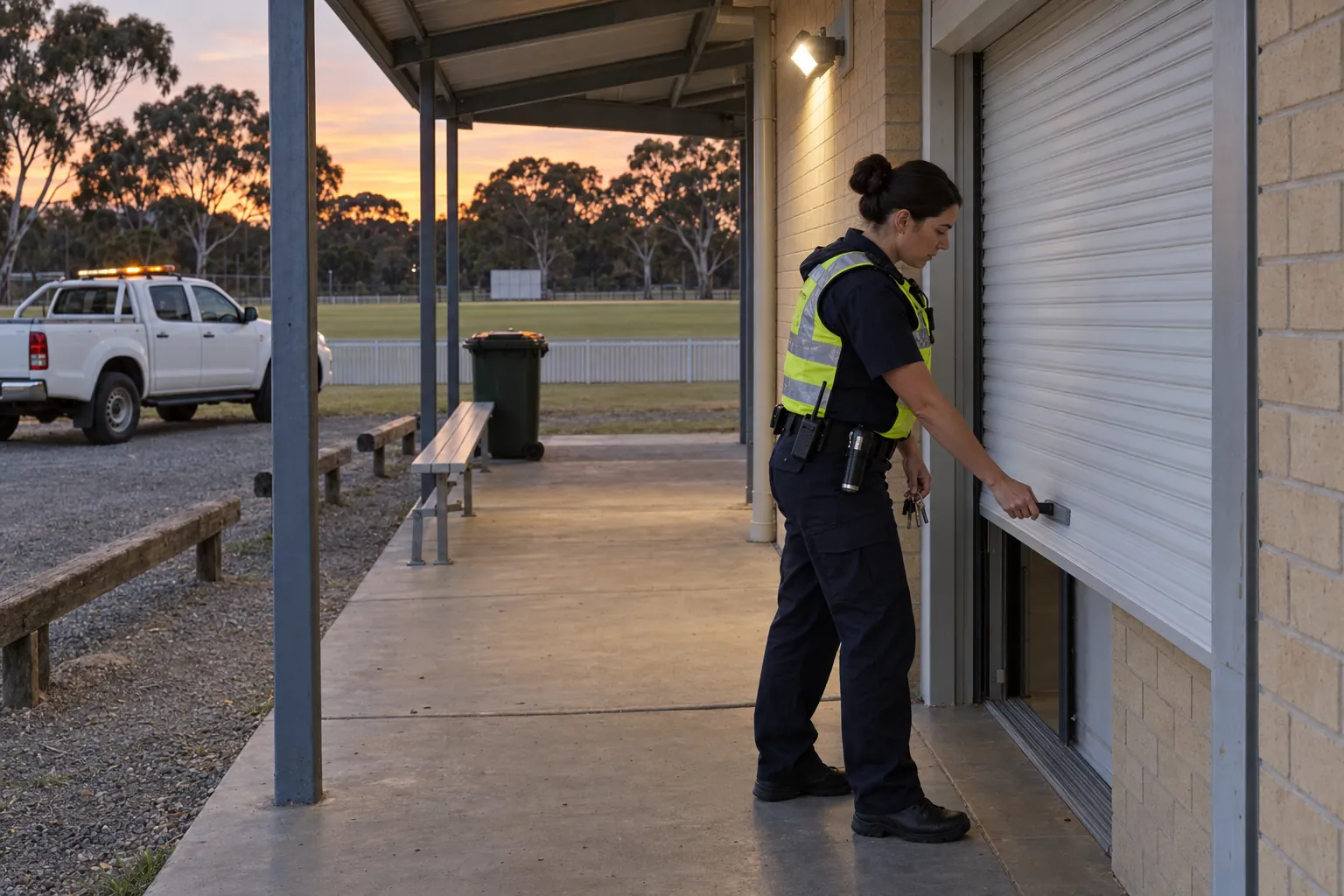
It is one of the most common mobile patrol services bought by schools, councils, sporting clubs, offices, shops and industrial sites, and one of the easiest to get wrong without anyone noticing until a door is found open. This guide covers what a lock up service should include on an Australian site, the licensing behind it, how keys and alarm codes are handled, the safety of the officer working alone at night, and what a record of each lock-up should show.
01
What a lock-up patrol is, and the licence behind it
A lock-up patrol, sold as a lock up service, is a scheduled visit by a mobile patrol officer to secure premises after the last people have left: check the building is empty, lock the doors, windows, roller doors and gates on the client's list, switch off what the client wants off, arm the intruder alarm and record the visit. An unlock is the reverse before opening time. Many sites buy both, often with random patrols and alarm response overnight.
It suits premises where nobody on the client's staff is reliably last out: a school after the evening hirers, a council hall, a sports club after training, a business park, a construction site at knock-off. It is not a static guard; the officer is on site for minutes and then drives on to the next site on the run.
Guarding and patrolling property for someone else is licensed security work in every Australian state and territory, under each one's own law and regulator. In Victoria, the Private Security Act 2004 (version 027, in force from 19 June 2025) governs the industry, and Victoria Police's private security licensing page states that "all private security activities are licensed activities" and that "an unarmed guard is a person who is employed or retained to protect, watch or guard any property while unarmed". In Queensland, section 7 of the Security Providers Act 1993 (current as at 26 May 2025) says a security officer "is a person who, for reward, guards, patrols or watches another person's property, including by (a) personally patrolling the property". In New South Wales, Service NSW's page Apply for a security operative licence says "if you're working in the security industry in NSW, you must hold the appropriate Class 1 or Class 2 security operative licence", administered by the Security Licensing and Enforcement Directorate of the NSW Police Force; the Class 1A subclass is Security Officer.
So the officer who turns up should hold the licence for that state, and the patrol company the business licence or registration its state requires; ask for both before the first visit. The Queensland wording turns on another person's property, for reward, so staff locking up their own workplace is a different arrangement; where the line falls in a particular case is a question for the state's regulator.
Pay and conditions for patrol officers sit in the Security Services Industry Award 2020, whose coverage clause (4.2) describes the industry as including patrolling, protecting, screening, watching or guarding people or property. Patrol companies often point in a tender to AS 4421:2023 Guard and patrol security services, which specifies the minimum requirements for the operation and management of an organisation providing protective security services. It describes how the company is run, not what a lock-up on your site includes; that is for you and the provider to write down.
02
What a lock-up and unlock should cover
Every site is different, and the list should be written for the building, not copied from a brochure. A typical lock-up on an Australian commercial or community site covers:
- The approach. Look before getting out of the vehicle: forced doors, broken glass, people loitering, lights on that should be off. If something looks wrong, do not go in alone.
- Confirming the building is empty. Walk the toilets, change rooms, meeting rooms, kitchens and staffroom, and call out before locking an area. A cleaner, a late hirer or a tradesperson still inside is a common way a lock-up goes wrong.
- Windows and internal doors closed and latched as the site instructions require.
- External doors, roller doors and shutters locked, and each one physically checked by pushing or pulling after locking, not assumed from the key turning.
- Fire doors closed, not wedged open, and exits clear. An exit is locked only once the building is confirmed empty, and only in the way the building manager has approved.
- Services the client lists: lights, air-conditioning, urns, taps left running. Only what is on the list; an officer should not switch off plant nobody has explained.
- Gates, boom gates and car parks closed and locked, with a check that no vehicle is being locked in.
- The alarm armed, with confirmation that it has set, and every zone that would not arm noted. On a monitored system, a call to the monitoring centre to confirm the arming is received is a common step.
- Keys and access cards returned to the key safe or kept on the patrol's key ring as agreed.
- The record: the time on and off site, the officer's name and licence number, what was secured, and anything found.
An unlock is shorter but just as specific: disarm, open the entrances and gates on the list, and walk enough of the building to spot anything from the night, such as water on the floor, a broken window, graffiti or signs someone was inside, and report it before staff or the public arrive.
03
Agreeing the service: times, site instructions and keys
Most disputes about a lock up service come from what was never written down. The client's site instructions should set out, for each site:
- The lock-up window: the earliest and latest time the officer may attend, and what happens if the building is still in use.
- The route, with a floor plan marking every door, roller door, gate and alarm panel, so a new officer gets it right the first time.
- What secured means for each door and gate, and which doors are fire exits that must not be chained or padlocked.
- Who to call when someone is still inside, the alarm will not set, or something is found open or damaged, on an after-hours number that is answered.
- What the officer may and may not do: ask people to leave, switch off equipment, enter plant rooms, reset the alarm after a fault.
- How the visit is reported, to whom, and by when.
Keys and alarm codes are the heart of the service and its biggest risk, because the patrol company holds keys to many clients' buildings. Agree how keys are labelled (a code, never the address), where they are kept, who may sign them out, and how a loss is reported. Give each officer their own alarm user code, so the arming record shows who set it, and cancel it when they leave the run. If a key on the patrol's ring is lost, the client may need a locksmith to rekey every lock it opens, and on a master key system that can be every door on the site, so agree in writing who pays. Where the site uses an electronic access control system instead of keys, or as well as them, the same rules apply to cards and fobs: one per officer, logged, and cancelled when they leave the run. The award recognises the practical side of this: clause 13.4 of the Security Services Industry Award 2020 deals with an employee who must collect equipment belonging to the employer, such as keys or a vehicle, before starting or return it afterwards, where that adds more than 15 minutes to their travel, and says their ordinary hours then start and finish at the point of collection or return.
Set the frequency with the building's use: every night, only on hire nights, or lock-ups in term and random patrols in the school holidays. Review the list whenever the building changes, such as a new tenant, door, alarm zone or after-hours user.
04
Working alone at night: the safety side
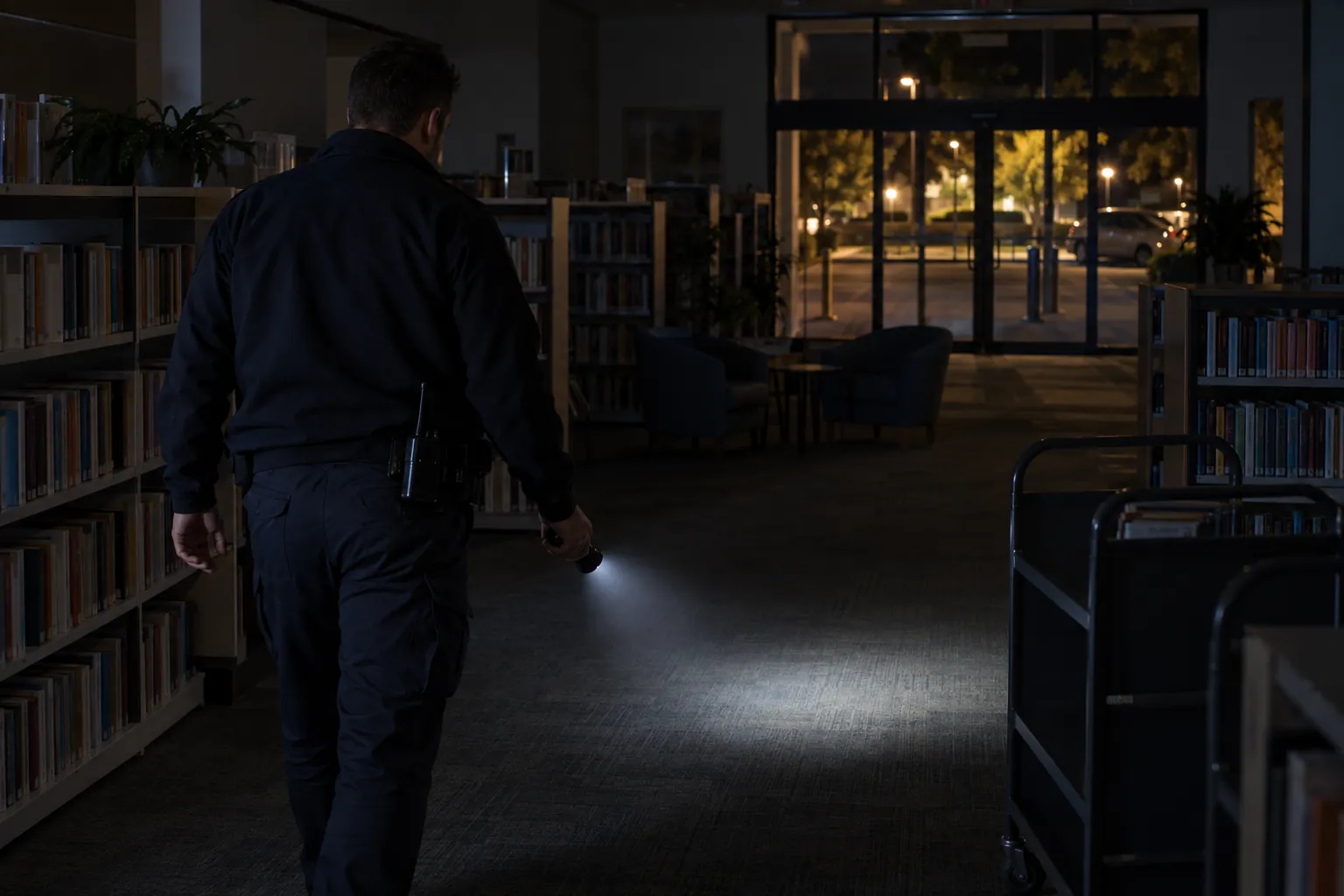
A lock-up officer usually works alone at night, entering empty buildings where an intruder may be inside. The patrol company, as the person conducting a business or undertaking (PCBU), has to manage that. Section 48 of Queensland's Work Health and Safety Regulation 2011 (current as at 29 March 2026) requires a PCBU to manage risks to the health and safety of a worker associated with remote or isolated work, and to "provide a system of work that includes effective communication with the worker". It defines remote or isolated work as "work that is isolated from the assistance of other persons because of location, time or the nature of the work". The Commonwealth Work Health and Safety Regulations 2011 have a regulation 48 on remote or isolated work too, and the other states and territories that have adopted the model WHS laws have their own regulations.
Victoria has not adopted the model laws. There the Occupational Health and Safety Act 2004 (version 045) applies instead, with its own general duties on employers, and the practical controls below are the same.
The client has a part too. Regulation 40 of the same Queensland regulation requires a PCBU at a workplace to ensure, so far as is reasonably practicable, that it is maintained so as to allow people "to enter and exit and to move about without risk to health and safety, both under normal working conditions and in an emergency". Broken outside lighting or a jammed roller door is the client's to fix, and a good patrol reports it.
In practice, a safe system for lock-ups includes:
- a check-in with the control room on arrival and departure at each site, and a follow-up if the officer has not checked out by an agreed time;
- a duress or man-down alarm, or a tested way to raise help quickly;
- a rule that an officer who finds signs of a break-in waits outside and calls police rather than searching alone;
- triple zero (000) for an emergency, and the police's non-urgent line for reports that can wait; in Victoria, the Police Assistance Line is 131 444, and the page is clear that in an emergency, including when a crime is in progress, you always call triple zero;
- site information about hazards met in the dark, such as pits, plant, dogs and uneven ground.
05
What a good record of a lock-up shows
The client pays for something done when nobody from the client is there, so the record is the service as far as the client can see. For every visit it should show:
- the date, the time the officer arrived and the time they left;
- the officer's name and licence number;
- each point on the lock-up list, marked secured, or not secured with the reason;
- the alarm: armed at what time, and any zone that would not set;
- anything found: people inside, doors or windows open, damage, leaks, lights or equipment left on, vehicles in the car park;
- who was told, when, and what they said;
- a photo where it helps, such as a gate locked, an alarm keypad showing set, or damage found.
Exceptions matter more than ticks. "Site secure, all in order" every night for a year tells the client nothing; the nights something was found open or the alarm would not set show the service is being done with attention, and lead to fixes.
Check the record against something independent now and then: ask the alarm monitoring provider whether it can supply the arming times, walk the site one morning before the unlock, or ask the cleaners what they find. If the site has a security occurrence book, the lock-up and unlock should appear in it; if anything serious was found, it should also have a security incident report of its own.
Many patrol companies report through an app or portal with GPS on the vehicle or phone. That shows where the officer was, not which doors were checked or whether the alarm set, so ask to see a sample report before signing.
06
Where the lock-up record fails, and where SiteClara fits
The weak point of a lock up service is the gap between the visit and the report. A line typed later in the patrol car, "22:14 site locked and alarmed", looks the same whether every door was pushed or only the front one. A door found open is mentioned to whoever answers the phone and never reaches the building manager. And a missed lock-up is rarely recorded as missed; it shows up as a door the cleaner finds open in the morning.
SiteClara records the check at the point where it is done. A printed QR poster, with an optional NFC tag behind it, sits at each place a check is scheduled, such as the alarm panel, the rear roller door or the car park gate. The officer scans or taps on their own phone, with no app to install, sees the checks due at that point, and marks each one done or explains what stopped them. The time and the named person are recorded as it happens, with a photo when one is asked for, and a problem they report, such as a broken lock or a door found open, goes onto the site's list of jobs until someone closes it.
The patrol supervisor sees what was due, done and missed, and records the reason a check was missed. Each day they review the checks and photos, add a note and approve a report that goes to the client's nominated contacts at 8am the next morning, showing what was reported, what was completed, what is still open and how the scheduled checks went, for example 5 of 5 lock-up points completed.
07
Questions people ask
What locks do police recommend for doors?
For business premises, Victoria Police's Business premises security page advises installing good quality locks and checking them weekly for damage, fitting external doors with steel door jambs, installing solid doors inside and at entry points, and locking doors to staff only areas. For homes, its Prevent home burglaries page advises deadlocks on all external doors and windows. A lock-up patrol that pushes and pulls each door every night is well placed to report a damaged lock or jamb.
What are the best locks to keep burglars out of your house?
Victoria Police's Prevent home burglaries page names no brand or model. It advises deadlocks on all external doors and windows, and reminds you to unlock the deadlock when you are inside, so you can get out if there is a fire. It also says to lock the garage doors, windows, gates, sheds, pet doors and skylights, to remove spare keys hidden outside and not to leave keys in window locks. The same fire point applies at a lock-up: an exit is deadlocked only once the building is confirmed empty.
08
Further reading, and a list to take away
Licensing is state law, so start with your own state's regulator: Victoria Police private security licensing, the Queensland Security Providers Act 1993, or Service NSW's Apply for a security operative licence. For officers working alone, read regulation 48 of the Work Health and Safety Regulations 2011 or your state's version.
Before you choose or review a lock up service, check that:
- the patrol company and each officer hold the right licence for your state;
- there is a written lock-up list for each site, with a marked floor plan;
- the lock-up window and what happens when the building is still in use are agreed;
- fire exits are named, and the officer knows which must never be chained or padlocked;
- keys are coded, logged and kept securely, and each officer has their own alarm code;
- the officer checks in and out with someone who will follow up, and never searches alone after a break-in;
- each visit's record names the officer and shows the time, each point, the alarm and anything found;
- doors found open and faults reach the building manager, and repeats are fixed;
- you compare the record with something independent from time to time, such as the alarm arming times;
- the list is reviewed whenever the building or its use changes.
Sources
Every document this guide quotes or links to, in the order it first cites them.
- Private Security Act 2004 legislation.vic.gov.au
- Victoria Police's private security licensing page police.vic.gov.au
- Security Providers Act 1993 legislation.qld.gov.au
- Apply for a security operative licence service.nsw.gov.au
- Security Services Industry Award 2020 awards.fairwork.gov.au
- AS 4421:2023 Guard and patrol security services store.standards.org.au
- Work Health and Safety Regulation 2011 legislation.qld.gov.au
- Work Health and Safety Regulations 2011 legislation.gov.au
- Occupational Health and Safety Act 2004 legislation.vic.gov.au
- Police Assistance Line police.vic.gov.au
- Business premises security police.vic.gov.au
- Prevent home burglaries police.vic.gov.au
Related guides
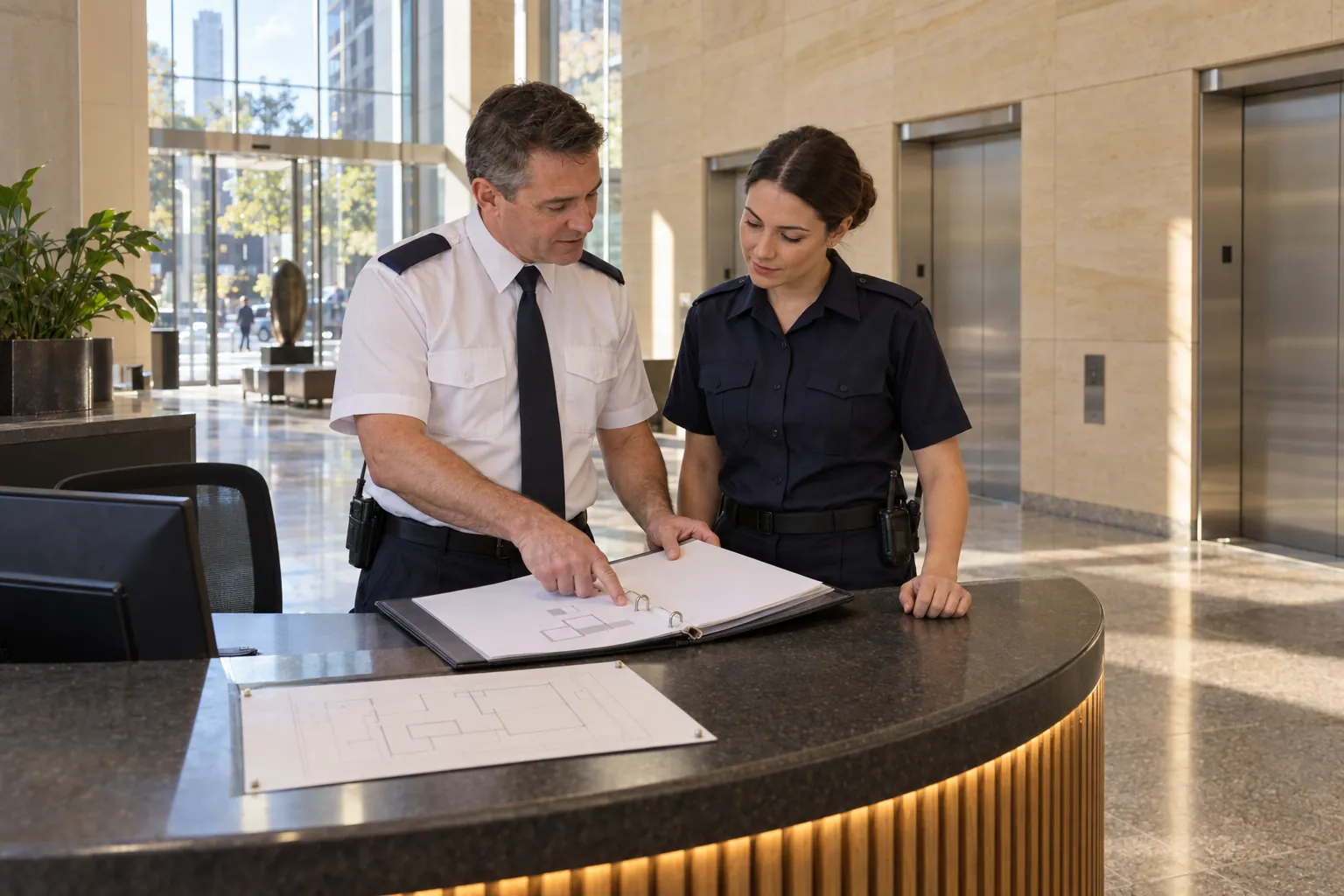 Security patrolsSecurity site instructions and post orders: what they should say, and how to keep them workingSecurity site instructions and post orders in Australia: what to include, the WHS duties behind them, how to agree and review them, and how to check they are used.
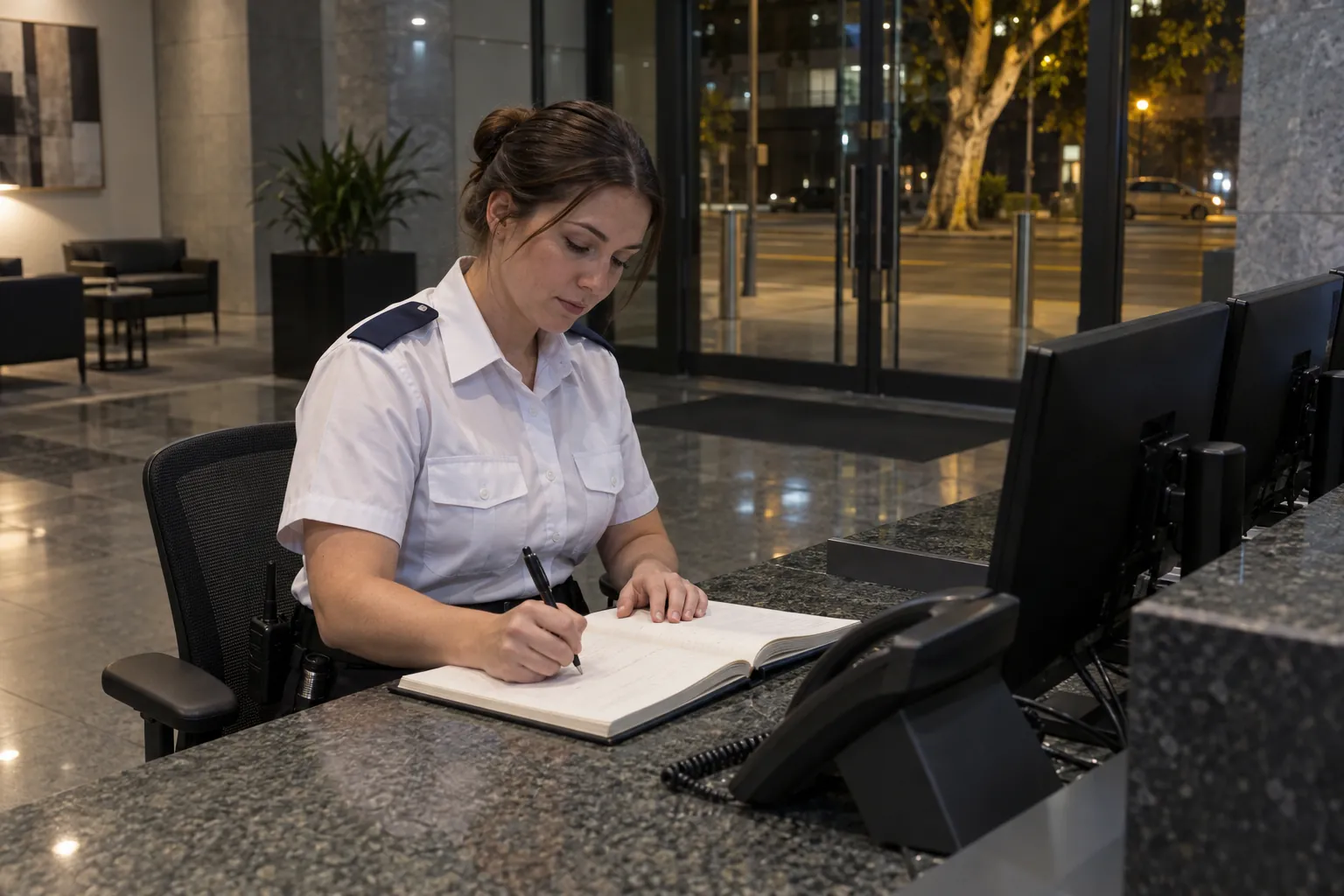 Security patrolsSecurity occurrence book: what to record, and how to keep one that holds upThe security occurrence book in Australia: what to record each shift, how to write entries that hold up, the registers the law does require, and paper or digital.
 Security patrolsSite security checklist: what to check, how often, and how to show it was doneSite security checklist for Australian buildings: the WHS duty, the Crowded Places Security Audit, what to check at opening, closing and after hours, and the record.
 Security patrolsSecurity incident report: what to record, and how to write one that stands upWriting a security incident report in Australia: what it must record, the licensing and WHS rules behind it, privacy, and what happens once it is submitted.