Premises and facilities management
Asbestos register: what it records, who keeps it, and how it stays live
An asbestos register is the dutyholder's record of every known and presumed asbestos-containing material in a non-domestic building – where it is, what it is, how much there is and what condition it is in – kept up to date under the duty to manage asbestos in regulation 4 of the Control of Asbestos Regulations 2012.
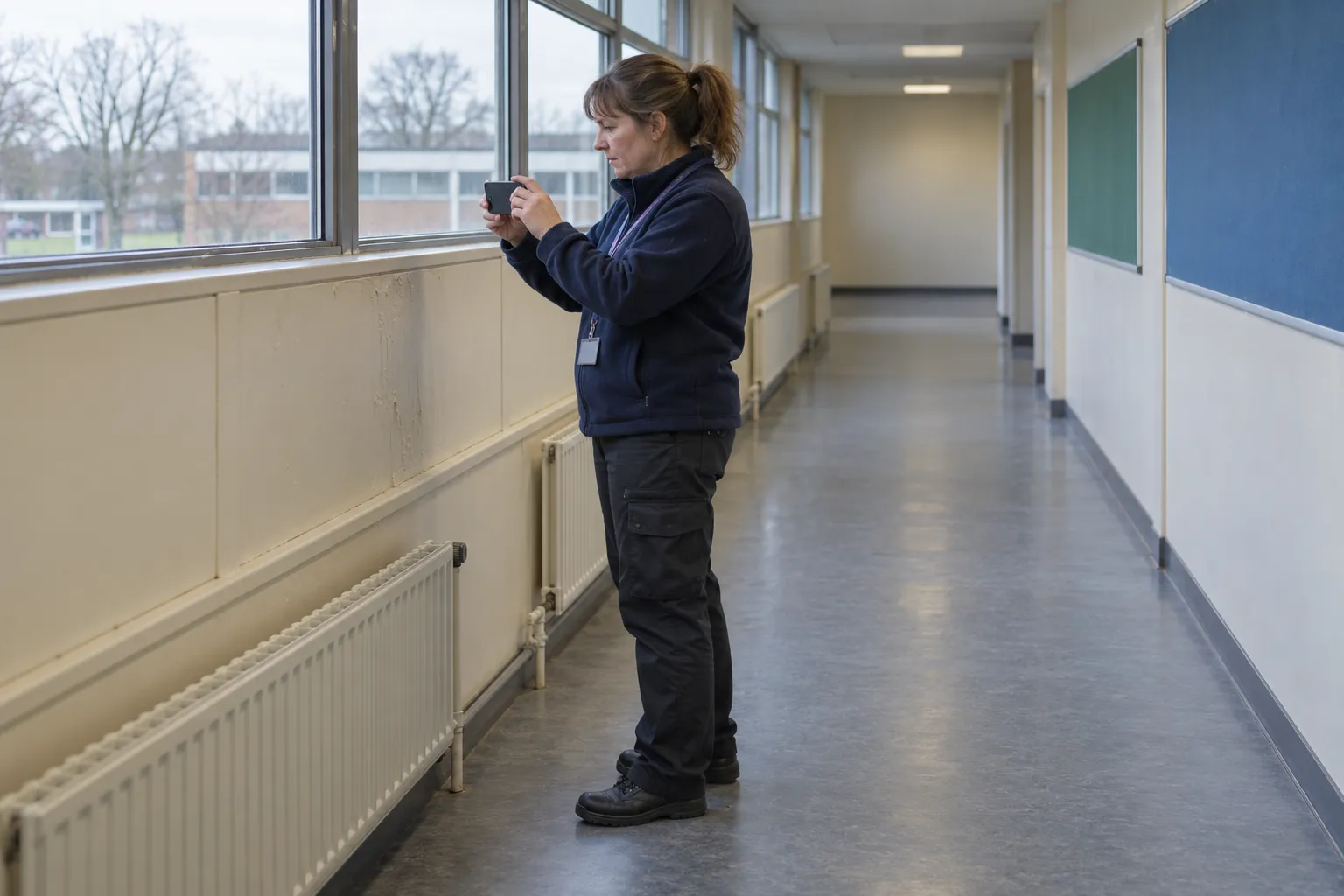
It is built from a survey, it sits at the heart of the asbestos management plan, and it is only worth having if it is current, because its job is to stop someone drilling, cutting or lifting into asbestos they did not know was there. This guide covers who keeps the register, what goes in it, how the management plan uses it, how often the materials are checked, and who must be shown it before work starts.
01
The duty to manage asbestos, and where the register comes from
In Great Britain the duty to manage asbestos is regulation 4 of the Control of Asbestos Regulations 2012. It falls on the dutyholder (often written duty holder): "every person who has, by virtue of a contract or tenancy, an obligation of any extent in relation to the maintenance or repair of non-domestic premises", or, where there is no such contract or tenancy, whoever controls the premises. The dutyholder must have a suitable and sufficient assessment made of whether asbestos is or is liable to be present, record its conclusions, and, where asbestos is present or presumed, prepare a written plan identifying the parts of the premises concerned and setting out how to manage the risk. That plan must include adequate measures for monitoring the condition of the asbestos, keeping it maintained or safely removed, and making sure information about its location and condition is "provided to every person liable to disturb it, and made available to the emergency services". The plan must be reviewed at regular intervals, implemented, and the measures taken recorded.
The regulation never says "register". The word comes from HSE's Approved Code of Practice, Managing and working with asbestos (L143, second edition, 2013), which says the record of where asbestos is present or presumed "is frequently referred to as an asbestos register". HSE's guidance on the duty to manage asbestos in buildings puts it plainly: "make, and keep up to date, a record or register of the location and condition of the ACMs or presumed ACMs", and review the management plan every 12 months or sooner if necessary.
HSE's introduction to asbestos safety says asbestos is the greatest cause of work-related deaths in Great Britain, with around 5,000 people dying every year from asbestos-related diseases. It was banned in 1999, but much of it is still in place, and caretakers and maintenance workers are among those most at risk. In Northern Ireland the same duty is regulation 4 of the Control of Asbestos Regulations (Northern Ireland) 2012.
02
Which buildings need one, and who keeps it
HSE's page on checking whether you have the duty to manage asbestos says it covers all non-domestic premises, such as offices, shops, warehouses, factories, hospitals and schools, and the common parts of multi-occupancy domestic premises such as purpose-built flats: foyers, corridors, lifts, staircases, roof spaces and garages, but not the flats themselves. L143 says premises completed before 2000 should always be presumed to contain asbestos unless there is strong evidence that they do not.
Who the dutyholder is depends on the lease or contract:
- The owner of the property, where they keep responsibility for maintenance and repair, or for the common parts of a multi-occupied building.
- Tenants, where the lease makes them responsible for repairs and maintenance; the duty can be shared, with the owner managing the common parts and tenants the parts they occupy.
- Whoever has control, where there is no clear lease or the building is empty.
- In schools, the local authority, the governors or the academy trust, depending on the type of school.
- Not a managing agent. Work can be passed to an agent, but HSE says "the legal obligation to comply with duty to manage regulation cannot be passed to a managing agent".
The dutyholder names an appointed person to run the register and plan day to day, with the resources, skills, training and authority to do it: often the estates, maintenance, building or facilities manager. HSE says a caretaker or site manager doing basic maintenance does not hold the legal duty, but should know where the asbestos is.
03
What goes in an asbestos register
The register is built from a management survey, whose main aim, HSE says in its guidance on arranging an asbestos survey, is to let the dutyholder produce the register and the management plan. A refurbishment or demolition survey is a separate, destructive survey needed before major refurbishment, demolition or other structural work, to find asbestos hidden in the fabric of the building. Sampling is the only way to confirm that a suspect material contains asbestos: a sample is taken by a suitably trained person and analysed by an accredited analyst. HSE says to check the survey report before relying on it: that all rooms and areas were accessed, that enough samples were taken, usually one or two per area or room, and that the plans are clear and accurate. HSE strongly recommends a UKAS-accredited surveying organisation, and Asbestos: The survey guide (HSG264) sets out how surveys are done.
HSE's guidance on how to make a register and assess the risk calls the register "a live document which must always contain current information on the presence and condition of asbestos-containing materials". As a minimum it should include:
- all known and presumed ACMs in the buildings, and the type of each;
- how much asbestos there is and its condition, with the dates of the original and the last inspection;
- each ACM's potential to release fibres (the material assessment) and its likelihood of disturbance in the day-to-day running of the building (the priority assessment);
- where asbestos is presumed because the surveyor could not gain access to an area.
HSE adds that photographs, actions with due dates, evidence that actions were completed and the date the next condition assessment is due make the register far more useful. L143 asks for a drawing of the premises with the ACMs marked, what each material looks like, the areas not inspected, and a date on the record to aid reviews.
The register can be paper or electronic, and HSE publishes an example asbestos register and site plan with a blank template in PDF and Word. A surveyor can score the material, but HSE says that even where a priority assessment comes with the report, "you will still need to validate this as only you will know what happens in your building".
04
The asbestos management plan, and how it uses the register
HSE's page on how to write your asbestos management plan and monitor it says the plan should include:
- who is responsible for managing asbestos, including deputies;
- the asbestos register, with the site plan showing where ACMs are and the areas not inspected;
- the schedule for monitoring the condition of the ACMs;
- how the register is shared with workers and contractors doing maintenance;
- control arrangements so that ACMs are not disturbed, such as permits to work;
- emergency procedures if ACMs are disturbed.
L143 adds that the plan should say no work on the fabric of the building can start until the relevant parts of the register have been checked.
The register then drives the actions. HSE says to give high priority to damaged ACMs and those likely to be disturbed, and to allow for planned work such as service installations. ACMs in good condition and unlikely to be disturbed are usually safer left in place and managed; damaged ones must be repaired, protected, sealed or removed. HSE's page on how to put your plan into action explains which work, including removal, needs a licensed contractor, such as any work on sprayed asbestos and most work on asbestos insulating board. HSE's example asbestos management plan shows a finished one: named people and deputies, a yearly condition inspection, a permit to work for one ceiling void, and an accidental damage and incident log.
05
Condition checks, reviews and keeping the register live
L143 says any identified or suspected ACM "must be inspected and its condition assessed periodically, to check that it has not deteriorated or been damaged", at a frequency that depends on where it is and what happens around it. HSE's A comprehensive guide to managing asbestos in premises (HSG227) says the interval "would not be expected to be more than 12 months in most cases": an asbestos insulating board ceiling in a remote unoccupied building may need inspecting once a year, while board panels on the walls of a constantly used corridor may need inspecting once a month.
A condition check is a visual inspection, looking for:
- signs of disturbance, scratches and broken edges;
- cracked or peeling paint or sealant;
- debris or dust near the material;
- material coming away from its base, or protective coverings missing or damaged.
HSG227 suggests photographs to compare condition over time, and expects the results to be recorded. Where something has deteriorated, a decision on remedial action follows, and repeated damage needs its cause found: HSG227's example is a forklift truck that keeps hitting an asbestos cement panel.
L143 says the plan, including the register and drawings, should be reviewed at least every 12 months, and whenever circumstances change: a change of use, work on the building, or ACMs removed or repaired. HSE adds staff with management responsibilities changing, ACMs being disturbed by accident, and the results of the scheduled condition checks, and says the register itself should be updated at least once a year, or sooner if anything changes the risk from an ACM.

06
Showing the register before work, and reporting damage
HSE's page on how to provide information to anyone who might disturb asbestos says you must tell workers about the plan before they start work on the fabric of the building: your own staff and contractors such as builders, decorators, plumbers, electricians and heating engineers. For planned work the information should go as early as possible, for example with the request for a quote, and cover where the asbestos is, its condition, and the arrangements for safe working such as permits to work.
The duty runs both ways. Under regulation 5 of the Control of Asbestos Regulations 2012 an employer must not start maintenance or other work liable to expose its employees to asbestos unless it has assessed whether asbestos is present, or assumes it is. That is why a competent contractor asks to see the register. Employers must also give those employees adequate information, instruction and training under regulation 10.
Occupants such as teachers, who are unlikely to disturb asbestos, must still be told where it is in the rooms they use, not to disturb it, and what to do if it is damaged; L143 says they should report accidental damage promptly.
07
Where the record fails, and what SiteClara does about it
A register written from a survey is accurate on the day; the trouble usually comes afterwards. The condition checks are set as "annually" and nobody is told which day; the corridor panels that should be looked at monthly are looked at when someone remembers; a caretaker notices a chipped panel behind a radiator and mentions it to whoever is passing; and the register still says "good condition", last inspected two years ago.
SiteClara records the routine checks where they happen. A printed QR poster, with an NFC tag behind it if staff should tap, goes at each location the plan names for a condition check: the plant room, the corridor with the board panels, the riser cupboard. Staff scan or tap with their own phone, with no app to install, see the checks due there, and mark each one done or explain what stopped them, such as a locked room. A photo can be asked for, so the same panel is photographed on each visit and the pictures can be compared. The time and the named person are recorded as it happens.
Damage found on a check is reported at that location and goes onto the team's list of jobs until someone closes it, and a supervisor can escalate it to the building manager. The supervisor sees which checks are due, done and missed, records why one was missed, and approves a daily report that goes to nominated management or client contacts the next morning. The appointed person gets dated, named evidence to update the register from.
08
Questions people ask
Is an asbestos register a legal requirement?
In effect, yes, for non-domestic premises where asbestos is or may be present: regulation 4 of the Control of Asbestos Regulations 2012 says the dutyholder must ensure that the conclusions of the assessment and every review are recorded, and that a written plan identifies the parts of the premises concerned. The law does not use the word "register", but HSE's Approved Code of Practice, Managing and working with asbestos (L143), says this formal record is frequently referred to as an asbestos register, in written or electronic form.
Do you need an asbestos register if there is no asbestos?
You need a record of why you concluded there is none. L143, Managing and working with asbestos, says that if the building's age or other information gives very strong evidence that no ACMs are present, no further action is needed other than to record why. Premises completed before 2000 should always be presumed to contain asbestos unless there is strong evidence that they do not.
Can I check the asbestos register?
Anyone liable to disturb the asbestos must be given its location and condition, and it must be made available to the emergency services, under regulation 4 of the Control of Asbestos Regulations 2012. L143, Managing and working with asbestos, says the register, including drawings, should be available on site for the entire life of the premises, that work should start only once it is known and understood by the workers doing it, and that copies of the management plan go to employee representatives and trade union safety representatives.
How often should the asbestos register and management plan be updated?
At least once a year, and sooner if something changes. HSE's guidance on how to make a register and assess the risk says to update the register at least once a year as part of the asbestos management review, or before if anything changes the risk from an ACM, and L143, Managing and working with asbestos, says the plan, including records and drawings, should be reviewed every 12 months as a minimum and whenever circumstances change, such as a change of use, work on the building, or ACMs removed or repaired.
09
Further reading, and a list to take away
HSE publishes L143, HSG227 and HSG264 free, and its step-by-step guidance on the duty to manage includes blank and example registers and plans. In Northern Ireland, HSENI's Always ask for the asbestos register explains the duty. For schools in England, the Department for Education publishes Managing asbestos in your school or college.
To check an asbestos register and the plan around it, make sure that:
- you know who the dutyholder is, and who the appointed person and deputy are;
- every building built or refurbished before 2000 is covered, and every area not inspected is presumed to contain asbestos;
- each ACM has its location, type, extent, condition, assessments, and last and next inspection dates;
- the plan sets a condition-check frequency for each ACM, and every check is recorded with a date, a name and, where useful, a photograph;
- contractors see the register before work starts, ideally at quotation;
- occupants know how to report damage, and there is an incident procedure and log;
- the plan and register are reviewed at least every 12 months, and whenever work, staff or the building's use changes.
Sources
Every document this guide quotes or links to, in the order it first cites them.
- Regulation 4 of the Control of Asbestos Regulations 2012 legislation.gov.uk
- Managing and working with asbestos hse.gov.uk
- The duty to manage asbestos in buildings hse.gov.uk
- Introduction to asbestos safety hse.gov.uk
- Control of Asbestos Regulations (Northern Ireland) 2012 legislation.gov.uk
- Checking whether you have the duty to manage asbestos hse.gov.uk
- Arranging an asbestos survey hse.gov.uk
- Asbestos: The survey guide hse.gov.uk
- Make a register and assess the risk hse.gov.uk
- Example asbestos register and site plan hse.gov.uk
- Write your asbestos management plan and monitor it hse.gov.uk
- Put your plan into action hse.gov.uk
- Example asbestos management plan hse.gov.uk
- A comprehensive guide to managing asbestos in premises hse.gov.uk
- Provide information to anyone who might disturb asbestos hse.gov.uk
- Regulation 5 of the Control of Asbestos Regulations 2012 legislation.gov.uk
- Regulation 10 legislation.gov.uk
- Managing and working with asbestos (L143) hse.gov.uk
- Always ask for the asbestos register hseni.gov.uk
- Managing asbestos in your school or college gov.uk
Related guides
 Premises and facilities managementManaging agent responsibilities in residential block managementWhat a managing agent does for a block of flats in England and Wales: service charges, the RICS code, repairs, fire safety in common parts, and records.
 Premises and facilities managementPremises manager: what the job involves, and how to run it wellWhat a premises manager does in a college, charity, housing provider or trust: the compliance calendar, contractors, security, budgets and reporting.
 Premises and facilities managementBuilding compliance checklist: the statutory picture for a UK buildingBuilding compliance checklist for UK non-domestic buildings: fire, electrical, gas, water, asbestos, lifts, access and energy, who is responsible, how often.
 Premises and facilities managementCaretaker duties: what the job involves, and how to show it was doneCaretaker duties in halls, churches, offices, flats and schools: opening and locking, routine checks, minor repairs, cleaning and working alone safely.