Cleaning
Cleaning service level agreement: what to include, and how to show it is met
A cleaning service level agreement (SLA) is the part of a cleaning contract that sets the standard of cleaning the provider must deliver, how quickly problems are put right, how performance is measured and reported, and what happens when it falls short.

It turns a cleaning contract into something both sides can measure. This guide covers what to put in one, how to set service levels that can actually be checked, and how to evidence them.
01
What a cleaning service level agreement is
A service level agreement (SLA) is the part of a service contract that sets out the level of service the client should receive and how it will be measured. In commercial cleaning it usually sits alongside two other documents: the contract, with the legal terms such as length, price, payment terms, liability, insurance and termination, and the cleaning specification, which says what is cleaned, where and how often. The SLA says how well, how fast, and how anyone will know. Its purpose is clarity: to clearly define what the client is buying so that both sides can ensure it is delivered.
No regulation requires a cleaning SLA. It is a commercial document, agreed between the parties and enforceable as part of the contract. What the law does require is the outcome the SLA is there to protect. The Workplace (Health, Safety and Welfare) Regulations 1992 require a workplace, its furniture and fittings to be kept sufficiently clean, and washrooms to be kept clean and orderly. The Health and Safety at Work etc. Act 1974 and the Control of Substances Hazardous to Health Regulations 2002 (COSHH) govern how the work is done. Those duties stay with the employer or whoever controls the premises, even when cleaning is outsourced to a cleaning company, so the SLA is also how a client shows it is managing them.
In England, Wales and Northern Ireland, the Supply of Goods and Services Act 1982 implies into a business contract for services a term that the provider will carry out the work with reasonable care and skill; Scots law reaches a similar position through the common law. An SLA replaces that general promise with a specific one: a certain level of service, stated in measurable terms, with a clear path for recourse if things go wrong.
02
What a cleaning SLA should include
There is no one-size-fits-all template, and sector-specific needs, such as a school, a hospital or an office cleaning contract, change the detail. But the components of an SLA for cleaning services are well established. A usable agreement covers:
- Parties, sites and scope of services: who the service provider and client are, the buildings and areas covered, and anything excluded. Exclusions matter as much as inclusions: periodic deep cleans, window cleaning at height, waste collection and specialist cleaning are common areas of disagreement.
- Service description: the services to be provided and the cleaning duties in outline, with a reference to the cleaning specification rather than a copy of it, so the two cannot drift apart.
- Service hours: when cleaning happens and when the provider must respond to requests, including evenings and weekends if the building is used then.
- Performance standards: what "clean" means for each area type, such as reception, washrooms, kitchens and offices, written so that two inspectors would agree.
- Response and resolution times for reactive requests and reported failures, by priority: the response time to attend, and the time to put it right.
- Key performance indicators: the measurable metrics, the target for each, how each is measured and by whom.
- Reporting: what the cleaning provider reports, how often and to whom.
- Escalation: how issues or disputes are raised, who handles them at each level, and within what time.
- Service credits or price reductions, if the parties agree to have them, and the persistent-failure point at which the client can end the contract.
- Client responsibilities: access, storage for equipment and chemicals, who supplies consumables, and notice of changes to the building's use.
- Health and safety: COSHH assessments, risk assessments and method statements, training, and incident reporting.
- Staffing: supervision, vetting where the site needs it, onboarding and induction of new staff, and cover for absence.
- Review: how often the SLA is reviewed and how changes are agreed.
Confidentiality, data protection, insurance and termination usually belong in the main terms and conditions. Keep the SLA to what is measured and managed day to day, so the people running the contract actually use it.
03
Setting service levels that can be measured
The commonest weakness in a cleaning SLA is a service level nobody can measure: "a high standard of cleanliness at all times", "a prompt response". Each service level should say what is measured, the target, the period, and the source of the evidence.
Response and resolution times work best in a small number of priorities. As an illustration of the shape, not an industry standard:
- Urgent: a spillage that creates a slip hazard, a blocked toilet, a washroom out of soap or paper. Attend within a short time during service hours, often measured in minutes, and make safe at once.
- High: a missed clean in a busy area or a visible failure a visitor would notice. Put right the same day.
- Routine: an item missed on a lower-use area, or a request for extra work. Put right by the next scheduled clean or by agreement.
The numbers you choose should be ones the provider can meet with the staff on site. A 15-minute response in a building with one cleaner on an evening shift is a promise the contract has already broken.
What does a 4-hour SLA mean?
A 4-hour SLA gives four hours to deal with a reported problem, so the agreement should say whether the four hours is the time to attend or the time to put it right, and whether the clock runs only during service hours.
NHS England's National standards of healthcare cleanliness 2025 show the shape: a cleaning problem in a functional risk category 2 area, such as an acute ward, should be assessed within 20 minutes and put right at the next scheduled clean or, if the area is accessible, within 4 hours, whichever is sooner.
Cleaning quality is usually set as an audit score against the agreed cleaning standards: the percentage of inspected elements that pass. Delivery levels are set as completion: the scheduled cleans and checks completed against those planned. Both are needed. An SLA that measures only quality can be met by a provider who cleans half the rooms well; one that measures only delivery can be met by a provider who visits every room and cleans none of them properly.
04
How the SLA is measured and reported
Most cleaning SLAs rest on three sources of evidence, and a good one names all three:
- Audits: a supervisor or client representative inspects a sample of rooms against the standard and scores them. Joint audits, walked by both parties, take much of the heat out of disputes. The British Institute of Cleaning Science (BICSc) and many providers use structured audit methods that score each element of a room.
- Records of work done: check sheets, logs or digital records showing each scheduled task was carried out, by whom and when.
- Requests and complaints: every reported failure, with the time it was reported, the time it was put right, and whether the same problem keeps coming back.
Reporting should match the pace of the contract. A monthly report with KPI results, trends and actions is normal, reviewed at a meeting between the facilities manager and the contract manager. Many clients also want something shorter and more frequent, such as a daily or weekly summary of what was done, what was missed and what is still open, so problems surface before the monthly figures.
Build regular reviews into the agreement. Business needs change: a floor is closed, a canteen opens, hybrid working empties the building on Fridays. An SLA reviewed regularly, at least annually and whenever the building's use changes, stays aligned with what the client needs; one left alone becomes a list of targets for a building that no longer exists.
05
Service credits, escalation and recourse
Any good SLA has to tackle the uncomfortable question of what happens when the service falls short. The usual tools, from mildest to strongest, are:
- Rectification: the failure is put right within the agreed time, at no extra cost.
- Escalation: if it is not, or if it recurs, it goes from the site supervisor to the contract manager and then to a named senior contact, each with a time to respond.
- A performance improvement plan: agreed actions and dates, reviewed until the KPI recovers.
- Service credits: a reduction in the monthly charge when a KPI is missed, usually capped as a percentage of the fee.
- Termination for persistent failure: the right to end the contract if KPIs are missed repeatedly over a defined period.
Service credits should be proportionate. Under English law, following the Supreme Court in Cavendish Square Holding BV v Makdessi [2015] UKSC 67, a clause that imposes a detriment out of all proportion to the client's legitimate interest in performance risks being unenforceable as a penalty, so a legal review of the contractual drafting by a solicitor or law firm is worth the cost before you finalise it. In practice, credits work best as a signal rather than a revenue stream: a small, certain reduction focuses attention, whereas a large one mainly produces arguments about whether the KPI was really missed.
Clear escalation also helps prevent small problems from damaging the business relationship: a commercial cleaning contract is more often lost to a run of small complaints nobody answered than to one bad day. Recourse runs the other way too. If the client does not provide access, storage or the consumables it agreed to supply, the SLA should say that failures caused by it do not count against the provider.
06
Where SLA evidence fails, and what SiteClara does about it
Most cleaning SLAs are strong on quality evidence and weak on delivery evidence. Audits happen monthly and are written up; the day-to-day record of what was done sits on sheets on the backs of doors, if it exists at all. When a client asks whether the agreed service was delivered last Tuesday, the provider can describe the schedule but cannot show it, and the first sign of a missed clean is a complaint.
SiteClara gives each location a printed QR poster, with an optional NFC tag behind it. Staff scan or tap it on their own phone, with no app to install, and see the scheduled checks due there. They mark each one done, or explain what stopped them. The time and the named person are recorded as it happens, with a photo when one helps. A problem found on the round is reported there and goes onto the team's list of jobs until someone closes it.
The supervisor sees what is due, done and missed, and can record why a check was missed. At the end of the day they review the totals and photos, add a note, record who was notified and approve the daily report, which goes to nominated management or client contacts at 8am the next morning. It shows what was reported, what was completed, what is still open, and how scheduled checks went, for example 12 of 12 completed. That is the delivery half of the SLA, recorded as it happened rather than assembled for the monthly meeting.
07
Further reading, and a checklist to take away
The Health and Safety Executive publishes the Approved Code of Practice Workplace health, safety and welfare (L24) and its COSHH guidance free on its website. The British Institute of Cleaning Science (BICSc) publishes standards and training for cleaning operatives and supervisors. In the public sector, the Cabinet Office publishes guidance for buyers on the Procurement Act 2023, including managing contract performance. For the contract terms themselves, take legal advice; an SLA is only as enforceable as the contract it sits in.
Before you sign or renew a cleaning SLA, check that:
- it refers to the current cleaning specification and names what is excluded;
- every service level says what is measured, the target, the period and the evidence;
- it measures delivery as well as quality;
- response and resolution times are set by priority and can be met with the staff on site;
- the escalation path names people and times;
- service credits, if any, are proportionate and capped;
- the client's own responsibilities are written down;
- reporting is frequent enough to catch a problem before the monthly meeting;
- there is a date for its next review.
Sources
Every document this guide quotes or links to, in the order it first cites them.
- Workplace (Health, Safety and Welfare) Regulations 1992 legislation.gov.uk
- Supply of Goods and Services Act 1982 legislation.gov.uk
- National standards of healthcare cleanliness 2025 england.nhs.uk
- Cavendish Square Holding BV v Makdessi [2015] UKSC 67 supremecourt.uk
- Workplace health, safety and welfare hse.gov.uk
- Guidance for buyers on the Procurement Act 2023 gov.uk
Related guides
 CleaningCleaning specification: what it should say, and how to show it is metWhat a cleaning specification should contain, input and output standards, setting frequencies by area, and how to show the specification is being delivered.
 CleaningCleaning KPIs: what to measure, and how to know the figures are trueThe cleaning KPIs worth measuring, how to define and target them, how to report them, and how a KPI can look green while the building is not clean.
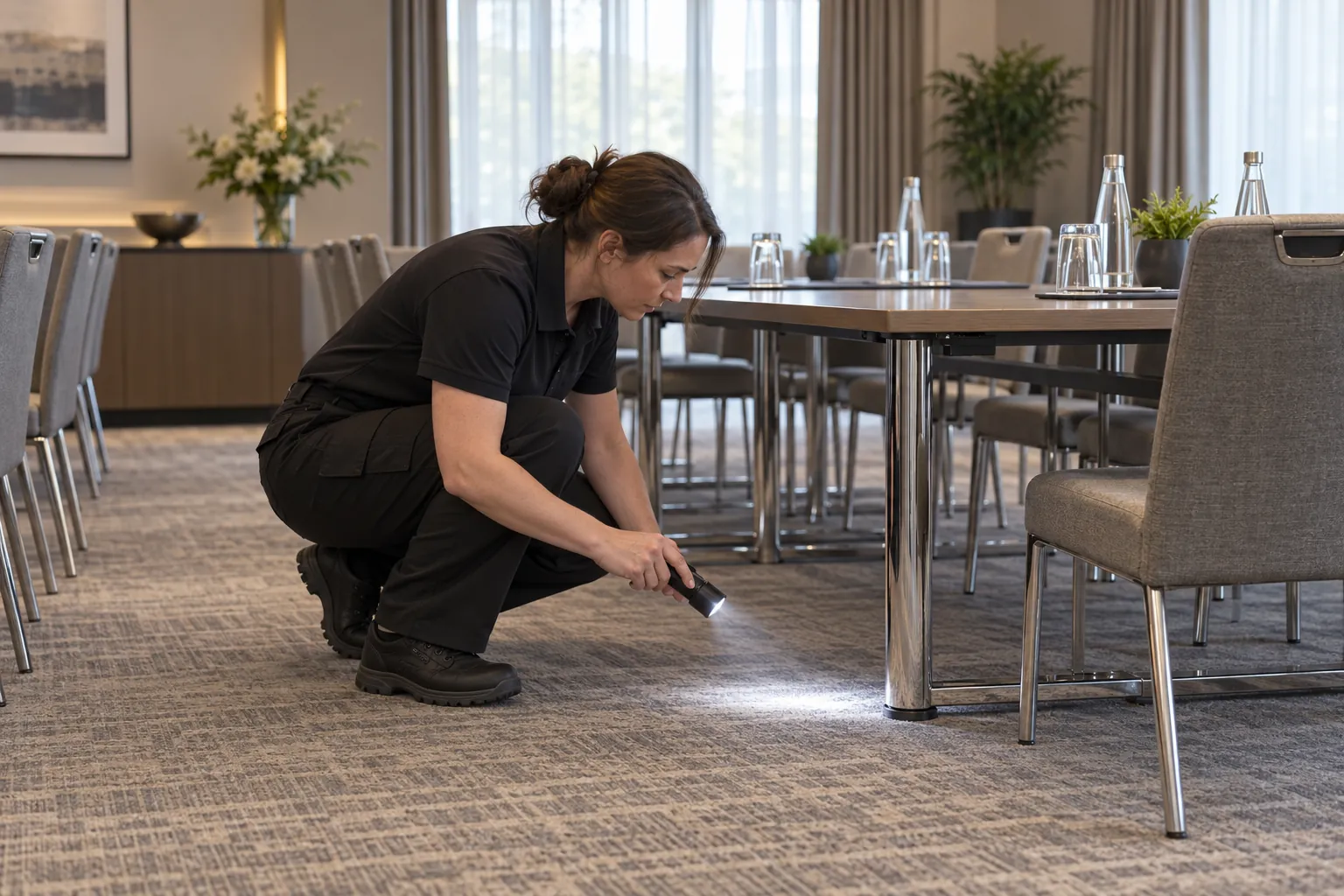 CleaningCleaning quality control: how to inspect, correct and prove the standardHow quality control works in commercial cleaning: QA versus QC, setting standards, running inspections, corrective action and a record that holds up.
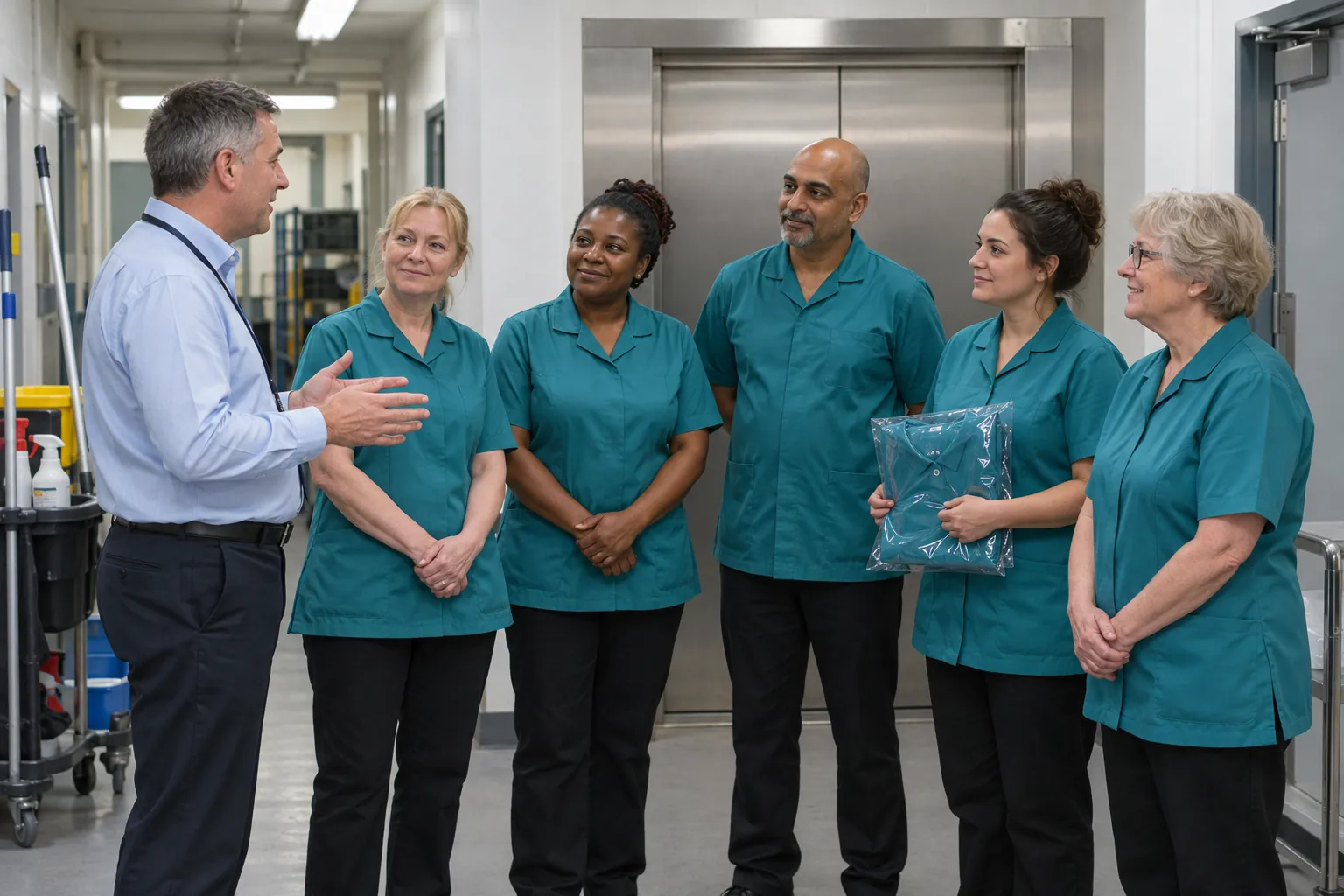 CleaningCleaning contract mobilisation: from contract award to a settled serviceHow to mobilise a new cleaning contract: the mobilisation plan, TUPE, site assessment, COSHH and induction, day one, and the first weeks of audits.