Cleaning
Cleaning quality control: how to inspect, correct and prove the standard
Cleaning quality control is the inspection of completed cleaning against the agreed standard, and the corrective action that puts it right when it falls short.
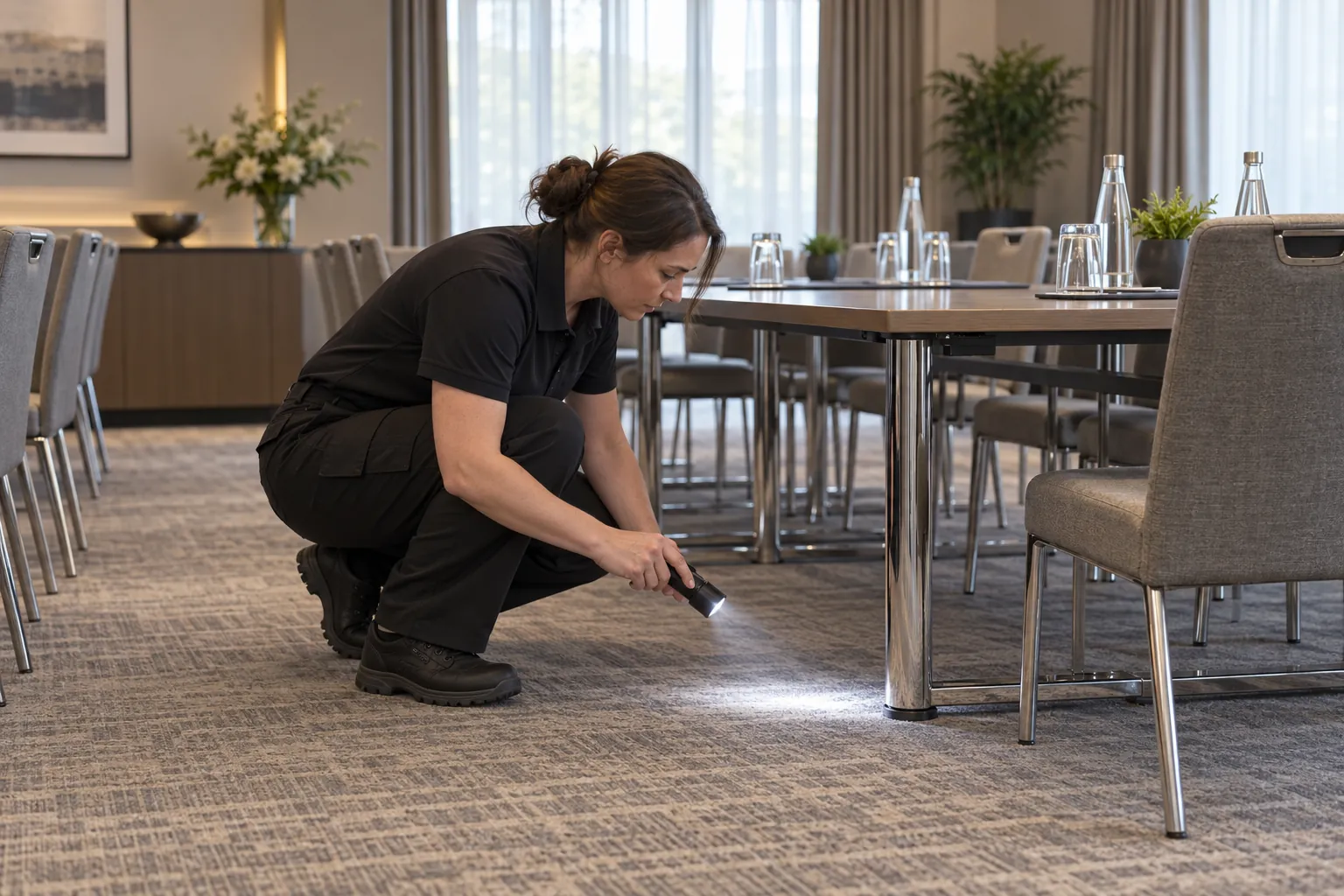
It is what separates a cleaning service that is good on the day of the audit from one that is good every day. This guide covers the difference between quality assurance and quality control, how to set standards that can be inspected, how to run inspections and corrective action, and what a credible quality record looks like.
01
Quality assurance and quality control in cleaning
Quality assurance in cleaning is the system that prevents failures, and quality control is the checking that finds and fixes them. The two terms are often used as if they meant the same thing, but they do different jobs.
- Quality assurance (QA) is the system that makes good cleaning likely: the cleaning specification, trained staff, written methods, the right equipment and chemicals, supervision and a management commitment to quality. It is about preventing failures.
- Quality control (QC) is the checking: inspections of the result, records of what was done, and corrective action when something falls short. It is about finding failures and fixing them.
Quality control is part of quality assurance, not an alternative to it. The quality assurance process sets the standard of cleaning; quality control measures the quality of cleaning actually delivered against it. A cleaning company with thorough inspections but untrained staff will find the same failures every week; one with good training and no inspections will never know when standards slip.
Several standards and duties sit behind this. ISO 9001 sets requirements for a quality management system and is widely held across the cleaning industry by providers of commercial cleaning services that bid for larger contracts. BS EN 13549:2001 is the European standard that sets out basic requirements and recommendations for quality measuring systems in cleaning services. In healthcare in England, the NHS National standards of healthcare cleanliness 2025 set an audit target score and audit frequency for each functional risk category, from 98% and above, audited weekly, in the highest-risk areas such as intensive care units and operating theatres, to 75% and above, audited every 12 months, in the lowest. And underneath all of them, the Workplace (Health, Safety and Welfare) Regulations 1992 require a workplace to be kept sufficiently clean, which is the outcome quality control exists to protect.
02
What a cleaning quality control system covers
A working quality control system for a commercial cleaning contract has a few parts, and each one needs an owner:
- Clear quality standards: what the result must look like in each area type, taken from the cleaning specification.
- A cleaning quality inspection checklist for each area type, listing the elements to inspect: floors, surfaces, fixtures, glass, bins, washroom fittings, dispensers. This audit checklist is separate from the cleaning checklist the operative works through, which lists the tasks rather than the result.
- An inspection schedule: how often each area is inspected, by whom, and how rooms are sampled.
- A scoring method, so results can be compared over time and between sites.
- Records of work done, showing the scheduled cleaning tasks were carried out, by whom and when.
- Corrective action: how failures are put right, by when, and how the fix is confirmed.
- Review: regular analysis of results to identify areas for improvement and recurring problems.
- Feedback: how building users and the client raise issues, and how those feed into the system.
- Periodic work: a check that each deep clean, carpet clean and high-level dust in the schedule actually happened, since these are the tasks most easily skipped.
Keep the checklist short enough to use. An inspection form with a hundred elements per room will be completed quickly and badly; one with ten well-chosen elements will be completed properly. A generic template downloaded from the internet is a starting point at best: the elements should come from your own specification, for the rooms in your building.
The same parts apply whether it is an office cleaning contract, a school or a hospital. What changes is the detail: how often each area is inspected, how strict the standard is, and how quickly a failure must be put right.
03
Running quality inspections
Regular inspections are the core of quality control in cleaning. To be worth doing, they need to be consistent, representative and honest.
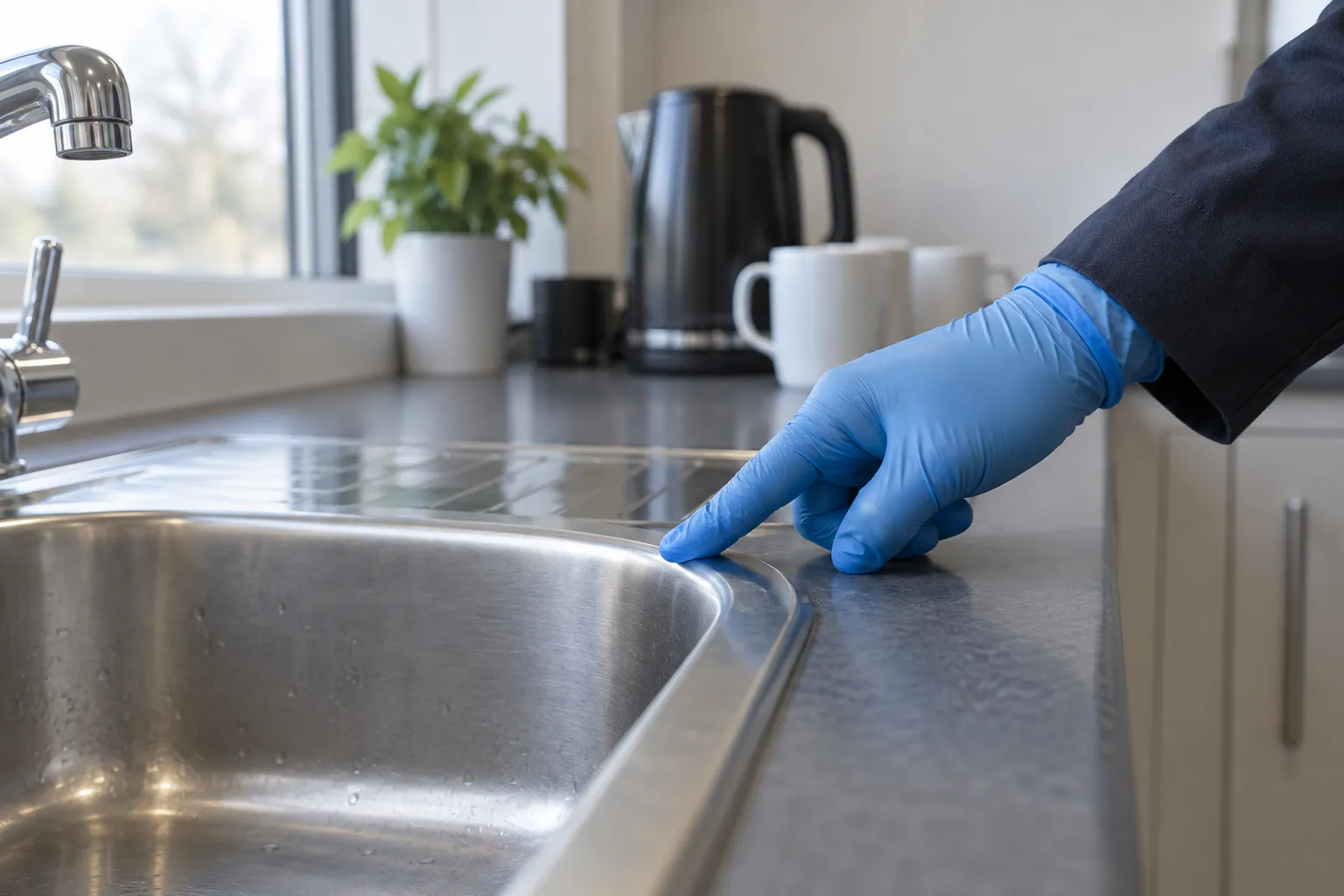
- Inspect against the standard, not against an impression. Each element is either acceptable or not, according to the written standard. "Looks fine" is not a result.
- Sample fairly. Inspect a spread of rooms across floors and types, and include the ones cleaned last in the shift, not only the ones by the lift.
- Vary the timing. Unannounced inspections, and some at busy times, show the standard building users actually experience. A washroom inspected at 7am tells you about the night clean, not about 2pm.
- Match frequency to risk. Washrooms, kitchens and entrances need inspecting more often than a store room. High-risk areas in healthcare, food production and schools need more still.
- Share the inspection. Joint inspections with the client's representative, perhaps monthly, remove arguments about the score and show both sides the same thing.
- Separate inspector from cleaner. The supervisor or a quality manager inspects; the operative who cleaned the room does not score it.
Scores are usually calculated as the percentage of inspected elements that pass. Record the failures by element and location, not only the overall score, because a steady 92% hides whether the same 8% fails every time.
04
Corrective action and continuous improvement
An inspection that finds a failure is only useful if the failure is fixed and does not come back. Every failure needs:
- Immediate rectification: the item is re-cleaned, within a time set by its priority. A dirty washroom in a busy building cannot wait for the next shift. NHS England's national standards, for example, expect a cleaning problem that raises a health and safety, patient safety or infection prevention issue to be assessed within 20 minutes and put right within 1 hour.
- A named owner and a date for anything that cannot be fixed on the spot.
- Confirmation: someone checks it has been done, rather than taking the action as closed when it is ticked.
- A cause: for anything that recurs, ask why. Too few hours, a missing product, a training gap, a room that became busier, or a task nobody was told about.
Take corrective action on the cause, not only the symptom. If the same kitchen fails every Monday, the fix may be a change to the weekend schedule rather than a word with the Monday cleaner.
Complaints and customer satisfaction belong in the same loop. A short survey of building users, or a simple way for them to report a problem, tells you how the service feels to the people who use it, which an inspection at a fixed time cannot. Treat each complaint as a free inspection: log it, fix it, and look for the pattern.
Continuous improvement comes from looking at the results over time. A monthly review of inspection results, complaints and recurring failures shows where the cleaning process is weak and where training, equipment or hours need to change. Good quality management systems make that review routine, evaluate whether last month's actions worked, and share what is found with the cleaning team, not only with the client.
05
Training, supervision and the cleaning team
Most quality issues start with people and process rather than effort. A cleaner who has never been shown the right method for a task, or who has too many rooms for the hours, will fall short however hard they work. The quality control system should feed back into:
- Training: induction for every new cleaner, method training for each task and piece of equipment, and refresher training when inspections show a gap. The British Institute of Cleaning Science (BICSc) publishes recognised training for operatives and supervisors.
- Method and colour coding: consistent methods and colour-coded equipment, so cloths and mops used in washrooms are never used in kitchens, protect hygiene standards as much as any inspection does.
- COSHH: under the Control of Substances Hazardous to Health Regulations 2002, the chemicals used must be assessed and staff trained to use them safely. Using the wrong product or dilution is also a quality failure.
- Supervision: supervisors who walk the building during the shift, not only at the end, catch problems while they can still be fixed.
- Recognition: telling the team when results improve is part of keeping cleaning standards high.
The aim is high-quality cleaning that holds on an ordinary Tuesday, not only on the day the client inspects. That is what distinguishes a professional cleaning provider: a high standard that does not depend on who is watching.
06
Where the quality record fails, and what SiteClara does about it
Many quality control systems are strong on inspection and weak on everything between inspections. The monthly audit is written up; the daily record of what was done lives on sheets on doors, and the reported problem goes to whoever was passing. When a client asks whether a failure found on Thursday was put right, or whether the washroom checks happened on Friday afternoon, the answer is often a recollection rather than a record.
SiteClara records the routine checks where they happen. A printed QR poster, with an optional NFC tag behind it, sits at each location. Staff scan or tap it on their own phone, with no mobile app to install, see the scheduled checks due there, and mark each one done or explain what stopped them, with a photo when one helps. A problem reported there goes onto the team's list of jobs until someone closes it, so a failure found on an inspection has an open job, an owner and a closing time rather than a note in a margin.
The supervisor sees what is due, done and missed, records why a check was missed, and can escalate a job to the building manager. The approved daily report goes to nominated management or client contacts at 8am the next morning, showing what was reported, what was completed, what is still open and how scheduled checks went, for example 12 of 12 completed.
07
Further reading, and a list to take away
The British Standards Institution publishes ISO 9001 and BS EN 13549. NHS England publishes the National standards of healthcare cleanliness 2025, a detailed public model of risk-based cleaning and audit. The Health and Safety Executive publishes guidance on COSHH and the Approved Code of Practice Workplace health, safety and welfare (L24). The British Institute of Cleaning Science (BICSc) publishes training and standards for operatives and supervisors.
To check your own cleaning quality control, ask whether:
- written standards exist for each area type, and staff have seen them;
- the inspection checklist is short enough to be completed properly;
- inspections are sampled fairly, some unannounced, and some joint with the client;
- the person inspecting is not the person who cleaned;
- failures are recorded by element and location, not only as a score;
- every corrective action has an owner, a date and a confirmation;
- recurring failures are traced to a cause;
- results feed back into training, hours and methods;
- there is a record of work done between inspections, as well as the inspections themselves.
Sources
Every document this guide quotes or links to, in the order it first cites them.
- BS EN 13549:2001 knowledge.bsigroup.com
- National standards of healthcare cleanliness 2025 england.nhs.uk
- Workplace (Health, Safety and Welfare) Regulations 1992 legislation.gov.uk
- Control of Substances Hazardous to Health Regulations 2002 legislation.gov.uk
- Workplace health, safety and welfare hse.gov.uk
Related guides
 CleaningCleaning KPIs: what to measure, and how to know the figures are trueThe cleaning KPIs worth measuring, how to define and target them, how to report them, and how a KPI can look green while the building is not clean.
 CleaningCleaning specification: what it should say, and how to show it is metWhat a cleaning specification should contain, input and output standards, setting frequencies by area, and how to show the specification is being delivered.
 CleaningCleaning supervisor duties: what the role involves, and what good looks likeWhat a cleaning supervisor does: the main duties, a typical shift, health and safety, managing the team, checking the work and reporting to the client.
 CleaningToilet check sheet: what to record and how to make it credibleWhat a washroom check sheet should record, how often to check, the legal duty behind it, and how to keep a record a client or inspector will believe.