Security patrols
Security guard RFP: how to write one, and how to choose the right bid
A security RFP (request for proposal) is a formal document in which a property owner, facility manager or public agency invites security companies to bid on providing guard services, setting out the coverage it needs and how it will choose between the proposals.
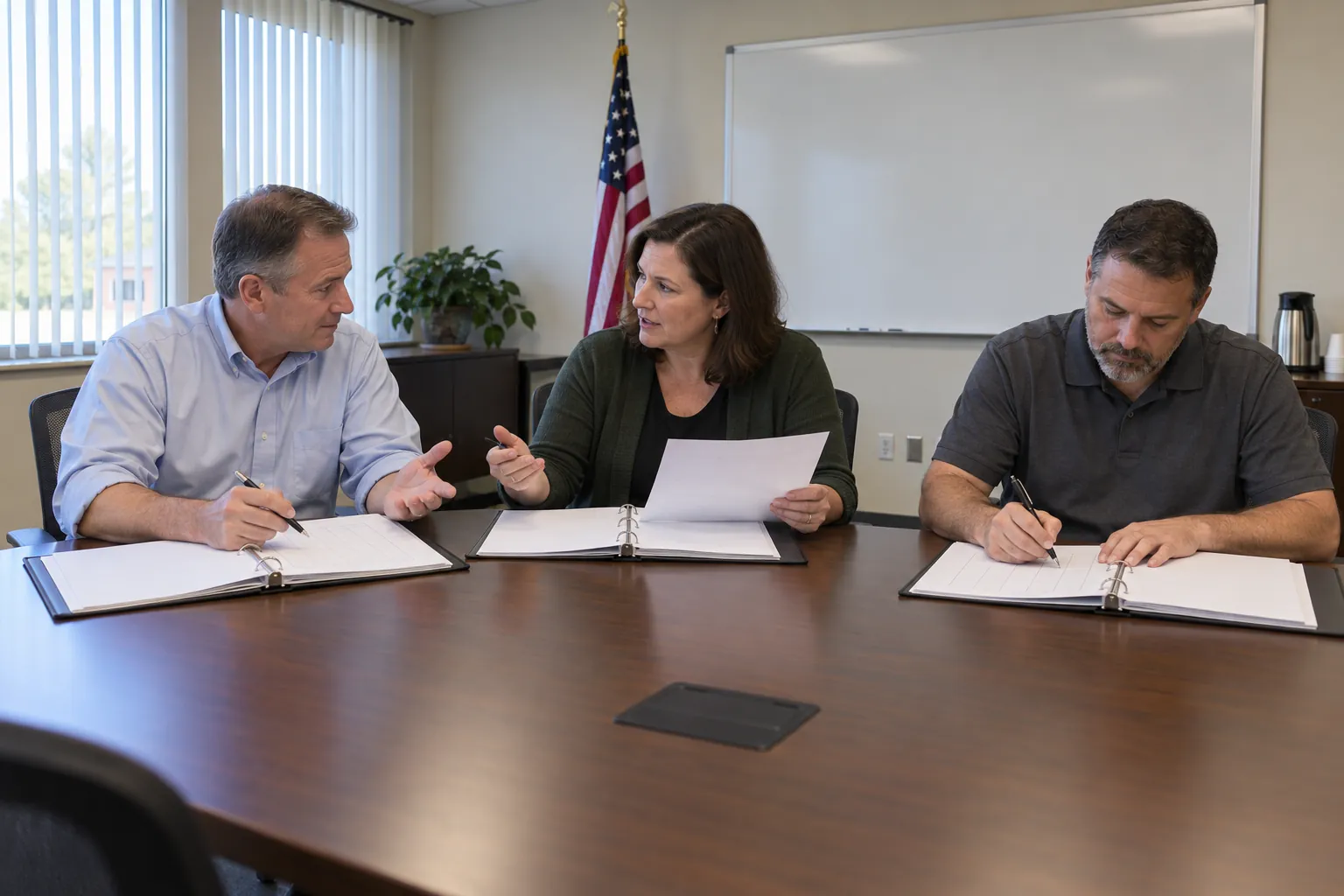
A clear RFP gets proposals you can compare line by line; a vague one gets a stack of brochures and a bill rate race to the bottom. This guide covers the rules that apply to public and private buyers in the United States, what the RFP should contain, how to write the scope and pricing sheet, and how to score the proposals.
01
What a security guard RFP is, and which rules apply
A security RFP is a written invitation to security companies to propose how they would staff and run the security service at a named property, and at what price. It differs from a simple request for quotes because the buyer expects to weigh more than price: the company's licensing, supervision, training, reporting, past performance and transition plan all count. Whatever the proposal says, and whatever the RFP asked for, usually becomes the baseline of the security services contract, so the RFP is the first draft of the service you will live with for years.
Private buyers, such as a commercial landlord, a property management company, an HOA or a hospital system, are not bound by any procurement statute. Still, a written scope, the same questions to every bidder and a scoring method agreed before the proposals arrive make the choice defensible to owners and boards.
Federal agencies buying guard services follow the Federal Acquisition Regulation (FAR), published at acquisition.gov. Under FAR 15.203, Requests for proposals, a competitive RFP must at a minimum describe the Government's requirement, the anticipated terms and conditions, the information required in the offeror's proposal, and the factors and significant subfactors that will be used to evaluate the proposal and their relative importance. FAR 37.102, Policy, makes performance-based acquisition "the preferred method for acquiring services", and FAR Subpart 37.6, Performance-Based Acquisition, asks agencies to describe the work in terms of the required results rather than how it is done or the number of hours provided. The FAR is being rewritten under the Revolutionary FAR Overhaul, and agencies may be working from model deviation text, so a federal buyer should read the current version and its own agency supplement before drafting.
Federal service contracts also carry the McNamara-O'Hara Service Contract Act. The Department of Labor's Service Contract Act guidance explains that contractors performing services on prime contracts over $2,500 must pay service employees at least the wage rates and fringe benefits found prevailing in the locality, as set by a wage determination issued for the contract, or the rates in a predecessor contractor's collective bargaining agreement. Guard labor is almost all of the price, so the wage determination drives every bid.
State and local agencies, including school districts, counties, cities and public universities, follow their own state procurement code and local purchasing rules, which differ from state to state. Florida is a typical example: for state agencies, Section 287.057 of the Florida Statutes sets out the invitation to bid, the request for proposals and the invitation to negotiate, and requires an RFP to include a statement describing the services sought and the relative importance of price and other evaluation criteria. Local governments and school districts follow their own rules. Check with your purchasing office for thresholds, advertising periods, protest rules and required contract clauses before you write anything.
Underneath every security RFP sits state licensing. Most states license the security company and register or license each officer, and the details vary. California's Bureau of Security and Investigative Services license pages list the private patrol operator license for the company and the security guard registration for the individual as separate credentials. In Florida, Section 493.6101 of the Florida Statutes defines a security agency and a security officer, and Section 493.6301 requires a Class "B" license for the agency and a Class "D" license for each officer. The RFP should require the right credentials for the state where the building is, and the buyer should verify them with the regulator rather than take a copy on trust.
02
What a security RFP should contain
Security RFPs differ in length, from a few pages for a single lobby post to a hundred for a campus or a federal facility, but the good ones share the same parts. A workable outline:
- Introduction and instructions: who is buying, the property or properties, the timeline, the single point of contact for questions, how and when to submit, and the format of the response.
- Background: the type of building and its occupants, hours of operation, current security arrangements, known problems (theft, trespass, after-hours access, parking issues) and why you are going out to bid now.
- Scope of work: the posts, hours, patrols and duties, written so a bidder can staff and price them without guessing. This is the heart of the RFP, covered in the next section.
- Performance standards and reporting: what you will measure, how you will check it, and what reports the company must provide and how often.
- Qualifications: state licenses, officer registration, training beyond the state minimum, supervision, insurance and any armed or unarmed requirement.
- Proposal requirements: exactly what each bidder must submit, in what order, so the proposals can be compared side by side.
- Pricing sheet: a form every bidder completes the same way, with the hours and posts filled in by you.
- Evaluation criteria: the factors, their relative weight and the method you will use to score them.
- Contract terms: the draft agreement or its key terms, including term, renewal options, insurance, indemnity, termination and transition, so bidders price the risk they will actually carry.
- Attachments: site plans, the current post orders, a sample daily activity report, and any forms bidders must sign.
Publishing your draft contract terms with the RFP saves weeks. A bidder that cannot accept your indemnity or insurance limits should say so in its proposal, not after you have chosen it.
03
Writing the scope of work and the post schedule
Bidders price hours. If the scope does not say how many hours of coverage, at which posts, on which days, each proposal will be built on different assumptions and the prices will not be comparable. Put the coverage in a table: each post or patrol, its location, the days and hours it is staffed, the number of officers, whether armed or unarmed, and any special skills such as fire watch, first aid and CPR, or console operation.
Then describe the duties at each post in plain terms. A lobby post might cover access control, visitor sign-in and the loading dock intercom; a roving patrol might cover the parking structure, exterior doors and the roof hatch every two hours overnight. Name the checkpoints a patrol must reach and how often. The detailed instructions belong in post orders, which the winning company writes and you approve, but the RFP should give enough of them that a bidder can see the workload.
Performance-based wording helps, even for a private buyer. FAR Subpart 37.6 asks for measurable performance standards structured to permit an assessment of the contractor's performance, and for a quality assurance surveillance plan (QASP) saying how the buyer will check. For a guard contract the results you want are usually coverage and response: every post staffed on time, every scheduled patrol completed and evidenced, incidents reported within a set time, supervisory visits at a set frequency. Guard service remains largely hours-based, so most buyers combine a post schedule with those standards rather than replacing one with the other.
Spell out the reporting you expect:
- a daily activity report from each post or shift, and an incident report for each incident, with the deadline for each;
- evidence of patrols: which checkpoints were reached, when and by whom, and what was found;
- a monthly report against the performance standards, with open problems and trends;
- notification of a vacant post, a late relief or a change of supervisor, and how fast;
- a regular performance review meeting, and who attends from each side.
Say, too, what technology you expect and who owns the data. If you want patrol records, reports and photos kept for a set period or handed over when the contract ends, put it in the RFP. Records locked in a departing company's system are a common loss at transition.
04
What bidders should submit, and how to compare pricing
Ask every bidder for the same things in the same order. A typical proposal requirement list:
- company license number and state, with the licensing regulator named, and officer registration arrangements;
- how officers are recruited, screened and trained, including state-required training and site-specific training before a first shift alone;
- the staffing plan for your site: named or described site supervisor, relief and backfill arrangements, and how a no-show is covered;
- the supervision plan: who inspects the posts, how often, and what they record;
- a sample daily activity report, incident report and monthly report, preferably redacted real ones;
- the approach to patrol verification and how you will see the evidence;
- a transition plan with dates, including whether the company will interview incumbent officers;
- insurance certificates at the limits the RFP sets;
- at least three references for comparable sites, with contact details, and any contracts lost or terminated in recent years;
- any exceptions to the draft contract terms.
For pricing, give bidders a pricing sheet with the annual hours for each post already filled in, and ask for the hourly bill rate by post type (unarmed officer, armed officer, supervisor), the holiday rate and the list of paid holidays, the rate for extra coverage at short notice, and the basis for any annual increase. Ask each bidder to show the officer pay rate its bill rate assumes. A low bill rate that rests on a pay rate at or near the local minimum wage predicts turnover and vacant posts; on a federal contract, it must at least meet the Service Contract Act wage determination.
Compare total annual cost at the hours in the scope, not bill rates alone. A company quoting a lower rate but excluding supervision, vehicles or holiday premiums may cost more in the end. Watch also for proposals that price fewer hours than the scope asked for: that is either a mistake or a quiet change to the service.
05
Evaluating and scoring the proposals
Decide how you will score before you open anything. The FAR's source selection rules are a useful model even for private buyers. FAR Subpart 15.1, Source Selection Processes and Techniques, describes a best value continuum: a tradeoff process, appropriate when it may be in the buyer's interest to award to other than the lowest priced offeror, and the lowest price technically acceptable (LPTA) process, where the award goes to the cheapest proposal that meets every minimum requirement. For most guard services, where the quality of supervision and the stability of the workforce make the difference, a tradeoff is the better fit; LPTA only works when every requirement can be written as a clear pass or fail.
FAR Subpart 15.3, Source Selection, requires price or cost to be evaluated in every source selection, quality to be addressed through one or more non-cost factors, and past performance to be evaluated in negotiated competitive acquisitions above the simplified acquisition threshold unless the contracting officer documents why it is not an appropriate factor. It allows color or adjectival ratings, numerical weights or ordinal rankings, and requires the relative strengths, deficiencies, significant weaknesses and risks behind the evaluation to be documented. A common private scheme weights something like technical approach and staffing, supervision and reporting, qualifications and past performance, transition, and price; set your own weights to fit the site and publish them in the RFP.
The steps that separate good choices from lucky ones:
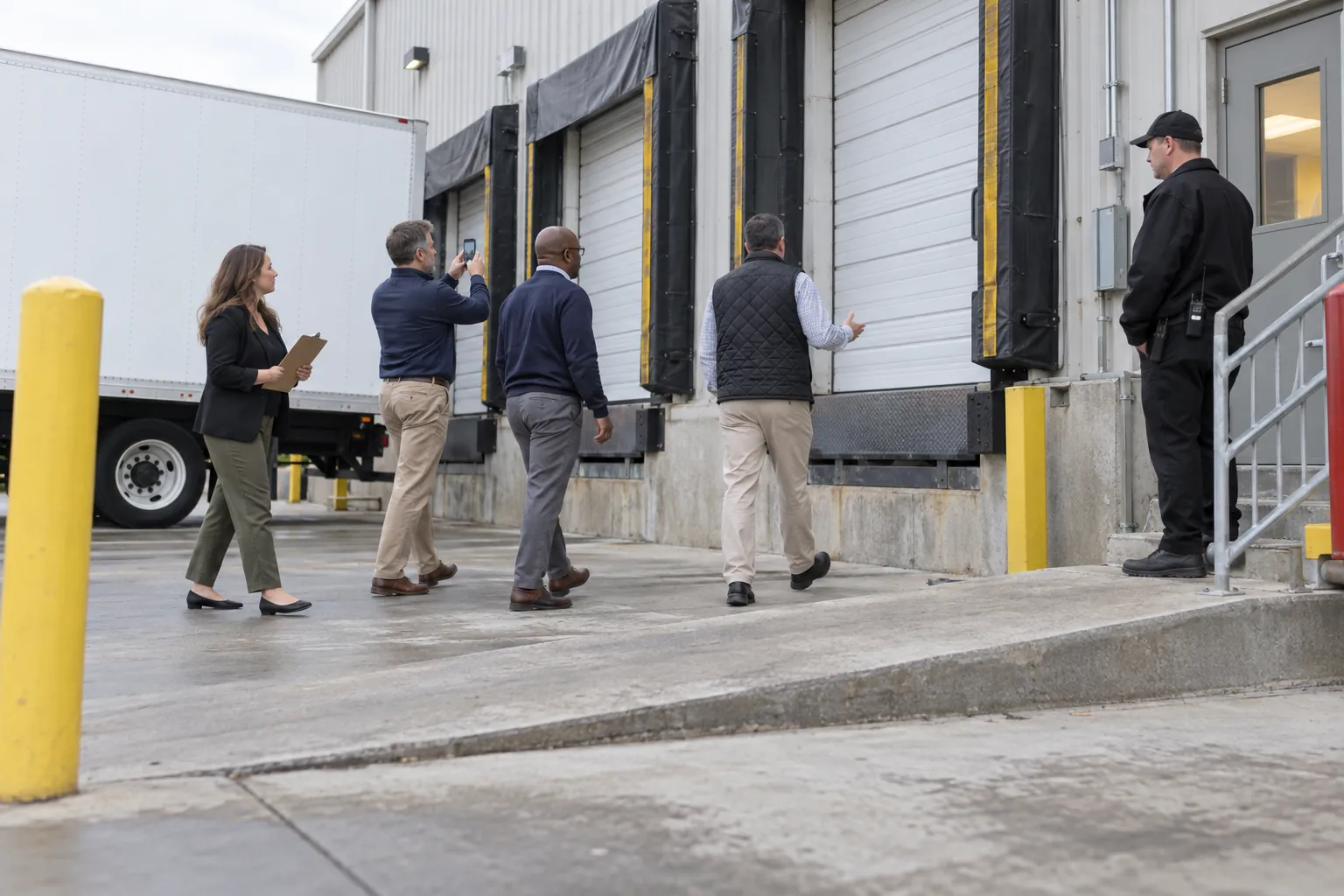
- A site walk before proposals are due, so every bidder sees the building, the posts and the patrol routes. Record attendance.
- A written question period, with every answer issued to all bidders as an addendum.
- A compliance check on arrival: licenses verified with the state regulator, insurance certificates checked, all required forms present.
- Independent scoring by at least two or three evaluators against the published criteria, then a meeting to settle differences.
- Reference calls with questions about vacant posts, supervisor visits, reporting quality and how problems were handled, not just "were you satisfied".
- Interviews or oral presentations with the shortlist, including the proposed site supervisor or account manager, not only the sales team.
- A best and final offer where your rules allow it, then the award and a written debrief for the companies not chosen.
06
Where the record fails, and where SiteClara fits
Most security RFPs promise more evidence than the contract later delivers. The proposal shows neat patrol reports and a supervision plan; a year in, the monthly review has a stack of daily activity reports that say "all secure" every night and nobody can say which doors were checked at 2:00 a.m. or who checked them. The buyer cannot tell whether the service is working, and the security company that is walking every round has no better record than one that is not. When the contract comes up for rebid, the scoring rests on impressions.
SiteClara is built for that gap. A printed QR code poster at each checkpoint the scope and post orders name, with an optional NFC tag behind it, lets officers scan or tap with their own phone, with no app to install, to see the checks due at that point and mark them done, or say what stopped them, such as a locked gate. The named officer and the time are recorded as it happens, with a photo when one is asked for. A problem found on the round, such as a door that will not latch or a light out in the parking lot, is reported there and stays on the team's list of jobs until someone closes it, and a job that needs the building's manager can be escalated to them to answer.
The security supervisor sees what was due, done and missed, with the reason where one was given, and approves a daily report that goes to nominated managers or client contacts the next morning: what was reported, completed and still open, and how the scheduled checks went. A buyer who writes patrol evidence into an RFP can ask to see that kind of record, and a company can use it to show its work at the performance review.
07
Further reading, and a list to take away
Federal buyers should start with FAR 15.203, FAR Subpart 37.6 and the Department of Labor's Service Contract Act pages, and check the Revolutionary FAR Overhaul for current text. State and local buyers should start with their purchasing office and state procurement code. Every buyer should check the licensing rules and look up the company's license with the security regulator in the building's state.
Before you issue a security guard RFP, check that it:
- describes the property, its hours, its occupants and the problems the service must address;
- sets out every post and patrol in a table, with days, hours, officer numbers and armed or unarmed;
- names the checkpoints and patrol frequencies, and the reports, deadlines and review meetings you expect;
- states measurable performance standards and how you will check them;
- requires the state licenses and officer registrations for the building's state, and says you will verify them;
- gives a pricing sheet with the hours filled in, and asks for bill rates, holiday and extra coverage rates, pay rate assumptions and escalation;
- publishes the evaluation criteria and their relative weight, and says whether price is traded off against quality;
- includes the draft contract terms, the insurance limits and the transition dates;
- says who owns the patrol records and reports, and how they are handed over at the end.
Sources
Every document this guide quotes or links to, in the order it first cites them.
- FAR 15.203, Requests for proposals acquisition.gov
- FAR 37.102, Policy acquisition.gov
- FAR Subpart 37.6, Performance-Based Acquisition acquisition.gov
- Revolutionary FAR Overhaul acquisition.gov
- Service Contract Act guidance dol.gov
- Section 287.057 of the Florida Statutes flsenate.gov
- Bureau of Security and Investigative Services license pages bsis.ca.gov
- Section 493.6101 of the Florida Statutes flsenate.gov
- Section 493.6301 flsenate.gov
- FAR Subpart 15.1, Source Selection Processes and Techniques acquisition.gov
- FAR Subpart 15.3, Source Selection acquisition.gov
Related guides
 Security patrolsThe security guard contract: what a security services agreement should sayWhat a US security guard contract should cover: state licensing checks, post orders, staffing, reporting, insurance, use of force and a clean exit.
 Security patrolsSecurity post orders: what they should say, and how to know they are followedSecurity post orders in the US: what they are, what state rules say, what to include, how to write, sign and review them, and how to check they are followed.
 Security patrolsSecurity KPIs: what to measure, and how to know the figures are trueThe security KPIs worth measuring on a guard services contract, how to define and verify them, the licensing and training measures, and how green figures mislead.
 Security patrolsSecurity daily activity report: what to include, and how to write one that holds upThe security daily activity report (DAR): what to record, how to write entries that hold up, how it differs from an incident report, and how to review and keep it.