Premises and facilities management
The Safety, Health and Welfare at Work Act 2005: the duties that land on a site, and the records they create
The Safety, Health and Welfare at Work Act 2005 is Ireland's main workplace safety law: it came into operation on 1 September 2005, replaced the 1989 Act, and requires every employer to ensure, so far as is reasonably practicable, the safety, health and welfare at work of their employees, with further duties on employees, on whoever controls a place of work and on others, enforced by the Health and Safety Authority (HSA).
Also written for United Kingdom
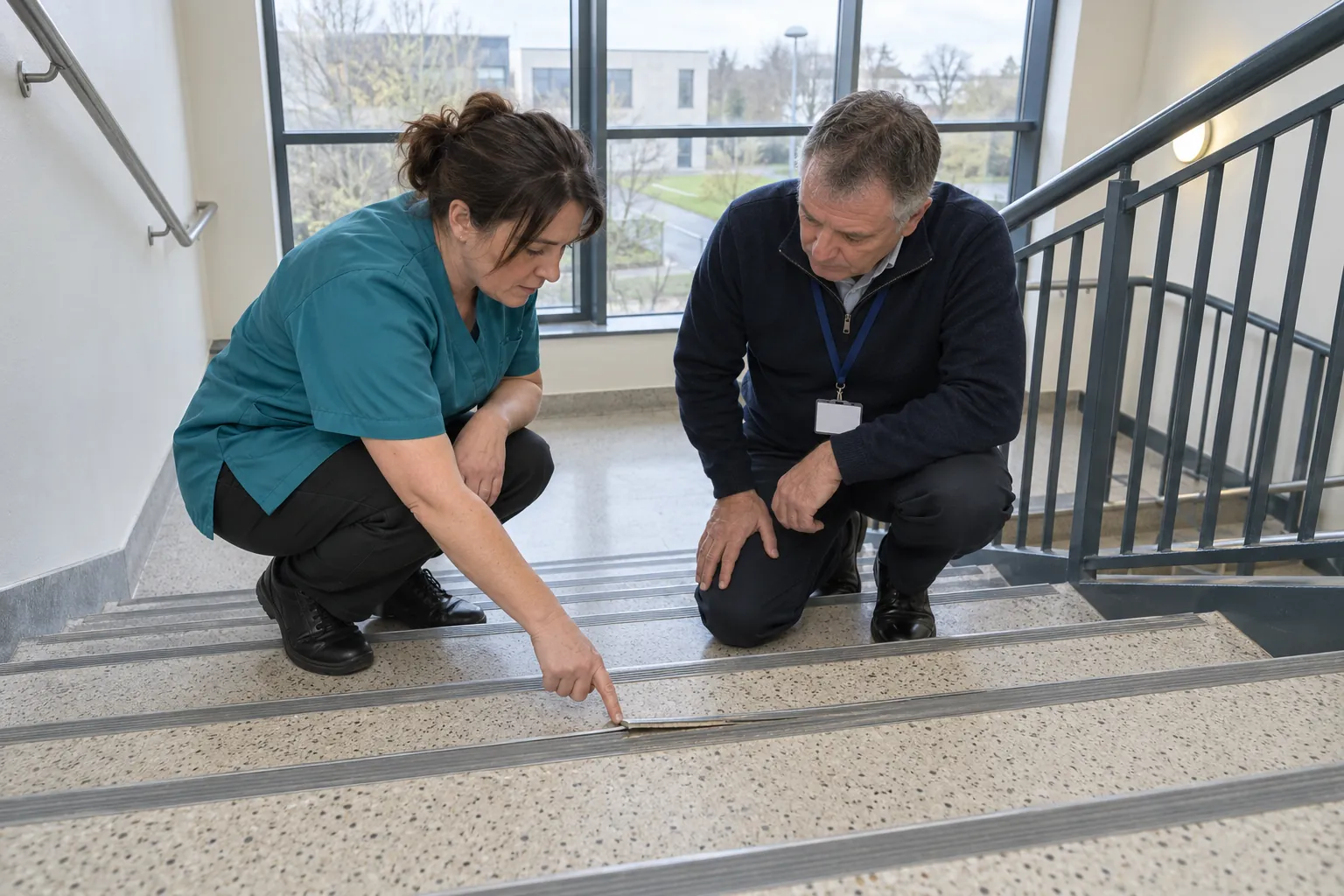
Most people meet it through a safety statement or an inspector's visit. This guide sets out the sections that matter most in an ordinary building, who carries each duty when a building is shared or a service is contracted out, the records each duty creates, and what the HSA can do when they are missing.
01
The Act in brief: what it is and whom it binds
The Safety, Health and Welfare at Work Act 2005 (Number 10 of 2005) governs safety, health and welfare at work in Ireland. The HSA's Safety, Health and Welfare at Work Act 2005 page says it came into operation on 1 September 2005, apart from parts of section 4(2), and the HSA's A Short Guide to the Safety, Health and Welfare at Work Act 2005 says it replaces the 1989 Act. It is not the UK's Health and Safety at Work etc. Act 1974: in Ireland the regulator is the Health and Safety Authority (HSA), continued in being under its present name by section 32, and the Act calls it simply the Authority.
The core duty is section 8(1): "Every employer shall ensure, so far as is reasonably practicable, the safety, health and welfare at work of his or her employees." Section 2(6) says reasonably practicable means the employer "has exercised all due care by putting in place the necessary protective and preventive measures, having identified the hazards and assessed the risks", and that further measures would be "grossly disproportionate" given the unusual, unforeseeable and exceptional nature of whatever might cause an accident. Section 81 puts the burden on the defence: in a prosecution, it is for the accused to prove that it was not reasonably practicable to do more than was in fact done. That is why records matter under Irish law: after an accident, the duty holder must show what was actually done.
The Act binds more than employers: employees, the self-employed, suppliers and designers, construction clients and contractors, and anyone with control over a place of work all have duties. Detailed rules sit in regulations made under the Act, for an ordinary building mostly the Safety, Health and Welfare at Work (General Application) Regulations 2007 (S.I. No. 299 of 2007), which the HSA says came into operation on 1 November 2007, apply to all places of work and have been amended several times since.
02
The duties that land on a site, section by section
As enacted, the Act had 89 sections and seven schedules, and amendments have since inserted more, such as sections 56A to 56I and Schedule 6A. A handful carry most of the weight in an office, school, hotel, apartment block or shopping centre:
- Section 8, the employer's general duties. Section 8(2) includes a safe place of work, access, egress and plant; safe systems of work; welfare facilities; information, training and supervision; protective equipment; emergency plans; reporting accidents as prescribed; and a competent person where necessary.
- Sections 9 and 10, information and training, in a form, manner and language "reasonably likely to be understood", with training on recruitment, on a change of task and when new equipment or systems of work arrive.
- Section 11, emergencies: first aid, fire-fighting and evacuation, contact with the emergency services, and designated employees whose number, training and equipment are adequate.
- Section 12, other people: visitors, pupils, residents, shoppers and other contractors' staff must not be exposed to risks, so far as is reasonably practicable.
- Section 13, employees: take reasonable care, co-operate, attend training, use equipment correctly, and report defects and dangers (see the next section).
- Section 15, people in control of a place of work: whoever controls a non-domestic place of work made available to others must ensure, so far as is reasonably practicable, that it, its access and egress, and any article or substance provided there are safe and without risk to health.
- Sections 19 and 20: identify the hazards, assess the risks and "be in possession of a written assessment", then prepare a written safety statement based on it.
- Section 21, sharing a place of work: employers must co-operate, co-ordinate and inform each other of the risks, "including by the exchange of safety statements or relevant extracts".
- Sections 25 to 27: employees may choose a safety representative; the employer must consult employees "in advance and in good time", including on the risk assessment and the safety statement; and no employee may be penalised for acting under the Act or raising a safety complaint.
03
Employees, and whoever controls the building
Section 13(1)(h) turns into a daily routine. An employee shall report to the employer, or to any other appropriate person, "as soon as practicable" any work carried on in a way that may endanger anyone, "any defect in the place of work, the systems of work, any article or substance which might endanger the safety, health or welfare at work" of anyone, and any contravention of the law that may endanger anyone, "of which he or she is aware". A cleaner who finds a loose stair nosing has a legal duty to report it, and the employer needs a way for that report to reach someone who will act.
Section 15 applies to a person who has control to any extent of a non-domestic place of work made available to people other than their own employees, or of its access and egress. Section 15(2) widens it: anyone who, "by virtue of any contract, tenancy, licence or other interest", is obliged to maintain or repair the place is treated as in control to the extent of that obligation. The HSA's short guide gives the example: a person in control of an office has to ensure that a visiting window cleaner has safe access and egress and that any permanent window cleaning equipment is safe to use, while the window cleaner's employer keeps its own duties.
The same reasoning reaches the common parts of a multi-let office or an apartment development. A landlord who keeps the stairs, lifts and car park, or an owners' management company with the common areas in its control, can hold section 15 duties towards every contractor who works there, and a managing agent appointed to maintain them may carry part of the duty under its contract. Sections 19(5) and 20(9) require anyone with section 12 or 15 duties to assess the risks and prepare a safety statement to the extent those duties reach other people.
Sections 9(2) and 10(5) add that a visiting worker's employer must receive adequate information about the hazards, and the worker instructions about the risks. In practice that is the site induction for a contractor's operatives, the exchange of safety statement extracts, and a written answer to who checks each common area and when.
04
The records each duty creates
The Act names few documents, but almost every duty is easier to show with a record. These are the ones an inspector, an insurer or a client is likely to ask for:
- The written risk assessment (section 19), reviewed after a significant change, with the improvements it shows to be necessary carried out.
- The safety statement (section 20), brought to employees' attention at least annually and to new starters, with a copy or extract "kept available for inspection at or near every place of work to which it relates while work is being carried out there".
- Training and induction (section 10): who was trained, in what and when; unrecorded training is hard to prove.
- Emergency arrangements (section 11): the plans, the designated employees, fire drills and first aid provision.
- Accident reports. The HSA's accident and dangerous occurrence reporting page says an injury must be reported where the employee cannot do their normal work for more than three consecutive days, excluding the day of the accident, and that non-fatal accidents and dangerous occurrences should be reported within ten working days. Its information sheet, Reporting Workplace Accidents and Dangerous Occurrences, says to keep a record of every accident and dangerous occurrence for ten years, and that recording near misses is good practice.
- Reports of defects and dangers (section 13(1)(h)): what was reported, by whom, when, and what was done.
- Consultation (sections 25 and 26): the safety representative, the agreed schedule of their inspections (section 25(3)), and representations made and answered.
- Routine checks: the walk-rounds, washroom checks, escape route checks and plant checks that the risk assessment relies on as control measures.
Section 77(2)(g) makes it an offence to make "a false entry intentionally in any register, book, notice or other document required by or under any of the relevant statutory provisions to be kept", and section 77(2)(h) to produce a record to an inspector knowing it to be false or misleading. A check sheet signed in advance for the week is the kind of entry that becomes a problem when it is read after an incident.
Good evidence is made at the time, names the person, says where and when, shows what was found as well as that something was done, and shows what happened to anything that was wrong.

05
How the HSA enforces the Act
The HSA's short guide says its inspectors mostly give advice during an inspection, but have a wide range of enforcement powers. Under section 64 an inspector may enter a place of work at any time, require records to be produced, copy records "or any electronic information system at the place", take photographs and measurements, question people, and direct that a safety statement be amended. The responses then escalate:
- A direction for an improvement plan (section 65): a written direction to submit, within one month, a plan specifying the remedial action proposed. As amended in 2010, failing to submit it, submitting one the inspector finds inadequate, or failing to implement it can lead to an improvement notice.
- An improvement notice (section 66): where an inspector believes a person is contravening or has contravened the law, a notice directing that the matter be remedied by a stated date.
- A prohibition notice (section 67): where an activity involves or is likely to involve "a risk of serious personal injury to any person", a notice stopping it until the matters giving rise to the risk are remedied.
- A High Court order (sections 68 and 71), to stop an activity carried on in breach of a prohibition notice or to restrict or prohibit the use of a place of work.
A notice must be brought to the attention of anyone whose work it affects and displayed in a prominent place at or near the place of work (section 69).
Penalties are in section 78. As amended by the Chemicals (Amendment) Act 2010 from 10 December 2010, according to the Law Reform Commission's revised text, most offences carry up to €5,000, 12 months' imprisonment or both on summary conviction, and up to €3,000,000, two years' imprisonment or both on indictment; the HSA's short guide, published in August 2005, still shows the original €3,000 and six months. Section 79 allows on-the-spot fines of up to €1,000 for offences prescribed for that purpose. Under section 80, a director, manager or similar officer whose consent, connivance or neglect led to an undertaking's offence is guilty of it too, and for a director it is presumed until the contrary is proved.
06
Where the record fails, and what SiteClara does about it
The Act is rarely failed for want of a safety statement. It is failed in the gap between the statement and the building. The risk assessment relies on a daily walk-round; the sheet on the plant room door is filled in for the month in one hand. An operative reports a broken handrail to whoever was passing, and nobody can say whether it reached the facilities manager. When an inspector asks for the records, or a claim arrives two years after an accident, the folder has the policy and little of the practice.
SiteClara records the routine checks a safety statement promises, at the place they are done. A printed QR poster, with an NFC tag behind it if staff should tap, sits at each location with a check: an escape route, a first aid point, a washroom, a plant room. Staff scan or tap with their own phone, with no app to install, and see the checks due there. They mark each one done, or say what stopped them, with a photo when one is asked for, and the time and the named person are recorded as it happens. A defect found on a round is reported there and stays on the team's list of open jobs until someone closes it.
The supervisor sees what is due, done and missed, records the reason a check was missed, and each day approves a report that goes to nominated management or client contacts the next morning, showing what was reported, completed and still open.
07
Questions people ask
Can you give a brief summary of the Safety, Health and Welfare at Work Act 2005?
It sets out the main provisions for securing and improving the safety, health and welfare of people at work, and it replaced the 1989 Act. The HSA's A Short Guide to the Safety, Health and Welfare at Work Act 2005 says it sets out the requirements for the control of safety and health at work, the management, organisation and systems of work needed to achieve them, the responsibilities and roles of employers, the self-employed, employees and others, and the enforcement procedures needed to make sure the goals are met. The same guide says the Act made significant changes in relation to risk assessment and safety statements where there are fewer than three employees, and also deals with intoxicants, medical fitness for work, penalties on conviction and on-the-spot fines.
Who has the most responsibility for safety and health in the workplace?
The employer. The HSA's A Short Guide to the Safety, Health and Welfare at Work Act 2005 says employers, including self-employed persons, "are primarily responsible for creating and maintaining a safe and healthy workplace". Employees have their own duties under section 13 of the Safety, Health and Welfare at Work Act 2005, including taking reasonable care and reporting defects, but those sit alongside the employer's duties, not in place of them.
What is the role of the HSA in Ireland?
The HSA describes itself in its short guide as the national body in Ireland with responsibility for securing health and safety at work, and it reports to a government Minister. Under section 34 of the Safety, Health and Welfare at Work Act 2005, its general functions include promoting the prevention of accidents, dangerous occurrences and personal injury at work, promoting education and training in the safety, health and welfare of persons at work, making adequate arrangements for enforcing the law, and making any arrangements that it considers appropriate for providing information and advice. It also prepares a strategy statement and a work programme, makes recommendations to the Minister on how the law is implemented and complied with, and complies with any written directions the Minister gives it.
What power does the HSA have?
Its inspectors can direct an improvement plan and serve improvement and prohibition notices, and the Authority can prosecute and can apply to the High Court to prohibit or restrict the use of a place of work. The HSA's A Short Guide to the Safety, Health and Welfare at Work Act 2005 says that for the most part inspectors give advice and information during an inspection, and use their wide range of enforcement powers in appropriate circumstances. It adds that the Authority may publish the names and addresses of those subjected to a prohibition notice, a High Court order or a penalty following a conviction.
08
Further reading, and a list to take away
The Act is on the Irish Statute Book section by section, starting from the employer's general duties in section 8, and the Law Reform Commission's revised Safety, Health and Welfare at Work Act 2005 carries the amendments. The HSA's A Short Guide to the Safety, Health and Welfare at Work Act 2005 is a readable overview, though its penalties predate 2010.
For a building you run or work in, check that:
- there is a written risk assessment, reviewed after every significant change, and a safety statement based on it, available on site;
- in a shared building, the employers have exchanged safety statement extracts and agreed in writing who checks each common area;
- whoever controls the common parts, whether landlord, owners' management company or managing agent, knows the extent of its section 15 duty;
- contractors' operatives are told the risks of the building before they start;
- employees know how to report a defect or danger, and every report has a recorded outcome;
- training is recorded at recruitment, on a change of task and on new equipment;
- accidents are reported to the HSA when the rules require, and recorded and kept for ten years;
- the routine checks the safety statement relies on are recorded as they are done, by whom and when, with missed checks and their reasons.
Sources
Every document this guide quotes or links to, in the order it first cites them.
- Safety, Health and Welfare at Work Act 2005 irishstatutebook.ie
- Safety, Health and Welfare at Work Act 2005 page hsa.ie
- A Short Guide to the Safety, Health and Welfare at Work Act 2005 hsa.ie
- Safety, Health and Welfare at Work (General Application) Regulations 2007 hsa.ie
- Revised Safety, Health and Welfare at Work Act 2005 revisedacts.lawreform.ie
- Accident and dangerous occurrence reporting page hsa.ie
- Information sheet, Reporting Workplace Accidents and Dangerous Occurrences hsa.ie
- A Short Guide to the Safety, Health and Welfare at Work Act 2005 hsa.ie
- Section 13 of the Safety, Health and Welfare at Work Act 2005 irishstatutebook.ie
- Section 34 of the Safety, Health and Welfare at Work Act 2005 irishstatutebook.ie
- Employer's general duties in section 8 irishstatutebook.ie
Related guides
 Premises and facilities managementSafety statement: what the 2005 Act requires, and how to show it is followedWhat a safety statement must contain under section 20 of the Safety, Health and Welfare at Work Act 2005, who needs one, when to review it and how to show it works.
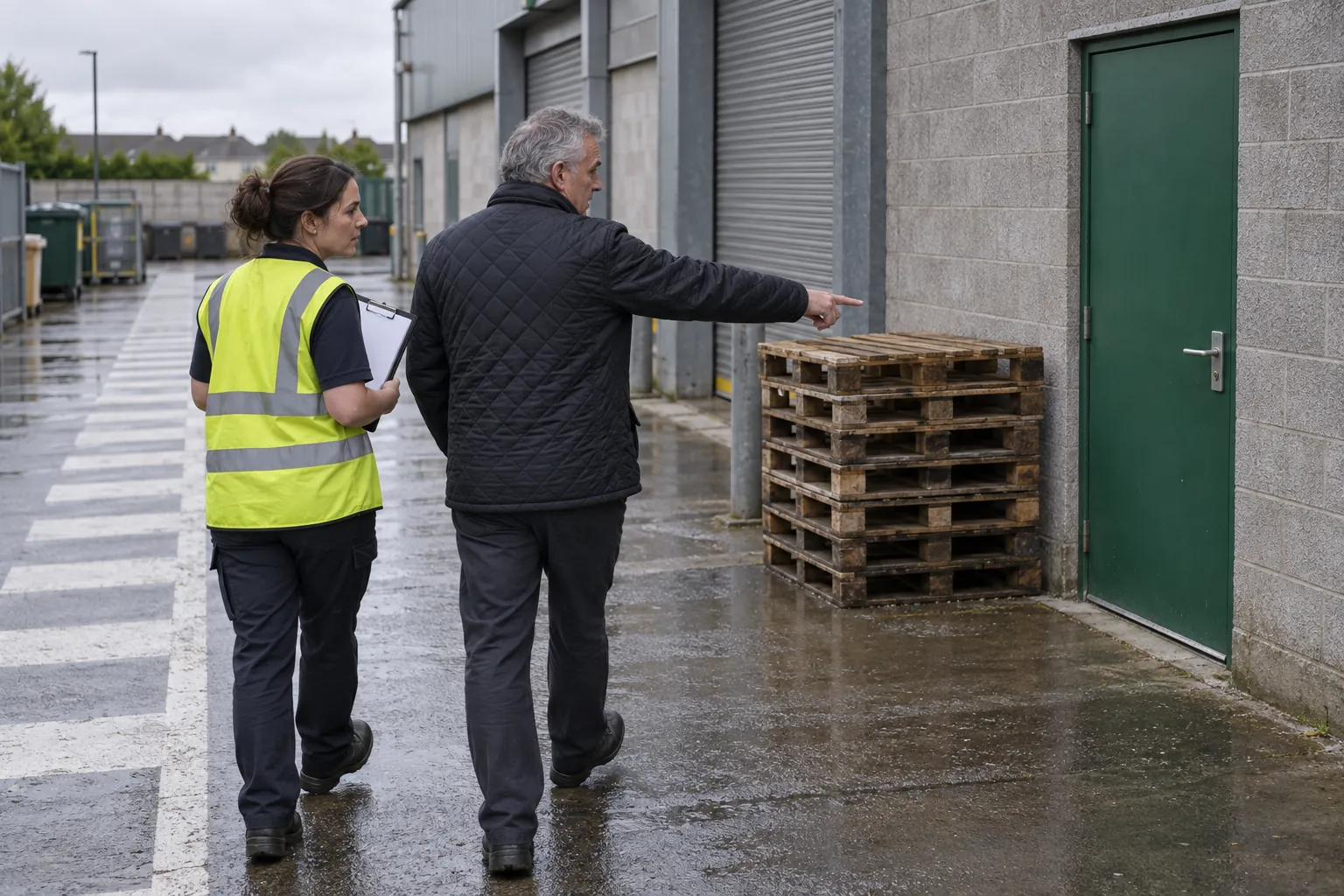 Premises and facilities managementHealth and safety inspection checklist: what to walk, what to record, and what the HSA looks forA workplace health and safety inspection in Ireland: the 2005 Act and 2007 Regulations, what to walk, how often, recording actions, and what an HSA inspector asks.
 Premises and facilities managementIncident report forms in Ireland: write the account, then check the HSA dutyAn Irish accident and incident report form: the fields to include, how to write one, and when the HSA needs its own report, within 10 working days for most injuries.
 Premises and facilities managementWelfare facilities at work: what the law requires, and how to keep them rightThe welfare facilities Irish law requires at work and on building sites: toilets, washing, drinking water, meals, rest and changing, and how to keep them in order.