Premises and facilities management
Health and safety inspection checklist: what to walk, what to record, and what the HSA looks for
A health and safety inspection checklist is a list of questions about the place of work, such as whether exits are clear, floors are safe and fire extinguishers are in date, that someone works through area by area to find hazards before they hurt anyone and to check that the controls in the safety statement are in place.
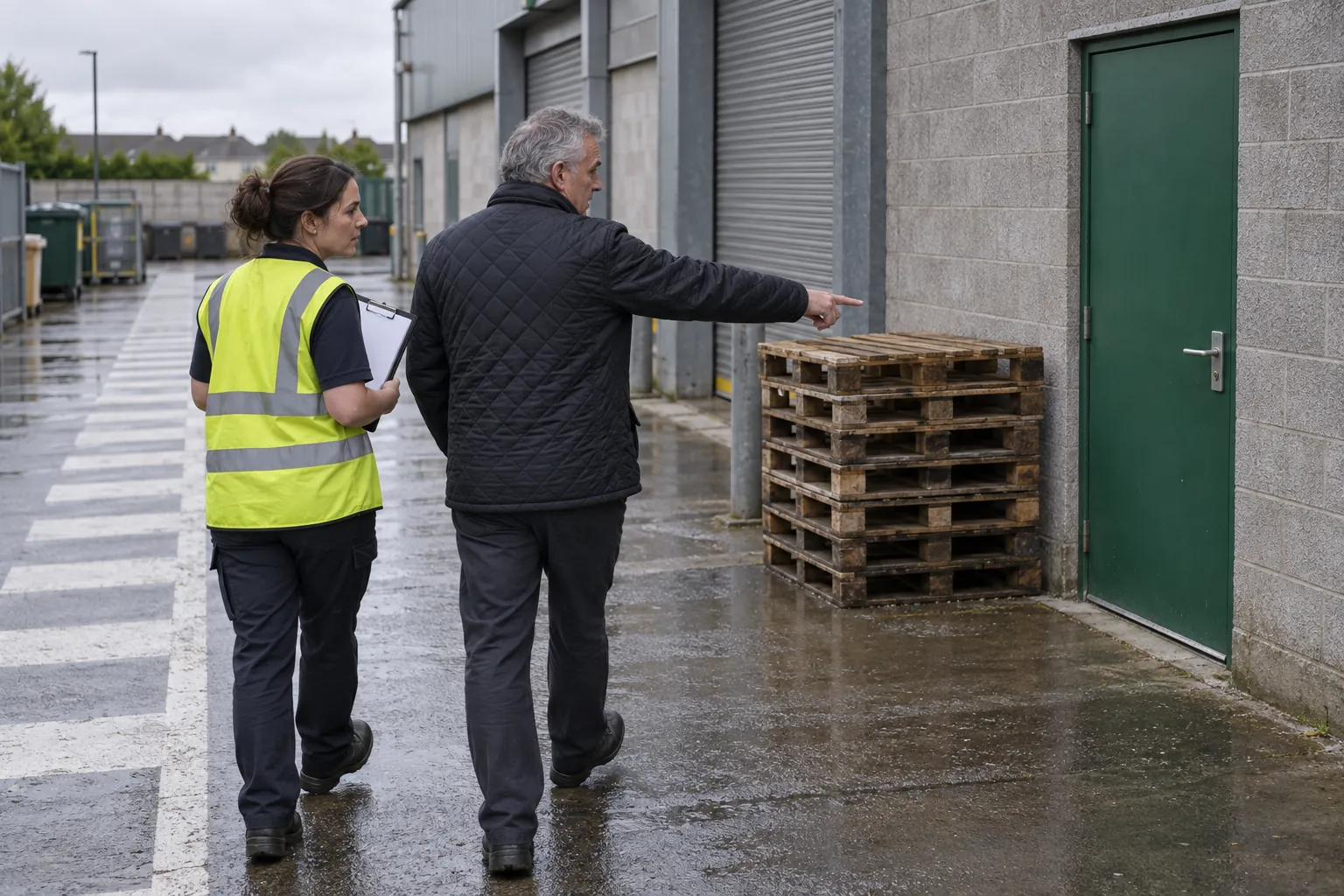
This guide covers the Irish law behind it, a checklist built on the Health and Safety Authority's own, how often to inspect and who should do it, how to record findings and close them out, and what an HSA inspector and a safety representative will look for.
01
The legal basis for workplace inspections in Ireland
The starting point is the Safety, Health and Welfare at Work Act 2005. Section 8 of the 2005 Act says that every employer “shall ensure, so far as is reasonably practicable, the safety, health and welfare at work of his or her employees”, and that the duty extends to maintaining the place of work “in a condition that is safe and without risk to health”, with safe means of access and egress (section 8(2)(c)), and to systems of work that are “planned, organised, performed, maintained and revised as appropriate” (section 8(2)(e)).
Section 19 of the 2005 Act requires every employer to identify the hazards in the place of work, assess the risks and hold a written risk assessment, to review it after a significant change or when there is another reason to believe it is no longer valid, and to implement the improvements it shows to be necessary. The safety statement under section 20 sets out how those risks are managed.
No section says “inspect the workplace every month”. But an employer who never walks the building cannot know whether it is being kept safe, or whether the controls in the safety statement are still in place. A routine inspection is the ordinary way of finding out.
The detail is in Part 2, Chapter 1 of the Safety, Health and Welfare at Work (General Application) Regulations 2007 (S.I. No. 299 of 2007, since amended; regulation numbers here are as made): ventilation, temperature, lighting, floors, doors, emergency routes, fire-fighting equipment, traffic routes, cleanliness and welfare. Most of a good checklist traces back to it.
Fire has its own statute. Section 18 of the Fire Services Act 1981 requires every person having control over the premises it covers to “take all reasonable measures to guard against the outbreak of fire”. A general inspection looks at fire precautions, but does not replace the fire safety checks and records that duty calls for. Northern Ireland has its own law, enforced by HSENI; this guide is about the Republic.
02
What a health and safety inspection checklist covers
The HSA publishes a General Inspection Checklist for Safety Representatives, with 42 questions, a Yes, No and Comments column for each, and space for the area inspected, the date and who inspected. The HSA says it “is not an exhaustive list of items and will not cover all hazards in all workplaces”, and that it can be completed “in a single inspection or over a series of shorter inspections”. Employers can use it too. Grouped, and tied to the 2007 Regulations where they apply, a general checklist for an office, school, shop, nursing home, hotel or apartment block's common areas looks like this:
- Housekeeping: the place of work kept clean, waste removed and floors cleaned by a suitable method as often as necessary (regulation 18); wet cleaning done when there is little foot traffic.
- Floors, stairs and walkways: no dangerous bumps, holes or slopes, and not slippery so far as is reasonably practicable (regulation 9); no trailing leads; handrails secure; entrances not left wet. See slips, trips and falls.
- Emergency routes and exits: kept clear at all times, exit doors opening outwards and easily opened, signs in place and emergency lighting where needed (regulation 12).
- Fire-fighting equipment: extinguishers in their marked places and in date, inspected and maintained as often as necessary (regulation 13); the fire alarm tested; staff know the assembly point.
- Doors and glazing: swing doors with see-through panels, glass doors and partitions marked or protected (regulations 9 and 11).
- Environment: adequate lighting and ventilation, noise not excessive, and a reasonable temperature (for sedentary office work, 17.5°C after the first hour so far as reasonably practicable, regulation 7).
- Welfare: toilets, washbasins and canteen clean and working; drinking water available (regulations 18 and 20).
- Electrical: no damaged or overheating cables and plugs; the RCD recently tested; people know where the electricity and gas cut-offs are.
- Equipment, chemicals and PPE: guards and emergency stops in place, users trained, chemicals stored safely, PPE provided and worn, trolley wheels and other manual handling aids moving freely.
- Vehicles and pedestrians: kept safely apart (regulation 14), with loading done in a suitable area.
- Height and examinations: edges where someone could fall; an in-date certificate of thorough examination for lifts, hoists and pressure systems.
- Asbestos, first aid and information: asbestos condition monitored; the first aid kit stocked and checked; employees aware of the safety statement and where it is kept.
Tailor it to the area, add the hazards your own risk assessment names, and remove questions that genuinely do not apply rather than ticking them “Yes” every time.
03
How often to inspect, and who should do it
Irish law does not set a frequency for a general workplace inspection. The 2005 Act comes closest in section 25 of the 2005 Act: where employees have appointed a safety representative, the employer and the representative “shall, having regard to the nature and extent of the hazards in the place of work, agree the frequency or schedule of inspections”, and the employer may not unreasonably withhold that agreement. Risk decides, and the same thinking suits the employer's own programme:
- Higher-risk areas, such as kitchens, plant rooms, loading bays and stores, are often walked weekly.
- Lower-risk areas, such as offices, are often inspected monthly or quarterly, with a fuller review each year alongside the safety statement.
- After a change, such as new equipment, a refurbishment or a new contractor, which may also call for the risk assessment to be reviewed under section 19(3).
- After an accident or dangerous occurrence, when a safety representative may inspect immediately (section 25(2)(a)(ii)).
Some checks are daily and should not wait for the monthly walk. The Department of Housing, Local Government and Heritage's Fire Safety Guide for Building Owners and Operators (August 2023) says that “all escape routes should be checked on a daily basis”, a routine that trained staff can carry out. A general inspection confirms those daily checks are happening; it does not take their place.
Write the frequency down and keep to it. The common failure is not a bad schedule but one that slips quietly from monthly to whenever there is time.
The inspector needs to know the area and enough about hazards to recognise one: the facilities manager, a duty manager, a caretaker, a supervisor or a safety adviser. For the fire alarm, emergency lighting, gas, lifts or the electrical installation, the general inspection notes visible problems and a competent person does the detailed test. Vary who walks an area: the person who works there every day stops seeing the box in front of the fire exit.
In a shared building, agree who inspects what. Section 21 of the 2005 Act requires employers sharing a place of work to co-operate, co-ordinate and inform each other of the risks. Where an owners' management company appoints a managing agent who engages cleaning and security contractors, write down who walks the common areas and who closes the findings.
04
Recording findings and closing out actions
The HSA's checklist records the area, the date, who inspected and a Yes, No or comment for each item. That shows the inspection happened. To show that what it found was dealt with, add four things. A complete record, on paper or digital, captures:
- The inspection: the date, the area or location and the name of the person who inspected.
- Each finding: what the hazard is, exactly where, and a photo where it helps someone else find it.
- Priority: a simple high, medium or low, so the serious items are dealt with first. Anything posing immediate danger is made safe during the inspection, not written down and left.
- The action: what will be done to remove or reduce the risk.
- An owner and a date: a named person and a target date.
- Close-out: when it was done, and who checked.
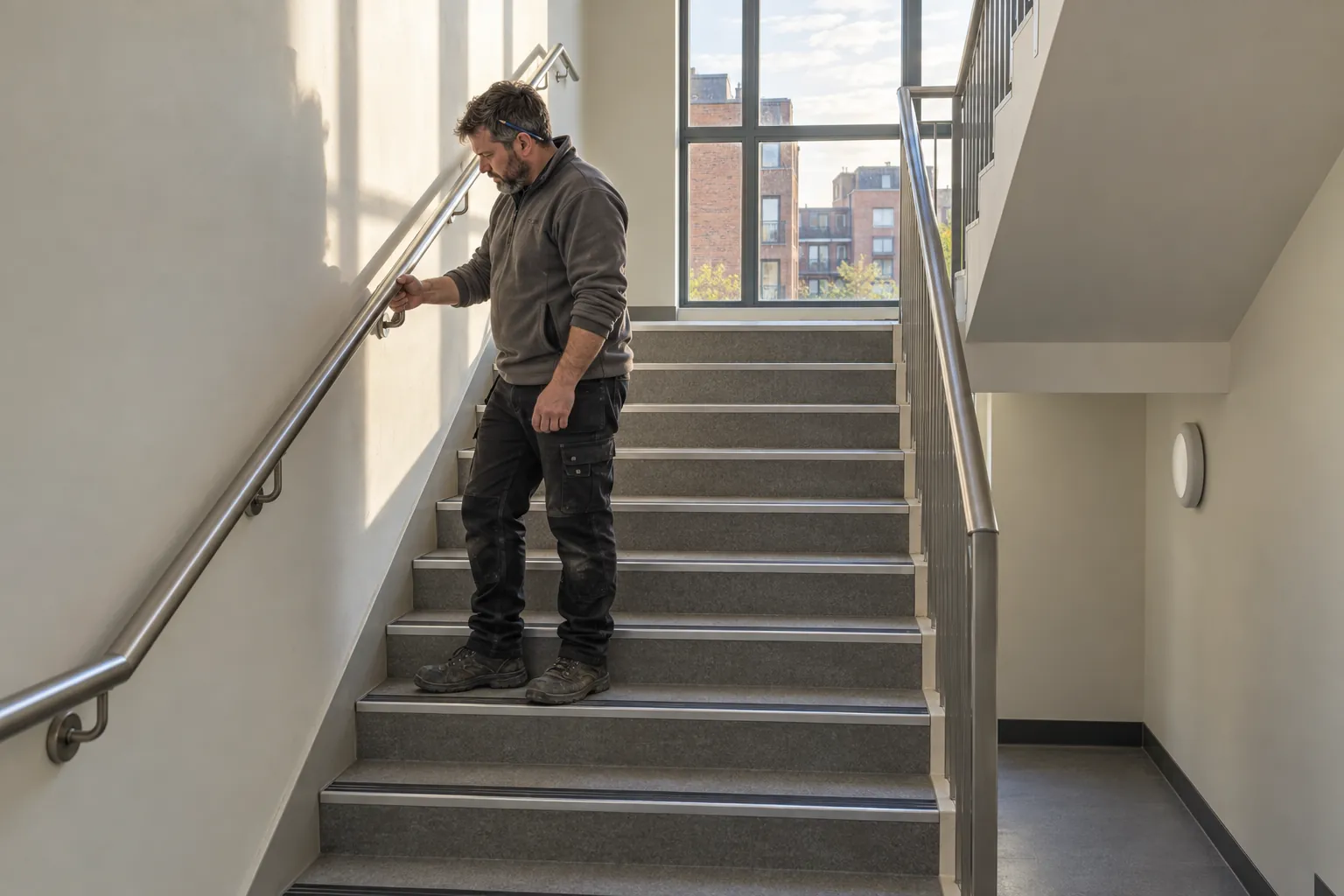
Before each inspection, read the previous one and its open actions. Record what was in order as well as what was not: a list of faults alone does not show which areas were looked at.
Some findings belong in other records too. The Department's fire safety guide says fire protection faults “are a life safety issue – not simply a maintenance issue to be dealt with later” and should be entered in the fire safety register and corrected promptly. The HSA's accident and dangerous occurrence reporting page explains that an injury to an employee from an accident at work must be reported where they cannot carry out their normal work for more than three consecutive days, excluding the day of the accident, and non-fatal accidents within ten working days.
Look at the findings together every few months. The same wet entrance or the same blocked exit points to a cause the inspection will not fix on its own, such as too little storage or the wrong matting. That is where the inspection feeds section 19: the risk assessment is reviewed and the improvements made.
05
What an HSA inspector and a safety representative look for
The HSA's page on how an inspection works says that inspectors' primary focus is preventative, and that “typically less than 10% of inspections result in formal enforcement actions being taken, 45% result in a written report of inspection handed out at the inspection and the rest are just advisory in nature”. It says the inspector “will look for written evidence on the preparation and implementation of the safety statement”, and for workplace-specific risk assessments, and may ask to speak to the people the statement names.
Completed checklists with actions closed are part of that evidence; a blank template is not. If an inspector finds breaches, the HSA's page on actions of inspectors sets out the range, including:
- a Report of Inspection letter for minor breaches, which the person in charge countersigns to accept that the items will be remedied;
- an Improvement Direction under section 65, to which the employer responds with an improvement plan;
- an Improvement Notice under section 66, requiring a contravention to be addressed within a period of not less than 14 days;
- a Prohibition Notice under section 67, where an activity is likely to involve a risk of serious personal injury, taking effect immediately.
Safety representatives have their own right to inspect. Under section 25(2), a representative may inspect the whole or any part of the place of work after reasonable notice, on the agreed schedule, or immediately after an accident, a dangerous occurrence or where there is imminent danger. They may also investigate accidents and complaints, accompany an HSA inspector and make representations, which the employer must consider, taking whatever action it considers necessary or appropriate so far as is reasonably practicable (section 25(4)). The HSA's safety representatives page includes carrying out inspections in its training syllabus.
Consultation is required either way. Section 26 of the 2005 Act requires every employer to consult employees, their safety representatives or both, in good time, on matters including the risk assessment and the safety statement. In practice, invite the representative or someone who works in the area to walk it with you, ask what worries them, share the actions taken, and make it easy to report a hazard between inspections.
06
Where the record fails, and what SiteClara does about it
Most inspection records fail in two places. The monthly walk happens, but its findings go into a filed form that nobody is chased to close, and the next inspection finds the same things. And the hazards noticed between inspections, by the cleaners, security officers and caretakers who pass through every day, are mentioned to whoever is passing and never written down. When an inspector asks for evidence that the safety statement is being implemented, the folder shows the monthly form and little of what happened in between.
SiteClara helps with the second, and with the routine checks that sit beside inspections. A printed QR poster at each location, with an NFC tag behind it if staff should tap, lets staff scan or tap with their own phone, with no app to install, to complete the checks due there, such as a daily walk of the escape routes or a first aid kit check, or to report an issue with a photo. A reported issue goes onto the team's list of jobs until someone closes it, and the supervisor's queue groups open jobs by building and floor. The supervisor sees what is due, done and missed, records the reason a check was missed, and each day reviews and approves a report that goes to nominated management or client contacts the next morning, showing what was reported, completed and still open.
07
Questions people ask
What is an inspection checklist in safety?
A list of questions used as a guide while walking a workplace, so that the routine hazards are not missed. The HSA's General Inspection Checklist for Safety Representatives describes itself as a guide “to help inspect a workplace for common problems”, and warns that it “is not an exhaustive list of items and will not cover all hazards in all workplaces”.
What should be included in a health and safety inspection checklist?
The area or location inspected, the date, who inspected, and a Yes, No and comment for each item, which is how the HSA's General Inspection Checklist for Safety Representatives is laid out. Its 42 items run from housekeeping (“Is the workplace clean and tidy?”), lighting, noise and temperature, through access to exit doors, fire extinguishers, first aid and electrical safety, to the safe storage of chemicals, manual handling aids, vehicles, work at height and in-date certificates of thorough examination for lifting equipment and pressure systems.
How do you prepare a health and safety inspection checklist?
Start from a published template and adapt it to your own risks. The HSA says its General Inspection Checklist for Safety Representatives “can be adapted to suit your workplace”, with blank boxes for the items you want checked or come across. Section 19 of the 2005 Act requires a written risk assessment, so add the hazards it names for each area, remove questions that do not apply, and leave room beside each “No” for an action, an owner and a date.
What are some examples of safety checklists?
In Ireland, the HSA's General Inspection Checklist for Safety Representatives covers a whole workplace, and its Workplace Transport Checklist is “an aid in assessing and controlling workplace transport hazards”, from documented site rules and a traffic plan to marked vehicle routes. For fire, the Department's Fire Safety Guide for Building Owners and Operators says that “all escape routes should be checked on a daily basis”, which suits a short daily checklist kept beside the monthly inspection checklists.
08
Further reading, and a list to take away
The law is the Safety, Health and Welfare at Work Act 2005, especially sections 8, 19, 20, 21, 25 and 26, and Part 2, Chapter 1 of the General Application Regulations 2007, both on the Irish Statute Book. The HSA's General Inspection Checklist for Safety Representatives is a free starting point. For fire, read the Department's Fire Safety Guide for Building Owners and Operators.
Before your next health and safety inspection, check that:
- the checklist reflects your risk assessment and the activities in each area, not a generic template;
- the frequency for each area is written down, agreed with the safety representative where there is one, and followed;
- the daily checks, such as escape routes, are happening between inspections and are recorded;
- inspectors are trained to spot hazards and vary from time to time;
- immediate dangers are made safe on the spot, and every finding has an action, an owner and a date;
- fire faults are also entered in the fire safety register, and reportable injuries go to the HSA;
- in a shared building, it is written down who inspects each common area;
- repeat findings are reviewed and fed back into the risk assessment and the safety statement.
Sources
Every document this guide quotes or links to, in the order it first cites them.
- Safety, Health and Welfare at Work Act 2005 irishstatutebook.ie
- Section 8 of the 2005 Act irishstatutebook.ie
- Section 19 of the 2005 Act irishstatutebook.ie
- Safety, Health and Welfare at Work (General Application) Regulations 2007 irishstatutebook.ie
- Section 18 of the Fire Services Act 1981 irishstatutebook.ie
- General Inspection Checklist for Safety Representatives hsa.ie
- Section 25 of the 2005 Act irishstatutebook.ie
- Fire Safety Guide for Building Owners and Operators assets.gov.ie
- Section 21 of the 2005 Act irishstatutebook.ie
- Accident and dangerous occurrence reporting page hsa.ie
- How an inspection works hsa.ie
- Actions of inspectors hsa.ie
- Safety representatives page hsa.ie
- Section 26 of the 2005 Act irishstatutebook.ie
- Workplace Transport Checklist hsa.ie
Related guides
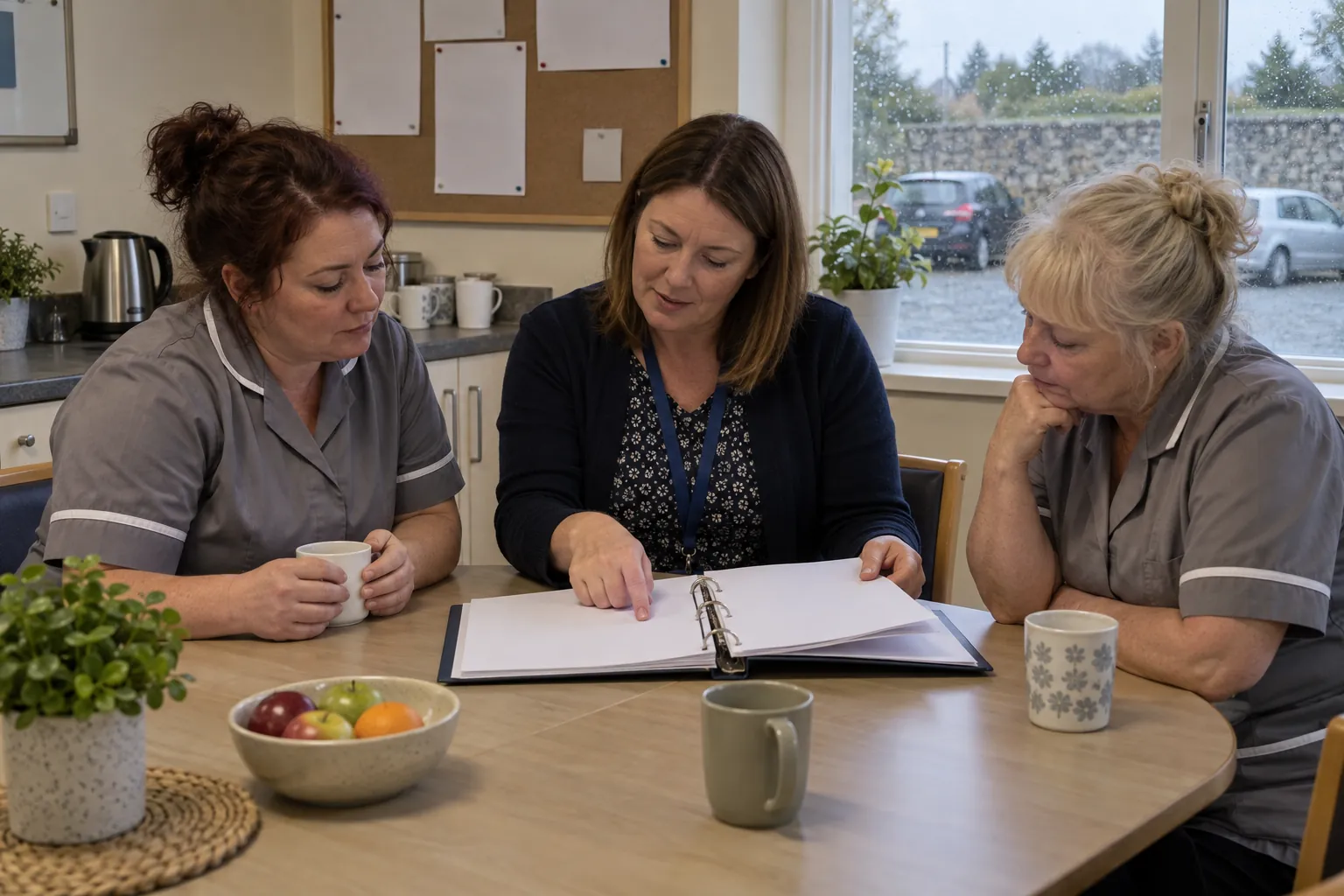 Premises and facilities managementSafety statement: what the 2005 Act requires, and how to show it is followedWhat a safety statement must contain under section 20 of the Safety, Health and Welfare at Work Act 2005, who needs one, when to review it and how to show it works.
 Premises and facilities managementBuilding compliance checklist: the statutory picture for a building in IrelandBuilding compliance checklist for non-domestic buildings in Ireland: fire, electrical, gas, water, asbestos, lifts, energy and access, who holds each duty and when.
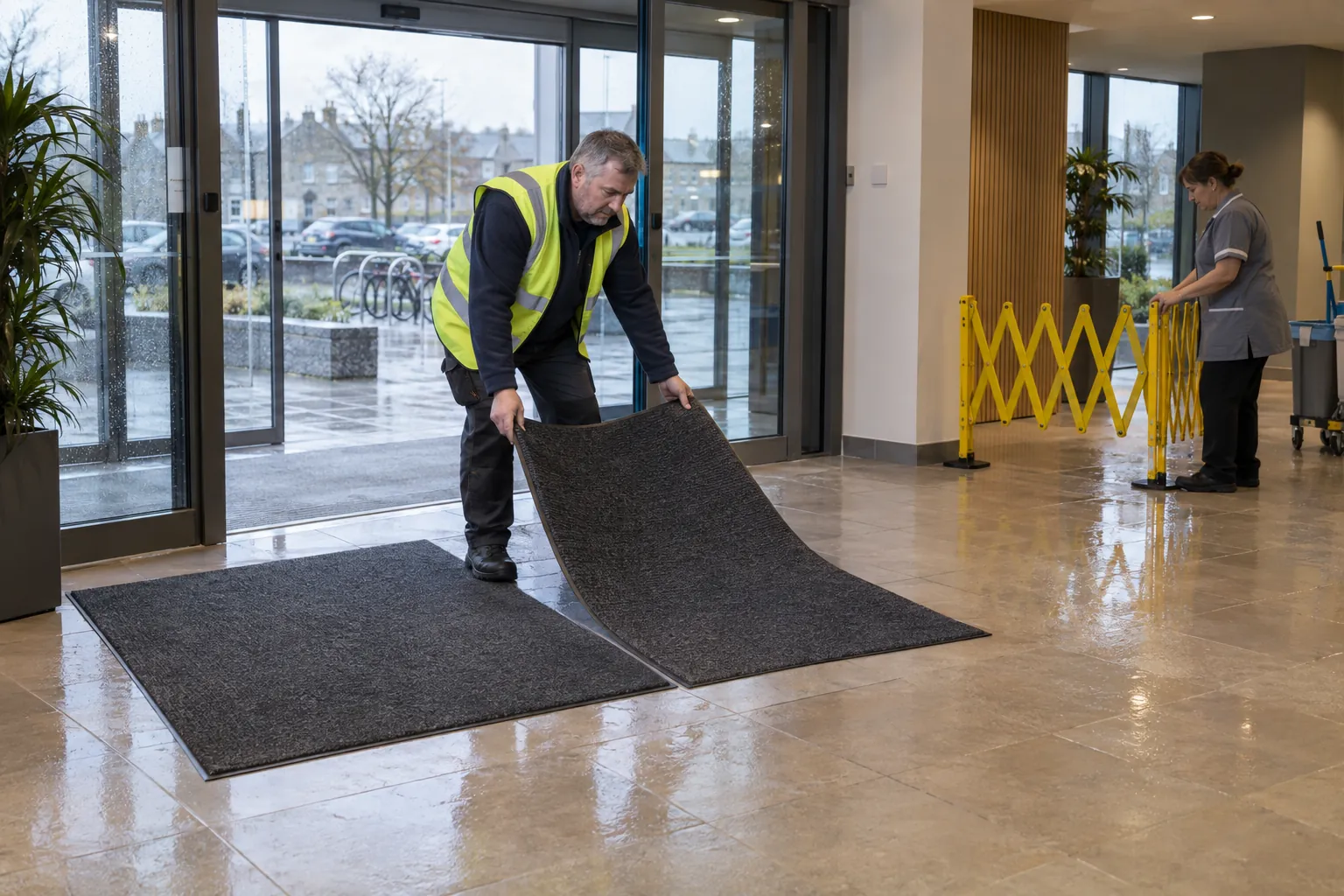 Premises and facilities managementSlips, trips and falls: what Irish law requires, and how to prevent them day to dayPreventing slips, trips and falls in Irish workplaces: the 2005 Act and 2007 Regulations, spills, floor cleaning, entrances, stairs and the checks that show it.
 Fire and water checksWorkplace fire safety checklist: what to check, how often, and who does itA workplace fire safety checklist for Ireland: the daily, weekly and monthly checks under the Fire Services Acts, who does each one, and what to record.