Premises and facilities management
Building maintenance checklist: what to check, how often, and who by
A building maintenance checklist is the schedule of daily, weekly, monthly and annual tasks that keeps a building's fabric, services, safety systems and grounds in efficient working order and in good repair, as regulation 5 of the Workplace (Health, Safety and Welfare) Regulations 1992 requires of workplaces in England, Wales and Scotland.

It turns that general duty into specific tasks on specific days. This one is written for UK offices, a school building, shops, community buildings and blocks, from the daily walk-round to the annual inspections, and it marks the items that need a competent person rather than the site team.
01
The duty behind a building maintenance checklist
Regulation 5 of the Workplace (Health, Safety and Welfare) Regulations 1992, which apply in England, Wales and Scotland, requires a workplace, and the equipment, devices and systems in it, to be maintained in an efficient state, in efficient working order and in good repair, and, where appropriate, to be subject to a suitable system of maintenance. The same regulations cover floors and traffic routes, lighting, ventilation, temperature, windows, doors and gates, and toilets and washing facilities. Fire safety law, electrical safety law, the rules on lifting equipment and pressure systems, and the approved code of practice on legionella add specific inspections and tests.
A building maintenance checklist is the practical form of that system of maintenance, and the routine end of a wider maintenance strategy that also includes planned preventive maintenance by contractors and reactive maintenance when things break. It does three jobs: it makes sure routine tasks are not forgotten, it spots potential issues through regular inspections before they become costly repairs or downtime for occupants, and it gives you a record that the work was done.
Who owns the checklist depends on the building. In a building the organisation owns or occupies alone, it is usually the premises, site or facilities manager, or the facility managers of a larger estate. In commercial properties let to several tenants, the landlord or managing agent, through its property managers, usually maintains the common parts and central plant, and each tenant looks after its own space, as the lease sets out. Whoever it is, the checklist should name them.
02
What a building maintenance checklist covers
A complete checklist for commercial buildings and other non-domestic premises covers four areas, interior and exterior:
- Building fabric and the building exterior: roofs, gutters and downpipes, exterior walls, windows and doors, floors, ceilings, stairs and handrails.
- Building services, each a building system with its own needs: heating and hot water, HVAC systems (heating, ventilation and air conditioning), plumbing and drainage, electrical systems, lighting, and lifts.
- Safety systems: fire alarm, emergency lighting, fire doors, fire extinguishers, sprinklers or risers where fitted, and security systems.
- Grounds: paths, car parks, external lighting, fences and gates, drainage, trees and bin stores.
The tasks split into two kinds. User checks are visual checks and simple tests the site team can do after basic training: walking the escape routes, pressing a call point for the weekly alarm test, flushing a little-used outlet. Competent person work is inspection, testing, servicing and certification that needs specific training, qualifications or registration: servicing a boiler, testing an electrical installation, examining a lift. In the lists below, items marked (CP) need a competent person.
Use the lists as a checklist template rather than a finished document; the regulatory requirements and the building decide the final version. The best practices are simple: one list per building, each maintenance task with a frequency and an owner, and a record of when it was done. Facility teams in larger organisations often hold the same maintenance schedule in facility management software; a smaller site can keep it on paper or a spreadsheet, provided someone keeps it current.
03
Daily and weekly checks
Daily maintenance checks, usually as a walk-round at opening:
- escape routes, stairs and corridors clear, and fire exits unlocked and opening freely;
- fire alarm panel showing normal, with no faults or disablements;
- fire doors closed or on working hold-open devices, not wedged;
- entrances, floors and walkways free of slip and trip hazards, including wet entrances in bad weather;
- lighting working in circulation areas and stairwells;
- toilets and washrooms working, with no leaks or blockages;
- heating, cooling and ventilation keeping occupied areas comfortable;
- lifts in service, and any faults reported;
- external doors, gates and windows secure at close;
- bins and bin stores tidy, with no waste against the building and no signs of pests.
Weekly:
- fire alarm test from a different call point each week, recorded in the fire log book;
- fire doors on escape routes checked for closing, latching and damage;
- little-used water outlets flushed, where the legionella risk assessment calls for it;
- plant rooms walked for leaks, noises, smells and alarms, and kept free of storage;
- external areas checked: paths, car park, external lighting, fences and gates;
- first aid kits and welfare facilities checked and restocked;
- any building management system (BMS) alarms reviewed and followed up.
These daily and weekly checks catch most of the problems that cause complaints, and they are the ones most often done without a record. A walk-round that finds nothing wrong is still worth recording, because it shows the check happened.
04
Monthly and quarterly checks
Monthly:
- emergency lighting functional test: a brief test of each fitting on simulated mains failure, recorded in the log book;
- fire extinguishers visually checked: in place, unobstructed, pressure gauge in the green where fitted, seals intact;
- hot and cold water temperatures taken at sentinel outlets, where the legionella risk assessment requires it;
- doors, closers, locks and ironmongery checked on main routes;
- roofs, gutters and drains looked at from the ground or a safe viewpoint, more often in autumn;
- signage, including fire exit signs, in place and legible;
- eyewash stations, emergency showers and safety equipment checked where fitted.
The monthly list is also a good point to note annual tasks coming due, so the contractors are booked in time.
Quarterly:
- showerheads and hoses cleaned and descaled, where the legionella controls require it;
- HVAC filters checked and changed to the manufacturer's schedule (CP where the plant needs it);
- external fabric walked: walls, windows, render, cladding and sealants;
- internal fabric: ceilings for stains that suggest a leak, floors for damage, stairs and handrails secure;
- grounds: trees near buildings and paths, drainage gullies, fences and gates;
- a review of open reactive maintenance jobs and repeat faults, to decide what needs planned maintenance and repair.
Around this time of year, add the seasonal jobs: clearing gutters and gullies after leaf fall, checking heating before the first cold spell, and preparing for gritting paths and car parks in winter.

05
Six-monthly, annual and longer, and the competent person items
Most of the items on this part of the checklist need a competent person. The site team's job is to make sure they are booked, attended, and that any defects they find are put right.
- Fire alarm service (CP): inspection and servicing, usually at intervals of no more than six months under BS 5839-1.
- Lift thorough examination (CP): under LOLER, at least every six months for passenger lifts, or as a written scheme of examination sets, alongside the lift contractor's routine maintenance.
- Emergency lighting full-duration test (CP or trained staff): annually, for the full rated duration of the system, under BS 5266-1.
- Fire extinguisher service (CP): annually, under BS 5306-3.
- Gas appliances and boilers (CP): serviced and safety checked, usually annually, by a Gas Safe registered engineer.
- Water system (CP for the risk assessment): cold water tanks inspected, thermostatic mixing valves serviced, and the legionella risk assessment reviewed as the approved code of practice L8 requires.
- Asbestos: the condition of known asbestos-containing materials rechecked at the frequency the management plan sets, often annually.
- Fire risk assessment (CP): reviewed regularly, and whenever the building or its use changes.
- Roof inspection (CP where access needs it): a close inspection of coverings, flashings, outlets and gutters.
- Local exhaust ventilation (CP): thorough examination and test, generally at least every 14 months under COSHH, where fitted.
- Portable appliances (CP): inspected and tested at intervals based on the risk, not a fixed legal period.
- Fixed electrical installation (CP): an electrical installation condition report (EICR), at the interval the previous inspector recommended. Electrical Safety First recommends periodic inspection and testing at least every 5 years for a business, and every year for a swimming pool.
- Air conditioning inspection (CP): for systems with an effective rated output over 12kW, an inspection by an energy assessor at intervals of no more than five years in England and Wales.
Over the longer term, a condition survey every few years feeds a maintenance plan for the big items: roof replacement, redecoration, windows, lifts and major plant. Deferred maintenance on these is where the largest costs build up quietly, and good upkeep of the fabric also helps energy efficiency, because a sound roof, sealed windows and well-set controls waste less heat.
For the statutory side in more detail, including who is responsible and where the certificates should be kept, see our building compliance checklist.
06
Where the checklist fails, and what SiteClara does about it
The competent person items usually have good records, because the contractor issues a certificate or report. It is the daily, weekly and monthly checks that fail: a checklist printed at the start of the year, ticked in batches on Friday afternoon, and a problem found on Tuesday passed on in the corridor and forgotten. When something goes wrong, nobody can say when the check was last done, or by whom.
SiteClara records those routine checks where they happen. A printed QR poster at each location, such as a plant room, a fire exit or a washroom, with an NFC tag behind it if you want staff to tap, lets staff scan or tap on their own phone, with no app to install, to see the checks due there and mark them done or say what stopped them. They can report an issue with a photo, and it goes onto the team's list of jobs until someone closes it. The supervisor sees what was due, done and missed, and each day an approved report goes to nominated management or client contacts at 8am the next morning, showing how the scheduled checks went, for example 12 of 12 completed.
07
Further reading, and a list to take away
The Health and Safety Executive publishes the approved code of practice on the Workplace Regulations (L24), guidance on legionella (L8 and HSG274), on asbestos management, on LOLER and on electrical safety. The government publishes fire safety guidance for the responsible person in England, with equivalent guidance for Wales, Scotland and Northern Ireland. The Building Engineering Services Association publishes SFG20, the maintenance specification library many facilities teams use to set tasks and frequencies.
Before you adopt a building maintenance checklist, check that:
- it covers fabric, services, safety systems and grounds;
- each task has a frequency, and the frequency comes from a risk assessment, a standard or the manufacturer;
- competent person items are marked, booked and tracked;
- each task names who is responsible;
- faults found on a check have a route to someone who will fix them;
- the daily and weekly checks are recorded, not only the annual ones;
- it is reviewed when the building, its use or its equipment changes.
Sources
Every document this guide quotes or links to, in the order it first cites them.
- Regulation 5 legislation.gov.uk
- Workplace (Health, Safety and Welfare) Regulations 1992 legislation.gov.uk
- LOLER legislation.gov.uk
- COSHH legislation.gov.uk
- Electrical Safety First electricalsafetyfirst.org.uk
- Approved code of practice on the Workplace Regulations (L24) hse.gov.uk
- SFG20 sfg20.co.uk
Related guides
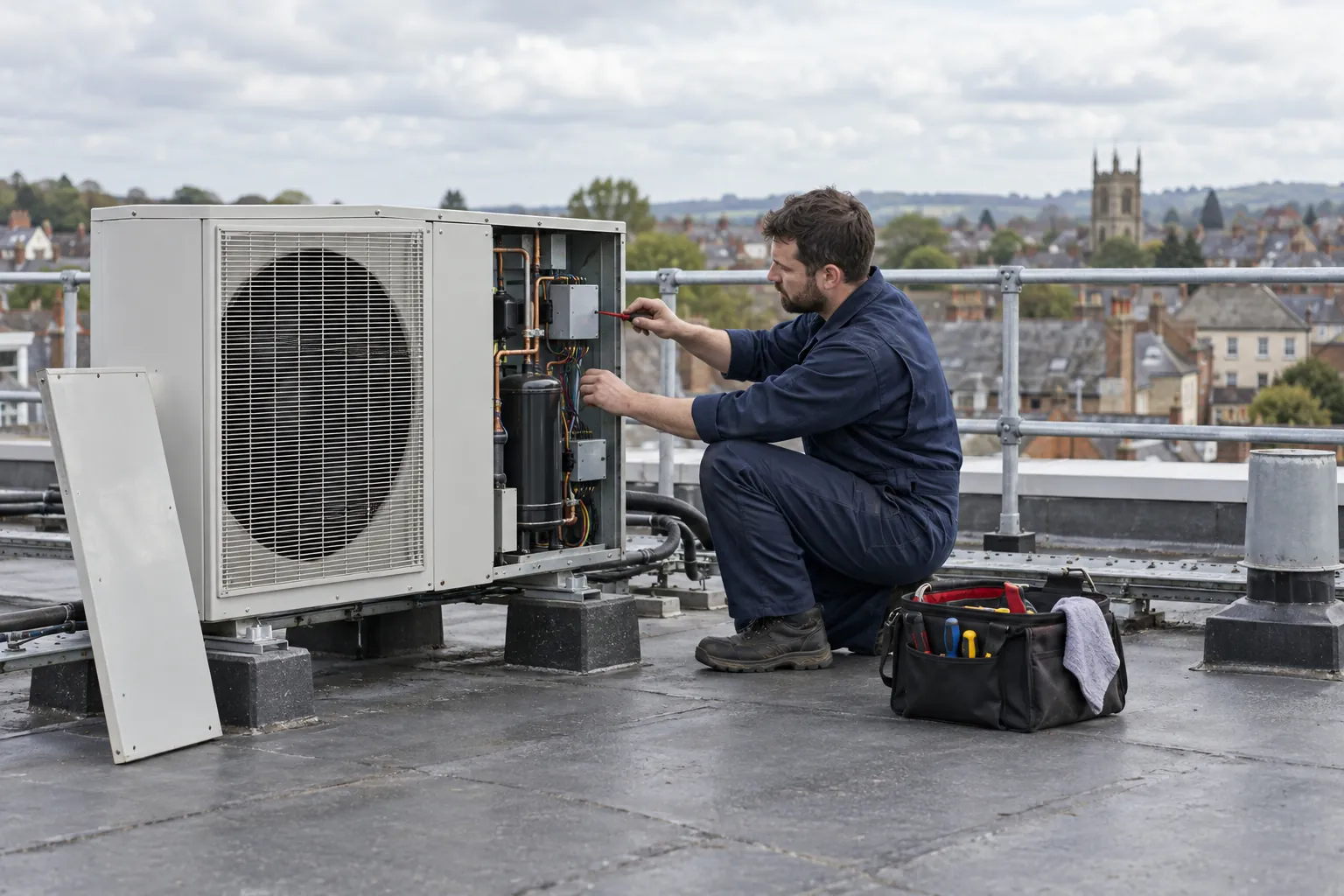 Premises and facilities managementPlanned preventative maintenance: how to plan it and prove it was donePlanned preventative maintenance (PPM): what it is, how to build an asset register and schedule, statutory versus discretionary tasks, and evidencing the work.
 Premises and facilities managementBuilding compliance checklist: the statutory picture for a UK buildingBuilding compliance checklist for UK non-domestic buildings: fire, electrical, gas, water, asbestos, lifts, access and energy, who is responsible, how often.
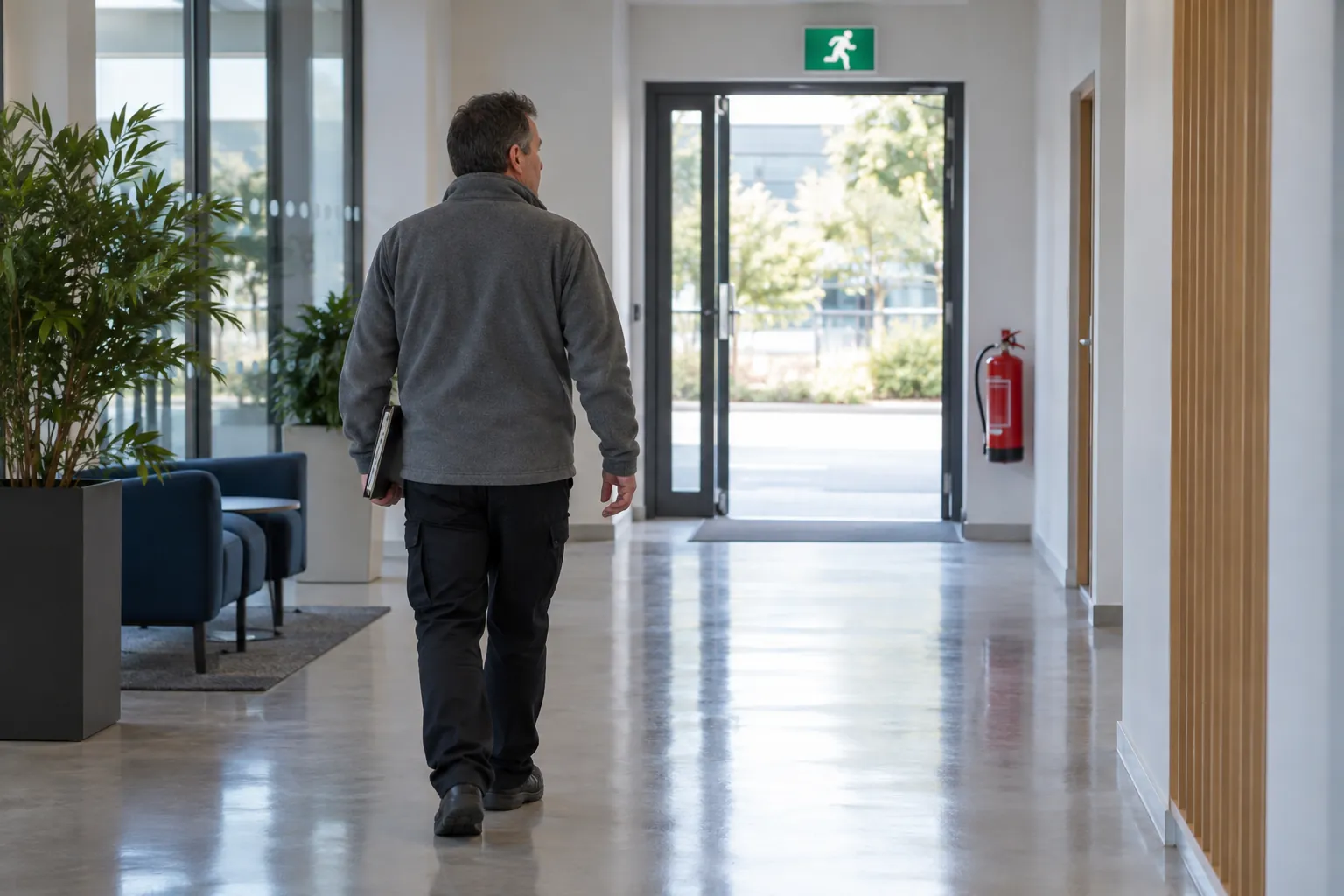 Fire and water checksFire safety checks in the workplace: what to check, how often, and who does itThe routine fire safety checks a UK workplace needs, from daily escape routes to the weekly alarm test, who does each one, and what the record should show.
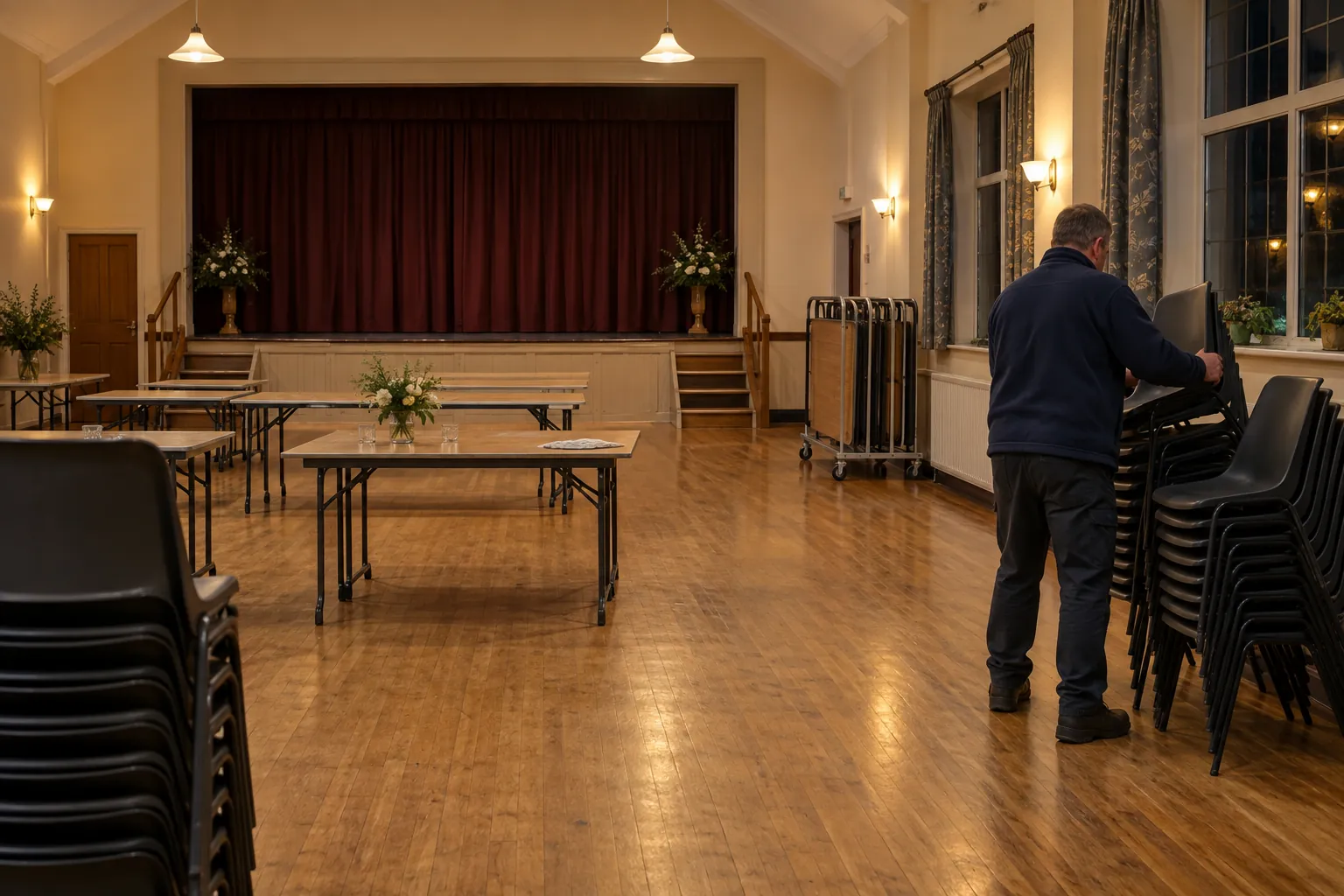 Premises and facilities managementCaretaker duties: what the job involves, and how to show it was doneCaretaker duties in halls, churches, offices, flats and schools: opening and locking, routine checks, minor repairs, cleaning and working alone safely.