Premises and facilities management
Planned preventative maintenance: how to plan it and prove it was done
Planned preventative maintenance (PPM) is maintenance performed purposely and regularly to keep the structure and fabric, facilities, plant and equipment of a building in satisfactory operating condition, through systematic inspection, detection and correction of failures before they occur, where they are present, or before they develop into major defects, as the RICS professional standard on PPM defines it.
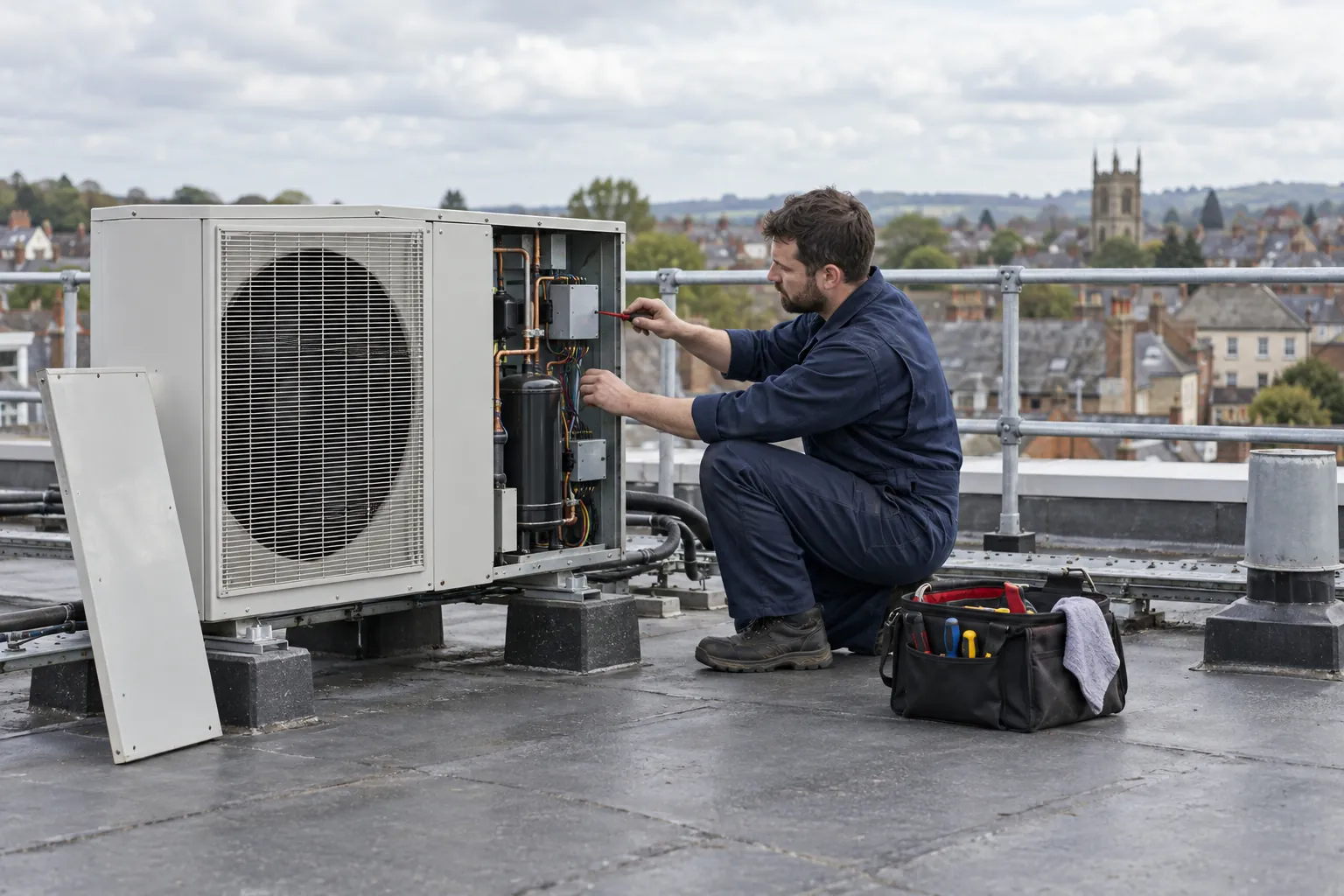
Put simply, it is the work done on a building and its services before anything breaks. This guide explains what it covers, how to build an asset register and a PPM schedule, which tasks the law requires and which are a choice, and what a good record of the work looks like.
01
What planned preventative maintenance is
Planned preventative maintenance is maintenance carried out on a schedule to keep a building, its plant and its equipment in safe working order and to reduce the likelihood of unexpected breakdowns. It is the opposite of reactive maintenance, where work happens after something has failed. A boiler serviced every year, gutters cleared every autumn and an emergency lighting system tested every month are all PPM.
The phrase is used in two related senses in the UK, and it helps to know which one someone means:
- Services PPM: the routine servicing, inspection and testing of building services and equipment, such as heating, ventilation and air conditioning (HVAC), water systems, electrical installations, fire alarms, lifts and emergency lighting. This is usually delivered by engineers and contractors to a schedule of tasks and frequencies.
- A planned maintenance programme: a longer-term plan for the building fabric and major components, such as roof coverings, windows, redecoration and plant replacement. The RICS professional standard Planned preventative maintenance of commercial and residential property says PPM programmes usually cover five to ten years but can extend up to 30 years, and should be reviewed and updated at frequent intervals. A building surveyor usually prepares one from a condition survey, which is where they assess the condition of each element and estimate the long-term cost of repairs and maintenance, and it feeds maintenance budgets, service charges and sinking funds.
Is planned preventative maintenance legally required? No law uses the phrase, but the duty to maintain is real. The Workplace (Health, Safety and Welfare) Regulations 1992 require a workplace and its equipment, devices and systems to be maintained in an efficient state, in efficient working order and in good repair, and, where appropriate, subject to a suitable system of maintenance. The Provision and Use of Work Equipment Regulations 1998 and the Electricity at Work Regulations 1989 carry similar maintenance duties for work equipment and electrical systems. A PPM programme is a practical way to meet those duties and to show that you have.
The benefits of planned preventative maintenance are practical ones: fewer equipment failures and less disruption to the people using the building, a longer lifespan for plant, better energy efficiency, and a building that stays compliant because statutory tasks are scheduled rather than remembered. It is a proactive approach that finds issues early. Some reactive maintenance will always be needed, but a building with no PPM strategy in place runs almost entirely on breakdowns.
02
What a PPM programme covers
Examples of planned preventative maintenance in a typical non-domestic building include:
- Heating and hot water: boiler servicing, gas safety checks on appliances, pumps, valves and controls.
- Ventilation and air conditioning: filter changes, fan and belt checks, cleaning of coils and grilles, and the periodic inspection of larger air conditioning systems required under energy performance rules.
- Water systems: the routine temperature monitoring, flushing and cleaning that a legionella risk assessment calls for.
- Electrical: periodic inspection and testing of the fixed installation, and inspection and testing of portable equipment where the risk calls for it.
- Fire safety systems: fire alarm testing and servicing, emergency lighting tests, fire extinguisher servicing, fire door inspections, dry risers and sprinklers.
- Lifts and lifting equipment: routine maintenance by the lift contractor, and the separate thorough examination required by law.
- Building fabric: roofs, gutters and drains, windows, doors, external walls, and floors.
- Security and access control: gates, barriers, door entry, CCTV and intruder alarms.
- Specialist plant: pressure systems, generators, kitchen extraction, and local exhaust ventilation where it is used.
The list for your building comes from what is actually in it. That is why every good PPM programme starts with an asset register.
03
Building an asset register and a PPM schedule
A PPM schedule answers four questions for every asset: what is it, where is it, what does it need and how often. Building one is mostly careful, methodical work:
- Survey the building and its assets. Walk every floor, plant room and roof, and list the assets: type, make and model, location, age, condition and any identification number. An old list inherited from a previous contractor is a starting point, not a register.
- Identify the statutory tasks. For each asset, note the inspections and tests the law requires, and the frequencies set by regulations, approved codes of practice, British Standards or the competent person's written scheme.
- Follow manufacturer guidelines. Service intervals, consumables and warranty conditions. Missing a service can void a warranty.
- Apply a specification. Use a recognised task library, such as SFG20, so that tasks and frequencies are consistent and defensible rather than invented.
- Decide the discretionary tasks. Some maintenance is sensible but not compulsory. Decide which you will do, and how often, based on how critical the asset is to the building's use.
- Assign each task. Name the in-house team or contractor responsible, and check they are competent for it.
- Put it in a calendar. Group tasks sensibly by building, trade and season, so engineers are not sent back to the same plant room three times in a month, and scheduled maintenance causes as little disruption as possible.
Who runs the programme depends on the building. In commercial property let to several tenants, the landlord or its managing agent, often through a property manager, usually maintains the common parts and central building systems and recovers the cost through the service charge, while a tenant on a full repairing lease usually looks after its own premises. The lease decides, so read it before assuming.
Many organisations hold the asset register and maintenance schedules in facilities management software, usually a CAFM or CMMS system, which issues the jobs, records their completion and can automate maintenance reminders. A small site can manage with a well-kept spreadsheet, provided someone owns it and keeps it current when assets are added, replaced or removed.
04
Statutory and discretionary tasks
The most useful distinction in any PPM strategy is between tasks the law requires and tasks you choose to do. Statutory tasks are not negotiable when budgets are tight, and missing one risks non-compliance; discretionary tasks are where judgement comes in.
Typical statutory or legally driven tasks in a UK non-domestic building include:
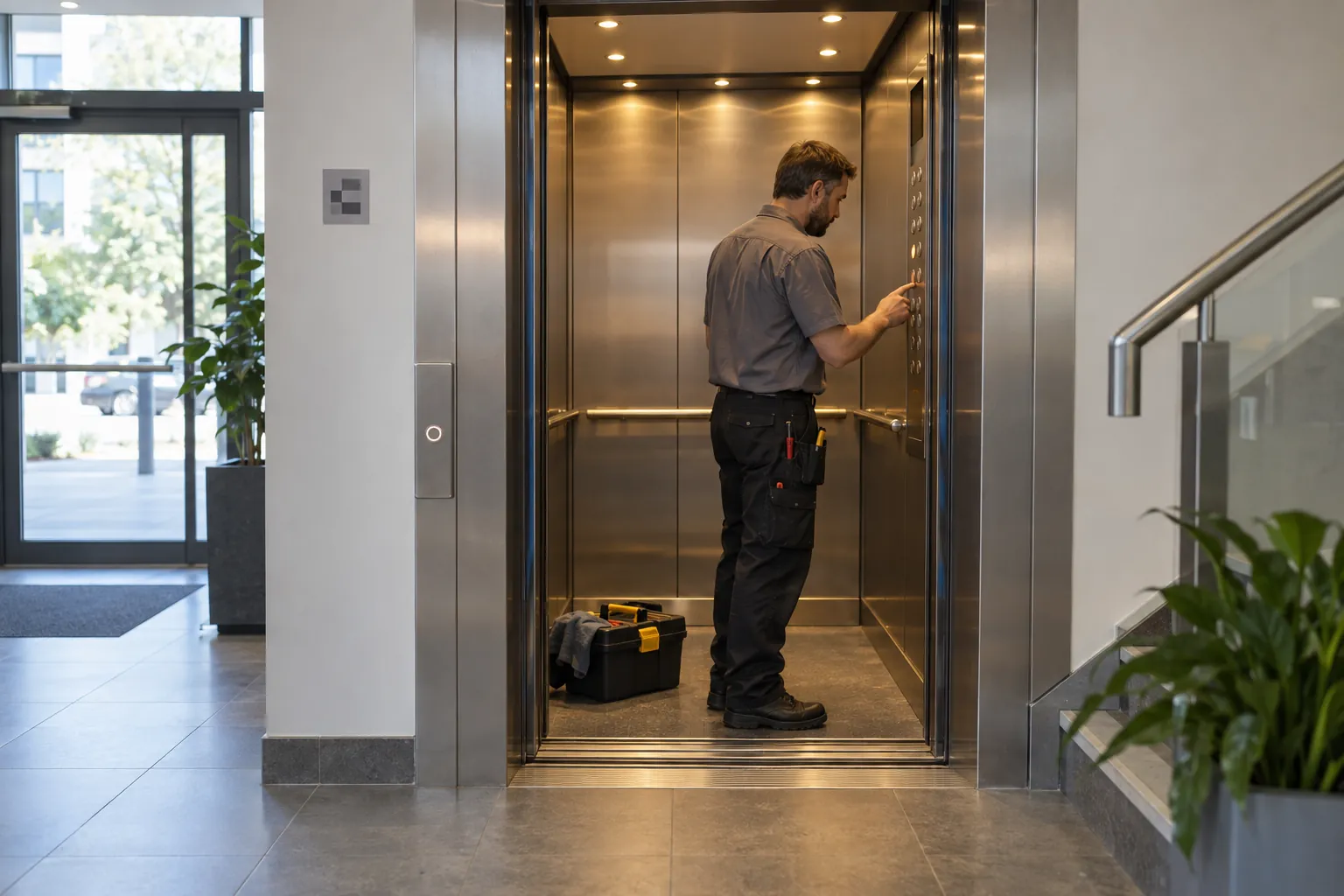
- Lifts: a thorough examination by a competent person under the Lifting Operations and Lifting Equipment Regulations 1998 (LOLER), at least every six months for equipment that lifts people, or in line with a written scheme of examination.
- Pressure systems: examination in line with a written scheme under the Pressure Systems Safety Regulations 2000.
- Water hygiene: the control measures identified in a legionella risk assessment, following the HSE Approved Code of Practice L8 and its technical guidance, HSG274.
- Fire safety: maintaining fire alarms, emergency lighting, extinguishers and fire doors under the fire safety legislation for each nation, with frequencies usually taken from the relevant British Standards.
- Electrical: maintaining the fixed installation so far as reasonably practicable to prevent danger, usually evidenced by a periodic inspection report at intervals recommended by the inspector.
- Gas: keeping gas appliances, flues and pipework safe, with work done by a Gas Safe registered engineer.
- Local exhaust ventilation: thorough examination and testing under the COSHH Regulations, generally at least every 14 months.
- Asbestos: under the Control of Asbestos Regulations 2012, the duty holder must manage asbestos in non-domestic premises, including keeping a register and checking the condition of known materials.
Discretionary tasks include much of the regular maintenance and routine servicing that keeps plant efficient and extends its lifespan: filter changes, cleaning, lubricating, adjusting controls, redecorating, clearing gutters before they overflow. None of them is required by name, but skipping them is how minor wear and tear, and issues like leaks, turns into unexpected breakdowns, downtime and expensive emergency repairs.
Northern Ireland and Scotland have their own versions of several of these regulations, and fire safety law differs between the nations. Check the rules for the nation your building is in.
05
How completion is evidenced
A PPM programme is only as credible as its records. When an insurer, an auditor, an enforcing authority or a client asks whether a task was done, the answer needs to be more than a tick on a planner. Good evidence usually includes:
- The job record: the planned preventative maintenance works done, the asset, the date, who did it, what they found and what they did about it.
- Certificates and reports: for statutory work, the document the competent person issues, such as a report of thorough examination, an electrical installation condition report or a fire alarm service record, filed against the asset it relates to.
- Defects and follow-up: faults found during PPM visits, the remedial work raised and when it was closed. A report listing defects that were never fixed is worse evidence than no report.
- Log books: fire alarm, emergency lighting and water hygiene log books, kept up to date on site.
- Completion against plan: a PPM report showing tasks due, tasks completed and tasks overdue, by month and by building.
PPM reports, usually a monthly maintenance report from the contractor or the in-house team, should show all of this by building. A PPM completion rate on its own tells you little. The questions worth asking are which tasks were missed, whether any were statutory, and what happened to the defects that were found.
Review the programme, and your wider maintenance strategies, at least once a year. Assets change, buildings change use, and a maintenance frequency that made sense five years ago may now be too often for a lightly used system or not often enough for a critical one. Predictive maintenance, using condition monitoring to decide when work is needed, can refine the schedule for critical assets, but it depends on good data and rarely replaces the statutory tasks.
06
Where the record fails, and where SiteClara fits
PPM records are usually strongest for the engineer's visit and weakest for the small, frequent checks in between: the weekly look at the plant room, the monthly flushing of little-used outlets, the regular inspections of the roof and gutters after a storm, the caretaker's check that the fire doors close. Those are often recorded on a sheet on a clipboard, if at all, and a problem found on one is passed on by word of mouth.
SiteClara records those routine checks. A printed QR poster at each location, with an NFC tag behind it if you want staff to tap, lets staff scan or tap on their own phone, with no app to install, to mark a scheduled check done or say what stopped them. They can report an issue with a photo, and it goes onto the team's list of jobs until someone closes it. The supervisor sees what was due, done and missed, and each day an approved report goes to nominated management or client contacts at 8am the next morning.
07
Questions people ask
Can you give me an example of scheduled maintenance?
A passenger lift's thorough examination is one: under regulation 9 of the Lifting Operations and Lifting Equipment Regulations 1998, lifting equipment for lifting people that is exposed to conditions causing deterioration liable to result in danger must be thoroughly examined at least every 6 months, and other such lifting equipment at least every 12 months, or in either case in line with an examination scheme. Another is local exhaust ventilation, which regulation 9 of the COSHH Regulations 2002 requires to be thoroughly examined and tested at least once every 14 months, or at the interval its Schedule 4 sets for some processes. Both sit alongside discretionary scheduled tasks, such as filter changes and clearing gutters, in a PPM schedule.
08
Further reading, and a list to take away
The Health and Safety Executive publishes guidance on the Workplace Regulations (L24), on LOLER, on pressure systems, on legionella (L8 and HSG274), on asbestos management and on electrical safety. BESA publishes SFG20. The Royal Institution of Chartered Surveyors (RICS) publishes Planned preventative maintenance of commercial and residential property, a professional standard setting out the principles for PPM surveys and reports for buildings. BS 8210 is the British Standard code of practice for facility maintenance management.
To check your planned preventative maintenance is in order:
- every asset is on a register, verified on site, with its location;
- every statutory task is identified, with its frequency and its source;
- each task has a named owner who is competent to do it;
- discretionary tasks are chosen deliberately, not inherited;
- certificates and reports are filed against the asset they relate to;
- defects found on PPM visits are raised, tracked and closed;
- overdue statutory tasks are reported, not buried in a percentage;
- the schedule is reviewed at least once a year.
Sources
Every document this guide quotes or links to, in the order it first cites them.
- Planned preventative maintenance of commercial and residential property rics.org
- Workplace (Health, Safety and Welfare) Regulations 1992 legislation.gov.uk
- Provision and Use of Work Equipment Regulations 1998 legislation.gov.uk
- Electricity at Work Regulations 1989 legislation.gov.uk
- Lifting Operations and Lifting Equipment Regulations 1998 legislation.gov.uk
- Pressure Systems Safety Regulations 2000 legislation.gov.uk
- Control of Asbestos Regulations 2012 legislation.gov.uk
- Regulation 9 of the COSHH Regulations 2002 legislation.gov.uk
Related guides
 Premises and facilities managementReactive maintenance: how to run it well, and keep it in proportionHow to run reactive maintenance in a UK building: priorities and response times, the balance with planned work, costs, contractors and closing the loop.
 Premises and facilities managementBuilding maintenance checklist: what to check, how often, and who byA building maintenance checklist for UK non-domestic buildings: daily to annual tasks for fabric, services, safety systems and grounds, and who does each.
 Premises and facilities managementBuilding compliance checklist: the statutory picture for a UK buildingBuilding compliance checklist for UK non-domestic buildings: fire, electrical, gas, water, asbestos, lifts, access and energy, who is responsible, how often.
 Premises and facilities managementCAFM system: what it does, and how to choose and implement oneWhat a CAFM system is and does, how it differs from a CMMS or IWMS, how to choose and implement one, and what it will not fix on its own.