Security patrols
School security: the measures, the lock-up and the record that it happened
School security in Australia is the set of measures a school uses to protect students and staff, visitors and property, from fences, locks, alarms and CCTV to visitor sign-in, key control, a nightly lock-up and incident reporting.
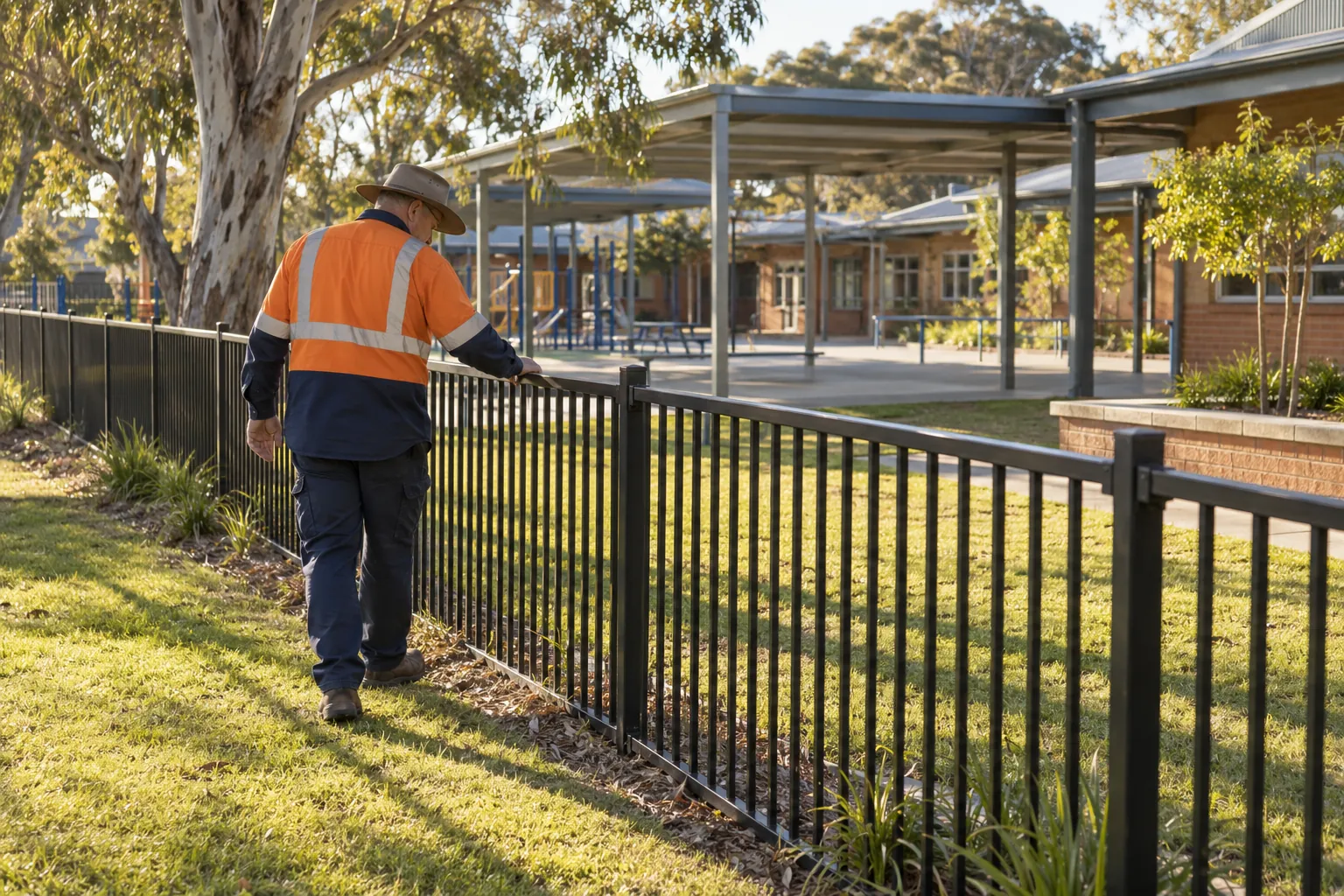
In a government school the principal is responsible for it under the state education department's security policy, while the department, as the employer, carries the duty under the state's work health and safety (in Victoria, occupational health and safety) law. Most of it is ordinary and repetitive: the same gates, doors and windows secured every afternoon, the same alarm armed, the same keys accounted for. It fails quietly, when a gate is left open over the holidays or a hirer leaves without setting the alarm. This guide covers the duty, the measures a security plan should include, the lock-up and after-hours routine, who does what, and what a record of it should show.
01
What school security means, and whose duty it is
A school is a workplace, so the starting point is work health and safety law. In every state and territory except Victoria, the model WHS laws apply. Section 19(1) of Queensland's Work Health and Safety Act 2011 (current as at 3 August 2026) says a person conducting a business or undertaking (PCBU) "must ensure, so far as is reasonably practicable, the health and safety of" its workers, and section 20(2) says the person with management or control of a workplace must ensure, so far as is reasonably practicable, "that the workplace, the means of entering and exiting the workplace and anything arising from the workplace are without risks to the health and safety of any person". For a school, any person includes students, parents, contractors and visitors. Victoria has its own Occupational Health and Safety Act 2004 (version 045, from 6 August 2025), with general duties to the same effect.
The detail of school security sits in each education department's policy, and it differs by state:
- Queensland: the Department of Education's School security procedure (version 3.4, effective 3 January 2025) requires the principal to "conduct and document a security risk assessment every year", to treat the risks found and to report every security incident.
- Victoria: the Department of Education's Crime Prevention in Schools policy (updated 6 December 2021) says schools should "actively adopt a range of crime prevention strategies to reduce the likelihood and consequence of criminal activity", and describes schools' responsibility to "provide a safe and secure working and learning environment for all students, staff, contractors, and visitors". Its Physical Security policy (updated 18 July 2025) says "all schools must have an EMP" (an emergency management plan) covering physical security, including lockdowns, lockouts and evacuations.
- New South Wales: the School Security Unit supports public schools, and School Infrastructure NSW's page Keeping schools safe and secure describes fencing as part of "an overall security plan" that "might include security guard patrols, electronic surveillance such as alarms and CCTV, along with other risk mitigation strategies that suit the needs of individual schools".
- Western Australia: the Department of Education's Security for Public Schools and Residential Facilities Policy (version 4.1, effective 27 February 2024) requires principals to "implement security measures in accordance with" its procedures.
Catholic and independent schools are not covered by the government departments' policies, but they are workplaces under the same WHS or OHS law, and most run a security plan along the same lines. Whichever sector, the shape is the same: assess the risks, put measures in place, run them every day, report what happens, and review.
02
The school security measures a plan should cover
Victoria's Crime Prevention in Schools policy sorts the measures into four kinds: target hardening, "such as locks, fences, window film"; environmental design and maintenance, "such as vegetation management, lighting, signage"; electronic systems, "such as intruder detection, CCTV, access control"; and policies and procedures, "such as visitor management, incident response". In practice a school security plan covers:
- Perimeter security. Fencing and gates that control where people can get in. School Infrastructure NSW says its security fencing is "generally" 2.1 metres high, "deters and prevents climbing" and is designed to allow casual surveillance. A fence only works if its gates are shut and locked at the right times, and if holes and damage are found and fixed.
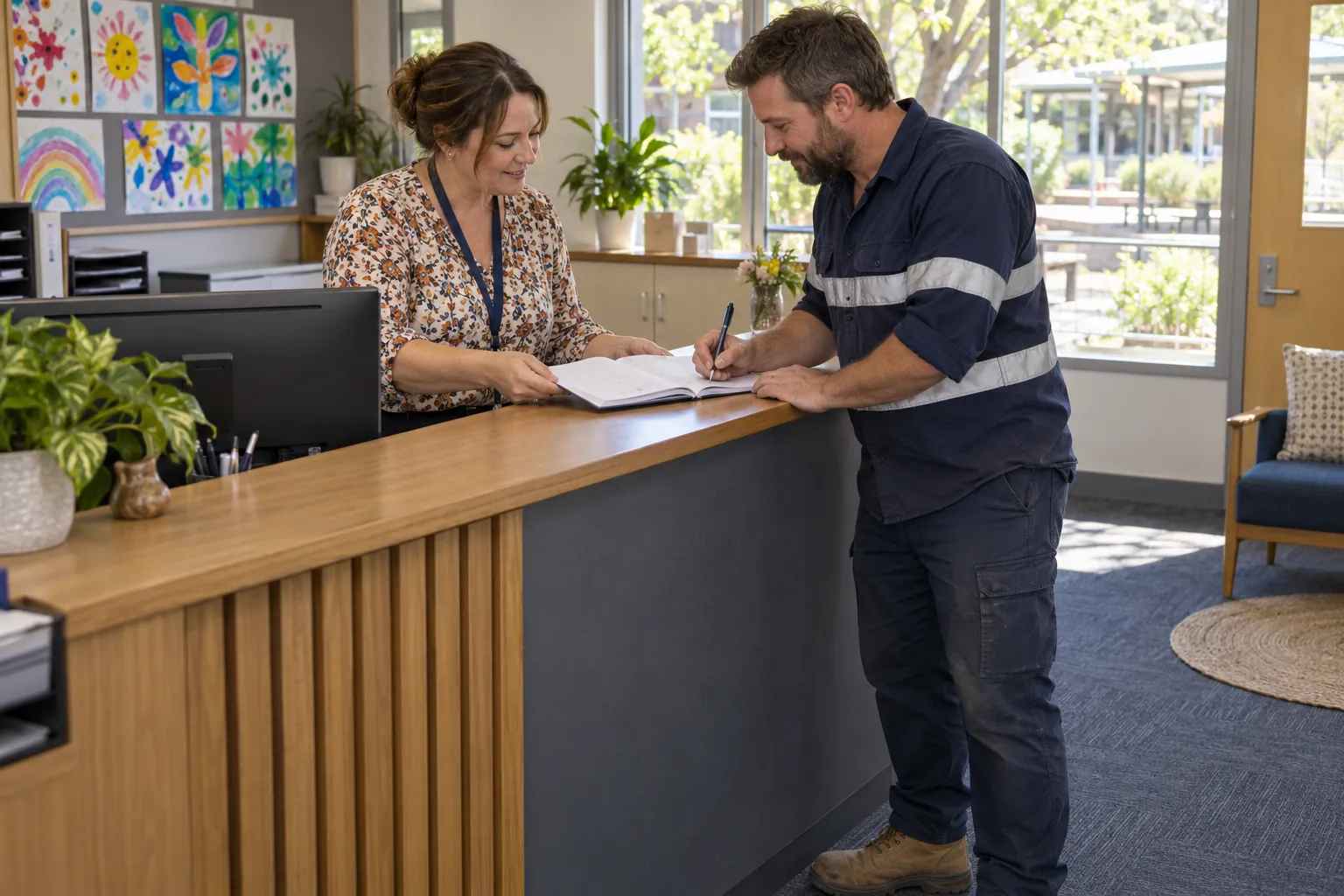
- Access during school hours. A single, signed entry point through the office. Queensland's Fact sheet 2: Developing security guidelines at schools says that, at a minimum, all visitors "should be required to sign in and out at administration" with their name, reason for visiting, phone number and times, and contractors separately, adding the company, the work and any keys issued.
- Keys and access cards. A written system for who holds which keys, how they are signed out and how they are audited. The same fact sheet says grand master keys should not leave the school site, should be kept in a secure cabinet or room covered by the intruder detection system, "should be signed out every time they are issued to any person" and should all be accounted for regularly, because losing one "may make re-keying of the entire school a necessity".
- Intruder detection and monitoring. An alarm that is armed whenever the school is empty, monitored, with an agreed response when it goes off.
- Lighting and grounds. After-hours lighting where neighbours can see the site, vegetation kept low, and graffiti and damage removed quickly.
- CCTV, where the risk justifies it and within the department's own CCTV rules and privacy law.
- Emergency response procedures: lockdown, lockout and evacuation procedures written into the emergency management plan and practised as drills, with an agreed way to reach staff and parents.
- Incident reporting: how a break-in, trespass, damage or threat is reported, to whom, and how fast.
No single measure is most needed. The departments' approach is to start from a risk assessment of the particular school, its location, layout, neighbours and history, and to choose measures that fit it and prevent the incidents most likely there. A small rural school and a large city high school with an oval open to the community need different plans.
03
The school lock-up procedure and the after-hours routine
Most of a school's security is decided at the end of the day. Queensland's School security procedure requires the principal to "ensure processes are established to secure all school buildings, including windows and access gates, outside of school operating hours" and to "ensure the intruder detection system is fully armed when the school is unattended (if installed)". A lock-up procedure turns that into a route somebody walks. Written for the school's own buildings, it usually covers:
- Confirm each block is empty. Classrooms, toilets, the library, the hall, the staffroom and the canteen, calling out before locking. A cleaner, a teacher marking late, a student waiting for a lift or a contractor still inside is the usual way a lock-up goes wrong.
- Windows and internal doors closed and latched, including louvres and high windows that are easy to miss.
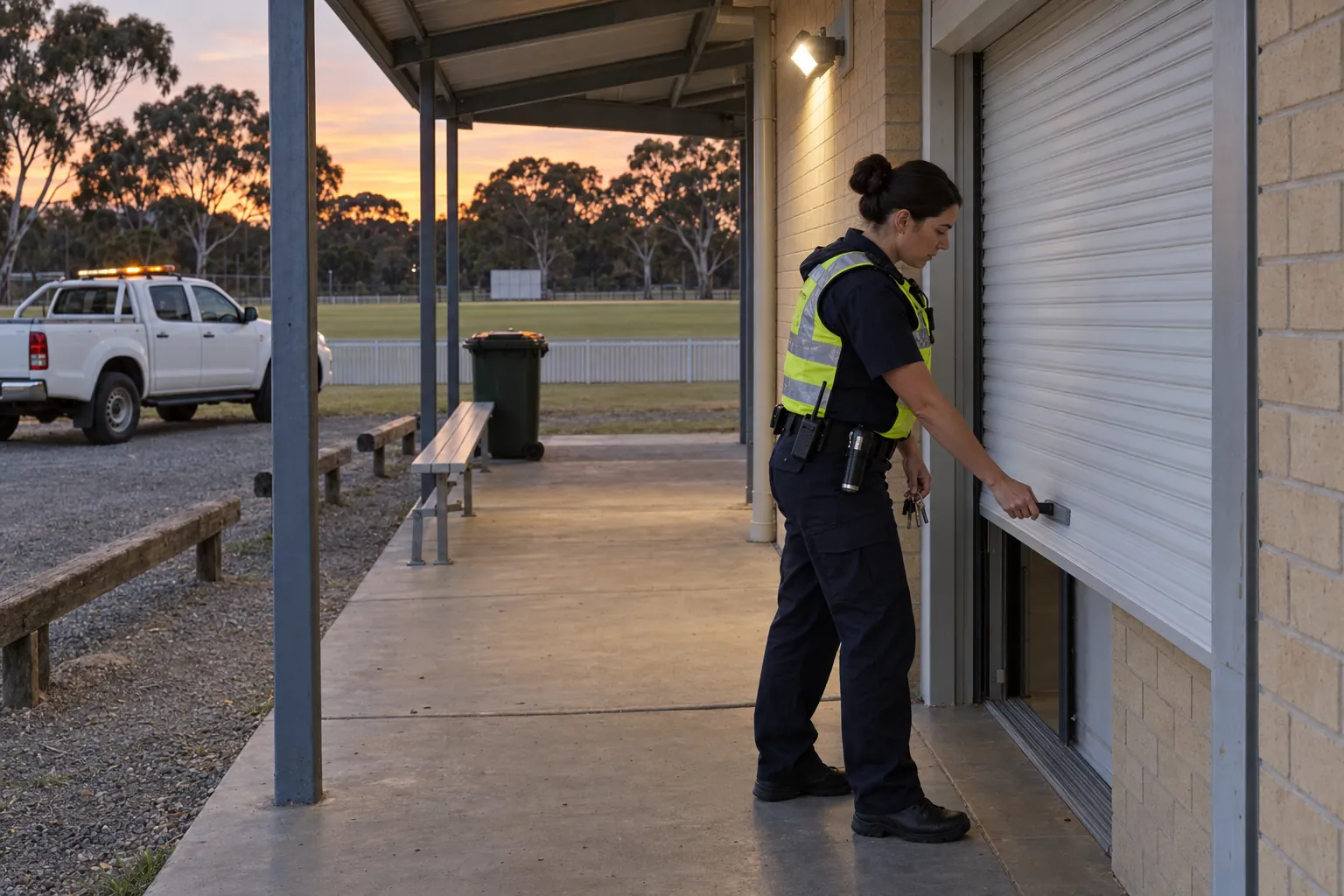
- External doors and roller doors locked, each one tested by pushing or pulling after locking.
- Exits left as the building's fire safety arrangements require, never chained shut while anyone may still be inside.
- Services on the list switched off: lights not on a timer, air-conditioning, urns, taps left running.
- Gates on the perimeter closed and locked, with a check that no car is being locked into the car park.
- The alarm armed, with any zone that will not set noted and reported.
- Keys returned to the key cabinet, and any key or card signed out that day back.
- The record: who locked up, when, and anything found.
Evening and weekend use is where routines slip. The Queensland procedure requires principals to send details of authorised users and scheduled after-hours activities to Protective Services, and to make sure authorised users "have sufficient instruction to secure facilities after use, and to correctly disarm and arm the intruder detection system". In practice that means training whoever locks up for each hirer, not just handing over a code. Fact sheet 2 adds that authorised users should hold a written notice from the school, and that any keys and alarm codes they are given "should only give access to the areas for which they are authorised". A sports club that hires the hall should have its own lock-up list for the hall, not the whole school's.
School holidays need their own plan. The procedure asks for "nominated officer(s) to manage significant security events after-hours, including school holidays", with their contact details given to Protective Services. Many schools add patrols in the holidays, a weekly walk of the grounds by a staff member, or both, because damage that happens in week one may not be found until the start of term.
04
Who does what: staff, cleaners, hirers and security guards
The principal is accountable, but the work is spread across people who rarely meet. The Queensland procedure asks the principal to "establish a list of staff responsible for relevant security practices including securing of buildings and intruder detection system maintenance". Writing that list down is half the value: it shows the gaps, such as the block nobody locks on Fridays.
- The business manager often holds the key register, alarm codes, hire agreements and security contract.
- The general assistant, groundsperson or facilities officer commonly does the afternoon lock-up, checks the fence line and gates, and reports damage.
- Cleaners are often the last people in a school each day, so the cleaning contract should say which doors they lock, whether they arm the alarm, and what they report.
- Hirers and community users lock up after themselves, under a written agreement and with their own alarm code.
- Staff report anyone on site who has not signed in, and anything that looks wrong. Queensland's procedure tells staff outside business hours to contact Protective Services on (07) 3224 6666, and Policelink on 131 444 if a crime has been committed; in an emergency, triple zero (000).
- A security company provides alarm response, mobile patrols, lock-ups or a static guard where the risk calls for it.
Security guards at a school, whether a static guard at a large event or a patrol officer doing a lock-up run, are doing licensed security work, and the licence is issued by the state or territory. Queensland's Fact sheet 2 encourages every school, "for the safety of staff", to engage a security provider to respond to intruder alarms, so that a teacher is not the first to arrive at a break-in, and says that a school arranging its own provider should "ensure the company and employees have the required security licences". The lock-up patrols guide sets out the state licensing and what a patrol's lock-up should include.
A fete, sports carnival or open night brings crowds onto a site that is normally closed. Australia's Strategy for Protecting Crowded Places from Terrorism notes that "a crowded place will not necessarily be crowded at all times", and Queensland's procedure asks for an extra risk assessment "in preparation for major events". The site security checklist guide covers the crowded places tools.
05
Reporting incidents and checking the plan works
Every state department wants incidents reported, because the reports decide where help goes. Queensland's procedure requires principals to report "ALL security incidents, including minor level unauthorised entry to school grounds and those events not reported to Queensland Police" to Protective Services as soon as possible, and the department uses the incidents of the previous two years to give each school a security risk rating of low, medium, high or extreme. Victoria's policy says criminal activity, including threats of assault, assault, arson and burglary, is to be reported "without delay to the police and to the Incident Support and Operations Centre (ISOC)" on 1800 126 126. NSW public schools can contact the School Security Unit on 1300 88 00 21, and Western Australia's policy lists School Watch on 1800 177 777.
A minor incident that is never reported, such as a cut fence or a smashed window found on Monday, makes the school look safer on paper than it is, and so less likely to get the fencing, lighting or patrols it needs.
Review is built in too. Queensland's principals document a security risk assessment every year and again after a critical incident or a significant change, such as new buildings or security installations, and complete an end of term security checklist two weeks before the end of each term.
Between those formal reviews, the daily routine is what keeps a school secure, and it needs its own record. A good record of the lock-up and after-hours checks shows, for each day:
- who did the lock-up, and at what time;
- each point on the list marked secured, or not secured with the reason;
- the alarm armed, and any zone that would not set;
- anything found: people on site, doors, windows or gates open, damage, graffiti, leaks;
- who was told, and what happened next;
- for hire nights, the hirer's lock-up as well as the school's;
- a photo where it helps, such as a gate chained or damage found.
Read the record for patterns, not just gaps: the same gate open every Thursday points to a hirer; the same alarm zone failing to set points to a faulty sensor.
06
Where the school security record fails, and where SiteClara fits
Most school security records are a lock-up sheet on the back of the office door, ticked at the end of the week, or nothing at all beyond the alarm panel's history. A ticked sheet looks the same whether every window was checked or only the front office. A gate found open is mentioned to whoever is in the staffroom the next morning and never reaches the business manager. A hirer's lock-up is not recorded by anyone. And when something goes wrong in the holidays, nobody can say when the site was last walked.
SiteClara records each check where it is done. A printed QR poster, with an optional NFC tag behind it, sits at each point on the lock-up route, such as the alarm panel, the hall's roller door or the back gate. Whoever does the check, a general assistant, a cleaner or a patrol officer, scans or taps it on their own phone, with no app to install, sees the checks due there, and marks each one done or explains what stopped them. The time and the named person are recorded as it happens, with a photo when one is asked for. A problem they report, such as a broken lock, a cut fence or a door found open, goes onto the site's list of jobs until someone closes it.
The person responsible sees what was due, done and missed, and gives the reason a check was missed. Each day they can review the checks and photos, add a note and approve a report that goes to the school's nominated contacts at 8am the next morning, showing what was reported, what was completed, what is still open and how the scheduled checks went.
07
Questions people ask
What does school security mean?
School security means the measures a school takes to keep its site, and everyone on it, safe from crime, trespass and damage. Victoria's Crime Prevention in Schools policy describes the aim as providing "a safe and secure working and learning environment for all students, staff, contractors, and visitors", and says schools should "actively adopt a range of crime prevention strategies to reduce the likelihood and consequence of criminal activity on their site".
What type of security is most needed for schools?
The type most needed depends on the school, which is why the state departments start from a security risk assessment rather than a fixed list. Victoria's Crime Prevention in Schools policy asks for a range of strategies across four kinds: target hardening, environmental design and maintenance, electronic systems, and policies and procedures. In most schools the basics are a secure perimeter, controlled entry and visitor sign-in, key control, an armed and monitored alarm, and a lock-up that is done and recorded every day.
How can a school improve its security?
Start with a documented security risk assessment, then act on what it finds. Queensland's School security procedure asks principals to "conduct and document a security risk assessment every year", to write a security risk management action plan with the risks, mitigation strategies, action items, milestone dates, resources and the responsible action officer, and to include those strategies in the school's annual facilities planning.
Does a school security guard need a licence?
Yes. A security provider and its staff need the security licences their state or territory requires. Queensland's Fact sheet 2: Developing security guidelines at schools encourages schools, "for the safety of staff", to engage a security provider to respond to intruder alarms, and tells a school arranging one independently to "ensure the company and employees have the required security licences".
08
Further reading, and a list to take away
Start with your own department's policy: Queensland's School security procedure, Victoria's Crime Prevention in Schools policy, School Infrastructure NSW's Keeping schools safe and secure or Western Australia's Security for Public Schools and Residential Facilities Policy. Catholic and independent schools should ask their own system or governing body.
To check your school's security is working, make sure that:
- a security risk assessment is documented and reviewed each year, and after a major change or incident;
- the perimeter fence and gates are inspected, and damage is reported and fixed;
- every visitor and contractor signs in and out at the office;
- keys are signed out, master keys stay on site, and keys are audited on a set timetable;
- there is a written lock-up list for each building, and a named person for each part of it;
- the alarm is armed whenever the school is empty, with an agreed response when it activates;
- hirers have a written notice, their own alarm code and their own lock-up list;
- someone is named for after-hours events, including the school holidays;
- every incident, however minor, is reported to the department's security contact;
- the daily lock-up is recorded with a name and a time, and someone reads the record.
Sources
Every document this guide quotes or links to, in the order it first cites them.
- Work Health and Safety Act 2011 legislation.qld.gov.au
- Occupational Health and Safety Act 2004 legislation.vic.gov.au
- School security procedure ppr.qed.qld.gov.au
- Crime Prevention in Schools policy www2.education.vic.gov.au
- Physical Security policy www2.education.vic.gov.au
- School Infrastructure NSW's page Keeping schools safe and secure schoolinfrastructure.nsw.gov.au
- Security for Public Schools and Residential Facilities Policy education.wa.edu.au
- Fact sheet 2: Developing security guidelines at schools ppr.qed.qld.gov.au
- Australia's Strategy for Protecting Crowded Places from Terrorism nationalsecurity.gov.au
Related guides
 Security patrolsLock-up patrols: what a lock up service covers, and how to know it happenedWhat a lock-up patrol covers in Australia: the licence behind it, the lock-up and unlock routine, keys and alarm codes, working alone, and a record that holds up.
 Security patrolsMobile patrols: what you are buying, and how to know each visit happenedWhat a mobile patrol is, how it differs from a static guard, the state licence behind it, what to agree in the contract and the patrol log that proves a visit.
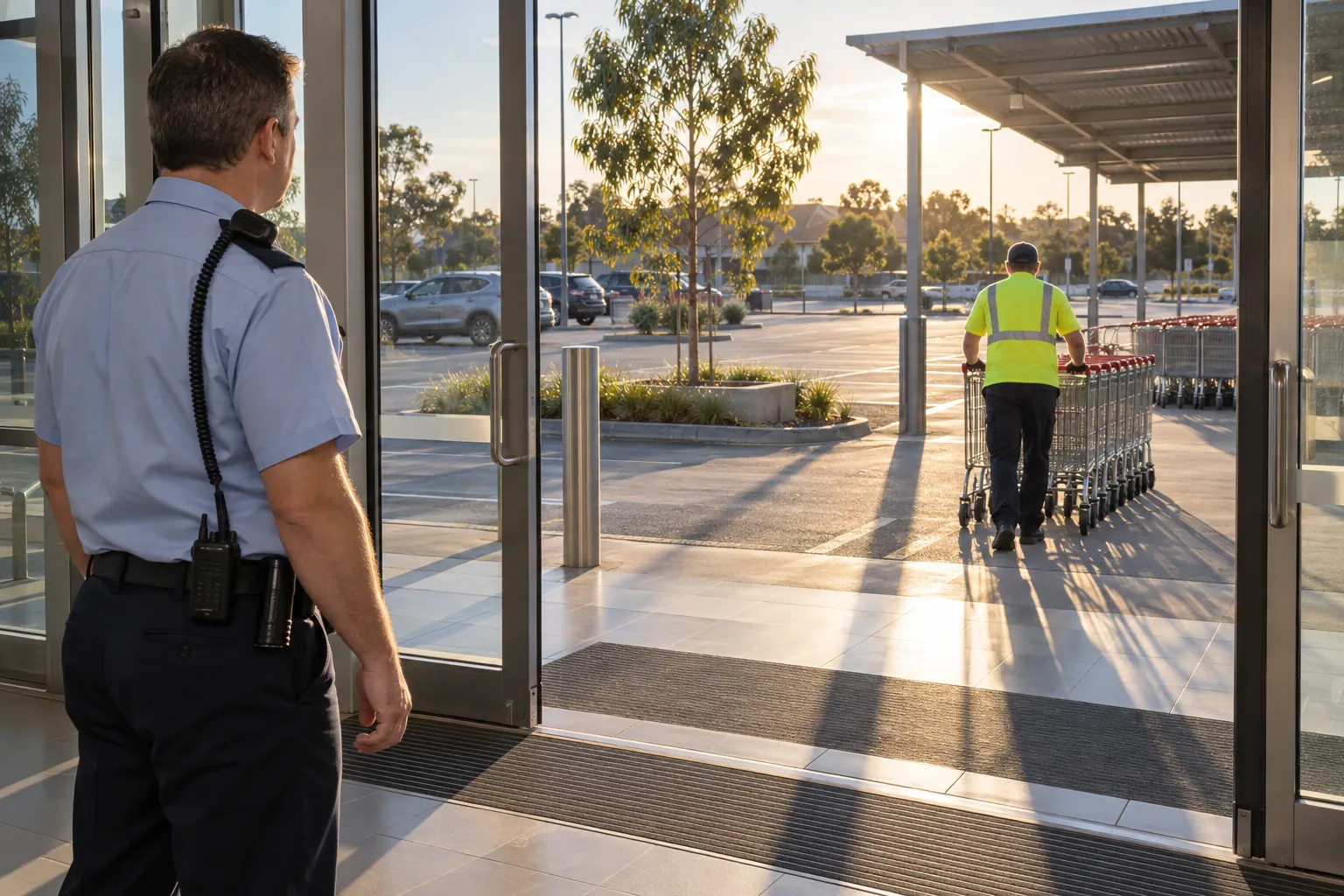 Security patrolsSite security checklist: what to check, how often, and how to show it was doneSite security checklist for Australian buildings: the WHS duty, the Crowded Places Security Audit, what to check at opening, closing and after hours, and the record.
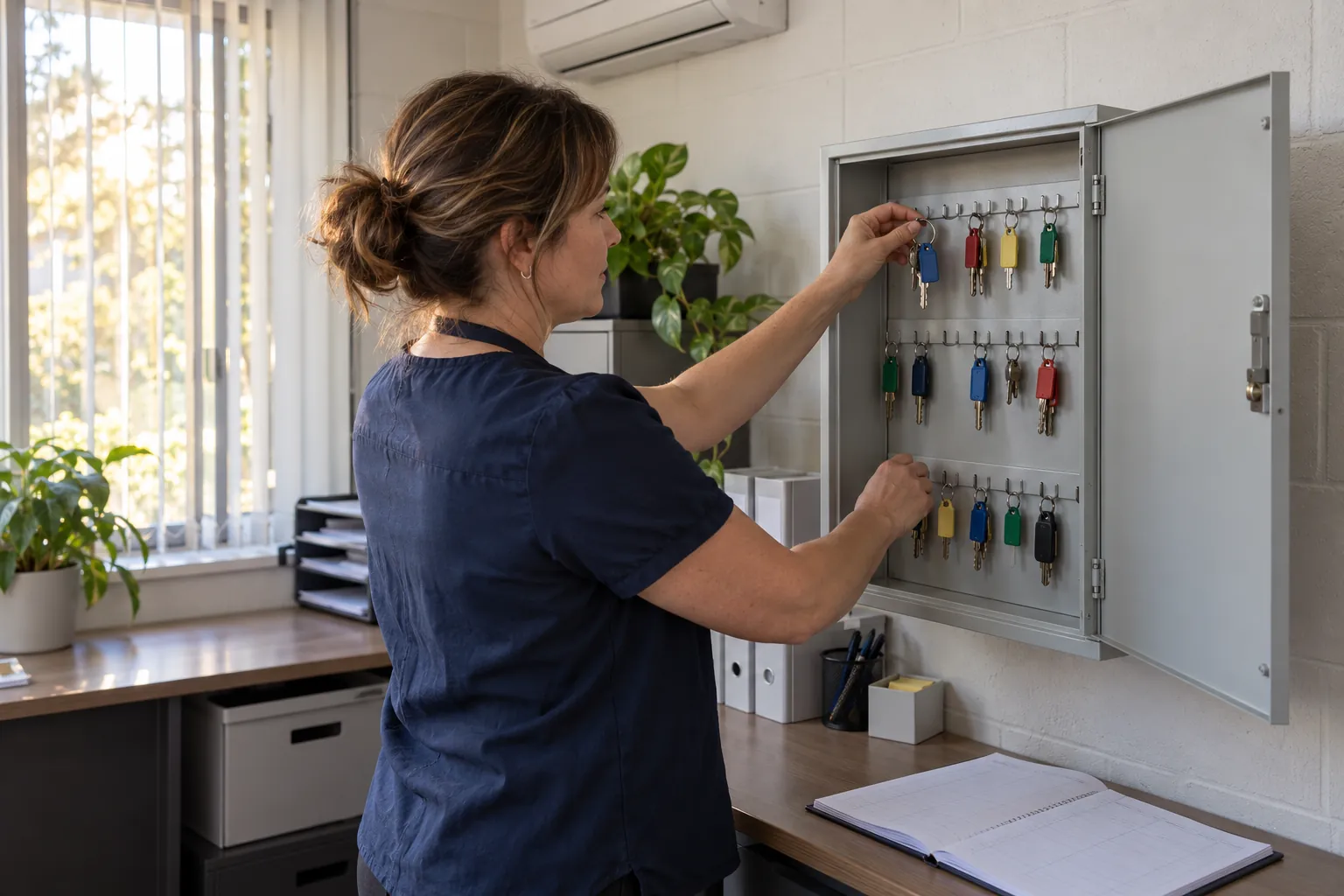 Premises and facilities managementKey register: what to record, who holds the keys, and how to audit themWhat a key register records, the WHS and fire safety rules behind it in Australia, how to issue, store and audit keys, and what to do when a key goes missing.