Premises and facilities management
Facilities management SLA: setting service levels across FM services
A facilities management SLA, or service level agreement, is an agreement, usually part of the FM contract, that sets a measurable standard for each service, such as how fast the helpdesk answers, how soon a fault is fixed and whether planned maintenance happens when it should, and says how each is measured and what happens when it is missed.
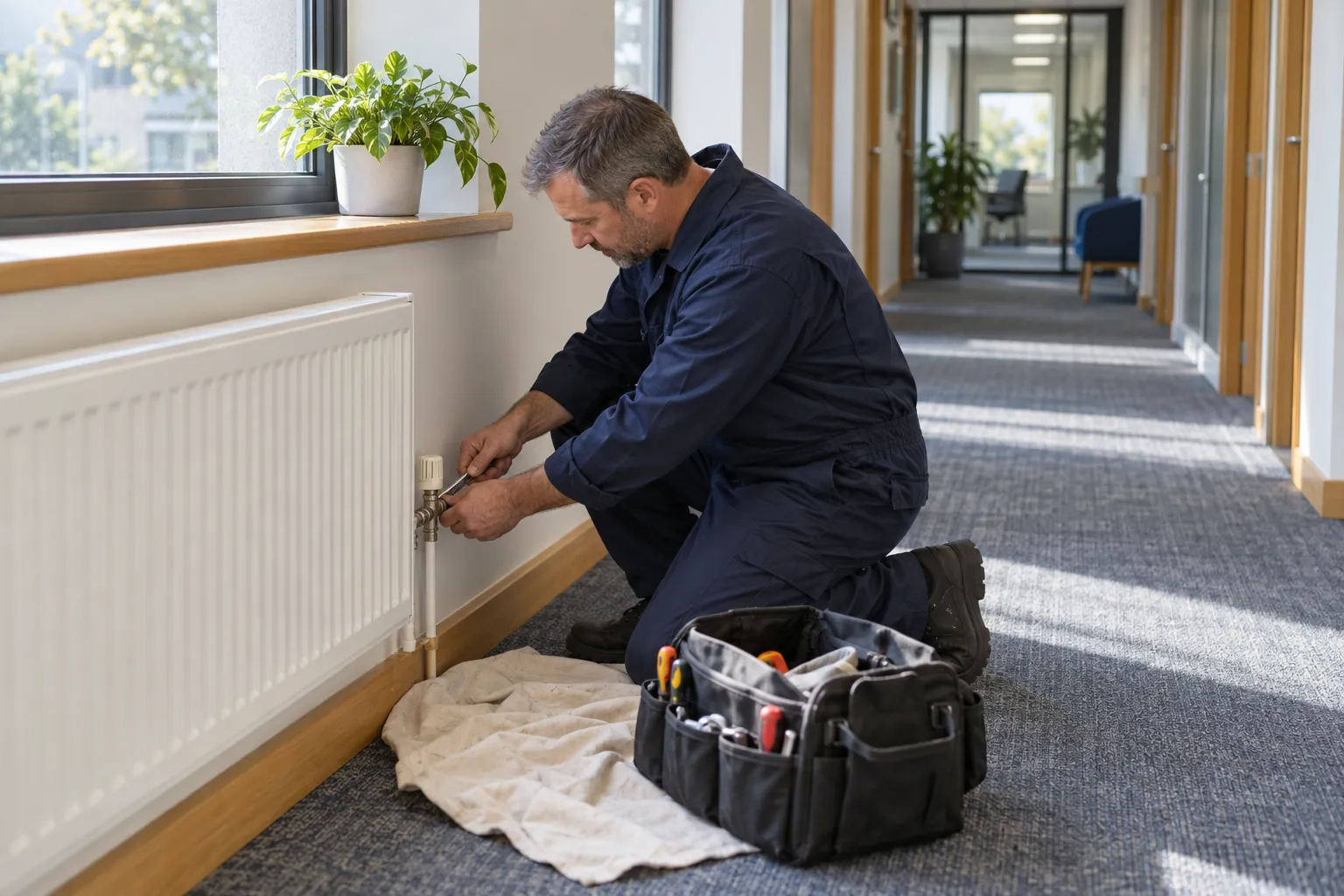
It is where facilities management stops being a promise, and where clean and secure are given a meaning both sides can check. This guide covers what an FM SLA should include across services, how to define service levels so they can be checked, and how they sit with KPIs.
01
What an SLA in facilities management is
A service level agreement (SLA) in facilities management is an agreement between a service provider and a client that sets out the level of service to be delivered, how that service performance will be measured, and what happens when service levels fall short. It is used in facilities management wherever services are outsourced, and increasingly where they are not. It is usually part of a facilities management contract, sitting alongside the service specifications and the payment terms. An in-house facilities team can also agree an internal SLA with the rest of the organisation, so that departments know what to expect and the facilities team has an agreed standard to manage to.
No law requires an SLA. It is a contractual tool. But many of the services it covers carry legal duties, and the SLA is often how a client shows those duties are being met by someone else: fire safety checks under the Regulatory Reform (Fire Safety) Order 2005 in England and Wales or the Fire (Scotland) Act 2005, workplace cleanliness and maintenance under the Workplace (Health, Safety and Welfare) Regulations 1992, and water hygiene under the HSE's Approved Code of Practice L8. For maintenance tasks, many SLAs refer to SFG20, the maintenance specification standard published by BESA, to define what planned maintenance must include and how often.
Without SLAs, each side judges the service by its own idea of an acceptable level, and the first real conversation about standards happens during a dispute. An SLA sets clear, agreed standards before that, which is the basis of consistent service delivery and of any performance management that follows. An SLA is narrower than the whole contract. It answers three questions for each service: what exactly is expected, how will we know, and what happens if it is not delivered. For cleaning alone, see the cleaning service level agreement guide; this one covers the SLA across facilities management services, from building maintenance to front of house.
What are the three types of SLAs?
The three types of service level agreement described by IBM are a customer-based SLA, between a provider and one customer, internal or external, covering the services it receives; a service-level SLA, covering one defined service given to many customers on the same terms; and a multilevel SLA, split into levels to bring more than two parties, or different levels of service, into one agreement. By that definition, an SLA agreed between an FM provider and one client, or between an in-house facilities team and the rest of its organisation, is customer-based.
02
What a facilities management SLA covers
Effective SLAs include a service scope, the service requirements, and at least one measurable performance standard for each service provided. Across a typical FM contract that means:
- Helpdesk: hours of cover, how maintenance requests and faults are logged, time to answer calls, time to acknowledge an email or portal request, and how the requester is kept informed.
- Reactive maintenance: response and fix times by priority, from emergencies to routine repairs.
- Planned preventive maintenance: tasks completed within their scheduled window, to the agreed specification, with records returned, including HVAC maintenance and the servicing that keeps facility operations running.
- Statutory compliance: inspections and tests completed before they fall due, with certificates held and remedial actions closed within agreed times.
- Cleaning: areas to be cleaned, frequencies, the standard each area must meet, audit scores and rectification times.
- Security: posts covered, patrols completed as instructed, incidents reported within an agreed time, and alarms answered.
- Front of house and support services: reception cover, post, room set-ups, waste collections and grounds maintenance.
- Reporting and review: what the provider reports, how often, and the meetings where performance is discussed.
Every standard should be something both the provider and the client could check from a record. "High level of service" is not a service level; "95% of priority 2 faults attended within four working hours, measured from the helpdesk log" is. Other examples of SLA wording that meet the same test:
- "Calls to the helpdesk answered within an agreed number of rings during staffed hours, measured from the telephone system."
- "Planned preventive maintenance tasks completed within the scheduled month, measured from the CAFM record, with the asset and task identified."
- "Scheduled washroom checks completed as specified, with a reason recorded for any missed."
- "Incidents reported to the client contact within an agreed time of the security officer becoming aware."
03
Setting service levels that can be measured
Reactive maintenance is where definitions matter most. Most FM SLAs sort faults into priorities by their effect on safety and on the business. One common pattern, for illustration only, is:
- Priority 1, emergency: a danger to people or the building, or loss of a critical service. Attend and make safe within a small number of hours, day or night.
- Priority 2, urgent: serious disruption, such as loss of heating in part of a building. Attend the same working day and fix within an agreed period.
- Priority 3, routine: a fault that can wait, such as a dripping tap. Fix within two working days or a similar agreed time.
- Priority 4, planned: minor work that can be scheduled into the next planned visit.
The right times depend on the building, the hours it is used and the distance engineers travel, and should be agreed, not copied. What matters more than the numbers is that each term is defined:
- When the clock starts: when the fault is reported, or when the helpdesk logs it.
- What stops it: attendance on site, making safe, a temporary repair, or a permanent fix. These are different service levels and should be measured separately.
- Which hours count: working hours or calendar hours, and whether the clock pauses overnight or at weekends.
- What pauses it: waiting for access, parts or a client decision, and who records the pause.
- Who decides the priority: the requester, the helpdesk or an agreed list of examples.
For cleaning and security, service levels are usually a mix of delivery measures, such as scheduled checks and patrols completed, and quality measures, such as audit scores against the specification. An SLA that only measures delivery can be met by people ticking boxes; one that only measures quality can be met by one good audit a month.
04
How SLAs sit with KPIs and service credits
SLA and KPI are often used interchangeably, but they do different jobs. The SLA defines the agreed standard for each piece of work, the required service for each task: this fault fixed within this time. The KPI measures how often the standard is met across the month: the percentage of priority 2 faults fixed within target. KPIs can also measure things the SLA does not promise job by job, such as customer satisfaction, first-time fix or repeat faults.
Service credits link the two to money. Under a service credit regime, when a KPI falls below its target and the provider fails to meet the agreed level, the provider's monthly payment is reduced by an agreed amount, usually weighted towards the service levels that matter most and capped. Service credits are useful for getting a provider to improve, but they are not a substitute for managing the contract. If service performance falls well below the expected level for month after month, the contract should say what happens next: an improvement plan, escalation to senior management on both sides, and ultimately termination for persistent failure. That is contract management, and the SLA is its tool, not its replacement.
Keep the list short. A handful of service standards that both sides measure and discuss every month will do more to hold service providers accountable than a schedule of sixty that nobody reads. Review the SLA at least once a year, and whenever the building's use or the services change.

05
Measurement and reporting
An SLA is only as good as the data behind it. Before agreeing a service level, agree where its measurement will come from:
- Helpdesk and CAFM records for response and fix times and planned maintenance completion, with the timestamps and pauses visible to the client.
- Compliance records and certificates for statutory inspections, checked against the compliance calendar.
- Audits for cleaning and other quality standards, ideally some carried out jointly by client and provider.
- Records of routine checks and patrols for the day-to-day delivery of cleaning and security.
- Customer satisfaction surveys or feedback on completed requests, to catch what the timestamps miss about service quality.
Report SLA performance each month in the same format, so that each month can be benchmarked against the last, with the underlying records available on request, and discuss exceptions rather than averages. A 97% figure hides the three emergencies that were not attended in time; the monthly review should talk about those three. The facilities management monthly report guide covers how to present it.
06
Where SLA evidence fails, and what SiteClara does about it
Maintenance SLAs usually have data behind them, because every job goes through a helpdesk and a CAFM system with timestamps. The soft service levels often do not. "Washrooms checked hourly", "patrol every two hours" and "reception cleaned before 8am" are measured, if at all, by paper sheets on site and a line in the monthly report. When a client questions them, there is little to show.
SiteClara records that routine work where it happens. A printed QR poster at each location, with an optional NFC tag behind it, lets cleaning, security or site staff scan the code or tap the tag on their own phone, with no app to install. They see the scheduled checks due there and mark each one done, or explain what stopped them, with a photo when it helps. An issue reported there goes onto the team's list of jobs until someone closes it, and a supervisor can escalate a job to the building manager, who can answer it.
The supervisor sees what is due, done and missed, and can record why a check was missed. Each day the supervisor approves a report that goes to nominated client and management contacts at 8am the next morning, showing what was reported, what was completed, what is still open and how scheduled checks went, for example 12 of 12 completed. That gives the soft services the same kind of daily record the maintenance side already has.
07
Further reading, and a checklist to take away
BESA publishes SFG20, the standard maintenance specification many FM SLAs refer to. The Institute of Workplace and Facilities Management (IWFM) publishes professional guidance on managing FM services and contracts. ISO 41001 sets out a management system for facility management, including monitoring and measuring performance. The Health and Safety Executive publishes guidance on the statutory duties behind many of the services an SLA covers.
Before you agree a facilities management SLA, check that:
- every service in scope has at least one service level;
- every service level is measurable from a record both sides can see;
- reactive priorities are defined with examples, and attend, make safe and fix are measured separately;
- clock starts, stops and pauses are written down;
- soft services have delivery measures as well as audit scores;
- each service level links to a KPI and, where agreed, a proportionate service credit;
- the SLA says what happens when performance falls short for more than one month;
- there is a date for the SLA's next review.
Sources
Every document this guide quotes or links to, in the order it first cites them.
- Regulatory Reform (Fire Safety) Order 2005 legislation.gov.uk
- Fire (Scotland) Act 2005 legislation.gov.uk
- Workplace (Health, Safety and Welfare) Regulations 1992 legislation.gov.uk
- Approved Code of Practice L8 hse.gov.uk
- SFG20 sfg20.co.uk
- IBM ibm.com
- ISO 41001 knowledge.bsigroup.com
Related guides
 Premises and facilities managementFacilities management KPIs: how to choose them, and how to keep them honestHow to choose facilities management KPIs across services: examples, input and outcome measures, data sources, definitions, and avoiding perverse incentives.
 CleaningCleaning service level agreement: what to include, and how to show it is metWhat a cleaning SLA should contain, how to set service levels and response times, service credits and escalation, and how to show the service was delivered.
 Premises and facilities managementFacilities helpdesk: what it does, and how to run one wellWhat a facilities helpdesk does, how it logs, prioritises and closes jobs, the people and systems behind it, and how to tell whether it is working.
 Premises and facilities managementFacilities management contract: what to put in it, and how to make it workWhat goes into a facilities management contract: scope, specifications, payment, KPIs and deductions, TUPE, mobilisation and exit, and the NEC4 standard form.