Premises and facilities management
Premises manager: what the job involves, and how to run it well
A premises manager is responsible for the day-to-day management of an organisation's buildings and grounds, keeping them safe, compliant, secure and in working order on the organisation's behalf, through its own staff and contractors.

Most searches for a premises manager are job adverts, and most of the adverts say the same thing in different words: responsible for the day-to-day management of our buildings, ensuring compliance, overseeing contractors. This guide sets out what that means in a college, a charity, a housing provider or a trust, how the compliance calendar works, and what leadership should expect to see.
01
What a premises manager is
A premises manager has overall responsibility for the day-to-day management and operation of an organisation's buildings and grounds: keeping them safe, compliant, secure and in working order, usually with a small team and a set of contractors. The job title is most common in organisations whose main business is not property: further education colleges, schools and academy trusts, charities, housing providers, health and care organisations, places of worship and community organisations.
The role overlaps with several others, and adverts use the titles loosely:
- a school site manager runs one school site and is usually hands-on;
- a building manager runs one building, often for a landlord;
- a facilities manager manages services across several sites, often through a larger team and bigger contracts;
- an estate manager or block manager in housing looks after residential blocks and estates, often for leasehold or shared owners;
- an accommodation manager in hospitality or student housing combines the premises with the residents' experience.
A premises manager usually sits between these: responsible for the whole of a smaller estate, reporting to a director or the chief executive, and expected to do both the planning and a fair share of the doing.
The legal duties are the organisation's. In Great Britain the premises manager carries out, on its behalf, duties under the Health and Safety at Work etc. Act 1974 and the health and safety regulations made under it, fire safety law (the Regulatory Reform (Fire Safety) Order 2005 in England and Wales, the Fire (Scotland) Act 2005 in Scotland), the Control of Asbestos Regulations 2012, and the control of Legionella under COSHH. Some sectors add their own: housing providers in England work to the Regulator of Social Housing's consumer standards, including its Safety and Quality Standard, and in England higher-risk residential buildings, at least 18 metres or seven storeys high with two or more homes, have their own regime under the Building Safety Act 2022.
02
What a premises manager job description covers
Read enough premises manager jobs, whether the vacancy is at a London housing association or a rural college, and the same duties recur. A typical premises manager job description asks the manager to take ownership of the buildings, and in particular to:
- take full ownership of compliance: statutory inspections, servicing, risk assessments and the records behind them;
- manage health and safety for the premises, including contractor control, accident and incident reporting, and first aid and fire arrangements;
- oversee contractors for maintenance, cleaning, security, grounds and waste, and manage supplier performance against their contracts;
- organise the day-to-day running of the buildings: opening and closing, repairs, room set-ups, lettings and events;
- keep the premises secure: locks, keys, alarms, CCTV, visitor access and out-of-hours call-outs;
- manage the premises budget and take part in procurement of works and services;
- plan maintenance: a programme of planned work and a list of longer-term repairs and replacements;
- manage a team of caretakers, cleaners or site staff, where the organisation employs its own;
- report to leadership on compliance, risks, spend and projects.
Adverts differ most in how hands-on the job is. A manager to oversee a trust's twelve sites will spend the week on contracts and reports; a premises manager at a single college campus may also be the person who changes the lock. Read the job type (full-time, part-time, term-time or temporary), the hours, whether the post is on-site or covers several sites, and the size of the team before comparing salaries, which vary widely with sector and region: current vacancies are the best guide.
03
The compliance calendar
The single most useful thing a new premises manager can build is a compliance calendar: every recurring inspection, test and review for every building, with its frequency, who does it, and where the record lives. Most follow the same shape:
- Weekly: fire alarm tests, checks of escape routes and fire doors, flushing of little-used water outlets where the Legionella risk assessment asks for it, and routine walk-rounds.
- Monthly: emergency lighting function tests, water temperature checks, fire extinguisher visual checks, and checks of first aid kits.
- Six-monthly and annual: servicing of the fire alarm, emergency lighting and extinguishers; thorough examination of lifts and lifting equipment under LOLER; gas safety checks and boiler servicing; portable appliance inspection and testing at a frequency set by risk.
- Longer cycles: fixed electrical installation testing, pressure system examinations, and reviews of the fire risk assessment, the Legionella risk assessment and the asbestos management plan.
Frequencies come from the regulations, the relevant British Standards and the manufacturer's or competent person's recommendations, and the risk assessments may tighten them. The calendar should show each item's owner, its last date and its next date, so that an overdue item stands out without anyone having to look for it.
04
Contractors, security and budgets
Most of the work a premises manager is accountable for is done by someone else, which makes managing contractors a key role in the job. That means clear specifications, a record of each contractor's competence and insurance, induction on site including the asbestos information, permits for hot work or work at height where needed, and checking the work before the invoice is paid. Supplier performance should be measured the same way every month, against the service levels in the contract.
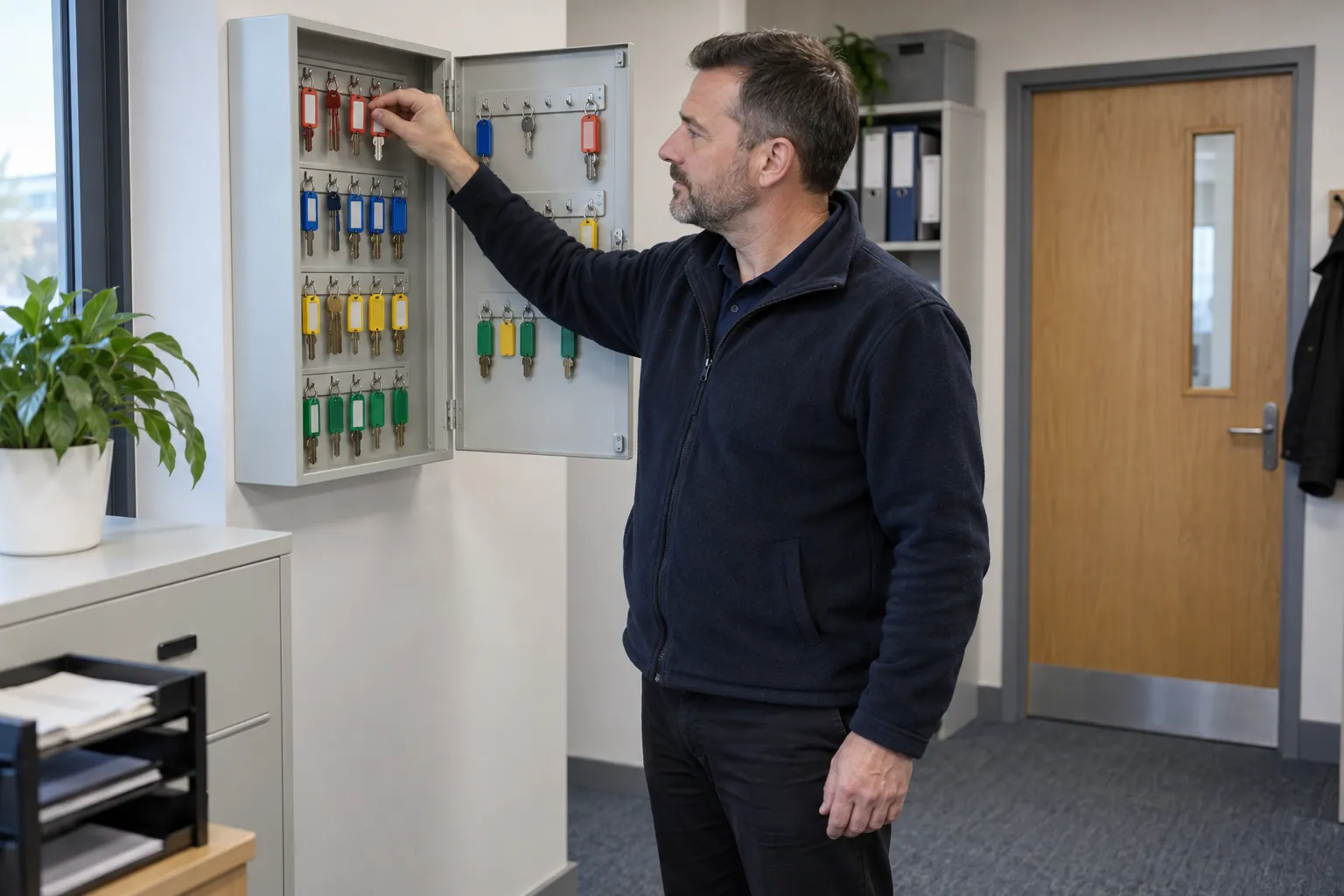
Security is usually a premises manager's responsibility too: who holds keys and codes, how visitors are signed in, which doors are locked when, how the intruder alarm is answered out of hours, and how CCTV is managed lawfully. In a school or a service for vulnerable people this sits alongside the organisation's safeguarding policy.
The budget usually has two halves: an operating budget for contracts, utilities, repairs and consumables, and a capital or planned maintenance budget for bigger works. Procurement rules depend on the organisation; public bodies, colleges and academy trusts have their own thresholds and processes. A premises manager who can show leadership what each building costs to run and what is coming in the next five years is far easier to fund than one who asks for money when something fails.
05
Reporting to leadership
Leadership, and in many organisations a board of trustees or governors, holds the legal responsibility the premises manager carries out. What they need is short and specific:
- Compliance: which statutory items are in date, which are overdue, and what is being done about each.
- Risks: open actions from the fire risk assessment and other risk assessments, and anything newly found.
- Incidents: accidents, near misses and security incidents on the premises.
- Delivery: whether the routine checks and contracted services happened as planned.
- Money and projects: spend against budget, and progress on planned works.
A monthly or termly report in that shape, with the evidence behind each line available on request, lets the board discharge its duty and lets the premises manager show the job is being done. Many premises managers also hold a health and safety qualification such as IOSH Managing Safely or a NEBOSH certificate, which helps when the conversation turns to risk. Experience in facilities management, estates or hospitality is common in successful applicants, and recruitment for senior posts often asks for evidence of managing contractors and budgets.
06
Where the record fails, and what SiteClara does about it
The premises manager's contractor certificates are usually in good order. The weak part is the routine work in between: the weekly checks done by caretakers, the cleaning and security rounds, the faults reported to a receptionist. That work is recorded, if at all, on paper in several places, and a premises manager covering more than one building often learns a check was missed only when something goes wrong.
SiteClara records that routine work where it happens. A printed QR poster at each location, such as a fire exit, a plant room, a washroom or a bin store, with an optional NFC tag behind it, lets site, cleaning or security staff scan the code or tap the tag on their own phone, with no app to install. They see the scheduled checks due there and mark each one done or explain what stopped them, with a photo when it helps. An issue reported there goes onto the team's list of jobs until someone closes it; the supervisor's queue groups open jobs by building and floor, and a job can be escalated to the building manager, who can answer it.
Each day the supervisor reviews the day's totals and photos, adds a note, records who was notified and approves a report, which goes to the premises manager and other nominated contacts at 8am the next morning. It shows what was reported, completed and still open, and how scheduled checks went, for example 12 of 12 completed. Where a cleaning contractor and a security contractor share a site, each can run its own staff, forms and approval. It is priced per building, with no per-person fees.
07
Further reading, and a list to take away
The Health and Safety Executive publishes guidance on managing premises, asbestos, Legionella (L8 and HSG274), lifting equipment, electrical safety and contractors. The Home Office and the Scottish Government publish fire safety guidance for non-domestic premises. The Department for Education publishes Good estate management for schools, useful well beyond schools. The Regulator of Social Housing publishes its consumer standards, and the Institute of Workplace and Facilities Management (IWFM) publishes professional standards for the wider facilities management profession.
In your first month as a premises manager, make sure you know:
- every building and area you are responsible for, and the legal duty holder for each;
- the compliance calendar, with every item's owner, last date and next date;
- where the fire risk assessment, asbestos register and Legionella risk assessment are, and their open actions;
- which contractors work on site, their contracts, and how their performance is measured;
- who holds keys and codes, and how out-of-hours call-outs work;
- the operating and capital budgets, and the procurement rules you must follow;
- what leadership expects to see from you, and how often.
Sources
Every document this guide quotes or links to, in the order it first cites them.
- Health and Safety at Work etc. Act 1974 legislation.gov.uk
- Regulatory Reform (Fire Safety) Order 2005 legislation.gov.uk
- Fire (Scotland) Act 2005 legislation.gov.uk
- Control of Asbestos Regulations 2012 legislation.gov.uk
- Safety and Quality Standard gov.uk
- Good estate management for schools gov.uk
Related guides
 Premises and facilities managementBuilding compliance checklist: the statutory picture for a UK buildingBuilding compliance checklist for UK non-domestic buildings: fire, electrical, gas, water, asbestos, lifts, access and energy, who is responsible, how often.
 Premises and facilities managementFacilities manager responsibilities: what the role covers, and how to show it is doneWhat a facilities manager is responsible for across services and sites: compliance, contractors, budgets, space, health and safety, and reporting.
 Premises and facilities managementBuilding manager responsibilities: the duties, the daily work and the recordWhat a building manager is responsible for in UK commercial and residential buildings: legal duties, daily work, contractors and the records that prove it.
 Premises and facilities managementSchool site manager duties: the role, the routine checks and the recordWhat a school site manager does: security, health and safety checks, repairs, cleaning and contractors, how often checks are due, and how to record them.