Premises and facilities management
School site manager duties: the role, the routine checks and the record
A school site manager, or caretaker, keeps a school's buildings and grounds secure, clean, maintained and safe day to day: opening and locking up, routine health and safety checks, minor repairs, and letting in and supervising contractors.
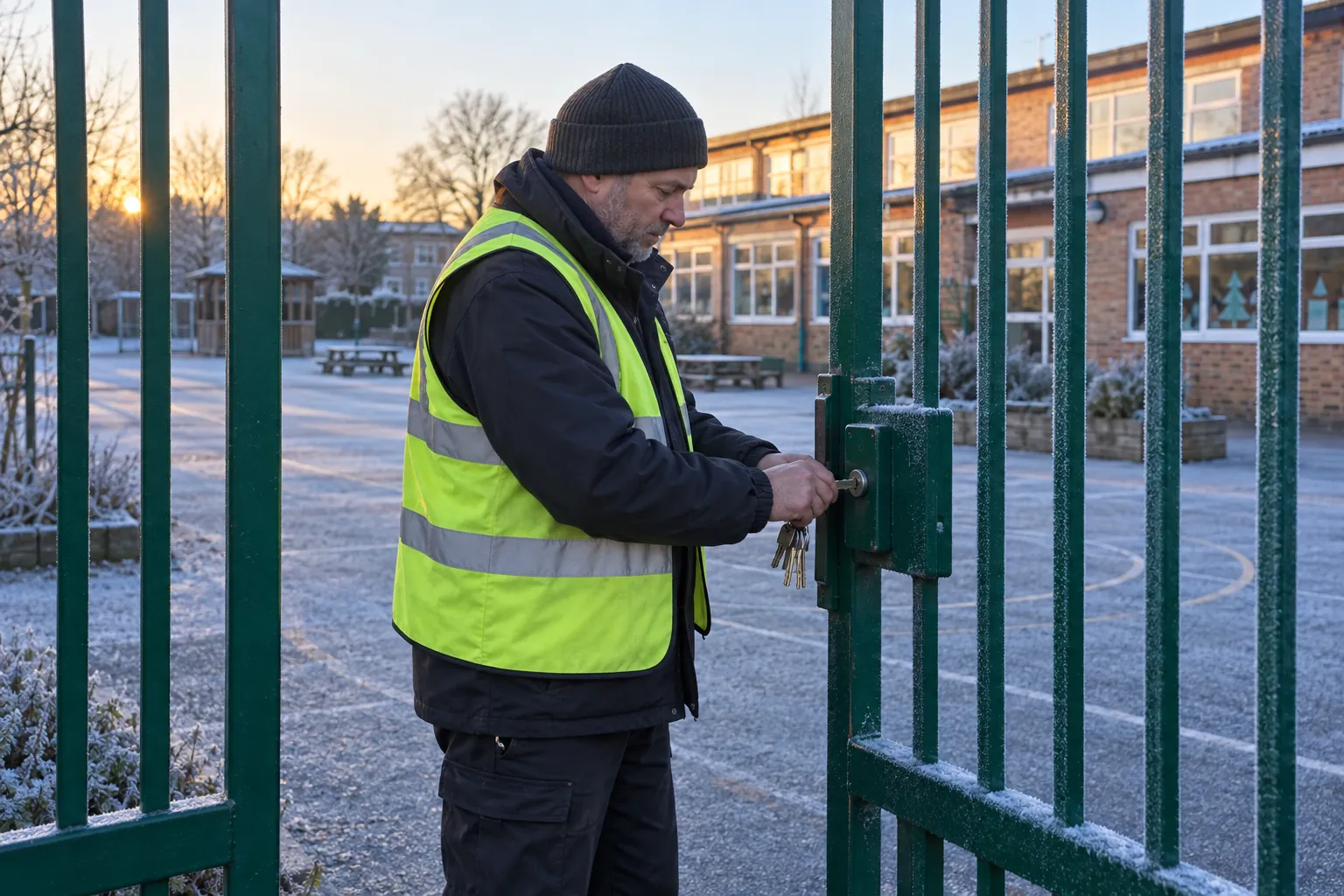
The site manager is usually the first person in and the last out. This guide sets out what the role covers, the routine health and safety checks most site managers carry out and how often, who the site manager answers to, and how the work can be recorded so the school can show it was done.
01
What a school site manager is responsible for
A school site manager looks after the premises so that the school can open safely every day. The job title varies: caretaker, site manager, premises manager, or in Scotland often janitor, and the role varies depending on the size of the school. Whatever the title, the aim is the smooth running of the site, so that teaching and learning are never interrupted by the building. In a small primary school one caretaker may open up, clean, fix and lock up; in a large secondary or a multi-academy trust there may be a team of site staff under a site manager or estates manager.
The site manager carries a lot of practical responsibility but is rarely the legal duty holder. Under the Health and Safety at Work etc. Act 1974 the employer holds the duty: the local authority for community and voluntary controlled schools, the governing body for foundation and voluntary aided schools, and the trust for academies. The Department for Education's guidance Health and safety: responsibilities and duties for schools explains who is responsible for what in England. The head teacher usually manages health and safety day to day, and the site manager carries out many of the checks and keeps many of the records that show the school's arrangements are working.
That distinction matters for a job description. A site manager can be responsible for carrying out the weekly fire alarm test and recording it; they are not personally responsible for the school's fire risk assessment unless the employer has trained them and given them that task.
02
The main duties of a school site manager
Most school site manager job descriptions, including the model versions used by local authorities and trusts, cover the same ground:
- Security and opening: opening and locking the site, setting and unsetting alarms, holding keys, responding to alarm call-outs out of hours, and checking gates, fences and doors.
- Health and safety checks: routine fire, water, lighting and site safety checks, recorded in the premises log, with problems reported to the head or business manager.
- Maintenance and repair: minor repairs, decorating and routine maintenance within the site manager's competence, and reporting larger problems for a contractor.
- Contractors: letting contractors in, checking them against the asbestos register before they drill or cut, signing them in and out, and making sure they are supervised as the school's safeguarding policy requires.
- Cleaning: supervising in-house cleaners or acting as the link with the cleaning company, and dealing with spills and accidents during the school day.
- Grounds and winter: litter picking, playground checks, clearing leaves, and gritting paths in ice and snow.
- Heating and utilities: checking boilers and heating controls are working, reading meters, and reporting faults.
- Lettings and events: opening for evening and weekend lettings, setting up halls for exams, assemblies and events, and moving furniture.
- Emergency situations: responding to floods, power failures, break-ins and other incidents, and supporting evacuation and lockdown procedures.
A good job description says which of these the site manager does personally, which they supervise, and which they only report. It should also say who the site manager reports to, usually the school business manager or head teacher, and what budget or authority they have to call in a contractor.
03
The routine checks, and how often
Much of the site manager's week is made up of routine checks. The exact list comes from the school's own risk assessments and the employer's policies, but a typical school includes:
- Daily: a walk of the site before pupils arrive, checking gates, fences, doors, playgrounds and escape routes, and removing hazards such as broken glass or litter; checking toilets are working and the heating is on.
- Weekly: a test of the fire alarm system from a different call point each week, as recommended by BS 5839-1; flushing of little-used water outlets as part of the school's Legionella controls; a check that fire doors close properly and escape routes are clear.
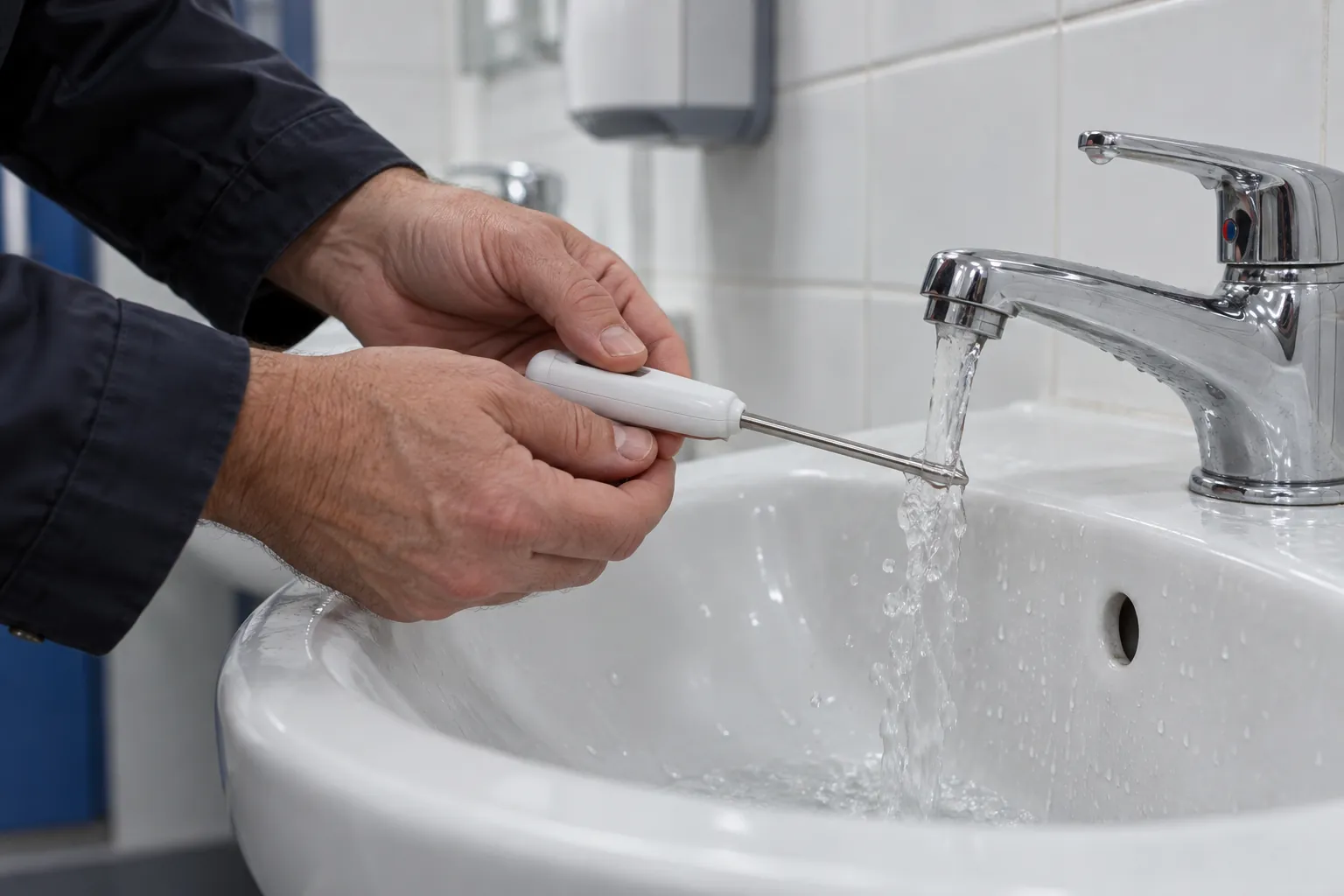
- Monthly: a short functional test of emergency lighting, as recommended by BS 5266-1; hot and cold water temperature checks at the outlets named in the Legionella written scheme; visual checks that fire extinguishers are in place, charged and undamaged; a closer inspection of fire doors.
- Termly or annually: supporting the contractor's servicing of the fire alarm, emergency lighting, extinguishers, boilers and water systems, and the annual full-duration emergency lighting test; checking the condition of any asbestos known to be in the building, in line with the asbestos management plan.
Competent contractors carry out the specialist inspections: gas safety, fixed electrical installation testing, lifts, and the servicing of fire systems. The site manager's job is to make sure they happen, let the contractor in, and keep the certificates where they can be found.
04
Training, qualifications and safeguarding
No specific qualification is required to be a school site manager, and employers recruit from many backgrounds, which is why recruitment should test for the right attitude to safety as much as trade skills: maintenance trades, facilities, the armed forces, cleaning supervision. What the role needs is suitable training for the checks it carries out, and a plan for development with training opportunities, because caretaking in a modern school has become a technical job with a career path into estates and facilities management. Common examples are:
- asbestos awareness, because site staff are the people most likely to disturb it;
- Legionella awareness and training in the school's water checks;
- fire safety and fire marshal training, and training in the fire alarm panel;
- working at height, ladder use, and manual handling;
- COSHH, for the cleaning and maintenance chemicals the site team uses;
- first aid, and a health and safety course such as IOSH Working Safely or Managing Safely for larger roles.
School site staff work around children every day. In England, Keeping Children Safe in Education sets out the pre-employment checks schools must carry out, including an enhanced DBS check, and site managers should receive the same safeguarding training as other staff. The site manager is also often the person who checks that contractors on site are either vetted or supervised.
The role involves lone working, especially early in the morning, in the evenings and during holidays. The employer should assess that risk and agree how the site manager keeps in contact, what they should not do alone, and what happens if they do not check in. The Health and Safety Executive's guidance on protecting lone workers is the starting point.
05
What a good site record looks like
A school site manager spends much of the day doing things that leave no trace unless they are written down. When an inspector, insurer, auditor or governor asks whether the school's checks are being done, the answer comes from the record, not from the site manager's memory. A good record:
- Is made at the time, with the date and time the check was done, not the day it was due.
- Names who did it, which matters when the caretaker is on leave and someone else covers.
- Shows what was found: "call point 4, alarm sounded, all sounders heard" rather than a tick.
- Shows what happened next: a fault reported, to whom, and when it was fixed.
- Explains gaps: a missed check with a reason, such as a holiday closure or a contractor visit, is more credible than a year without a gap.
- Can be found: fire, water and asbestos records kept where the head, the business manager and a visiting inspector can see them.
Local authorities and trusts often provide a premises log book for exactly this, and the school should use it. What goes wrong is usually not the book but the gap between the book and the work: checks done and not written down, or written down in a batch at the end of the week.
06
Where the site record fails, and what SiteClara does about it
The site manager's day is interrupted by everything: a leak, a delivery, a locked-out teacher, a child's accident. Paper logs are completed later from memory, and faults reported in the corridor are forgotten by lunchtime. The business manager sees the log book only when they go looking, and a missed weekly fire alarm test is noticed at the next audit, not the next day.
SiteClara puts a printed QR poster at each location, such as the fire alarm panel, each plant room, the boiler room and each toilet block, with an optional NFC tag behind it. The site manager or a colleague scans the code or taps the tag on their own phone, with no app to install, sees the scheduled checks due there, and marks each one done or explains what stopped them, with a photo when it helps. A fault found on a check, or reported by a member of staff, goes onto the team's list of jobs, grouped by building and floor, until someone closes it.
The site manager, as supervisor, sees what is due, done and missed, records the reason a check was missed, and approves a daily report. It goes to the head, business manager or trust estates lead at 8am the next morning, showing what was reported, what was completed, what is still open and how scheduled checks went.
07
Further reading, and a list to take away
The Department for Education publishes Health and safety: responsibilities and duties for schools, Good estate management for schools, guidance on asbestos management in schools, and Keeping Children Safe in Education. The Health and Safety Executive publishes guidance on Legionella (including HSG274), asbestos, working at height and lone working. Your local authority or trust will have its own premises policies and log book.
When writing or reviewing a school site manager job description, check that it:
- names who the site manager reports to and what they can authorise;
- separates duties done personally from those supervised or only reported;
- lists the routine checks and their frequencies, from the school's own risk assessments;
- covers contractors, the asbestos register and safeguarding on site;
- includes the training the checks need, with refresher dates;
- addresses lone working and out-of-hours call-outs;
- says where each check is recorded and who reviews the record;
- names who covers the checks when the site manager is away.
Sources
Every document this guide quotes or links to, in the order it first cites them.
- Health and Safety at Work etc. Act 1974 legislation.gov.uk
- Health and safety: responsibilities and duties for schools gov.uk
- Keeping Children Safe in Education gov.uk
- Protecting lone workers hse.gov.uk
- Good estate management for schools gov.uk
- Asbestos management in schools gov.uk
Related guides
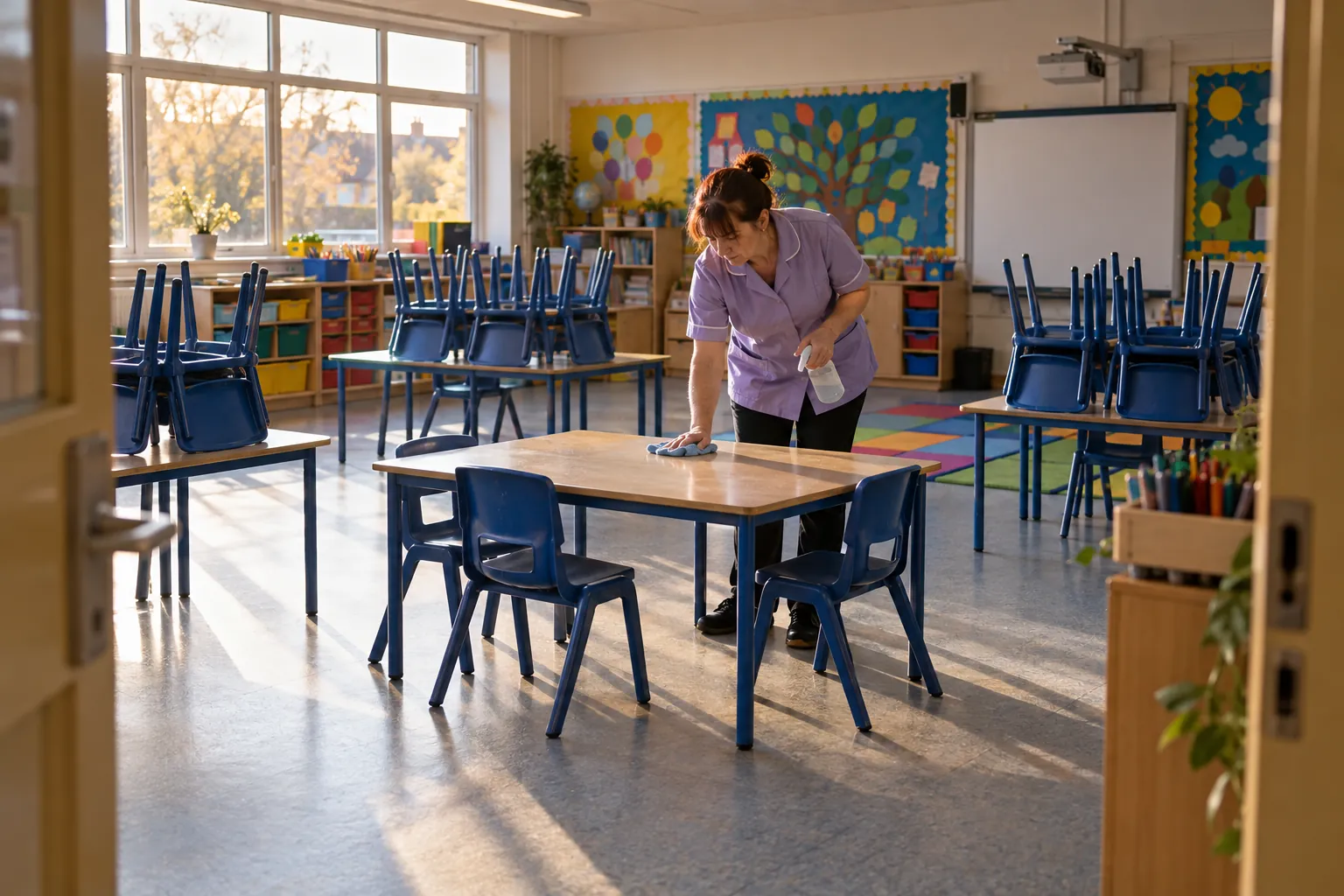 CleaningSchool cleaning checklist: what to clean, how often, and how to show it was doneA school cleaning checklist for classrooms, toilets, corridors, dining hall and changing rooms, with daily, weekly and holiday tasks and how to record them.
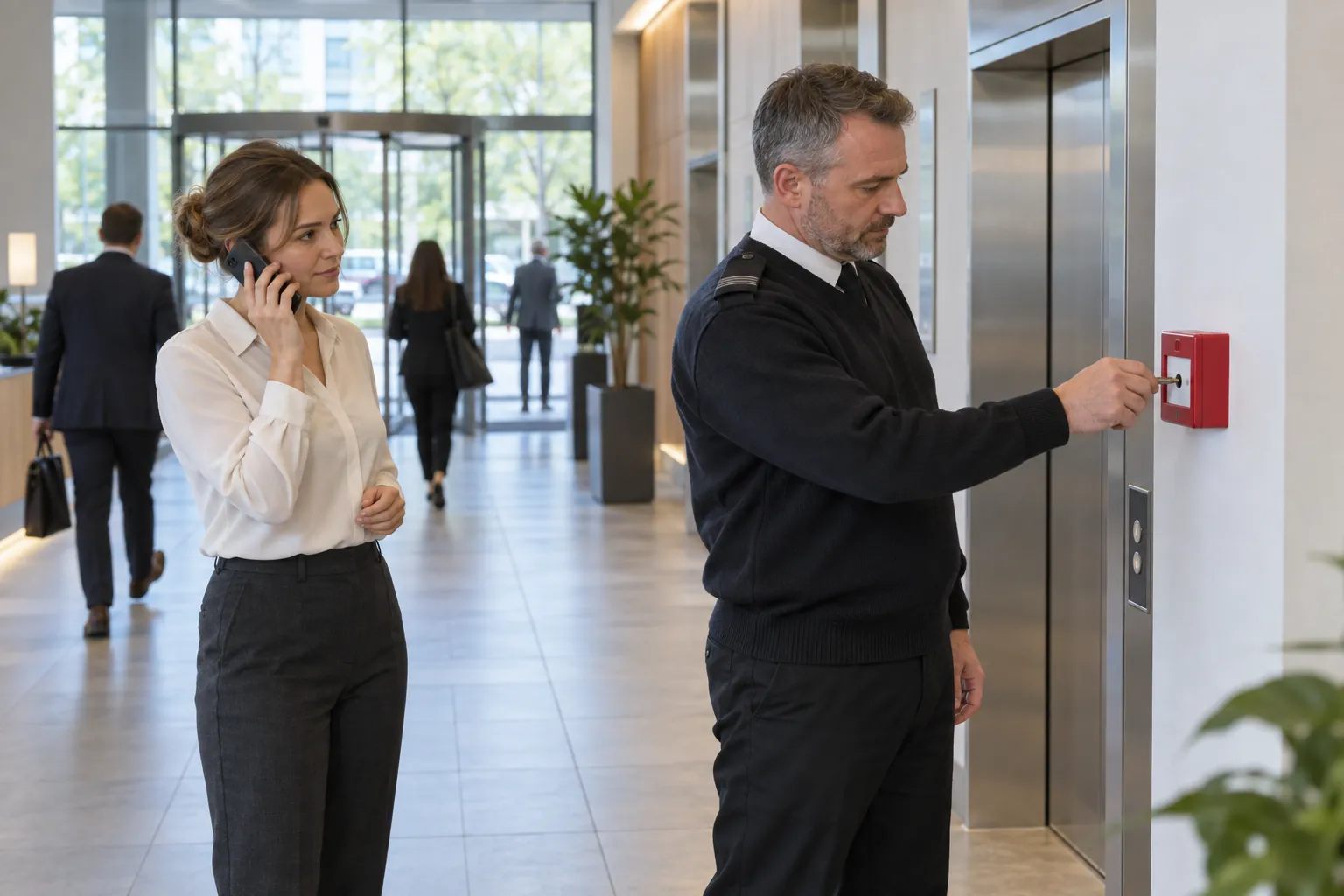 Fire and water checksWeekly fire alarm test: how to do it, and what to recordWeekly fire alarm test: how to carry out the test BS 5839-1 recommends, rotating call points, what to record, and what only a competent person can do.
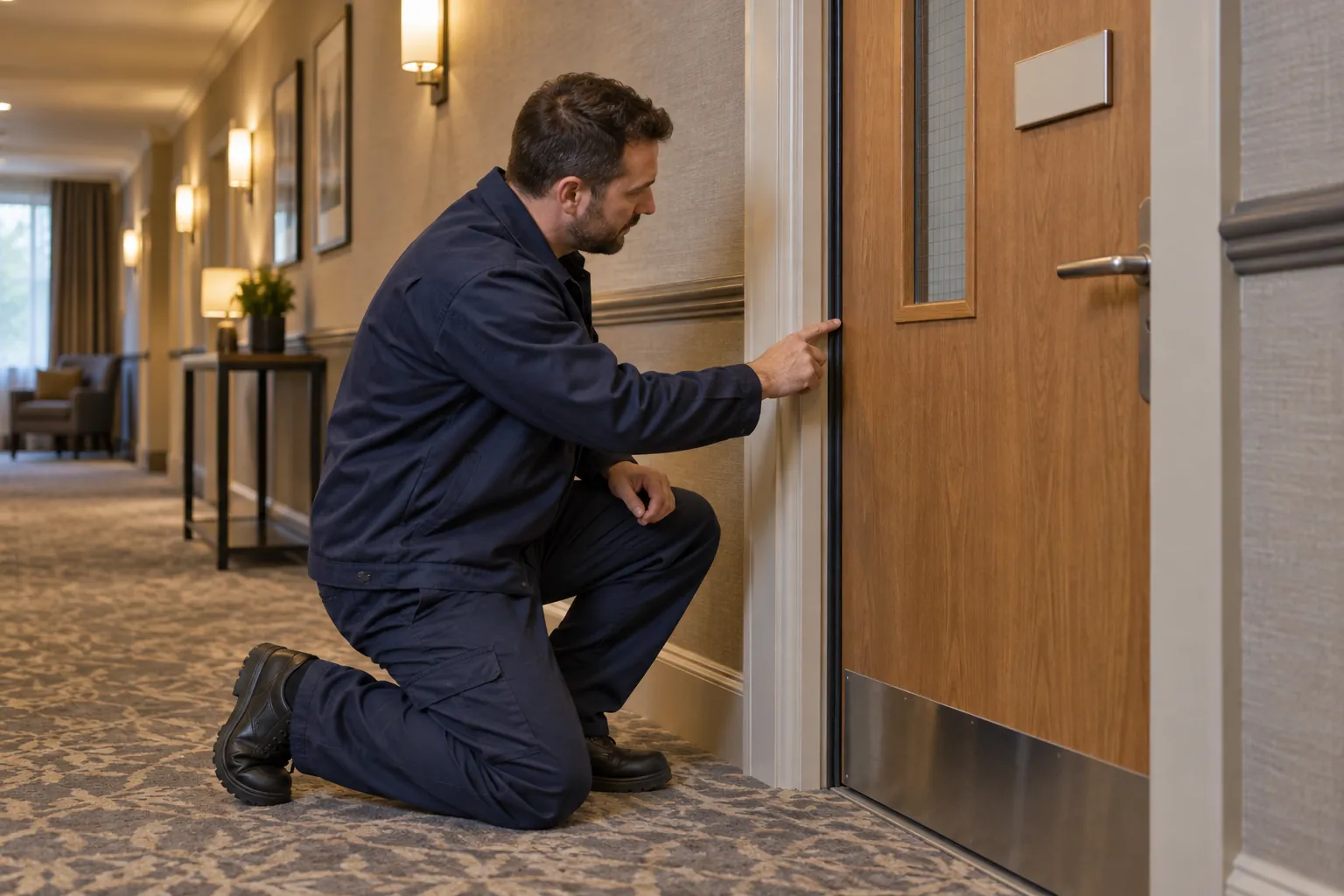 Fire and water checksFire door checks: what a routine check looks atFire door checks in any building: gaps, seals, closers, hinges, glazing and signs, how often to check, and when to call a fire door inspector.
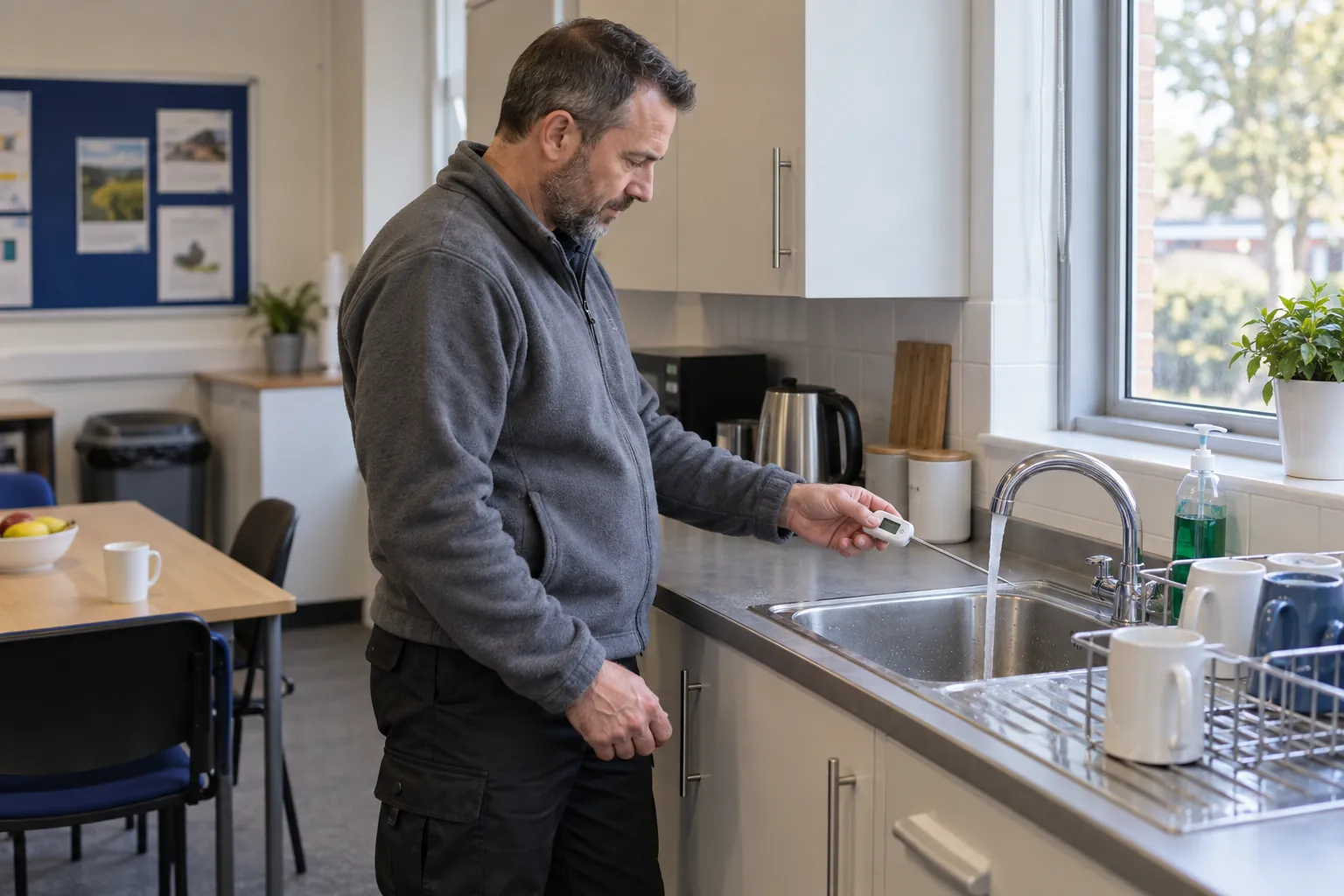 Fire and water checksLegionella checks: the routine monitoring, and the record that shows it was doneThe routine legionella checks in hot and cold water systems under HSE's L8 and HSG274: flushing, temperatures, who does them and what the record should show.