Premises and facilities management
Building manager responsibilities: the duties, the daily work and the record
A building manager is responsible for the day-to-day running of a building – its safety and statutory compliance, maintenance, cleaning, security, contractors and occupants – carrying out the legal duties that the law places on whoever owns, occupies or controls the building.
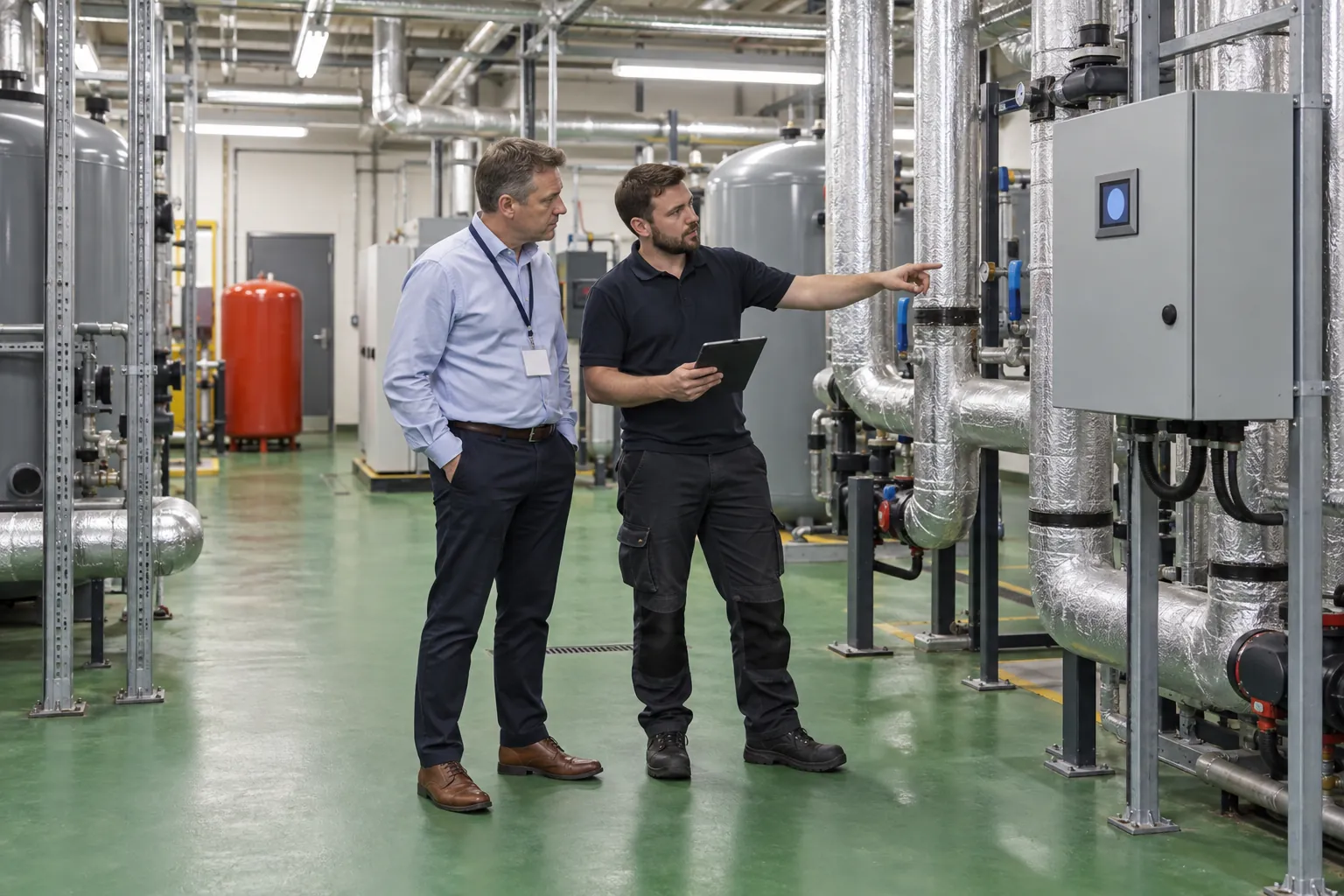
This guide covers the legal duties a building manager carries out, the day-to-day responsibilities, how the role differs between commercial and residential buildings, and what a good record of the work looks like.
01
What a building manager is, and the law behind the role
A building manager is responsible for the day-to-day operation of a building: its safety, its building services, its cleanliness and security, and the people and contractors who work in it. The title overlaps with several others. A facilities manager usually looks after the services an organisation needs in the buildings it occupies; a property manager or managing agent looks after a landlord's interests in let property, including rent, service charges and leases; a building manager is the person on site, or responsible for the site, who makes the building work. In smaller organisations one person does all three.
There is no licence to be a building manager in the UK, and no single law describing the role. Instead, the role carries out duties that the law places on whoever owns, occupies or controls the building. The main ones in England and Wales are:
- The Health and Safety at Work etc. Act 1974, including the duty on people in control of non-domestic premises towards those who use them, and the Workplace (Health, Safety and Welfare) Regulations 1992.
- The Regulatory Reform (Fire Safety) Order 2005: a suitable and sufficient fire risk assessment, fire precautions, and maintenance of fire safety systems, by or for the responsible person.
- The Control of Asbestos Regulations 2012: the duty to manage asbestos in non-domestic premises, including the common parts of residential blocks.
- Legionella: the risk assessment and control scheme described in the HSE's Approved Code of Practice L8 and its guidance HSG274.
- The Electricity at Work Regulations 1989, the Lifting Operations and Lifting Equipment Regulations 1998 for lifts used at work, and the Gas Safety (Installation and Use) Regulations 1998.
- The Construction (Design and Management) Regulations 2015 whenever refurbishments or building work are carried out.
- The Building Safety Act 2022 for higher-risk residential buildings in England: at least 18 metres or seven storeys, with at least two residential units.
Scotland and Northern Ireland have their own fire safety law, and some of the regulations differ. The building manager is rarely the legal duty holder in their own right, but they are usually the person who makes sure the duties are met and can show it.
02
Key responsibilities of a building manager
Building manager job descriptions vary with the building, but the key responsibilities are consistent:
- Health and safety compliance: making sure risk assessments are current, safety inspections and statutory tests are done on time, and certificates are kept.
- Operation and maintenance: planned maintenance activities for building systems such as HVAC, lifts, water, electrical and fire systems, and reactive repairs when something breaks.
- Contract management: appointing, instructing and checking service providers for cleaning, security, maintenance, waste management and grounds.
- Security and access: access control, keys and fobs, CCTV, reception or concierge, and out-of-hours response.
- Cleaning and waste: the cleaning specification, and the duty of care for waste under the Environmental Protection Act 1990, using authorised carriers and keeping transfer records.
- Tenants and occupants: being the point of contact for complaints and requests, communicating planned works, and building positive relationships with tenants and owners.
- Financial management: budgets, service charge or cost recovery information, and value for money from contractors.
- Emergencies and business continuity: fire evacuation, floods, power and water failures, lift entrapments, and the plans that keep the building running when something goes wrong.
- Projects and refurbishments: fit-outs, upgrades and major works, with the client duties under CDM 2015 where they apply, and work that must adhere to the Building Regulations, the UK's building codes.
03
How the role differs between commercial and residential buildings
Building management duties vary between residential and commercial properties, although the safety law underneath is much the same.
- Commercial properties, such as multi-let offices, business parks and shopping centres: the building manager works for the landlord or its managing agent, manages the common parts and shared building services, and coordinates with each occupier's own facilities team. Tenants are businesses with their own health and safety duties, and the lease sets out who is responsible for what.
- Residential properties, such as blocks of flats, build-to-rent and student accommodation: the building manager often works on site, manages the common parts on behalf of the landlord or residents' management company, and deals directly with residents. Fire safety in the common parts is central, and in England the Fire Safety (England) Regulations 2022 add specific duties, such as quarterly checks of communal fire doors in buildings over 11 metres.
- Owner-occupied buildings, such as a company headquarters, school or hospital site: the building manager, often called a facilities manager, works for the occupier, and the role reaches further into the services people use each day.
In each case, write down where the building manager's responsibility ends. The most common failures in building management are at the boundaries: between landlord and tenant, between the managing agent and the site team, between the maintenance contractor and the cleaning contractor.
04
The day-to-day operations
Most of a building manager's daily operations are small things that keep the building working, safe and compliant. A building manager will liaise with tenants, contractors, the owner and sometimes the local authority in the same morning:
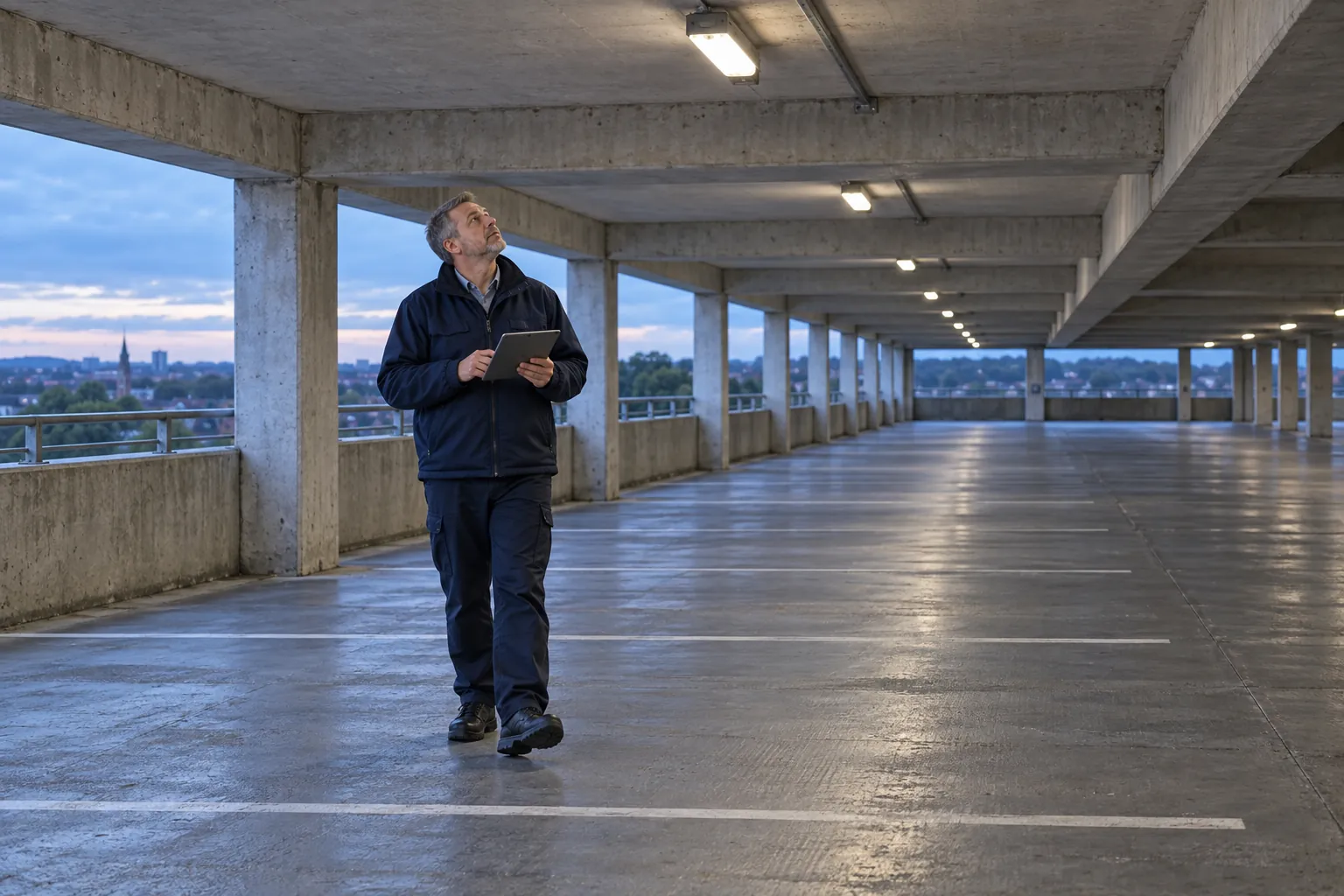
- A walk-round of the building, checking entrances, common parts, plant rooms, escape routes and anything reported the day before.
- Routine checks: the weekly fire alarm test, monthly emergency lighting tests, fire door checks, water temperature checks and flushing of little-used outlets, carried out by the site team or a contractor and recorded.
- Faults and requests from tenants, occupants and staff, logged, assigned to the right contractor or the maintenance staff, and followed up until they are closed.
- Contractors on site: permits to work, asbestos information, access and supervision.
- Service providers: checking that cleaning, security and maintenance are being delivered to the specification, not only billed.
- Reporting to the owner, managing agent or senior management: what happened, what is open, and what needs a decision.
Many buildings use management software for parts of this: a CAFM or CMMS system for assets and planned maintenance, a helpdesk for requests, a building management system for HVAC and energy. None of them removes the need for someone to walk the building.
05
What makes a good building manager, and good evidence
The management skills that matter most are organisational skills and interpersonal skills: time management skills, contract management, clear communication with tenants and contractors, and enough technical understanding of building services to know when something is wrong and who should fix it. Leadership skills matter where there is maintenance staff or a site team to manage, project management skills when refurbishments come round, and analytical skills for reading energy data, budgets and contractor performance. Professional bodies such as the Institute of Workplace and Facilities Management (IWFM) offer qualifications, and many building managers come into the role from a trade, a facilities team or property management. Others arrive with an HND, foundation degree or degree in facilities management, building services or business studies. There is a career progression from building manager into senior facility management and estates roles, and some specialise in residential, retail or technical buildings.
Just as important is the ability to show the work. When an insurer, a fire and rescue authority inspector, an auditor or a tenant asks whether the building is safe and properly run, the answer is in the records:
- a current fire risk assessment, asbestos register and Legionella risk assessment, with actions tracked to completion;
- certificates for statutory inspections of lifts, gas, electrical installations and fire systems;
- logs of routine checks, made at the time, naming who did them, and explaining any missed;
- a log of faults and requests, showing when each was raised and when it was closed;
- records that contracted services were delivered, not only invoiced.
Owners and senior management increasingly expect these as a regular report rather than a file produced when something goes wrong.
06
Where the record fails, and what SiteClara does about it
The building manager usually has good records of what contractors certify and weak records of what happens every day: the routine checks, the cleaning and security rounds, the faults reported to whoever was passing. The weekly checks live in a folder in the plant room, the cleaning contractor's sheets live in their cupboard, and a fault reported at reception may never reach the maintenance team.
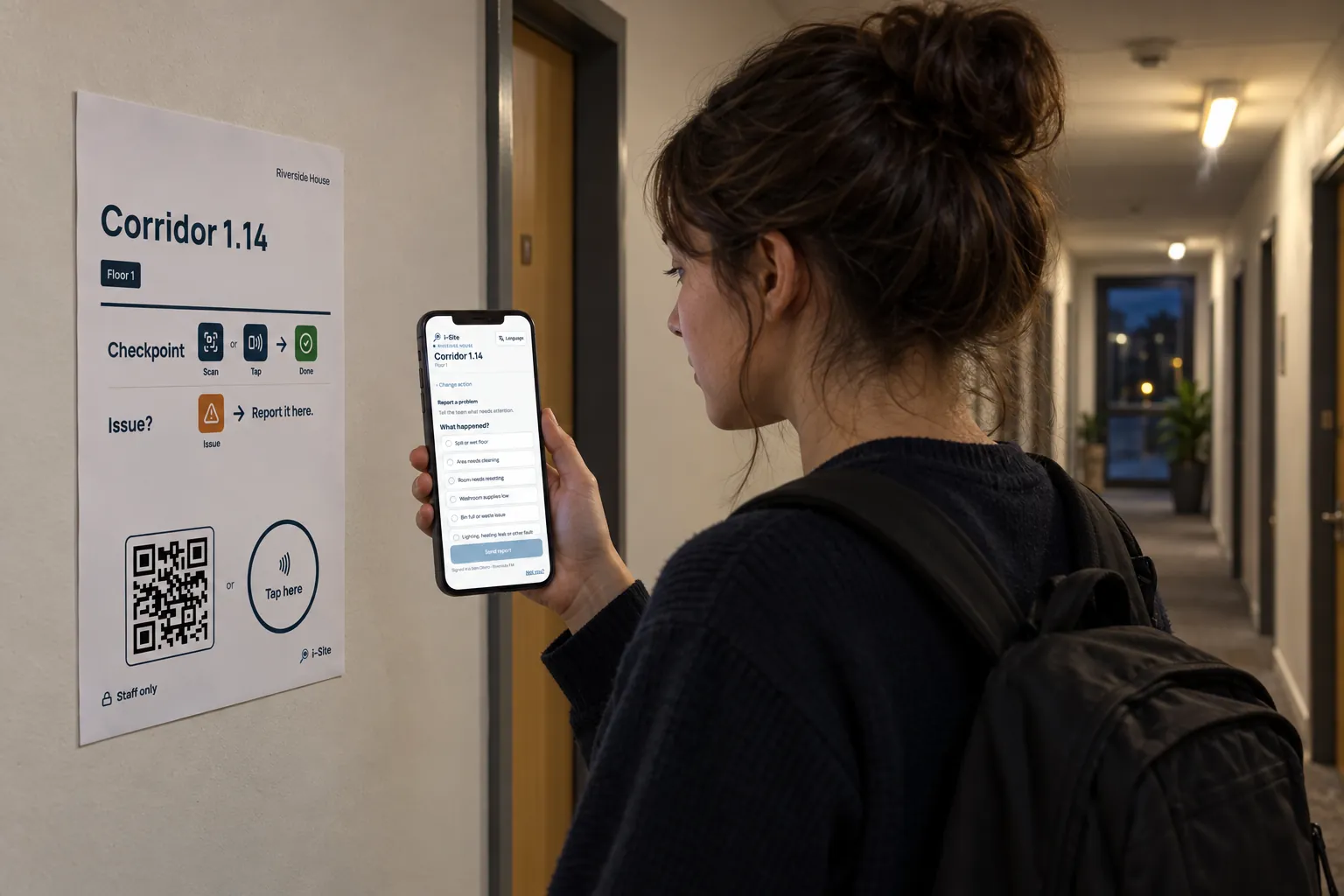
SiteClara puts a printed QR poster at each location, such as each washroom, plant room, fire door or bin store, with an optional NFC tag behind it. Staff of the cleaning, security or site team scan the code or tap the tag on their own phone, with no app to install, see the scheduled checks due there, and mark them done or explain what stopped them, with a photo when it helps. An issue reported there goes onto the team's list of jobs until someone closes it. The supervisor's queue groups open jobs by building and floor, and a supervisor can escalate a job to the building manager, who can answer it.
Each day the supervisor approves a report that goes to the building manager and other nominated contacts at 8am the next morning, showing what was reported, what was completed, what is still open and how scheduled checks went. Where two companies work in the same building, such as a cleaning provider and a security provider, each can run its own staff, forms and approval on the same site, and building-owner-led sites can also allow occupants to report issues from the posters.
07
Questions people ask
What skills are needed for a building manager?
The skills the National Careers Service lists for a facilities manager, the closest role it profiles, are business management, leadership, customer service, administration and maths skills, attention to detail, the ability to work well with others and use their initiative, and confidence with a computer and the main software packages. It has no separate building manager profile; its facilities manager profile describes a role that oversees "the operation, maintenance and security of buildings and workplaces", and for applying directly it counts relevant experience, including technical skills related to buildings and management.
What qualifications do I need to be a building manager?
The National Careers Service does not profile building managers, but for facilities managers, the closest role it covers, it lists four ways in: a university course, an apprenticeship, working your way up, or applying directly with relevant experience. Its facilities manager profile names a foundation degree or degree in a subject such as facilities management, building services management, business and management or building surveying, and apprenticeships including the Facilities Manager Level 4 Higher Apprenticeship. It adds that employers may encourage professional qualifications such as those of the Institute of Workplace and Facilities Management, and that qualifications in building services engineering, surveying or health and safety may give an advantage.
08
Further reading, and a list to take away
The Health and Safety Executive publishes guidance on managing premises, asbestos, Legionella (L8 and HSG274), lifting equipment and CDM 2015. The Home Office publishes guidance on the Regulatory Reform (Fire Safety) Order 2005 and the Fire Safety (England) Regulations 2022, and the Building Safety Regulator publishes guidance for higher-risk buildings. The Institute of Workplace and Facilities Management (IWFM) publishes professional standards for facilities and building managers.
If you are writing a building manager job description, or taking on a building, check that you know:
- who the legal duty holders are, and which of their duties you carry out;
- where the fire risk assessment, asbestos register and Legionella risk assessment are, and when each is due for review;
- which statutory inspections are due, and who holds the certificates;
- which routine checks the site team does, how often, and where they are recorded;
- which contractors work in the building, and what each is responsible for;
- how tenants and occupants report faults, and how you know each is closed;
- what the owner or senior management expect to see from you, and how often.
Sources
Every document this guide quotes or links to, in the order it first cites them.
- Health and Safety at Work etc. Act 1974 legislation.gov.uk
- Workplace (Health, Safety and Welfare) Regulations 1992 legislation.gov.uk
- Regulatory Reform (Fire Safety) Order 2005 legislation.gov.uk
- Control of Asbestos Regulations 2012 legislation.gov.uk
- Building Safety Act 2022 legislation.gov.uk
- Environmental Protection Act 1990 legislation.gov.uk
- Facilities manager profile nationalcareers.service.gov.uk
Related guides
 Premises and facilities managementManaging agent responsibilities in residential block managementWhat a managing agent does for a block of flats in England and Wales: service charges, the RICS code, repairs, fire safety in common parts, and records.
 Premises and facilities managementFacilities helpdesk: what it does, and how to run one wellWhat a facilities helpdesk does, how it logs, prioritises and closes jobs, the people and systems behind it, and how to tell whether it is working.
 Premises and facilities managementFault reporting system: how faults are reported, prioritised and closedHow a fault reporting system for a building should work: how occupants report faults, how facilities teams log and prioritise them, and how a fault is closed.
 Premises and facilities managementFacilities management monthly report: what to include, and what makes it believableWhat an FM monthly report should contain: compliance, planned and reactive maintenance, KPIs, health and safety, costs, and the evidence behind them.