Fire and water checks
Hot works permits in Ireland: the duty, the permit and the final check
A hot works permit, also called a hot work permit, is a formal, signed authorisation that lets named people carry out welding, cutting, grinding, soldering or other work producing flame, sparks or heat at one place for a set time, under stated precautions to prevent fires.
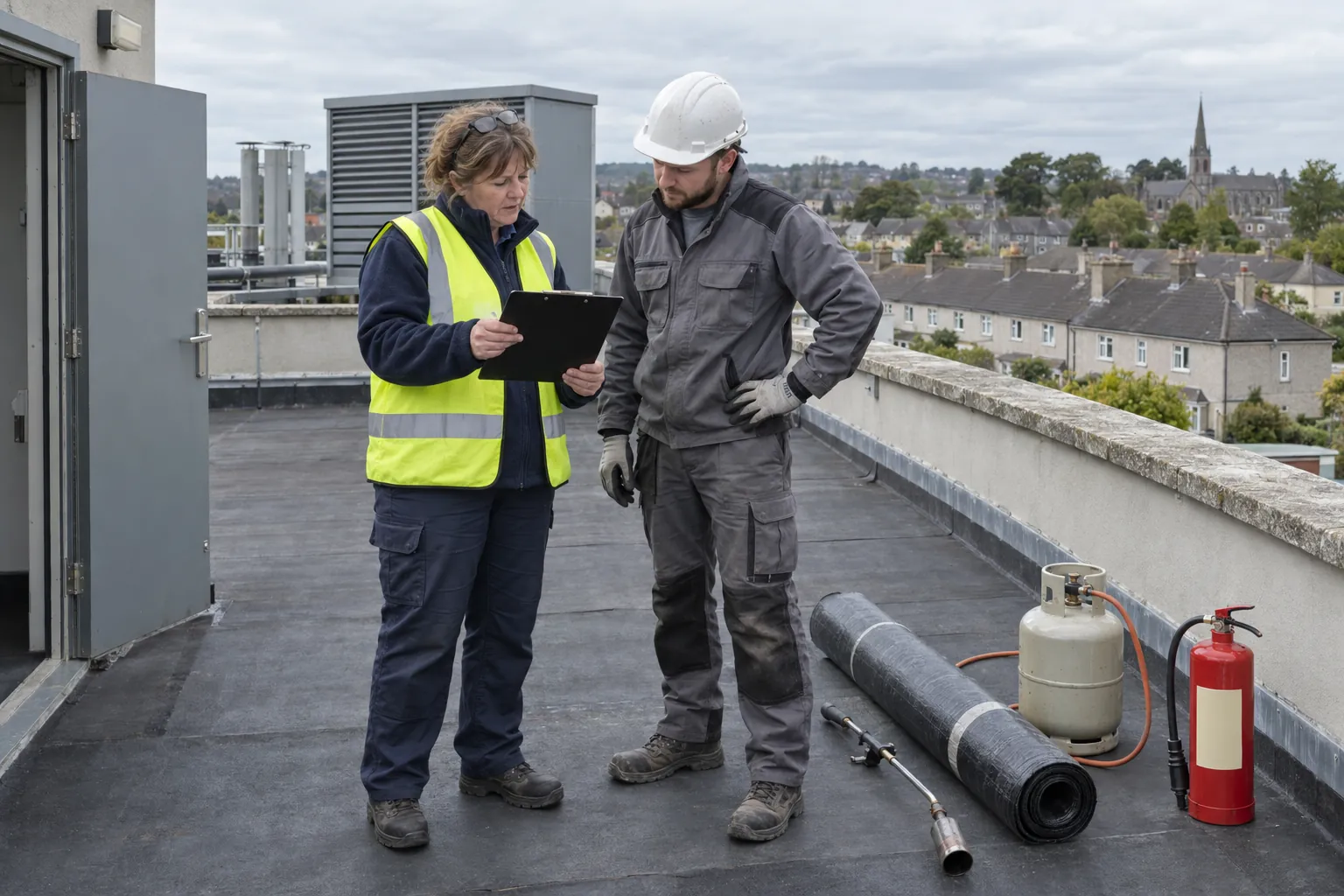
Hot work brings flame, sparks or heat into parts of a building where there is normally none, often close to combustible and flammable materials. The permit is how the people responsible for the building decide whether the work should happen at all, set the precautions, and make sure somebody comes back to check nothing is smouldering after the contractor has gone. This guide sets out where the duty comes from in Irish law, what counts as hot work, what a permit should say, who does what, and how to close one off.
01
Where the duty behind a hot works permit comes from
No Irish statute says in so many words that all hot work in an office, school or apartment block needs a permit. The duty is built from general obligations in workplace law and fire law, and the official guidance on both says a permit system is how you meet them.
Under section 8 of the Safety, Health and Welfare at Work Act 2005, every employer must provide “systems of work that are planned, organised, performed, maintained and revised as appropriate so as to be, so far as is reasonably practicable, safe and without risk to health”, with the instruction, training and supervision that go with them. Section 19 requires a written risk assessment. Section 12 extends the employer's duty to people at the place of work who are not their employees, such as the occupants below a roof being felted. Where employers share a place of work, section 21 requires them to co-operate, co-ordinate their actions and tell each other about the risks from their work.
Fire law adds its own duty. Section 18 of the Fire Services Act 1981 covers premises used for sleeping accommodation, care, entertainment, teaching and any use involving access by the public, and the Licensing of Indoor Events Act 2003, section 29 added “any workplace” and replaced subsection (2). As amended, every person having control over such premises must “take all reasonable measures to guard against the outbreak of fire” and “ensure that the fire safety measures and procedures referred to in paragraph (b) are applied at all times”. Subsection (3) binds everyone else on the premises, contractors included, to act so that nobody is exposed to danger from fire “as a consequence of any act or omission of his”.
The Health and Safety Authority's page on fire prevention says hot work “can be very dangerous and stringent controls must be in place”, and tells employers to “use a hot work permit system”. The Department of Housing, Local Government and Heritage's Fire Safety Guide for Building Owners and Operators (August 2023), section 5.2.10, says hot work “should be carefully supervised” and the person having control “should ensure that all necessary precautions against fire are taken – including engaging only competent contractors”.
02
What counts as hot work, and the question to ask first
The HSA notes that hot work often arises from construction and maintenance work. It defines hot work as “work that might generate sufficient heat, sparks or flame to cause a fire” and names welding, flame cutting, soldering, brazing, grinding “and other equipment incorporating a flame, e.g. tar boilers”. Its 2017 safety alert on hot work on drums and containers, issued after a fatal explosion, adds sawing. In the buildings that facilities teams, caretakers and managing agents look after, that usually means:
- Roofing: torch-on felt and a gas burner on a flat roof, often above an occupied floor.
- Plumbing and heating: a blowlamp soldering copper pipe in a riser, a ceiling void or behind a kitchen unit.
- Metalwork: welding a railing, gate or bracket; cutting out old steelwork in a plant room.
- Cutting and grinding: a disc cutter or grinder on anything that throws sparks.
- Containers: the HSA's alert says never to heat a drum, tank or container “before ascertaining its contents and assessing the risk of fire and explosion”.
Whether heat guns and hot-air tools count is for your own procedure to decide from your risk assessment.
The first question on any permit is whether the work needs to be hot at all. The HSA's controls begin: “Identify all hot work” and “Only allow hot work if no satisfactory alternative”. Its safety alert names cold cutting and cold repair as safer options, while noting that cold work “is not completely without risk”. A bolted fixing, a push-fit joint or taking the item to a workshop can make the permit unnecessary.
03
What a hot works permit should say
The HSA's guidance on work permits and isolation of equipment is clear about what any permit is. It “should not be confused with giving someone permission to work on site”, and “issuing a permit does not, by itself, make a task safe”. Permits “should state any conditions to be met after the work is completed”, including handing the area back in a safe condition.
The Confined Spaces code lists the essential parts of a permit procedure: a written procedure defining who may authorise jobs; a form that becomes “a written and signed statement” that safe conditions are in place for the duration of the work; a way of telling the workers “the exact identity, location, nature and extent of the job, the hazards involved and the precautions to be taken”; and “a system for ensuring the safe hand-back of the workplace after the job is completed”.
For hot work, the HSA's fire prevention page adds clear responsibility, logging and audit, routine checking and supervision, removing or protecting combustibles, controlling sparks and heat, suitable fire-fighting equipment and training, “a separate person to fire-watch and use fire-fighting equipment – the fire watcher”, and a “final check of area at least 60 minutes after completed job and certainly prior to premises being vacated”.
Put together, a workable hot works permit records:
- a permit number and the exact location, down to the room, riser, roof area or void;
- the work, the equipment and why a cold method was not used;
- the contractor, the operatives and the person in charge of the job;
- the valid period, usually no longer than a shift;
- the precautions checked before work starts: combustibles removed or covered, openings sealed, the far side of walls and floors checked, extinguishers at hand, escape routes clear;
- any fire protection affected, such as a detector covered or an alarm zone isolated, who authorised it and what replaces it;
- the fire watcher, by name;
- the signatures of the issuer and the person accepting the permit;
- the time the hot work stopped, the time of the final check, who did it and what they found, and when the permit was signed closed.
04
Who issues, who accepts, and who else needs to know
A permit works when everyone knows which part is theirs:
- The issuer is authorised by the person having control: typically the facilities manager, building manager, caretaker or a trained deputy. They check the area before signing and can stop the work. The Department's guide notes that contractors “may not be as familiar with the premises as those normally present” and puts the precautions on the person having control, so the issuer should be someone on the building's side, not the contractor.
- The contractor keeps their own duties under the 2005 Act, including a risk assessment and a safety statement. The permit is how their method meets the building's arrangements, not a replacement for either.
- The operative reads and accepts the permit, keeps to its conditions and stops if conditions change.
- The fire watcher is a separate person with an extinguisher and nothing else to do. The fire watch guide covers the watch in detail.
- Reception or the security officer needs to know that hot work is under way, where, and whether any part of the fire alarm is isolated, so a real alarm there is not dismissed.
In a multi-let office, the landlord or its managing agent often controls the common parts and plant while each tenant controls its own floor, so a permit for a riser or the roof should say whose system applies and who has been told. In an apartment development, the common areas are the owners' management company's responsibility, which may act through its managing agent.
The arrangements belong in the safety statement. Section 20 of the 2005 Act requires it to specify the protective and preventive measures and the names of the people responsible for tasks under it, and to bring relevant extracts to those affected where specific tasks pose a serious risk. It should say who may issue permits and where completed permits are kept.
05
During the work, the final check, and closing the permit
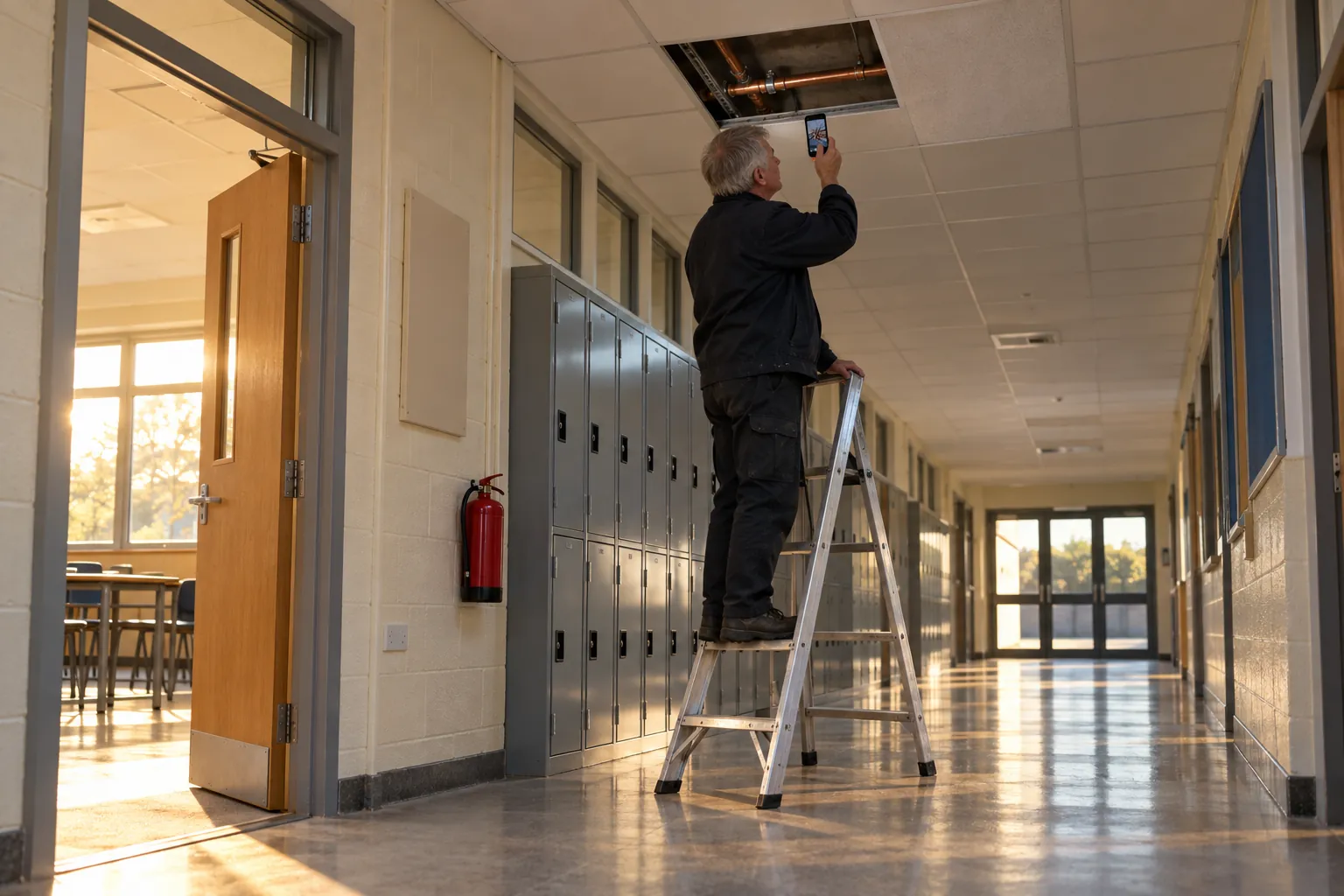
A hot work fire need not show itself while the welder is working. It can start in something the sparks or heat reached, a gap behind a skirting, dust in a void, insulation under a roof, and develop after everyone has packed up. That is why the HSA asks for the final check at least an hour after the job, and why the Confined Spaces code says “a fire watch should remain in place for an adequate period after the work is complete”.
The Department's guide adds that the person having control should ensure escape routes are not blocked or obstructed, that access by occupants to areas of hot work “should be restricted”, and that “hazardous equipment and materials should be removed from the building at the end of each working day, and a final check should be made to ensure that no fire danger remains after work finishes.”
A permit that will stand up to a fire officer, an HSA inspector or an insurer afterwards shows:
- that it was issued before the work started, not written up at the end of the day;
- that the fire watcher was named and present throughout;
- the time the hot work stopped, and the time of the final check at least an hour later, who did it, and what they checked, including the rooms above, below and beside, and any voids;
- that any alarm isolation was restored, when and by whom;
- that the permit was signed closed only after all of that.
The last line is the one to watch: a permit signed closed at 4pm, when the work stopped at 4pm, records that nobody came back.
Keep completed permits with the building's fire records. The Department's guide asks for a fire safety register where section 18 applies, “a living document” including works carried out on the fire detection and alarm system and routine checks “with comments on the results of the checks and inspections and actions taken (and by whom) to address defects”. An isolation for hot work belongs there too.
The HSA also asks for “logging and audit processes”: every few months, pull a sample of permits: were the final checks at least an hour after the work stopped, was the watcher named, were isolations restored the same day, and were any permits never closed?
06
Where the hot works record fails, and what SiteClara does about it
The permit pad is usually fine. The weakness is what happens after it leaves the office. The permit is signed closed when the contractor hands back the keys, and the one-hour check is ticked in the same pen at the same minute. The detector covers stay on until somebody notices a week later. The caretaker who walked the roof after the felting crew left did check, but nothing records when.
SiteClara records routine checks where they happen. A printed QR poster, with an optional NFC tag behind it, sits at each place a check is scheduled: a plant room, a riser, a roof access door, the fire alarm panel. Staff scan or tap on their own phone, with no app to install, see what is due there and mark each check done or explain what stopped them. The named person and the time are recorded as it happens, with a photo when one is asked for. A problem found on the round, such as a detector still covered after the works or cylinders left in a stairwell, becomes a job on the team's list and stays open until someone closes it.
The supervisor sees what is due, done and missed, and records the reason a check was missed. Each day they review the checks and photos, add a note and approve a report that goes to nominated contacts the next morning, so the facilities manager or managing agent sees the building's checks around the works as they were done, not as they were remembered.
07
Questions people ask
What is a hot work permit?
A written permit that controls one piece of work involving flame, sparks or heat. The HSA's guidance on work permits and isolation of equipment describes a permit to work system as “a formal procedure to ensure that the system of work is properly planned and implemented for jobs which have a significant risk”, and its page on fire prevention tells employers to “use a hot work permit system”. The permit sets out the precautions before, during and after the work, including handing the area back in a safe condition.
What is considered to be hot work?
The HSA's page on fire prevention defines hot work as “work that might generate sufficient heat, sparks or flame to cause a fire”, and gives welding, flame cutting, soldering, brazing, grinding “and other equipment incorporating a flame, e.g. tar boilers” as examples. In most buildings that means torch-on roofing, soldering copper pipe, welding railings and brackets, and disc cutting.
Why would you need a hot work permit?
Because hot work starts fires, sometimes long after the work stops. The HSA's page on fire prevention says hot work “can be very dangerous and stringent controls must be in place”, and its permit system covers removing or protecting combustible or flammable materials, controlling sparks and heat, a separate fire watcher, and a “final check of area at least 60 minutes after completed job and certainly prior to premises being vacated”.
Who can issue a hot works permit?
Whoever your own written procedure names, and it should not be the contractor doing the work. The HSA's Code of Practice for Working in Confined Spaces says a permit procedure needs “a written procedure, which sets out how the system is to operate and clearly defines who may authorise particular jobs”, and its example form is signed by the “competent person responsible for authorising work to proceed”. The code takes its definition of a competent person from section 2(2) of the 2005 Act: someone with “sufficient training, experience and knowledge appropriate to the nature of the work”.
What is the maximum duration of a hot work permit?
No Irish law or HSA guidance sets a maximum. The example permit-to-work form in the HSA's Code of Practice for Working in Confined Spaces leaves a “Permit valid until” line for the person authorising the work to fill in, so the limit is theirs to set. Whatever the limit, the HSA's final check comes at least 60 minutes after the work stops, and the permit should not be signed closed before it.
08
Where to read more, and a list to take away
Start with the HSA's page on fire prevention, and the Department's Fire Safety Guide for Building Owners and Operators, section 5.2.10 for hot work and section 5.6 for the register. The HSA's Code of Practice for Working in Confined Spaces includes an example permit-to-work form. On a construction site, regulation 45 of the Safety, Health and Welfare at Work (Construction) Regulations 2013 (as made) requires fire-fighting devices, detectors and alarms to be “regularly checked and properly maintained”. Under section 18(4) of the 1981 Act, your local authority fire service may give advice on a particular building.
Before the next contractor lights a torch in your building, check that:
- your safety statement says who may issue a hot works permit, and they are trained to do it;
- contractors are told before arriving that hot work needs a permit, and asked whether a cold method would do;
- the permit names the exact location, the valid times, the operatives and the fire watcher;
- combustibles are cleared or covered, and the far side of walls, floors and ceilings is checked;
- any isolation is recorded, reception and security are told, and it is restored the same day;
- the final check is done at least an hour after the work stops, before the building is left, with the time and name written down;
- no permit is signed closed until then;
- completed permits go into the fire safety register, and a sample is audited every few months.
Sources
Every document this guide quotes or links to, in the order it first cites them.
- Section 8 of the Safety, Health and Welfare at Work Act 2005 irishstatutebook.ie
- Section 19 irishstatutebook.ie
- Section 12 irishstatutebook.ie
- Section 21 irishstatutebook.ie
- Section 18 of the Fire Services Act 1981 irishstatutebook.ie
- Licensing of Indoor Events Act 2003, section 29 irishstatutebook.ie
- Fire prevention hsa.ie
- Fire Safety Guide for Building Owners and Operators assets.gov.ie
- Safety, Health and Welfare at Work (General Application) Regulations 2007 irishstatutebook.ie
- Code of Practice for Working in Confined Spaces hsa.ie
- Safety alert on hot work on drums and containers hsa.ie
- Work permits and isolation of equipment hsa.ie
- Section 20 of the 2005 Act irishstatutebook.ie
- Safety, Health and Welfare at Work (Construction) Regulations 2013 irishstatutebook.ie
Related guides
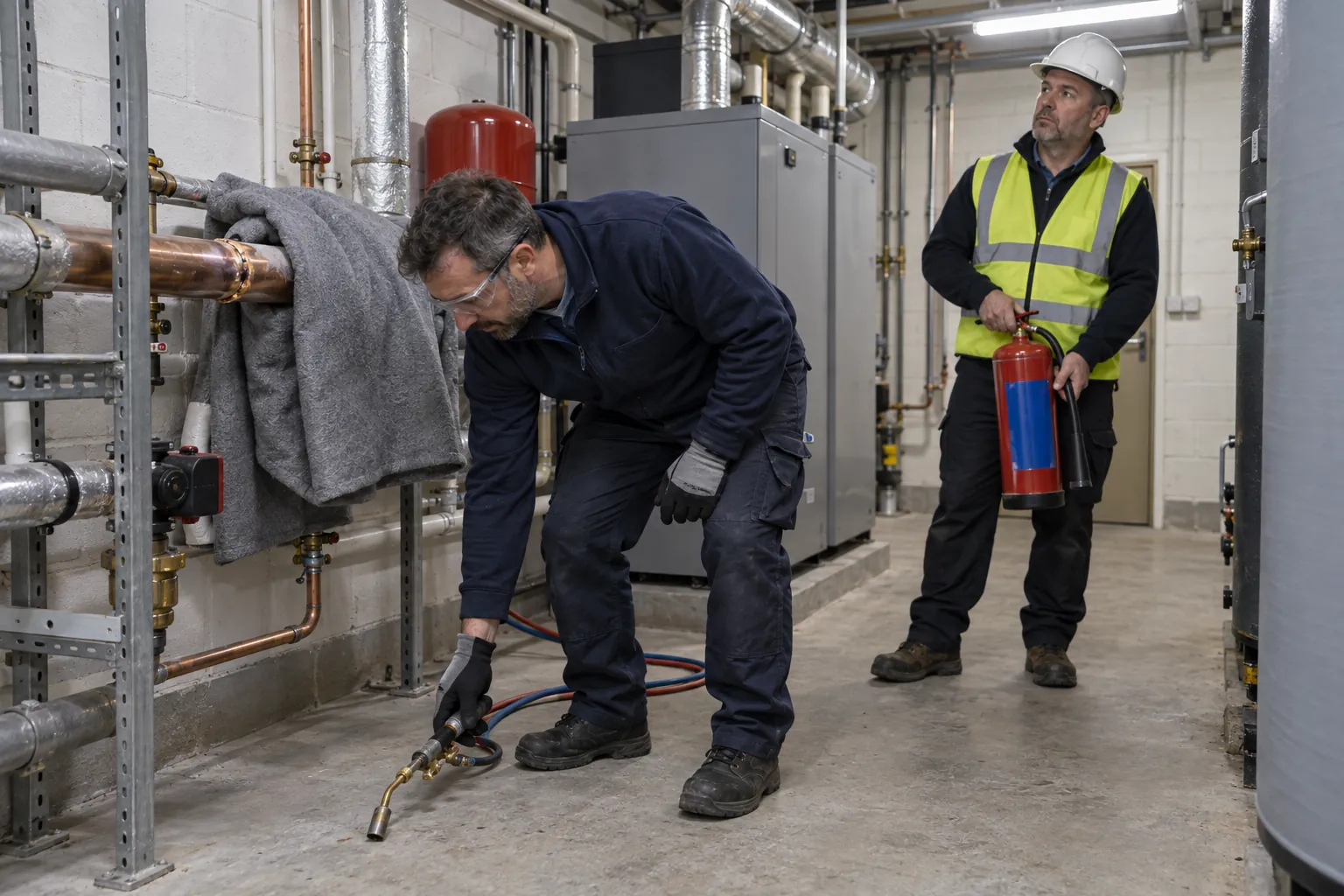 Fire and water checksFire watch: what it is in Ireland, when you need one and what to recordWhat a fire watch is under Irish law and guidance, when a building needs one, what the fire watcher does after hot work or during an alarm fault, and what to record.
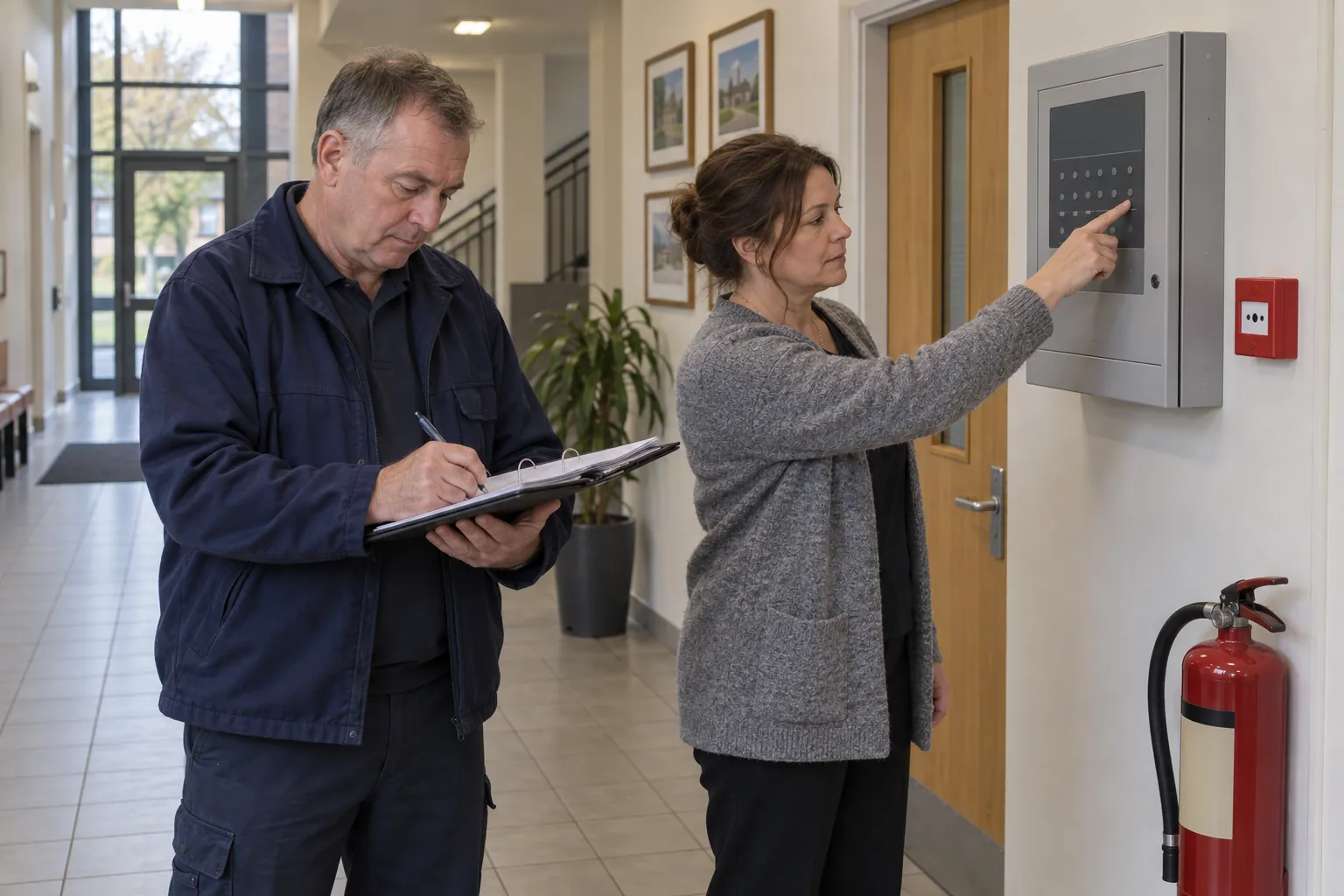 Fire and water checksFire safety register: what to record, who keeps it and how to make it credibleWhat a fire safety register should hold under section 18(2) of the Fire Services Acts, the routine checks behind it, who keeps it, and what makes it credible.
 Premises and facilities managementSafety statement: what the 2005 Act requires, and how to show it is followedWhat a safety statement must contain under section 20 of the Safety, Health and Welfare at Work Act 2005, who needs one, when to review it and how to show it works.
 Fire and water checksFire alarm testing in Ireland: the checks, the servicing, and the recordFire alarm testing in Ireland: the legal duty, the daily and weekly checks, quarterly servicing to I.S. 3218, and what the fire safety register should show.