Fire and water checks
Fire safety register: what to record, who keeps it and how to make it credible
A fire safety register is the record that the person having control of a building in Ireland keeps of its fire safety checks, tests, servicing, training, drills, faults and false alarms, as a means of showing that the fire safety measures required by section 18(2) of the Fire Services Acts 1981 and 2003 are applied at all times.
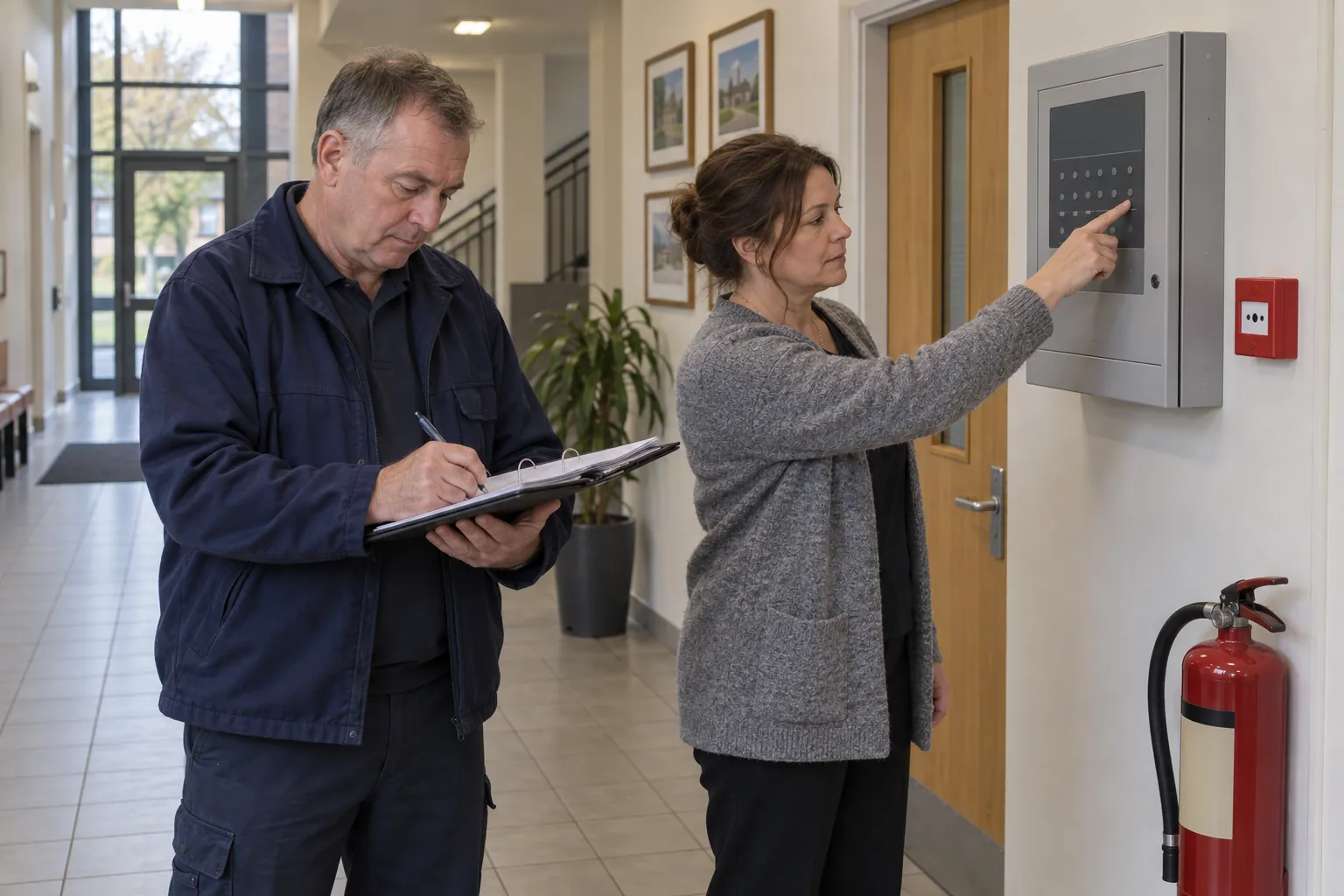
This guide covers the duty behind it, what the Department of Housing's guidance says it should contain, the routine that feeds it, who keeps it, and what makes it believable when the fire officer asks to see it.
01
What a fire safety register is, and the duty behind it
A fire safety register is the running record of how a building's fire precautions are checked, tested, maintained and used: the Irish name for a fire log book, and a document an officer of the fire authority can ask to inspect.
The duty behind it is section 18 of the Fire Services Act 1981, as amended by section 29 of the Licensing of Indoor Events Act 2003; the two are cited together as the Fire Services Acts 1981 and 2003. Section 18 applies to premises used for sleeping accommodation (other than a house occupied as a single dwelling), care, entertainment, teaching or public access and, since 2003, to any workplace. Section 18(2), as substituted in 2003, says:
The Act does not use the words "fire safety register". The register comes from paragraph (c): if the measures and procedures must be applied at all times, the person having control needs a way to show they were. The Department of Housing, Local Government and Heritage's Fire Safety Guide for Building Owners and Operators (August 2023), written for persons having control under section 18(2), is direct about it: a Fire Safety Register "should be maintained for all premises where section 18 applies", and keeping one "will assist in meeting the general obligations, imposed by section 18 of the Fire Services Acts, and is a means of demonstrating compliance".
Workplaces carry a second duty: under section 11 of the Safety, Health and Welfare at Work Act 2005, every employer must plan for emergencies, provide for fire-fighting and evacuation, and designate and train the employees who carry them out. The Health and Safety Authority's Fire topic page notes that the wider fire legislation is generally enforced by local authority fire officers, and its advice on fire detection and warning puts the record plainly: "A record of the work carried out on such equipment and systems will help to demonstrate compliance with the law."
02
What a fire safety register should contain
The Department's guide says the register should be "a living document – with daily, weekly, monthly, quarterly and annual records of fire safety checks of procedures and the life safety systems within the premises". Its indicative, non-exhaustive schedule of contents comes down to this:
- The premises and the people: the address, the owner and any management company; the person having control (the owner, occupier or manager) and any deputies; the fire and emergency procedures; and the fire duties assigned to staff.
- Each life safety system: emergency lighting; the fire detection and alarm system, including its zones, detectors, manual call points, inspections, false alarms, maintenance and works; fire doors, with an inventory; sprinklers and other suppression systems; smoke control; dry and wet risers and fallers; static water storage; and portable fire extinguishers.
- Drawings and certificates: up-to-date construction drawings and specifications, which may include the drawings made for a fire safety certificate application and any conditions attached to the certificate, and the manuals and certificates from specialist contractors and suppliers.
- Training: the instruction and training given to staff on fire safety, and by whom.
- Drills: each fire and evacuation drill, its date, the names of those taking part, and the type, objective and results of the exercise.
- Checks and maintenance: routine checks, planned inspections and maintenance of fire protection equipment, "with comments on the results of the checks and inspections and actions taken (and by whom) to address defects".
- The building and its services: where the utilities and fire-fighting systems are, and each inspection of the building, its fittings and services, with what was done about any defect.
- Incidents: every fire incident and false alarm, and the action taken.
Two documents filed with the register are not substitutes for it. A fire safety certificate is a building control approval of the design of new work, applied for to the local building control authority; it says nothing about whether the alarm was tested last week. And a contractor's service report covers one visit to one system. The register is what ties them together with the day-to-day record.
03
The routine checks that feed it, and how often
Section 8 of the Department's guide sets out a maintenance schedule, system by system, and splits the work in two. Many of the daily, weekly and monthly checks "can be carried out without expert knowledge of the equipment or system" by a designated person, in practice often a caretaker, a facilities team member or a security officer; some, such as the weekly sprinkler test, still need a competent person. The quarterly, six-monthly and annual work should be done by competent persons who can certify it to the relevant standard. Both halves belong in the register. For most non-domestic buildings the rhythm includes:
- Daily: escape routes clear and signed; final exit doors readily openable; fire doors on escape routes closed unless held by a hold-open device that releases when the alarm sounds; the fire alarm panel showing normal operation, or any fault logged and acted on; and yesterday's faults attended to.
- Weekly: a fire alarm test, confirming the panel can receive a fire signal and start the evacuation procedure, "recording which trigger device has been used", in line with I.S. 3218; standby batteries checked; and emergency lighting checks on at least a quarter of the system, so that all of it is checked at least every four weeks under I.S. 3217.
- Monthly: every place where an extinguisher or hose reel should be, checked, with anything missing replaced at once; hose reels visually inspected; hold-open devices tested, with the result recorded; panic exit devices on escape doors inspected; and any standby generator started and run.
- Quarterly and six-monthly, by a competent person: the fire alarm inspection and servicing under I.S. 3218, with a test or servicing certificate; the quarterly emergency lighting inspection and test with its report; fire door inspections every six months (every two years for apartment entrance doors); and fire mains, including dry risers, every six months.
- Annually, by a competent person: portable extinguishers maintained under I.S. 291 at intervals of no more than 12 months, give or take one; hose reels under I.S. EN 671-3; the full-duration emergency lighting test; and the annual tests of dry mains under I.S. 391.
Buildings with sprinklers, smoke control, firefighting lifts, private hydrants or fire dampers add their own lines, and the guide gives the interval for each.
The register is also where the unplanned goes: a false alarm at 14:10 on a Thursday, an extinguisher discharged, a fire door wedged open with a bin. The guide is firm on faults: they "are a life safety issue – not simply a maintenance issue to be dealt with later; faults should be entered in the fire safety register and corrected promptly."
04
Who keeps it, where, and in shared buildings
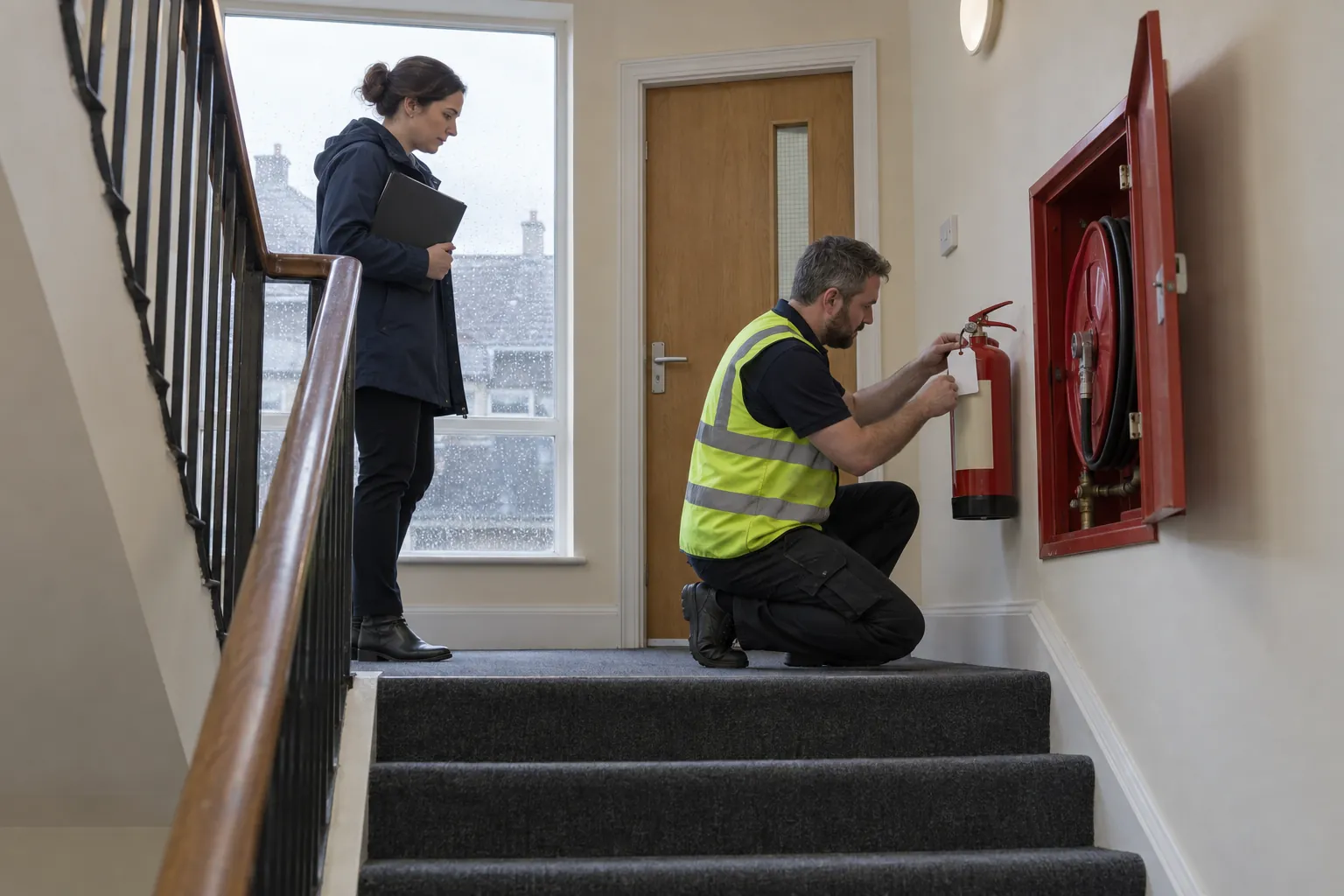
The person having control is responsible for the register. The Department's guide says it "should be kept on the premises at all times, be kept up-to-date, and should be available for inspection by an authorised officer of the fire authority." The entries come from several hands:
- the facilities, premises or centre manager, who usually keeps the register and makes sure the routine checks happen;
- caretakers, facilities staff and security officers, who do the daily and weekly checks;
- fire wardens, who record drills and what they found;
- fire protection contractors, who record their servicing and leave their certificates.
The person having control may hand specific duties to staff, but the guide is clear that they keep overall responsibility for making sure delegated tasks are done. In a place of assembly, the Department's Code of Practice for the Management of Fire Safety in Places of Assembly names a Fire Safety Manager, who should keep the register "to record all fire safety matters", and says that where premises are not used every day the daily fire alarm checks should be made each time before the public is admitted.
Many buildings have more than one party with section 18(2) responsibilities: a landlord and tenants, a property manager, or occupiers of different floors. The guide says the allocation of fire safety management, including who maintains the alarm, the emergency lighting and the evacuation procedures, "should be clear to all parties involved", and that the lease should identify where responsibility lies. Agree who keeps which parts of the register, and who can see them.
In an apartment block the person having control is usually the building owner or the owners' management company (OMC), which often appoints a managing agent to run the building day to day. The agent may keep the register, but the duty stays with the OMC, which the guide says needs service charges that fund its fire protection. The Department's older Guide to Fire Safety in Flats, Bedsitters and Apartments (1994) includes a sample register, and asks for the owner and their agent or management company to be named in it.
Neither section 18 nor the register sections of the guide set a retention period. Keep completed registers and their certificates when a new one is started; an assessor, an insurer or an investigator may need the history.
05
What makes the register credible, and how it is checked
Fire authorities have powers of inspection and, the Department's guide notes, of enforcement: advice, a fire safety notice, a closure notice, and an application to the High Court to restrict use of the premises. Since 2003, section 18 also lets an authorised person require the person having control to carry out a fire safety assessment and notify the fire authority. The guide notes that penalties on conviction can reach two years' imprisonment, a fine of up to €130,000, or both.
When a fire safety assessment is carried out, the Department's Code of Practice for Fire Safety Assessment of Premises and Buildings (March 2022) names the fire safety register among the documents an assessor may draw on, and as a source of evidence about how fire safety is managed. A register that reads well on both occasions:
- is written at the time, with the date and actual time of each check, not from memory at the month's end;
- names the person who did each check, and the company and engineer for each service;
- is specific: which call point, which zone, which fire door, which extinguisher, not "all OK";
- closes every fault: a defect entered with no repair after it suggests the defect is still there;
- explains gaps: a missed weekly test with a reason, such as the building being closed for the holidays, is better than a blank;
- is read regularly by someone with authority to get faults fixed, not only before an inspection.
Neither the Act nor the guide requires a particular format. A bound register at the panel is simple and familiar to engineers and fire officers, but it lives in one place and cannot tell anyone a check was missed. A digital record can show a gap as it happens, if everyone uses it and it can be shown on the premises to an officer with no login. Many buildings keep both, the paper register referencing the digital record of routine checks.
06
Where the register fails, and what SiteClara does about it
Most registers fail in the same few ways. A month of weekly alarm tests goes in at once, in the same pen. The daily checks are ticked on a sheet on the back of the plant room door before the day has started. The register sits at the panel while the facilities manager responsible for four other buildings never sees it. A fault is written down and never closed, and nobody notices until the fire officer reads it months later.
SiteClara records the routine checks that feed the register at the place they are done. A printed QR poster, with an optional NFC tag behind it, goes at a location such as the fire alarm panel, a final exit, a stair core or a floor's extinguisher point. The caretaker, cleaner or security officer doing the check scans the code or taps the tag with their own phone, with no app to install, sees the checks due there, such as the daily panel check or the monthly extinguisher round, and marks each one done or explains what stopped them. The named person and the time are recorded as it happens, with a photo when one is asked for. A fault found there, such as a wedged fire door or a blocked exit, goes onto the team's list of jobs until someone closes it, and the supervisor can escalate it to the building manager, who can answer it.
The supervisor sees what was due, done and missed across the building, and records the reason for anything missed. Each day they approve a report that goes to nominated managers or client contacts the next morning: what was reported, completed and still open, and how the scheduled checks went.
07
Questions people ask
Is there a fire safety register template?
Yes. Dublin Fire Brigade publishes a Fire Safety Register Template to download as a PDF, noting that "the keeping of fire safety records is an important element of the proper fire safety management of any business premises". It was produced "to help business owners keep records for specific items, such as fire doors and extinguishers", and lists inspections to be carried out "on a daily, weekly, monthly, three-monthly, six-monthly and annual basis", with advice for fire wardens and training checklists. Dublin Fire Brigade asks for the register to be "kept in a safe place on the premises at all times" and available for inspection by its fire officers.
How do you get a fire safety certificate in Ireland?
You apply to the building control authority, the local authority for the area. Cavan County Council's Fire Certificate guidance explains that the certificate states that the works or building "will, if constructed in accordance with the plans and specifications submitted, comply with the requirements of Part B of the Second Schedule to the Building Regulations 1997", and that since 1 July 2021 applications are made online through the Building Control Management System (BCMS), where every nominated party needs an account. Article 13 of the Building Control Regulations 1997 asks for plans, including "a site or layout plan and drawings of floor plans, elevations and sections", with the calculations, specifications and particulars of use needed to assess the design against Part B, and article 12 bars the work without a certificate. The certificate approves the design; the register is how the building shows it is run safely once it is open.
What buildings are exempt from a fire safety certificate?
Article 11(2) of the Building Control Regulations 1997 exempts a building used as a dwelling other than a flat, a single-storey domestic garage, a single-storey building ancillary to a dwelling that is used only for recreation, storage or keeping plants, birds or animals for domestic purposes, and certain single-storey agricultural buildings. Cavan County Council's Fire Certificate guidance adds works by a building control authority in its own area and works in connection with a Garda station, a courthouse, a barracks and certain government buildings. An exemption from the certificate is not an exemption from section 18: a workplace in an exempt building still carries the section 18(2) duty, and the Department's guide says a register should be kept wherever section 18 applies.
How much does a fire safety cert cost?
The building control authority charges the application fee by floor area. Dublin City Council's Getting a Fire Safety Certificate page gives €2.90 per square metre for a fire safety certificate or a revised one, with a minimum of €125; €5.80 per square metre, minimum €250, when the application comes with a 7 day notice; and €11.60 per square metre, minimum €500, for a regularisation certificate for work started or finished without one. Works by certain voluntary and not-for-profit organisations are exempt from the fee under article 22 of the Building Control Regulations.
08
Further reading, and a list to take away
The Department of Housing, Local Government and Heritage keeps its fire safety responsibility and guidance documents in one collection: the Fire Safety Guide for Building Owners and Operators (section 5.6 for the register, section 8 for the schedule) and guides for particular premises, several with a sample register. Your local authority fire service can give advice under section 18(4), and Dublin Fire Brigade publishes a register template. I.S. 3218 (fire detection and alarm systems), I.S. 3217 (emergency lighting) and I.S. 291 (portable extinguishers) are published by the National Standards Authority of Ireland.
Check that your register:
- names the person having control, their deputies, and anyone else who shares section 18(2) duties for the building;
- has a section for each system: alarm, emergency lighting, fire doors, extinguishers, risers and any others;
- records every daily, weekly and monthly check, with the device or location, the time, the result and the name;
- records servicing, with the competent person's certificate or report kept with it;
- records every fault and false alarm, with the action taken and the date it was put right;
- records every drill, with who took part and what it showed;
- is kept on the premises, up to date, and can be produced to an authorised officer.
Sources
Every document this guide quotes or links to, in the order it first cites them.
- Fire Services Act 1981 irishstatutebook.ie
- Section 29 of the Licensing of Indoor Events Act 2003 irishstatutebook.ie
- Fire Safety Guide for Building Owners and Operators gov.ie
- Section 11 of the Safety, Health and Welfare at Work Act 2005 irishstatutebook.ie
- Fire hsa.ie
- Fire detection and warning hsa.ie
- Code of Practice for the Management of Fire Safety in Places of Assembly gov.ie
- Guide to Fire Safety in Flats, Bedsitters and Apartments gov.ie
- Code of Practice for Fire Safety Assessment of Premises and Buildings gov.ie
- Fire Safety Register Template dublincity.ie
- Fire Certificate gov.ie
- Building Control Regulations 1997 irishstatutebook.ie
- Getting a Fire Safety Certificate gov.ie
- Fire safety responsibility and guidance documents gov.ie
Related guides
 Fire and water checksFire alarm testing in Ireland: the checks, the servicing, and the recordFire alarm testing in Ireland: the legal duty, the daily and weekly checks, quarterly servicing to I.S. 3218, and what the fire safety register should show.
 Fire and water checksEmergency lighting testing in Ireland: the checks, the tests, and the recordEmergency lighting testing in Ireland: the legal duty, the daily and weekly checks, quarterly and annual tests to I.S. 3217, and what the logbook should show.
 Fire and water checksFire drills in Ireland: the duty, how to run one, and what to recordFire drills in Ireland: the Fire Services Acts and 2005 Act duties, how often to hold one, how to run and review it, and what the fire safety register should show.
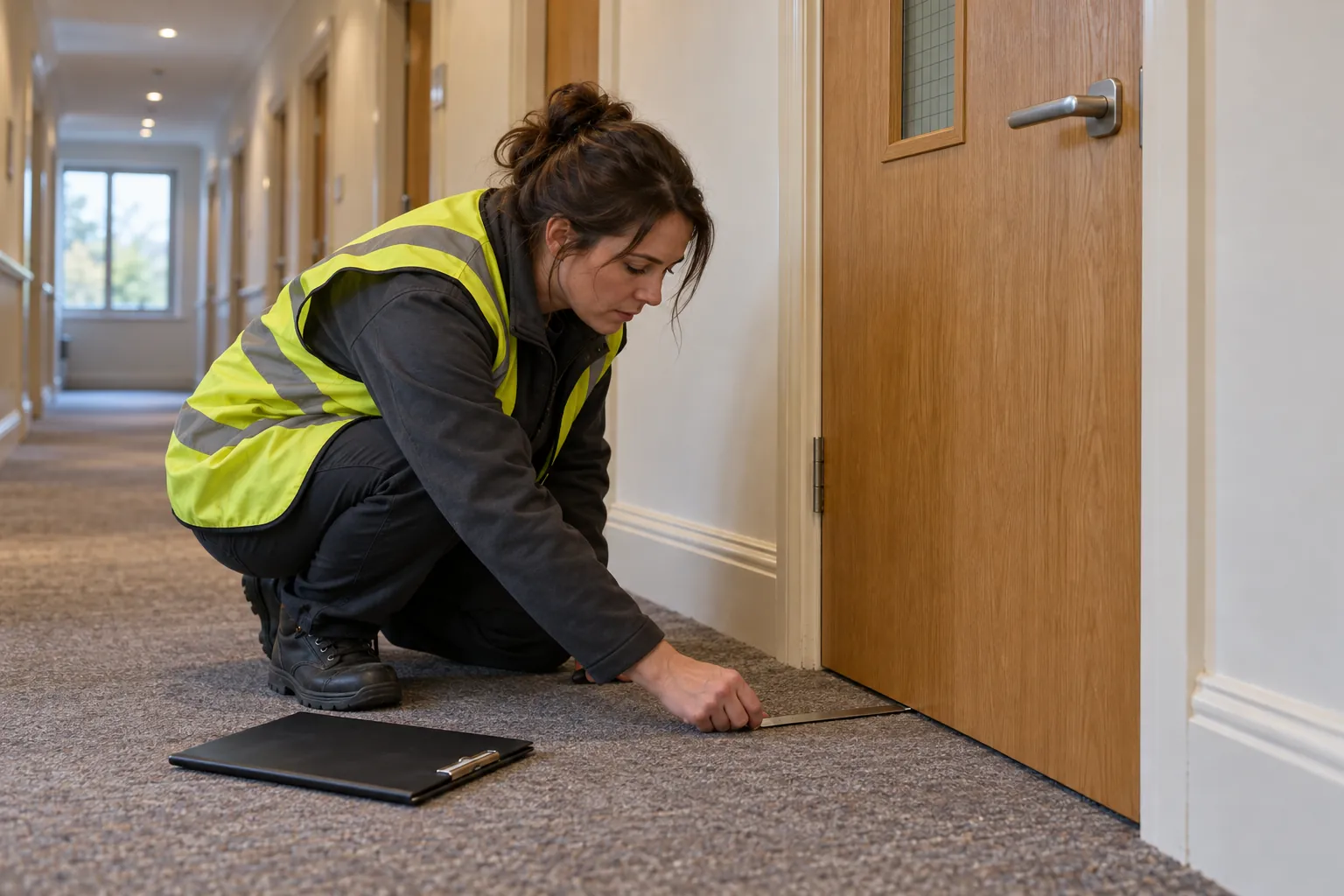 Fire and water checksFire door inspection: the duty, the checks and the recordFire door inspection in Ireland: the section 18(2) duty, the six-monthly check in the Department's guide, what a competent person looks at, and the register.