Fire and water checks
Fire watch: what it is in Ireland, when you need one and what to record
A fire watch, sometimes written firewatch, is a trained person posted for a set time with no other job than to look for fire, raise the alarm and tackle a small fire if one starts.
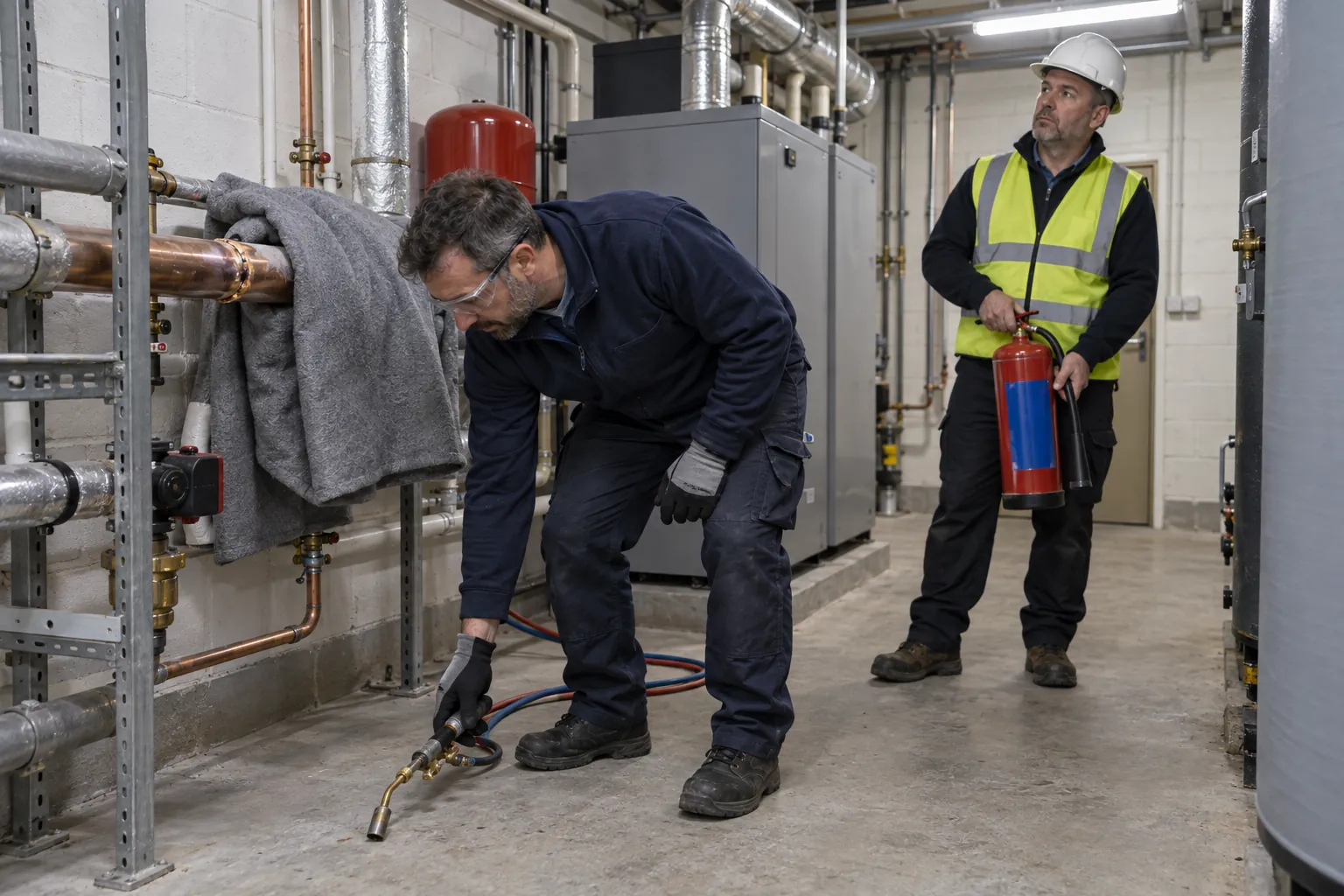
In Ireland you will meet one in two situations: during and after hot work such as welding, cutting or grinding, and while part of a building's fire protection is out of action, for example a fire alarm system that is faulty, isolated or being replaced. Neither situation is rare, and both are easy to get wrong on the day. This guide sets out the Irish law and official guidance behind a fire watch, when one is needed, what the person keeping it does, and what a record of it should show.
01
What a fire watch is, and the Irish law behind it
A fire watch is a temporary arrangement: a named, trained person is posted to watch an area where the risk of fire has gone up, or where the usual means of detecting a fire has been lost, and to raise the alarm and tackle a small fire if one starts. It is a task, not a job title: a fire warden may be asked to keep one, but the two are not the same.
Irish law does not set out a fire watch as a stand-alone requirement. It comes from two general duties. The first is in section 18 of the Fire Services Act 1981, as amended by section 29 of the Licensing of Indoor Events Act 2003, which substituted a new subsection (2). The 1981 Act and Part 3 of the 2003 Act are cited together as the Fire Services Acts 1981 and 2003. Section 18(2) makes it the duty of every person having control over premises to which the section applies to:
- take all reasonable measures to guard against the outbreak of fire on such premises;
- provide reasonable fire safety measures for such premises and prepare and provide appropriate fire safety procedures for ensuring the safety of persons on such premises;
- ensure that the fire safety measures and procedures are applied at all times; and
- ensure, as far as is reasonably practicable, the safety of persons on the premises in the event of an outbreak of fire whether such outbreak has occurred or not.
The third, applied at all times, is the one a fire watch answers: when the alarm is off for works, or a contractor is cutting steel above a ceiling, something has to stand in for the usual measures. Since the 2003 amendment the section applies to any workplace as well as to premises with sleeping accommodation, care, entertainment, teaching or public access, but not to a dwelling house occupied as a single dwelling. Section 18(3) adds a duty on every person on the premises, contractors included, not to expose anyone to danger from fire by their acts or omissions.
The second source is workplace law. The Safety, Health and Welfare at Work Act 2005, section 11, requires employers to provide measures for fire-fighting and evacuation and to designate trained, equipped employees to carry them out. Regulation 13 of the Safety, Health and Welfare at Work (General Application) Regulations 2007 requires fire detection and fire-fighting equipment to be inspected and maintained so it stays in good working order. The Health and Safety Authority's own Fire Prevention guidance is where the fire watch is named: its list of hot work controls includes "provision of a separate person to fire-watch and use fire-fighting equipment – the fire watcher".
02
When a building in Ireland needs a fire watch
The need for a fire watch comes out of a risk assessment, not a fixed rule. The risk assessment under section 19 of the 2005 Act and the safety statement under section 20, which must set out the emergency procedures, are where to say when one is used and who keeps it. The common occasions are:
- Hot work. Welding, flame cutting, soldering, brazing, grinding, and other work with equipment that uses a flame, such as a tar boiler. The watch runs during the work and for a period after it.
- A fire alarm system that is faulty, isolated or partly disabled. A zone isolated for dusty works, a panel fault waiting for the engineer, or a system being upgraded while the building stays open.
- Other fire protection out of action. A sprinkler system drained for repair, fire doors removed for replacement, or a compartment wall opened up for services.
- Remedial works after a fire safety assessment. Where a building stays in use while defects are put right, the assessor may recommend temporary measures to keep it safe in the meantime.
For the second, third and fourth of these, the official basis is the Department of Housing, Local Government and Heritage's Fire Safety Guide for Building Owners and Operators (August 2023), the guide for persons having control under section 18(2). On hot work it says: "Where work involves removing or switching off fire protection facilities, alternative arrangements to maintain safety levels should be made." And on faults in general: "Faults are a life safety issue – not simply a maintenance issue to be dealt with later; faults should be entered in the fire safety register and corrected promptly."
The Department's Code of Practice for Fire Safety Assessment of Premises and Buildings (March 2022), issued under section 18A of the Acts, goes further for buildings awaiting remedial works. It lists interim compensatory measures that may be considered, including "provision of self-contained smoke or heat alarms, or provision of a fire warden, as a temporary measure, in advance of provision of a fire detection and alarm system". It is clear that these measures "are not to be viewed as a long-term solution", and it advises the assessor to consult the relevant fire authority where interim measures are proposed.
03
The fire watch during and after hot work
Hot work is the classic case. The HSA describes it as "work that might generate sufficient heat, sparks or flame to cause a fire", and its Fire Prevention guidance tells employers to identify all hot work, allow it only where there is no satisfactory alternative, make sure contractors know the procedures, and use a hot work permit system. The controls it lists include clear responsibility, logging and audit, routine checking and supervision, removing or protecting combustible materials, controlling sparks and heat, suitable fire-fighting equipment with training, the separate fire watcher, and a "final check of area at least 60 minutes after completed job and certainly prior to premises being vacated".
The Department's owners' guide makes the same point from the building's side: hot work "should be carefully supervised", outside contractors "may not be as familiar with the premises as those normally present", and a final check should be made to ensure that no fire danger remains after work finishes.
In practice the fire watcher during hot work:
- is someone other than the person doing the work, so their attention is on the surroundings, not the weld;
- checks before work starts that combustibles are moved or covered, gaps where sparks could fall are sealed, and an extinguisher or fire blanket is to hand;
- knows the nearest manual call point and how to raise the alarm if detection in the area is isolated for the job;
- watches the work area, the floor below, the far side of walls and any void that sparks or conducted heat could reach, and stops the work if conditions change;
- stays after the work ends and checks again, hidden spaces included, before signing the permit closed.
The 60 minutes in the HSA guidance is a minimum for the final check, not a maximum for the watch. Where work was done near insulation, roof coverings or ceiling voids, where smouldering can go unseen, the risk assessment may call for a longer watch or a further check later. The permit form in use, or conditions in the building's insurance policy, may also set their own periods; read them rather than assuming, and where they differ, follow whichever is stricter. The HSA's page Work Permits and Isolation of Equipment, written for quarries but true anywhere, makes the essential point: "Issuing a permit does not, by itself, make a task safe."
04
A fire watch while fire protection is out of action
The second kind of fire watch covers a building rather than a job. When a fire alarm system is out of service, the building loses its automatic warning, and someone has to decide what replaces it and for how long, before the system is switched off, not after.
That decision belongs to the person having control. The owners' guide says this may be an individual, several people or an organisation, such as an owners' management company, landlord, tenant, facilities manager or property services company, and that a person having control may delegate tasks but "should retain overall responsibility for ensuring delegated tasks are carried out". In an apartment block the section 18(2) duties are likely to fall on the building owner or the owners' management company (OMC); the managing agent the OMC appoints may arrange the watch, but the duty stays with the OMC or owner. In a multi-let office, landlord and tenants need one agreed arrangement for the common parts.
A sensible impairment watch sets out:
- What is out of action and why: which zones, devices or systems, and the expected date of repair. The owners' guide expects the fire detection and alarm system to be inspected and maintained in line with the Irish standard, I.S. 3218, so ask the servicing company what each isolation leaves unprotected.
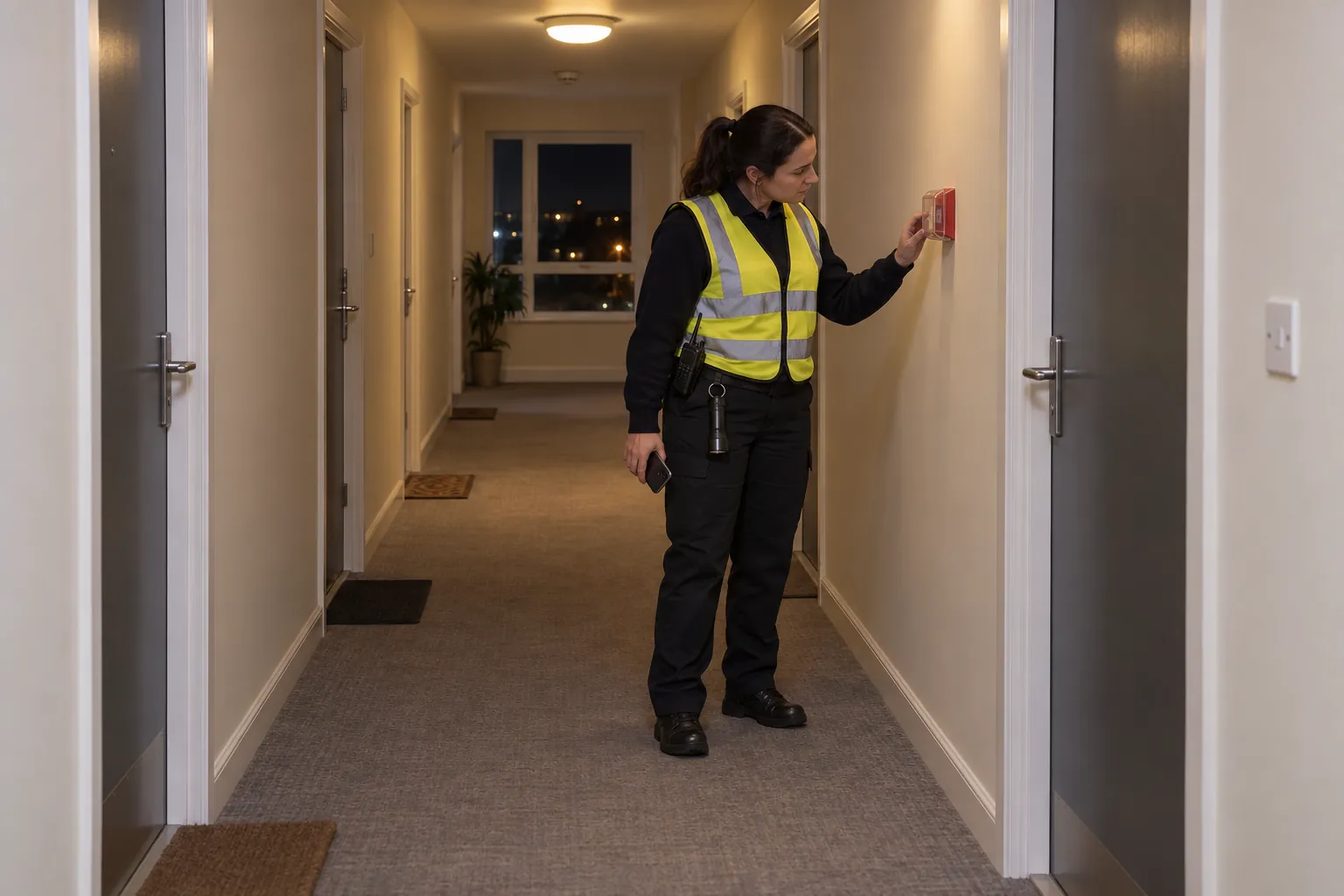
- The route: every area that has lost detection, plus plant rooms, stores, risers and escape routes, in an order a stranger could follow.
- The frequency: set by the risk assessment, and by the fire safety assessor where one is involved. Sleeping accommodation, care settings and buildings where people cannot easily escape need closer watching than an empty office at weekends. No Irish statute fixes an interval.
- How the alarm will be raised: the manual means agreed for the period, how occupants will be told, and calling the fire service on 112 or 999 without waiting to confirm a fire.
- Who keeps the watch, and when it hands over: named people for each shift, with the handover time written down.
- When it ends: once the system is restored and tested, with the restoration recorded.
Interim measures are temporary. A fire watch that has run for months because nobody ordered the repair is a fault being managed as a maintenance issue, which the owners' guide says it is not. Where the fire authority has been involved, keep it informed of the arrangement and of the date the system comes back.
05
Who keeps the watch, what they carry and what they write down
For a fire watch, section 11's trained and equipped people means someone who knows the building, has been shown the route, can use the extinguishers provided, knows how to raise the alarm with the system down, and has nothing else to do while on watch. A security officer, caretaker or trained member of staff can keep one; so can a contractor's own fire watcher during hot work, provided the building knows who that is. They should carry a phone or radio with the numbers for the duty manager and the alarm company, a torch, access to every room on the route, and the permit or a copy of the zones affected.
What good evidence looks like is simple to describe and hard to achieve. For each round or check, the record should show the time, the area, the name of the person, what they found and what they did about it. A hot work watch should show the permit it relates to, when the work stopped, when the final check was done and by whom. An impairment watch should show when the system went off, each round in between, every handover, and when the system came back into service.
Those facts also belong in the building's fire safety register, sometimes called a fire log book. The owners' guide describes it as "a living document – with daily, weekly, monthly, quarterly and annual records of fire safety checks of procedures and the life safety systems within the premises", to be kept on the premises, up to date and available for inspection by an authorised officer of the fire authority. Faults and works on the alarm system belong there; the fire watch record is the evidence behind that entry, and the register should say where it is kept. Check it while the watch is running: a missed round is far more useful to know about that night than weeks later.
06
Where the fire watch record fails, and what SiteClara does about it
A fire watch can be kept properly and still be poorly recorded. The familiar failures are a hot work permit signed closed before the final check was due, a patrol sheet completed at the end of the night in one hand and one pen, a watcher called away with the gap never written down, and a handover from the contractor's fire watcher to the building's staff that happened in a corridor. The sheet looks complete either way, which is the problem.
SiteClara records checks at the place they are done. A printed QR poster, with an optional NFC tag behind it, sits at each point on a patrol route or at the location of the work. The person on watch scans or taps with their own phone, with no app to install, sees the checks due there and marks each one done or explains what stopped them. The time and the named person are recorded as it happens, with a photo when the check asks for one. Anything found, such as a blocked exit or a fire door wedged open, can be reported from the same tag and stays on the team's list of open jobs until someone closes it.
A supervisor sees what was due, done and missed, and records the reason for a miss. Each day they review the checks and photos and approve a report that goes to nominated contacts, such as the facilities manager or the OMC's managing agent, the next morning, showing what was completed and what is still open.
07
Questions people ask
What is the purpose of a fire watch?
To stand in for protection that is missing or not enough on its own: someone watching an area where the risk of fire has gone up, or where detection has been lost, so that a fire is seen early, the alarm is raised and a small fire is tackled. The Health and Safety Authority's Fire Prevention guidance lists, among its hot work controls, "provision of a separate person to fire-watch and use fire-fighting equipment – the fire watcher".
Is fire watch a real job?
It is a real duty rather than a job title. The HSA's Fire Prevention guidance names "the fire watcher" as a separate person in its list of hot work controls, and a security officer, caretaker, trained member of staff or a contractor's own fire watcher can be given the task for as long as the work or the impairment lasts.
Is there fire watch training in Ireland?
The law sets the standard rather than a named course. Section 11 of the Safety, Health and Welfare at Work Act 2005 requires every employer to designate the employees who carry out its emergency measures, fire-fighting and evacuation among them, and to ensure that "the number of those employees, their training and the equipment available to them are adequate", taking into account the size of and specific hazards relating to the place of work. The HSA's Fire Prevention guidance adds "provision of and training on suitable fire-fighting equipment" to its hot work controls, so a fire watcher should at least be trained on the extinguishers provided, the route and how to raise the alarm.
08
Further reading, and a list to take away
The Department of Housing, Local Government and Heritage publishes the Fire Safety Guide for Building Owners and Operators (2023), the most useful single document for anyone with section 18(2) duties, and the Code of Practice for Fire Safety Assessment of Premises and Buildings (2022). The Health and Safety Authority's Fire topic pages list the workplace legislation and note that other fire legislation is generally enforced by local authority fire officers, whose fire prevention sections can advise on a specific building.
Before the next hot work job or alarm isolation, check that:
- the safety statement and risk assessment say when a fire watch will be used and who keeps it;
- every hot work job has a permit, and the permit names a fire watcher who is not doing the work;
- the final check after hot work is timed from when the work stopped, is at least 60 minutes later, and happens before the building is left empty;
- any isolation of the fire alarm or other fire protection is agreed in advance, with a written watch arrangement and a repair date;
- the route, frequency and means of raising the alarm are written down and shown to the people on watch;
- each round and handover records the time, area, name and findings;
- faults and isolations are entered in the fire safety register, and someone checks the watch record while it runs and chases the repair.
Sources
Every document this guide quotes or links to, in the order it first cites them.
- Section 18 of the Fire Services Act 1981 irishstatutebook.ie
- Section 29 of the Licensing of Indoor Events Act 2003 irishstatutebook.ie
- Safety, Health and Welfare at Work Act 2005, section 11 irishstatutebook.ie
- Regulation 13 of the Safety, Health and Welfare at Work (General Application) Regulations 2007 irishstatutebook.ie
- Fire Prevention hsa.ie
- Risk assessment under section 19 of the 2005 Act irishstatutebook.ie
- Safety statement under section 20 irishstatutebook.ie
- Fire Safety Guide for Building Owners and Operators gov.ie
- Code of Practice for Fire Safety Assessment of Premises and Buildings assets.gov.ie
- Work Permits and Isolation of Equipment hsa.ie
- I.S. 3218 nsai.ie
- Fire hsa.ie
Related guides
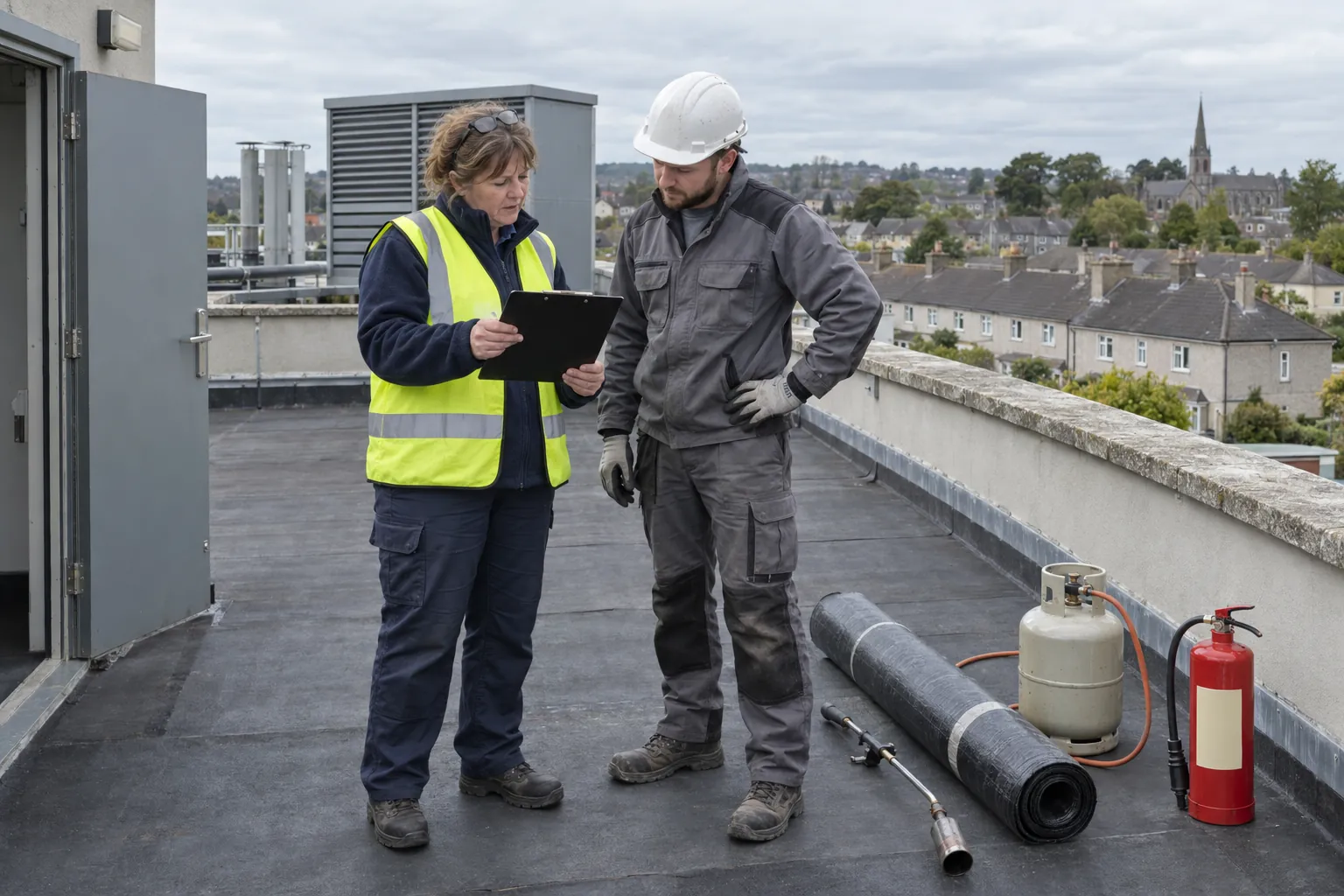 Fire and water checksHot works permits in Ireland: the duty, the permit and the final checkHot works permits in Ireland: the 2005 Act and Fire Services Acts duties behind them, what counts as hot work, what a permit should say, and closing it off properly.
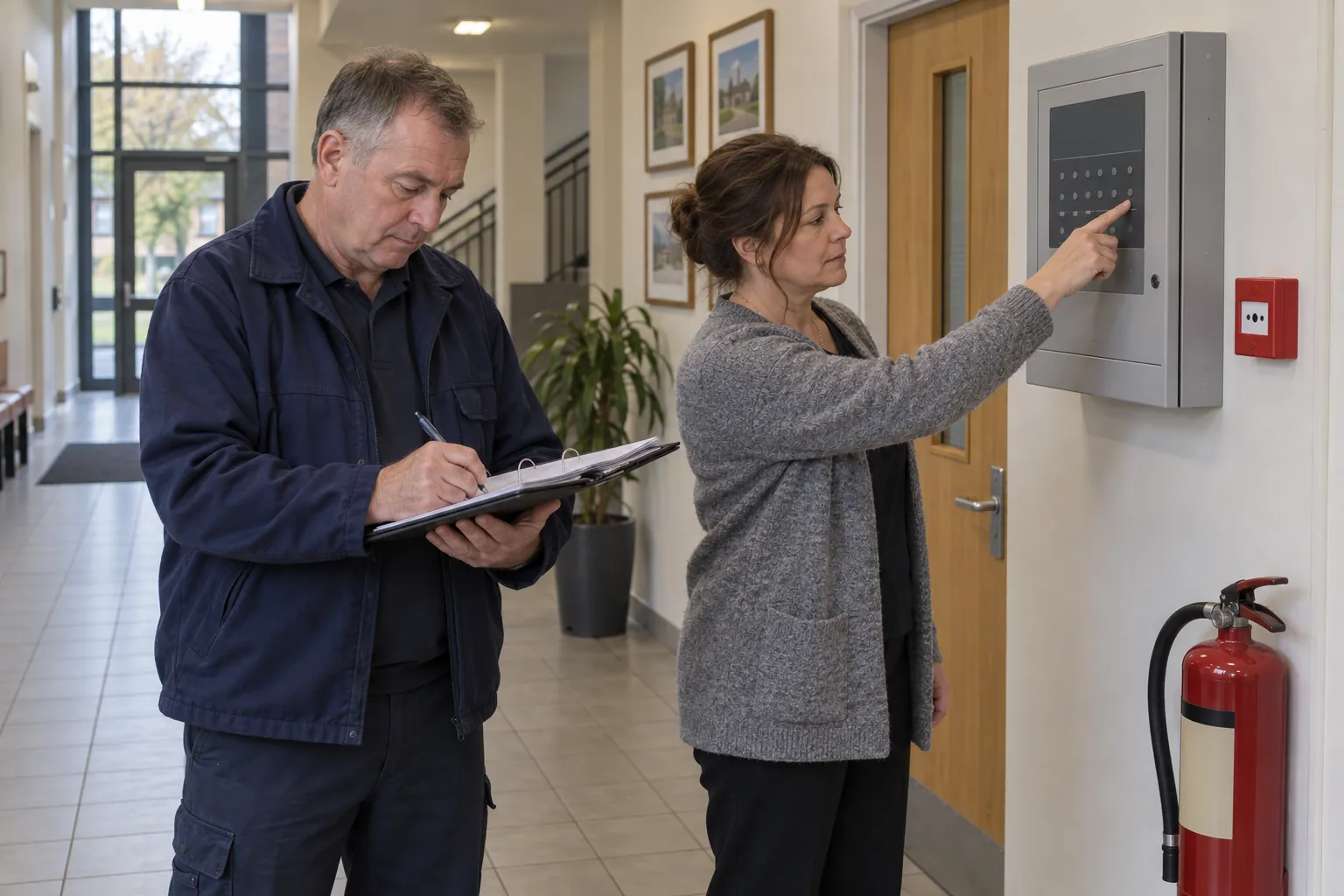 Fire and water checksFire safety register: what to record, who keeps it and how to make it credibleWhat a fire safety register should hold under section 18(2) of the Fire Services Acts, the routine checks behind it, who keeps it, and what makes it credible.
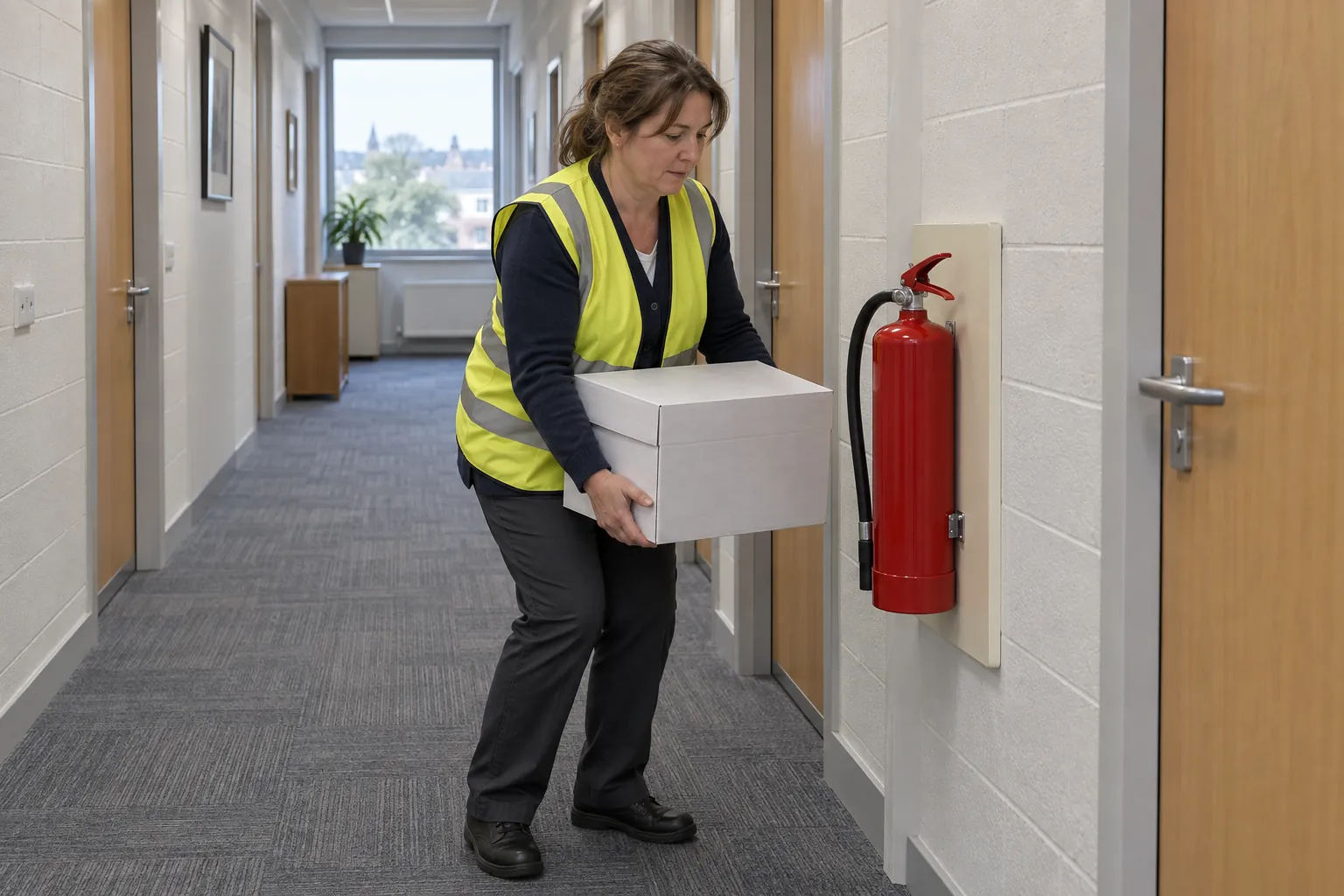 Fire and water checksFire warden duties: the daily checks, the evacuation and the recordWhat a fire warden does in an Irish workplace: the law behind the role, the daily and weekly checks, the job in an evacuation, and a record that stands up.
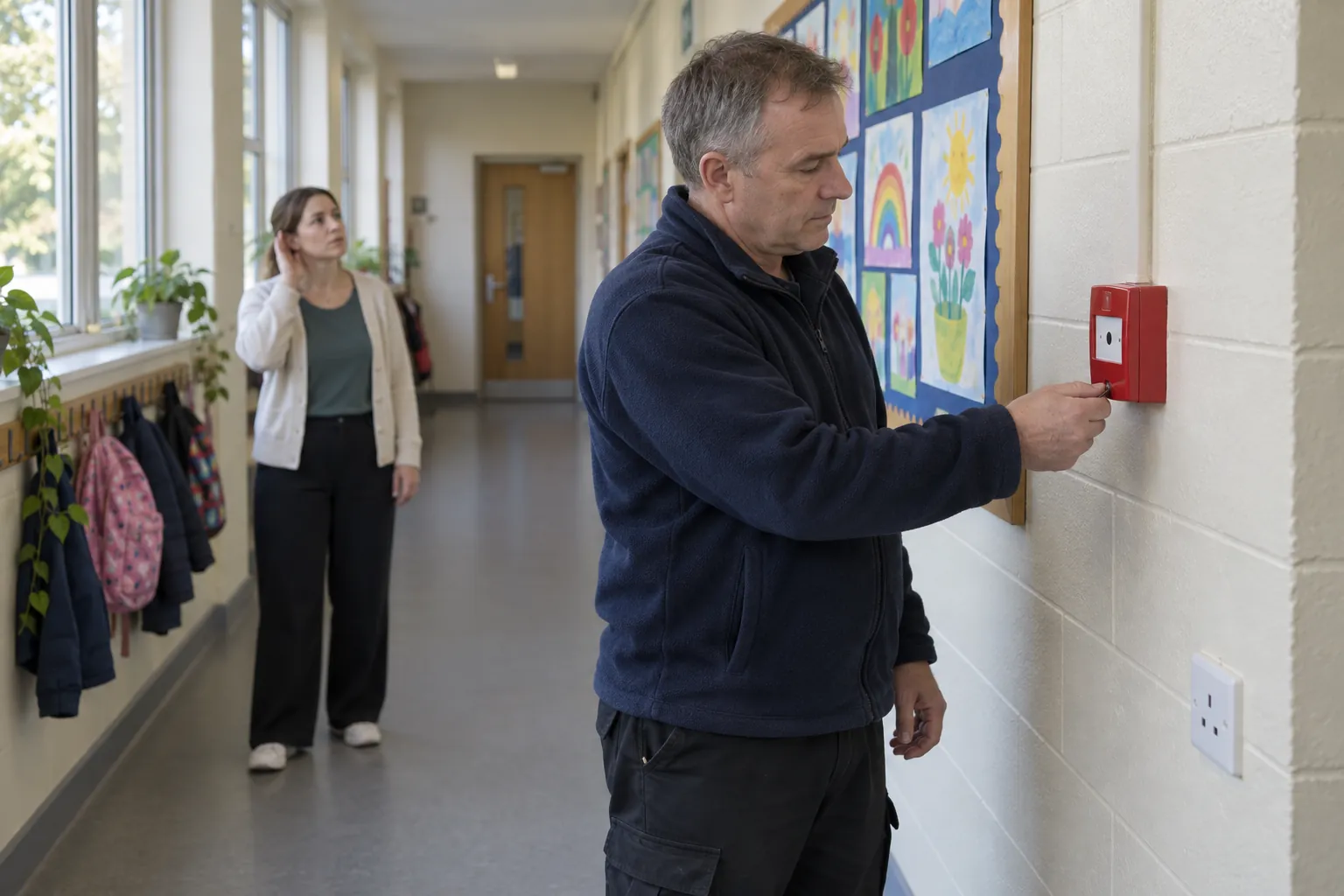 Fire and water checksFire alarm testing in Ireland: the checks, the servicing, and the recordFire alarm testing in Ireland: the legal duty, the daily and weekly checks, quarterly servicing to I.S. 3218, and what the fire safety register should show.