Premises and facilities management
Body corporate maintenance: who repairs what, the long-term plan and the records, in New Zealand
In New Zealand a body corporate must repair and maintain the common property, its own assets and any building elements and infrastructure that relate to or serve more than one unit, under section 138 of the Unit Titles Act 2010, while each owner repairs and maintains their own unit.
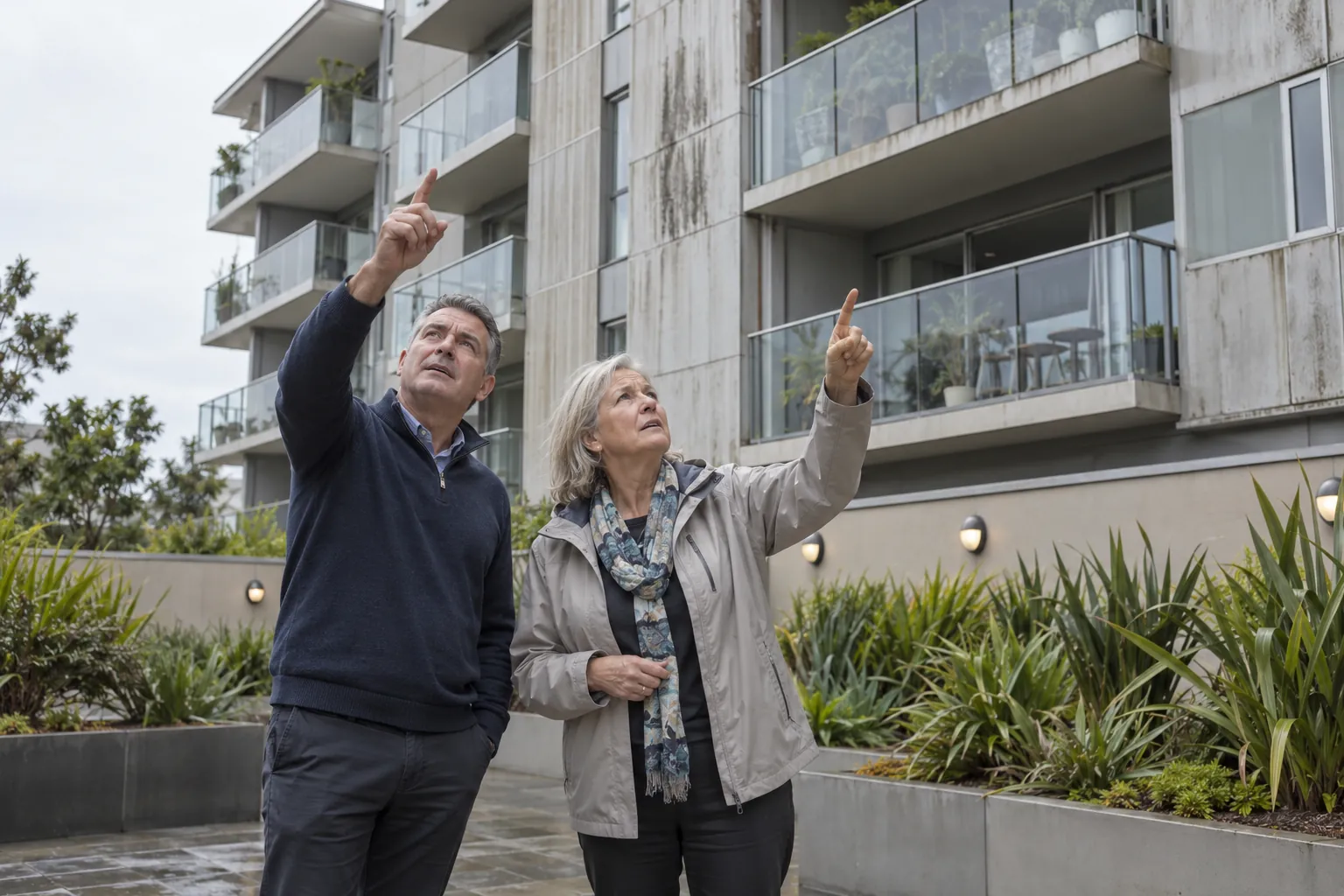
Every body corporate must also have a long-term maintenance plan covering at least 10 years, and 30 years for a development of 10 or more principal units. This guide covers who maintains what, who pays, what the plan must contain, how the routine work is organised, and what a good record of it looks like.
01
The body corporate's duty to repair and maintain
A unit title development, such as an apartment block, a group of townhouses or a mixed-use building of shops and offices, is run by its body corporate. The Unit Titles Act 2010 sets out what the body corporate maintains and what each owner maintains, and that line decides who organises a repair and who pays for it.
Section 138(1) of the Act says the body corporate must repair and maintain:
- the common property;
- any assets designed for use in connection with the common property;
- any other assets owned by the body corporate; and
- any building elements and infrastructure that relate to or serve more than 1 unit.
Building elements are defined widely in section 5: the external and internal components of any part of a building or land on a unit plan that are necessary to the building's structural integrity, its exterior aesthetics, or the health and safety of the people who occupy or use it, "including, without limitation, the roof, balconies, decks, cladding systems, foundations systems", retaining walls and other walls or features that support the building. So the duty reaches well beyond the lobby and the driveway: a roof, the cladding or a balcony can fall to the body corporate even where it is part of a unit, if it relates to or serves more than one unit.
Whether it does can end up in court. In Wheeldon v Body Corporate 342525 [2016] NZSC 125, a dispute over weathertightness repairs at an apartment complex, the Supreme Court dismissed an application for leave to appeal and said that whether a building element or infrastructure relates to more than one unit "is essentially a factual question". The answer depends on the building, which is why evidence of its condition matters.
Each owner has a matching duty. Section 80(1)(g) requires the owner of a principal unit to repair and maintain it and keep it in good order so that no damage or harm, "whether physical, economic, or otherwise", is or could be caused to the common property, any building element, any infrastructure or any other unit. Under section 138(4), the body corporate can recover what it spends repairing or maintaining building elements and infrastructure contained in a principal unit from that unit's owner, as a debt. The unit plan shows where each unit's boundary falls, but the body corporate's duty does not stop there: a building element or infrastructure contained in a unit can still be the body corporate's to maintain if it relates to or serves more than one unit.
The Unit Titles (Strengthening Body Corporate Governance and Other Matters) Amendment Act 2022 tightened the rules. Unit Titles Services' page on changes to the Unit Titles Act 2010 says the changes are now in force, including "new requirements to ensure sufficient planning of long-term maintenance projects", which took effect on 9 May 2024.
02
Who maintains what, and who pays
Unit Titles Services' page on unit title maintenance puts it plainly: "The body corporate repairs and maintains the common property." The work divides like this:
- The body corporate: the common property, such as a shared car park, lobby or stairwell; assets it owns, and assets used in connection with the common property; and parts of the building that serve more than one unit, which can include building elements such as the roof, the cladding and the foundations, and shared infrastructure.
- Each unit owner: the inside of their unit. The same page says an owner "may also have to look after the exterior, especially if the units are detached", and that no work may damage the common property, the building or other units.
- Work that crosses the line: an owner whose work could affect another unit or the common property needs written consent from the body corporate and any affected owners.
The body corporate can enter a unit to carry out repairs and maintenance; Unit Titles Services says it "can access at any time as long as it's at reasonable hours".
Owners pay through their levies, which the page on owner's responsibilities says can cover insurance, cleaning, gardening, contractor fees and maintenance. The unit title maintenance page adds that some owners may pay more if the work is because an owner or tenant was negligent or caused the damage, benefits some owners more than others, or is on building elements or infrastructure contained in a unit.
Where the building has specified systems, such as a lift, sprinklers or emergency lighting, the Building Act 2004 applies as well. MBIE's page on specified systems and compliance schedules says every building other than a single residential building (unless it has a cable car) that contains one needs a compliance schedule and an annual building warrant of fitness (BWoF). The body corporate needs to know who engages the independent qualified persons (IQPs), who does the owner's routine checks, and who signs the BWoF.
03
The long-term maintenance plan
Every body corporate must have a long-term maintenance (LTM) plan. Section 116 of the Act requires it, and regulations 30 and 30A of the Unit Titles Regulations 2011 set out what it contains. Unit Titles Services' page on ensuring adequate planning for maintenance says the plan is to summarise the current state of the common property, identify future maintenance and its estimated cost, support the long-term maintenance fund, provide a basis for levying owners, and guide the body corporate's annual maintenance decisions.
How long it covers. At least 10 years. A large unit title development, one with 10 or more principal units, must plan 30 years from the plan's commencement or last review, with detailed costings for the first 10 years and high-level planning for years 11 to 30. A large development must consult building professionals or other suitably qualified professionals when it develops or reviews the plan, unless it decides by special resolution not to.
How often it is reviewed. At least every three years. A large development must also review it as soon as practicable after becoming aware of any matter that may have a material impact on it.
What it must contain. Regulation 30(1) requires the plan to:
- cover the common property, building elements and infrastructure, and any additional items the body corporate has decided by ordinary resolution to include;
- summarise the current state of the common property;
- identify the items the body corporate may decide by ordinary resolution not to maintain for any period during the plan;
- state the period covered, the estimated age and life expectancy of each item, and the estimated cost of maintaining and replacing it;
- state whether there is a long-term maintenance fund, the plan's sources of funding, and the amount to be put into any fund each year;
- state who prepared the plan.
For years 11 to 30 of a large development's plan, regulation 30A asks instead for "a high-level indication of the expected cost of maintenance and replacement" of the items.
The fund. A body corporate must establish a long-term maintenance fund unless it decides by special resolution not to, and must then review that decision every year. The fund can only be spent on the plan, and need not cover all of its anticipated costs.
MBIE has written two example plans, for small and for large developments, linked from Unit Titles Services' maintenance page. The large one lists typical items: exterior repainting, balustrades and balcony tiles, scaffolding for work above two storeys, driveways, stormwater drains, the roof and box gutters, stairwells, retaining walls, and testing the main switchboard.
04
Organising the routine work: committee, managers and contractors
The long-term plan deals in years; the building is kept in order week by week, by several people:
- The committee. Unit Titles Services' page on the body corporate committee and chairperson says a development of more than 9 units must form a committee unless it decides otherwise by special resolution, and that the body corporate's duties and powers can be delegated to it, except for certain specified matters.
- The body corporate manager. Under the page on managing contracts with service providers, a body corporate manager provides record keeping and administration, financial services, or regulatory compliance on the body corporate's behalf, under an agreement that must set out reporting requirements and compliance with the code of conduct.
- The building manager. The same page says "A building manager will carry out the long-term maintenance plan", and may advise on what it covers, when work is due and what it may cost. In practice the building manager or a caretaker also walks the common property, logs faults and gets contractors in.
Routine work is paid from the operating account, which the page on body corporate finances says covers managing the property, services and amenities, compliance costs and "maintenance costs incurred at least once a year (eg, pool cleaning)".
Health and safety law applies too. WorkSafe's Property management FAQs say "Under HSWA, a Body Corporate is considered to be a PCBU", with duties over the matters it has influence and control over, and that committee members are officers with a duty of due diligence: to make sure the body corporate is doing what it needs to "when work is being carried out on the common areas of the property." Where several businesses have duties for the same work, they must consult, cooperate and coordinate, so far as is reasonably practicable.
A workable routine has three layers: regular checks of lobbies, stairwells, car parks, bin areas, grounds and lighting; planned work from the plan and the service contracts, checked when done; and reactive repairs from reported faults. What the checks find is the current state of the common property that the next plan review must summarise.

05
What good maintenance records look like
Unit Titles Services lists the information bodies corporate and body corporate managers must keep for at least three years, because MBIE as regulator can ask for it to monitor compliance and investigate complaints. On maintenance the list includes the long-term maintenance plan; any remediation, earthquake-prone and land defect report; notices to owners about entering a unit under section 80; minutes of body corporate and committee meetings; current third-party warranties for common property, assets, building elements and infrastructure; and the body corporate's service contracts.
Where there is a compliance schedule, MBIE's page on managing your BWoF adds the owner's records of inspection, maintenance and repairs, kept for at least two years with the dates, the work undertaken, the faults found, the remedies applied and the person who performed the work.
Beyond what the law lists, a body corporate is in a strong position when it can answer these quickly:
- When was this last checked, and by whom? A dated, named record of each routine check, made at the time, not filled in later.
- What did it look like? A photo when a defect is found and again when it is fixed: a blocked gutter, a stairwell light out, water staining on a ceiling.
- Who reported it, and when was it closed? A fault log from report to repair, so a slow leak is not reported five times and fixed none.
Unit Titles Services' page on How to resolve a dispute gives body corporate decisions, repairs and maintenance among its examples of disputes, which can go to mediation or a hearing at the Tenancy Tribunal. A repair dispute can turn on whether a leaking pipe serves one unit or several, or whether a defect was reported and ignored. Those are questions of fact, and a record made at the time is good evidence of them.
06
Where the record fails, and what SiteClara does about it
The plan, the minutes and the IQP certificates are usually in order. The weak record is the everyday one. The cleaner's sheet in the bin room is signed for the week ahead. The car park lights are said to be checked, with nothing to show when. A resident mentions a leaking downpipe to the caretaker in the lift, and it never reaches the body corporate manager.
SiteClara records the checks at the location. A printed QR poster, with an optional NFC tag behind it, sits at each place a check is scheduled, such as a lobby, stairwell, bin room, pool or car park level. The caretaker, cleaners or contractors' staff scan the code or tap the tag on their own phone, with no app to install, see the checks due there, and mark each one done or explain what stopped them. The named person and the time are recorded as it happens, with a photo when one is asked for. A fault reported at the location goes onto the team's list of open jobs until someone closes it, and where a tag is set to Open, a resident or visitor can report a problem there too.
Each day the supervisor sees what was due, done and missed, records why a check was missed, and approves a report that goes to the building manager and other nominated contacts the next morning: what was reported, completed and still open, and how the scheduled checks went. A supervisor can escalate a job to the building manager, who can answer it.
07
Questions people ask
What maintenance is the body corporate responsible for?
Unit Titles Services' page on unit title maintenance says the body corporate repairs and maintains the common property, assets owned by the body corporate, assets used in connection with the common property, and parts of the building that serve more than one unit. Each owner is responsible for the inside of their unit, and may also have to look after the exterior, especially if the units are detached.
What maintenance is required by the tenant?
Tenancy Services' page on damage and repairs says tenants must tell the landlord straight away if they are aware something needs to be repaired or maintained, no matter how it happened or who caused the damage. Its page on property maintenance says landlords and tenants are both responsible for keeping the property in good condition, and that tenants must get consent before making changes to it. In a unit title development, tenants must also obey the body corporate rules.
What are the operational rules for body corporates in New Zealand?
They are the body corporate rules for the development, which owners and tenants must obey. Unit Titles Services' page on owner's responsibilities says the default rules are set out in the Unit Titles Regulations, and the body corporate can remove, change or add to them, so owners should keep the most up-to-date copy.
Who pays for body corporate maintenance?
Unit owners, through the levies the body corporate sets. Unit Titles Services' page on owner's responsibilities says levies cover general expenses such as insurance, cleaning, gardening, contractor fees and maintenance, and that some owners may pay more for a repair if an owner or tenant caused the damage, the work benefits some owners more than others, or it is on the parts of the building contained within their unit.
Is there a template for a long-term maintenance plan?
Yes. Unit Titles Services' page on ensuring adequate planning for maintenance says all body corporates must have a plan that covers at least 10 years, and that a large development must review its plan every 3 years. It offers two example plans to download: one for complex developments and one for small bodies corporate.
08
Further reading, and a list to take away
The Unit Titles Act 2010 and the Unit Titles Regulations 2011 are on legislation.govt.nz. Unit Titles Services explains them: start with unit title maintenance, which links MBIE's example plans. For specified systems, read MBIE's managing your BWoF, and for health and safety, WorkSafe's Property management FAQs.
If you sit on a committee, manage a unit title building or are taking one over, check that you know:
- where each unit's boundary falls on the unit plan, which parts are common property, which building elements and infrastructure serve more than one unit, and which belong to the units alone;
- where the long-term maintenance plan is, who prepared it, how many years it covers and when its next review is due;
- whether there is a compliance schedule, who the IQPs are, and when the BWoF is due;
- what the committee, the body corporate manager and the building manager have each agreed to do;
- how residents and contractors report faults, and how you know each one is closed;
- how routine checks of the common property are recorded, by whom and how often, and where the photos are kept.
Sources
Every document this guide quotes or links to, in the order it first cites them.
- Unit Titles Act 2010 legislation.govt.nz
- Wheeldon v Body Corporate 342525 [2016] NZSC 125 courtsofnz.govt.nz
- Changes to the Unit Titles Act 2010 unittitles.govt.nz
- Unit title maintenance unittitles.govt.nz
- Owner's responsibilities unittitles.govt.nz
- Specified systems and compliance schedules building.govt.nz
- Unit Titles Regulations 2011 legislation.govt.nz
- Ensuring adequate planning for maintenance unittitles.govt.nz
- Body corporate committee and chairperson unittitles.govt.nz
- Managing contracts with service providers unittitles.govt.nz
- Body corporate finances unittitles.govt.nz
- Property management FAQs worksafe.govt.nz
- Information bodies corporate and body corporate managers must keep unittitles.govt.nz
- Managing your BWoF building.govt.nz
- How to resolve a dispute unittitles.govt.nz
- Damage and repairs tenancy.govt.nz
- Property maintenance tenancy.govt.nz
Related guides
 Premises and facilities managementBuilding manager duties: the law, the daily work and the record, in New ZealandWhat a building manager does in New Zealand: HSWA duties, the compliance schedule and BWoF, unit title buildings, daily work and the records that show it was done.
 Premises and facilities managementPreventative maintenance: how to plan it and show it was donePreventative maintenance for New Zealand buildings: the HSWA and Building Act duties, the compliance schedule, building a programme, and the records behind it.
 Fire and water checksThe building warrant of fitness: what a New Zealand owner signs each year, and how to make it trueWhat a New Zealand building warrant of fitness declares, who signs it, the Form 12 and Form 12A cycle, the records behind it, and the checks that keep it true.
 Premises and facilities managementCaretaker duties: what the job involves in New Zealand, and how to show it was doneCaretaker duties in New Zealand schools, apartment blocks, offices and halls: lock-ups, routine checks, basic repairs, working alone and the record of what was done.