Premises and facilities management
Caretaker duties: what the job involves in New Zealand, and how to show it was done
A caretaker's duties are to keep a building and its grounds clean, secure, safe and in good repair: opening up and locking up, cleaning and servicing the toilets, looking after the grounds, restocking supplies, doing basic repairs, carrying out routine checks and calling in tradespeople for anything bigger.
Also written for United Kingdom · Ireland · United States · Canada · Australia · South Africa
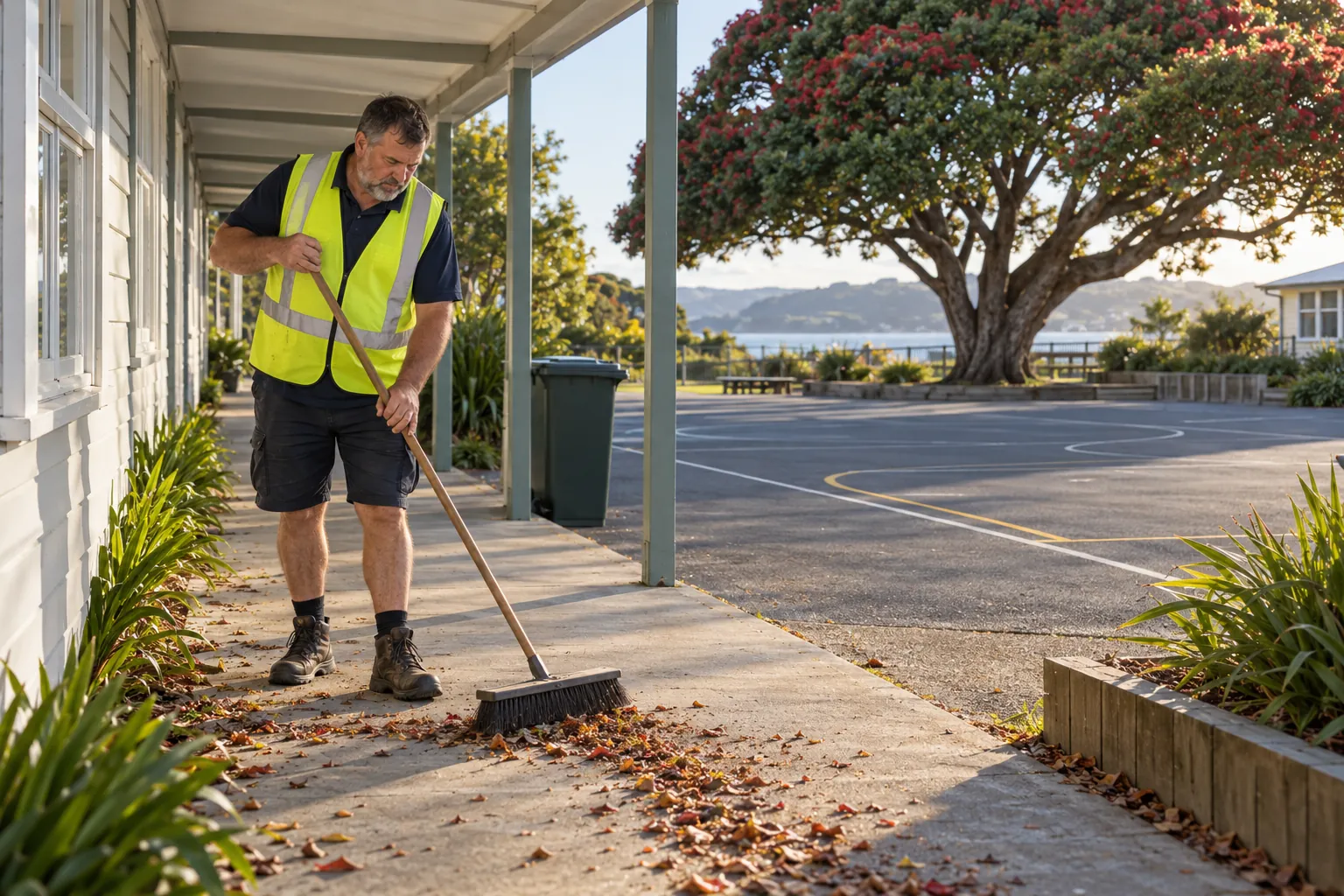
This guide covers the caretaker's job in New Zealand schools, apartment blocks, offices and community buildings, the law behind it from the Health and Safety at Work Act 2015 to the building warrant of fitness, the routine checks most caretakers do, working alone safely, and what a good record of the work looks like.
01
What a caretaker is, and whose duties the job carries out
A caretaker looks after a building and its grounds for whoever owns or runs it. Tahatū Career Navigator's Caretaker job profile puts it in one line: "Caretakers maintain and clean buildings and facilities such as schools, apartments, hospitals and office buildings." Other titles for the job are building caretaker, school caretaker, building custodian, building superintendent and property supervisor. This guide is about looking after a building; caregiving, the care of a person, is a different job.
Most of the legal duties a caretaker carries out belong to the organisation they work for, not to the caretaker personally. In New Zealand the main ones are:
- The Health and Safety at Work Act 2015 (HSWA), section 36: every person conducting a business or undertaking (PCBU) must ensure, so far as is reasonably practicable, the health and safety of workers, and that other people are not put at risk by its work. WorkSafe's Introduction to the Health and Safety at Work Act 2015 special guide says this includes "providing and maintaining a work environment that is without risks to health and safety" and "providing adequate facilities for the welfare at work of workers".
- Section 37: in the words of WorkSafe's special guide, a PCBU who manages or controls a workplace must ensure, so far as is reasonably practicable, that "the workplace, the means of entering and exiting the workplace, and anything else arising from the workplace are without health and safety risks to any person", visitors, students and residents included.
- Section 30: WorkSafe's special guide says risks "must be eliminated so far as is reasonably practicable", and if they cannot be, minimised.
- Section 34: in the special guide's words, PCBUs sharing duties must "consult, co-operate and co-ordinate activities". The caretaker's employer shares duties with the cleaning company and every contractor on site.
- The Building Act 2004, section 108: the owner of a building with a compliance schedule supplies an annual building warrant of fitness (BWoF) to the council. Some of the routine inspections behind it are done by the owner's own people, often the caretaker.
Who the PCBU is depends on the building. The Ministry of Education's page on health and safety responsibilities for schools says "School boards are legally responsible for the health and safety of everyone working at, attending and visiting a school". WorkSafe's Property management FAQs say a commercial landlord is a PCBU, that "a property manager is also a PCBU", and that a body corporate is "considered to be a PCBU". The caretaker is a worker, and section 45 gives workers their own duties: to take reasonable care for their own and others' health and safety, and to comply, so far as they reasonably can, with any reasonable instruction.
02
Caretaker duties and responsibilities in practice
Tahatū lists what caretakers may do: "clean buildings and facilities", "maintain outdoor grounds and gardens", "restock building supplies", "clean and service bathrooms", "do basic repairs", "organise tradespeople and other workers" and "maintain building security". A caretaker job description usually turns that into day-to-day duties such as these:
- Opening and locking up: unlocking before the day or a booking starts, setting and unsetting the alarm, checking windows and external doors at close, and holding keys securely, often as a keyholder for alarm call-outs.
- Cleaning: in a small building the caretaker is the cleaner; in a larger one they clean between the contract cleaners' visits, deal with spills and empty bins.
- Toilets and supplies: cleaning and restocking toilets, hand towels and soap, and reporting blocked or leaking fittings.
- Grounds: mowing, weeding, litter picking, clearing leaves from paths and gutters, and keeping courts, playgrounds and car parks safe.
- Basic repairs: replacing a light tube, tightening a loose handle, freeing a sticking window, touching up paint, and reporting anything bigger.
- Routine checks: escape routes clear, exits opening freely, the owner's checks on the compliance schedule where they are the caretaker's, and anything unsafe taken out of use.
- Tradespeople: letting them in, showing them where they are working and where the asbestos management plan is, and checking the job is finished.
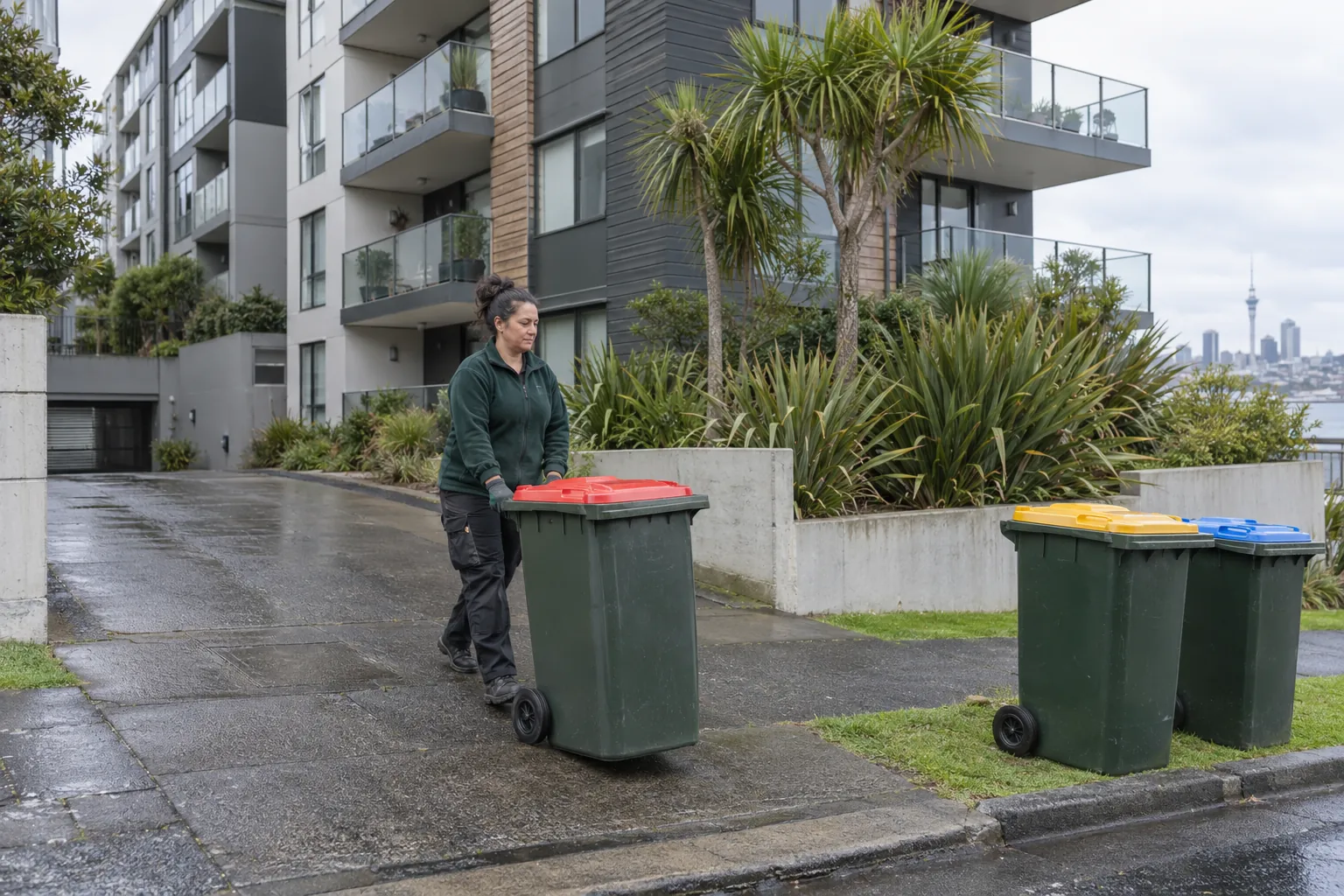
- Security, rubbish and rooms: reporting damage, graffiti and signs of a break-in, putting bins out on collection day, and setting up chairs and tables for assemblies, meetings and hall hire.
What a caretaker should not do matters as much. Electrical work, gas fitting, plumbing and drainlaying, work on fire alarms or sprinklers, and work at height without the right equipment and training belong to a licensed or competent tradesperson. WorkSafe's Property management FAQs make the point for owners: "Engage competent contractors to do any work on the property." A good job description says where the caretaker's work stops.
03
How the job differs from building to building
The core of caretaking is the same everywhere, but each kind of building adds its own work and its own line of responsibility.
- Schools and kura: the school caretaker usually works for the board, reporting to the principal or the school's property manager. The day starts before staff arrive and ends after the last evening hire. The Ministry of Education says boards must meet their duty "by developing, monitoring and reviewing health and safety policies and practices", and much of the property side lands on the caretaker's list.
- Apartment blocks and unit title developments: a resident or visiting caretaker looks after the lobbies, stairwells, corridors, car parks, bin rooms and gardens. Unit Titles Services' page on unit title maintenance says "The body corporate repairs and maintains the common property", including "parts of the building that serve more than one unit". The caretaker reports repairs to the body corporate or its building manager, not to individual owners.
- Offices and commercial buildings: the caretaker works for the landlord or the property manager, looks after the shared areas and services, and is the first person tenants call when something breaks.
- Community halls, churches and sports clubs: the week follows the bookings. The caretaker opens for each hirer, checks the hall before and after and locks up after evening events. Many posts are part time or voluntary; the committee or trust that runs the hall remains responsible for it.
Tahatū says caretakers "usually work regular hours but may work evenings and weekends and be on call", and "usually work in schools, apartment blocks and public buildings". Some apartment caretakers live on site.
04
The routine checks, and working alone safely
Much of a caretaker's value is in checks nobody notices when they are done. The compliance schedule, the evacuation scheme and the organisation's own risk management set how often, but a typical pattern is:
- Every opening: escape routes and exits clear, the building secure overnight, toilets clean and stocked, no wet floors, trailing leads or broken glass.
- Weekly or monthly: the owner's own checks on the compliance schedule where they are given to the caretaker. MBIE's page on inspection and maintenance of specified systems says "A building owner may be responsible for undertaking some less complex and more frequent inspection tasks. These tasks will also be detailed in the compliance schedule." Most specified systems also need at least an annual IQP inspection.
- A walk round the outside: fences, lighting, gutters, paths and play equipment, with damage reported.
- After every event or hire: the hall, kitchen and toilets left clean and safe, and the building locked and alarmed.
A caretaker should know where three documents are kept. The first is the building warrant of fitness and its records: MBIE's page on managing your BWoF says the owner renews the BWoF every 12 months and "needs to keep all records of inspection, maintenance and repairs undertaken for at least two years after they have been issued". The second is the evacuation scheme, where there is one: Fire and Emergency's page Maintain your scheme (trial evacuations and training programmes) says permanent occupants are trained and assessed at intervals of not more than six months. The third is the asbestos management plan: WorkSafe's guidance on managing asbestos in your building or workplace says "Buildings built before 1 January 2000 are likely to contain asbestos material", and the plan must be readily accessible to workers. Check it before drilling a wall or opening a ceiling.
Caretakers often work alone, early, late and in the holidays. That is lawful, but it is a risk the PCBU must manage under regulation 21 of the Health and Safety at Work (General Risk and Workplace Management) Regulations 2016. WorkSafe's General risk and workplace management – part 2 says "Work can be remote or isolated from the assistance of other persons because of location, time, or the nature of the work", and the PCBU must "provide a system of work that includes effective communication with workers". In practice: agreed check-in times, someone who notices a missed one, a way to raise the alarm, and jobs such as ladder work or heavy lifting that wait until someone else is there.
05
Skills, entry requirements and a good record
There is no compulsory qualification for a caretaker in New Zealand. Tahatū says "You usually need experience to become a caretaker and a qualification may be useful", and lists experience in similar work, passing a police check and holding a driver licence among the entry requirements. Cleaning, gardening, grounds work or a trade all count as similar work, and training in first aid, manual handling and ladder safety helps. Tahatū also says caretakers "may work outdoors in all weather conditions" and "may do physically demanding work", and need to be practical and safety conscious and able to solve problems. In practice that means working alone and to a routine, and knowing enough about building services to spot a fault and describe it to a tradesperson.
In schools and kura, vetting is the law. The Ministry of Education's page Police vets for schools and kura says that "Under the Children's Act 2014 and the Education and Training Act 2020", Police vets must be done for non-teaching employees and for contractors who may have unsupervised access to children during normal operating hours, and that "A Police vet is valid for 3 years".
A good caretaking record shows three things:
- That the routine checks were done: what, where, when and by whom, made at the time rather than filled in at the end of the week.
- What was found and reported: the fault, the location, the time and who was told.
- What happened to each report: who took it on, and when it was fixed or why it is still open.
That record protects the caretaker when something goes wrong, and lets the board, the body corporate or the owner show a WorkSafe inspector or an insurer that the building was looked after. Where the caretaker does the owner's checks on the compliance schedule, their reports are part of what the BWoF relies on, and are kept with the compliance schedule.
06
Where the record fails, and what SiteClara does about it
Caretakers are often the most reliable people in a building and the worst recorded. The checks happen, but they are ticked on a sheet inside the cleaner's cupboard, written in an exercise book in the caretaker's shed, or not written down at all. A broken light mentioned to whoever was in the office never reaches the person who can fix it. When the board chair, the body corporate committee or the property manager asks whether the building was checked, the caretaker's word is all there is.
SiteClara gives each check a place. A printed QR poster at each location, such as the main entrance, the staffroom kitchen, a toilet block, the plant room or the bin enclosure, with an optional NFC tag behind it, lets the caretaker scan the code or tap the tag on their own phone, with no app to install. They see the checks due there and mark each one done, or explain what stopped them, with a photo when one is asked for. The named person and the time are recorded as it happens, and a problem reported there goes onto the team's list of open jobs until someone closes it.
Whoever supervises the caretaker sees what was due, done and missed, records the reason a check was missed, and can escalate a job to the building manager, who can answer it. Each day the supervisor approves a short report that goes the next morning to nominated contacts, such as the principal, the property manager or the body corporate's building manager, showing what was reported, what was completed, what is still open and how the scheduled checks went.
07
Questions people ask
What are the duties and responsibilities of a caretaker?
Tahatū Career Navigator's Caretaker job profile lists them: caretakers may "clean buildings and facilities", "maintain outdoor grounds and gardens", "restock building supplies", "clean and service bathrooms", "do basic repairs", "organise tradespeople and other workers" and "maintain building security".
What is the role of a caretaker?
A caretaker's role is to keep a building and its grounds clean, secure and in good repair for the organisation that owns or runs it. Tahatū Career Navigator's Caretaker job profile says caretakers "maintain and clean buildings and facilities such as schools, apartments, hospitals and office buildings".
08
Further reading, and a list to take away
WorkSafe's Introduction to the Health and Safety at Work Act 2015 special guide explains the duties, including changes coming into force on 1 April 2027, and its Overlapping duties – quick guide explains how the caretaker's employer, the cleaning company and contractors share them. For the building, start with MBIE's managing your BWoF; for schools, the Ministry of Education's health and safety responsibilities for schools; for apartment blocks, Unit Titles Services' unit title maintenance.
If you are writing a caretaker job description, or starting as a caretaker, check that you know:
- who your employer is, who the PCBU for the building is, and who you report problems to;
- your buildings, grounds and hours, including evenings, holidays and call-outs;
- which routine checks are yours, how often, and where each is recorded;
- which repairs you may do yourself, and which go to a licensed tradesperson;
- where the compliance schedule, the asbestos management plan and the evacuation scheme are kept;
- the arrangements for working alone, and which tasks wait for a second person;
- how you show, at the end of each day, what you did and what is still open.
Sources
Every document this guide quotes or links to, in the order it first cites them.
- Caretaker job profile tahatu.govt.nz
- Health and Safety at Work Act 2015 legislation.govt.nz
- Introduction to the Health and Safety at Work Act 2015 special guide worksafe.govt.nz
- Health and safety responsibilities for schools education.govt.nz
- Property management FAQs worksafe.govt.nz
- Unit title maintenance unittitles.govt.nz
- Inspection and maintenance of specified systems building.govt.nz
- Managing your BWoF building.govt.nz
- Maintain your scheme (trial evacuations and training programmes) fireandemergency.nz
- Managing asbestos in your building or workplace worksafe.govt.nz
- General risk and workplace management – part 2 worksafe.govt.nz
- Police vets for schools and kura education.govt.nz
- Overlapping duties – quick guide worksafe.govt.nz
Related guides
 Premises and facilities managementBuilding manager duties: the law, the daily work and the record, in New ZealandWhat a building manager does in New Zealand: HSWA duties, the compliance schedule and BWoF, unit title buildings, daily work and the records that show it was done.
 Security patrolsLock-up patrols: securing a building at close, and showing it was doneWhat a lock-up service covers in New Zealand: the PSPLA licence, the order of a lock-up, fire exits, trespassers, break-ins and what each visit should record.
 Fire and water checksThe building warrant of fitness: what a New Zealand owner signs each year, and how to make it trueWhat a New Zealand building warrant of fitness declares, who signs it, the Form 12 and Form 12A cycle, the records behind it, and the checks that keep it true.
 Premises and facilities managementLone worker policy: what New Zealand law asks for, and what to put in itA lone worker policy in New Zealand: regulation 21 on remote or isolated work, the risk assessment, check-ins, first aid and an outline to adapt for your building.