Premises and facilities management
LOLER inspection: the thorough examination, the report, and the checks in between
A LOLER inspection is the statutory thorough examination of lifting equipment by a competent person that regulation 9 of the Lifting Operations and Lifting Equipment Regulations 1998 requires, where the equipment is exposed to conditions causing deterioration, at least every 6 months for equipment that lifts people and for lifting accessories, and at least every 12 months for other lifting equipment, unless an examination scheme sets other intervals.
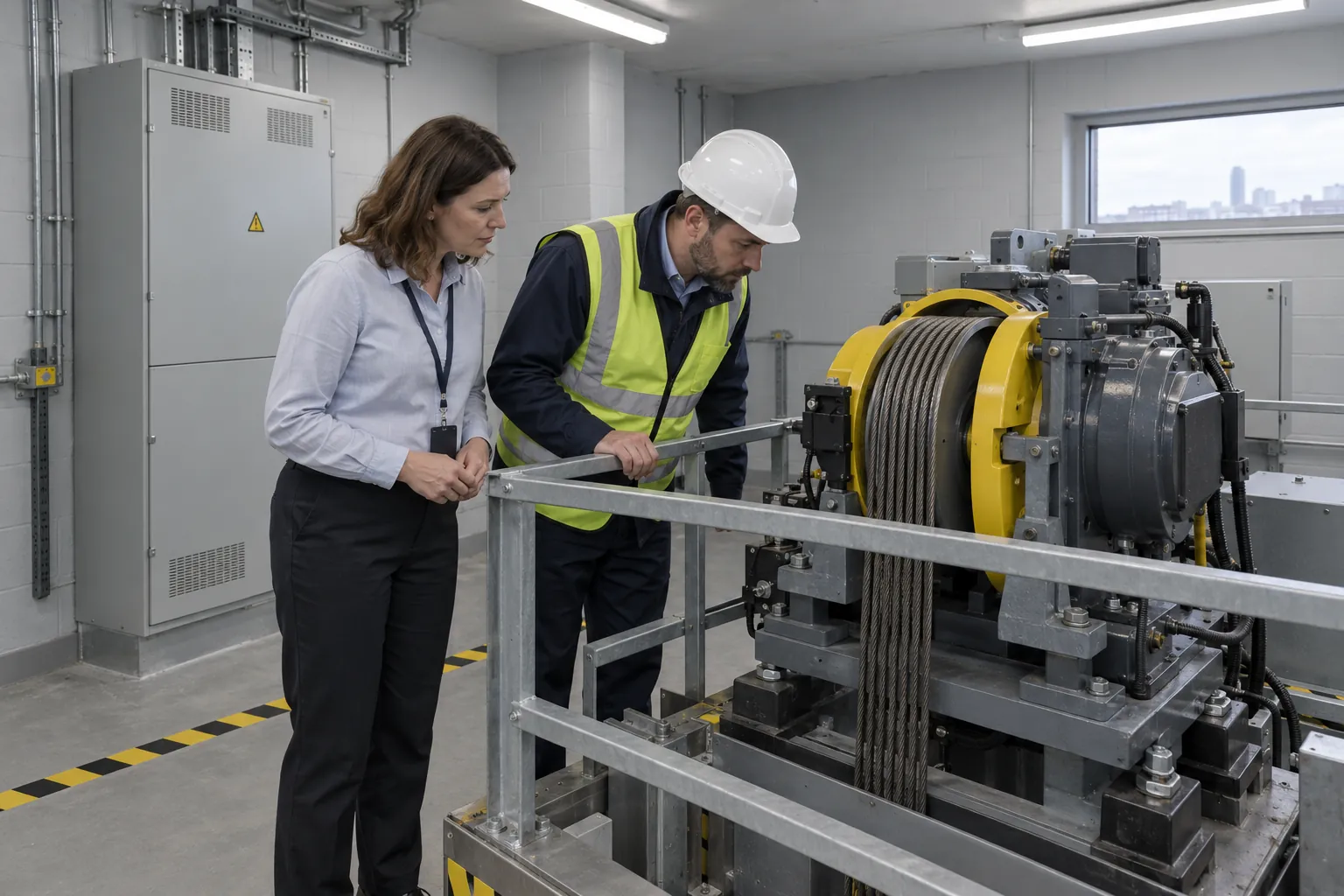
In a building that means the passenger and goods lifts, stairlifts and platform lifts used at work, hoists, dumb waiters and anything else that raises or lowers a load. This guide covers the law, which equipment it applies to, who may examine it, what the report must say, what to do about defects, and the checks that keep the record alive between examinations.
01
What a LOLER inspection is, and the law behind it
LOLER inspection is the trade's name for the statutory thorough examination of lifting equipment, but the law uses two words for two jobs. Regulation 9 of the Lifting Operations and Lifting Equipment Regulations 1998 (thorough examination and inspection) requires every employer to ensure that lifting equipment exposed to conditions causing deterioration which is liable to result in dangerous situations is thoroughly examined at set intervals and, if appropriate, inspected by a competent person at suitable intervals in between, so that any deterioration can be detected and remedied in good time.
Regulation 9 requires a thorough examination at four points:
- Before first use, unless the equipment is new and the employer has a declaration of conformity made not more than 12 months before it is put into service.
- After installation, where its safety depends on the installation conditions, to ensure it has been installed correctly and is safe to operate.
- Periodically in service: at least every 6 months for lifting equipment for lifting persons and for accessories for lifting, at least every 12 months for other lifting equipment, or in either case in accordance with an examination scheme.
- After exceptional circumstances liable to jeopardise the safety of the equipment.
Under regulation 3 of LOLER (application) the duties also fall on anyone who has control to any extent of lifting equipment or the way it is used. HSE's Approved Code of Practice, Safe use of lifting equipment (L113, second edition, 2014), gives the building case: the owner of an office block who provides a lift for the employees working in it must ensure the passenger lift is safe to use and receives periodic thorough examinations and, where appropriate, inspections.
LOLER applies in Great Britain. Northern Ireland has the Lifting Operations and Lifting Equipment Regulations (Northern Ireland) 1999, with thorough examination in regulation 9, reports and defects in regulation 10, and keeping of information in regulation 11.
02
Which lifts and lifting equipment need a LOLER inspection
Lifting equipment is work equipment for lifting or lowering loads; an accessory for lifting attaches a load to the machine. HSE's leaflet Thorough examination of lifting equipment: A simple guide for employers (INDG422) lists examples. Those found in ordinary non-domestic buildings include:
- workplace passenger and goods lifts, in offices, hospitals, schools, hotels and warehouses;
- stairlifts and platform lifts provided as work equipment;
- dumb waiters in kitchens and restaurants;
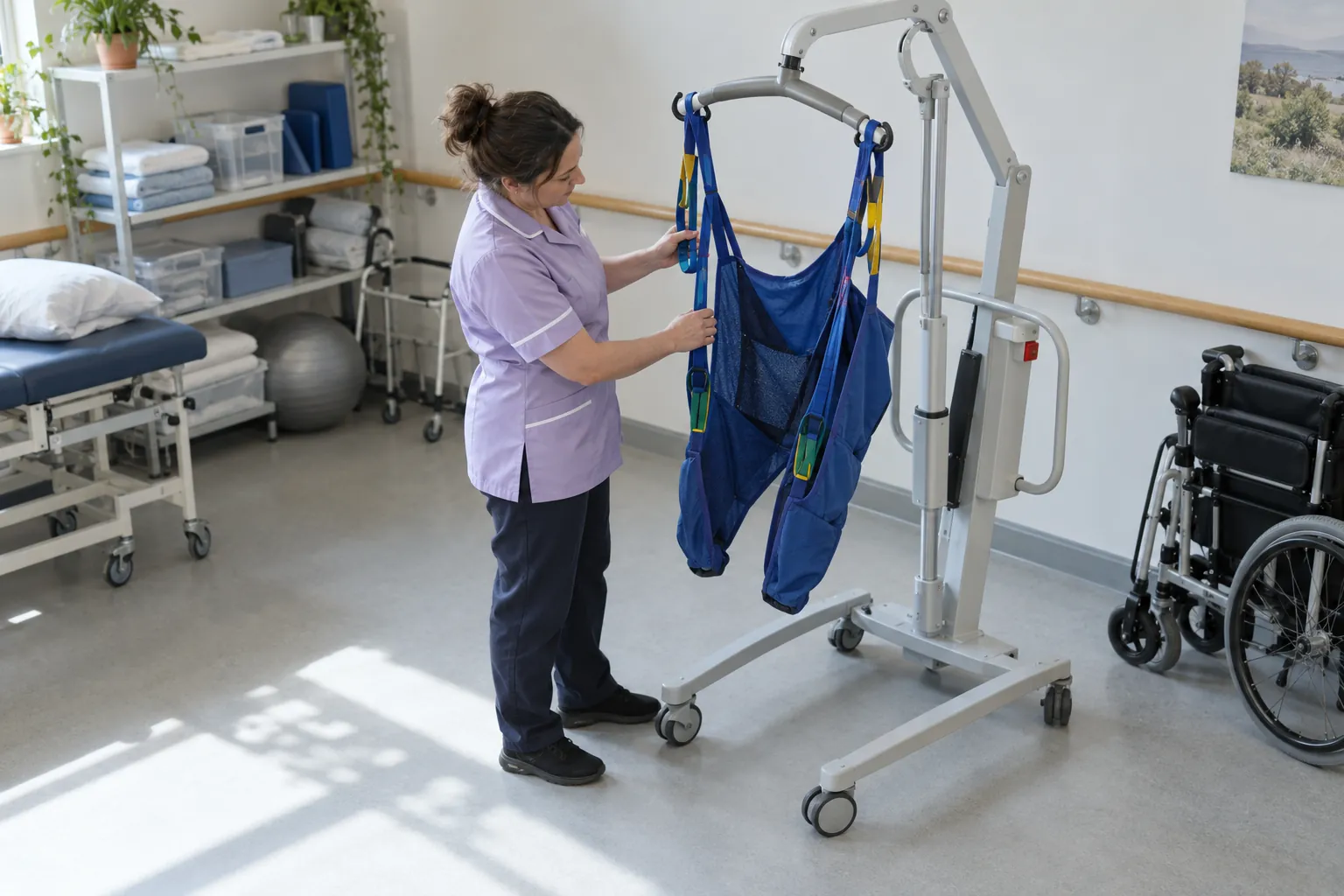
- hoists: bath hoists, and the patient hoists and slings used in hospitals and care homes, which L113 confirms are covered;
- scissor lifts, vehicle tail lifts and vehicle lifts in loading bays and workshops;
- lift trucks, and (L113 adds) high lift pallet trucks, manual or powered, that can raise the forks above 300mm;
- accessories: slings, hooks, shackles and eyebolts.
Some equipment is outside LOLER. HSE's page on passenger lifts and escalators says LOLER does not apply to escalators or moving walkways, which come under regulation 19 of the Workplace (Health, Safety and Welfare) Regulations 1992, although industry guidelines prepared with HSE recommend thorough examination normally every six months. INDG422 says lifts used mainly by members of the public, such as those in shopping centres, carry no duties under LOLER, but the Health and Safety at Work etc. Act 1974 still requires them to be safe, and following LOLER helps meet that duty; HSE adds that insurers may demand similarly stringent risk management. The simplest course is to treat every lift in the building the same way and have it examined.
A brand-new lift is placed on the market under the Lifts Regulations 2016 and needs no initial thorough examination if its declaration of conformity is less than 12 months old. Keep that declaration: regulation 11 of LOLER (keeping of information) requires it for as long as the lift is operated.
03
How often, and who can carry out a LOLER inspection
HSE's page on the thorough examination of lifting equipment sets out the frequency of in-service thorough examinations, which are there to verify that the lifting equipment can continue to be safely used:
- every 6 months for equipment used to lift people, so any lift that carries people at any time, and for all lifting accessories;
- every 12 months for other lifting equipment, such as a goods-only lift or a dumb waiter;
- or as an examination scheme says, drawn up by a competent person;
- and after exceptional circumstances, which HSE's leaflet Thorough examination and testing of lifts: Simple guidance for lift owners (INDG339) describes as damage or failure, long periods out of use, or a major change in operating conditions.
An examination scheme may set intervals longer or shorter than 6 or 12 months, but INDG422 says a longer period must be based on a rigorous assessment of the risks. INDG339 warns that if you cannot produce the written scheme, an inspector will assume the lift is examined at the statutory intervals.
A competent person, in INDG422's words, has enough practical and theoretical knowledge and experience of the equipment to detect defects or weaknesses and assess how important they are, is sufficiently independent and impartial to make objective decisions, and is not the person who performs routine maintenance, because they would be assessing their own work. They may be on your own staff, but INDG339 notes that few lift owners have the competence in-house. It names accreditation by the United Kingdom Accreditation Service (UKAS) to BS EN ISO/IEC 17020 as an indication of an inspection body's competence, and says most insurance companies can recommend accredited inspecting organisations.
For a lift, INDG339 says the examination should include landing and car doors and their interlocks, gearing, the main drive, governors, safety gear, suspension ropes and chains, overload detection, electrical devices, brakes, buffers and overspeed devices, and hydraulics. INDG339 says the duty holder's responsibilities include maintaining the lift, selecting and instructing the competent person, telling them about changes in its operating conditions, making the manufacturer's instructions and maintenance records available, acting promptly on defects, and keeping the records.
04
The report of thorough examination, and what to do about defects
Regulation 10 of LOLER (reports and defects) requires the person examining to notify the employer forthwith of any defect which is or could become a danger to persons; to make an authenticated written report as soon as is practicable; and, where a defect involves an existing or imminent risk of serious personal injury, to send a copy to the enforcing authority, HSE or the local authority. L113 says the report should normally reach you within 28 days of the examination.
Schedule 1 of LOLER lists what the report must contain, including:
- the employer, the premises, and particulars that identify the equipment;
- the date of the last thorough examination and the safe working load;
- the reason for the examination: after installation or assembly at a new site, the 6 or 12-month interval, an examination scheme, or exceptional circumstances;
- any dangerous defect, the repair needed and the date by which it must be done, and any test carried out;
- the latest date for the next thorough examination;
- the name, address and qualifications of the person making the report, and its date.
INDG339 says that if a report does not contain all of this you should not accept it, as doing so may put you in breach of the law.
Regulation 10(3) deals with defects. Where a dangerous defect has been notified, the equipment must not be used before it is rectified: a serious defect means taking the lift out of service at once. Where the report gives a time to put a defect right, the equipment must not be used after that time until it is rectified. The second kind is where buildings come unstuck: the report says six weeks, the repair needs a quotation and an order, and nobody is tracking the date.
Under regulation 11, a periodic report must be kept until the next report is made or for two years, whichever is later; a report before first use until you stop using the equipment (two years for an accessory for lifting); a report after installation until you stop using the equipment at that place; and a record of an inspection between examinations until the next such record. INDG339 adds that electronic copies are acceptable if a written one can be produced. Separately, the failure of any load-bearing part of lifting equipment, other than an accessory, is a dangerous occurrence under Schedule 2 of the Reporting of Injuries, Diseases and Dangerous Occurrences Regulations 2013 (RIDDOR).
05
Between examinations: inspections, pre-use checks and maintenance
LOLER inspections every six or twelve months are a snapshot. Three other things are expected in between, and each leaves its own record.
- Inspections under regulation 9(3)(b). Where the risk assessment identifies a significant risk, the equipment should be inspected at suitable intervals, for example weekly, monthly or quarterly, as the competent person advises. For a lift, INDG339 says these can be done in-house by a competent, trained employee, with visual and functional checks, for example that the alarm interlocks operate correctly and the lift doors cannot be opened from the landing side. The person inspecting must report a dangerous defect forthwith and make a written record as soon as practicable.
- Pre-use checks. L113 says users should check lifting equipment before it is used each working day or at the start of each shift, and report and record any defect. This matters most for equipment a named person operates: a patient hoist, a scissor lift, a tail lift. A passenger lift has no single operator, so its day-to-day eye is the building's own routine and the people who report faults.
- Maintenance. Regulation 5 of the Provision and Use of Work Equipment Regulations 1998 (maintenance), known as PUWER, requires work equipment to be maintained in an efficient state, in efficient working order and in good repair, with any maintenance log kept up to date. INDG422 says thorough examination is not intended to replace maintenance; the lift contractor's service visits are not the LOLER examination.
For each item of lifting equipment, a building should be able to show:
- the current report and the date the next is due;
- each defect in it, its deadline, and when and by whom it was put right;
- each in-house inspection, with the date, the person and the result;
- pre-use checks for operator-run equipment, and the defects raised from them;
- fault reports from users, and when the equipment went out of service and came back.
06
Where the record fails, and what SiteClara does about it
The thorough examination rarely goes missing: the inspection body books it and the report arrives. What fails is everything around it. The report lands in one inbox and a defect with a date sits unread. The weekly lift check becomes a column of ticks in the motor room, filled in when someone remembers. The hoist's pre-use check is done by every carer and recorded by none. A stuck landing door is mentioned to whoever is at reception, and the only proof it was reported is someone's memory.
SiteClara records the routine checks where they happen. A printed QR poster, with an optional NFC tag behind it, goes at the lift lobby, the hoist store or the loading bay. Staff scan or tap with their own phone, with no app to install, see the checks due there, such as the weekly lift alarm and door check, and mark each one done or explain what stopped them. The time and the named person are recorded as it happens, with a photo when the check asks for one. A fault reported at the poster goes onto the team's list of jobs until someone closes it.
The supervisor sees what is due, done and missed, records the reason a check was missed, and approves a daily report that goes to nominated management or client contacts at 8am the next morning, showing what was reported, completed and still open.
07
Questions people ask
Is LOLER a legal requirement?
Yes. Regulation 9 of the Lifting Operations and Lifting Equipment Regulations 1998 (thorough examination and inspection) requires lifting equipment to be thoroughly examined before first use and, where it is exposed to conditions causing deterioration, at least every 6 or 12 months in service, and HSE's LOLER overview says the Regulations place duties on people and companies who own, operate or have control over lifting equipment. Northern Ireland has its own Lifting Operations and Lifting Equipment Regulations (Northern Ireland) 1999.
What are LOLER inspection requirements?
HSE's LOLER overview says lifting equipment must be of adequate strength and stability, positioned or installed to reduce the risk of the equipment or load striking a person, clearly marked with its safe working load, used in lifting operations properly planned by a competent person, and thoroughly examined in the circumstances the Regulations set. Records of all thorough examinations must be kept.
Should a LOLER inspection be every 6 months or 12 months?
Every 6 months for lifting equipment and accessories used to lift people and for all lifting accessories, and every 12 months for all other lifting equipment, as HSE's guidance on thorough examination of lifting equipment sets out from regulation 9 of the Lifting Operations and Lifting Equipment Regulations 1998. An examination scheme can set different intervals instead.
Who can carry out a LOLER inspection?
A competent person. HSE's guidance on thorough examination of lifting equipment says they need such appropriate practical and theoretical knowledge and experience of the lifting equipment as will enable them to detect defects or weaknesses, and should not be the person who undertakes routine maintenance of the equipment.
Can I do my own LOLER inspection?
Only if the examiner is competent and independent of the maintenance. HSE's guidance on thorough examination of lifting equipment accepts in-house examinations where the competent person is sufficiently independent and impartial to make them without fear or favour, but not by the person who maintains the equipment, as they would be assessing their own maintenance work. The inspections between examinations under regulation 9(3)(b) of the Lifting Operations and Lifting Equipment Regulations 1998 must also be made by a competent person.
08
Where to read the official guidance, and a list to take away
Start with HSE's pages on thorough examination and on passenger lifts. For lifts, read INDG339; for lifting equipment generally, INDG422. The Regulations, Approved Code of Practice and guidance are in L113, free to download from HSE. Our building compliance checklist places lifts among a building's other statutory duties.
Before the next examination, check that:
- every item of lifting equipment is listed, with who holds the duty;
- each has a current report, and you know when the next is due;
- lifts carrying people are on a 6-month cycle or a written scheme;
- the competent person is independent of the maintenance contractor;
- every defect in the last report has a deadline, an owner and a record of repair;
- the in-house inspections are done by a named person and recorded;
- reports are kept for two years or until the next, whichever is later.
Sources
Every document this guide quotes or links to, in the order it first cites them.
- Regulation 9 of the Lifting Operations and Lifting Equipment Regulations 1998 (thorough examination and inspection) legislation.gov.uk
- Regulation 3 of LOLER (application) legislation.gov.uk
- Safe use of lifting equipment (L113, second edition, 2014) hse.gov.uk
- Lifting Operations and Lifting Equipment Regulations (Northern Ireland) 1999 legislation.gov.uk
- Thorough examination of lifting equipment: A simple guide for employers (INDG422) hse.gov.uk
- Passenger lifts and escalators hse.gov.uk
- Regulation 19 of the Workplace (Health, Safety and Welfare) Regulations 1992 legislation.gov.uk
- Lifts Regulations 2016 legislation.gov.uk
- Regulation 11 of LOLER (keeping of information) legislation.gov.uk
- Thorough examination of lifting equipment hse.gov.uk
- Thorough examination and testing of lifts: Simple guidance for lift owners (INDG339) hse.gov.uk
- Regulation 10 of LOLER (reports and defects) legislation.gov.uk
- Schedule 1 of LOLER legislation.gov.uk
- Schedule 2 of the Reporting of Injuries, Diseases and Dangerous Occurrences Regulations 2013 (RIDDOR) legislation.gov.uk
- Regulation 5 of the Provision and Use of Work Equipment Regulations 1998 (maintenance) legislation.gov.uk
- HSE's LOLER overview hse.gov.uk
Related guides
 Premises and facilities managementBuilding compliance checklist: the statutory picture for a UK buildingBuilding compliance checklist for UK non-domestic buildings: fire, electrical, gas, water, asbestos, lifts, access and energy, who is responsible, how often.
 Premises and facilities managementPlanned preventative maintenance: how to plan it and prove it was donePlanned preventative maintenance (PPM): what it is, how to build an asset register and schedule, statutory versus discretionary tasks, and evidencing the work.
 Premises and facilities managementLadder inspection: the daily check, the recorded inspection, and the tag that shows itLadder inspection in the UK: the daily pre-use check, the recorded detailed visual inspection, a checklist, how often, who is competent, and ladder tagging.
 Premises and facilities managementRIDDOR reporting: what must be reported, by when, and by whomRIDDOR reporting explained: the reportable injuries, the over-seven-day rule, the 10 and 15 day deadlines, how to report to HSE and who in a building must report.