Premises and facilities
Pest control report: what each visit must record, and the checks between visits
A pest control report, also called a treatment or service report, is the written record a pest technician leaves after every visit: the date, the technician, what was inspected and found, any pesticide used with its active ingredient, quantity and location, and the recommendations on hygiene, proofing and housekeeping that the site must act on.
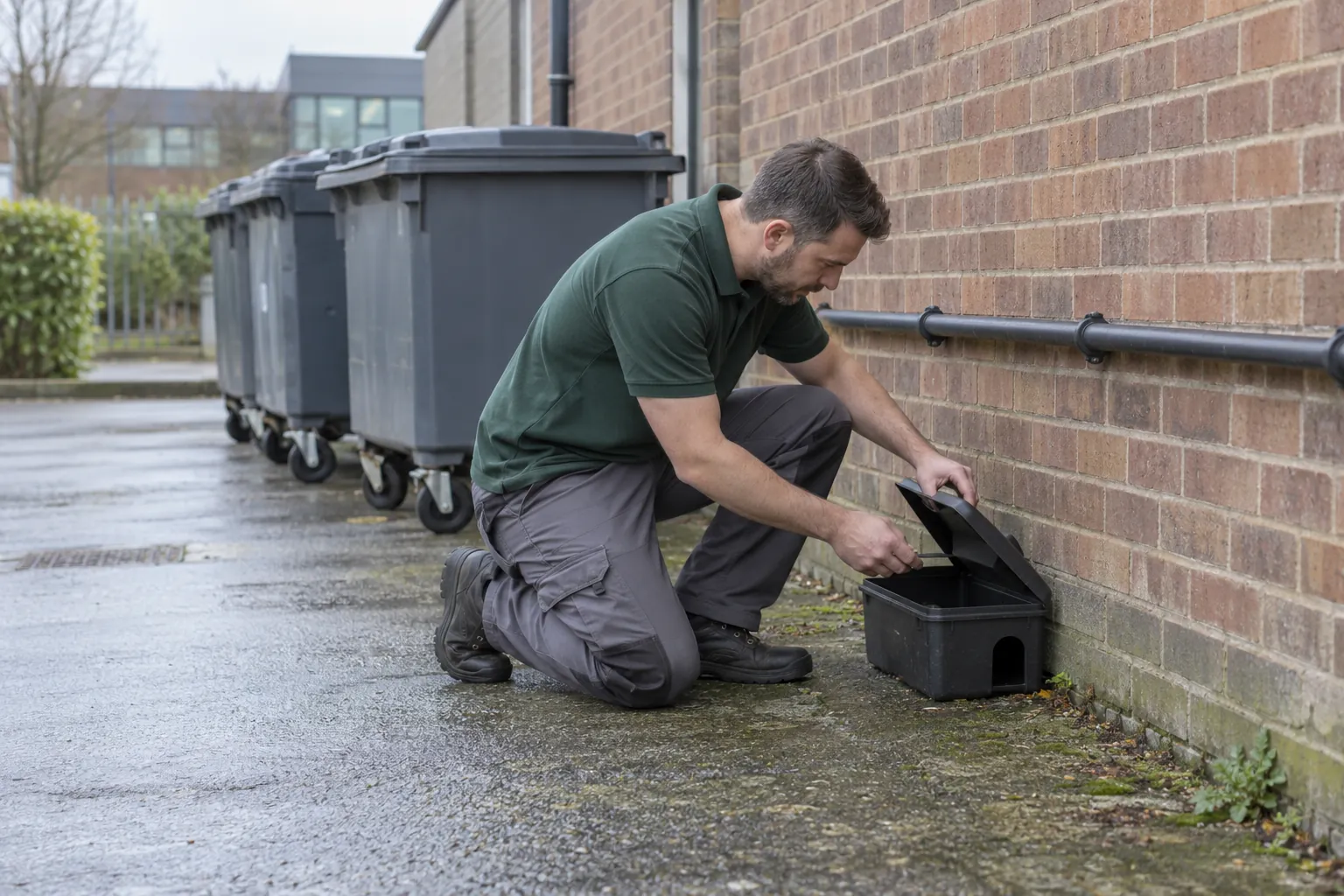
For a food business it is part of the evidence of compliance, showing that the pest control procedures the law requires are in place; for a pest control company it is the proof of what was done, where and with what. This guide covers the rules and codes behind the report, what each one should contain, how the inspection itself works, the checks and records a site keeps between visits, and how to tell a useful report from a weak one.
01
What a pest control report is, and the rules behind it
No single statute prescribes the layout of a pest control report or a template for it. The duty sits with the occupier, and the report is how the occupier and the pest management company show compliance with that duty. Four documents shape what it should say.
- The food hygiene law. Annex II of Regulation (EC) No 852/2004, the food hygiene regulation kept in law in Great Britain, with the EU version applying in Northern Ireland, says in Chapter IX, paragraph 4, that "adequate procedures are to be in place to control pests". Chapter I requires the layout and design of food premises to permit good hygiene practices, "including protection against contamination and, in particular, pest control", and Chapter VI requires refuse stores to be designed and managed so that they can be kept clean and, "where necessary, free of animals and pests".
- The FSA's safe method. The pest control safe method in Safer food, better business for caterers, used in England, Wales and Northern Ireland (Food Standards Scotland's CookSafe plays the same part in Scotland), tells a kitchen to check its premises regularly for signs of pests and, if it uses a contractor, to "keep a record of their contact details and visits in your diary, as well as any feedback or action points they recommend", noting when each was carried out.
- The service standard. BS EN 16636:2015 Pest management services. Requirements and competences specifies the requirements for pest management services and the competences professional providers must meet "in order to protect public health, assets and the environment". It covers the whole service, from client contact, inspecting the site, assessing the infestation and identifying the pests through to risk assessment, the pest management plan and waste management, and excludes field crop protection and the routine cleaning and disinfection done by contract cleaners.
- The trade code. The British Pest Control Association's Code of Best Practice for Professional Reports (Version 1, December 2020) sets the minimum its members must give every customer, and says plainly that "verbal communication, on its own, is not acceptable".
Outside food, the report still matters. Rats and mice spoil stock and damage property, and the HSE's page on rodenticides notes that rodents can carry diseases that harm people. In England, Wales and Scotland, section 3 of the Prevention of Damage by Pests Act 1949 requires the occupier of land, other than agricultural land, to give the local authority written notice forthwith if they learn that rats or mice are living on or resorting to the land in substantial numbers. An office, school or warehouse has as much reason as a kitchen to keep the record.
02
What a pest control report must contain
The BPCA Code, which calls them treatment reports, lists ten items its members must always provide, handwritten or electronic, so a paper template and a digital report are held to the same standard, and they make a sound checklist for any provider and any client reading the paperwork:
- A report for every visit, with a copy left with the customer.
- The occupier informed directly. Where landlord and tenant are different customers, the occupier of the premises must have the details of the actions taken and the pesticides used, as well as the paying customer.
- Every chemical used: the active ingredient, the trade name, the quantity and the location, such as behind the kickboards in the kitchen, as a minimum.
- Recommendations for hygiene, proofing and housekeeping.
- The date.
- The technician's name and signature, legibly.
- The customer's signature or electronic confirmation that they have read and understood the report.
- Any post-treatment requirements, in the report or a supporting document.
- Any warnings, discussed and recorded with the customer, for example not to go into a treated area until it is dry.
- Any relevant follow-up information.
Winchester City Council's guidance on appointing a pest control contractor adds the detail an environmental health officer expects on a contract with bait stations: the report "should clearly state in which bait box on the plan the bait was placed, the type of bait, the active ingredient and the amount", and should include recommendations on proofing and hygiene, such as clearing vegetation.
In practice a good service report also records its observations: which areas were inspected, not only where something was found; the activity at each numbered point; any proofing done or device serviced; and the date of the next visit. Keep the findings, the advice and the corrective actions apart, with each recommendation given an owner.
03
The pest control inspection: survey, site plan and routine visits
A contract starts with a survey, the first pest inspection of the property, not a treatment. Winchester's guidance says a detailed survey inside and out, including cellars, attics, storage areas, food preparation rooms, vegetation and external drains, should come before any treatment, to assess the level and location of activity, how to treat it, and contributing factors such as poor housekeeping, harbourage or inadequate proofing.
From the survey the contractor draws a site plan showing every bait station inside and outside, and other devices such as electronic insect killers. Each station is numbered so that activity around it, and the effect of any treatment, can be followed from visit to visit. Bait stations can hold non-toxic monitoring blocks as well as toxic bait, and the guidance is firm that they are a monitoring device, not the whole of the control: "it is not enough to simply check the bait boxes each visit".
On visit frequency, the same guidance says the contractor should advise how many visits the site needs, that rats can reproduce roughly every month, and that a visit every six to eight weeks allows new activity to be found and dealt with quickly. Where a routine visit finds increased activity or an infestation, a follow-up visit a week to 10 days later should be made, both to find the source and because a lack of follow-up visits can lead to pests eating a sub-lethal amount of pesticide, which can cause tolerance and resistance in the population, and rodent activity can actually increase. Pest control inspections on routine visits typically cover:
- every numbered internal and external station: present, intact, secure, and whether bait has been taken or monitoring blocks marked;
- signs of activity elsewhere: droppings, smear marks, gnawing, nests, footprints in dust, live or dead insects, webbing in dry goods, feathers or droppings at roof level;
- proofing and repairs at entry points: gaps around pipes and cables, door brushes and seals, damaged air bricks, drain covers, open windows without screens;
- housekeeping and sanitation: spillage under equipment, cardboard stored against walls, bins and waste stores, vegetation against the building;
- insect control units: lamps, glue boards and what they have caught.
The use of pesticides is controlled as well. The HSE's overview of using biocides says the label instructions must be followed carefully and that certain rodenticides can be used by and sold to professional users with demonstrated competence only. Its rodenticides page asks users to consider other methods, such as good hygiene and physical barriers, before reaching for anticoagulants, and says professional use of anticoagulant rodenticides in Great Britain and Northern Ireland must follow one of the UK rodenticide stewardship regimes. Recording the active ingredient and quantity at each point is how each pest control treatment is shown later.
04
Between visits: the pest control records a site keeps
A contractor visits for minutes every few weeks; the building is open every day. Winchester's guidance is clear that it is "always the responsibility of the food business operator" to make sure pest activity on site is managed: to understand the contract, take the recommended actions, and read and monitor the reports. The same holds for whoever runs any other building.
The FSA's pest control safe method sets out the everyday side of pest prevention: check the premises regularly for signs of pests, with reminders in the diary, and maintain them in good repair; refuse a delivery with gnawed packaging or insects; keep external areas tidy and free from weeds, with close-fitting lids on food bins; and make sure no food or dirty plates are left out when the business is closed. If staff see signs of an infestation, call the contractor immediately, wash and disinfect any surface or equipment pests may have touched, throw away any food they may have touched, and "write down what went wrong and what you did about it". The same safe method asks for better staff training on recognising the signs, so that the people in the building every day are trained to spot infestations early and report them at once.
So a site's pest control records are more than the contractor's folder. A practical set holds:
- The contract and the site plan, with the station numbers, the visit frequency and the target pests.
- Every visit report, in date order, signed or confirmed, with the follow-up visits that were promised.
- A recommendations log: each proofing, hygiene or housekeeping recommendation, the corrective actions taken, who owns it, the dates it was raised and done, and a photo or note to show it.
- The site's own checks: the routine look for signs of pests in stores, kitchens, bin stores and plant rooms, with the date, who checked and what they found, including nothing.
- Sightings and call-outs: who reported what, where and when, and what was done.
- Any notice to the council under the 1949 Act.
Recommendations are where the record goes quiet. A gap behind the dishwasher reported three visits running tells an inspector that nobody reads the reports.

05
Reading a pest control report, and what an inspector looks for
For a food business, pest control is part of the rating. The FSA's Food Hygiene Rating Scheme guidance for businesses lists "the physical condition of your business – including cleanliness, layout, lighting, ventilation, pest control and other facilities" as one of the three elements an officer checks. Under section 32 of the Food Safety Act 1990 an authorised officer may enter at all reasonable hours and inspect records relating to a food business in any form, including those held on a computer; Northern Ireland has its own equivalent in the Food Safety (Northern Ireland) Order 1991. Expect the officer to ask for the pest folder, read the last few reports, and walk to the places they mention.
Read each report as the officer would. The questions that matter make a short pest control checklist:
- Was the visit made when the contract says, and was every follow-up made?
- Are the dates and signatures complete, the technician's and the site's?
- Does it say what was inspected, or only that nothing was found? Winchester's guidance warns clients to "be wary of receiving reports that only ever say 'no problems found'".
- Does activity at the same stations keep recurring, and is anything being done about the cause rather than the bait?
- Are products named by active ingredient as well as trade name, with quantity and location?
- Are the recommendations the same as last time? If so, why have they not been done?
- Were warnings and post-treatment instructions passed on to the people who work in the treated area, including other shifts and the cleaning team?
- Does the site plan still match the building after a refit?
A pest company should read its own reports the same way: the BPCA Code says a treatment report "will form part of your evidence/defence" if the work is ever challenged.
06
Where the record fails, and what SiteClara does about it
The contractor's report usually exists; the trouble is the weeks between visits. The diary check for pests is ticked in a batch on Friday. The bin store lid was left open and nobody can say since when. A porter saw droppings behind the dry store on Sunday, told whoever was on, and by Monday it was nobody's job. The recommendation to clear the loading bay sits on four reports in a row.
SiteClara records the routine checks where they happen. A printed QR poster, with an NFC tag behind it if staff should tap, goes at the bin store, the dry store, the loading bay or the kitchen. Kitchen staff, caretakers, cleaners or a pest company's own technicians scan or tap with their own phone, with no app to install, see the checks due there, such as no signs of pests, bin lids closed, nothing stored against the walls and doors closed after deliveries, and mark each one done or explain what stopped them. A photo can be asked for, and the time and the named person are recorded as it happens.
A sighting of droppings, gnawing or flies is reported at that location and goes onto the team's list of jobs until someone closes it, and a supervisor can escalate it to the building manager. The supervisor sees which checks are due, done and missed, records why one was missed, and approves a daily report that goes to nominated management or client contacts the next morning: a dated, named record of the checks between the contractor's visits, and of each visit itself when the technician scans in.
07
Questions people ask
What will pest control do on your first visit?
A survey before any treatment. Winchester City Council's guidance, Appointing a pest control contractor, says a thorough survey of internal and external areas, including cellars, attics, storage areas, food preparation rooms, dense vegetation and external drains, should come first, to establish the level and location of any activity, how best to treat it, and contributing factors such as poor housekeeping, harbourage or inadequate proofing. It calls this first pest inspection "not a quick job"; from it the contractor draws up a site plan with every bait station numbered.
Do rats go away with pest control?
Not from bait boxes alone. Winchester City Council's guidance, Appointing a pest control contractor, says bait boxes are a monitoring device and not the only control measure, and that where a routine visit finds an infestation a follow-up visit a week to 10 days later should be made, because a lack of follow-up visits can lead to pests eating a sub-lethal amount of pesticide, which can cause tolerance and resistance in the population, and rodent activity can actually increase. The HSE's page on rodenticides asks users to consider other methods, such as good hygiene and physical barriers, before reaching for anticoagulants.
How do you make a pest control report?
The British Pest Control Association's Code of Best Practice for Professional Reports sets the minimum, handwritten or electronic: a detailed report for every visit with a copy left with the customer; the date; the technician's name and signature; the active ingredient, trade name, quantity and location of any chemical used; recommendations on hygiene, proofing and housekeeping; warnings, post-treatment requirements and follow-up information; and the customer's signature or electronic confirmation. Verbal communication on its own is not acceptable.
What should a pest control log book hold?
For a kitchen, the FSA's pest control safe method in Safer food, better business says to put reminders of pest checks in the diary, keep a record of a contractor's contact details and visits with any feedback or action points they recommend, note when each action was carried out, and write down what went wrong and what you did about it.
Is pest control a legal requirement for a food business?
Yes: Chapter IX of Annex II to Regulation (EC) No 852/2004 requires adequate procedures to be in place to control pests. The law does not say those procedures must include a contractor; the FSA's pest control safe method treats a contractor as one option and suggests one where a pest problem persists.
08
Further reading, and a list to take away
Start with Annex II of Regulation (EC) No 852/2004, the FSA's pest control safe method in Safer food, better business, the HSE's biocides pages, BS EN 16636:2015 and the BPCA's Code of Best Practice for Professional Reports. For a particular site, ask the council's environmental health team.
Before you file the next pest control report, run through this pest control checklist:
- it is dated, names and is signed by the technician, and has been signed or confirmed by someone on site;
- it says what was inspected and found at every numbered station and elsewhere;
- all chemicals used are named by active ingredient and trade name, with quantity and location;
- warnings and post-treatment instructions have reached the people who work in the treated areas;
- each recommendation has an owner and a date, and last visit's are closed with evidence;
- any promised follow-up visit is booked;
- the site's own checks for signs of pests, deliveries and refuse stores are recorded on the day, by the person who made them;
- the site plan still matches the building.
Sources
Every document this guide quotes or links to, in the order it first cites them.
- Annex II of Regulation (EC) No 852/2004 legislation.gov.uk
- Safer food, better business for caterers gov.uk
- BS EN 16636:2015 Pest management services. Requirements and competences knowledge.bsigroup.com
- Code of Best Practice for Professional Reports bpca.org.uk
- Rodenticides hse.gov.uk
- Section 3 of the Prevention of Damage by Pests Act 1949 legislation.gov.uk
- Appointing a pest control contractor winchester.gov.uk
- Using biocides hse.gov.uk
- Food Hygiene Rating Scheme guidance for businesses gov.uk
- Section 32 of the Food Safety Act 1990 legislation.gov.uk
- Pest control safe method assets.publishing.service.gov.uk
Related guides
 CleaningEHO inspection checklist: what the food safety officer checks, and the records behind itWhat an EHO checks on a UK food hygiene inspection, the records to have ready, how the 0 to 5 rating is worked out, and what happens after the visit.
 Premises and facilities managementWaste transfer note: what must be on it, who signs it, and how long to keep itWhat a waste transfer note must include, who signs it, season tickets, keeping notes for two years and checking your waste carrier, under the duty of care.
 CleaningHygiene audit: what is checked, who does it, and what happens nextHow hygiene and infection prevention audits work in care, healthcare, schools and food areas: what is audited, by whom, how it is scored and what follows.
 Premises and facilities managementFridge temperature log: the limits, the daily reading, and what to do when it is outKeeping a fridge temperature log in a UK kitchen, care home or surgery: the 8°C and 2°C to 8°C limits, how often to check, and what to do when a reading is out.