Premises and facilities management
The Cal/OSHA Injury and Illness Prevention Program: what 8 CCR 3203 asks, and how to run it in a building
An Injury and Illness Prevention Program, or IIPP, is the written workplace safety program every California employer must establish, implement and maintain under Title 8 of the California Code of Regulations, section 3203, to find and correct hazards before workers are hurt.
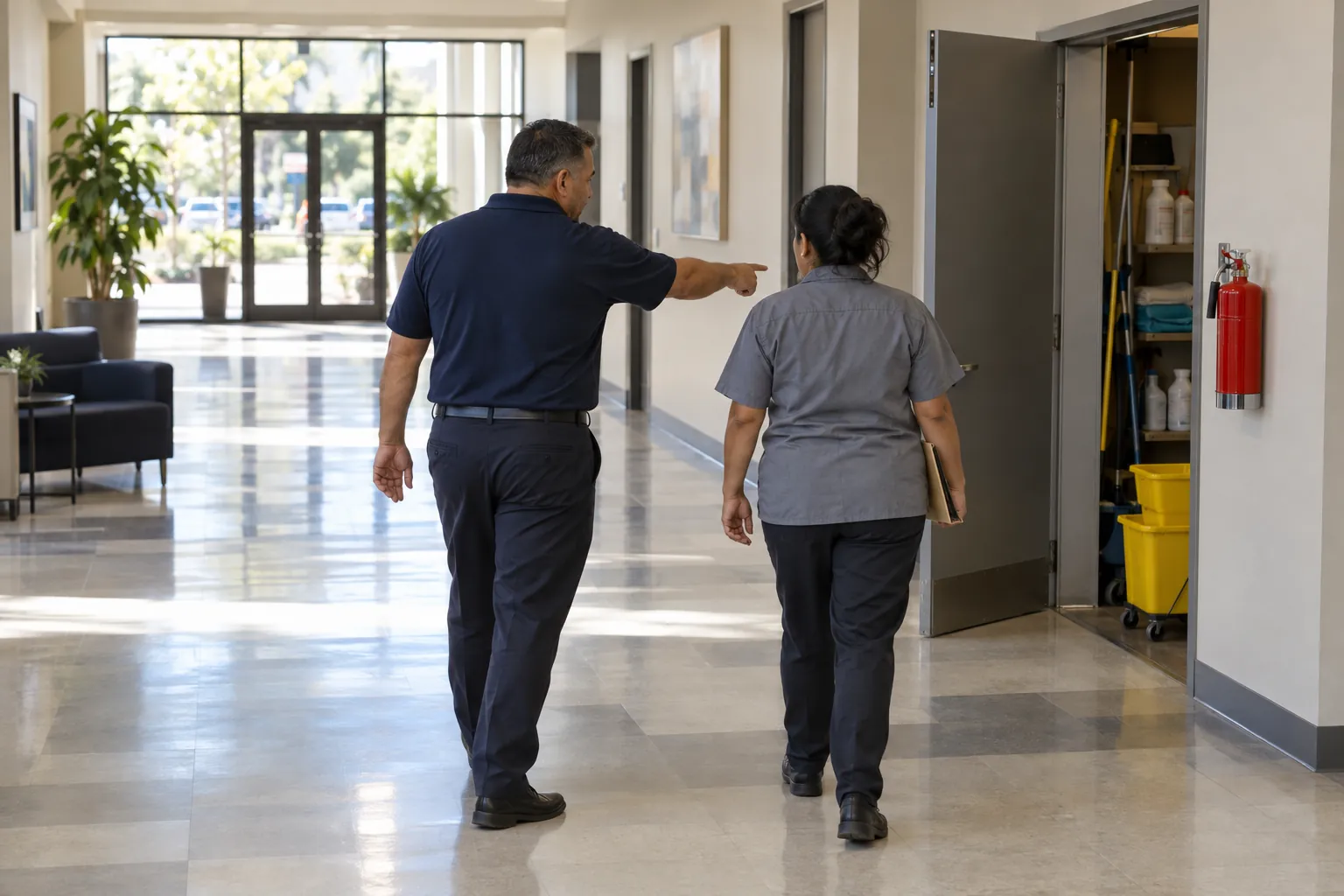
It is California's rule, not a federal one, and the program has to be run, not only written. For janitorial and custodial contractors, security companies and facility teams, that means named people in charge, scheduled inspections, hazards corrected promptly, injuries investigated, training given and recorded, and a way for staff to raise a hazard without fear. This guide covers what the regulation says, what each element looks like in an ordinary building, and what a record that stands up to a Cal/OSHA inspector shows.
01
What 8 CCR 3203 requires, and who it covers
The Injury and Illness Prevention Program is a California requirement. Title 8, section 3203, Injury and Illness Prevention Program, in the General Industry Safety Orders, opens: "Effective July 1, 1991, every employer shall establish, implement and maintain an effective Injury and Illness Prevention Program (Program). The Program shall be in writing". The duty behind it is in the statute, California Labor Code section 6401.7, which says every employer "shall establish, implement, and maintain an effective injury prevention program" and lists what it must include.
Establish means writing it down, implement means doing what it says, and maintain means keeping it current as the work, the building and the people change. A binder on a shelf meets the first and fails the other two, and it is the other two an inspector looks for.
The rule is enforced by the Division of Occupational Safety and Health, known as Cal/OSHA. California runs an OSHA-approved State Plan; as federal OSHA's State Plans page puts it, California's plan covers "most private sector workers and all state and local government workers." Cal/OSHA's own guide, Developing Your Workplace Injury & Illness Prevention Program (June 2024), says the term employer includes any person or corporation, the State and every state agency, and every county, city, district and public agency, "which has any person engaged in or permitted to work for hire, except for household services." A small janitorial firm, a large security contractor and a school district's custodial department are all covered.
Federal OSHA has no general requirement for a written safety program. It publishes Recommended Practices for Safety and Health Programs, seven core elements, from management leadership and worker participation through hazard identification, prevention and control, training and program evaluation, to communication and coordination for host employers, contractors and staffing agencies. They cover much the same ground as section 3203.
02
The elements of an IIPP, in plain terms
Section 3203(a) lists what the written program must do "at a minimum." Cal/OSHA's guide counts nine elements, adding recordkeeping from subsection (b). In the language of a building team, they are these:
- Responsibility. The program must "Identify the person or persons with authority and responsibility for implementing the Program." Name a role and a person, such as a janitorial account manager or a chief engineer, with the authority to spend money and stop work.
- Compliance. A system for ensuring employees follow safe and healthy work practices. Recognition, retraining and discipline all count.
- Communication. A system for communicating "in a form readily understandable by all affected employees," including "provisions designed to encourage employees to inform the employer of hazards at the worksite without fear of reprisal."
- Hazard assessment. Procedures for identifying and evaluating hazards, "including scheduled periodic inspections to identify unsafe conditions and work practices," and inspections when the program starts, when new substances, processes or equipment bring a new hazard, and when a new hazard comes to light.
- Accident and exposure investigation. "A procedure to investigate occupational injury or occupational illness."
- Hazard correction. Methods for correcting unsafe or unhealthy conditions and practices "in a timely manner based on the severity of the hazard," clearing the area of an imminent hazard except for those fixing it.
- Training and instruction. At set occasions, including for supervisors.
- Employee access. Since July 1, 2020, employees may see and receive a copy of the program.
- Recordkeeping. Records of the scheduled inspections and of training, kept for at least a year, with some relief for small employers.
Cal/OSHA publishes model programs to start from: one for high-hazard employers, one for non-high-hazard employers, one for employers with seasonal or intermittent workers and one for construction. None is required, but an employer in an industry Cal/OSHA has determined to be non-high-hazard that adopts, posts and implements the Injury & Illness Prevention Model Program for Non-High Hazard Employers in good faith "is not subject to assessment of a civil penalty for a first violation of T8 CCR 3203." The model comes with three sample forms: a Hazard Assessment and Correction Record, an Accident/Exposure Investigation Report and a Worker Training and Instruction Record.
03
Scheduled inspections: how often, by whom, and what the record shows
Hazard control is, in Cal/OSHA's words, "the heart of an effective IIPP," and scheduled inspections are how most hazards in an ordinary building are found. Section 3203 does not set a frequency. The guide says it depends on the operations, the size of the hazards, how experienced the staff are, changes to equipment or processes, and the history of injuries and illnesses. It also says scheduled inspections "are in addition to the everyday safety and health checks that are part of the routine duties of managers and supervisors."
For a building, it usually settles into a pattern like this:
- Daily or each shift, as part of the routine: restrooms and floors for spills and trip hazards, janitor closets and chemical storage, exits and exit routes, the security officer's patrol of doors, stairwells and parking areas.
- Weekly: loading docks, trash rooms, mechanical rooms, roof access, ladders and floor machines.
- Monthly or quarterly: a fuller walk by the supervisor or safety lead, often with the client's facility manager: electrical panel clearance, storage, first aid supplies, eyewash stations.
- When something changes: a new chemical or machine, a new tenant area or security post, a renovation, or an injury that shows an unlisted hazard.
Who inspects matters as much as how often. The guide says inspections "must be conducted by personnel who, through experience or training, are able to identify actual and potential hazards and understand safe work practices," and that the first hazard assessment survey, when the program is set up, "must be made by a qualified person."
The record is set by section 3203(b)(1): records of scheduled and periodic inspections "including person(s) conducting the inspection, the unsafe conditions and work practices that have been identified and action taken to correct the identified unsafe conditions and work practices," kept "for at least one (1) year." Employers with fewer than 10 employees may keep them only until the hazard is corrected. A useful inspection record therefore answers four questions for each location: who looked, when, what was wrong, and what was done about it.
The guide adds that written inspection reports "must be reviewed by management and/or the safety committee," that the review should help prioritize actions and "verify completion of previous corrective actions," and that overall results should be reviewed for trends. The same blocked exit found every month means the correction did not work.
04
Investigating injuries and correcting hazards promptly
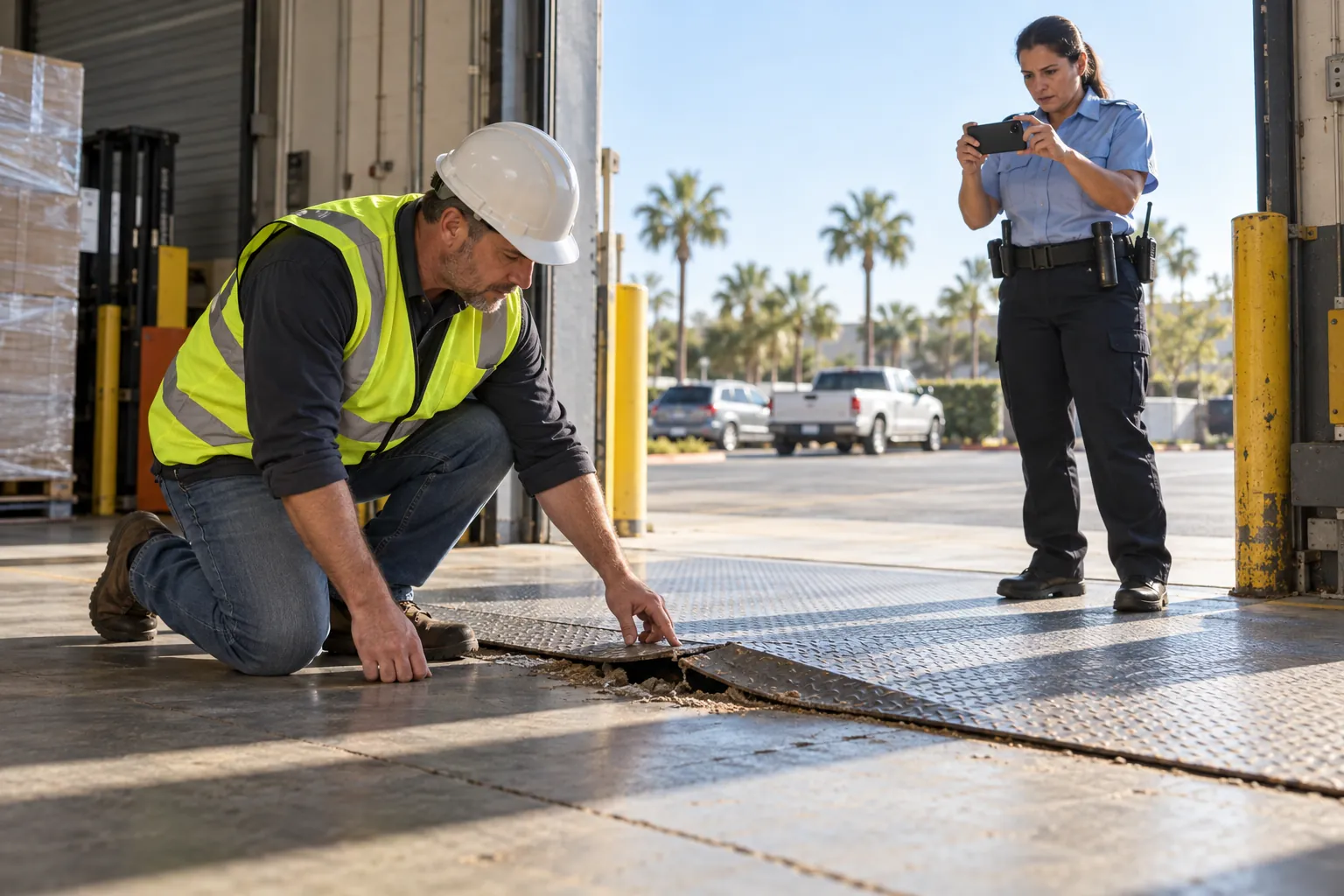
Section 3203(a)(5) requires "a procedure to investigate occupational injury or occupational illness." Cal/OSHA's guide goes further and treats near misses the same way: an investigation "must be in writing and adequately identify the cause(s) of the accident or near-miss occurrence," conducted by trained people, with the focus on why it happened and what will stop it happening again. It asks four questions: what happened, why it happened, what should be done, and what action has been taken. It also says the purpose "is not to establish blame."
An investigation of a custodian's fall in a wet stairwell might find it is mopped as the office arrives, the wet floor signs are two floors away, and a leaking window above was never reported. Each finding points to a correction.
Correction is its own element. Section 3203(a)(6) requires hazards to be corrected "in a timely manner based on the severity of the hazard," when observed or discovered, and, for an imminent hazard, removal of exposed staff. The program should say how a hazard is reported, who decides how urgent it is, who fixes it, and how the reporter finds out, because, as the guide says, telling employees what happened encourages them to keep reporting.
The IIPP's records sit beside California's injury recordkeeping, not in place of it. Unless exempt by size or industry, an employer records each work-related fatality, injury or illness meeting the criteria in 8 CCR 14300 on the Cal/OSHA Form 300 log, prepares a Form 301 incident report or equivalent, posts the Form 300A summary from February 1 to April 30, and keeps five years of records.
05
Training, communication and employee access
Training. Section 3203(a)(7) sets the occasions: when the program starts, for all new employees, for new job assignments, when new substances, processes, procedures or equipment bring a new hazard, when a new hazard is recognized, and for supervisors. For a custodial team that means chemicals and their Safety Data Sheets, floor machines, ladders, lifting and the building's emergency action plan; for security officers, the hazards in their post orders, such as night patrols, confrontation and lone work.
Section 3203(b)(2) sets the training record: for each employee, "employee name or other identifier, training dates, type(s) of training, and training providers," kept for at least a year. Employers with fewer than 10 employees can instead keep a log of the instructions each employee was given about the hazards of their job when hired or reassigned.
Communication. The rule asks for communication "in a form readily understandable by all affected employees." On a janitorial or security contract that often means more than one language, short tailgate or toolbox meetings at the start of a shift, and a way to report a hazard that works at 2 a.m. when no supervisor is on site. Under section 3203(c), a labor/management safety committee that meets at least quarterly, keeps written records for a year and reviews inspections and investigations is presumed to meet the communication element.
Employee access. Section 3203(a)(8) gives employees and their designated representatives the right to examine and receive a copy of the program. The employer either provides it "in no event later than five (5) business days after the request," on paper unless the employee agrees to an electronic copy, with one printed copy free, or provides unobstructed access through a company server or website that employees routinely use in their work. Every employee must be told about this right.
Small employers. Section 3203 gives some relief. An employer with fewer than 20 employees in a low-hazard industry, or outside the high-hazard list with an experience modification rate of 1.1 or less, may limit written documentation to who is responsible, the scheduled inspections and training. The program itself must still run.
06
Where the record fails, and what SiteClara does about it
Most IIPPs fail between the binder and the building. The janitor closets are inspected weekly, but the form was filled in for the month at once. A custodian told the supervisor about a loose stair nosing, and nobody wrote it down. When someone falls on that stair, the employer has a program that says hazards are corrected in a timely manner, and nothing to show that this one was.
SiteClara puts a printed QR poster at each location that matters, such as a janitor closet, a stairwell, the loading dock or a guard post, with an optional NFC tag. Staff scan the code or tap the tag on their own phone, with no app to install, and sign in with a link. They see the checks due at that location, and mark each one done, with a photo when one is asked for, or say what stopped them, such as a locked door. A hazard found there, such as a leaking pipe or a blocked exit, is reported on the spot with a photo and goes onto the team's list of jobs until someone closes it.
The supervisor sees what is due, done and missed, and can record why a check was missed. A job the team cannot fix, such as a stair repair that belongs to the building, can be escalated to the building manager to answer. Each day the supervisor reviews and approves a report that goes to nominated management or client contacts at 8 a.m. the next morning, showing what was reported, completed and still open, and how the scheduled checks went, for example 11 of 12 completed. Over a year, the person responsible for the IIPP has a dated account of who checked each location, what they found and when it was closed.
07
Questions people ask
Does OSHA require an IIPP?
No, federal OSHA has no general standard requiring a written injury and illness prevention program. Its Recommended Practices for Safety and Health Programs (OSHA 3885, October 2016) says in its disclaimer that the practices "are recommendations only," and that employers "will not be cited for failing to have a safety and health program that complies with this document." In California, the requirement comes from 8 CCR 3203 and is enforced by Cal/OSHA.
Do all states require an IIPP?
No. OSHA's Injury and Illness Prevention Programs White Paper (January 2012) found that "34 U.S. states have established laws or regulations designed to require or encourage injury and illness prevention programs, including 15 states with mandatory regulations for all or some employers." It named those 15 as Arkansas, California, Hawaii, Louisiana, Michigan, Minnesota, Mississippi, Montana, North Carolina, New Hampshire, Nevada, New York, Oregon, Utah and Washington, and many of them apply only to some employers, such as those in high-hazard industries or with high injury rates. The count dates from 2012, so check your own state's current rules.
Who does the injury and illness prevention program apply to?
In California, almost every employer. Cal/OSHA's guide, Developing Your Workplace Injury & Illness Prevention Program (June 2024), says "a written, effective Injury and Illness Prevention Program (IIPP) is required for every California employer," and that the term employer includes any person or corporation, the State and its agencies, and every county, city, district and public agency "which has any person engaged in or permitted to work for hire, except for household services."
What are the 9 elements of the injury and illness prevention program?
Cal/OSHA's guide, Developing Your Workplace Injury & Illness Prevention Program, lists them as: a person or persons with authority and responsibility for the IIPP; a system for ensuring employees comply with safe work practices; a system for communicating with employees; procedures for identifying and evaluating hazards; procedures to investigate occupational injury or illness; procedures for correcting unsafe or unhealthy conditions; employee training and instruction; procedures for employee access to the IIPP; and recordkeeping and documentation. The first eight come from 8 CCR 3203(a) and recordkeeping from subsection (b).
08
Where to read the rules, and a list to take away
Read the regulation itself, 8 CCR 3203, and the statute behind it, Labor Code 6401.7. Cal/OSHA's guide, Developing Your Workplace Injury & Illness Prevention Program, includes an IIPP checklist and a code of safe practices; the non-high hazard model program gives you forms to start from. Cal/OSHA Consultation Services offers free telephone, email and onsite help. If you work outside California, start with OSHA's Recommended Practices for Safety and Health Programs and check whether your state runs its own plan. Fold your workplace violence prevention plan and your heat illness prevention plan into the IIPP or keep them beside it.
For an IIPP that works in the building and not only on paper, check that:
- the program is written, current and names the person responsible by role and by name;
- every location with a hazard is listed, with how often it is inspected and by whom, and re-inspected when something changes;
- each inspection record shows who inspected, the unsafe conditions found and the action taken, and is kept for at least a year;
- hazards are corrected in order of severity, and whoever reported one hears what happened;
- every injury and near miss is investigated in writing, for causes rather than blame;
- training is given at every occasion 3203(a)(7) lists and recorded with name, date, type and provider;
- staff can report a hazard in a language they read, at any hour, without fear of reprisal;
- hazards in a client's building are reported to the client and followed up until closed.
Sources
Every document this guide quotes or links to, in the order it first cites them.
- Title 8, section 3203, Injury and Illness Prevention Program dir.ca.gov
- California Labor Code section 6401.7 leginfo.legislature.ca.gov
- State Plans page osha.gov
- Developing Your Workplace Injury & Illness Prevention Program dir.ca.gov
- Recommended Practices for Safety and Health Programs osha.gov
- Labor Code section 6401.9 leginfo.legislature.ca.gov
- Injury & Illness Prevention Model Program for Non-High Hazard Employers dir.ca.gov
- 8 CCR 336.10, Determination of Citable Employer dir.ca.gov
- Recommended Practices for Safety and Health Programs osha.gov
- Injury and Illness Prevention Programs White Paper osha.gov
Related guides
 Security patrolsCalifornia SB 553: the workplace violence prevention plan, the log and the checks behind themCalifornia's SB 553 in practice: who Labor Code 6401.9 covers, what the plan must contain, the violent incident log, hazard inspections, training and records.
 Premises and facilities managementHeat illness prevention: the rules, the hot spots in a building, and the daily routineHeat illness prevention for building teams: Cal/OSHA 3395 and 3396, OSHA's General Duty Clause, state heat rules, water, rest, cool-down areas and the record.
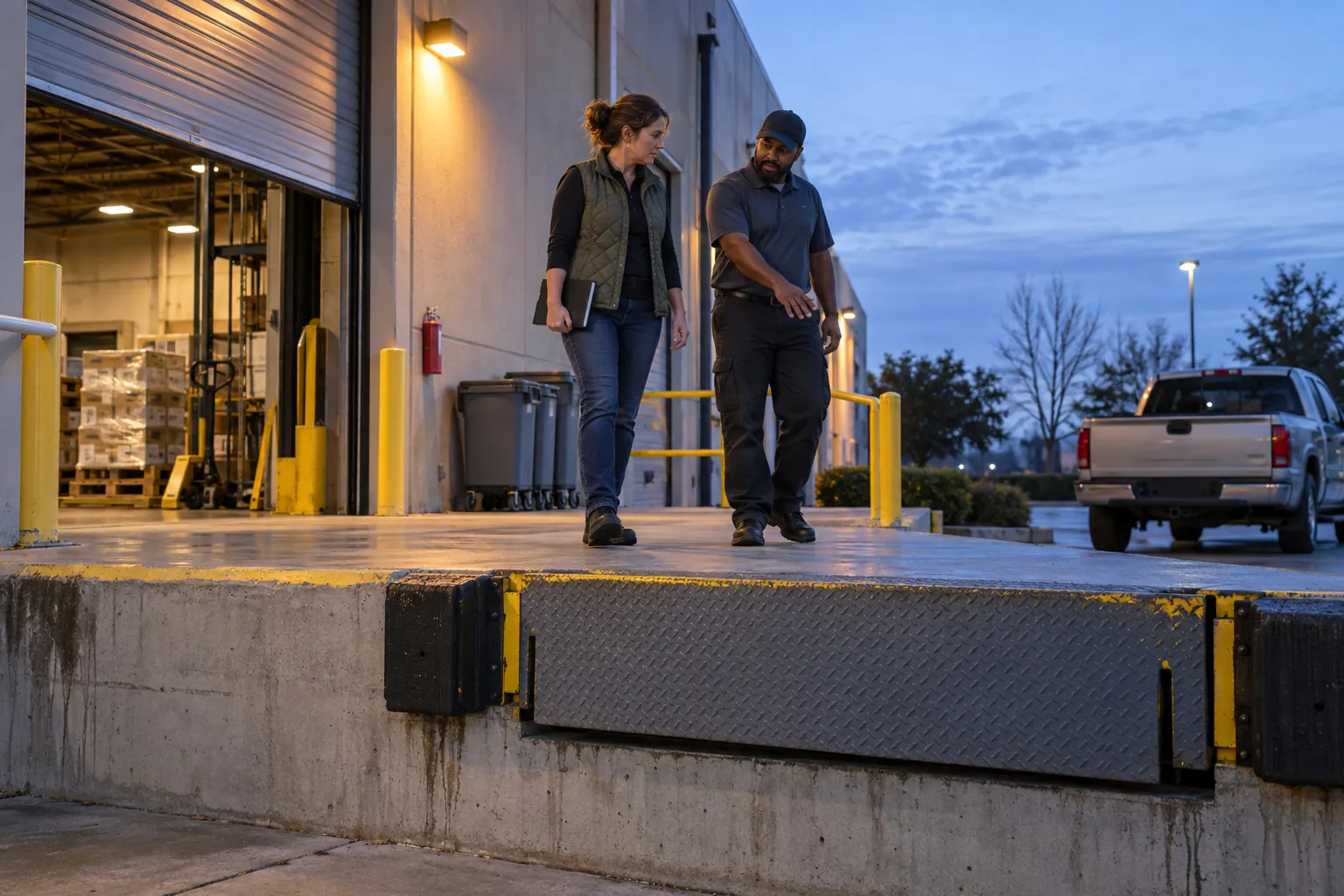 Premises and facilities managementSafety walkthroughs: how to walk a building, talk to the crew and fix what you findWhat a safety walk is under OSHA's Recommended Practices, what to look at in a commercial building, how often to walk, how to record findings and close them out.
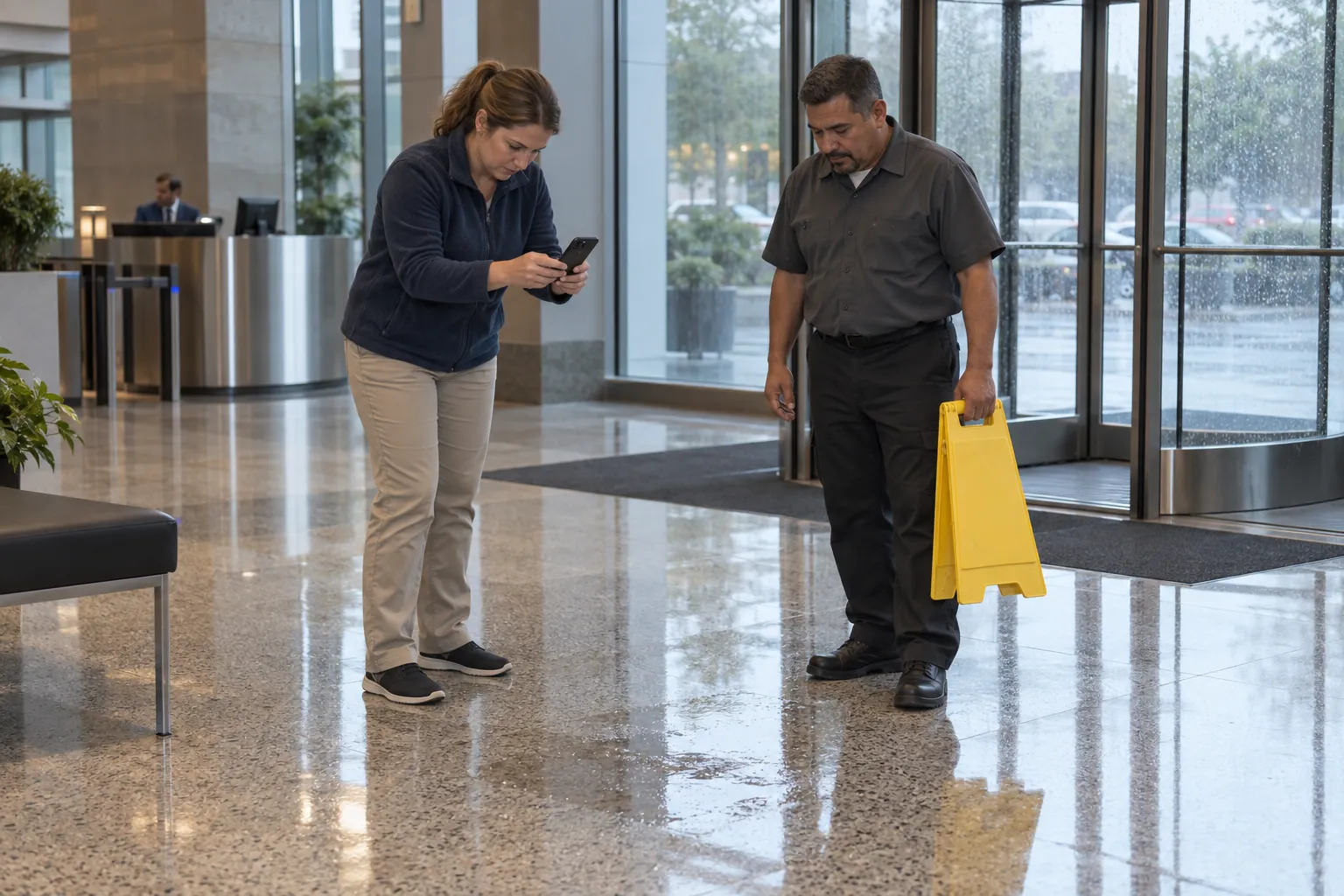 Premises and facilities managementAccident investigation: finding out why it happened, not who to blameHow to investigate a workplace accident in a U.S. building: OSHA's four steps, the scene, interviews, root causes, corrective actions and the records that matter.