Cleaning
Graffiti reporting and removal: from the first photo to a clean wall
Graffiti in Australia is reported to the police or the local council, and when it is on a building, also to whoever manages that building, with a photo showing where it is and when it was found.
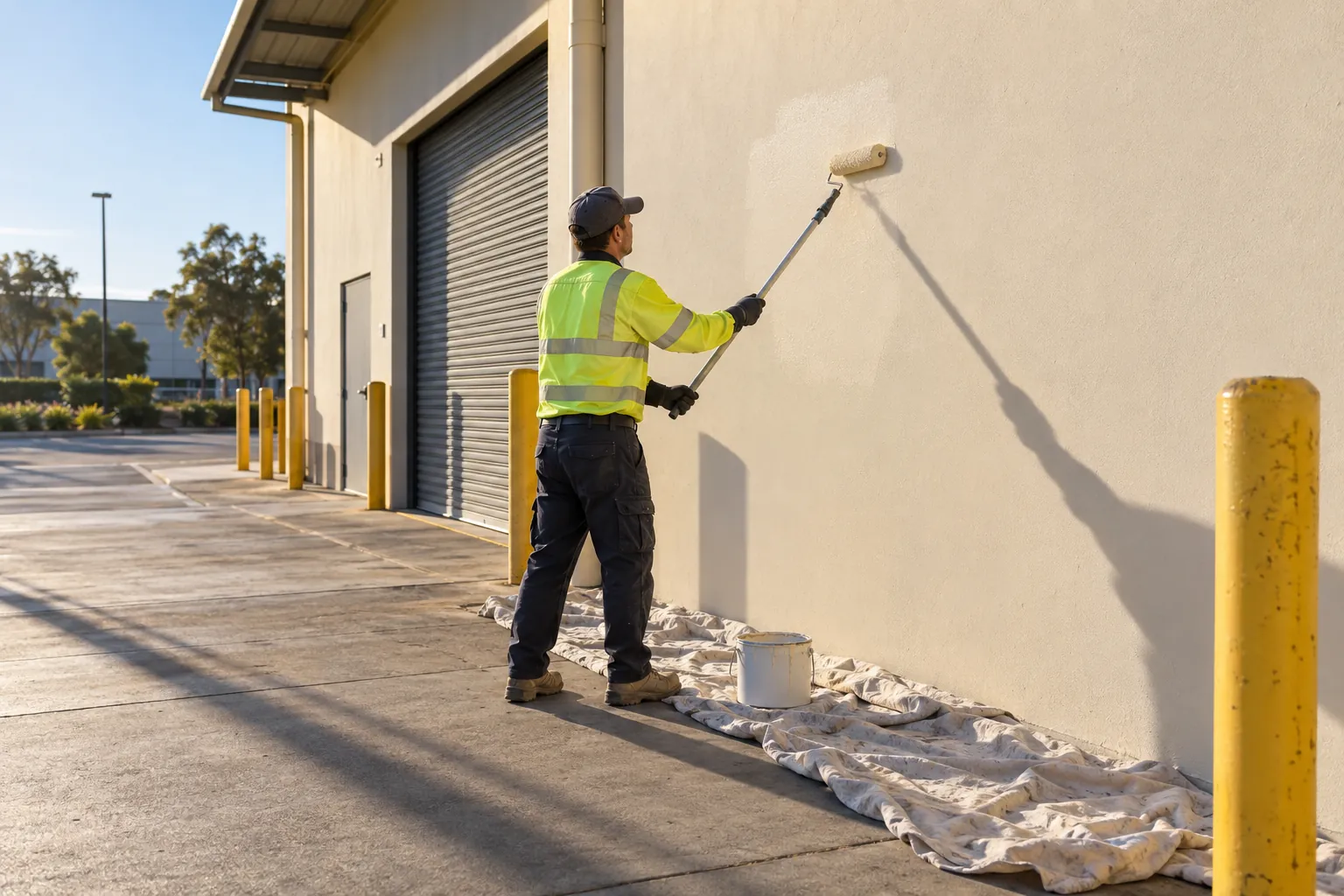
Graffiti vandalism on a building is a small crime with a long tail. Left for a week, a single tag on a loading dock door invites the next one; removed the same day, it often stays a single tag. Most of the work is not the removal itself but what surrounds it: noticing the graffiti, reporting it to the right people with a photo that shows where and when, deciding who pays and how fast, removing it safely, and being able to show later that it was done. This guide covers what Australian state law and councils say about graffiti, how to report it, who is responsible for removing it on private, strata and public land, how to build it into a cleaning or maintenance contract, and what a record worth trusting looks like.
01
What Australian law says about graffiti
There is no single national graffiti law. Each state and territory has its own, and much of the day-to-day response sits with local councils. The common ground: marking someone else's property without consent is an offence, the owner usually deals with the result, and councils and police want to hear about it.
Victoria's Graffiti Prevention Act 2007 (version 017, in force from 6 August 2025) is a good place to see how the pieces fit. It defines to mark graffiti as to "write, draw, mark, scratch or otherwise deface property by any means so that the defacement is not readily removable by wiping with a dry cloth". That definition matters to a cleaner: chalk that wipes off is not graffiti under the Act, but a scratched window, an etched mirror or a paint-pen tag is. Section 5 makes it an offence to mark graffiti on property visible from a public place without the express consent of the owner or the owner's agent, and section 6 deals separately with graffiti that "would offend a reasonable person", with an exception for reasonable political comment.
Part 4 of the Victorian Act deals with removal. Under section 18 a council "may, in accordance with this section, take any action necessary to remove or obliterate graffiti on private property if the graffiti is visible from a public place". If it must enter the property, it needs at least 28 days' notice to the owner or occupier and their written consent; if not, at least 10 days' notice, and it may proceed unless they object. After a removal that did not need entry, it may remove graffiti later marked on the same property for 12 months without fresh notice or consent, unless the owner or occupier has objected. And section 22 says nothing in that Part "imposes a duty on a Council to remove or obliterate graffiti from private property".
Queensland's government summary of graffiti laws in Queensland puts the owner's side plainly. It says graffiti is "a form of vandalism and is illegal in Queensland", that defacing property can lead to a charge of wilful damage, and that as a property owner you should remove unlawful graffiti from your property as soon as possible, comply with a council's request to remove it within the agreed time, and report graffiti offences to police or your local council.
In Western Australia, the state government's page on how to report graffiti points to an online report, to the closest local government for removal from a public space, and to 131 444 for graffiti that may be a hate crime. New South Wales has its own statute, the Graffiti Control Act 2008. Before writing a procedure for a building, read the current Act for that state and your council's graffiti page.
02
What to report, and who to report it to
Graffiti reporting has two audiences that are easy to confuse. The first is outside the building: police, who treat it as a crime, and the council or other public authority, who may remove graffiti on public land or offer help with private property. The second is inside: the building manager, strata manager, facilities manager or cleaning supervisor who has to get it removed, and the owner who pays. A tag reported only to the council is often never heard of by the person who could have had it painted out that afternoon.
Whoever finds it, a good report of a graffiti incident answers the same questions:
- Exactly where: the building, the elevation or level, and the surface, such as "car park level 2, eastern stairwell door", not "the car park".
- A photograph before anything is touched, wide enough to show where it is and close enough to show the marks. Police and insurers may both want it later.
- When it was found, and when the area was last seen clean, which narrows the window in which it appeared.
- What it is: paint, marker, scratching, etching on glass, a sticker or a poster, and roughly how large.
- Whether it is offensive: racist, sexual, threatening or aimed at a person or group. This decides how fast it must go, and may need police involvement straight away.
- Any other damage: a forced door, a broken light, a damaged fence or signs someone climbed onto a roof.
- Who found it, so questions can be answered later.
Inside the building, reports should go to one named role, not whoever is passing. A cleaner who mentions a tag to a guard and assumes it was passed on has, in practice, told nobody.
Outside the building, follow your council's process and your state's police reporting line, and link the current pages in your site instructions rather than copying a number onto a laminated sheet that will outlive it. In New South Wales, Service NSW says graffiti on public assets next to a building, such as an electricity box, telecommunications equipment or a public transport stop, can be reported directly to the organisation responsible for it. Anyone who knows who did it but does not want to be named can tell Crime Stoppers instead.
03
Removing graffiti: timing, methods and work health and safety
Speed matters more than method. The reasoning is simple: graffiti removed quickly gives its author less time on display and less reason to return, while graffiti left in place tells everyone the building is not watched. No national standard sets a removal time, so set your own and write it down. A workable pattern is:
- Offensive or hate graffiti: covered or removed on the same shift it is found, and reported to police.
- Graffiti at an entrance, lobby, lift or public frontage: removed within a set number of hours agreed with the owner.
- Other graffiti: removed within a set number of days, with a temporary cover-up if the permanent method needs a specialist.
The method depends on the surface. Painted surfaces are often painted out in a matching colour; sealed surfaces may take a solvent or proprietary remover; porous brick may need low-pressure washing or a poultice; etched glass may need new film or new glass. Heritage fabric, natural stone and coated metal can be damaged by the wrong chemical or too much pressure, so test in an inconspicuous spot and take advice on a heritage-listed building.
Graffiti removal is work, and the ordinary work health and safety duties apply to it. Under the model WHS laws, as reflected in the Commonwealth Work Health and Safety Regulations 2011, Chapter 7 deals with hazardous chemicals: regulation 344 requires a person conducting a business or undertaking (PCBU) to obtain the safety data sheet for a hazardous chemical and give workers access to it, and regulation 351 deals with managing the risks to health and safety that hazardous chemicals create. Many graffiti removers and solvents are hazardous chemicals, so the safety data sheet, the gloves, eye protection and ventilation it calls for, and the storage arrangements belong in the plan. Part 4.4 of the same Regulations deals with the risk of falls, which matters the moment the tag is above head height or on a roof edge. Each state and territory that has adopted the model laws has its own version of these Regulations; check yours.
Victoria has not adopted the model WHS laws. There, the Occupational Health and Safety Act 2004 (version 045, in force from 6 August 2025) and its regulations set the employer's duties, with the same practical result: assess the chemical, the access and the pressure equipment before the work starts.
Wash-down water carries paint and chemicals, so keep it out of stormwater drains and ask your council what it expects. And in Victoria, possessing an aerosol paint can without lawful excuse on transport company property, in an adjacent public place or where you are trespassing is an offence under section 7 of the Graffiti Prevention Act. Section 7(2) makes carrying one "in the course of" a person's employment, occupation, business, trade or profession a lawful excuse, so a contractor carrying spray paint for a removal job near a station or rail line is covered.
04
Who is responsible: owners, strata, tenants and contractors
In a single-owner building the owner decides, usually through the facilities manager, the cleaning contractor or a specialist firm. In a strata scheme, graffiti on common property, such as external walls, the car park, the bin room and the lift lobby, is for the owners corporation, strata company or body corporate, normally through the strata manager or building manager. Graffiti on a lot, such as a shopfront's glazing, may fall to the lot owner or tenant under the by-laws and the lease. Settle shared fences and footpaths before the first tag appears.
Shopping centres, car parks, schools and business parks tend to run graffiti as part of the cleaning or maintenance contract. If yours does, the contract or specification should say:
- Who looks for it: which rounds include a check of which walls, doors, lifts, stairwells and signs, and how often.
- Who reports it, and to whom: one named role inside the building, with police and council reporting assigned to someone specific.
- Response times by category, measured from the time the graffiti was reported, not the time a work order was raised.
- What is included: which surfaces and heights the cleaners remove themselves, what goes to a specialist, and what is priced as extra work.
- Photographs: before and after, taken from the same place, attached to the job.
- Materials: the removers and paints approved for each surface, with their safety data sheets, and any colour schedule for painting out.
- Reporting: how the client sees open and closed graffiti jobs, and how often it is reviewed.
Security officers on a lock-up patrol and cleaners on the early shift are usually first to see new graffiti. Their site instructions should say what to do: photograph it, report it through the agreed route, and cover offensive graffiti in a public area until it can be removed.
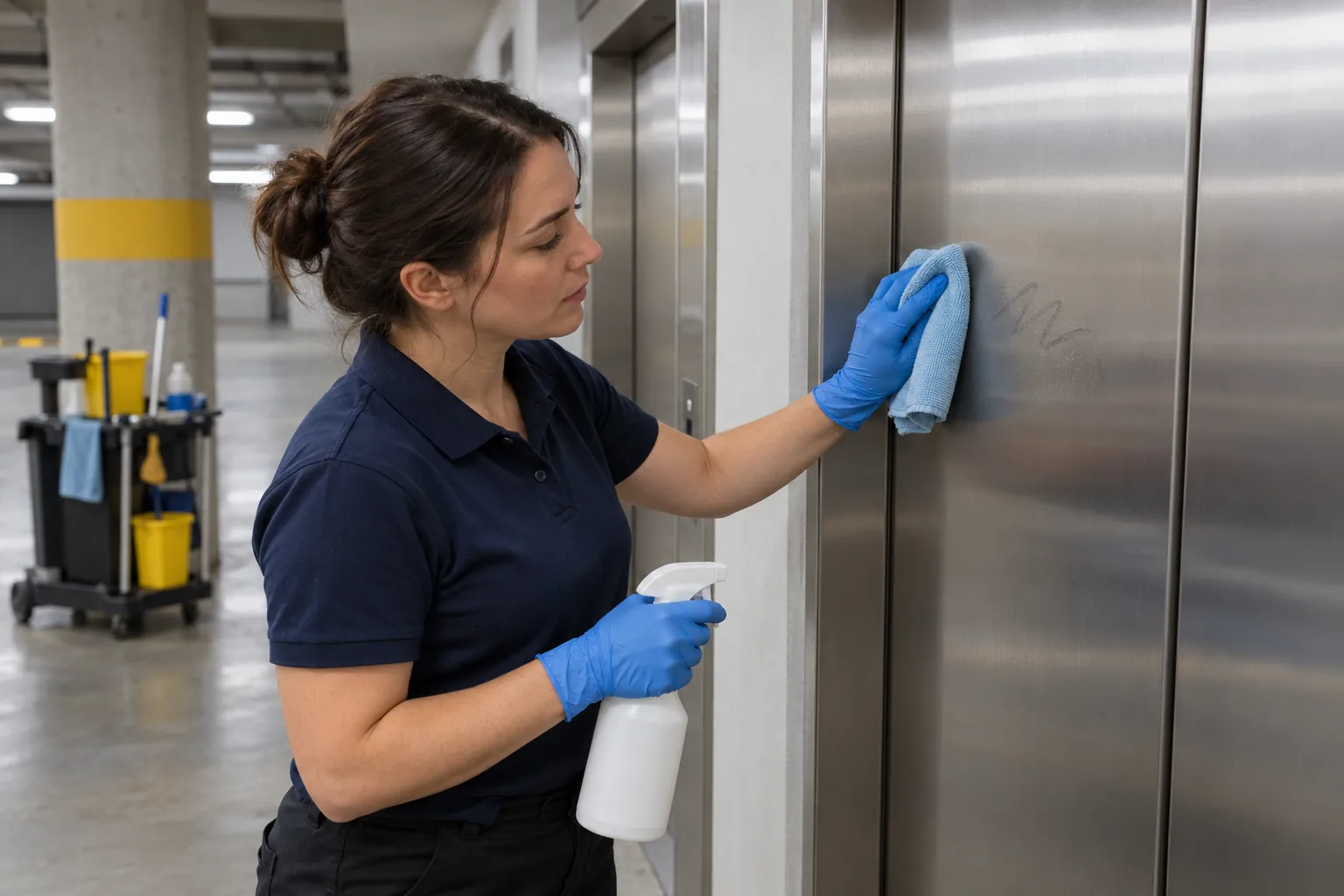
05
What a good graffiti record looks like, and how to check it
A good graffiti record lets anyone answer four questions without asking around: what was found, where, when, and what happened next. For each occurrence it holds:
- The location, down to the wall, door or level.
- The date and time it was found, and by whom.
- A photograph before any removal.
- Its category (offensive, frontage, general) and therefore its target time.
- Whether police and the council were told, when, and any reference number they gave.
- What was done, by whom, and when, with a photograph after removal from the same position.
- Anything left over, such as ghosting, a colour mismatch or etched glass waiting on a glazier.
Kept like that, the record supports a police report and an insurance claim, shows the owner whether the contract is working, and shows where graffiti keeps coming back: the same laneway wall every fortnight, the same stairwell after every weekend. That pattern is your best evidence when arguing for lighting, a coating or a change to a patrol.
To check it, the building manager or supervisor reviews it on a fixed rhythm and walks a sample: go to three or four recent entries and look at the wall. Compare the time on each "after" photo with the time of the report, chase jobs open past their target, and look for gaps: a car park level with nothing found in two months may be clean, or may not be on anyone's round.
Name the person who found each tag, for follow-up questions; do not turn it into a league table, which discourages the reporting you need.
06
Where the graffiti record fails, and what SiteClara does about it
Graffiti usually fails between noticing and acting. A cleaner sees a new tag on the loading dock door at 5.30 am and tells the day guard, who mentions it to the building manager in the lift, who emails the painter, who comes the following week and finds two more. Nobody took a photo, so nobody can say how long each tag was up, or whether the offensive one in the stairwell reached police. Meanwhile the log says "external areas checked" every morning, signed in advance for the week.
SiteClara records work and reports at the location. A printed QR poster, with an optional NFC sticker behind it, sits at each place where checks are scheduled, such as the loading dock, a car park level, the bin room or a stairwell. Cleaners, security officers and other staff scan or tap on their own phone, with no app to install, and mark the scheduled check done, or say why it could not be done, at the time and in the place. When they find graffiti, they report it there with a photo: the report carries the location, the time and the named person, and goes onto the team's list of open jobs until someone closes it.
The supervisor sees the open jobs and the day's checks, adds a note and approves a daily report that goes to nominated management or client contacts the next morning, showing what was checked, what was reported and what is still open. For graffiti, that turns "I told someone about the tag" into a job with a photo, a time, a location and a name, and turns "external areas checked" into a dated record of each round at each place.
07
Questions people ask
How do I report someone for graffiti?
Report it to police or your local council. Queensland's page on graffiti laws in Queensland tells people to "report graffiti offences to police or your local council". Western Australia's page on how to report graffiti offers an online report, asks you to call 131 444 for urgent attention to graffiti that may be a hate crime, and points to Crime Stoppers on 1800 333 000 for reporting anonymously. Other states have their own routes, so check your state police and council pages.
How can I report graffiti in NSW?
Report graffiti on your property to NSW Police online, and ask your local council about removing it. The Service NSW page to report intentional damage or graffiti to NSW Police gives you a police event number for insurance purposes, and says to call Triple Zero (000) instead if the incident is an emergency or happening now. The Service NSW page to report graffiti on community facilities or public assets says graffiti on your private property is your responsibility to get cleaned, that your local council may provide graffiti removal kits or a removal service, and that graffiti on public assets, such as electricity boxes, Telstra equipment or public transport, can be reported directly to the organisation responsible. It also notes that the NSW Graffiti Hotline has closed.
Is graffiti a crime in Australia?
Yes, in every state and territory, under each one's own law. Queensland's page on graffiti laws in Queensland says graffiti "is a form of vandalism and is illegal in Queensland", that defacing property can lead to a charge of wilful damage, which is punishable by imprisonment, and that it is also unlawful to possess an aerosol spray, marker or other instrument used, or suspected to have been used, for graffiti.
Who pays to remove graffiti?
On private property, usually the owner. Queensland's page on graffiti laws in Queensland says owners should remove unlawful graffiti "as soon as possible" and comply with a council's request to remove it within an agreed timeframe. For graffiti in a public space, Western Australia's page on how to report graffiti says to contact the closest local government. In a strata scheme, graffiti on common property falls to the owners corporation, strata company or body corporate.
08
Where to read the official guidance, and a short list to take away
Start with your own state: Parts 2 and 4 of Victoria's Graffiti Prevention Act 2007, Queensland's page on graffiti laws in Queensland, Western Australia's page on how to report graffiti, or the Graffiti Control Act 2008 in New South Wales, then your council's graffiti page. For the removal work, read the hazardous chemicals and falls provisions of the Work Health and Safety Regulations 2011 or your state's version, and in Victoria the Occupational Health and Safety Act 2004.
To take away:
- Name one role in the building that receives every graffiti report, and tell cleaners, security and tenants who it is.
- Photograph before anything is touched, and again after removal from the same spot.
- Set removal times by category, with offensive graffiti gone on the shift it is found and reported to police.
- Agree who acts on common property, lots, shared fences and footpaths before the first tag appears.
- Keep safety data sheets and a method for each surface, and test before using a new remover.
- Put the walls, doors and levels that attract graffiti on a named round, not on "external areas".
- Review open graffiti jobs weekly, walk a sample, and use the pattern to argue for prevention.
Read more in our guides to strata common property maintenance, car park cleaning and the cleaning log sheet.
Sources
Every document this guide quotes or links to, in the order it first cites them.
- Graffiti Prevention Act 2007 legislation.vic.gov.au
- Graffiti laws in Queensland qld.gov.au
- Report graffiti wa.gov.au
- Work Health and Safety Regulations 2011 legislation.gov.au
- Occupational Health and Safety Act 2004 legislation.vic.gov.au
- Report intentional damage or graffiti to NSW Police service.nsw.gov.au
- Report graffiti on community facilities or public assets service.nsw.gov.au
Related guides
 Premises and facilities managementStrata maintenance: keeping common property in repair, and showing that you haveStrata maintenance in Australia: the duty to repair common property in NSW, Victoria and Queensland, the plans a scheme needs, who does what and the records to keep.
 CleaningCar park cleaning: what to clean, how often, and how to show it was doneCar park cleaning in Australia: the WHS and OHS duties, what to clean and how often, working safely among traffic, wash water, and a record worth trusting.
 CleaningShopping centre cleaning: common areas, amenities, food courts and spillsShopping centre cleaning in Australia: the WHS and OHS duties, the areas and trading-day schedule, spills, food courts, contractors and a record worth trusting.
 CleaningCleaning log sheet: what to record, who signs it, and what a signature provesWhat a cleaning log sheet should record in Australian workplaces and food businesses, the WHS and food safety rules behind it, and what a signature proves.