Cleaning
Cleaning log sheet: what to record, who signs it, and what a signature proves
A cleaning log, or cleaning log sheet, is a written record of which area was cleaned, what was done, when it was finished and who did it, with a column for whoever checked it.
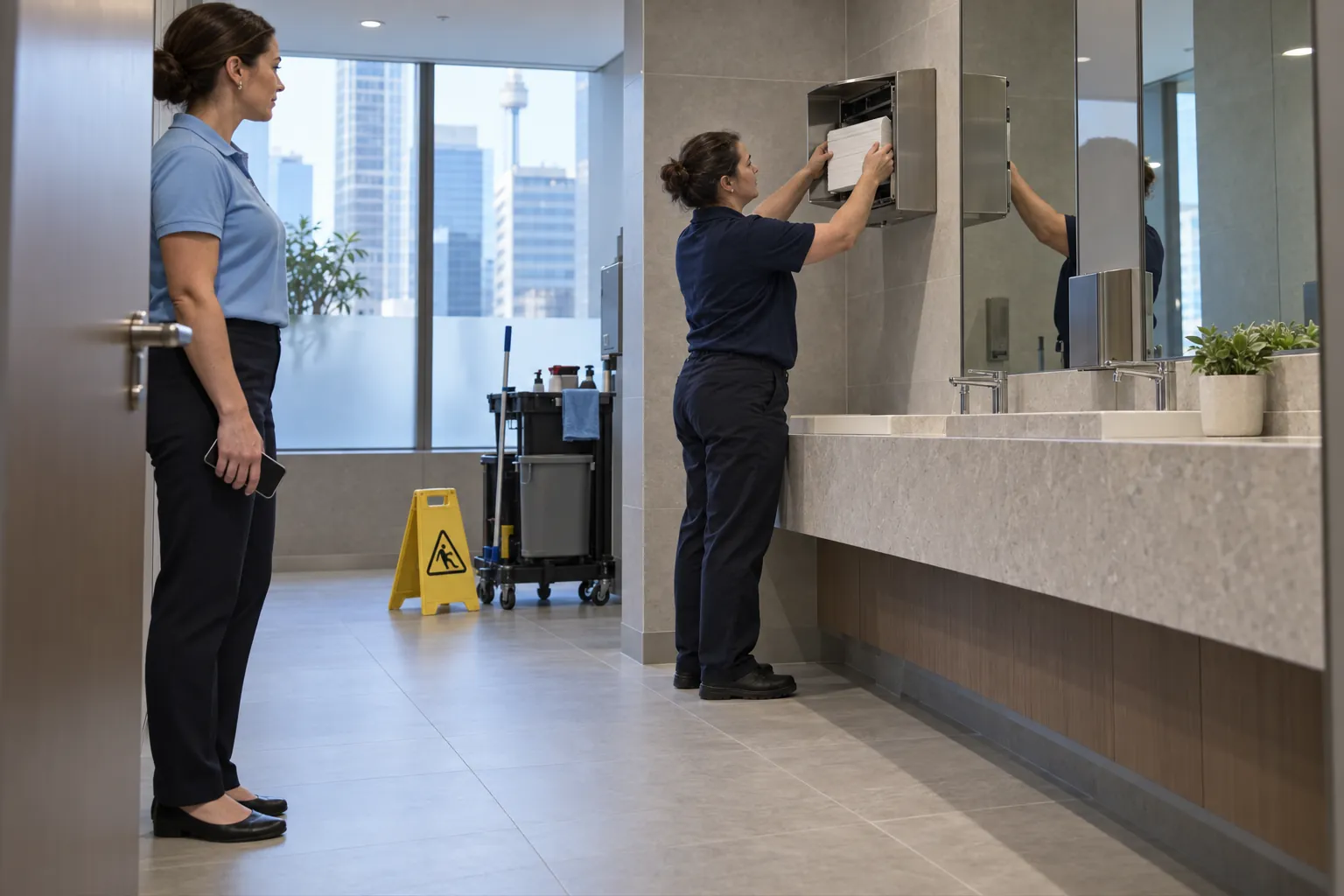
In Australia it sits under work health and safety law, and in many food businesses under the food safety standards as well. This guide covers where cleaning logs are used, what they should record, who should sign them, how long to keep them, and why a full log is not always an honest one.
01
What a cleaning log sheet is for, and the duty behind it
A cleaning log sheet is a running record of cleaning: which area, what was done, the time it was finished and the name of the person who did it, with a column for whoever checked it. Some logs record a single clean, such as a kitchen close-down or a builders clean before handover. Others record repeated visits through the day, like the sheet on the back of an amenities door. Contractors and clients call them cleaning logs, cleaning records, cleaning log books, sign-off sheets or cleaning registers, but the job is the same: to show later that the work was done.
No Australian law requires a document called a cleaning log. The law requires the outcome, and the log is how a cleaning contractor, a facility manager or a business shows that the routine work behind the outcome is happening.
In every state and territory except Victoria, the duty comes from a Work Health and Safety Act based on the national model law. Queensland's Work Health and Safety Act 2011 is typical. Section 19(3) requires a person conducting a business or undertaking (a PCBU) to ensure, so far as is reasonably practicable, "the provision and maintenance of a work environment without risks to health and safety", "the provision of adequate facilities for the welfare at work of workers in carrying out work for the business or undertaking, including ensuring access to those facilities", and "that the health of workers and the conditions at the workplace are monitored for the purpose of preventing illness or injury".
The regulations make it specific. In the model Work Health and Safety Regulations, as adopted in Queensland's Work Health and Safety Regulation 2011, regulation 40 covers general workplace facilities, including that "floors and other surfaces are designed, installed and maintained to allow work to be carried out without risk to health and safety". Regulation 41 requires adequate facilities for workers, "including toilets, drinking water, washing facilities and eating facilities", maintained so as to be "in good working order" and "clean, safe and accessible".
Victoria keeps its own Occupational Health and Safety Act 2004. There the employer, rather than a PCBU, must provide adequate facilities for the welfare of employees and a working environment that is safe and without risks to health, and WorkSafe Victoria's compliance code sets out how facilities are kept clean. The words differ; the log does the same job in Melbourne as in Brisbane.
Food businesses have a second layer. The Food Standards Code covers the cleaning and sanitising of food premises and equipment, and Food Standards Australia New Zealand (FSANZ) says that utensils and surfaces that come in contact with food should be clean and sanitary. Since December 2023 Standard 3.2.2A Food Safety Management Tools has required a category one business (a caterer or food service business that processes unpackaged potentially hazardous food into food that is both ready-to-eat and potentially hazardous) to substantiate its critical food safety controls, cleaning and sanitising among them. That is the one place in this guide where a cleaning record can be close to mandatory, and it is covered in section 05.
02
Where cleaning logs are used
A cleaning log turns up wherever someone other than the cleaner will later want to know whether the cleaning happened:
- Amenities, toilets and bathrooms. The toilet or bathroom cleaning log sheet on the back of the door in an office, shopping centre, school or car park amenities block, with a line for each check through the day. See the toilet cleaning checklist for what each check should cover.
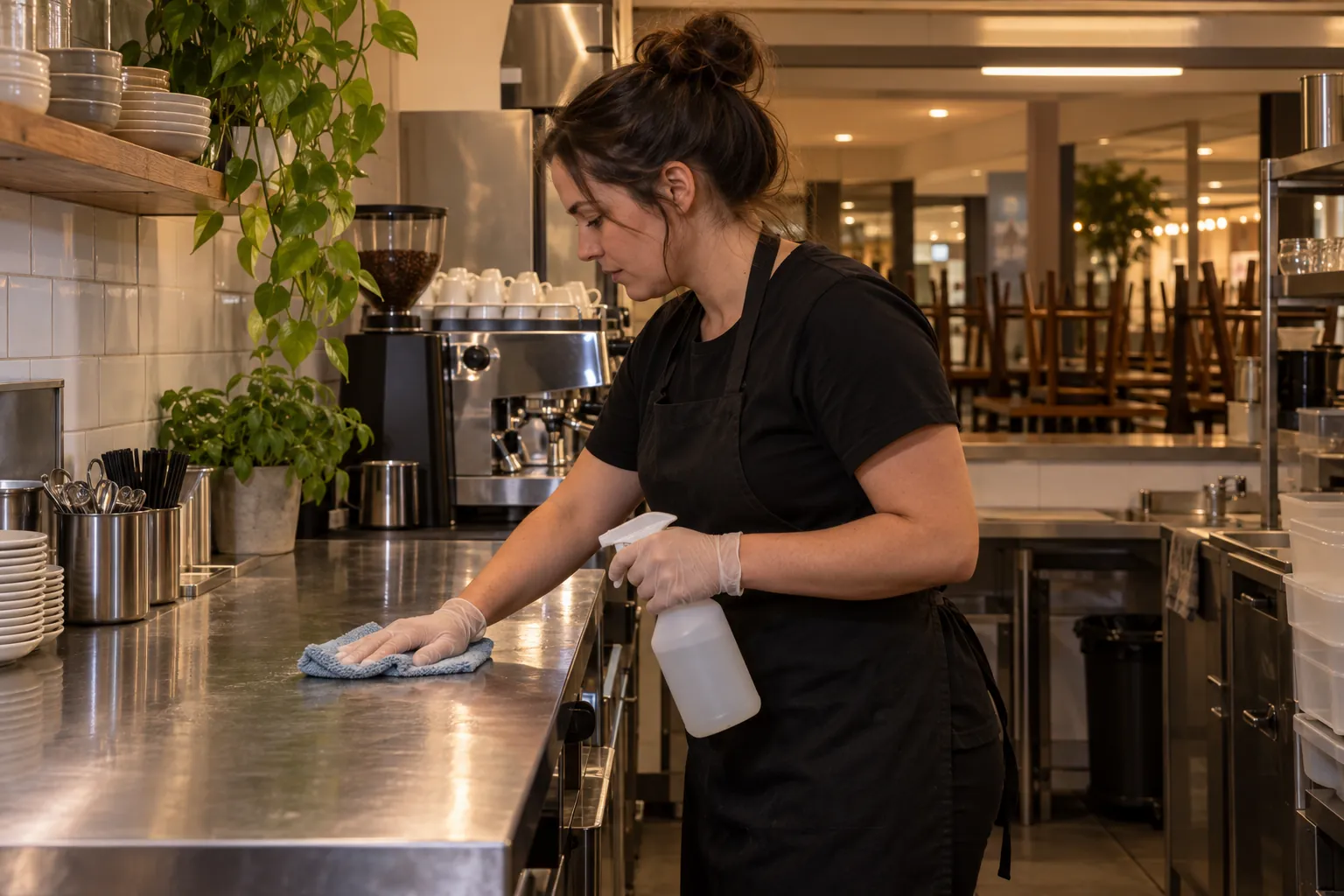
- Kitchens, tearooms and food areas. The daily clean of a staff kitchen or tearoom, and in a café, restaurant or catering kitchen the cleaning and sanitising of benches, equipment and food contact surfaces at close.
- End of trip facilities. Showers, change rooms and lockers in commercial office buildings, where high use through the morning and evening peaks needs more than one clean a day.
- Lift lobbies, entrances and common property. The ground floor and lift lobbies of an office tower, or the common property of a strata scheme, body corporate or owners corporation, where the strata manager or building manager wants to show the contractor has attended.
- Childcare centres, medical suites and gyms. Rooms where the next user needs to know the space is ready, and where the service may have its own cleaning requirements on top of WHS law.
- Periodic work. Carpet cleaning, high-level dusting, window cleaning, strip and seal of hard floors, and deep cleans of kitchens and amenities, logged when finished so the next one can be scheduled.
- Handover. A builders clean before practical completion, a tenancy made good at the end of a lease, or a function room returned after an event: the point where responsibility for a space passes from one party to another.
In each case the log answers the same questions: was this done, by whom, when, and did anyone check?
03
What a cleaning log sheet should record
Make each log specific to the area. A cleaning log template downloaded as a PDF or Excel spreadsheet is a starting point, not a finished log: a generic sheet printed for every room is quick to produce and hard to believe. A cleaning schedule says what should be cleaned and how often; the log records what was actually done, so the two work as a pair. Many sites keep a daily log for frequent cleans and a monthly log, with a column for each day, for work done once a day or less. A useful log records:
- The area, named so there is no doubt which one: "Level 3 amenities, east core", not "toilets".
- The tasks, each listed separately in the order they are done, with the product and method where it matters, such as the sanitiser and its contact time on a food contact surface.
- The date and the time finished, written when the work was finished, not the time it was due.
- The name and signature or initials of the person who did the work, clear enough to identify one person months later.
- Anything not done, and why: a room locked, a meeting running over, a product out of stock, a wet floor that had to be closed off.
- Hazards and faults found: a leaking cistern, a broken dispenser, a lifting floor tile, pests, a spill, and who they were reported to.
- Consumables in amenities and kitchens: soap, paper towel and toilet paper restocked, sanitary bins serviced.
- The checker's column: the supervisor or client representative who inspected the work, and the time of that inspection.
- Corrective action: what happened when the check found a problem, and who signed it off the second time.
Keep a list of the names, initials and signatures of everyone who signs, so an initial can be traced to a person. A cleaning log whose initials nobody can identify is a record of nothing.
04
Who signs, and what a signature means
Most arguments about cleaning logs are really arguments about what a signature meant. Say it plainly, on the log or in the site procedure:
- The cleaner signs to say: I completed these tasks, in this area, at this time, using the method specified. They sign for their own work only, never for a colleague, and never before the work is done.
- The supervisor or checker signs to say: I inspected this area at this time and it met the standard. That is a different statement. It should be made by someone who did not do the clean, after looking, not by initialling the whole week's log on Friday. See the guide to cleaning supervisor duties for how inspections fit into the shift.
- The person accepting the space, at a handover, signs to say: I have seen the area and accept it in this condition, subject to any items listed. That transfers responsibility, so it should be done on a walk-through, not at a desk.
A signature does not mean the area is still clean an hour later, or that surfaces were sanitised unless the log says so. And a supervisor's signature does not turn a clean they never saw into a checked one.
Three habits undermine a log more than any others:
- Signing in advance, so the sheet shows work that has not happened yet.
- One person signing for a crew, so nobody can say who cleaned which area.
- Filling in the log at the end of the shift from memory, often in the cleaners' room, with times that are guesses.
Each one makes the record look complete while removing what it was meant to prove. The fix is partly procedural (sign at the area, at the time) and partly cultural: a cleaner who writes "not done, room locked" should be thanked for an honest log, not treated as the cause of a gap.
05
How often to clean, how long to keep the log, and who reviews it
Neither the WHS regulations nor the national model code sets a fixed cleaning frequency; they set the factors. The code of practice Managing the work environment and facilities, a Safe Work Australia model code approved in each adopting jurisdiction (the link is the NSW version, August 2019), says that "the work environment must be maintained so that it remains in a clean and safe condition", that "consumable items, including soap and toilet paper, should be replenished regularly", and that workplaces and facilities "should be cleaned regularly taking into account the type of work performed, the likelihood of contamination, the number of workers using them, including during shiftwork, and the type of facility, such as eating areas, toilets, handbasins and showers." It adds that the duty to consult covers monitoring conditions, including "access, cleaning and maintenance of the facilities".
In Victoria, WorkSafe's Compliance code: Workplace facilities and the working environment (December 2023) goes further. It says cleaning "may be needed at each shift change or daily, but can be needed more often depending on the type or nature of the work", and that "the cleaning schedule needs to account for the hygienic maintenance of facilities in high-use areas, like dining areas, toilets, urinals, hand washing facilities and showers". It also says dining facilities need to be cleaned "generally at least daily". That is as close as Australian workplace guidance comes to telling you what the log should show.
For food businesses, Food Standards Australia New Zealand's guidance on the evidence tool under Standard 3.2.2A says a category one business must make a record showing it has properly managed the food safety risks of its prescribed activities, which include cleaning and sanitising. "Records must be kept for at least 3 months." FSANZ also says "a record may not be needed if the business can show an authorised officer (food regulator) in some other way" that the risks are managed, for example by demonstrating an activity. Most businesses find a log the simplest way to show it. FSANZ's page on cleaning and sanitising sets out the difference the log should reflect: "Cleaning is removing general dirt, grease and food waste. Sanitising destroys microorganisms."
Outside food, keep logs for as long as the cleaning contract or your insurer requires, and long enough to answer a complaint, a claim or an incident investigation. Write the period down in the procedure, because a log thrown out last month cannot settle this month's disagreement.
Review matters more than retention. A practical pattern:
- Each shift, the supervisor looks at the logs for gaps and "not done" entries, and follows up faults reported.
- Each week, the contract manager compares logs against the scope of works or cleaning specification and looks for the same gap in the same place.
- Each month, the contractor and the client or facility manager review them together, alongside joint inspections and complaints, as part of the cleaning contract.
In a shared building, the building owner or owners corporation, the tenants, the facility manager and the cleaning contractor often hold the same duty. Section 46 of the WHS Act requires each person with a duty in relation to the same matter, so far as is reasonably practicable, to "consult, cooperate and coordinate activities with all other persons who have a duty in relation to the same matter". A cleaning log that all of them can see is one of the simplest ways to do that.
06
Where the cleaning log fails, and what SiteClara does about it
Paper cleaning logs fail in predictable ways. They are signed in a batch at the end of the shift, they sit in a folder in the cleaners' room that the client never sees, the supervisor's column is filled in at the desk, and a missed clean is noticed only when the next person finds the amenities dirty. When a dispute comes up weeks later, nobody can show whether a line was written at 4 pm or at 9 pm.
SiteClara records the clean at the place where it was done. A printed QR poster at each area, with an optional NFC tag behind it, lets a member of the cleaning team scan the code or tap the tag with their own phone, with no app to install, and see the scheduled checks due there. They mark each one done, with a photo of the finished area when the check asks for one, or say what stopped them. Their name and the time are recorded as it happens. A fault found on the round, such as a leaking tap or an empty dispenser, can be reported at the same tag and goes onto the team's list of open jobs until someone closes it.
The supervisor sees what is due, done and missed across the building, and can record the reason a check was missed. At the end of the day they review the totals and photos, add a note and approve the report, which goes to nominated client or management contacts the next morning, showing what was completed, what was reported and what is still open.
07
Where to read more, and a list to take away
Read the WHS Act and Regulations for your own state or territory: the Queensland versions linked above follow the national model, and New South Wales, South Australia, Tasmania, Western Australia and the territories have their own equivalents. Victoria's Occupational Health and Safety Act 2004 and WorkSafe Victoria's compliance code on workplace facilities apply there. The code of practice Managing the work environment and facilities includes a checklist in its appendix that asks, among other things, whether facilities are cleaned regularly and consumables replaced. For food businesses, start with FSANZ's overview of the food safety management tools and your state or local council's food safety team. For the tasks a log should list in each part of an office or shared building, area by area, see the commercial cleaning checklist.
Before you print or revise a cleaning log sheet, check that:
- each log is for one named area, with the tasks listed in the order they are done;
- it records the time the work was finished, not the time it was due;
- every signature or initial can be traced to one person, with a signature list kept;
- there is a separate column for a checker who did not do the work;
- tasks not done, faults and hazards found have somewhere to go, and someone follows them up;
- a food business's log separates cleaning from sanitising and is kept for at least 3 months;
- the site procedure says what each signature means, and that nobody signs in advance;
- handovers are signed on a joint walk-through, with photos and a list of defects;
- someone reviews the logs each shift and each month, and you know how long they are kept.
Sources
Every document this guide quotes or links to, in the order it first cites them.
- Work Health and Safety Act 2011 legislation.qld.gov.au
- Work Health and Safety Regulation 2011 legislation.qld.gov.au
- Occupational Health and Safety Act 2004 legislation.vic.gov.au
- Standard 3.2.2A Food Safety Management Tools foodstandards.gov.au
- Managing the work environment and facilities safework.nsw.gov.au
- Compliance code: Workplace facilities and the working environment worksafe.vic.gov.au
- Evidence tool foodstandards.gov.au
- Cleaning and sanitising foodstandards.gov.au
Related guides
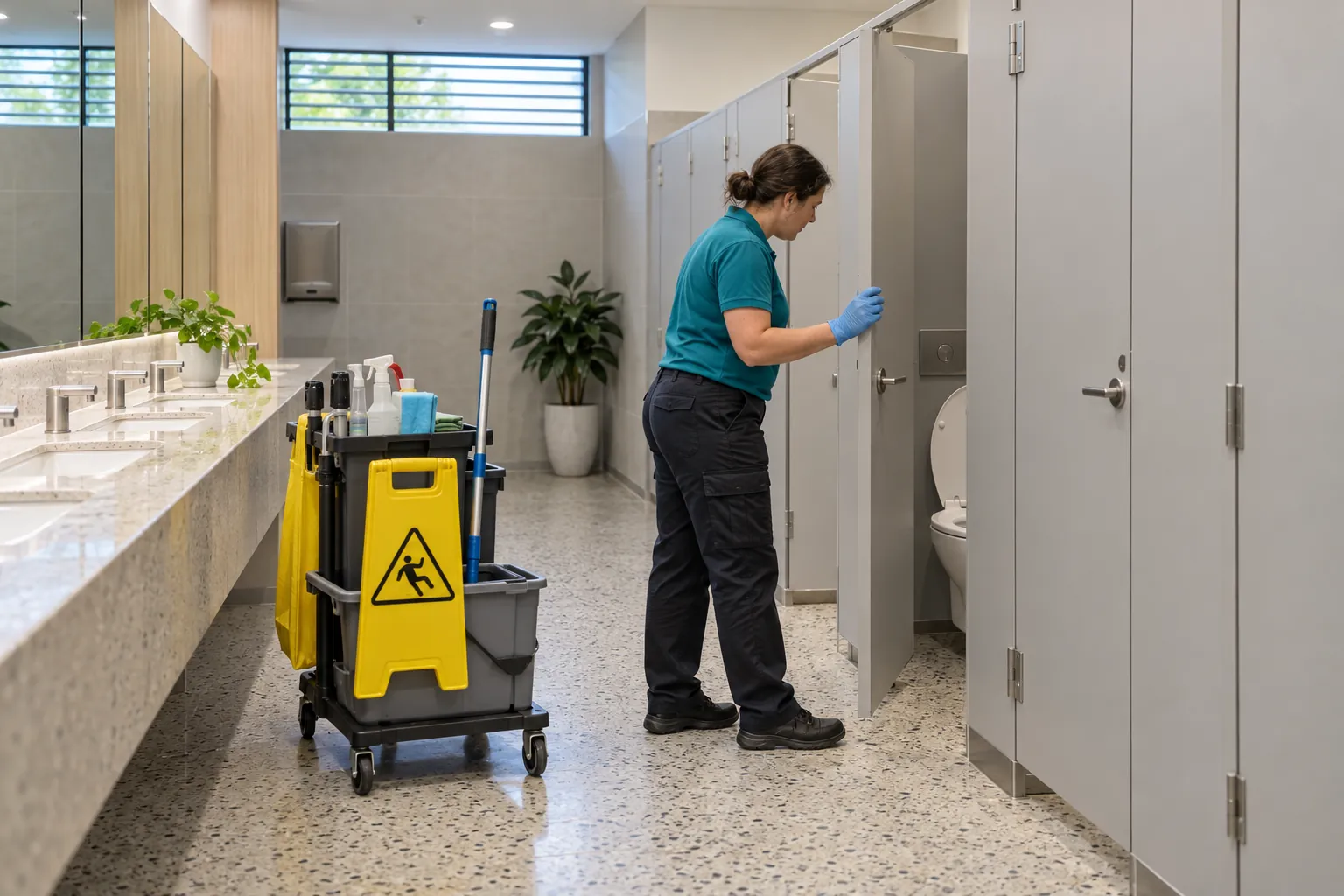 CleaningToilet cleaning checklist: what to check, how often, and how to make the record believableWhat a toilet cleaning checklist should cover in Australian workplaces, how often to check, the WHS and OHS duties behind it, and how to make the record believable.
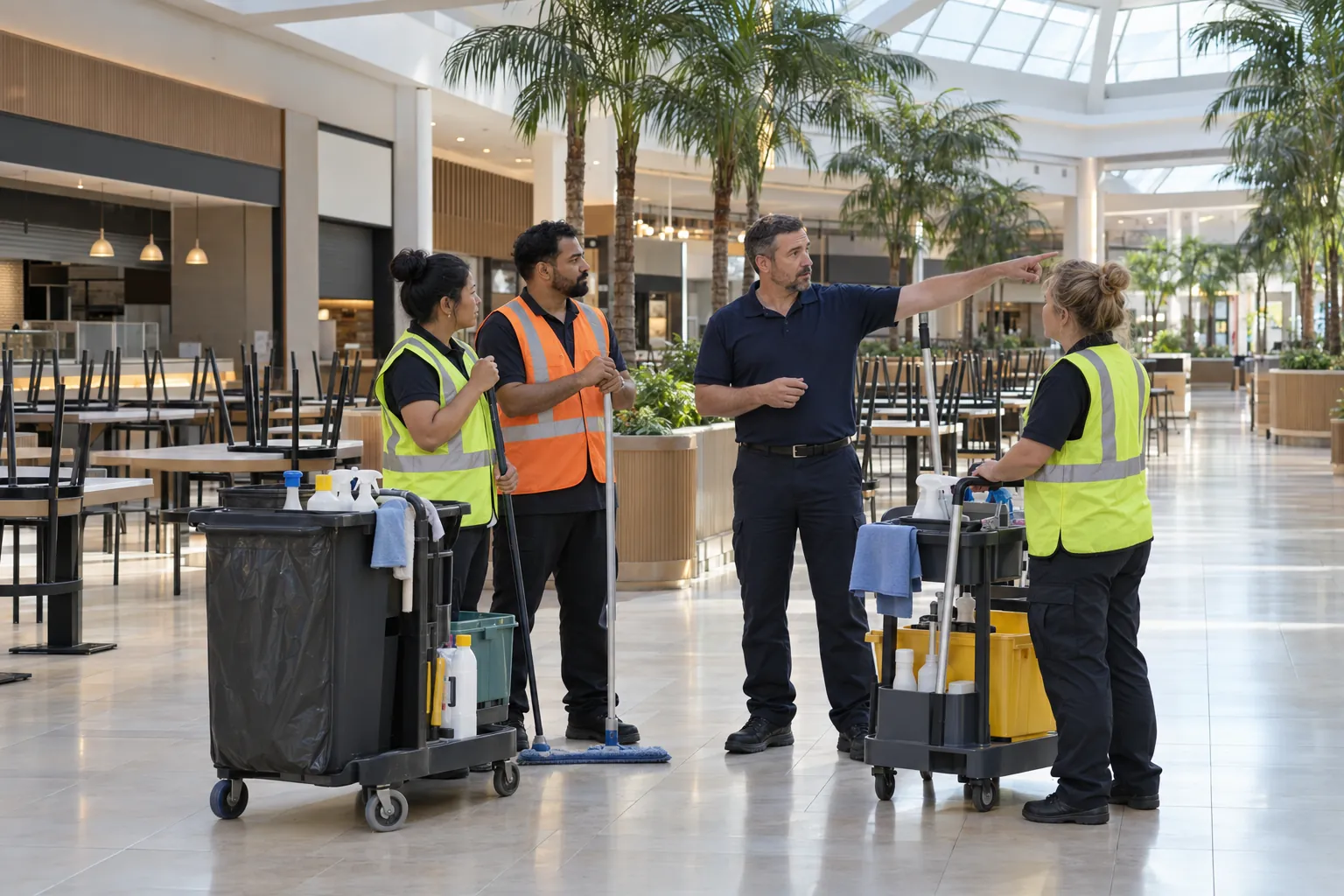 CleaningCleaning supervisor duties: what the role involves in Australia, and what good looks likeWhat a cleaning supervisor does in Australia: the Cleaning Services Award, WHS duties, a typical shift, managing the team, checking the work and reporting.
 CleaningCommercial cleaning checklist: area by area, and how to know it is followedA commercial cleaning checklist for Australian offices and shared buildings, area by area, with the WHS duties behind it and how a supervisor checks it is followed.
 CleaningThe Cleaning Accountability Framework: certification, prequalification and the records behind themWhat the Cleaning Accountability Framework is, how CAF building certification and contractor prequalification work, and the records behind them.