Premises and facilities management
Workplace housekeeping: what WHS law asks, and a routine that holds between inspections
Workplace housekeeping is the everyday work of keeping a workplace clean, tidy and free of slip, trip and fire hazards: spills cleaned up straight away, walkways and fire stairs kept clear, stock, cleaning equipment and flammable materials put away, bins emptied, and broken lights and loose carpet tiles fixed before someone trips.
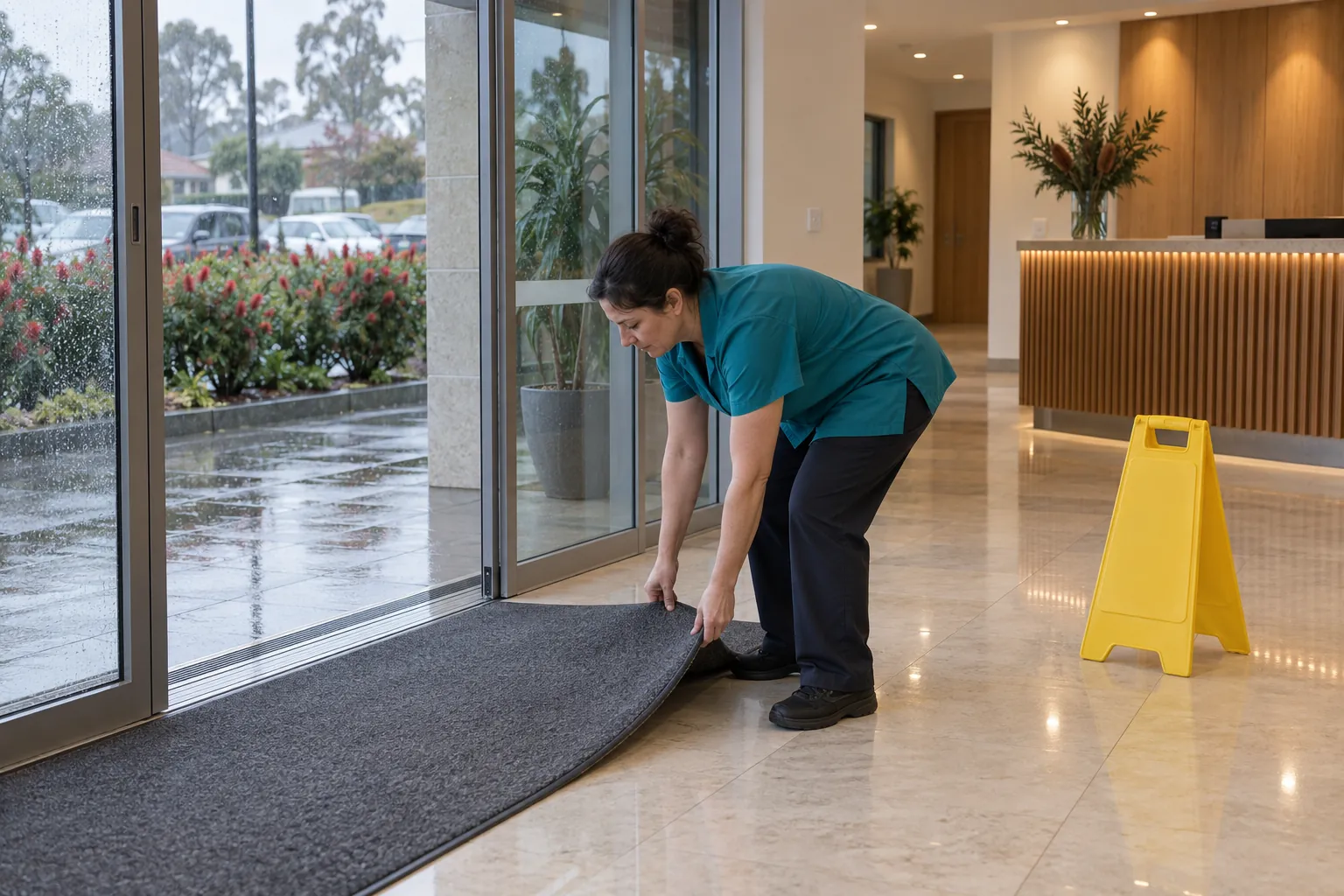
It is unglamorous, and it is where many slips and trips begin. This guide covers the duties in Australian work health and safety law that housekeeping serves, what the codes of practice say, what a housekeeping routine should cover in an office, shopping centre, school or strata building, who is responsible for which areas, how often to check, and what a record worth keeping looks like.
01
The WHS duties behind workplace housekeeping
No Australian law uses the word housekeeping as a duty on its own, and none sets a housekeeping checklist or a frequency. The duties it serves are general ones. Under section 19 of the Work Health and Safety Act 2011, a person conducting a business or undertaking (PCBU) must ensure, so far as is reasonably practicable, the health and safety of workers and others affected by the work. The Work Health and Safety Act 2011 (Qld), which follows the model Act and keeps its numbers, lists in section 19(3) among other things "the provision and maintenance of a work environment without risks to health and safety", "the provision of adequate facilities for the welfare at work of workers", and "that the health of workers and the conditions at the workplace are monitored for the purpose of preventing illness or injury".
Regulation 40 of the Work Health and Safety Regulations, "Duty in relation to general workplace facilities", is where housekeeping sits most squarely. The Commonwealth Work Health and Safety Regulations 2011 follow the model regulations, as do those of the other jurisdictions that have adopted the model laws. The wording below is from Queensland's Work Health and Safety Regulation 2011 (the reprint current as at 29 March 2026), which keeps the model numbering. A PCBU must ensure, so far as is reasonably practicable, that:
- "the layout of the workplace allows, and the workplace is maintained so as to allow, for persons to enter and exit and to move about without risk to health and safety, both under normal working conditions and in an emergency";
- "work areas have space for work to be carried out without risk to health and safety";
- "floors and other surfaces are designed, installed and maintained to allow work to be carried out without risk to health and safety";
- lighting enables people to work, move about and evacuate without risk.
Regulation 41 adds that workers' facilities, including toilets, drinking water, washing and eating facilities, must be kept in good working order, clean, safe and accessible.
The approved code of practice Managing the work environment and facilities (the SafeWork NSW edition of August 2019, based on the Safe Work Australia model code dated May 2018) gives housekeeping its own section, 2.6. It opens: "An untidy workplace can cause injuries, in particular injuries resulting from slips and trips, therefore good housekeeping practices are essential for all workplaces." Its examples are the core of any routine: "spills on floors should be cleaned up immediately", "walkways should be kept clear of obstructions", "work materials should be neatly stored", and "waste should be regularly removed". Section 1.3 adds that "the work environment must be maintained so that it remains in a clean and safe condition".
Codes of practice matter because, as the foreword says, they "are admissible in court proceedings" and courts "may rely on the code in determining what is reasonably practicable". Safe Work Australia has revised the model code since 2018, and each state and territory approves its own edition, so check which one applies where your building is.
02
What workplace housekeeping covers in practice
Housekeeping is broader than cleaning: it keeps the building in the condition regulation 40 describes, with clear routes, safe floors, working storage and lights on. In a commercial building it usually covers:
- Walkways, corridors and aisles: kept clear of trolleys, boxes, furniture and deliveries. The NSW code says "aisles and walkways should be at least 600 mm wide and kept free of furniture or other obstructions at all times", and where routes need defining, marked with a permanent line "at least 50 mm wide" in white, yellow or another contrasting colour.
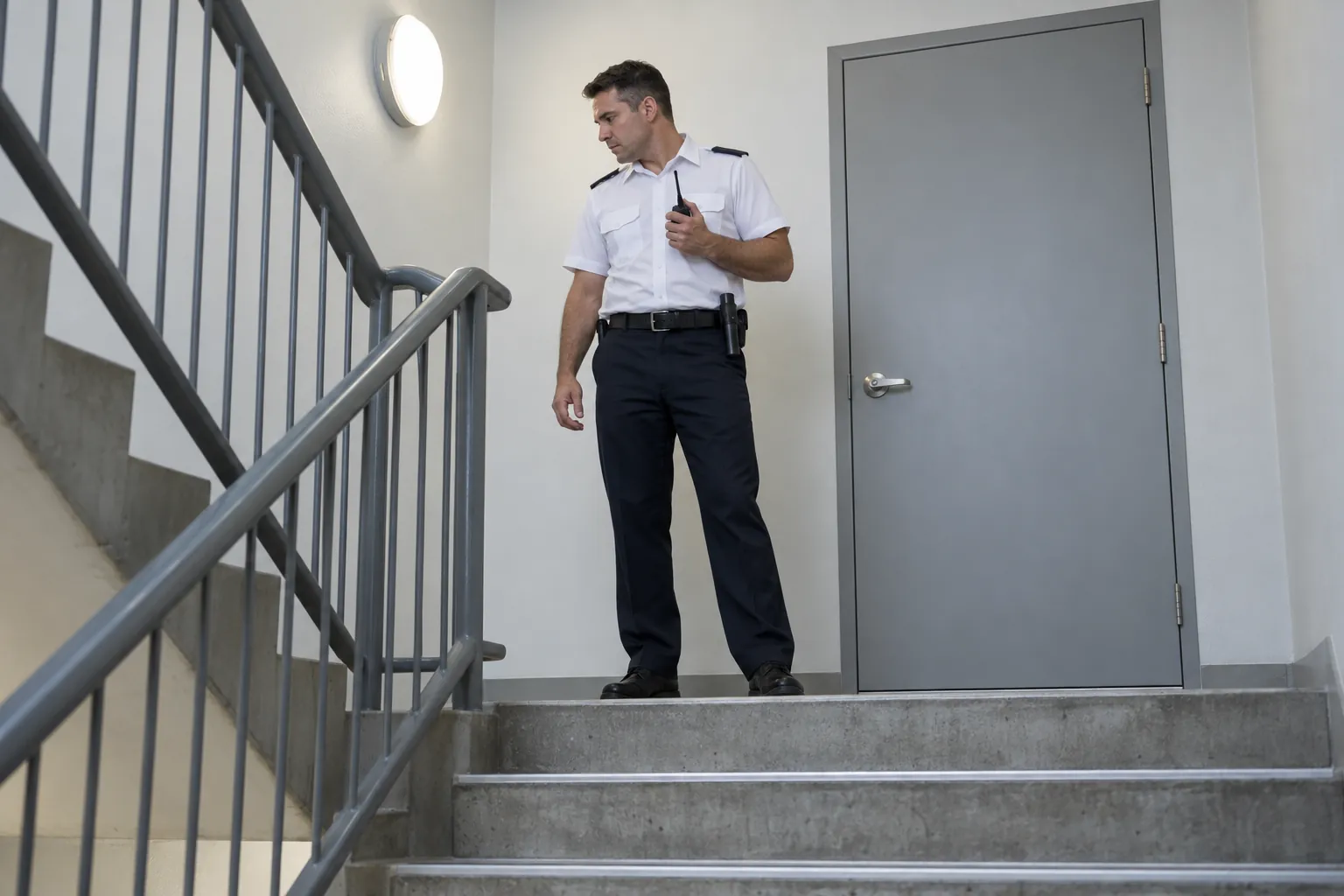
- Exits and paths to exits: fire stairs, exit doors and the space in front of them never used for storage, and exit doors that open freely. The Victorian code asks that paths to exits comply with the National Construction Code and be kept safe.
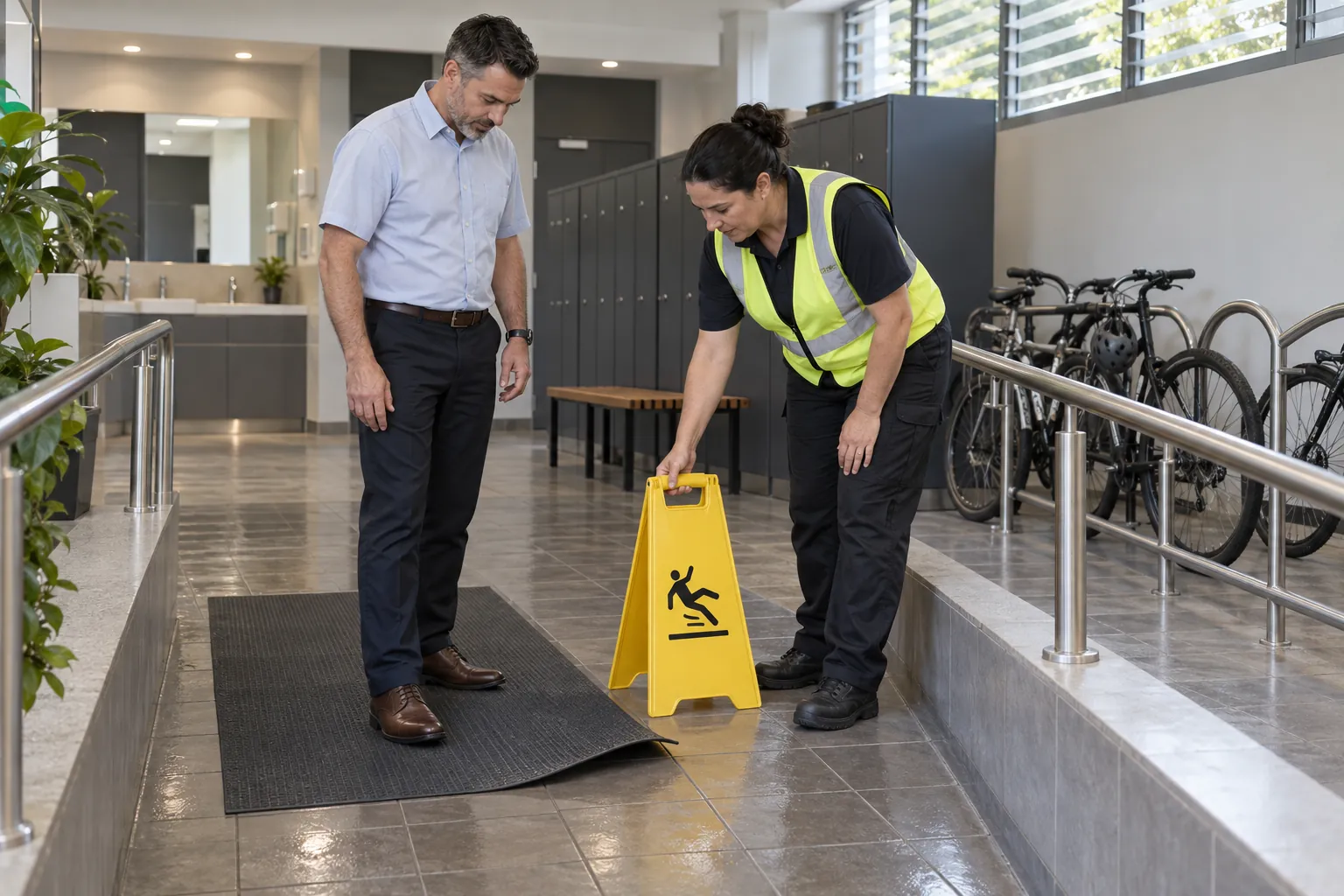
- Floors and entries: spills cleaned up at once, wet floor signs used while a floor dries, entry matting checked when it rains, and damage reported. The NSW code names the common trip hazards: "trailing cables, uneven edges or broken surfaces, gratings or covers, loose mats or carpet tiles". It also warns that the risk of slipping "may be increased by the use of some cleaning agents", so choose cleaning materials and methods with the floor in mind.
- Storage: stock, chairs and archive boxes kept in stores, not in corridors, plant rooms or fire stairs. Cleaners' trolleys, mops, buckets and other cleaning equipment go back to the cleaners' store rather than being left in a walkway, and flammable materials such as aerosols, solvents and fuel are kept in their proper store, well away from exits and ignition sources.
- Waste: bins where they are needed, emptied before they overflow, and bin rooms and loading docks kept tidy. For eating areas the NSW code says rubbish bins "should be emptied at least daily".
- Lighting: blown lamps in stairs, corridors and car parks reported and replaced. The code says broken or damaged fittings, including lighting, "should be replaced or repaired promptly", and outdoor paths and car parks may need lighting after dark.
- Amenities and consumables: toilets, kitchens and end of trip facilities clean, with soap, toilet paper and paper towels replenished. The workplace amenities guide covers these in more detail.
The list for a particular building comes from walking it. A shopping centre's loading dock and bin room carry different risks from a school's corridors after lunch. Name the places that go wrong in that building.
03
Who is responsible for which areas
Most commercial buildings have more than one duty holder. An office tower, a shopping centre or a strata building has an owner or owners corporation (a body corporate in Queensland), a building or facility manager, tenants, and contractors for cleaning, security and maintenance. Each has a duty over the part it controls.
Section 20 of the model Act puts a duty on a PCBU with management or control of a workplace to ensure, so far as is reasonably practicable, that the workplace, the means of entering and exiting it and anything arising from it are without risks to health and safety. In practice that means the building manager answers for the common areas: the lobby, lifts, fire stairs, car park, loading dock, bin rooms and shared amenities. Tenants answer for their own tenancies. Where duties overlap, as they do at every tenancy door and shared corridor, the model Act requires duty holders to consult, cooperate and coordinate their activities with each other.
The NSW code is realistic about who does the work: "while it may be reasonable to expect workers to leave their immediate work area in a clean and tidy condition at the end of the working day, other options for carrying out the general cleaning of the workplace should be considered, for example engaging cleaners." A working split in most buildings looks like this:
- Everyone who works there keeps their own area tidy, puts things away, reports what they cannot fix, and does not walk past a spill.
- The cleaning contractor cleans to the specification, deals with spills they find or are called to, empties bins, restocks consumables and reports damage, leaks and blocked routes.
- Security officers on patrol check fire stairs, exit doors, car parks and loading docks, and report obstructions and lights out.
- The building or facility manager sets the routine for the common areas, gets defects fixed and checks that it all happens.
- Tenants manage their own tenancies, and keep their deliveries and stock out of common areas.
Write the split down: the cleaning scope of works says which spills, bins and consumables are the contractor's, and the security site instructions say which exits and stairs are checked on each patrol. Most housekeeping failures in shared buildings are areas nobody was told were theirs.
04
How often to check, and when
No Australian law sets a housekeeping frequency. The codes tie it to the risk. The NSW code says workplaces and facilities "should be cleaned regularly taking into account the type of work performed, the likelihood of contamination, the number of workers using them, including during shiftwork, and the type of facility", and that floors "must be inspected regularly and maintained to eliminate or minimise slip and trip hazards". The Victorian compliance code says cleaning "may be needed at each shift change or daily, but can be needed more often depending on the type or nature of the work", and its checklist asks whether facilities are cleaned "at least every shift change or daily".
A routine that holds usually has three layers:
- Spot housekeeping, all the time: whoever finds a spill cleans it, or guards it and calls it in.
- Scheduled checks at set places and times: entrances at opening and after rain, amenities through the day, kitchens after lunch, loading docks after deliveries, fire stairs on each security patrol, car park lighting at dusk.
- A periodic walk-through: often as part of a workplace inspection, looking at what the daily checks miss (stores, risers, plant rooms) and at anything that keeps coming back.
Set the times from the building's own pattern, then adjust: if one kitchen's bins overflow by 2 pm every day, move the empty or add a bin. Review the routine when the building changes, such as a new tenant, a new use for a floor or more people on site.
05
What a good housekeeping record shows
Nothing in the WHS laws prescribes a housekeeping record. It still matters: it is how the building manager and the client know the routine is happening, and after a slip or a blocked exit, how a PCBU shows what it did. A useful record has these qualities:
- It is made at the time and at the place, not filled in later from memory. A sheet on the back of the door signed at the start of the shift for the whole day is not a record of anything.
- It names who did the check, so a question can be asked and answered, and a person gets credit for doing it.
- It says what was found, not just a tick: "entry mat curled, relaid", "two pallets in fire stair B, dock supervisor told".
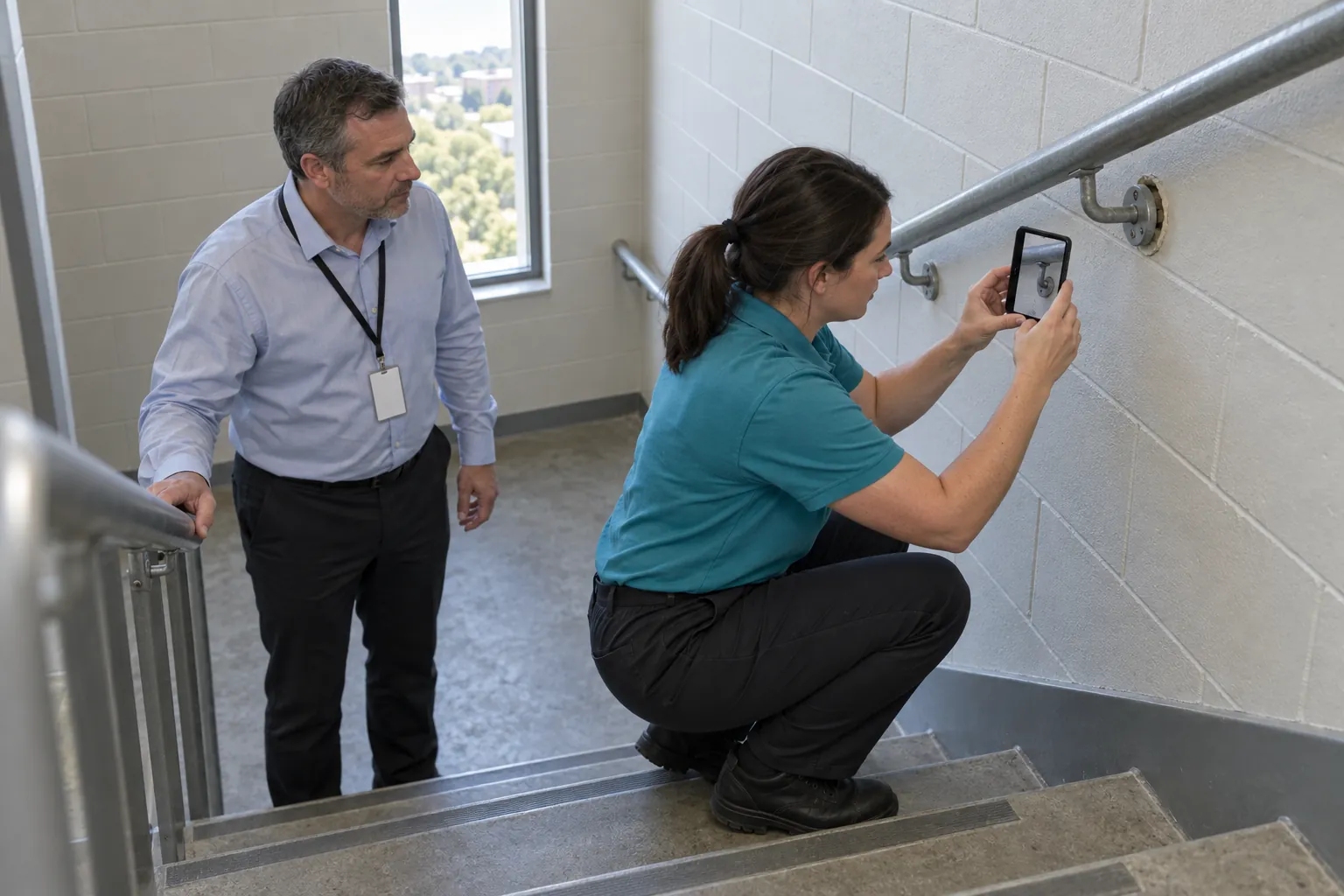
- It carries a photo where one helps, particularly for a blocked route or damage that someone else must fix.
- It shows what was missed as well as what was done, with the reason: a check skipped because the area was closed is different from one nobody got to.
- It follows a problem through to fixed: who was told, who owns it, and when it was put right.
Look for patterns. The same corridor obstructed every week is a storage problem, not a housekeeping one; the same entry wet every morning may need a longer mat or a canopy. A good record is what shows that a control is not working.
Share the record. Cleaners and security officers keep reporting when they can see that what they reported was fixed, and tenants stop storing stock in the corridor when the building manager can show them the photos.
06
Where the housekeeping record fails, and what SiteClara does about it
Housekeeping records tend to fail in the same ways. The check sheet on the back of the amenities door is signed for the whole day in advance, or not at all. The security patrol walks past the fire stairs with nothing to show it looked. And the spill, the loose carpet tile or the pallet in the exit route is mentioned to whoever was passing, and never written down or followed up.
SiteClara helps with the routine checks and the reports between them. A printed QR poster, with an optional NFC tag behind it, sits at each location where checks are scheduled, such as an entrance, an amenities block, a kitchen, a fire stair, a loading dock or a car park level. Staff scan or tap on their own phone, with no app to install, see the checks due there, and mark each one done or explain what stopped them. They can also report a problem at that location, with a photo when one helps. The report carries the location, the time and the named person, and goes onto the team's list of open jobs until someone closes it.
The supervisor sees what is due, done and missed, and the open jobs grouped by building and floor. Each day they add a note and approve a report that goes to nominated management or client contacts the next morning, showing what was checked, what was reported, what was completed and what is still open.
07
Questions people ask
What is workplace housekeeping?
It is keeping the workplace clean, tidy and orderly so that people can move about and work without being hurt. The code of practice Managing the work environment and facilities explains why: "An untidy workplace can cause injuries, in particular injuries resulting from slips and trips, therefore good housekeeping practices are essential for all workplaces."
What are the rules of workplace housekeeping?
No Australian law sets a fixed number of rules. The code of practice Managing the work environment and facilities gives four examples at section 2.6: "spills on floors should be cleaned up immediately", "walkways should be kept clear of obstructions", "work materials should be neatly stored" and "waste should be regularly removed". It adds that containers for waste "should be conveniently located and regularly emptied".
Is there a workplace housekeeping checklist?
Yes, two official ones. Appendix B of the code of practice Managing the work environment and facilities is a work environment and facilities checklist, asking for example whether floors are "maintained to be free of slip and trip hazards" and whether facilities are "cleaned regularly". In Victoria, Appendix E of WorkSafe Victoria's Compliance code: Workplace facilities and the working environment has a housekeeping section that asks whether workplace facilities are "cleaned regularly, at least every shift change or daily".
Do workers need housekeeping training?
Where a workplace is hard to keep tidy, yes. The code of practice Managing the work environment and facilities says that where there is "rapid production of finished goods and waste", "training all workers in housekeeping procedures and their cooperation with these procedures is necessary to keep the workplace tidy". In any workplace, everyone should know the routine, including how to deal with a spill and how to report a hazard.
08
Where to read more, and a list to take away
Start with regulations 40 and 41 of the Work Health and Safety Regulations in your own jurisdiction, such as the Commonwealth Work Health and Safety Regulations 2011 or Queensland's Work Health and Safety Regulation 2011. The primary duty is section 19 of the Act, for example the Work Health and Safety Act 2011 (Qld).
Read the code of practice Managing the work environment and facilities, sections 1.3 (monitoring and maintaining), 2.1 (entry and exit), 2.4 (floors and other surfaces), 2.5 (lighting) and 2.6 (housekeeping), and its Appendix B checklist. In Victoria, read the Occupational Health and Safety Act 2004 with WorkSafe Victoria's Compliance code: Workplace facilities and the working environment, whose Appendix E, the facilities planning checklist, includes a housekeeping section.
Before you next walk the building, check that:
- the housekeeping routine names the places that go wrong in this building, not a generic list;
- walkways and aisles are clear, and fire stairs, exits and paths to exits hold nothing at all;
- everyone knows that a spill is dealt with when it is found, and how to call one in;
- bins are emptied before they overflow, and eating area bins at least daily;
- broken lights, loose carpet tiles and damaged floors are reported and fixed promptly;
- in a shared building, it is written down who looks after each common area, and what the cleaning and security contractors check;
- checks are recorded at the time and place, by name, with what was found and what was missed;
- repeat problems lead to a change in storage, layout or routine, not just another clean-up;
- the procedure matches your jurisdiction, and Victoria's OHS Act where the site is in Victoria.
Sources
Every document this guide quotes or links to, in the order it first cites them.
- Work Health and Safety Act 2011 (Qld) legislation.qld.gov.au
- Work Health and Safety Regulations 2011 legislation.gov.au
- Work Health and Safety Regulation 2011 legislation.qld.gov.au
- Managing the work environment and facilities safework.nsw.gov.au
- Occupational Health and Safety Act 2004 legislation.vic.gov.au
- Compliance code: Workplace facilities and the working environment worksafe.vic.gov.au
Related guides
 Premises and facilities managementWorkplace inspection checklist: what WHS law asks, what to walk, and what to do nextWorkplace inspections under Australian WHS law: the duties behind them, what the checklist covers, how often, recording findings, and HSRs' right to inspect.
 Premises and facilities managementWorkplace amenities: what the law asks for, and how to keep them clean and workingWorkplace amenities under Australian WHS and OHS law: what must be provided, the numbers the codes give, who cleans and maintains them, and what a good record shows.
 Premises and facilities managementHazard report forms and hazard reporting: what WHS law asks, and how to close the loopHazard reporting under Australian WHS law: the duty to identify hazards, what a hazard report form should hold, who acts on it, and how to show the fix was made.
 Premises and facilities managementNear miss reporting in Australia: what WHS law asks, and how to make it workWhat a near miss is under Australian WHS law, when one is a notifiable dangerous incident, what a good report holds, and how to make sure the hazard is fixed.