Premises and facilities management
Workplace amenities: what the law asks for, and how to keep them clean and working
Workplace amenities are the facilities a business provides for its workers' welfare at work, such as the toilets, hand basins, drinking water, lunchrooms, lockers, change rooms and showers that let people get through a working day.
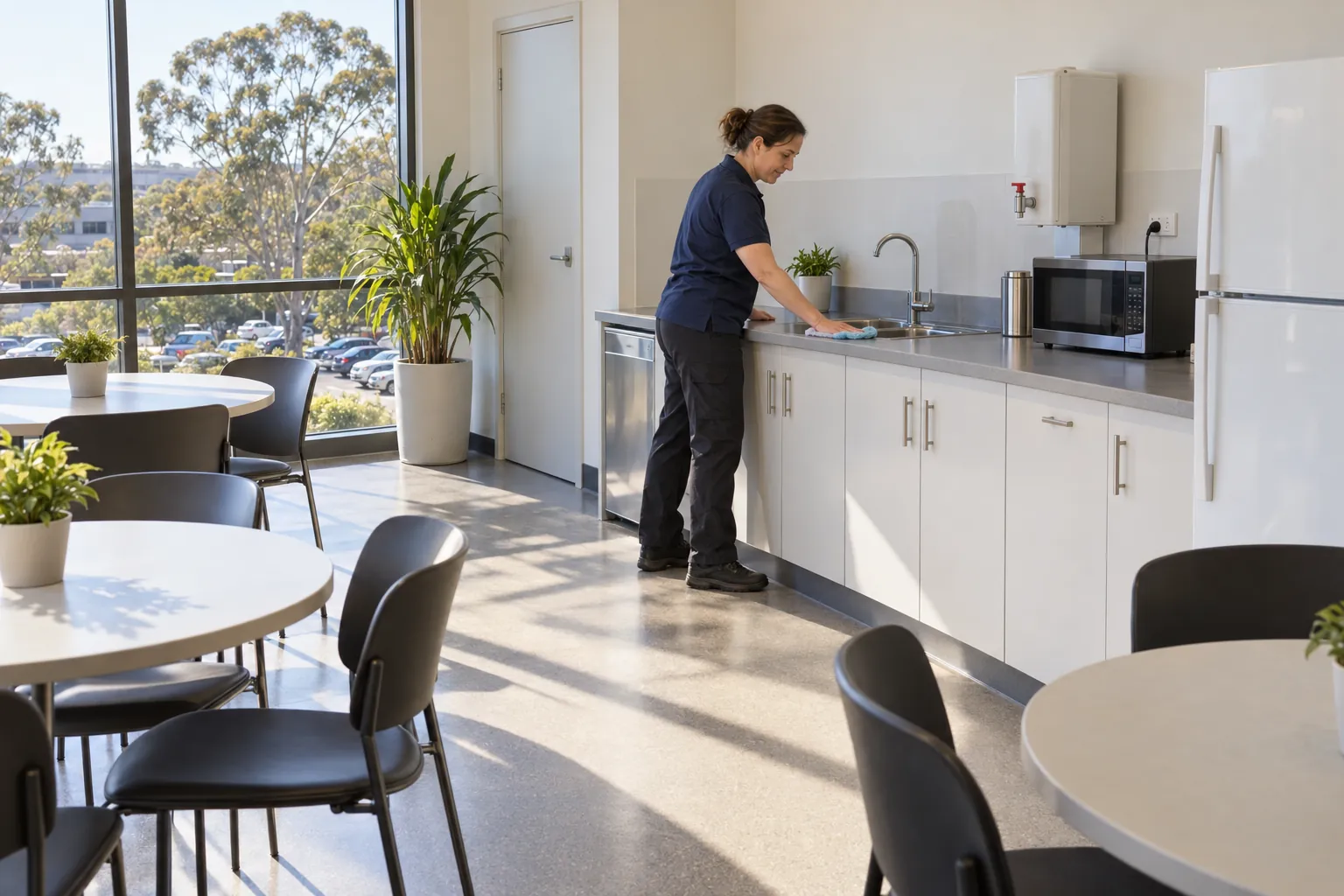
Australian work health and safety law requires them to be adequate, clean, safe, accessible and in good working order, and the codes of practice say what adequate usually means. This guide covers the duty, what counts as an amenity, the numbers the codes give, who provides and looks after amenities in a shared building, how often to clean and check them, and what a record worth keeping shows.
01
What workplace amenities are, and the duty behind them
Amenities is the everyday word, and was the old name of the Victorian code, but the legislation says facilities. Under the model work health and safety laws, adopted in their own Acts by every state and territory except Victoria, section 19(3)(e) of the Work Health and Safety Act 2011 (Qld) makes part of the primary duty of a person conducting a business or undertaking (PCBU) "the provision of adequate facilities for the welfare at work of workers in carrying out work for the business or undertaking, including ensuring access to those facilities". Queensland keeps the model numbering, as the other adopting jurisdictions do.
Regulation 41, "Duty to provide and maintain adequate and accessible facilities", turns that into a specific duty. In Queensland's Work Health and Safety Regulation 2011 (the version current from 29 March 2026), a PCBU at a workplace "must ensure, so far as is reasonably practicable, the provision of adequate facilities for workers, including toilets, drinking water, washing facilities and eating facilities". Subregulation (2) is the part that makes amenities a routine rather than a fit-out: the facilities must be "maintained so as to be (a) in good working order; and (b) clean, safe and accessible". Subregulations (1) and (2) each carry a maximum penalty of 60 penalty units. The Commonwealth's own Work Health and Safety Regulations 2011, which apply to Commonwealth workplaces, contain a regulation 41 of the same name.
Regulation 41(3) says what adequate depends on, including "the nature of the work", "the size, location and nature of the workplace" and "the number and composition of the workers". That is why no single list fits every building, and why the codes of practice matter.
The approved code of practice Managing the work environment and facilities (the SafeWork NSW edition of August 2019, based on the Safe Work Australia model code dated May 2018) gives the detail in section 3. Codes of practice "are admissible in court proceedings", and courts "may rely on the code in determining what is reasonably practicable". Safe Work Australia has since published revised editions of the model code, dated November 2024 and December 2025, and each jurisdiction approves its own edition, so check which applies where your building is.
02
What counts as a workplace amenity
The Victorian code lists them in one sentence: "Workplace facilities include toilets, shelter, seating, dining rooms, change rooms, drinking water, personal storage and washing facilities. Facilities need to be kept clean and hygienic and be cleaned regularly." In an ordinary commercial building, that means:
- Toilets, accessible to workers with a disability, with toilet paper, hand washing, hygienic hand drying, rubbish bins and a means of disposing of sanitary items.
- Hand washing: basins with hot and cold water or a mixer, soap, and paper towels or hand dryers, near the toilets and reachable from work and eating areas.
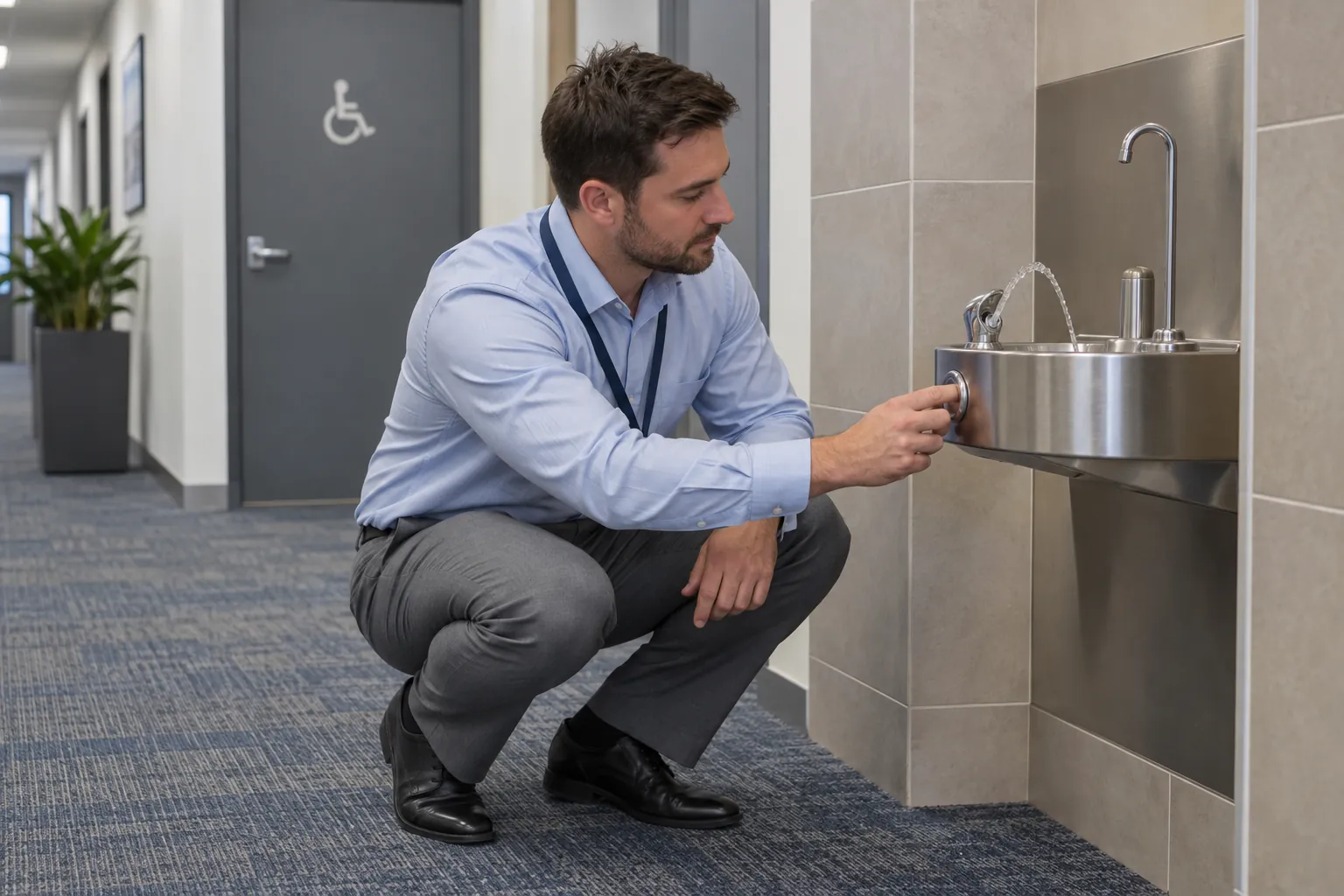
- Drinking water: clean, free of charge and available at all times, from an outlet separate from the toilets and wash basins.
- Eating facilities: a lunchroom, staff kitchen or kitchenette with a sink, a way of boiling water, a microwave, a refrigerator, clean storage and bins.
- Personal storage: somewhere secure for a bag, medication or hygiene supplies, separate from contaminated protective clothing.
- Change rooms and showers, where the work means people change into uniforms or protective clothing, or where it is dirty, hot or hazardous.
- Seating and shelter: seats for work that allows sitting from time to time, and shelter for outdoor workers to eat, rest and escape bad weather.
The Victorian code adds needs raised in consultation, such as "lactation facilities" and "prayer or religious rooms", and warns that being unable to use a safe and secure toilet, shower or changing facility "may also constitute a psychosocial hazard".
Office fit-outs often use the word more widely, for spaces designed around the employee experience, such as cafés, gyms, wellness rooms and collaboration zones. Those are choices an employer may make; the facilities above are the ones the law requires, and they come first.
03
How many, and where: the numbers the codes give
The codes give numbers as guidance, using should. For new buildings and major renovations, the National Construction Code sets the number of sanitary facilities, and both codes point to it. The Victorian code sets out "what WorkSafe considers to be the minimum number of toilets and washbasins needed for employees in a workplace, so far as is reasonably practicable", and, as noted above, a court may rely on a code in deciding what is reasonably practicable. The NSW code's figures are these:
- Toilets: at least one closet pan per 20 male workers and one urinal per 25, and one closet pan per 15 female workers. One unisex toilet may do where "the total number of people who normally work at the workplace is 10 or fewer" and "there are two or fewer workers of one gender". The ratios are a minimum: "There should be enough toilets available for the number of workers who may need to use them at the same time."
- Where toilets go: "In multistorey buildings, toilets should be located on at least every second floor."
- Hand basins: "one wash basin for every 30 male workers and one for every 30 female workers, or part thereof", with more where work involves infectious substances or other contaminants.
- Drinking water: "at or below 24 degrees Celsius", supplied "so that workers do not drink directly from a shared container".
- Eating areas: a separate eating area if "10 or more workers usually eat at the workplace at the same time", with "1 m2 of clear space for each person likely to use the area at any one time".
The Victorian code's Appendix D keeps the same pan ratios for buildings other than schools and adds "at least one all genders toilet in every workplace for every 50 employees, so far as is reasonably practicable", on top of an accessible toilet. Where only one toilet is provided for ten or fewer people, "this needs to be a fully accessible toilet". It asks for one drinking point "for every 40 employees or part thereof", and, where reasonably practicable, toilets for employees separate from those for visitors, clients and the public.
Numbers are the start, not the finish. A building that meets the ratios on paper still fails if a floor's toilets are locked for a week awaiting a plumber, or the only lunchroom is shut when a shift ends. The NSW code says facilities already close to the workplace can be relied on only if workers get breaks to use them, they are within a reasonable distance of the work area, "workers on different shifts have similar access", and "the means of access is safe at all times".
04
Who provides and looks after amenities in a shared building
In a single-occupier building, the PCBU provides the amenities and its own cleaning and maintenance keep them up. Most commercial buildings are not like that: a tenant's staff use toilets on a common floor and a kitchenette inside the tenancy, the landlord or managing agent contracts the cleaning, and the plumbing belongs to the building.
The law expects the duty holders to sort this out between them. Under section 20(2) of the WHS Act, the person with management or control of a workplace must ensure, so far as is reasonably practicable, that the workplace is without risks to health and safety. Section 46 requires everyone with a duty in relation to the same matter to "consult, cooperate and coordinate activities" with each other. The NSW code gives the example: a tenant PCBU "will share responsibility for providing a safe physical work environment and facilities with the property manager or building owner", and should check that arrangements are in place for "the proper maintenance of ... facilities such as toilets".
Workers have a say too. Section 49(c) requires consultation "when making decisions about the adequacy of facilities for the welfare of workers", and the NSW code adds that this covers monitoring "access, cleaning and maintenance of the facilities". Where there is a health and safety representative, the consultation must involve them.
In practice, a written split of responsibilities avoids most arguments:
- The building owner, managing agent or owners corporation: common-area toilets and showers, plumbing, hot water, drinking fountains and the common-property cleaning contract, often run by the strata manager or building manager.
- The tenant: its own kitchenette, lunchroom, lockers and any toilets inside the tenancy, and consultation with its workers.
- The cleaning contractor: the scheduled cleans, consumables and the reporting of faults it finds.
- The maintenance contractor or plumber: repairs, with a response time for a blocked or broken toilet.
Contract cleaners and security officers are workers too, usually on someone else's premises. The NSW code says that where work is done away from base, as by gardeners, bus drivers or couriers, workers "must have access to other toilets, for example public toilets or toilets at clients' premises", and "information should be provided to workers on where the toilets are located". The same reasoning applies to contract cleaners and security officers on a client's premises. A cleaning or security company should agree with each client which toilets, kitchen and storage its staff may use, especially at night when the tenant's areas are locked.
05
Keeping amenities clean and working: how often, and what to check
Neither code sets one frequency for everything. Section 1.3 of the NSW code says facilities "should be cleaned regularly taking into account the type of work performed, the likelihood of contamination, the number of workers using them, including during shiftwork, and the type of facility". The Victorian code is more direct: "Cleaning may be needed at each shift change or daily, but can be needed more often depending on the type or nature of the work", and the schedule "needs to account for the hygienic maintenance of facilities in high-use areas, like dining areas, toilets, urinals, hand washing facilities and showers". A few frequencies are given outright:
- eating area bins "should be emptied at least daily" (NSW), and in Victoria dining facilities "need to be cleaned regularly, generally at least daily";
- consumables, "including soap and toilet paper, should be replenished regularly" (NSW);
- broken or damaged fittings, including plumbing, "should be replaced or repaired promptly" (NSW), and in Victoria "Spills, blockages and waste should be dealt with quickly";
- where drinking fountains are provided, "these and the filters should be regularly tested, cleaned, changed and maintained" (Victoria).
Between full cleans, a busy building needs a shorter check at each amenity: toilets and basins clean and unblocked, soap, paper and towels stocked, sanitary bins not overfull, hand dryers working, floors dry, the lunchroom sink and benches clean, drinking water running cold. The toilet cleaning checklist covers the clean itself; this check is whether the amenity is usable now, timed around use, such as after the lunch rush and before a night shift.
The Victorian code also says when to review the provision as a whole, including when "an HSR asks for a review", when "more employees are brought on", when "a complaint has been lodged about the adequacy of facilities", and after an incident involving them. A record of complaints and repeat faults shows when a review is due.
06
Where the amenities record fails, and what SiteClara does about it
Amenities records tend to fail in the same few ways. The sheet on the back of the toilet door is initialled for the whole day at 7 am, or not at all after lunch. The out-of-order sign stays on a cubicle for a fortnight because the fault was mentioned to whoever was passing and nobody told the managing agent. When a health and safety representative, a client or an inspector asks, there is nothing to show that the facilities were kept clean and in good working order.
SiteClara helps with the routine checks and the reports between them. A printed QR poster, with an optional NFC tag behind it, sits at each location where checks are scheduled, such as a toilet block, a shower room, a lunchroom or a kitchenette. Staff scan or tap on their own phone, with no app to install, see the checks due there, and mark each one done or explain what stopped them. They can also report a problem at that location, such as a blocked toilet, an empty soap dispenser or a broken hand dryer, with a photo when one helps. The report carries the location, the time and the named person, and goes onto the team's list of open jobs until someone closes it.
The supervisor sees what is due, done and missed, and the open jobs by building and floor. Each day they add a note and approve a report that goes to nominated management or client contacts the next morning: what was checked, reported and completed, and what is still open.
07
Questions people ask
What are examples of staff amenities?
WorkSafe Victoria's Compliance code: Workplace facilities and the working environment lists them: "toilets, shelter, seating, dining rooms, change rooms, drinking water, personal storage and washing facilities". It adds that consulting staff may show other needs, such as "lactation facilities with a private, comfortable space to breastfeed or express breastmilk" and "prayer or religious rooms".
What are the basic amenities a workplace must provide?
Regulation 41(1) of the model regulations, as in Queensland's Work Health and Safety Regulation 2011, names four: a PCBU must ensure, so far as is reasonably practicable, "the provision of adequate facilities for workers, including toilets, drinking water, washing facilities and eating facilities". The word including makes the list a floor, not a ceiling: change rooms, showers, lockers, seating and shelter follow where the work calls for them.
What are some examples of office amenities?
Appendix C of the code of practice Managing the work environment and facilities works through a three-storey office in a central business district with 50 female and 20 male workers, some with disabilities. Its plan has a toilet block on the second floor, reached by lift, with one toilet and a urinal for men, four toilets for women and a unisex toilet for workers with disabilities, hand basins beside the toilets, a ground-floor eating area with a kitchen and seating for up to 20 at a time, kitchenettes on the second and third floors for boiling water and washing up, drinking water and refrigerators in the kitchen and kitchenettes, a fully adjustable chair for everyone, and a lockable drawer or locker for personal belongings. Change rooms are "not required".
08
Where to read more, and a list to take away
Start with section 19(3)(e) of the Act and regulation 41 in your own state's or territory's version, such as the Work Health and Safety Act 2011 (Qld) and Queensland's Work Health and Safety Regulation 2011, or the Commonwealth Work Health and Safety Regulations 2011 for Commonwealth workplaces.
Then read the code of practice Managing the work environment and facilities, sections 1.3 and 3, and its Appendix B checklist. In Victoria, read the Occupational Health and Safety Act 2004 with WorkSafe Victoria's Compliance code: Workplace facilities and the working environment, whose Appendix D gives the toilet and basin numbers and Appendix E a planning checklist.
Before you next walk the building, check that:
- the toilets, basins, drinking water and eating areas meet the numbers in your jurisdiction's code for the people who use them at the same time, not only in total;
- workers on every shift, including contract cleaners and security officers at night, know which amenities they may use and can reach them;
- it is written down who cleans, restocks and repairs each amenity, and who the tenant calls when one is out of order;
- cleaning frequencies follow use, with lunchrooms and bins at least daily and busy toilets checked between cleans;
- faults are reported with the location and time, and followed up until fixed;
- checks are recorded at the time and place, by name, with what was found and what was missed;
- complaints and repeat faults trigger a review of the provision, with workers and any HSR consulted;
- the procedure matches your jurisdiction, and Victoria's OHS Act and compliance code where the site is in Victoria.
Sources
Every document this guide quotes or links to, in the order it first cites them.
- Work Health and Safety Act 2011 (Qld) legislation.qld.gov.au
- Work Health and Safety Regulation 2011 legislation.qld.gov.au
- Work Health and Safety Regulations 2011 legislation.gov.au
- Managing the work environment and facilities safework.nsw.gov.au
- Occupational Health and Safety Act 2004 legislation.vic.gov.au
- Compliance code: Workplace facilities and the working environment worksafe.vic.gov.au
Related guides
 Premises and facilities managementWorkplace housekeeping: what WHS law asks, and a routine that holds between inspectionsWorkplace housekeeping under Australian WHS law: regulation 40, what the codes of practice ask, who keeps which areas tidy, how often, and what a good record shows.
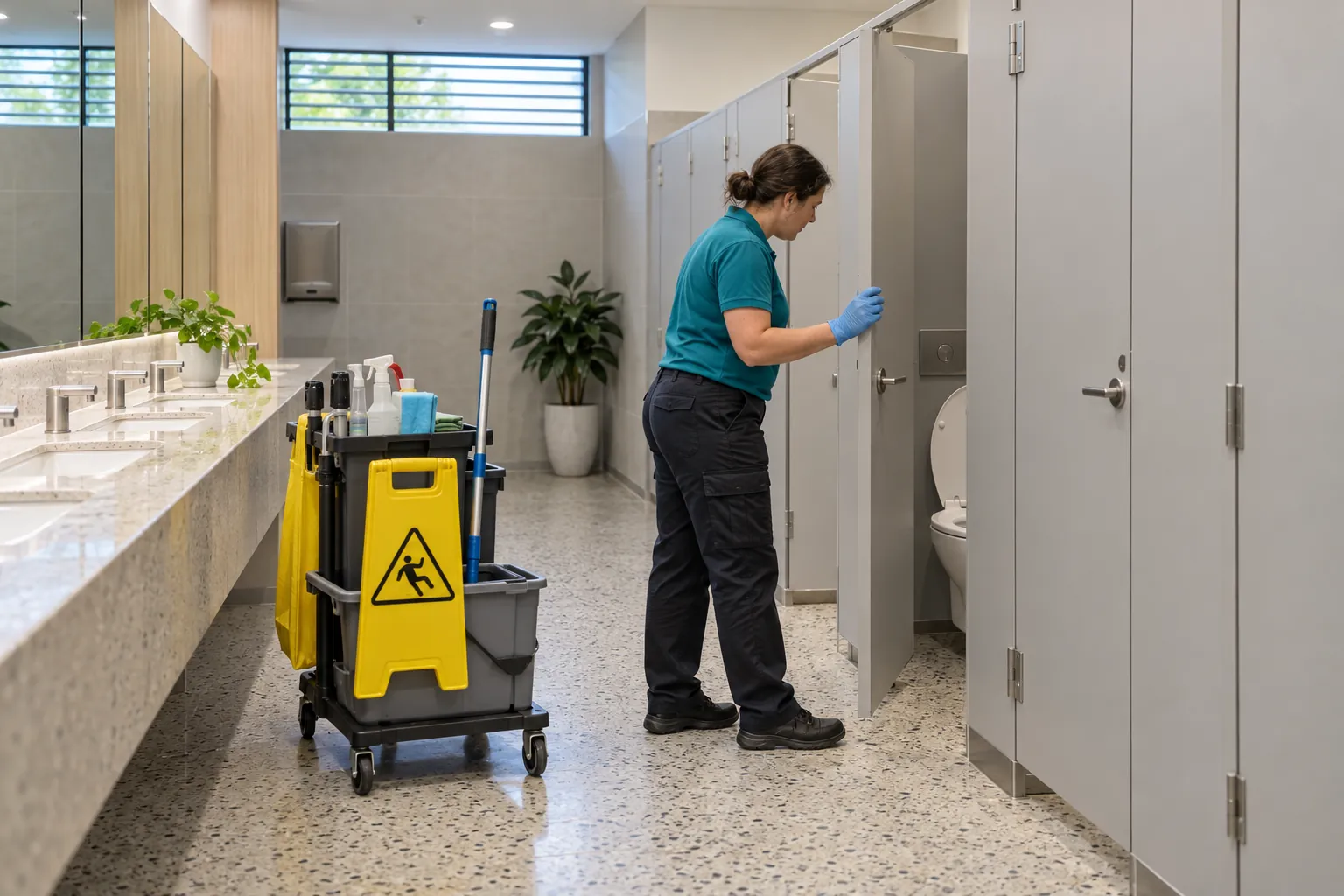 CleaningToilet cleaning checklist: what to check, how often, and how to make the record believableWhat a toilet cleaning checklist should cover in Australian workplaces, how often to check, the WHS and OHS duties behind it, and how to make the record believable.
 CleaningEnd of trip facilities: keeping showers, lockers and bike rooms clean and workingWhat end of trip facilities include, what WHS and planning rules say, how often to clean and check showers, lockers and bike rooms, and who looks after what.
 Premises and facilities managementWorkplace inspection checklist: what WHS law asks, what to walk, and what to do nextWorkplace inspections under Australian WHS law: the duties behind them, what the checklist covers, how often, recording findings, and HSRs' right to inspect.