Premises and facilities management
Elevator maintenance in Canada: the owner's duties, the log book and inspections
Elevator maintenance in Canada is a legal duty of the building owner, carried out by a contractor registered or licensed with the provincial safety authority to a written maintenance control program (MCP) under CSA B44, the Safety Code for Elevators and Escalators, and in Ontario and British Columbia the interval between maintenance visits must not exceed three months.
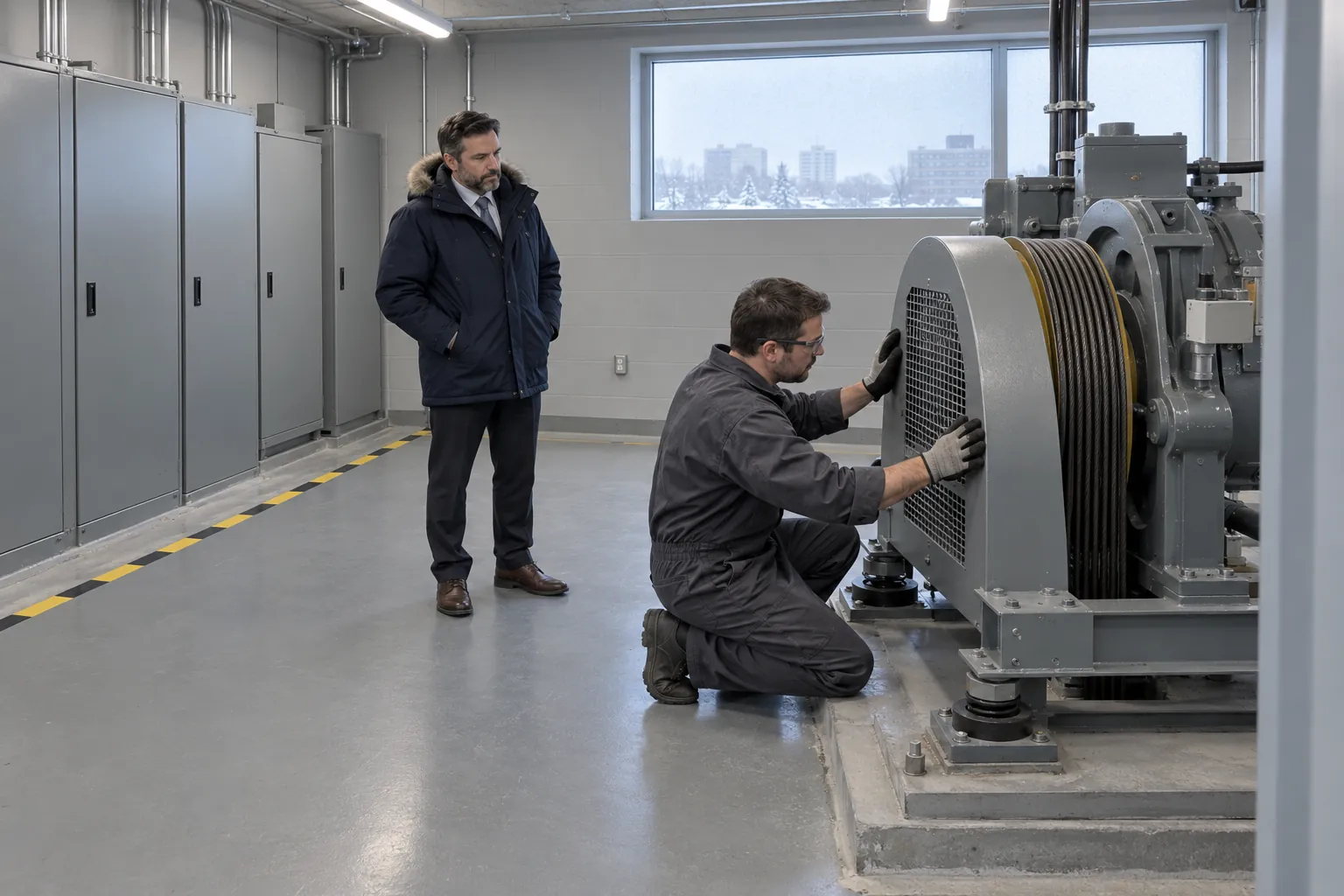
The work is recorded in a log book kept with the elevator, which the provincial inspector reads. The owner does not do the maintenance, but is answerable for the contract, the access, the keys, the licence and what happens when the elevator stops. This guide covers the rules in Ontario and British Columbia, what the MCP and the log book hold, how often elevators are serviced and inspected, and what building staff should record between visits.
01
Who is responsible for elevator maintenance
Elevators are regulated by the provinces, each adopting the elevator code, ASME A17.1/CSA B44, with its own amendments.
In Ontario, elevating devices are regulated under the Technical Standards and Safety Act, 2000 and O. Reg. 209/01 (Elevating Devices), administered by the Technical Standards and Safety Authority (TSSA). Section 32 (1) is the core rule: "An owner of an elevating device shall ensure that the elevating device is not used or operated unless it is maintained by a registered contractor in accordance with the requirements of this section." Maintenance includes regular inspection and examination of all parts and functions, cleaning, lubricating and adjusting, and repairing or replacing worn, defective or broken parts (section 32 (3)). The technical rules are in TSSA's Elevating Devices Code Adoption Document Amendment 295/22r1 (1 May 2024), which adopts ASME A17.1-2019/CSA B44-19 with Ontario changes; its maintenance section, Section 8.6, took effect on 1 January 2023.
In British Columbia, the Elevating Devices Safety Regulation (B.C. Reg. 101/2004), administered by Technical Safety BC, says the same in other words: "An owner must engage a licensed elevating device contractor to maintain a program of mandatory maintenance for the elevating device to ensure its safe working condition" (section 21 (2)), and must ensure the device is operated in accordance with the regulation "and the manufacturer's specifications" (section 21 (1)).
02
The maintenance control program (MCP), and how often elevators are serviced
The MCP is the written plan for one particular elevator. TSSA's code adoption document amends CSA B44 clause 8.6.1.2.1: "A written Maintenance Control Program (MCP) shall be in place to maintain the equipment in compliance with the requirements of Section 8.6. The MCP shall specify examinations, tests, cleaning, lubrication, and adjustments to applicable components at regular intervals." Manitoba's ITS 26-005 adds that it "is developed and provided by the elevator contractor responsible for servicing the equipment" and kept in the device's log book with the maintenance records. In Ontario, where an MCP has been put in place on an existing device, a copy must be supplied to the owner (clause 3.3.3).
Section 32 (2) of O. Reg. 209/01 says the intervals are set "by the owner or a contractor on behalf of the owner", from the device's quality and age, the maintenance specifications and how often and how it is used. The code adoption document bases them on the equipment's age, condition and accumulated wear, its design and inherent quality, its usage, environmental conditions, improved technology and the manufacturer's recommendations, and then sets limits:
- Every elevator, at least every three months: "the maintenance interval for an elevating device shall not exceed three months".
- Door systems: at intervals of no more than six months.
- Suspension ropes or belts: inspected at least every 12 months.
- Hydraulic elevators with buried cylinders or buried piping: oil loss monitoring at least every three months, with its own log kept in the machine room for at least five years from the last entry.
- Periodic testing: "category 1 tests are performed annually", category 3 tests every 3 years and category 5 tests every 5 years, counted from the month and year of the acceptance test. A late test does not reset the anniversary date.
British Columbia puts the floor in the regulation: "The frequency of mandatory maintenance for an elevating device is at least quarterly" (section 21 (4)), with category 1, 3 and 5 tests at one, three and five years under its schedule of code variations. Its contractor must submit an MCP compliance document to a provincial safety manager on or before requesting an acceptance inspection, changing the frequency of maintenance, or taking on a new maintenance contract for a device whose operating permit was issued on or after 30 April 2020 (section 12.1).
These are maximum intervals, not targets: an elevator in a busy commercial building, or an older, more worn one, may need routine visits more often, and its MCP should say so.
03
The elevator maintenance log: what it records and how long it is kept
In Ontario, "every owner of an elevating device and every contractor shall maintain a log book for each elevating device that they own or maintain" (section 34 (1) of O. Reg. 209/01). It is kept "for a period of at least five years from the date of the last entry" and must be "readily available at the location of the elevating device to an inspector, maintenance mechanic and other persons designated by the owner" (section 34 (2) and (3)). Safety device tests are recorded in it, and the records pass to a new owner (section 33 (6) and (7)).
For elevators, the code adoption document lists what the on-site MCP records must include (clause 8.6.1.4.1 as amended):
- the site name and address, the contractor's name and registration number, and the elevator's TSSA installation number and type;
- the date of the record, and a description of each maintenance task, its interval and its requirements;
- an indication that the task was completed, with the year and month;
- the printed name, signature and certification number of the mechanic who did it.
A task is not signed off while it is unfinished, or while a part directly affecting safety is defective. Call-back (trouble call) records "shall be maintained for a minimum of one year", and a change to a periodic test's anniversary date "shall be noted in the logbook with rationale". British Columbia's schedule requires MCP records to be viewable on site "in both hard copy and electronic format", and periodic test records to be kept "both in a log book and electronically" with all the values recorded.
The log book belongs to the elevator, not the contractor. When the maintenance contract changes hands, make sure the log book, the MCP and the test records stay on site.
04
Elevator inspection, the licence and the operating permit
Maintenance is the contractor's work; inspection is the province checking the elevator, the maintenance and the records against the code.
TSSA's elevating devices inspections page names three kinds of inspection in Ontario: an initial inspection of a new installation, to make sure it "conforms to its design registration submission and is safe for use by the public" before it is licensed, an inspection of a major or minor alteration, and periodic inspections of existing elevators.
In Ontario, an elevating device "shall be inspected by an inspector at such intervals as may be determined by the director" (section 44 (1)), and the owner pays for periodic inspections (section 44 (2)). TSSA's elevating devices inspections page says periodic inspections "are scheduled automatically by TSSA" using a risk model, and its FAQs about elevating devices inspections list the factors: past inspection results, the number of floors, the maintaining company's safety rating, the device's age and the type of building. Where a hazard is found, TSSA issues compliance orders, which can be appealed within 90 days.
An Ontario elevator also needs a licence. An initial licence expires one year after issue unless another date is specified (section 28 (2)). The owner posts it "in a conspicuous position in the load-carrying unit of the elevating device or adjacent to the elevating device" (section 30 (1)), and tells TSSA within 10 days of a change to its particulars (section 29).
In British Columbia, a safety officer inspects periodically "in accordance with the applicable codes and standards adopted" (section 14). The owner holds an operating permit, which Technical Safety BC's elevating devices operating permits page says "expire after one year"; the applicant must show that "any required mandatory maintenance program is in place" (section 9 (1)), and the permit is kept where the device is (section 10).
Inspectors read the records too: Manitoba's bulletin says the MCP is reviewed at each periodic inspection, so read the log book before the inspector does.
05
What the owner and building staff do between visits
Between the mechanic's visits, the building looks after the elevator's surroundings, and section 37 of O. Reg. 209/01 makes much of that the owner's legal duty. The owner must ensure:
- unobstructed access to and egress from the elevator;
- safe access to the machinery space "regardless of weather conditions";
- that the machinery space is locked against the public and "free of objects not required for the operation of the elevating device": the machine room is not a store room;
- that the keys are "readily available at all times" on site to an inspector, the police or the fire department;
- that a list of people to call in a breakdown, power failure or incident is on site, and those people are ready to act.
For a passenger elevator, the contractor's name, telephone number and contract expiry must be readily available, and the location of the keys posted inside the fire hose cabinet nearest the main front entrance or another conspicuous place there (section 38).
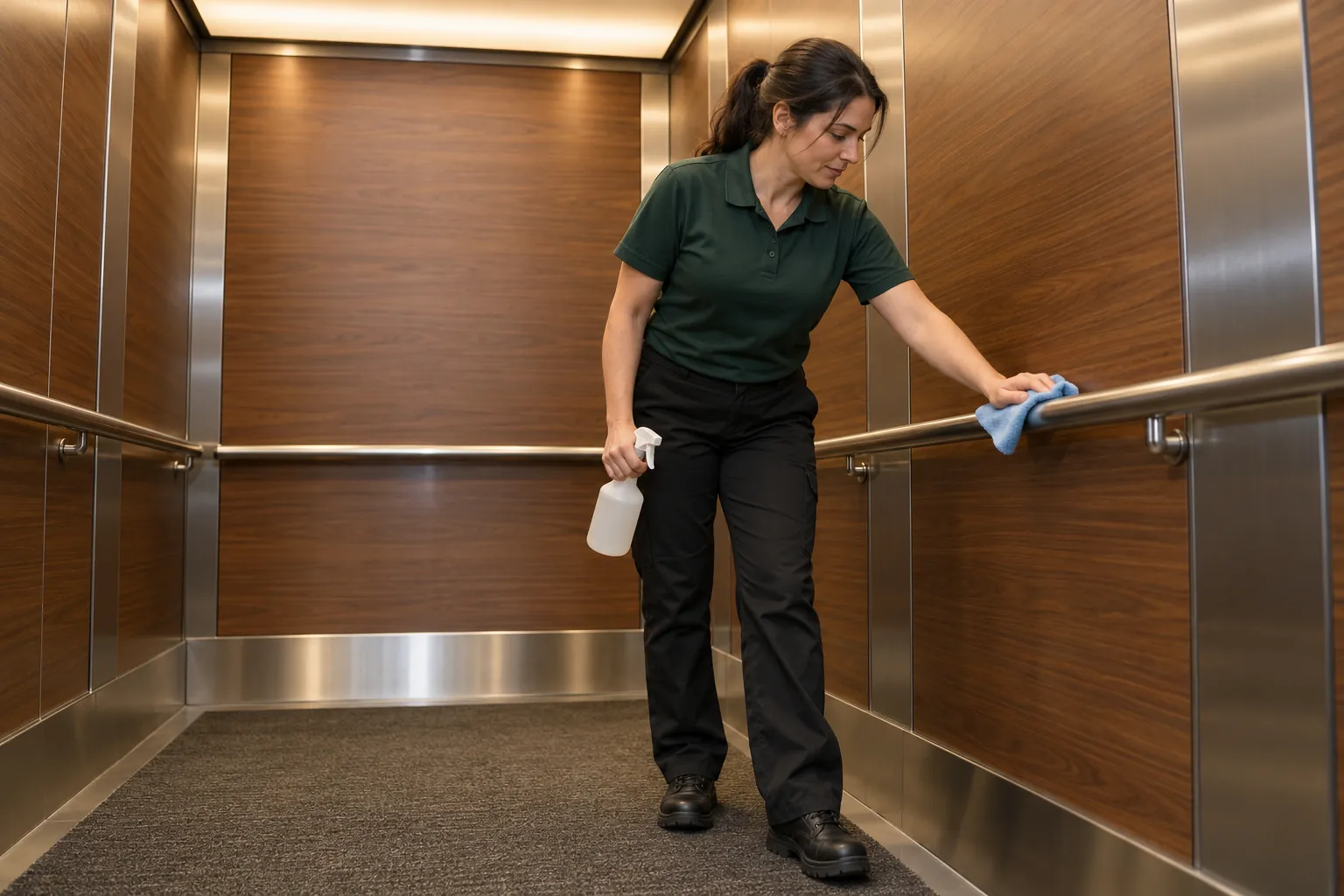
Building staff may clean, within limits: someone who is not a registered contractor may do "jobs of a housekeeping nature" in the car or the area giving access to it (section 32 (6)). Nobody but an inspector or a contractor may interfere with a device installed for the elevator's safe operation (section 10 (2)). In British Columbia, evacuation procedures done by anyone other than a certified mechanic must be developed, and trained, by a person acceptable to a provincial safety manager (section 24).
Some checks are the owner's own. In Ontario, people authorized by the owner do an escalator's daily prestart checks and stopping distance check (clause 3.21), and records of daily or weekly checks by authorized personnel carry the same details as a log entry (clause 2.3.4). TSSA's FAQs say of the Firefighter's Emergency Operation Checklist: "The owners are responsible to complete this checklist and keep a record of it."
When something goes wrong, the clocks are short. Under section 36:
- Death or injury needing a doctor: the owner notifies TSSA's director "by telephone immediately".
- Any other incident, or a fire, flood, vandalism, impact or lightning strike that may affect safe operation: the owner and contractor notify within 24 hours and report in writing within seven days.
- Afterwards: after a death or injury, a fire, flood, vandalism, impact or lightning strike, or an immediate hazard, nothing is disturbed except to make the scene safe or rescue someone, and the elevator stays out of service until the cause is found, safety is restored and an inspector permits (section 36 (7) and (8)).
In British Columbia, a device involved in an incident "must be shut down immediately" until a safety officer permits otherwise (section 20).
Ontario residential buildings and long-term care homes have one more report. An outage of "48 hours or longer" must be reported to TSSA within 30 days of the elevator returning to service, with its cause and when the repairing contractor was first contacted and first attended (section 38.1); TSSA's elevator availability page explains it.
06
Where the elevator record fails, and what SiteClara does about it
The contractor keeps the log book; the gaps are usually on the building's side. The elevator stops on a Saturday, nobody notes when the contractor was called, and the outage report comes from memory. A resident mentions bouncing doors to whoever was at the front desk. The call list still names last year's contractor, and the machine room fills with spare floor tiles.
SiteClara records work at the location. A printed QR poster, with an optional NFC tag behind it, sits where a check is scheduled, such as an elevator lobby or the machine room door. Staff scan or tap on their own phone, with no app to install, and mark the check done there, with a photo when one is asked for, for example of a clear machine room. The time, the place and the named person are recorded automatically. If something stopped the check, such as no key on site, they say so, and the reason is recorded against that check.
Anyone on the team can report a problem at a location, such as an elevator out of service, with a photo, and it stays on the team's list of jobs until someone closes it, so when it stopped and when it was back are both on record. Checks can be scheduled, such as a daily walk of the lobbies, and a missed one shows as missed. A supervisor approves a daily report that goes to nominated contacts the next morning.
07
Questions people ask
How often should elevators be serviced?
In Ontario and British Columbia, at least every three months, and more often where the elevator's maintenance control program calls for it. TSSA's Elevating Devices Code Adoption Document Amendment 295/22r1 says "the maintenance interval for an elevating device shall not exceed three months", and section 21 (4) of the Elevating Devices Safety Regulation (B.C. Reg. 101/2004) says "at least quarterly".
Who inspects elevators in Ontario?
The Technical Standards and Safety Authority (TSSA). Its elevating devices inspections page says TSSA "inspects new, existing and altered devices", and schedules periodic inspections automatically.
What does an elevator inspection consist of?
In Ontario, TSSA's elevating devices inspections page names three kinds: an initial inspection of a new installation, which checks that it "conforms to its design registration submission and is safe for use by the public" before it is licensed, an inspection of a major or minor alteration, and a periodic inspection of an existing elevator.
How often does an elevator need to be inspected?
In Ontario, as often as TSSA's risk model decides, from past inspection results, the number of floors in the building, the maintaining company's safety rating, the device's age and the type of building, according to TSSA's FAQs about elevating devices inspections.
What is an elevator maintenance log?
The on-site record of each maintenance task done on one elevator. In Ontario, TSSA's Elevating Devices Code Adoption Document Amendment 295/22r1 says it includes the site, the contractor and its registration number, the elevator's installation number, each task with its interval, the year and month it was done, and the name, signature and certification number of the mechanic, and that call-back records "shall be maintained for a minimum of one year". Section 34 of O. Reg. 209/01 keeps the log book for at least five years from the last entry.
08
Where to read more, and a list to take away
In Ontario, read sections 9, 10 and 28 to 44 of O. Reg. 209/01 (Elevating Devices) and clause 3.3 of TSSA's Elevating Devices Code Adoption Document Amendment 295/22r1. In British Columbia, read sections 9 to 24 and the schedule of B.C. Reg. 101/2004. CSA B44 itself is a paid standard from CSA Group. Elsewhere, start with your province's safety authority; Manitoba's ITS 26-005 is a clear two-page account of an MCP.
For each elevator, use this checklist to confirm that:
- a registered (Ontario) or licensed (British Columbia) contractor holds a current maintenance contract, with its name, number and expiry on site;
- the MCP is on site and the log book shows visits no more than three months apart;
- category 1 tests are in date and the next category 3 and 5 dates are known;
- trouble calls in the log book are explained, not just dated;
- the licence or operating permit is current and posted or kept as required;
- the machine room is locked, clear of storage and reachable in any weather, with keys and call list where responders will find them;
- staff know what they may clean and what they must leave to the mechanic;
- outages and incidents are recorded as they happen, with when the contractor was called and arrived.
Sources
Every document this guide quotes or links to, in the order it first cites them.
- Technical Standards and Safety Act, 2000 ontario.ca
- O. Reg. 209/01 (Elevating Devices) ontario.ca
- Elevating Devices Code Adoption Document Amendment 295/22r1 tssa.org
- Elevating Devices Safety Regulation (B.C. Reg. 101/2004) bclaws.gov.bc.ca
- ITS 26-005, Required Maintenance Control Program for Elevating Devices gov.mb.ca
- Elevating devices inspections page tssa.org
- FAQs about elevating devices inspections tssa.org
- Elevating devices operating permits page technicalsafetybc.ca
- Elevator availability page tssa.org
Related guides
 Premises and facilities managementBuilding compliance checklist: the legal picture for a Canadian buildingA building compliance checklist for Canadian commercial buildings: fire code, OHS, asbestos, elevators, boilers, accessibility and energy, who holds each duty.
 Premises and facilities managementPreventive maintenance checklist: what to include, how often, and how to show it was doneA preventive maintenance checklist for Canadian buildings: what the fire code and provincial law require, what to include, how often, and the records to keep.
 Premises and facilities managementBuilding superintendent duties: what the super does, and how to show it was doneWhat a building superintendent does in Canada: the landlord's duties a super carries out, heat and vital services, fire safety, working alone and the daily record.
 Premises and facilities managementCondo maintenance: looking after the common elements, and proving itWho maintains a condo's common elements under Ontario's Condominium Act and other provinces' laws, what the work covers, how often, and what the record should show.