Premises and facilities management
Building compliance checklist: the legal picture for a Canadian building
Building code compliance in Canada means meeting the codes your province or territory has adopted: the building code for the design, construction and renovation of a building, and the fire code, occupational health and safety law and equipment regulations once it is occupied.
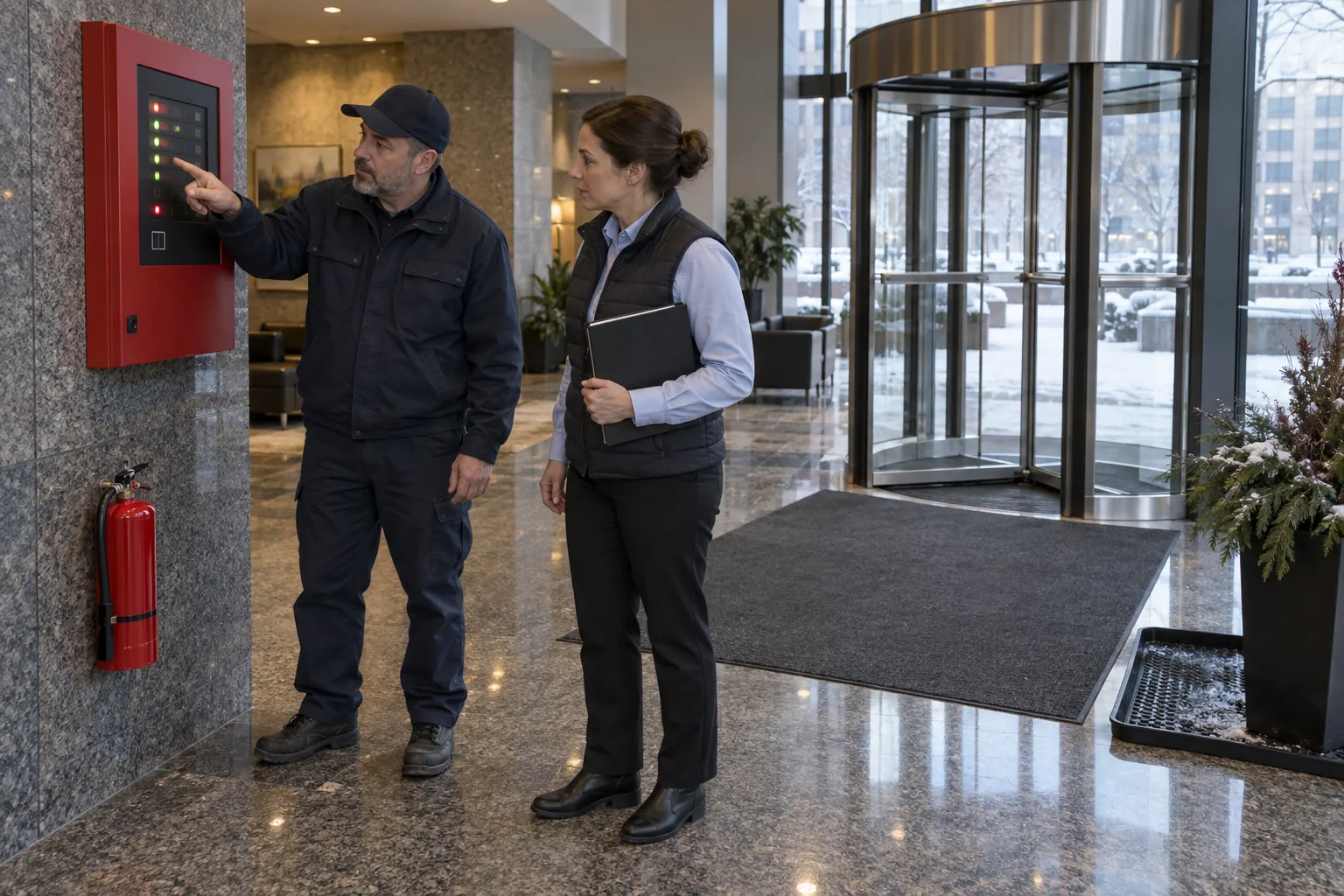
Keeping an existing building compliant means meeting several provincial rules at once: the fire code, occupational health and safety law, the asbestos regulation, the elevating devices and boiler rules, accessibility standards and, for larger buildings, energy reporting. This checklist takes Ontario as the worked example and notes where British Columbia, Alberta, Quebec and federally regulated workplaces differ. For each item it sets out who holds the duty, how often the work is done and what record should exist.
01
Building code compliance in Canada: who holds which duty
There is no single building compliance law in Canada. Each duty comes from its own statute or regulation, and almost all of them are provincial or territorial. The model codes, such as the National Fire Code of Canada 2025 published by the National Research Council, have legal force only where a province or territory adopts them, usually with amendments.
Two codes are often run together. The building code sets, in the words of the National Building Code of Canada 2020, "technical requirements for the design and construction of new buildings, as well as the alteration, change of use and demolition of existing buildings", and is enforced through a permit for each construction project; in Ontario, the province's page on Ontario's Building Code says "enforcement of the Building Code is the responsibility of municipal building officials". The fire code governs the building once it is occupied: how its fire protection systems are checked, inspected, tested and maintained. Most routine compliance work in an existing building sits under the fire code.
In Ontario, the main duty holders are:
- The owner, under the Ontario Fire Code (O. Reg. 213/07): "unless otherwise specified, the owner is responsible for carrying out the provisions of this Code". Owner means "any person, firm or corporation having control over any portion of the building or property", so a tenant, a condominium corporation or a property manager can be an owner for the parts they control.
- The employer, under the Occupational Health and Safety Act, who must maintain the equipment it provides in good condition and "take every precaution reasonable in the circumstances for the protection of a worker" (section 25).
- The owner of a workplace, under section 29, who must ensure prescribed facilities are provided and maintained and "the workplace complies with the regulations".
- The building owner for asbestos, and the owner of each elevating device, boiler or pressure vessel, under the regulations covered further down.
In a multi-tenant tower, a plaza or a condominium, the lease or declaration decides who maintains what, but it cannot move a statutory duty off the person the law names. Compliance gaps usually sit between the property manager, the tenant's facility manager and the contractors rather than inside one role.
02
The building compliance checklist at a glance
For a typical existing commercial or institutional building in Ontario, the checklist covers:
- Fire safety: a fire safety plan where required, fire drills, and the fire alarm, sprinklers and standpipes, extinguishers, emergency lighting, exit signs, emergency power, fire separations and closures.
- Fire records, kept at the building for the period the Fire Code sets.
- Asbestos: a record kept on the premises and updated every year, where asbestos is present or presumed.
- Elevating devices: a licence, a registered maintenance contractor and a log book.
- Boilers and pressure vessels: a current certificate of inspection where the regulation applies.
- Electrical work notified to the Electrical Safety Authority.
- Workplace safety: committee or representative inspections, and WHMIS labels and safety data sheets for cleaning and maintenance chemicals.
- Washrooms for workers, with a record of the two most recent cleanings.
- Accessibility: maintenance procedures for accessible elements in public spaces.
- Energy and water reporting for buildings of 50,000 square feet or more.
- Cooling towers, where there are any.
Use it as a starting point: a building with a commercial kitchen, a parkade, a pool or a daycare will have more.
The Fire Code's vocabulary is worth using on the register because it sets the level of effort. A check is "visual observation to ensure the device or system is in place and is not obviously damaged or obstructed"; an inspection is a "physical examination to determine that the device or system will apparently perform in accordance with its intended function"; a test is "the operation of a device or system" to ensure it will perform. A building operator can do most checks; the annual fire alarm inspection and test need a person with the qualifications the Code sets out.
03
Fire code compliance: the checks, inspections and tests
Part 6 of Division B of the Ontario Fire Code sets the maintenance of fire protection equipment, and Section 2.8 sets emergency planning:
- Fire safety plan: required in the buildings listed in Article 2.8.1.1., including assembly and care occupancies, residential occupancies with an occupant load over 10, offices and stores with an occupant load over 300, and any building of four storeys or more counting those below grade. It is kept in the building and "reviewed as often as necessary, but at least every 12 months". See the fire safety plan guide.
- Fire drills: for supervisory staff at least once in each 12-month period, and more often in some occupancies (Article 2.8.3.2.).
- Fire alarm: inspected and tested to CAN/ULC-S536 (Article 6.3.2.2.), with a record of whether each device, component and circuit is in proper working order; the central alarm and control facility "checked daily for indication of trouble" (Article 6.3.2.3.). See fire alarm testing.
- Sprinklers and standpipes: sprinkler water supply and system pressure checked weekly by gauge (Article 6.5.3.2.) and sprinkler heads checked at least once a year (Article 6.5.3.4.); standpipe hose stations inspected monthly (Article 6.4.2.1.). Work to NFPA 25 is deemed to satisfy the standpipe inspection and testing articles and the later sprinkler inspection, testing and maintenance subsections, but not the weekly gauge check or the yearly head check (Articles 6.4.1.6. and 6.5.1.1.). See sprinkler system inspection.
- Portable extinguishers: "inspected monthly" (Article 6.2.7.2.), maintained to NFPA 10, tagged, with a permanent maintenance record each. See the monthly fire extinguisher inspection.
- Emergency lighting and exit signs: self-contained units inspected and tested at intervals of not more than one month, with a full-duration test at not more than 12 months (Article 6.7.1.6.); battery-backed exit signs likewise. See the emergency lighting test.
- Emergency power: generators inspected, tested and maintained to CSA C282, with the written records that standard requires. See generator testing.
- Closures: door hardware adjusted "to ensure proper closing and latching", and never "obstructed, blocked, wedged open" (Subsection 2.2.3.). See fire door inspection.
- Means of egress: "maintained in good repair and free of obstructions" (Article 2.7.1.7.), with exterior stairways and fire escapes "kept free of snow and ice accumulations" (Article 2.7.1.8.), hydrants kept free of snow and ice (Article 6.6.4.2.) and fire department connections "physically unobstructed and readily accessible" (Article 6.4.3.7.).
Over all of these, Article 1.1.1.2. says a device that does not operate as intended when checked, inspected or tested "shall be repaired or replaced" if its failure would adversely affect fire or life safety. A deficiency on a contractor's report is not closed until the repair is done.
Other provinces start from the same National Fire Code, but article numbers and amendments differ: check the applicable code before copying an Ontario schedule.
04
Asbestos, elevators, boilers, electrical, accessibility and energy
- Asbestos. Under section 8 of O. Reg. 278/05, where the owner knows or ought reasonably to know that asbestos-containing material is in the building, or treats material as if it were, the owner must "prepare and keep on the premises a record" of where it is and whether it is friable, give written notice to occupiers and to contractors whose work may disturb it, train its own workers who may, and "inspect the material mentioned in the record at reasonable intervals". The record is updated "at least once in each 12-month period" and whenever new information comes to light.
- Elevators, escalators and lifts. Under O. Reg. 209/01 (Elevating Devices), no owner may operate a device "unless it is licensed"; the licence is posted in or next to it; it must be "maintained by a registered contractor"; and the owner and the contractor each keep a log book, kept at least five years from the last entry and "readily available at the location of the elevating device". The Technical Standards and Safety Authority (TSSA) administers the regime.
- Boilers and pressure vessels. Under O. Reg. 220/01, a boiler or pressure vessel within the regulation's scope may not be operated without a current certificate of inspection, and the owner must ensure it "is maintained in a safe working condition and operated safely". Many small heating boilers are outside its scope; your insurer or TSSA will confirm which. See the boiler log guide.
- Electrical work. The Electrical Safety Authority's page on finding the right contractor explains that under the Ontario Electrical Safety Code "electrical work must be reported to the Electrical Safety Authority by filing a notification of work before the work starts", which a licensed electrical contractor does for you.
- Accessibility. Section 80.44 of the Integrated Accessibility Standards, O. Reg. 191/11, requires the multi-year accessibility plan of obligated organizations, other than small organizations, to include "procedures for preventative and emergency maintenance of the accessible elements in public spaces" and for temporary disruptions. A broken automatic door opener is a compliance item, not just a maintenance request.
- Energy and water. Under O. Reg. 506/18, owners of prescribed buildings of at least 50,000 square feet report energy and water use for each calendar year "no later than July 1" of the next; a condominium corporation counts as an owner.
- Cooling towers. In Quebec, the Régie du bâtiment's page on the obligations of a cooling tower owner lists a maintenance program drawn up by members of a professional order, a register kept on site, and Legionella sampling at intervals of no more than 30 days in service. Elsewhere, check your municipality and see cooling tower requirements.

05
Workplace safety, washrooms, and where the records live
Workplace inspections. CCOHS's guidance on effective workplace inspections says inspections "help to identify and record hazards for corrective action", with each finding's location, priority, action, owner and due date. The JHSC workplace inspection guide covers each province's rules. CCOHS's WHMIS general guidance covers labels, safety data sheets and training for the products in janitorial closets and mechanical rooms.
Washrooms. Ontario's guidance on maintaining clean washroom facilities for workers explains that under O. Reg. 480/24 employers must record "the date and time of the two most recent cleanings", posted "in a conspicuous place in or near the washroom facility" or kept electronically with directions for workers. See the washroom cleaning checklist.
What the fire records must show. Under Subsection 1.1.2. of the Ontario Fire Code, "records shall be made noting what was done and the date and time it was done", kept at the building for the Chief Fire Official, and electronic records readily available on request are deemed to comply. Each record is kept "for a period of at least two years after being prepared", keeping at least the latest and the previous record of each test. See the fire safety log book.
The evidence rarely fails to exist; it fails to be found when the fire inspector, the TSSA inspector or the insurer asks. A good arrangement has:
- a compliance register: each item, its regulation, duty holder, contractor, frequency, date last done and date next due;
- reports, certificates and licences filed against the building and equipment, with each contractor's licence or registration noted;
- the records the law keeps on site, such as fire test records, the asbestos record and elevating device log books, actually there;
- every deficiency raised as a job, assigned and closed with the date of the fix;
- a quarterly check that nothing has quietly gone overdue.
06
Where the record fails, and what SiteClara does about it
The annual items are usually well recorded, because a contractor issues a report and somebody chases the renewal. The weak point is the routine in between: the daily look at the fire alarm panel, the weekly sprinkler gauge reading, the monthly extinguisher and emergency lighting checks, the exits cleared after a snowfall, the fire door found wedged open. These are what a fire inspector asks about, and what is most often initialled on a sheet in the mechanical room a week at a time, or reported to whoever was passing.
SiteClara records that routine work where it happens. A printed QR poster at each location, such as a mechanical room, an exit stairwell or a washroom, with an NFC tag behind it if you want staff to tap, lets custodial, security or building staff scan or tap on their own phone, with no app to install. They see the checks scheduled there and mark each one done, or explain what stopped them, with a photo when the check asks for one. The named person and the time are recorded as it happens. A problem found, such as a missing extinguisher or a blocked exit, goes onto the team's list of jobs until someone closes it.
The supervisor sees what was due, done and missed, records why a check was missed, and can escalate a job to the building manager. Each day the supervisor approves a report that goes to nominated management or client contacts at 8 a.m. the next morning.
07
Questions people ask
Who is responsible for the Ontario building code?
The province writes it and municipalities enforce it. Ontario's page on Ontario's Building Code says it was developed in consultation with building officials, fire prevention officials, architects, engineers, builders and the construction industry, and that "enforcement of the Building Code is the responsibility of municipal building officials". The current edition is published as the 2024 Building Code Compendium. Once a building is occupied, the Ontario Fire Code puts its duties on the owner, as set out above.
Which provinces have their own building code?
Alberta, British Columbia, Ontario and Quebec. The National Research Council's Codes Canada frequently asked questions say that "Codes Canada publications form the basis of the provincial Codes in Alberta, British Columbia, Ontario and Quebec", and that the ten provinces and three territories have jurisdiction over construction. The national codes are "model documents only and must be adopted by an authority having jurisdiction in order to come into effect".
Does Manitoba have a building code?
Yes, though Manitoba does not write its own from scratch. The National Research Council's Codes Canada frequently asked questions list Manitoba, with New Brunswick, Newfoundland and Labrador, Nova Scotia, Nunavut, the Northwest Territories, Saskatchewan and Yukon, among those where the national codes "are normally adopted by reference". Check with your municipal or provincial building official for the edition and amendments in force.
What are the building code compliance requirements?
A design complies either by following the code's own provisions or by an alternative solution that performs at least as well. The National Research Council's Codes Canada frequently asked questions say that "applying the provisions in the Codes is one option for compliance", and that an alternative solution "must achieve at least the same level of performance and satisfy the same objective(s) assigned to the associated Code provisions". Which code requirements apply depends on the edition your province or territory has adopted.
08
Where to read more, and a checklist to take away
Start with the fire code where the building is: the Ontario Fire Code, the BC Fire Code, the Alberta edition or Quebec's chapitre Bâtiment, with the National Fire Code of Canada 2025 as their model. Ontario's page on fire safety legislation and Ontario's Fire Code explains who enforces it, and the Ministry's guide to Part III of the Occupational Health and Safety Act explains the duties of employers and owners. CCOHS's OSH Answers pages are the plain-language starting point anywhere in Canada.
To check your building compliance is in order:
- you know which province's codes apply, and whether any workplace in the building is federally regulated;
- every item has a named duty holder, and the lease or declaration has been read for who does what;
- the fire safety plan, where required, has been reviewed in the last 12 months;
- each fire protection system has a date last inspected and next due, with its records on site or available electronically;
- the asbestos record is on the premises and updated in the last 12 months;
- every elevating device is licensed, and its log book is at the device;
- every report's deficiencies are tracked to a dated repair;
- the daily, weekly and monthly checks are recorded as they happen;
- someone reviews the whole register every quarter.
Sources
Every document this guide quotes or links to, in the order it first cites them.
- National Fire Code of Canada 2025 nrc.canada.ca
- National Building Code of Canada 2020 nrc.canada.ca
- Ontario's Building Code ontario.ca
- Ontario Fire Code (O. Reg. 213/07) ontario.ca
- Occupational Health and Safety Act ontario.ca
- BC Fire Code 2024 www2.gov.bc.ca
- National Fire Code – 2023 Alberta Edition alberta.ca
- Chapitre Bâtiment du Code de sécurité incluant le CNPI 2020 rbq.gouv.qc.ca
- List of federally regulated industries and workplaces canada.ca
- O. Reg. 278/05 ontario.ca
- O. Reg. 209/01 ontario.ca
- O. Reg. 220/01 ontario.ca
- Finding the right contractor esasafe.com
- O. Reg. 191/11 ontario.ca
- O. Reg. 506/18 ontario.ca
- The obligations of a cooling tower owner rbq.gouv.qc.ca
- Effective workplace inspections ccohs.ca
- WHMIS general guidance ccohs.ca
- Guidance on maintaining clean washroom facilities for workers ontario.ca
- Codes Canada frequently asked questions nrc.canada.ca
- Fire safety legislation and Ontario's Fire Code ontario.ca
- Guide to Part III of the Occupational Health and Safety Act ontario.ca
Related guides
 Fire and water checksFire log book: what to record, who keeps it and how long, under Canadian fire codesWhat a fire log book should hold under the Ontario Fire Code and the National Fire Code of Canada: the tests, who records them, how long to keep them, and the form.
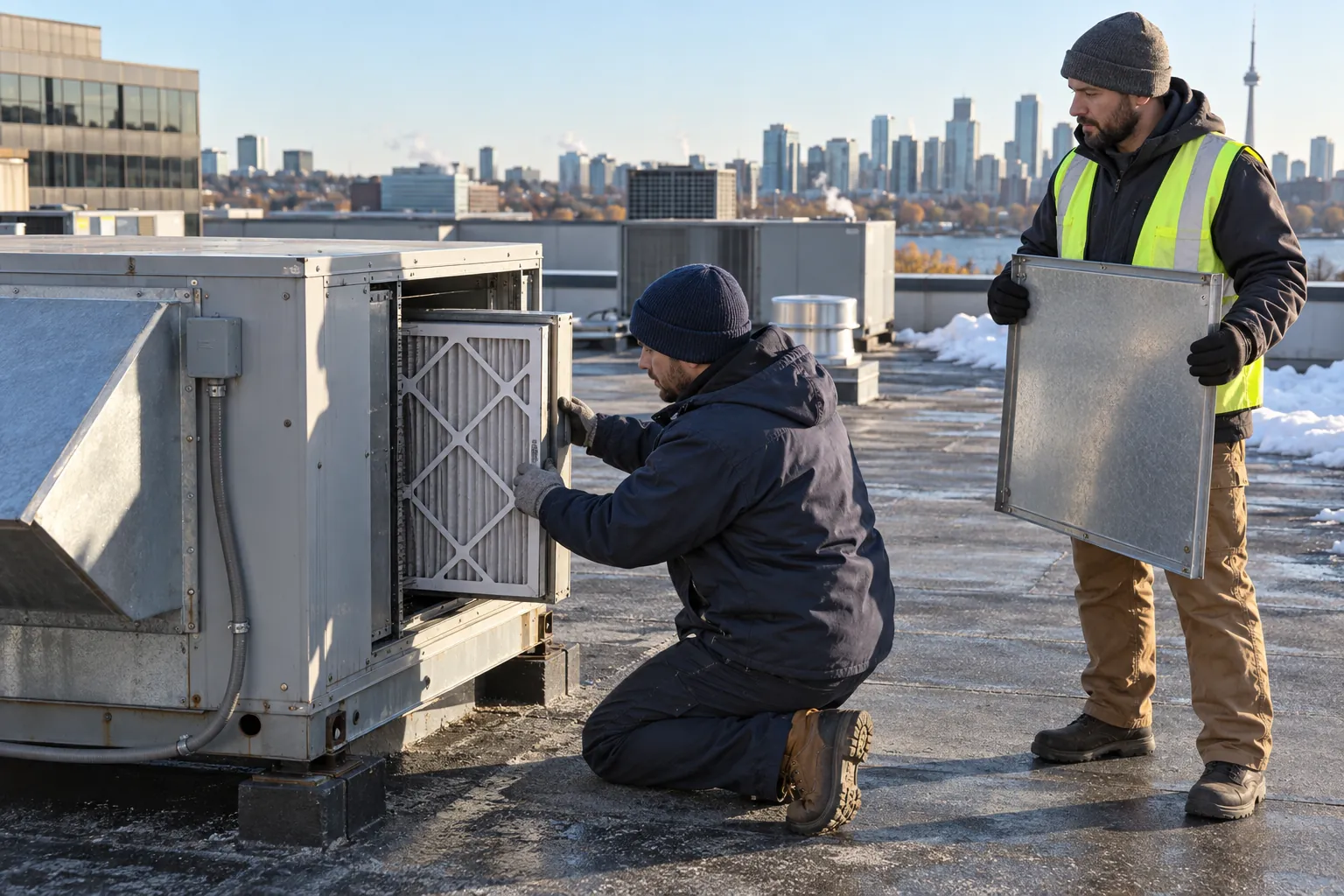 Premises and facilities managementPreventive maintenance checklist: what to include, how often, and how to show it was doneA preventive maintenance checklist for Canadian buildings: what the fire code and provincial law require, what to include, how often, and the records to keep.
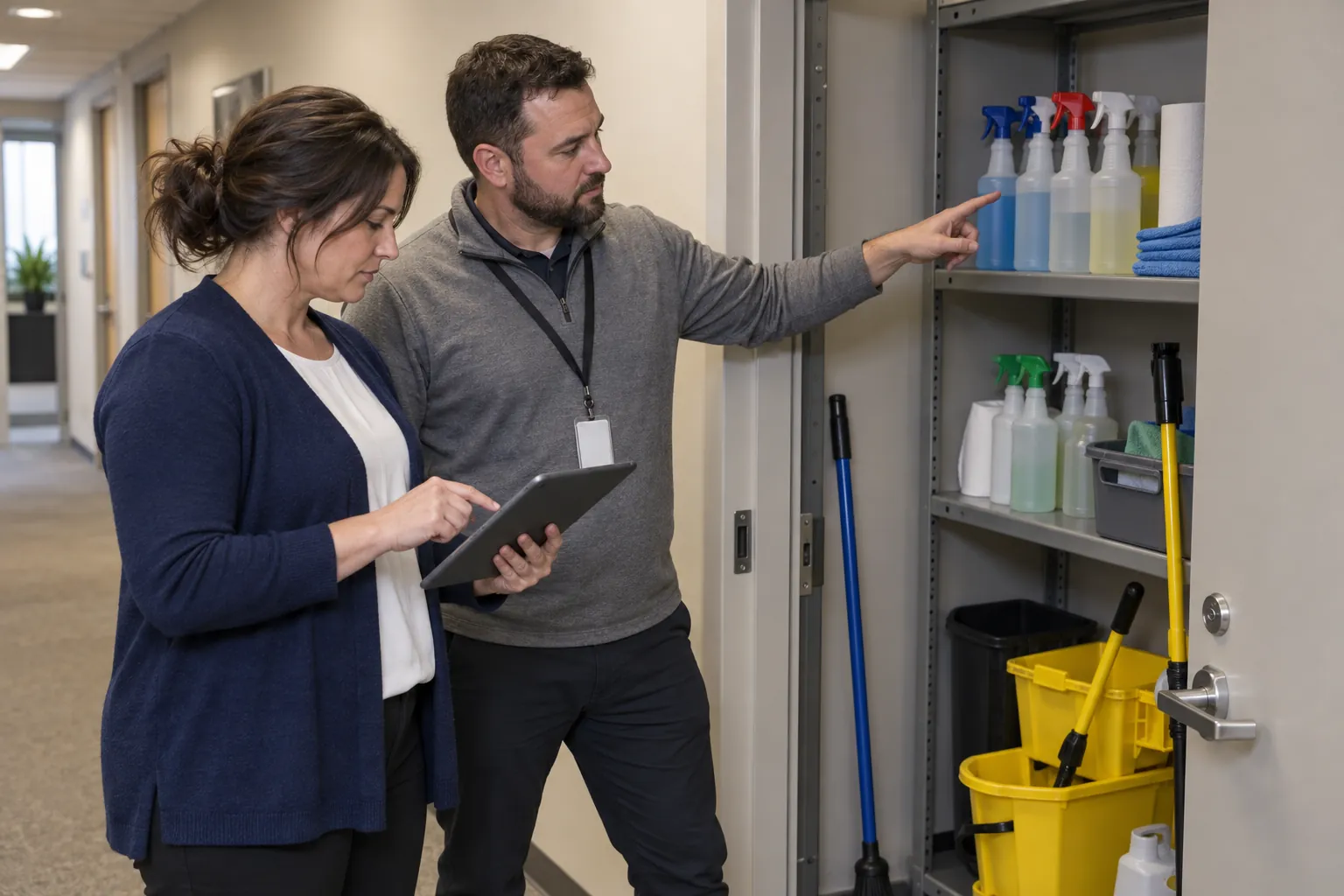 Premises and facilities managementWorkplace inspection checklist: how a JHSC inspection should workA workplace inspection checklist for Canadian JHSCs and representatives: Ontario, BC, Alberta and federal rules, what to walk, how often and what to record.
 Premises and facilities managementFacility manager duties in Canada: what the role covers, and how to show it is doneWhat a facility manager does in Canada: the owner, employer and supervisor duties under provincial OHS and fire law, contractors, and the records that show it.