Premises and facilities management
Preventive maintenance checklist: what to include, how often, and how to show it was done
A preventive maintenance checklist is a list of the routine inspections, tests and servicing tasks done on a building and its components at set intervals to prevent failures: the fire alarm inspection, the generator run, the filter change, the roof walk before the snow.
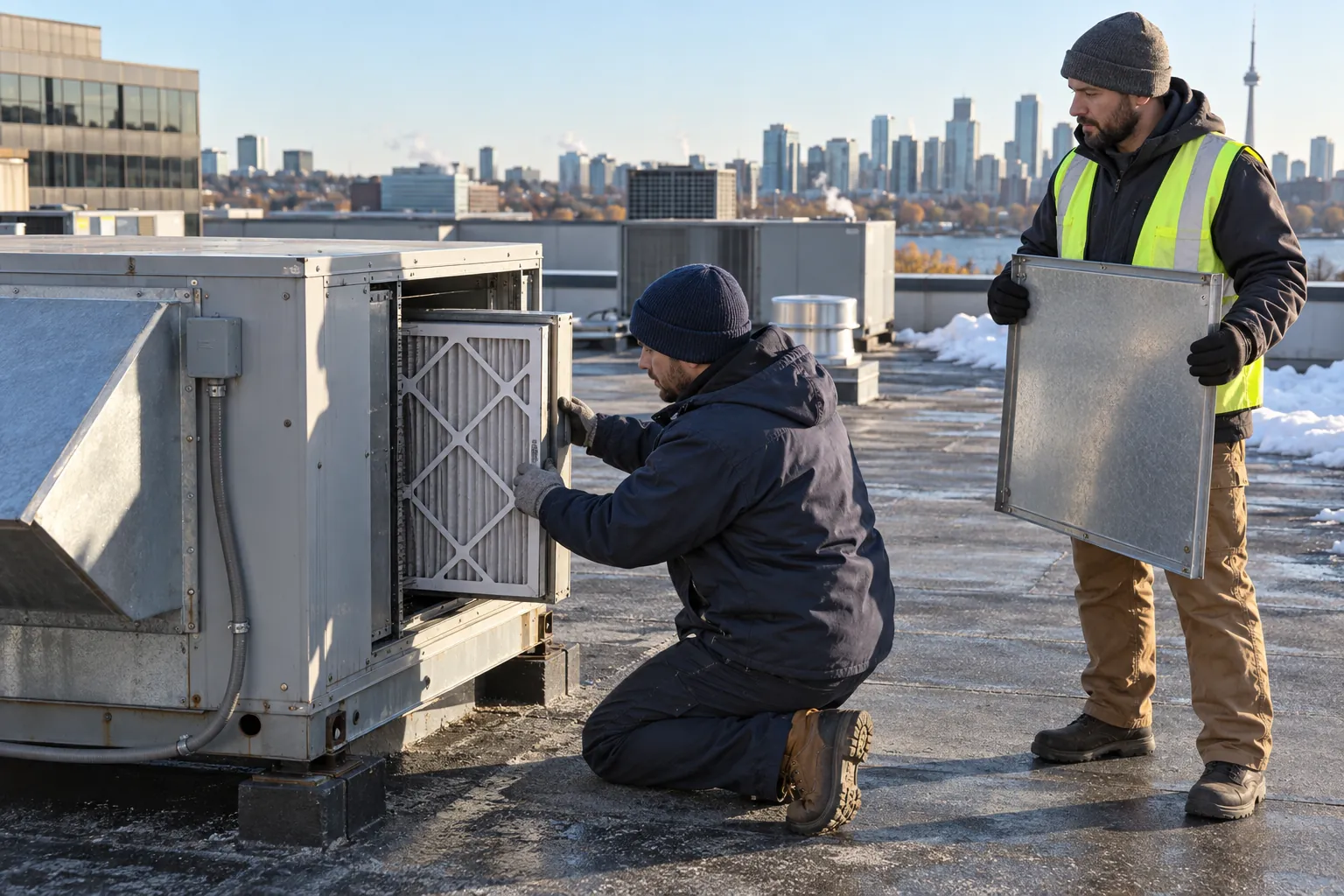
This guide explains what the National Fire Code of Canada and provincial law require, how to build a checklist from an equipment inventory, which tasks are set by code and which are a choice, and what a good record of the work looks like.
01
What preventive maintenance is, and the law behind it
Preventive maintenance, or PM, is maintenance done on a schedule to keep a building and its equipment in safe working order and to catch wear before it becomes a breakdown. It is the opposite of reactive maintenance, where work starts after something has failed. A preventive maintenance checklist is the working version of the program: each task, where it happens, how often, and who does it. Done well, it improves the reliability of the equipment and lowers the costs of emergency repairs and downtime.
The word covers two related things. Routine PM is the inspection, testing and servicing of fire protection, heating, ventilation and air conditioning (HVAC), plumbing, electrical systems, elevators and emergency power, usually issued as work orders from a computerized maintenance management system (CMMS) or a spreadsheet. Capital planning is the long-term plan for replacing roofs, boilers and windows, such as a condominium's reserve fund study. This guide is about the first.
Is preventive maintenance a legal requirement? No Canadian statute uses the phrase, but the duty to maintain runs through the law, and most of it is provincial. Each province's fire code is based on an edition of the National Fire Code of Canada, the latest being the National Fire Code of Canada 2025, which says in Division B, Article 6.1.1.2: "Fire protection installations shall be maintained in operating condition." The Ontario Fire Code, O. Reg. 213/07 adds, in Division B, Sentence 1.1.1.2.(2), that where the code sets no specific check or test for a fire safety device, "such devices shall be maintained to ensure they operate as per their design requirements."
Workplace law covers the equipment people work with. Ontario's Occupational Health and Safety Act, clause 25(1)(b), requires an employer to ensure that "the equipment, materials and protective devices provided by the employer are maintained in good condition". In British Columbia, section 4.3(2) of the Occupational Health and Safety Regulation, Part 4 requires the inspection, testing, repair and maintenance of equipment to be carried out "in accordance with the manufacturer's instructions and any standard the tool, machine or piece of equipment is required to meet", or as a professional engineer specifies, unless the regulation says otherwise.
02
What a preventive maintenance checklist covers
The checklist comes from what is in the building. In a typical Canadian office, school, retail plaza, apartment building or condominium, it includes:
- Fire protection: fire alarm, sprinklers and standpipes, fire pumps, portable extinguishers, emergency lighting and exit signs, fire doors, kitchen hood suppression.
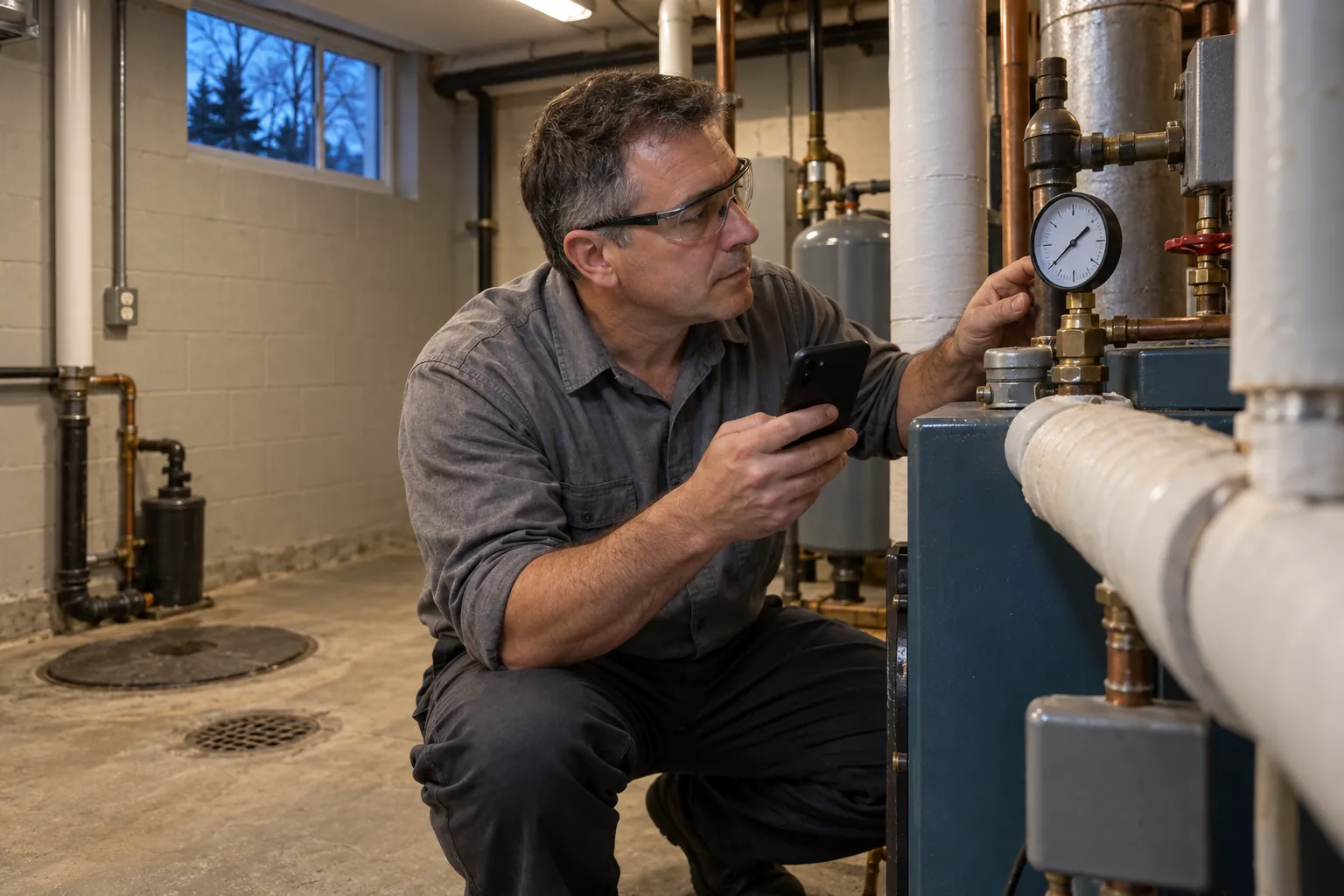
- Heating: boilers, burners and controls, pumps, unit heaters in garages and loading docks, chimneys and flues, and the start-up before the heating season.
- Ventilation and air conditioning: rooftop units, make-up air units, air handlers, filters, belts, coils, condensate drains, cooling towers where fitted.
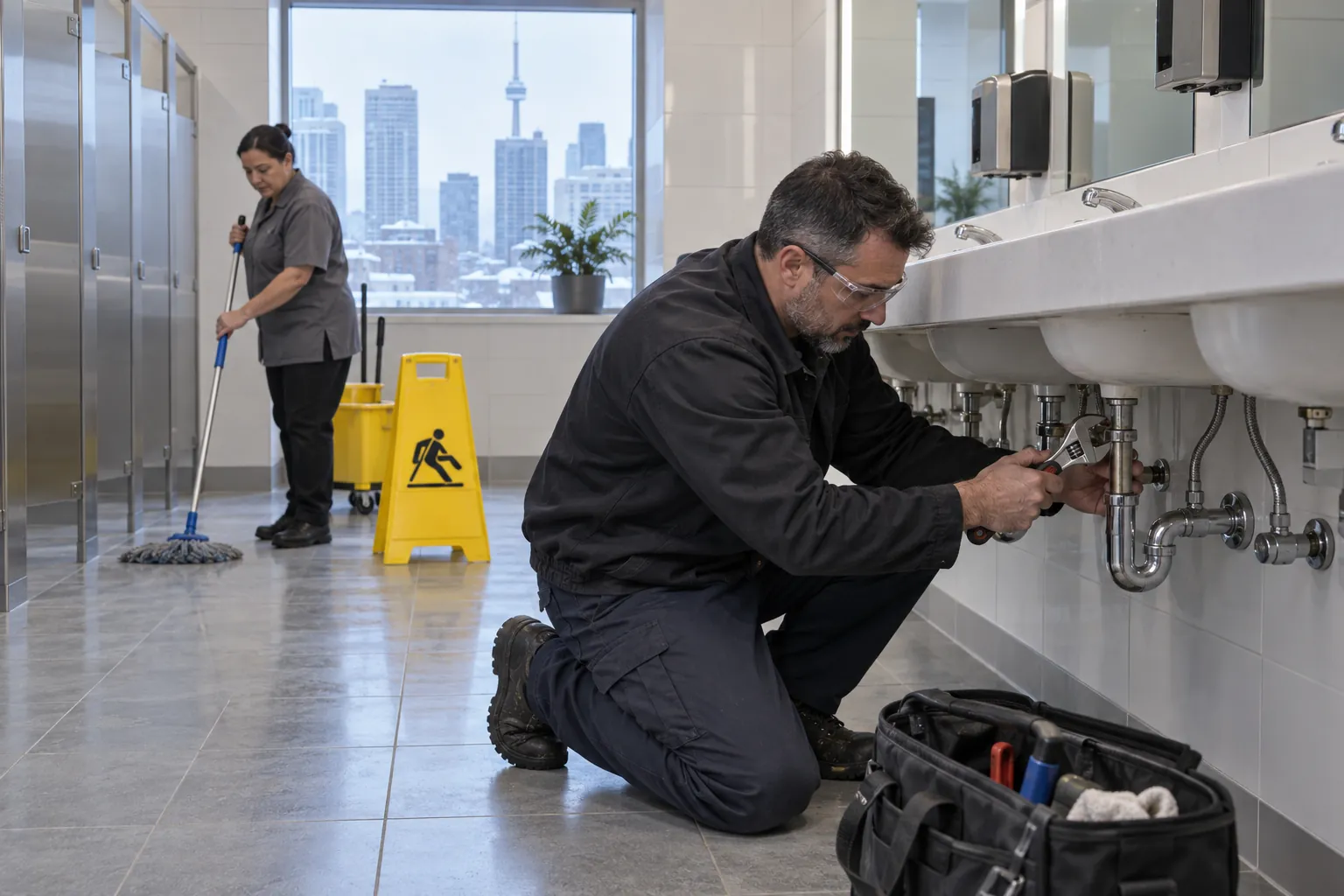
- Plumbing: domestic hot water heaters, mixing valves, sump and sewage ejector pumps, backflow preventers, floor drains.
- Electrical and emergency power: the standby generator and transfer switch, electrical rooms kept clear, panels and disconnects.
- Elevators: maintenance by the elevator contractor, plus the checks the building's own staff make, such as the car phone and lighting.
- Envelope and roof: roof membranes and drains, flashing, caulking, windows, balconies, and the parking garage slab, where road salt does the most damage.
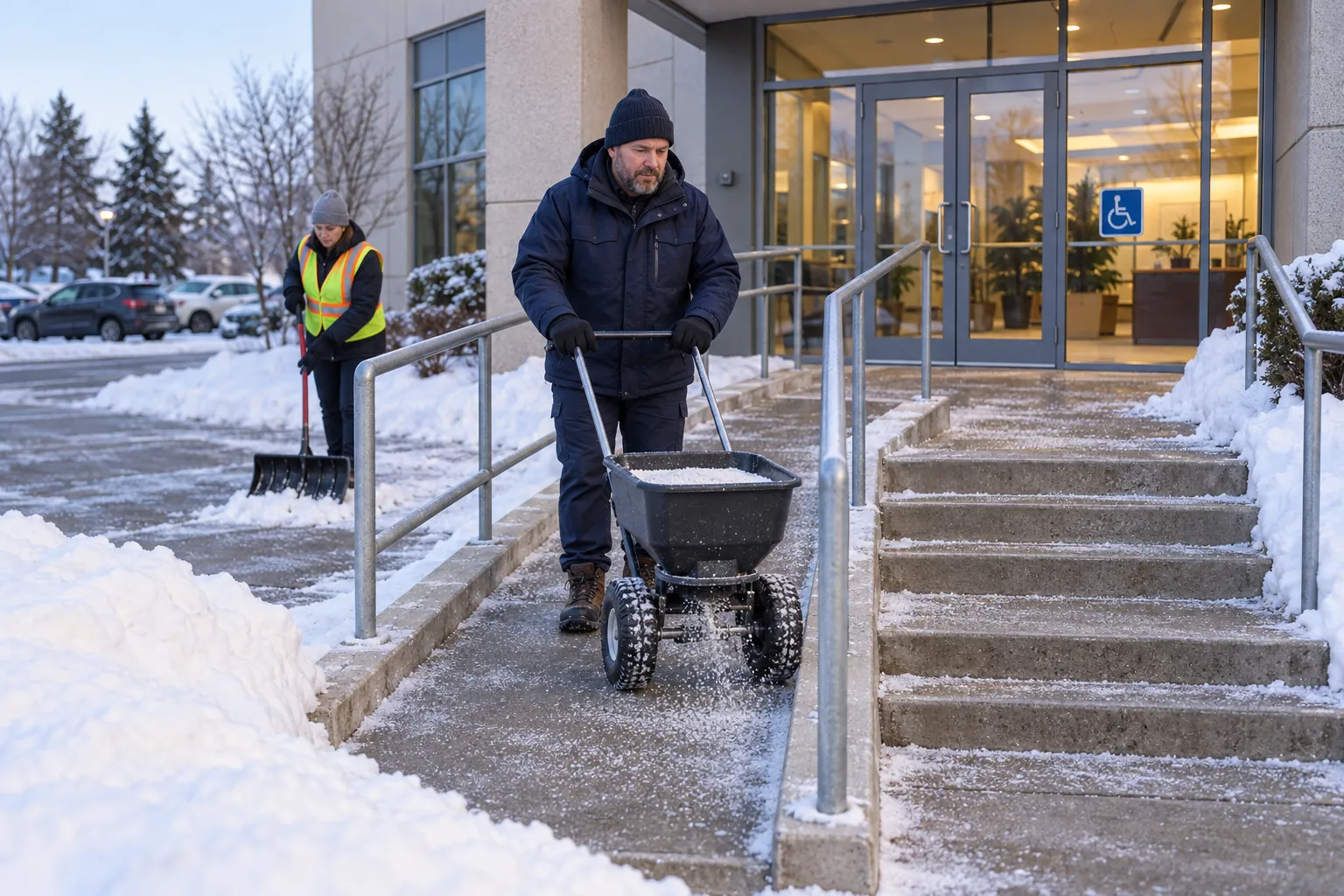
- Grounds and seasonal work: snow and ice equipment, exterior lighting, catch basins, walkways, and winterizing outdoor taps before the first frost.
That is why a good program starts with an equipment inventory rather than a downloaded template. A checklist for a heated underground garage in Winnipeg has little in common with one for a single-storey retail unit in Victoria.
03
Building the checklist, and how often each task happens
A preventive maintenance checklist answers four questions for every item: what is it, where is it, what does it need and how often. Building one is methodical work:
- Walk the building and list the equipment: every mechanical room, electrical room, roof and parking level, with make, model, serial number, location and condition. The last contractor's list is a starting point, not an inventory.
- Identify the code-driven tasks, with the frequency and the article or standard each comes from.
- Read the manufacturers' instructions. They set service intervals and warranty conditions, and in British Columbia they are part of the legal duty.
- Decide the discretionary tasks, based on how much the building's operation depends on the equipment, how it has performed, and what a failure would cost in repairs and downtime.
- Assign each task to a building operator, superintendent or contractor, and check they hold any certificate or registration the work needs.
- Put it in a calendar, grouped by building, trade and season. In Canada the weather shapes it: heating start-up in the fall, cooling start-up in the spring, the roof walk before the snow and again after the thaw.
A frequency-based layout is the easiest to follow. As an example, with the tasks the Ontario Fire Code sets marked with their article:
- Weekly: walk the mechanical and electrical rooms for leaks, noises and alarms; check hoods, ducts and filters subject to grease or other combustible deposits, "at intervals not greater than seven days" (Sentence 2.6.1.3.(1)).
- Monthly: inspect and test self-contained emergency lighting units "at intervals not greater than one month" (Article 6.7.1.6.); inspect each door in a fire separation (Sentence 2.2.3.4.(4)); inspect portable extinguishers monthly (Article 6.2.7.2.), with maintenance and testing to NFPA 10 (Article 6.2.7.1.); run the generator as CSA C282 and the manufacturer require; check sump pumps and floor drains.
- Quarterly and seasonally: HVAC service visits, filters, belts and coils, heating and cooling change-over, winterizing exterior plumbing.
- Annually: the fire alarm inspection and test; sprinkler and standpipe inspections; boiler service; chimneys, flues and flue pipes inspected "at intervals not greater than 12 months" (Sentence 2.6.1.4.(1)); and disconnect switches for mechanical air-conditioning and ventilating systems tested at the same interval "to establish that the system can be shut down in an emergency" (Sentence 2.6.1.8.(1)).
Tasks with no article beside them show a common pattern, not a legal minimum: the real frequency comes from the manufacturer, the standard and the building's own experience. Many facility managers hold the checklist in a CMMS, a digital system that issues the work orders and keeps the maintenance data; a small building can run on a spreadsheet someone owns and keeps current. Larger buildings sometimes add condition monitoring, such as temperature or vibration readings from the building automation system, so that a task is timed by the equipment's performance rather than the calendar alone.
04
Code-driven tasks and discretionary tasks
The most useful distinction is between tasks the law requires and tasks you choose; judgment belongs to the second. In Ontario, the code-driven tasks in a typical commercial or multi-residential building include:
- Fire alarm systems: inspected and tested in conformance with CAN/ULC-S536, Standard for Inspection and Testing of Fire Alarm Systems (Ontario Fire Code, Sentence 6.3.2.2.(1)).
- Sprinklers and standpipes: "maintained in operating condition" (Articles 6.4.1.2. and 6.5.1.2.), with compliance with NFPA 25 deemed to satisfy the code's own inspection and testing requirements for them, and for fire pumps and water tanks.
- Emergency power: "inspected, tested and maintained in conformance with CSA-C282", Emergency Electrical Power Supply for Buildings (Sentence 6.7.1.1.(1)), with written records kept as that standard requires (Article 6.7.1.3.). Our guide to generator testing covers this in detail.
- Commercial kitchen exhaust: exhaust and fire protection systems "shall be maintained in accordance with NFPA 96" (Article 2.6.1.13.).
- Elevators: under O. Reg. 209/01, Elevating Devices, section 32, the owner must ensure a device "is not used or operated unless it is maintained by a registered contractor", at intervals based on its quality and age, the maintenance specifications and how it is used.
- Asbestos: where asbestos-containing material is present, O. Reg. 278/05, section 8, requires the owner to inspect it "at reasonable intervals in order to determine its condition" and to update the record of it "at least once in each 12-month period".
Condominiums carry a separate duty. Under section 90 of Ontario's Condominium Act, 1998, "the corporation shall maintain the common elements and each owner shall maintain the owner's unit", and that includes "the obligation to repair after normal wear and tear". Section 94 requires periodic reserve fund studies of "the expected costs of major repair and replacement of the common elements and assets of the corporation". The PM checklist looks after the building month to month; the reserve fund study plans for the day each component wears out. Other provinces have their own condominium and strata law.
Quebec adds a duty many owners miss. Under the Code de sécurité, chapitre Bâtiment, as the Régie du bâtiment du Québec explains in Façades de bâtiments : rappel des exigences d'entretien, owners of buildings with a façade of five storeys or more above ground need a professional's report on the safety of the façades "au plus tard au 10e anniversaire de la construction du bâtiment, puis tous les 5 ans", and must keep a register up to date.
Discretionary tasks are most of the routine servicing that keeps equipment efficient: filter changes, coil cleaning, lubrication, clearing roof drains before they freeze, resealing caulking before it lets water in. None is required by name, but skipping them is how minor wear becomes a no-heat call in January or a flooded parking level.
05
How completion is recorded and checked
A preventive maintenance program is only as credible as its records. When a fire prevention officer, an insurer, a condo board or a client asks whether a task was done, the answer needs to be more than a check mark on a calendar. The Ontario Fire Code, Division B, Subsection 1.1.2, sets the pattern for fire safety work: "records shall be made noting what was done and the date and time it was done", kept at the building for at least two years with at least the latest two of each test, and "Electronic records that can be made readily available to the Chief Fire Official upon request, are deemed to comply". Elevating devices have their own log book under O. Reg. 209/01, section 34, kept "for a period of at least five years from the date of the last entry".
Where British Columbia's regulation requires an inspection and maintenance record for a piece of equipment, section 4.9 asks for an entry "signed by the person responsible for any test, inspection, modification, repair or maintenance performed on the equipment, summarizing the work done, indicating the status of the equipment". It is a good model for any maintenance record. Good evidence usually includes:
- The work order record: the equipment, its location, the task, the date and time, who did it, what they found and what they did.
- Contractors' reports: fire alarm, sprinkler, generator and elevator reports, filed against the equipment they relate to.
- Deficiencies and follow-up: the fault, the repair raised and the date it was fixed. The Ontario Fire Code, Sentence 1.1.1.2.(3), requires a fire safety device that does not operate as intended to be "repaired or replaced" where its failure would affect fire or life safety. A report full of deficiencies never closed is worse than no report.
- Completion against plan: a monthly report of tasks due, completed and overdue, by building, with the code-driven ones shown separately, so a manager can verify the program is being followed.
The Canadian Centre for Occupational Health and Safety, in its fact sheet on effective workplace inspections, notes that periodic inspections of critical equipment "are often part of preventive maintenance procedures or hazard control programs", and suggests reading earlier inspection and maintenance reports before each new one. A completion percentage alone tells you little: ask which tasks were missed, whether any were code-driven, and what happened to the deficiencies.
Review the checklist at least once a year: equipment is replaced, spaces change use, and a frequency set five years ago may now be wrong.
06
Where the maintenance record fails, and where SiteClara fits
Maintenance records are usually strongest for the contractor's visit and weakest for the frequent checks in between: the superintendent's weekly walk of the boiler room, the sump pits, the roof drains after a storm. Those are often initialled on a clipboard a week at a time, and a problem found is passed on by word of mouth.
SiteClara records those routine checks where they happen. A printed QR poster at each location, with an NFC tag behind it if you want staff to tap, lets them scan or tap on their own phone, with no app to install, see the checks scheduled there, and mark each one done or say what stopped them, such as a locked electrical room. The named person and the time are recorded as it happens, with a photo when the check asks for one. A fault, such as a sump pump alarm or a blocked roof drain, is reported there with a photo and goes onto the team's list of jobs until someone closes it.
The supervisor sees what was due, done and missed across the building, and records the reason a check was missed; a job that needs the building manager can be escalated to them to answer. Each day the supervisor reviews and approves a report that goes to nominated management or client contacts at 8 a.m. the next morning, showing what was reported, completed and still open, and how the scheduled checks went.
07
Questions people ask
What is included in preventive maintenance?
Planned inspection, testing, cleaning and servicing of the equipment and systems a building depends on, done at set intervals, together with the repairs those checks turn up. The Canadian Centre for Occupational Health and Safety, in its fact sheet on effective workplace inspections, says periodic inspections of the critical components of equipment or systems "are often part of preventive maintenance procedures or hazard control programs", and notes that laws may require qualified or competent persons to inspect equipment such as elevators, boilers, pressure vessels, "fire suppression systems and fire extinguishers" at regular intervals, such as monthly, quarterly or annually.
What are the basic preventive maintenance checklists?
Most programs combine two kinds. The first is the short, frequent check made by the people who use or look after the equipment; the CCOHS fact sheet on effective workplace inspections describes pre-operation checks "performed by workers at the beginning of their shift" to assure "that the equipment meets minimum acceptable safety requirements". The second is the periodic inspection, test or service by a qualified person or contractor, such as the annual fire alarm test, set by the fire code, the standards it calls up and the manufacturer.
How do you prepare a preventive maintenance plan?
List the equipment, set each task and its frequency from the fire code, the standards it names and the manufacturer's instructions, give each task an owner, and keep a record of the work. In British Columbia, section 4.3(2) of the Occupational Health and Safety Regulation, Part 4 requires inspection, testing, repair and maintenance to follow "the manufacturer's instructions and any standard the tool, machine or piece of equipment is required to meet", or a professional engineer's specification, and section 4.3(3) requires equipment found unsafe to be identified so that it "is not inadvertently returned to service until it is made safe for use".
08
Further reading, and a checklist to take away
Start with the fire code in force where the building is: Part 6 and Subsection 2.6.1. of the Ontario Fire Code, or Part 6 of the National Fire Code of Canada 2025 and your province's edition. Read your province's workplace safety rules on equipment, such as Part 4 of British Columbia's OHS Regulation. The standards the codes call up, such as CAN/ULC-S536, NFPA 25, NFPA 96 and CSA C282, are sold by their publishers; your contractors should work to the edition the code names.
To check your preventive maintenance checklist is in order:
- every piece of equipment is on an inventory, checked on site, with its location;
- every code-driven task is listed with its frequency and its source;
- manufacturers' intervals have been read and applied;
- each task has a named owner with any certificate it needs;
- the calendar follows the seasons: heating and cooling start-up, the roof before the snow and after the thaw;
- contractors' reports are filed against the equipment they relate to;
- every deficiency is raised, tracked and closed, with the date it was fixed;
- records are kept at the building, on paper or electronically, for as long as the code requires;
- overdue code-driven tasks are reported by name, not buried in a percentage;
- the checklist is reviewed at least once a year.
Sources
Every document this guide quotes or links to, in the order it first cites them.
- National Fire Code of Canada 2025 nrc.canada.ca
- Ontario Fire Code, O. Reg. 213/07 ontario.ca
- Occupational Health and Safety Act ontario.ca
- Occupational Health and Safety Regulation, Part 4 worksafebc.com
- Canada Labour Code laws-lois.justice.gc.ca
- O. Reg. 209/01, Elevating Devices ontario.ca
- O. Reg. 278/05 ontario.ca
- Condominium Act, 1998 ontario.ca
- Façades de bâtiments : rappel des exigences d'entretien rbq.gouv.qc.ca
- Effective workplace inspections ccohs.ca
Related guides
 Premises and facilities managementReactive maintenance: how to run it well, and keep it in proportionHow to run reactive maintenance in a Canadian building: priorities and response times, the Ontario and BC rules, contractors, costs and closing the loop.
 Premises and facilities managementBuilding maintenance checklist: what to check, how often, and who does itA building maintenance checklist for Canadian buildings: daily to annual tasks, the property standards bylaws and fire code behind them, and who does each.
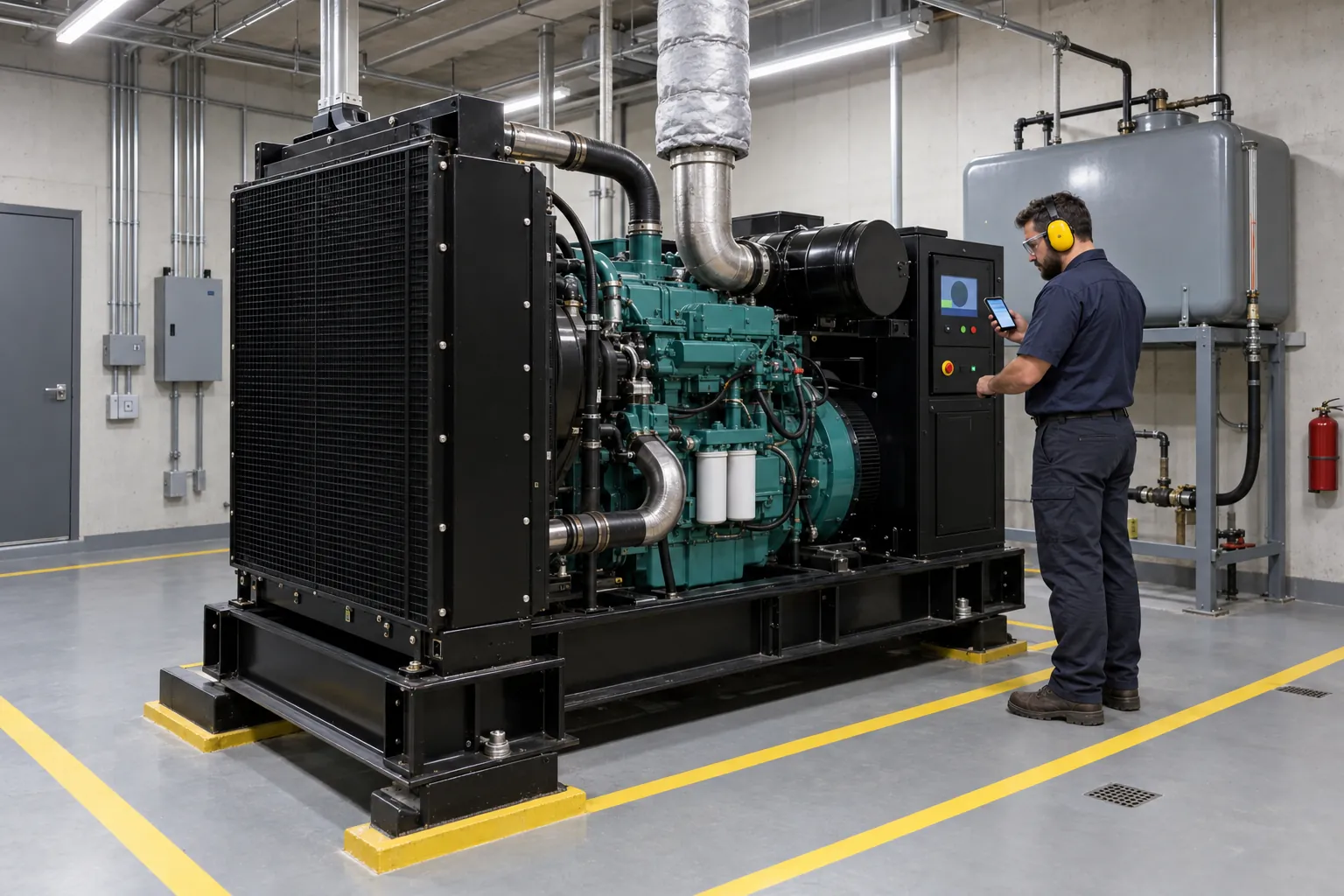 Premises and facilities managementGenerator testing: what CSA C282 and the fire code require, and how to show it was doneEmergency generator testing in Canadian buildings: what the fire code and CSA C282 require, the weekly and monthly checks, shutdowns, fuel and the records to keep.
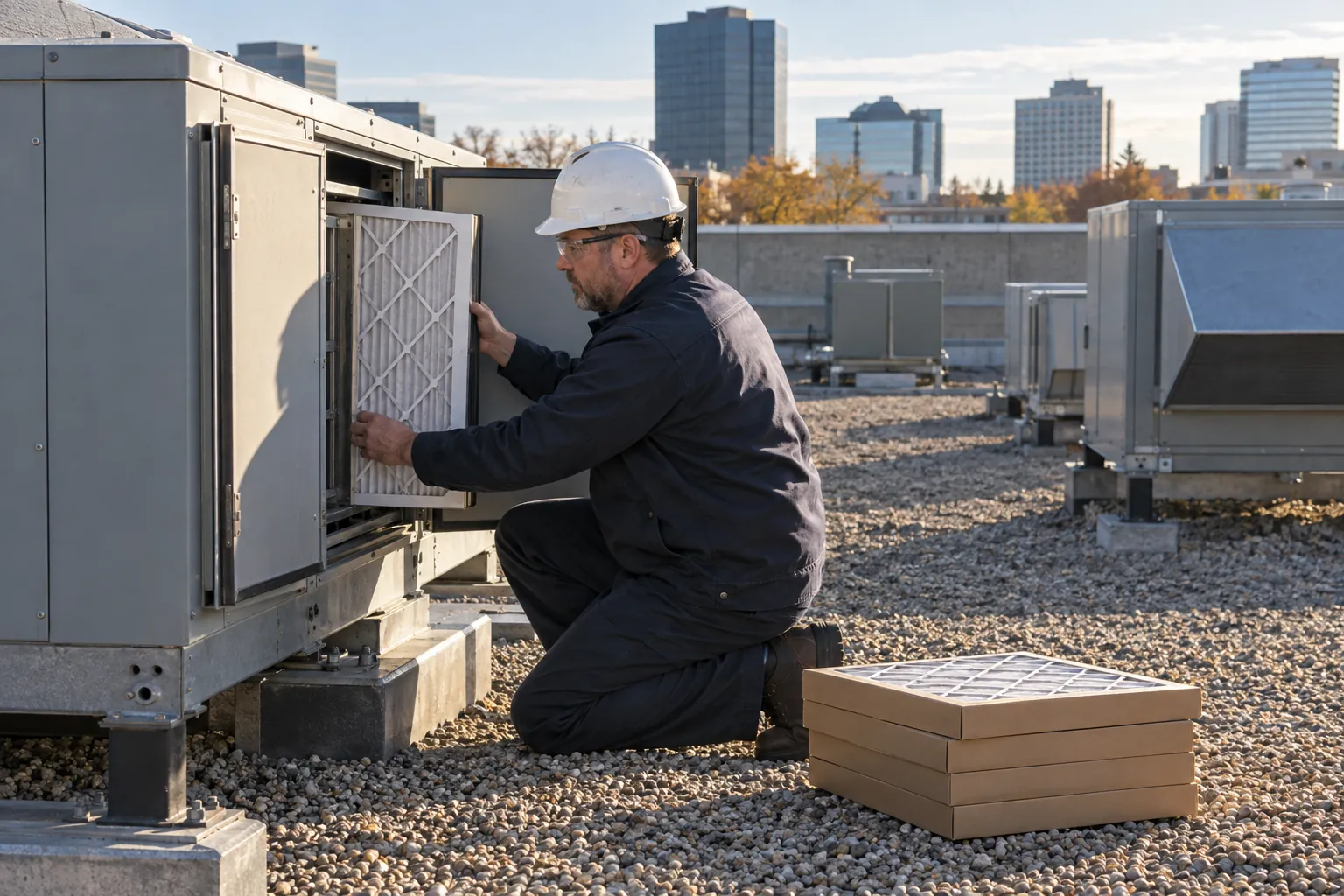 Premises and facilities managementHVAC filter change log: what the rules ask for, and what a useful one recordsWhat an HVAC filter change log should record, what federal and BC workplace rules require, how often to change filters, and what makes the log believable.