Premises and facilities management
Maintenance request forms: what to capture, how fast to answer, and what to keep
A maintenance request is a written report, on a form, online or by letter, asking the landlord, property manager or facility team to repair a problem in a building, and in Canada it is usually how the legal duty to repair is set in motion and later proved.
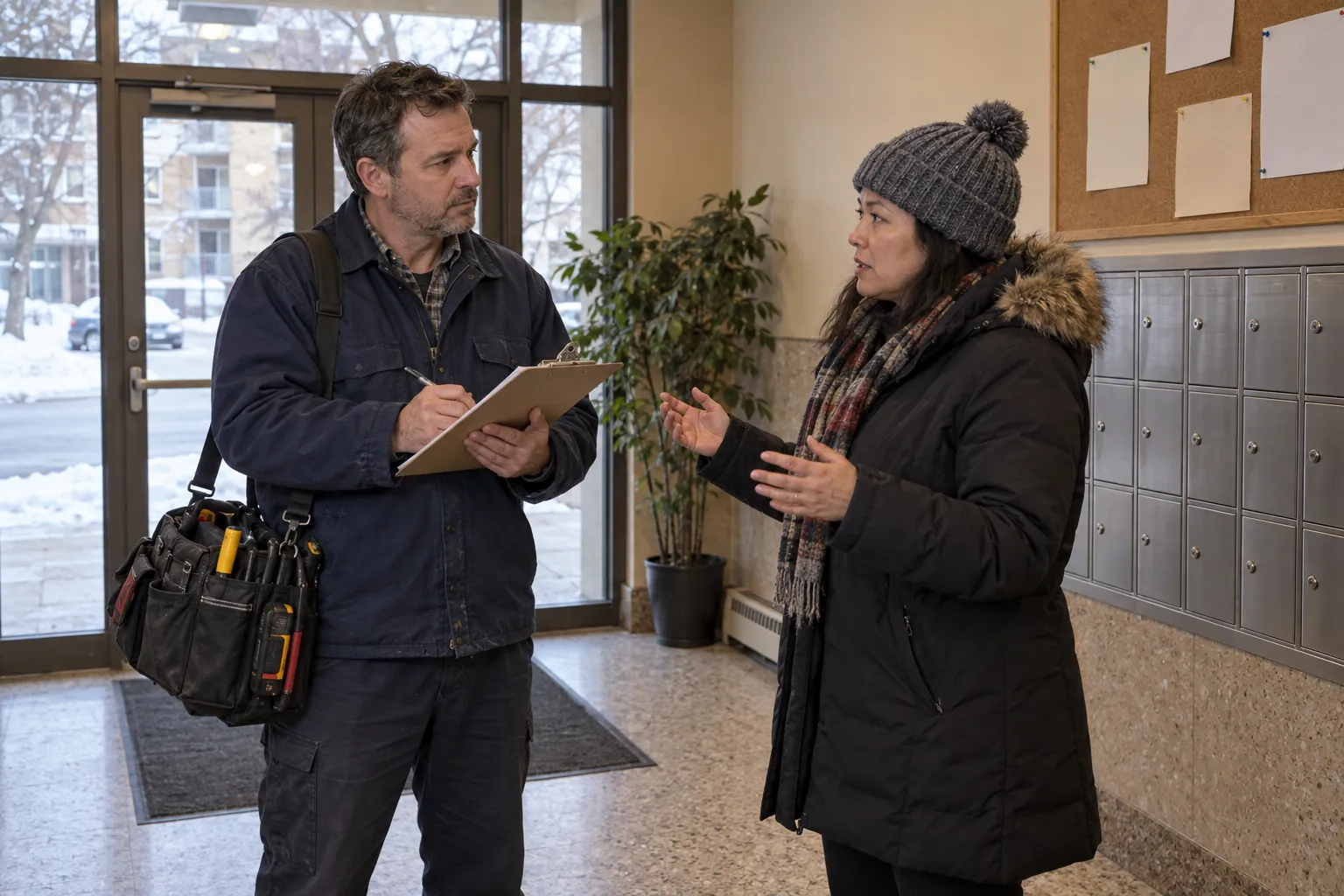
Whether it is a tenant reporting no hot water, a student submitting a residence maintenance request about a broken blind, a custodian reporting a cracked stair nosing or an office worker reporting a door that will not latch, the request form decides what the super, the property manager or the facility team knows, how fast they answer and what is left on file afterwards. This guide covers the Canadian rules behind a maintenance request, what the form should capture, how to prioritize and close requests, and how to tell whether your process works.
01
Who has to fix it: the repair duties behind a maintenance request
No Canadian law prescribes a maintenance request form. The law sets the duty to repair, and a request is how that duty is triggered, tracked and, in a dispute, proved. Which duty applies depends on the province and the kind of building.
Rental housing in Ontario. Section 20(1) of the Residential Tenancies Act, 2006 says: "A landlord is responsible for providing and maintaining a residential complex, including the rental units in it, in a good state of repair and fit for habitation and for complying with health, safety, housing and maintenance standards." If a tenant applies to the Landlord and Tenant Board about maintenance, section 30(2) says the Board "shall consider whether the tenant or former tenant advised the landlord of the alleged breaches before applying to the Board." That single sentence is why the written request, and the landlord's record of it, matters so much.
The Board's own brochure, Maintenance and Repairs, tells tenants that the first thing to do is ask the landlord in writing, by letter or on a "maintenance" or "work order" request form, and to keep a copy.
Property standards. Municipal property standards bylaws set the physical standard most buildings are judged against. Toronto's Property Standards Bylaw page states that the bylaw "sets the standards for all properties in Toronto" and that all property owners must repair and maintain their property. Where a municipality has no property standards bylaw for a residential complex, section 224 of the Residential Tenancies Act applies the provincial standards in O. Reg. 517/06, Maintenance Standards, which require, among much else, that common areas, from lobbies and laundry rooms to garbage rooms and parking garages, "be kept clean and free of hazards".
British Columbia. Section 32(1) of the Residential Tenancy Act requires a landlord to "provide and maintain residential property in a state of decoration and repair" that complies with the health, safety and housing standards required by law and is suitable for occupation. Section 33(2) goes further than most provinces on reporting: the landlord "must post and maintain in a conspicuous place on residential property, or give to a tenant in writing, the name and telephone number of a person the tenant is to contact for emergency repairs."
Condominiums in Ontario. Under section 90(1) of the Condominium Act, 1998, "the corporation shall maintain the common elements and each owner shall maintain the owner's unit", subject to what the declaration says under section 91. A condo request form has to ask whose repair it is.
Workplaces. In an office, school or plant the duty comes from provincial occupational health and safety law for most employers. Ontario's Occupational Health and Safety Act requires the employer to ensure that equipment, materials and protective devices it provides are "maintained in good condition" (section 25(1)(b)), and requires workers to report to the employer or supervisor any defect in equipment or a protective device that may endanger someone, and "the existence of any hazard of which he or she knows" (section 28(1)(c) and (d)). Federally regulated workplaces, such as banks, airports and telecoms, follow the Canada Labour Code, Part II instead.
02
What a maintenance request form should capture
The clearest Canadian statement of what a request process must record is in Toronto's RentSafeTO bylaw. Toronto Municipal Code Chapter 354, Apartment Buildings applies to purpose-built rental buildings with three or more storeys and ten or more rental units (not long-term care homes, licensed retirement homes or housing co-operatives). Section 354-3.1 requires the owner or operator to "have a process for receiving and tracking tenant service requests" that at a minimum collects and retains:
- the date and time the request was made;
- a description of the location of the issue, including a rental unit number if applicable, and the nature of the request as the tenant identified it;
- a way of identifying when a request is urgent;
- the name and contact information of the tenant making the request;
- a way of giving the tenant a copy of what was collected, when they ask for it; and
- copies of all responses the owner or operator made to the request.
That list is a good minimum for any maintenance request form, in or out of Toronto. A form that works usually adds:
- The building, floor and room or suite, chosen from a list rather than typed, so that "the washroom by the elevator" does not arrive without a floor.
- A category: plumbing, heating and ventilation, electrical and lighting, doors and locks, elevators, appliances, pests, cleaning, snow and ice, security, grounds. Categories route the request to the right trade or team.
- A photo, which saves a site visit just to see what the problem is.
- Urgency as the requester sees it, kept separate from the priority the building later sets.
- How the damage happened, if the requester knows. In British Columbia, section 32(3) of the Residential Tenancy Act says a tenant "must repair damage to the rental unit or common areas that is caused by the actions or neglect of the tenant" or of someone they let in, while section 32(4) says a tenant "is not required to make repairs for reasonable wear and tear." Knowing the cause early helps settle who carries the charges.
- Permission to enter, for work inside a rental unit. In Ontario, section 26 of the Residential Tenancies Act allows entry without written notice in an emergency or with the tenant's consent at the time; otherwise section 27 requires written notice at least 24 hours before entry that specifies "the reason for entry, the day of entry and a time of entry between the hours of 8 a.m. and 8 p.m."
- A reference number the requester can quote when they follow up.
- An owner, a status and a closing note, added by the building as the request is handled.
Keep the form short: every additional field is a reason to mention it in the elevator instead. Put brief instructions at the top: what to include, what happens once a request is submitted, and when the requester can expect to receive a reply.
03
How tenants, occupants and staff make a request
The right route is the one people will actually use when they notice the problem. Most buildings end up with several:
- The super's door or phone: quick and personal, but it depends on one person remembering to write it down.
- A paper form at the management office or front desk: gives a written record, but it has to be collected, typed up and filed.
- Email: easy to set up, but requests arrive without a suite number or a floor, and a shared inbox is easy to lose track of.
- An online form or tenant portal: structured, and people can submit a request outside business hours, but they must remember the address and a password.
- A QR code or tag at the location: the person scans it with their phone, and the request arrives already knowing the building and the location. This suits common areas, washrooms, parkades and plant rooms, where the location is the whole question.
- Word of mouth: it works until someone is away, and leaves nothing on file.
Two things matter more than the choice of route. First, every route should end in the same record; a request made at the super's door should be written up in the same place as one made through the portal. Second, emergencies need a person, not a queue. British Columbia makes that a legal requirement through section 33(2) of its Residential Tenancy Act, and Toronto's Chapter 354 requires emergency contact information on the notification board in every apartment building it covers. A good request form says plainly, at the top, what counts as an emergency and which number to call instead of filling it in, including after business hours; a fire is a call to 911, never a form.
Staff are a route too. Cleaners, custodians and security guards walk every corridor and washroom daily; make it easy for them to report what they find and you will hear about most problems before a tenant has to.
04
Prioritizing, responding and getting in to fix it
Once a request arrives, someone has to decide how urgent it is and who will deal with it. Some municipal bylaws set fixed response times. Toronto's Chapter 354 is the best known: an owner or operator must respond to an urgent service request within 24 hours and to one that is not urgent within 7 days. It defines an urgent request as one related to the discontinuance of fuel, electricity, gas, heat, or hot or cold water, or to a breach of building security, suite security or the building envelope. Hamilton's Safe Apartment Buildings By-law 24-054, in force since 1 January 2026, covers purpose-built rental buildings with two or more storeys and six or more rental units; the City's Safe Apartment Buildings Building Owner Reference Guide sets out a response within 24 hours for urgent requests and 5 days for non-urgent ones, an inspection within 72 hours for signs of pests, and tenant service request records kept for 30 months.
British Columbia defines "emergency repairs" in section 33(1) of its Residential Tenancy Act as repairs that are urgent, necessary for health or safety or for the preservation or use of the property, and made to repair major leaks in pipes or the roof, damaged or blocked water or sewer pipes or plumbing fixtures, the primary heating system, damaged or defective locks that give access to a rental unit, or the electrical systems. Under section 33(3), a tenant may arrange emergency repairs after at least two attempts to telephone the emergency contact and a reasonable time for the landlord to act.
For commercial, institutional and condo buildings, response times belong in the management agreement, the lease or the service contract. As an example only, many buildings use four levels:
- Emergency: a flood, no heat in winter, a person trapped in an elevator, a failed entrance lock. Attend at once and make safe.
- Urgent: a whole floor without lighting, the only accessible washroom out of order.
- Routine: a single light out, a dripping tap.
- Planned: work better grouped with other jobs or done at a quiet time.
Measure two things separately: the response, when someone answers the requester or attends and makes safe, and the fix, when the problem is resolved.
Assign each request to a named person or contractor, not to a team inbox. In a large portfolio that means a work order in a CMMS; in a single building, the super's list. Either way, the reactive maintenance that requests create should be read alongside the planned work: repeat requests about the same boiler, door closer or roof drain are a sign that something needs replacing rather than repairing again.
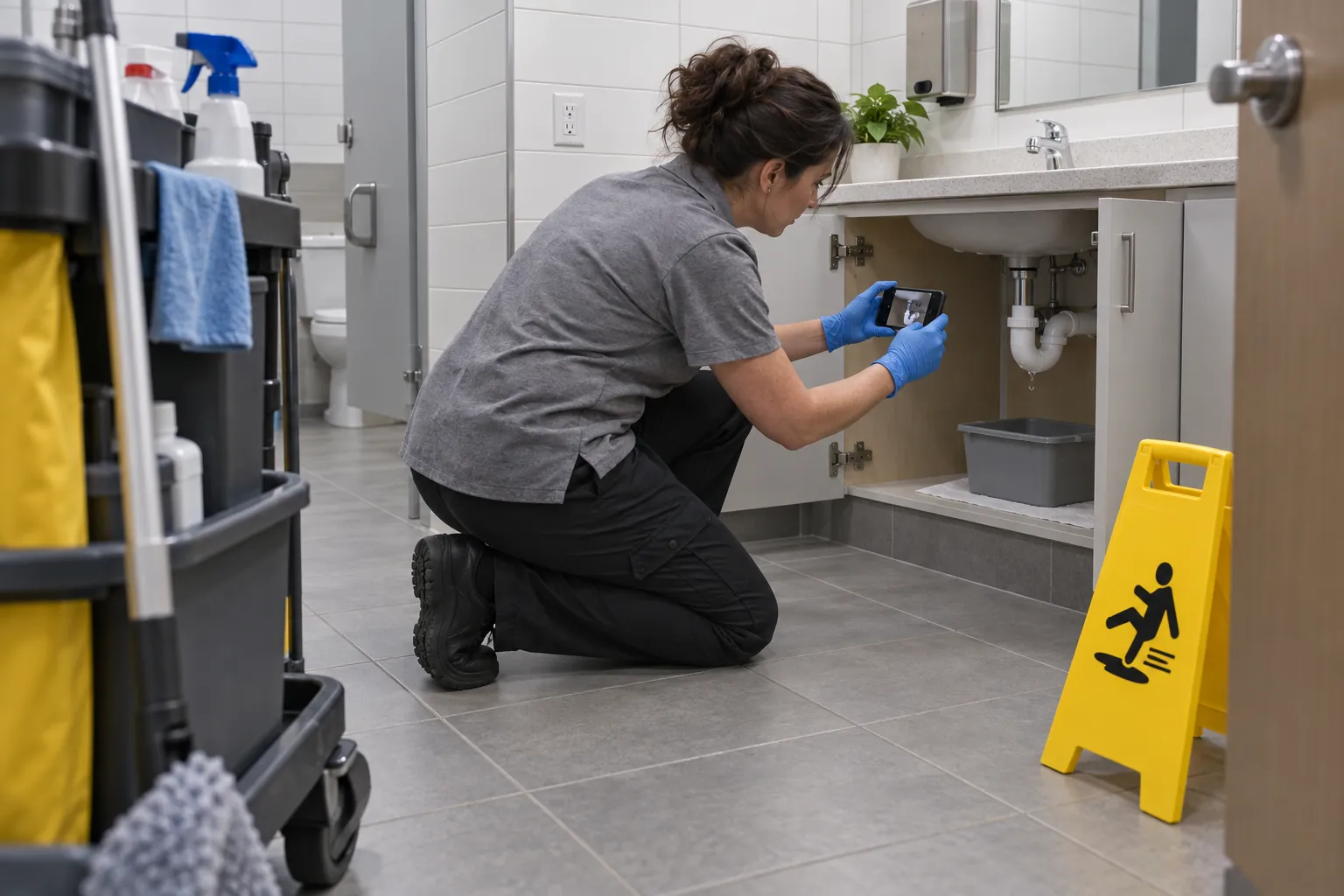
05
Closing a request, keeping the record, and checking it works
A request is closed when the problem is fixed, not when someone has been to look. A good close-out records what was done, by whom and when, with a photo of the result where it helps. If the job needs a part or a second visit, it stays open with a note. The requester should hear that it has been addressed, or why it cannot be.
How long to keep the record depends on who you are. Chapter 354 requires Toronto apartment building owners and operators to keep records needed to show compliance, including tenant service requests, cleaning logs and logs of service on heating, cooling, electrical, ventilation and plumbing systems, "in a secure and accessible manner for a period no less than 24 months from the date the record was created." Hamilton's bylaw requires 30 months. Elsewhere, ask your lawyer or insurer how long to keep them.
The history of requests is also one of the best hazard maps a building has. The Canadian Centre for Occupational Health and Safety lists "hazard reporting by employees" and "documents and records" among the methods for identifying hazards in Hazard and Risk - Hazard Identification.
To check whether your maintenance request process is working, look at:
- Open requests by age: how many are older than a week, a month, three months, and why.
- Response and fix times against your own levels, and against the times set by Toronto's Chapter 354, Hamilton's By-law 24-054 or a similar bylaw, if one applies to you.
- Repeat requests for the same problem, which usually mean the first fix failed or nobody told the requester it was in hand.
- Who finds the problems: requests raised by staff on their rounds compared with those raised by tenants or occupants. If tenants find most of them, the rounds are not looking.
- Requests that bypassed the process: the ones mentioned in a hallway and fixed, or not, with nothing written down.
06
Where the maintenance request record fails, and what SiteClara does about it
Most failures happen before the request reaches any form. The custodian who spots a leak under a sink has no quick way to report it. The email says "the light is out in the stairwell" with no building or floor. The super was told in the lobby and meant to write it down. Months later nobody can show when it was reported, or what happened next.
SiteClara puts a printed QR poster, with an NFC tag behind it if you want staff to tap, at each location, such as a washroom, a lobby, a stairwell, a parkade level or a garbage room. Staff scan or tap with their own phone, with no app to install, and report a problem there with a photo. The report arrives already knowing the building and the location, carries the time and the named person, and goes onto the team's list of jobs until someone closes it. On sites led by the building owner, public reporting can also be switched on so that occupants and visitors can report at a tag; provider sites start with staff-only tags.
The supervisor's queue groups open jobs by building and floor, and a supervisor can escalate a job once to the building manager, who can answer it. Each day the supervisor approves a report that goes to nominated management or client contacts the next morning, showing what was reported, what was completed and what is still open.
07
Questions people ask
How do I write a maintenance request?
Put it in writing and keep a copy. The Landlord and Tenant Board's brochure Maintenance and Repairs says "the tenant can write the landlord a letter or complete a 'maintenance' or 'work order' request form" and "should keep a copy of their written request." Say where the problem is, down to the suite or room, what is wrong, when it started and whether it is urgent, and add a photo if the form allows one.
Can you give me an example of a maintenance issue?
The Landlord and Tenant Board's Maintenance and Repairs brochure says "all things that the landlord provides to the tenant must be kept in working order", and lists electrical, plumbing or heating systems, appliances, carpets in the unit or common areas, walls, roofs and ceilings, windows, doors, locks and lighting, and garages, laundry rooms, patios, walkways or pools. A leaking tap, a broken lock or a light out in a stairwell are all maintenance issues.
How long do landlords have to fix problems in Ontario?
The Residential Tenancies Act sets no fixed number of days. The Board's Maintenance and Repairs brochure says that if the landlord does not fix the problem "within a reasonable time", the tenant can file a Tenant Application about Maintenance (Form T6), and warns that a tenant "should not withhold any part of the rent". In Toronto, Municipal Code Chapter 354, Apartment Buildings requires the owner or operator of a building it covers to respond to an urgent service request "within 24 hours of the request being made" and to one that is not urgent "within 7 days", and Hamilton's Safe Apartment Buildings By-law 24-054 sets 24 hours and 5 days; these are times to respond, not to finish the repair.
How long should I wait for maintenance in an emergency?
In British Columbia, section 33(3) of the Residential Tenancy Act lets a tenant have emergency repairs made once "the tenant has made at least 2 attempts to telephone, at the number provided, the person identified by the landlord as the person to contact for emergency repairs" and has then given the landlord "reasonable time to make the repairs." For anything that is not an emergency, call or write to the landlord and keep a record of each request and its date.
08
Further reading, and a list to take away
In Ontario, read sections 20 and 26 to 30 of the Residential Tenancies Act, 2006 and the Board's brochure; in Toronto, Chapter 354; in British Columbia, sections 32 and 33 of the Residential Tenancy Act; for condos, sections 89 to 91 of the Condominium Act, 1998 and your declaration; for workplaces, your province's occupational health and safety act and CCOHS.
To review your own maintenance request form and process, check that:
- everyone who uses the building knows how to make a request, including after hours and on weekends;
- an emergency number is posted where people will see it, and someone answers it;
- every route, from the super's door to the portal, ends in one record;
- each request carries a date and time, a location down to the floor and room or suite, a description and, where it helps, a photo;
- urgent requests are defined in writing, and response and fix times are measured separately;
- each request has a named owner until it is closed;
- the requester hears when the work is done;
- staff on cleaning and security rounds can report what they find without stopping the round;
- open requests are reviewed by age every week, and records are kept for as long as your bylaw, lease or insurer requires.
Sources
Every document this guide quotes or links to, in the order it first cites them.
- Residential Tenancies Act, 2006 ontario.ca
- Maintenance and Repairs tribunalsontario.ca
- Property Standards Bylaw page toronto.ca
- O. Reg. 517/06, Maintenance Standards ontario.ca
- Residential Tenancy Act bclaws.gov.bc.ca
- Condominium Act, 1998 ontario.ca
- Occupational Health and Safety Act ontario.ca
- Toronto Municipal Code Chapter 354, Apartment Buildings toronto.ca
- Safe Apartment Buildings Building Owner Reference Guide hamilton.ca
- Hazard and Risk - Hazard Identification ccohs.ca
Related guides
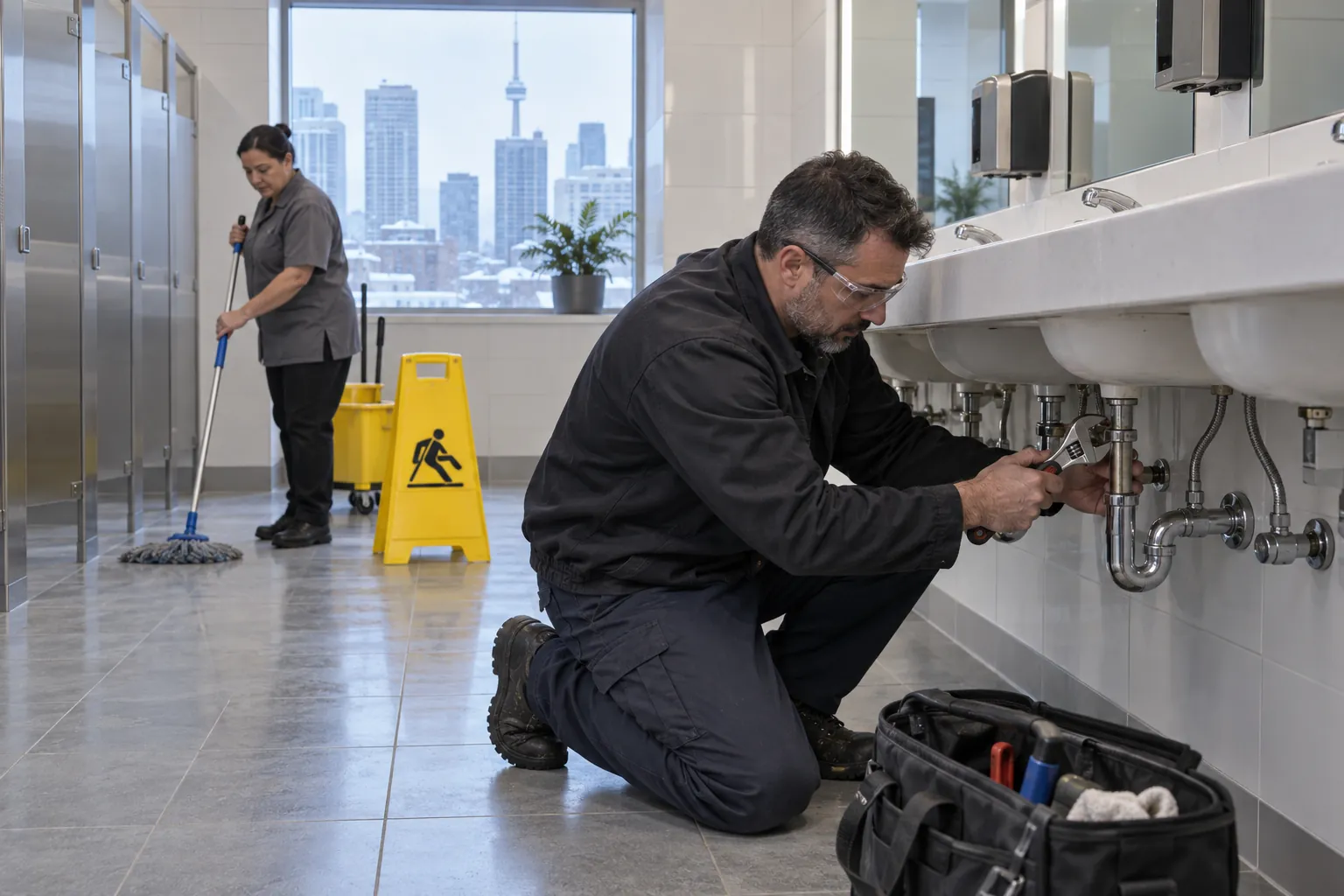 Premises and facilities managementReactive maintenance: how to run it well, and keep it in proportionHow to run reactive maintenance in a Canadian building: priorities and response times, the Ontario and BC rules, contractors, costs and closing the loop.
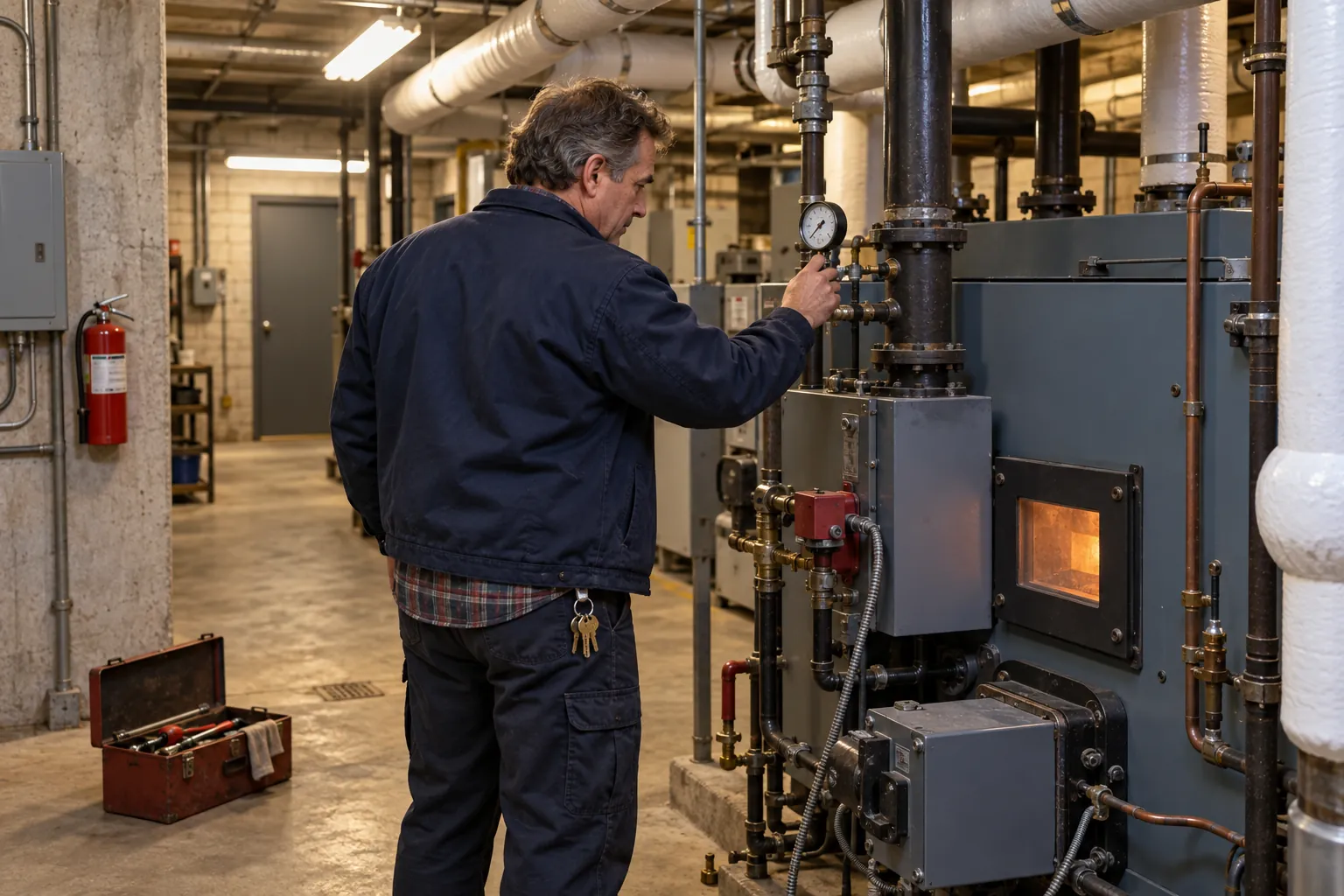 Premises and facilities managementBuilding superintendent duties: what the super does, and how to show it was doneWhat a building superintendent does in Canada: the landlord's duties a super carries out, heat and vital services, fire safety, working alone and the daily record.
 Premises and facilities managementProperty manager duties in Canada: licensing, legal duties and the daily recordWhat a property manager does in Canada: provincial licensing, the owner's duties under occupiers', tenancy and fire law, the daily work and the records.
 Premises and facilities managementCondo maintenance: looking after the common elements, and proving itWho maintains a condo's common elements under Ontario's Condominium Act and other provinces' laws, what the work covers, how often, and what the record should show.