Premises and facilities management
Opening and closing checks: the kitchen, the bar and the shop floor
Opening and closing checks are the short list of checks a food business, bar or shop carries out every time it opens and closes, such as fridges working, hot water at every basin, food covered and labelled and waste removed, and in the Food Standards Agency's Safer food, better business pack the manager signs the diary each day to say they were done.
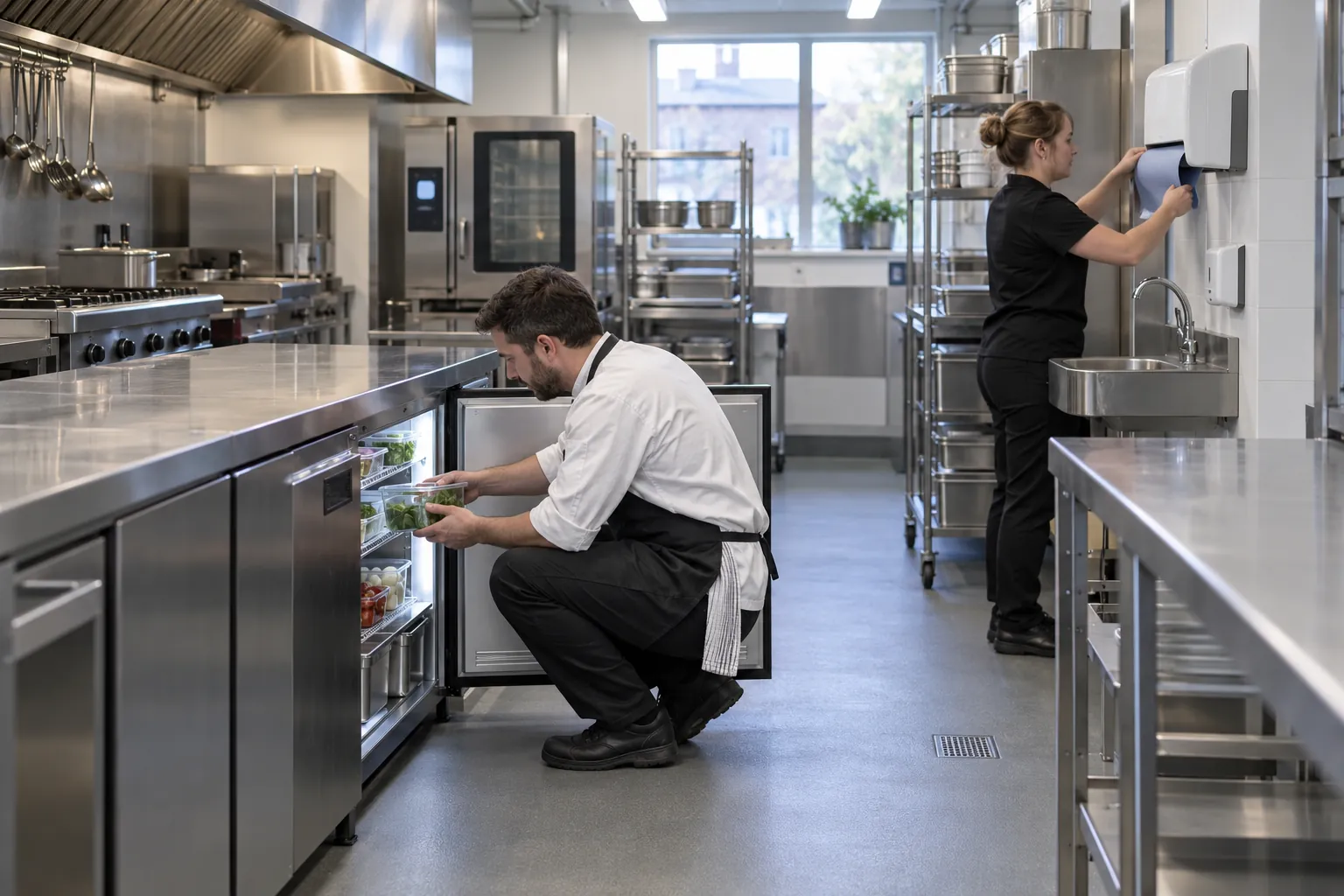
Most venues add the building's own items: fire exits unbolted and escape routes clear before anyone comes in, and at night nobody left inside, appliances off, bins away from the walls and the doors secured. This guide sets out the SFBB lists, what to add for a bar or a shop, who signs, and how to keep a record that shows the checks happened.
01
What opening and closing checks are, and the law behind them
No statute uses the words "opening and closing checks". They come from two duties that meet at the start and end of the day's operations: food safety, where food is sold or served, and fire safety, wherever people work or visit. Opening and closing checklists are a practical way to carry out both.
For food, Article 5 of Regulation (EC) No 852/2004, the assimilated food hygiene regulation in Great Britain, requires a food business operator to put in place, implement and maintain a permanent procedure based on the HACCP principles. Those principles include effective monitoring procedures and documents and records commensurate with the nature and size of the business. Daily checks at opening and closing are the simplest form of monitoring a small kitchen can keep.
The Food Standards Agency turned that into a ready-made routine. Its Safer food, better business for caterers pack (SFBB), a food safety management pack for restaurants, cafés, takeaways and other small catering businesses in England, Wales and Northern Ireland, has a safe method called Opening and closing checks. The Safer food, better business for retailers pack, for small shops selling food, carries the same safe method. In Scotland, caterers can work from Food Standards Scotland's CookSafe manual instead, which helps catering businesses put HACCP-based systems in place and gives templates for writing house rules and keeping records.
For fire, article 14 of the Regulatory Reform (Fire Safety) Order 2005, which applies in England and Wales, requires the responsible person to keep routes to emergency exits and the exits themselves clear at all times, and says emergency doors must not be so locked or fastened that they cannot be easily and immediately opened by anyone who may need them in an emergency. Scotland and Northern Ireland have their own fire safety law, Part 3 of the Fire (Scotland) Act 2005 and Part III of the Fire and Rescue Services (Northern Ireland) Order 2006, with similar duties on whoever controls the premises. A shop or bar that bolts its fire exits overnight has to unbolt them every morning, which is why the government's fire guidance puts that first among the daily checks.
02
The SFBB opening and closing checks, item by item
The SFBB opening checklist has nine checks, to be done "at the beginning of the day":
- fridges, chilled display equipment and freezers are working properly;
- other equipment, such as the oven, is working properly;
- staff are fit for work and wearing clean work clothes;
- food preparation areas are clean and disinfected, including work surfaces, equipment and utensils;
- all areas are free from evidence of pest activity;
- there are plenty of handwashing and cleaning materials, such as soap, paper towels and sanitiser;
- hot running water is available at all sinks and hand wash basins;
- the probe thermometer is working and probe wipes are available;
- allergen information is accurate for all items on sale.
The closing checklist, for "the end of the day", has eight:
- all food is covered, labelled and put in the fridge or freezer where appropriate;
- food on its use-by date has been thrown away;
- dirty cleaning equipment has been cleaned or thrown away;
- waste has been removed and new bags put into the bins;
- food preparation areas are clean and disinfected;
- all washing up has been finished;
- floors are swept and clean;
- "Prove it" checks have been recorded.
Both lists end with a line for the cleaning schedule and blank rows, and both say "You can also add your own checks to the list." That is the point to make the list yours: the walk-in chiller door seal, the hot-hold unit on and ready before service, the fryer filtered and covered, the back door to the yard locked. Most restaurant opening and closing checklists start from these two lists and add the kitchen's own tasks.
Alongside the daily lists the pack has a safe method for extra checks, less frequent but still regular: deep cleaning behind equipment and of the outside waste area, maintenance such as clearing drains and condensers, the dishwasher deep cleaned, pest checks inside and out, and the temperature probe checked in boiling water and melting ice, where it should read within 1°C of 100°C and 0°C. Each is noted in the diary on the day it was done.
03
Beyond the kitchen: the bar, the shop floor and locking up
A pub kitchen or hotel restaurant uses the SFBB lists as they stand. The rest of the building needs its own opening and closing round, and most of what goes on it comes from the fire risk assessment. The government's guide Fire safety risk assessment: offices and shops, published under article 50 of the Fire Safety Order, gives these as daily checks:
- remove bolts, padlocks and security devices from fire exits;
- make sure doors on escape routes swing freely and close fully;
- check escape routes are clear of obstructions and combustible materials;
- check the fire alarm panel shows the system is active and fully operational;
- where practicable, visually check that emergency lighting units are in good repair and working;
- check that safety signs and notices are legible.
The same guide says that before admitting the public "you need to ensure that all of your fire safety provisions are in place and in working order", and that "Constant checks are needed while the public are present, and again after they have left." For closing, it lists the safety considerations when closing down at the end of the day: removing rubbish, making sure enough exits remain available for anyone still inside, and closing fire doors and shutters. In higher risk areas it asks for close-down arrangements such as checking all appliances are turned off and combustible waste has been removed, and it says outside wheeled bins should be secured in a compound so they cannot be moved next to the building and set alight.
A bar opening checklist usually adds the bar's own items to that: the glass washer and ice machine clean and working, drip trays and bar tops clean, the cellar tidy with nothing stacked in the escape route, and the premises licence in order. In England and Wales, under section 57 of the Licensing Act 2003, the licence or a certified copy, with a list of any relevant mandatory conditions, must be kept at the premises in the custody or under the control of the holder or of a person who works there and has been nominated in writing. The summary of the licence, and a notice of that nominated person's position, must be prominently displayed. Scotland and Northern Ireland have their own licensing law. If your licence carries conditions that need a daily check, such as a working CCTV system, put them on the list too.
A bar closing checklist puts the closing procedures in order: glasses collected and washed, drip trays emptied and cleaned, any food stored under the SFBB closing checks, toilets and outside areas checked so nobody is left inside, smoking area ashtrays emptied into a metal bin and taken outside as the fire guide advises, appliances off, fire doors closed, then the building secured.
A shop's opening and locking-up round follows the same pattern. Before the doors open to customers: the alarm unset, a walk round for signs of a break-in, leaks or damage, fire exits unbolted, aisles and escape routes clear, the floor dry, and chillers at temperature if you sell food. At close: the shop floor, fitting rooms and toilets checked so nobody is left inside, gaps on the shelves noted to restock in the morning, rubbish removed and bins secured, the stockroom, back door and windows locked, the tills cashed up and the day's sales and cash secured as your procedure says, the alarm set and the front door the last thing you lock. Our retail cleaning checklist covers the cleaning before opening and after close.
04
Who does the checks, and the daily diary
In the SFBB pack the checks are everyone's and the signature is the manager's. The diary introduction says the manager should sign the diary every day to say that the opening and closing checks have been done and the safe methods followed. If the manager is not in, they can give responsibility for the diary to another member of staff, which is why the pack ties it to the training and supervision safe method: the member of staff who opens on a Sunday needs to know the list as well as the manager does.
Each day in the SFBB diary has a box for opening checks, a box for closing checks, a name and a signature under the line "Our safe methods were followed and effectively supervised today", and a space headed "Any problems or changes – what did you do?". The introduction says the diary should take about one minute a day to complete. If anything different happens or something goes wrong, note what happened and what you did, "so you can show that you have taken action to make sure that food is safe to eat". The pack's worked example shows the kind of entry it means: cooked meat rejected because it arrived at 10.2°C.
Opening and closing are often different team members. The early shift opens and the late shift locks up, and in a shop or bar the last person out is often alone. The Health and Safety Executive's guidance on protecting those working alone says employers must manage the health and safety risks before people can work alone, so the closing routine should say who locks up, how they leave the building safely and who in the team knows they have gone.
The handover between shifts is where a problem is easily lost. Give each task on the list a named owner, and make a problem found at closing something the opener reads before starting, not something said in passing.
Fire checks are the responsible person's duty under the Fire Safety Order, but the offices and shops guide expects them to be delegated: instructions need to be given to the people who remove bolts, bars or chains on final exit doors before the start of business and who close the premises down at the end of the day, and in larger premises those instructions should be written.

05
The 4-weekly review, and what good evidence looks like
The diary is only half the system. Every four weeks the SFBB pack asks for a review: walk around the kitchen and watch whether the safe methods are being followed, then look back over the past four weeks' diary entries. "If you had a serious problem, or the same thing went wrong three times or more", note it, find out why and record what you did to resolve it. The review must be completed even if no problems were found, and its checklist includes the question "Are any extra opening or closing checks required?"
That is where a daily list earns its keep. A fridge that ran warm three Mondays running, or a fire exit found bolted at opening twice in a fortnight, is one line in a day's record and a pattern across four weeks. Good evidence makes the pattern visible to managers:
- Each check recorded when it was done, not at the end of the week, by the person who did it.
- A failed check written down as failed, with what was done about it, rather than a tick and a word in the kitchen.
- Opening and closing kept apart, so the record shows which staff opened and which closed.
- The building's checks alongside the kitchen's: fire exits, escape routes and the alarm panel at opening, the round of the premises at close.
- Faults followed to the end: a broken door closer found at opening needs a name against it and a date it was fixed.
An environmental health officer reads the record for the days they were not there, and as our guide to the EHO inspection checklist explains, judges confidence in management partly on it. A diary ticked in the same pen every day is weaker evidence than one with a problem written down and dealt with.
06
Where the record fails, and where SiteClara fits
Opening and closing checks fail in familiar ways. The diary is signed for the whole week on Saturday. The closing boxes are ticked the next morning on the closer's behalf. The fire exit bolt is drawn back when someone remembers. A fault found at opening is mentioned to whoever is on and never reaches the person who can fix it.
SiteClara records routine checks where they happen. A printed QR poster, with an optional NFC tag behind it, goes at each place a check belongs: the kitchen pass, the bar, the cellar, the fire exits, the back door, the shop floor. Staff scan the code or tap the tag on their own phone, with no app to install, see the checks due there, and mark each one done or say what stopped them. The time and the named person are recorded as it happens, with a photo where one helps. A fault found on the round, such as a door that will not close or a basin with no hot water, goes onto the team's list of jobs until someone closes it.
The supervisor sees what was due, done and missed, records the reason a check was missed, reviews the day's report and approves it, and the approved report goes to nominated managers or the client at 8am the next morning.
In a food business SiteClara is the working record of the opening and closing round and the faults found on it. The SFBB diary, the CookSafe records or your HACCP documents remain the food safety records an officer asks to see, kept where the business keeps them.
07
Questions people ask
Are opening and closing checks a legal requirement?
Not under that name, but the duties behind them are. Article 5 of Regulation (EC) No 852/2004 requires a food business to maintain HACCP-based procedures with monitoring and records suited to its size, and the SFBB opening and closing checks are the FSA's way of doing that for a small business. Under article 14 of the Fire Safety Order, emergency exits must be kept clear and must not be locked so they cannot be easily and immediately opened, which in practice means checking them at opening.
What is an opening checklist, and what is a closing checklist?
An opening checklist is the set of checks done at the beginning of the day, before trading starts, and a closing checklist the set done at the end of the day. The FSA's Opening and closing checks safe method says "It is essential that you and your staff do certain checks every time you open and close." Its opening list covers fridges and other equipment working, staff fit for work, clean preparation areas, no sign of pests, handwashing materials, hot water, the probe thermometer and allergen information; its closing list covers food covered and labelled, use-by food thrown away, waste removed, washing up finished, floors clean and the "Prove it" checks recorded. Both say you can add your own checks to the list.
What daily checklists does a restaurant need?
For food safety, the SFBB diary introduction lists what a small catering business keeps: week-to-view diary pages, the checks to do every day when you open and close, a 4-weekly review, a staff training record, a suppliers' list and a cleaning schedule. The manager should sign the diary every day to say the opening and closing checks have been done and the safe methods followed, and it should take about one minute a day unless something needs writing down.
Do I have to use the SFBB pack?
Not necessarily. GOV.UK's Food safety management systems for businesses says a food business needs a food safety management system that meets the HACCP principles. Its page on creating a food safety management system says the SFBB packs are designed for small catering businesses such as restaurants, cafés and takeaways and can be adapted to suit the size and nature of the business, and that a larger or higher-risk business may be advised by its local food safety team to make an HACCP plan instead. In Scotland, Food Standards Scotland's CookSafe manual helps caterers put HACCP-based systems in place.
08
Official guidance, and an opening and closing checklist to take away
For a kitchen, start with the FSA's Safer food, better business for caterers, especially the Management section and the diary; a shop selling food uses Safer food, better business for retailers, and a Scottish caterer the CookSafe manual. For the building, read the daily checks and the close-down advice in Fire safety risk assessment: offices and shops, and for a licensed venue in England and Wales section 57 of the Licensing Act 2003.
Before you settle your opening and closing checks, make sure that:
- the SFBB opening and closing lists, or your own HACCP equivalents, are written down with your own checks added;
- fire exits are unbolted, escape routes clear and the alarm panel normal before anyone is let in;
- the closing round covers people left inside, appliances, waste and bins, fire doors and the final lock-up;
- a named person opens and a named person closes on every day of the week, including the manager's days off;
- whoever locks up alone has a safe way out and someone who knows they have gone;
- a failed check is recorded as failed, with what was done about it;
- faults found at opening or closing reach someone who will fix them;
- the diary is signed on the day, and the 4-weekly review asks whether the list needs changing.
Sources
Every document this guide quotes or links to, in the order it first cites them.
- Article 5 of Regulation (EC) No 852/2004 legislation.gov.uk
- Safer food, better business for caterers gov.uk
- Opening and closing checks assets.publishing.service.gov.uk
- Safer food, better business for retailers gov.uk
- CookSafe manual foodstandards.gov.scot
- Article 14 of the Regulatory Reform (Fire Safety) Order 2005 legislation.gov.uk
- Part 3 of the Fire (Scotland) Act 2005 legislation.gov.uk
- Part III of the Fire and Rescue Services (Northern Ireland) Order 2006 legislation.gov.uk
- Fire safety risk assessment: offices and shops gov.uk
- Section 57 of the Licensing Act 2003 legislation.gov.uk
- Diary introduction assets.publishing.service.gov.uk
- SFBB diary assets.publishing.service.gov.uk
- Protecting those working alone hse.gov.uk
- Food safety management systems for businesses gov.uk
- Creating a food safety management system gov.uk
Related guides
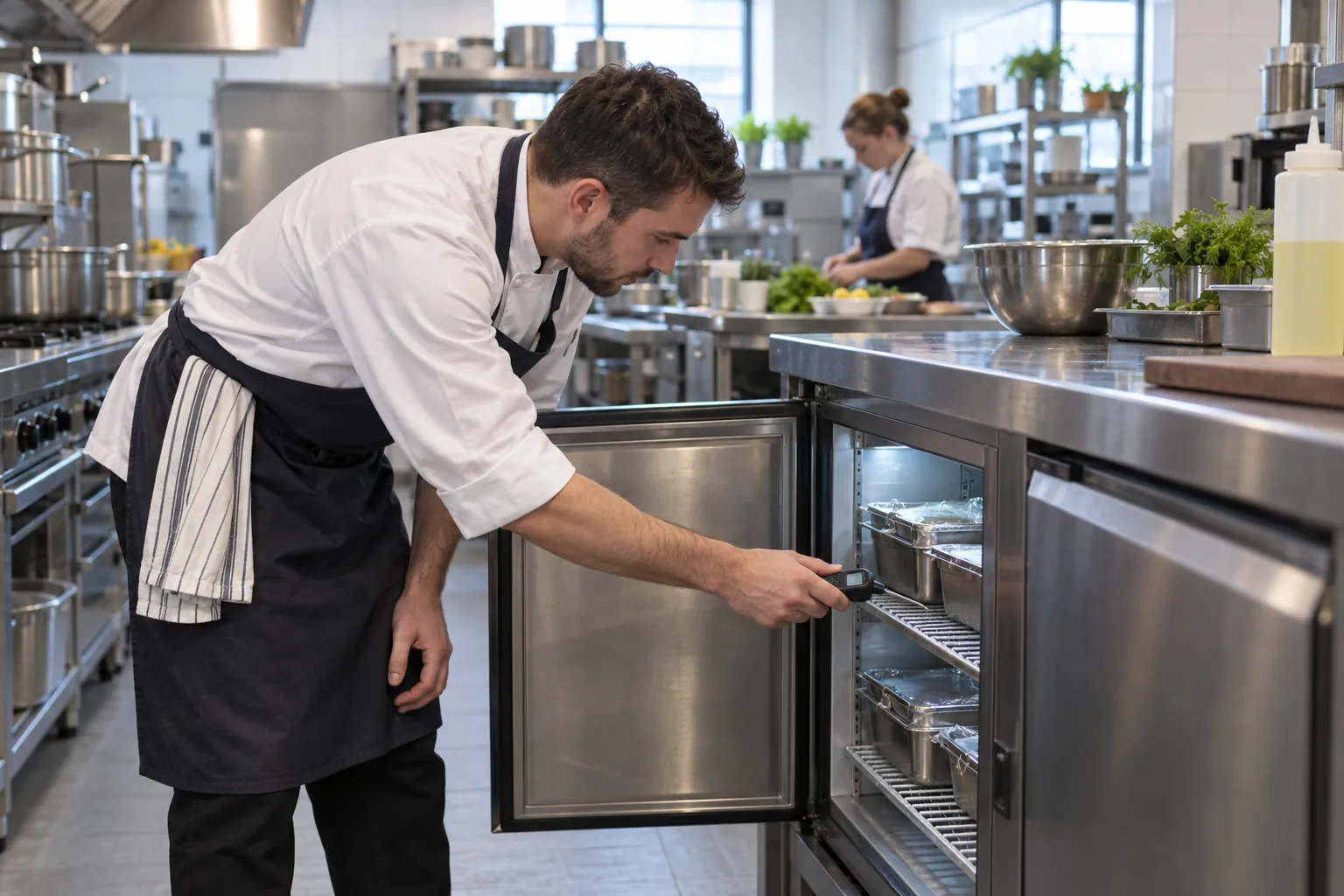 Premises and facilities managementFridge temperature log: the limits, the daily reading, and what to do when it is outKeeping a fridge temperature log in a UK kitchen, care home or surgery: the 8°C and 2°C to 8°C limits, how often to check, and what to do when a reading is out.
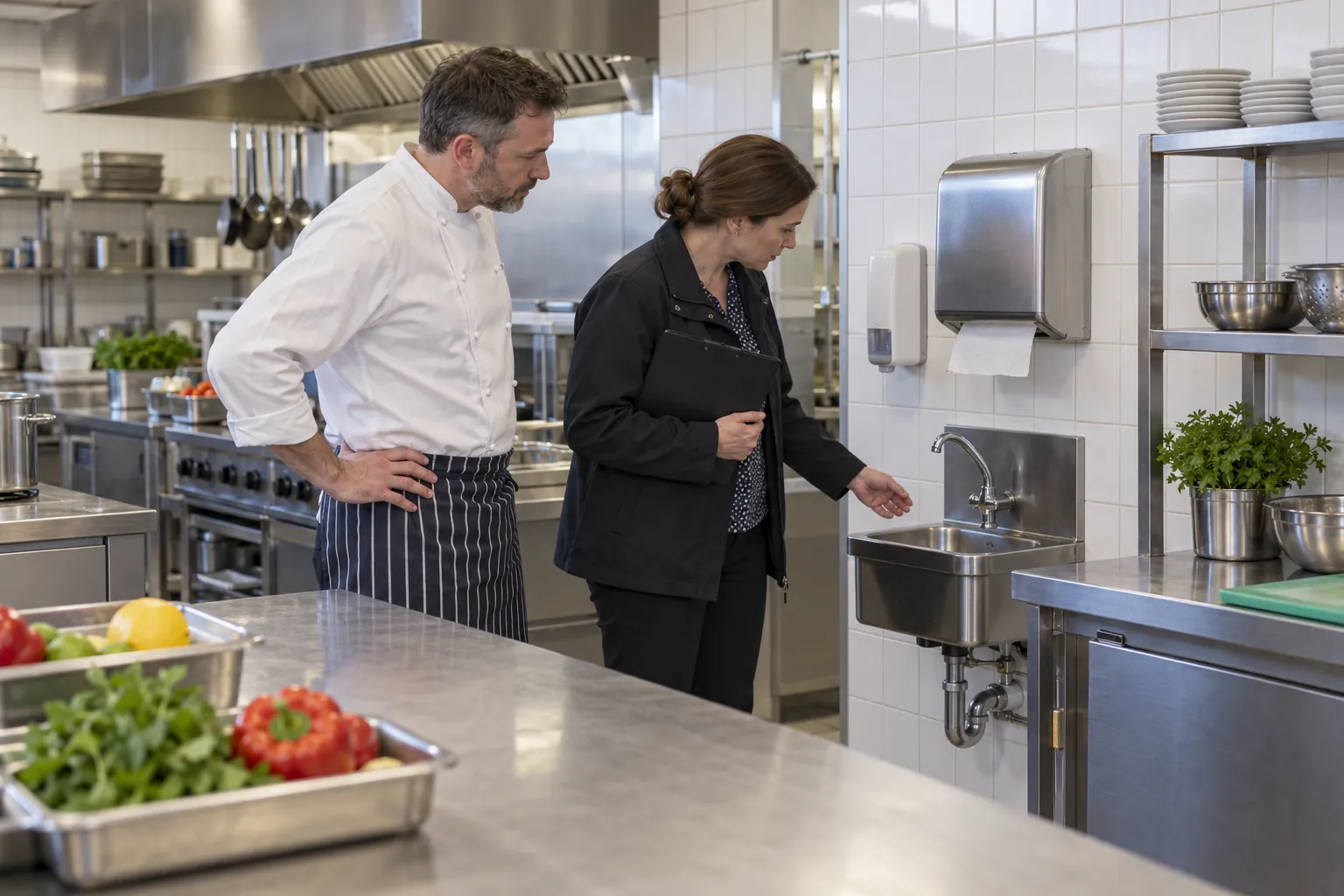 CleaningEHO inspection checklist: what the food safety officer checks, and the records behind itWhat an EHO checks on a UK food hygiene inspection, the records to have ready, how the 0 to 5 rating is worked out, and what happens after the visit.
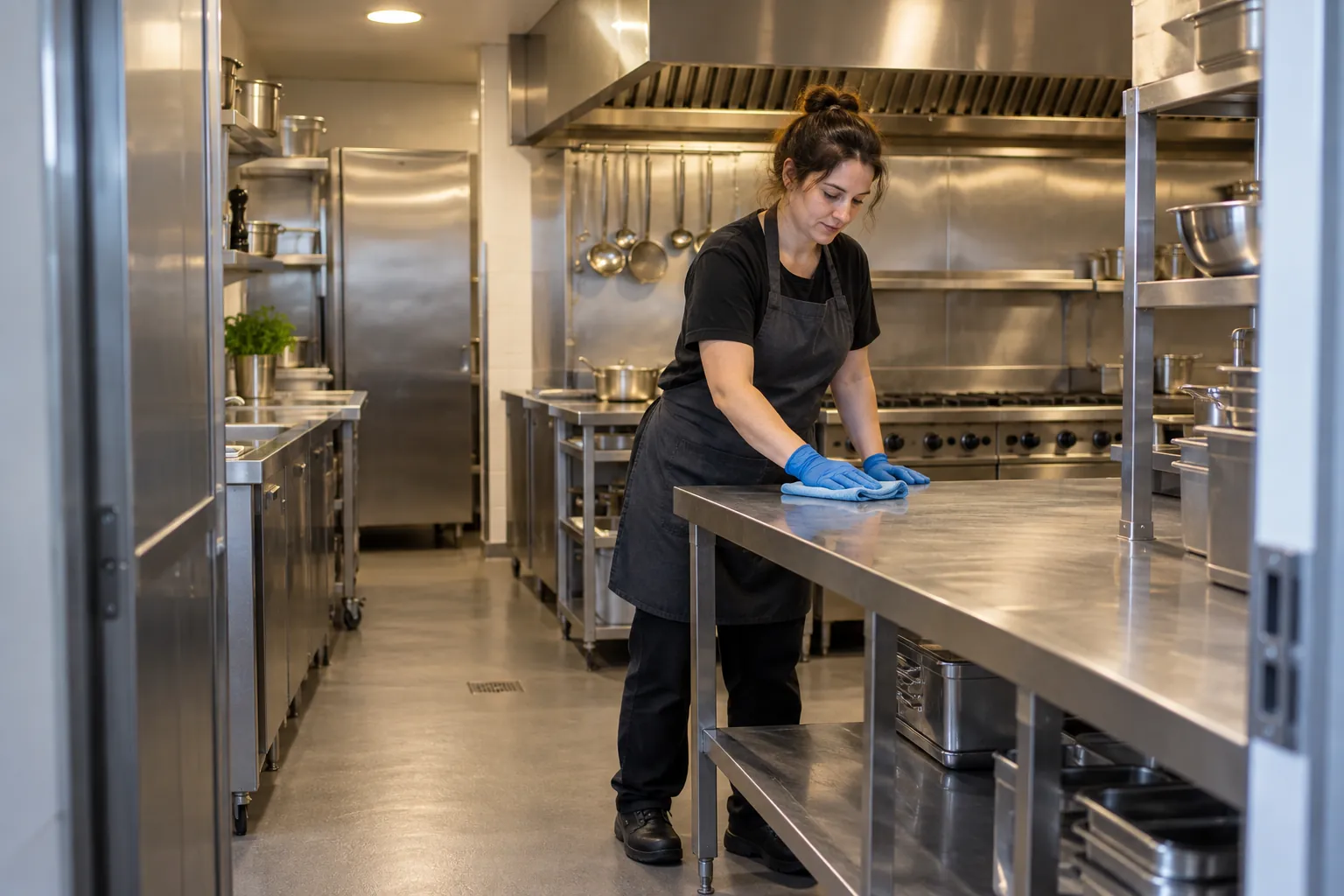 CleaningRestaurant cleaning checklist: daily work and a useful recordA UK restaurant cleaning checklist for kitchen and front of house, with daily, weekly and periodic tasks, safe cleaning methods and a worked cleaning record.
 CleaningRetail cleaning checklist: shop floors, fitting rooms and spillsA retail cleaning checklist for shops: entrances, sales floors, fitting rooms, customer toilets and stockrooms, with slips, spill response and who checks it.