Cleaning
Restaurant cleaning checklist: daily work and a useful record
A restaurant cleaning checklist sets out what to clean, how to clean it, when to do it and who checks the result across the kitchen, dining room, toilets and waste areas.
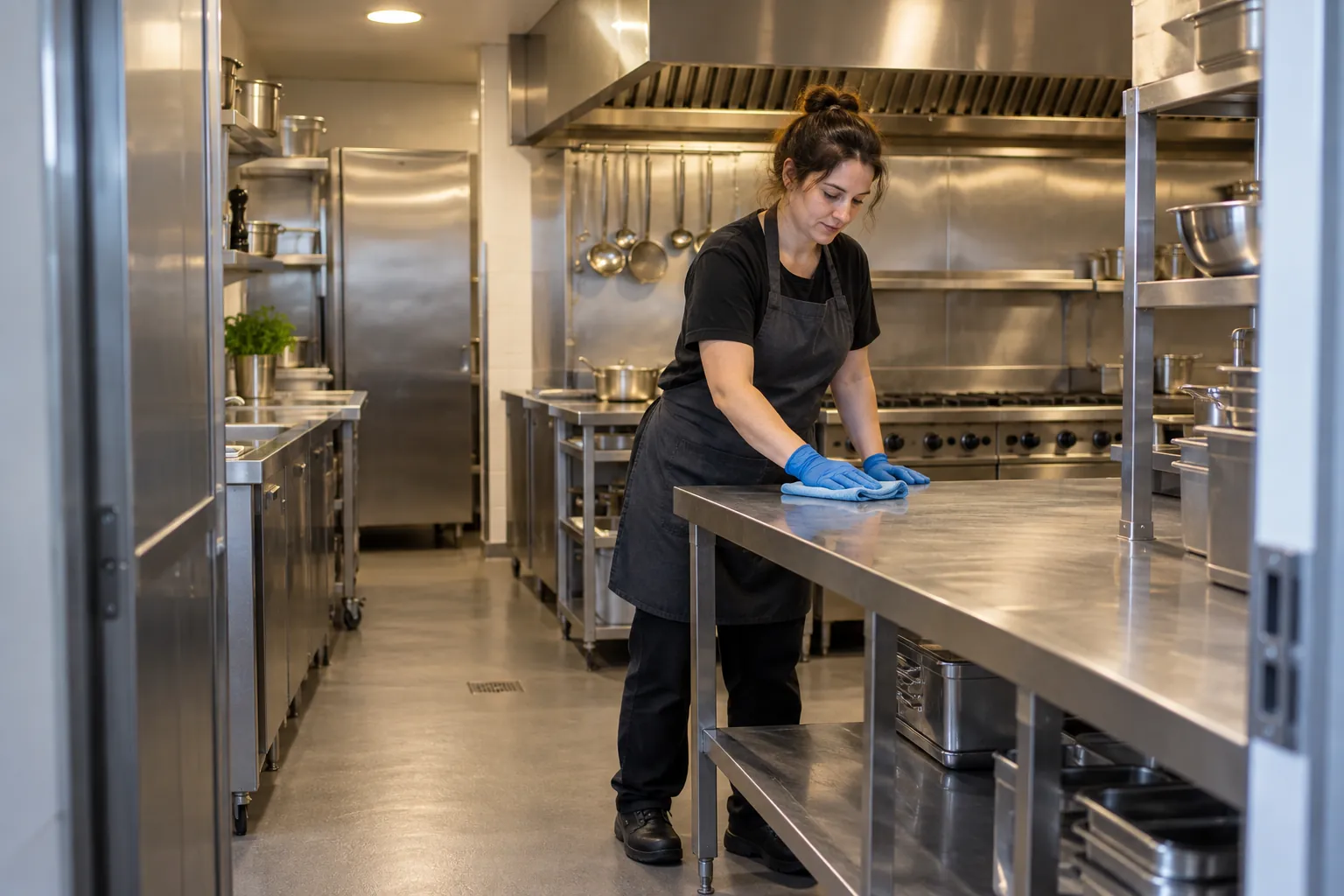
Food-contact cleaning belongs in the restaurant's food safety procedures, while the wider list keeps front and back of house ready for service. A tick at closing should show completed work and any exception, rather than promise that every surface is safe simply because it looks clean.
01
Put the checklist inside the food safety method
A list of surfaces is only the beginning. The government's food hygiene cleaning guidance says businesses must be able to show that cleaning is effective and should have a schedule and record covering the items, frequency and products. It includes equipment, utensils, cloths and touch points, and calls for cleaning and disinfection after contact with raw food.
For small caterers in England and Wales, the Food Standards Agency's Safer food, better business for caterers provides safe methods and records. The FSA's current business guidance directs Northern Ireland businesses to Safe Catering. In Scotland, Food Standards Scotland's CookSafe guide provides a separate approach with House Rules and records. Use the system appropriate to the restaurant and its jurisdiction, with advice from the local authority where needed.
Make the cleaning method specific to the item. It needs the approved product, dilution where relevant, application method, contact time, rinsing instructions and precautions. Detergent removal of dirt and disinfection are different steps. Neither a universal bleach recipe nor an immediate spray-and-wipe is a substitute for the product instructions and the restaurant's assessed method.
The food business remains responsible for its food safety arrangements when a cleaning company does some of the work. Write the boundary between kitchen staff, front-of-house staff and the contractor, especially for food-contact surfaces, waste, toilets and specialist equipment. Otherwise a clean dining room can hide an unowned kitchen closing task.
Give employees one restaurant cleaning checklist they can follow during their shift, with the relevant methods available beside it. The manager should inspect the result and check that supplies support the method. This joins food safety with everyday health and safety: the work must leave food-contact surfaces ready for their intended use without exposing people to chemicals, blades or slippery floors.
02
A commercial kitchen cleaning checklist
Build the commercial kitchen cleaning checklist around what the restaurant prepares and the equipment it uses. Cleaning as work proceeds, after a change of task where necessary, and after raw-food contact cannot all wait for the last person to leave. Use the list below as a planning example, then add the approved method and responsible role to each item.
- Preparation surfaces and boards: remove food residue and clean using the approved method; disinfect where the food safety procedure requires it. Keep raw-food and ready-to-eat arrangements clear, including utensils and cleaning equipment.
- Utensils, pans, dishes and glassware: use the specified washing and disinfection process. Check that cleaned items are protected from dirty splash, hands and nearby waste while they dry and are stored.
- Cooking equipment: clean the accessible surfaces of the grill, griddle, range, fryer, ovens and microwaves through each manufacturer's safe procedure. Specify cooling and isolation arrangements where required. Do not make dismantling or moving a hot appliance an ordinary closing tick.
- Refrigerators and freezers: deal with spills promptly; plan shelf and interior cleaning while protecting food and maintaining safe storage conditions. Check handles, seals and visible condition without treating cleaning as a temperature-control test.
- Sinks and handwashing facilities: clean the designated facilities, taps and nearby touch points; leave handwashing supplies ready. Keep cleaning tools and dirty utensils from taking over a facility intended for handwashing.
- Floors, walls and accessible areas: remove debris and grease through the safe method, with wet-area controls. Include splash areas and accessible space beneath equipment; plan inaccessible or heavy equipment separately.
- Waste and cleaning supplies: remove food waste promptly, empty the appropriate bins and clean the containers as required. Keep chemicals away from food and store clean tools separately from dirty ones.
Name the dishwasher, ice machine, coffee machine or meat slicer where the restaurant has one. Their cleaning procedures and maintenance requirements are equipment-specific. A generic checklist should not invent a dismantling method, prescribe a drain chemical or suggest that all grease traps are emptied after every service.
Include drains and removable covers only through a suitable procedure that prevents contamination of nearby food. Keep cloths and tea towels within the restaurant's washing or replacement arrangements, rather than using one damp cloth throughout service. Accessible walls behind sinks and cooking equipment belong on the restaurant kitchen cleaning list; surfaces behind heavy equipment need a separate access plan.
Connect waste and storage cleaning with the restaurant's pest control arrangements. The FSA's premises guidance includes pest control and prompt food-waste removal. Add a handover field for signs of pests found during cleaning and the manager notified. Follow the food safety procedure for affected food and areas; a cleaner's tick should not imply that an infestation has been treated.
03
Daily, weekly and periodic restaurant cleaning tasks
Frequencies should follow the food safety method, use, condition, supplier instructions and risk. The intervals below are suggested planning categories, not statutory minimums for every restaurant. A busy service, raw-food preparation or a spill can require action sooner than a calendar slot.
- During preparation and service: clear and clean as work proceeds; perform the required food-contact cleaning between tasks; deal with spills safely; keep handwashing facilities supplied; check busy customer toilets and waste points at suitable intervals.
- After each shift or at closing: complete the kitchen's approved surface and equipment cleaning, clear waste, clean sinks and touch points, and leave the floor safe. Record any equipment or area not completed and who will resolve it before use.
- Daily front-of-house cleaning: clean dining tables between customers using the appropriate method; clean seating and service stations as needed; attend to floors, door handles, menus and other shared items; check toilets, soap and paper supplies.
- Weekly cleaning tasks: consider shelving, storage areas, detailed accessible equipment exteriors and lower-use surfaces. Set the interval from what is found and make provision for food protection during the work.
- Monthly or other periodic work: review hard-to-reach areas and plan deep cleaning, extraction-system work and other specialist tasks at the intervals needed for the actual equipment and use. Record the planned date, safe method, access and contractor where applicable.
There is no useful single answer to how often an entire commercial kitchen should be deep cleaned. Treat deep cleaning as a set of tasks with their own conditions and intervals. A greasy accessible surface needs attention when dirty; a specialist extraction clean needs its own assessed programme. Do not promise that a monthly visit covers every food safety or fire risk.
Keep front-of-house cleaning in the same planning view, but retain the different methods. Toilet equipment must not migrate into food preparation. A room ready for customers needs both a clean appearance and usable facilities; polish on a dining table cannot compensate for an empty soap dispenser.
For daily cleaning in the dining room, wipe tables using the agreed method, attend to chair backs and other touch points, and check condiments and clean their holders when required. Inspect menus and service items for visible residue. Sweep and mop suitable floors through the safe floor method, with access controlled until they are ready to use. Do not sweep loose dirt towards uncovered food or assume every floor covering can be wet mopped. These practical tasks help maintain cleanliness between the larger periodic cleans.
04
Safe methods, chemicals and staff training
The FSA's Your cleaning schedule safe method asks for details of the cleaning method, chemicals, equipment and frequency, with training and supervision. Use a short item-specific instruction that staff can follow. Where a disinfectant is used, record its required contact time from the manufacturer's instructions rather than guessing a number for every bottle.
For hazardous cleaning substances in Great Britain, HSE's hospitality cleaning-substances guidance explains assessment and exposure controls. Keep chemicals in suitable labelled containers, store them safely and train staff in the precautions. Never mix chemicals, and do not put a cleaning substance in a food or drink container.
Keep food protected during cleaning and restore the area through the food safety method before food preparation resumes. Plan appliance cleaning around heat, blades, movement and safe isolation. A checklist cannot make a task safe if the person has neither the instructions nor the equipment to do it.
For floors, HSE's cleaning slips guidance describes the risk created by wet cleaning and the need to control access. In a restaurant, agree a safe route between the kitchen and dining room and keep customers away from a wet area. A cone warns; it does not physically stop access.
Check competence by observing the job. Ask a new member of staff to demonstrate the surface-cleaning method and explain what they would do if the correct product ran out. Training is incomplete if the only answer is to sign a sheet. Make substitutions and unavailable supplies a manager's decision, not an employee's improvisation during a busy close.
In a surface-cleaning procedure, first remove visible food and dirt, then wash with the approved detergent and water and rinse as instructed. Apply the specified disinfectant where required, allow its contact time, and follow any required rinse and drying instructions. The purpose is to prevent cross-contamination as well as remove visible grease. Record the actual cleaning products used in the method, and regularly check that staff can identify them correctly.
05
Kitchen cleaning schedule template and completed-work record
Keep a planned schedule and a completed-work record. The schedule says what should happen; the record says what actually happened. A spreadsheet or paper sheet can do both if the columns are clear, but a blank row for next week should never look like evidence of this week's cleaning.
- Schedule fields: area or item; required method; approved product and instructions; planned frequency or trigger; responsible role; checker where applicable.
- Completion fields: actual date and time; item or task; person completing it; result; exception or fault; corrective action; person notified; recheck and outcome.
- Version information: date the method was agreed and who approves changes, so a new piece of equipment does not remain absent from an old printed list.
A manager should review exceptions before the next relevant use. Record the correction and recheck rather than copying yesterday's note indefinitely. If the method cannot be carried out or contamination is suspected, follow the food safety procedure for the affected food and area; a checklist is not permission to continue service.
Retain the food safety records for the period appropriate to the business and its system, taking local authority advice where needed. This guide does not prescribe one universal retention period. Keep specialist maintenance reports and the food safety records available alongside routine cleaning evidence.
06
Where the cleaning record fails
The sheet signed before service ends is a prediction. A general 'kitchen clean' tick cannot explain which fryer was left untouched, whether a blocked sink was reported or who agreed an alternative method. Good evidence records the work at the relevant location and makes the exception easy for the next responsible person to find.
SiteClara lets enrolled staff scan a QR code or tap an NFC tag at a configured location, answer the task checklist and record completed work. Staff can report an issue with a note and optional photos, while scheduled checks can record an unable result with a reason. A supervisor reviews the daily report before approval.
A restaurant can use that location record for its chosen routine cleaning tasks and fault handover. The responsible food business still sets the cleaning methods, checks their effectiveness and keeps its food safety management records. Use photographs sparingly and avoid unnecessary customer or staff information.
07
Official guidance and a short working list
Use the government's food hygiene cleaning guidance, the FSA's SFBB caterers pack for England and Wales, Safe Catering for Northern Ireland, and CookSafe for Scotland. The CookSafe Cleaning House Rules include a cleaning schedule template. Check the equipment instructions and seek local authority advice on the business's particular arrangements.
- List kitchen, dining, toilet, storage and waste tasks.
- Write the safe method and product instructions beside each relevant item.
- Separate during-service cleaning from closing and periodic work.
- Agree the boundary between staff and contractors.
- Record exceptions and corrective actions at the time.
- Check the result before the next relevant use.
- Review the schedule when equipment, menus, use or cleaning methods change.
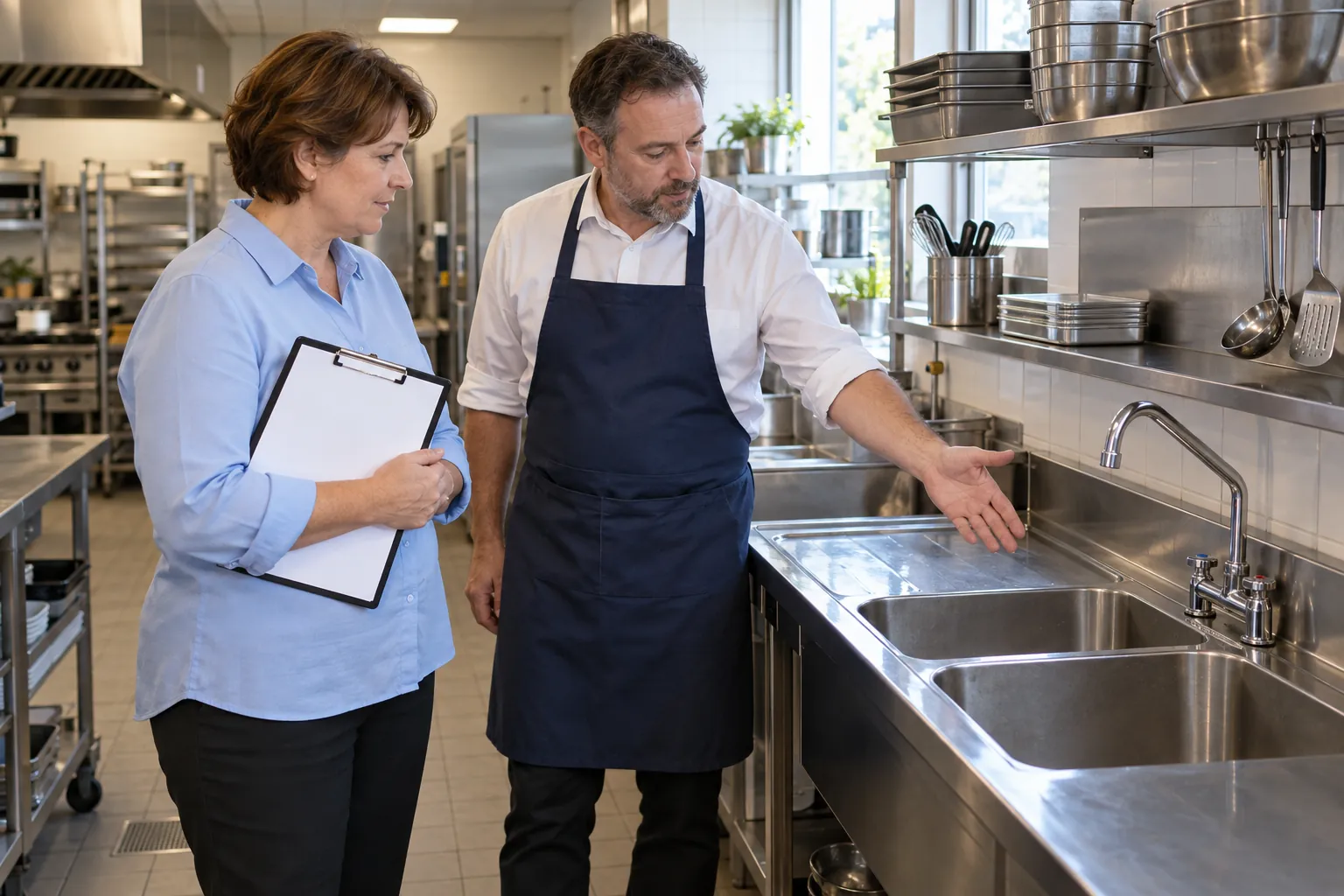
Walk the restaurant with the people who prepare food and those who clean it. Follow one item from dirty to ready for use, then follow one fault from discovery to a checked correction. That exercise shows whether the checklist describes the real work and whether the record survives a difficult service.
Sources
Every document this guide quotes or links to, in the order it first cites them.
- Government's food hygiene cleaning guidance gov.uk
- Safer food, better business for caterers gov.uk
- Current business guidance gov.uk
- Safe Catering gov.uk
- CookSafe guide foodstandards.gov.scot
- Food business remains responsible for its food safety arrangements gov.uk
- Your cleaning schedule safe method assets.publishing.service.gov.uk
- HSE's hospitality cleaning-substances guidance hse.gov.uk
- HSE's cleaning slips guidance hse.gov.uk
- CookSafe Cleaning House Rules foodstandards.gov.scot
Related guides
 CleaningCommercial cleaning checklist: area by area, and how to use itA commercial cleaning checklist for offices and shared premises, area by area, with how to use it on shift, what to record and how a supervisor checks it.
 CleaningCleaning specification: what it should say, and how to show it is metWhat a cleaning specification should contain, input and output standards, setting frequencies by area, and how to show the specification is being delivered.
 CleaningCleaning quality control: how to inspect, correct and prove the standardHow quality control works in commercial cleaning: QA versus QC, setting standards, running inspections, corrective action and a record that holds up.
 CleaningToilet check sheet: what to record and how to make it credibleWhat a washroom check sheet should record, how often to check, the legal duty behind it, and how to keep a record a client or inspector will believe.