Cleaning
Retail cleaning checklist: shop floors, fitting rooms and spills
A retail cleaning checklist sets out what is cleaned in each area of a shop before opening, during trading and after close, from the entrance and sales floor to fitting rooms, toilets and the stockroom, and who does each task.
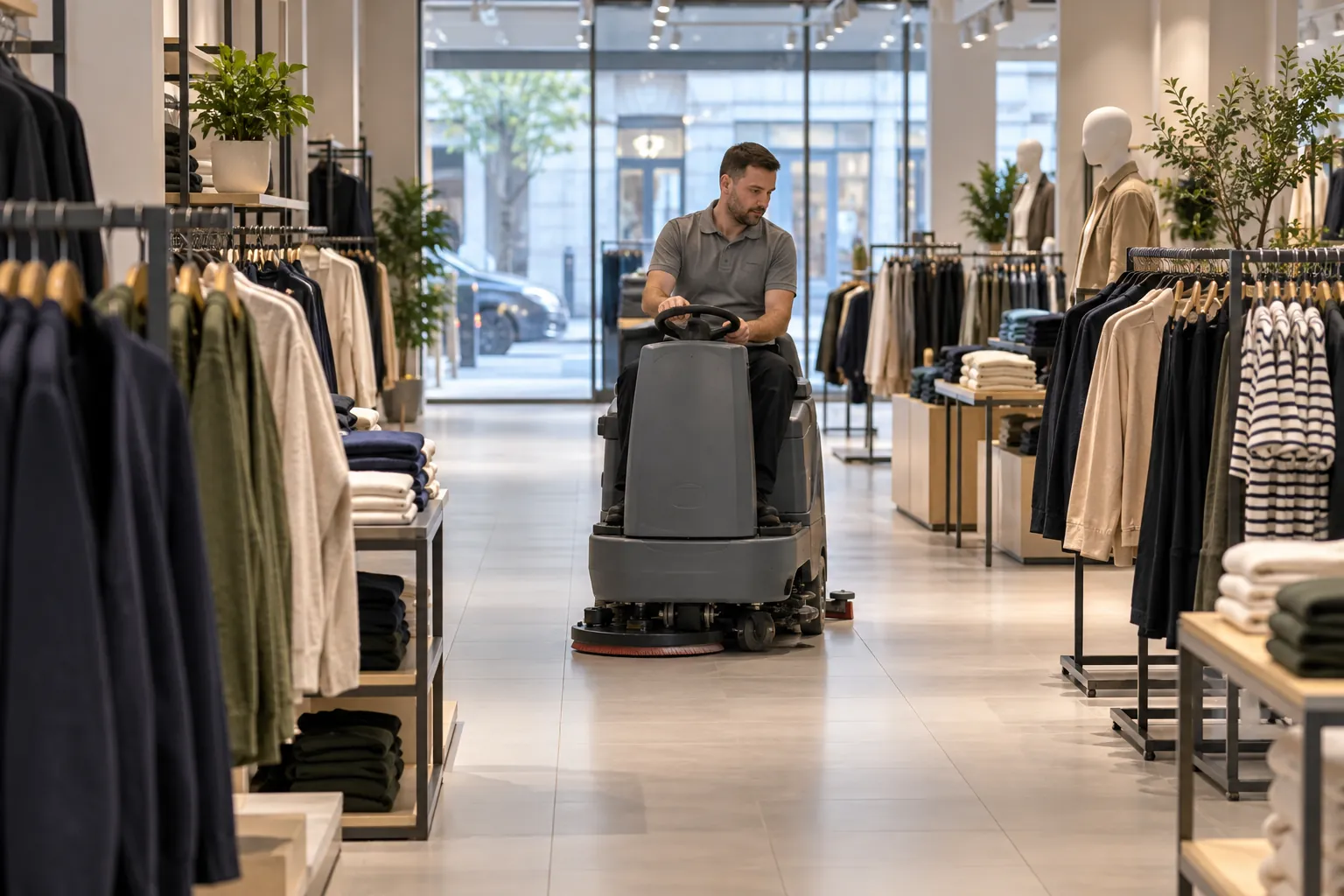
A shop has to be cleaned around its customers. The floor is walked all day, spills happen during trading, and a wet entrance on a rainy Saturday is a slip risk as much as a cleaning job. This guide sets out that checklist, including the areas shoppers never see.
01
The duty behind a retail cleaning checklist
In Great Britain, the Workplace (Health, Safety and Welfare) Regulations 1992 require every workplace, a shop included, to be kept sufficiently clean (regulation 9) and its floors and traffic routes to be kept free, so far as is reasonably practicable, of anything that may cause a person to slip, trip or fall (regulation 12). Regulation 9 also says that, so far as is reasonably practicable, waste must not be allowed to accumulate except in suitable receptacles. Northern Ireland has equivalent regulations. A retailer owes cleaning and safety duties to staff and to shoppers: the Health and Safety at Work etc. Act 1974 requires an employer to protect employees and, so far as is reasonably practicable, anyone else affected by the business, which in a shop means every customer.
Civil law adds the occupier's duty of care to visitors: the Occupiers' Liability Act 1957 in England and Wales, the Occupiers' Liability (Scotland) Act 1960, and the Northern Ireland Act of 1957. When a customer slips, the question is usually whether the shop had a reasonable system for inspecting and cleaning the floor, and whether it can show that the system was followed at the time.
Other duties touch cleaning in particular parts of a shop:
- COSHH: the Control of Substances Hazardous to Health Regulations 2002 cover cleaning chemicals, including how they are stored in the stockroom.
- Food hygiene: a shop that sells unwrapped food, has a bakery or deli counter or runs a café must keep food areas and equipment clean under food hygiene law, and will be inspected by the local authority.
- Fire safety: escape routes and fire exits must be kept clear under the Regulatory Reform (Fire Safety) Order 2005 in England and Wales, with equivalent law in Scotland and Northern Ireland. Cardboard, cages and cleaning equipment in the wrong place are among the commonest problems.
In most shops, health and safety law is enforced by the local authority's environmental health team rather than the Health and Safety Executive, though HSE publishes the guidance they work from.
02
What a retail cleaning checklist covers
Every shop is different, from a small high-street store to a supermarket, and a downloaded template or PDF is only a starting point, but the checklist usually covers the same areas:
- Entrance: doors, entrance matting, the lobby floor, and trolley and basket bays.
- Sales floor: aisles and walkways, shelves, fixtures and product displays, mirrors and glass.
- Checkout area: counters, POS screens and card terminals, conveyor belts, self-checkouts and queue barriers.
- Fitting rooms: floors, mirrors, seats, hooks, curtains or doors.
- Customer toilets and baby change, where provided.
- Food areas: bakery, deli, café, chillers and freezers, each with its own cleaning schedule to keep a hygienic environment for open food.
- Staff areas: staff room, kitchen, staff toilets and lockers.
- Stockroom and goods-in: floors, racking, cardboard and waste, cleaning store and fire exits.
- Outside: the shopfront, windows at street level, the pavement in front of the door and, for larger stores, the car park and trolley shelters.
Split the checklist by area and by time of day, with more attention in high-traffic areas. A single list for the whole store, completed once, tells you little about the entrance at 11am on a wet Saturday.
03
The retail cleaning checklist: before opening, during trading, after close
Most retail store cleaning happens outside trading hours, with lighter cleaning tasks through the day. A retail store cleaning checklist works best as a daily cleaning checklist in three parts, with weekly cleaning and periodic work listed separately. Adjust the list to the store's hours, floor types and peak times.
Before opening
- Walk the sales floor for spills and trip hazards left overnight or from deliveries, sweeping up dirt and debris where needed.
- Clean entrance doors and glass at hand height; lay out or clean entrance matting.
- Wipe checkout counters, card terminals, belts and baskets.
- Check customer toilets and fitting rooms are clean, and that supplies such as soap, paper towels and toilet paper are stocked.
- Check fire exits and escape routes are clear.
During trading
- Regular floor walks to find and deal with spills, dropped stock and packaging.
- Check and dry the entrance in wet weather, and replace saturated mats.
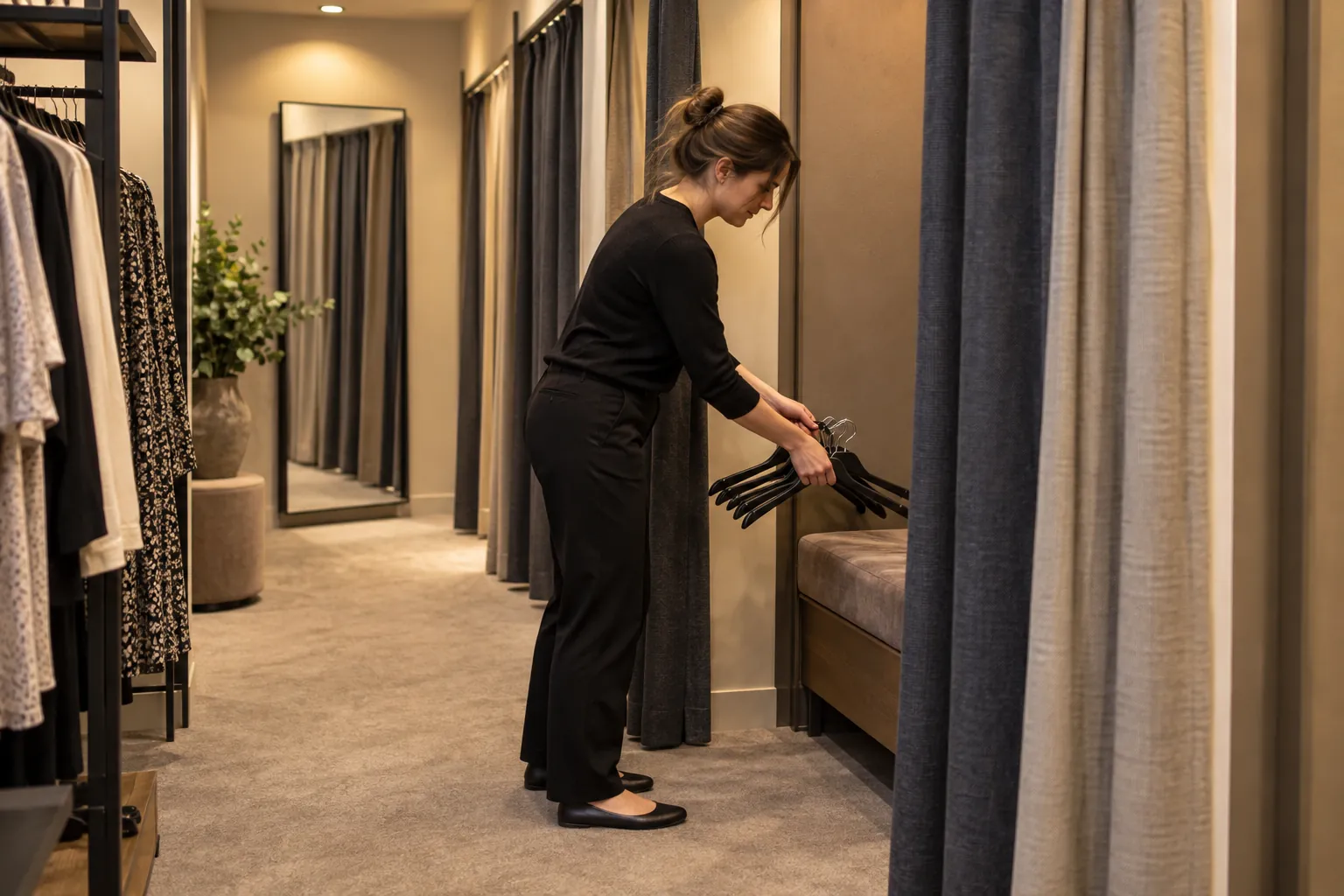
- Clear and tidy fitting rooms between customers at busy times; remove hangers, tags and pins, and check for anything left behind.
- Check customer toilets on a schedule that matches footfall; see the toilet check sheet guide.
- Wipe checkout touch points and light switches in staff areas at intervals, which limits the spread of germs, and empty bins before they overflow.
After close
- Clean hard floors by sweeping and mopping floors or with a scrubber-dryer; vacuum carpeted areas.
- Dust shelves and fixtures, and remove fingerprints and streaks from glass, mirrors and display cases.
- Clean fitting rooms fully, including mirrors, seats and floors.
- Full clean of customer and staff toilets and the staff kitchen.
- Empty all bins, remove cardboard and waste to the compactor or collection point.
- Clean food areas to their own schedule.
Weekly and periodic
- Dust high shelving, signage frames and light fittings; replace burnt-out light bulbs through maintenance.
- Clean under fixtures, behind checkouts and along skirting.
- Deep clean floors: strip and reseal where the floor type needs it, and shampoo carpets or treat stains.
- Clean the stockroom floor and racking, the cleaning store and the bin area.
- Clean shop windows, inside and out, often by a specialist window cleaner.
04
Slips, spills and wet weather
HSE lists slips and trips among the most common causes of injury at work, and in shops they affect customers as well as staff. Floor cleaning in a shop is therefore as much about hazard control as about how the store looks, though the two go together: a clean and welcoming store is part of the shopping experience, and store cleanliness is one of the first things a customer notices. A few principles make most of the difference:
- Find spills quickly. Regular floor walks at a set interval, more often at peak times and in food aisles, and a rule that any member of staff who sees a spill stays with it or guards it until it is dealt with.
- Deal with them properly. Stop people walking through, clean up with the right method, and dry the floor. A mop that leaves a wet film simply moves the hazard; many stores use spill kits with absorbent pads for spot spills and a scrubber-dryer for larger areas.
- Use signs honestly. Put a wet floor sign out while the floor is wet and remove it when it is dry. A sign that stands in the same place all day is ignored by shoppers and does little to show a system is working.
- Control the entrance. Enough matting to take water off shoes before they reach hard floors, cleaned and replaced when saturated, and more frequent checks in rain.
- Match cleaning to the floor. The wrong detergent, or too much of it, leaves residue that makes a floor slippery when wet. Follow the floor manufacturer's cleaning guidance and check floor type before changing products.
- Record it. Note floor walks and spills dealt with, with the time. If a customer claims they slipped at 14:10, a record of the floor walk at 14:00 and the spill cleaned at 14:05 is what the insurer will ask for.
Freezer and chiller aisles, entrances, food-to-go areas and stockroom doors where cages come in from outside are the usual problem spots. If the same area keeps causing trouble, have the slip resistance of the floor assessed and look again at the flooring, the cleaning method and the entrance matting.
05
Who does it, and how the checklist is checked
In many shops, store staff handle the daily cleaning through trading hours and a retail cleaning service, a professional cleaning contractor or an in-house store team does the main clean before opening or after close. Larger stores and shopping centres often have cleaners on the floor all day. Whatever the split, the retail cleaning checklist should say who owns each task, because a spill that everyone assumes is someone else's job is the one that causes a claim.
- Store managers set the standard, check the store on opening and before peak periods, and deal with complaints.
- Store staff handle floor walks, spills, fitting rooms and tidying during trading, and report anything they cannot deal with.
- The cleaning team, in-house or contracted, does the scheduled cleans, the out-of-hours work and periodic floor care.
- Maintenance and specialists handle lighting, fixtures, windows at height and floor restoration.
For a retailer with many stores, the same checklist and cleaning plan across the estate gives consistent standards, supports compliance with the company's own hygiene standards, and gives a fair basis for comparison. Audit it the way you would any standard: a scheduled inspection by an area manager, a scored walk-round against the specification, and a look at complaints and slip incidents by store.
Plan for peaks. Christmas, sales, school holidays and bad weather bring more shoppers, more stock on the floor and more spills. Increase floor walks, check customer toilets more often and add a mid-day clean of the entrance, and put the change on the checklist so it actually happens rather than being assumed.
06
Where the retail cleaning record fails, and what SiteClara does about it
Most shops can show a cleaning rota. Far fewer can show that the floor walk at 14:00 actually happened, who did it, and what they found. The paper sheet at the back of the store is completed at the end of the day, the contract cleaner's night work is recorded in their own folder, and an area manager visiting once a fortnight sees the store on that day only.
SiteClara places a printed QR poster at each area on the checklist – the entrance, each fitting room, the customer toilets, the stockroom – with an optional NFC tag behind it. Staff scan the code or tap the tag on their own phone, with no app to install, see the scheduled checks due there, and mark them done or explain what stopped them. The time and the person are recorded as it happens, with a photo on any visit. A problem found, such as a broken fitting or a leaking chiller, goes onto the team's list of jobs until someone closes it. On a site led by the building owner, public reporting can also be allowed, so a customer can report a problem at a tag, for example in a customer toilet.
The supervisor or store manager sees what is due, done and missed and can record why a check was missed. The store and its cleaning contractor can share the same site. Each morning at 8am the approved report for the day before goes to nominated management or client contacts, showing what was reported, completed and still open, and how scheduled checks went.
07
Further reading, and a list to take away
The Health and Safety Executive publishes Preventing slips and trips at work (INDG225), guidance for the retail sector and the Approved Code of Practice Workplace health, safety and welfare (L24). The Food Standards Agency, and Food Standards Scotland in Scotland, publish guidance for food retailers. The British Institute of Cleaning Science (BICSc) publishes training and standards for cleaning operatives.
Before the next busy season, check that your retail cleaning checklist:
- is split by area and by before opening, during trading and after close;
- sets floor walks at an interval that matches footfall, with more in bad weather and at peaks;
- has a spill procedure that ends with a dry floor and the sign removed;
- covers fitting rooms, customer toilets and the stockroom, not only the sales floor;
- keeps fire exits and escape routes clear of cardboard and equipment;
- names who owns each task, between store staff and the cleaning team;
- records floor walks and spills with the time;
- is audited by someone other than the person who completes it.
Sources
Every document this guide quotes or links to, in the order it first cites them.
- Workplace (Health, Safety and Welfare) Regulations 1992 legislation.gov.uk
- Regulation 9 legislation.gov.uk
- Regulation 12 legislation.gov.uk
- Occupiers' Liability Act 1957 legislation.gov.uk
- Regulatory Reform (Fire Safety) Order 2005 legislation.gov.uk
- Preventing slips and trips at work hse.gov.uk
Related guides
 CleaningCommercial cleaning checklist: area by area, and how to use itA commercial cleaning checklist for offices and shared premises, area by area, with how to use it on shift, what to record and how a supervisor checks it.
 CleaningToilet check sheet: what to record and how to make it credibleWhat a washroom check sheet should record, how often to check, the legal duty behind it, and how to keep a record a client or inspector will believe.
 CleaningCleaning quality control: how to inspect, correct and prove the standardHow quality control works in commercial cleaning: QA versus QC, setting standards, running inspections, corrective action and a record that holds up.
 Fire and water checksFire safety checks in the workplace: what to check, how often, and who does itThe routine fire safety checks a UK workplace needs, from daily escape routes to the weekly alarm test, who does each one, and what the record should show.