Premises and facilities management
Notifiable events: what WorkSafe must be told, and what to do in the first hour
A WorkSafe notifiable event is a death, a notifiable injury or illness, or a notifiable incident arising from work, and under the Health and Safety at Work Act 2015 the person conducting the business or undertaking must make sure WorkSafe New Zealand is notified as soon as possible after becoming aware of it.
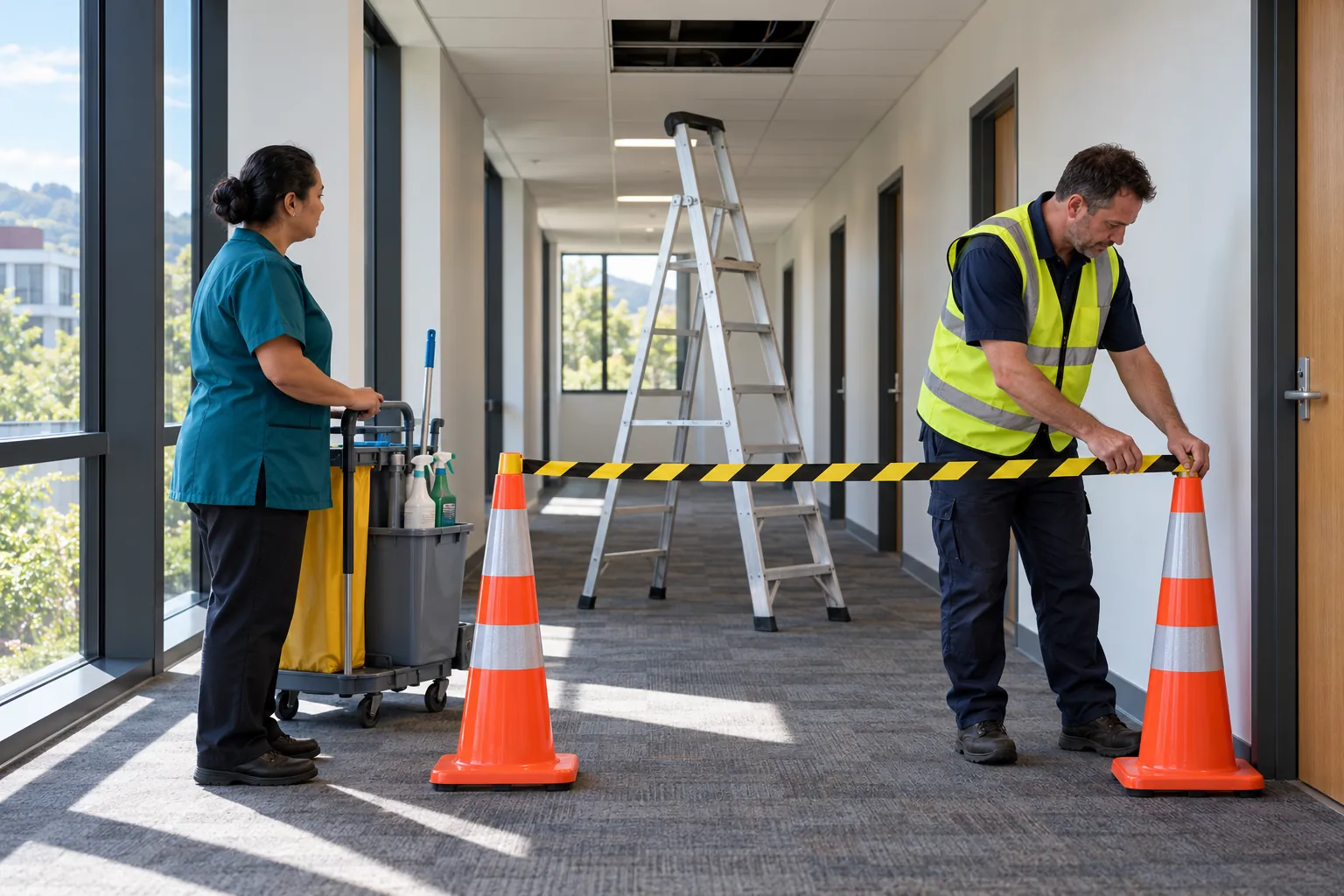
A cleaner on a campus is splashed in the eye while decanting a chemical. A ceiling tile and a section of grid come down in an office corridor overnight. A caretaker falls from a stepladder in a school hall and is admitted to hospital. Each of these may be a notifiable event under the Act, and each sets off three duties at once: leave the scene alone, tell WorkSafe, and keep the record. This guide explains what counts, what does not, who notifies when several businesses share a building, and how to make the follow-up hold together.
01
What a notifiable event is under the Health and Safety at Work Act 2015
A notifiable event is the small group of serious work-related events that the health and safety regulator must be told about. The definitions are in sections 23 to 25 of the Health and Safety at Work Act 2015 (HSWA): section 23 defines a notifiable injury or illness, section 24 a notifiable incident, and section 25 brings them together with a death as a notifiable event. The duties that follow are in sections 55 to 57: preserve the site, notify the regulator, and keep a record.
WorkSafe New Zealand's quick guide What events need to be notified? (March 2024) puts it plainly: a notifiable event is "a death", "a notifiable injury or illness" or "a notifiable incident", and "Only serious events are intended to be notified. These trigger requirements to preserve the site, notify the regulator and keep records."
The duty sits with the person conducting a business or undertaking, the PCBU. The quick guide says a PCBU "must make sure the regulator is notified as soon as possible after becoming aware that a notifiable event arising from the conduct of the business or undertaking has happened". The event must arise from the work: WorkSafe says it "could be due to the condition of the work site, the way the work activity is organised, or the way equipment or substances are used".
For most buildings the regulator is WorkSafe, New Zealand's primary work health and safety regulator; Maritime New Zealand is the regulator for ships and, since 1 July 2024, the 13 major ports, and the Civil Aviation Authority for aircraft in operation. Some regulations, such as the Health and Safety at Work (Asbestos) Regulations 2016, add notification duties of their own.
02
What counts as notifiable in a building, and what does not
WorkSafe's guide starts with a simple test for injuries and illnesses: "All injuries or illnesses that require (or would usually require) a person to be admitted to hospital for immediate treatment are notifiable." Admission means as an inpatient "for any length of time"; it "does not include being taken to the hospital for out-patient treatment by a hospital's Emergency Department".
Beyond hospital admission, the guide lists other notifiable injuries and illnesses, each requiring immediate treatment other than first aid. The ones cleaning, security and facilities teams are most likely to meet are:
- A serious eye injury, including "contact with any substance that could cause serious eye damage", but not "exposure to a substance or object that only causes discomfort to the eye".
- A serious head injury, such as a fractured skull or "a head injury that results in losing consciousness".
- A spinal injury, which "does not include back strain or bruising".
- Serious lacerations: "serious deep cuts that cause muscle, tendon, nerve or blood vessel damage, or permanent impairment", but not "superficial cuts treatable by cleaning the wound and applying a dressing".
- Loss of a bodily function, such as consciousness or movement of a limb, for example "through electric shock or acute exposure to a harmful substance or heat".
- Medical treatment within 48 hours of exposure to a substance, such as burns from skin contact with or inhalation of toxic chemicals.
- A serious burn, amputation, degloving, or a serious infection to which the work is a significant contributing factor, including work involving contact with human blood or bodily substances.
A notifiable incident is different: nobody needs to be hurt. WorkSafe describes it as "an unplanned or uncontrolled work-related incident that exposes the health and safety of workers or others to a serious risk arising from immediate or imminent exposure to" a listed event. In a building, the relevant ones are usually a substance escaping, spilling or leaking; "an implosion, explosion or fire"; gas or steam escaping; a pressurised substance escaping; electric shock "from anything that could cause a lethal shock"; "the fall or release from height of any plant, substance, or thing"; and "the collapse or partial collapse of a structure". WorkSafe adds that "People may be put at serious risk even if they were some distance from the incident, for example, from a gas leak."
WorkSafe is just as clear about what is not notifiable. Events unrelated to work are not, such as "a worker fainting from a non-work related cause". A sprain, strain or fracture "that does not require admission to hospital (except for skull and spinal fractures)" is not, and neither is a burn treatable by washing and a dressing. Nor are "controlled activities that form part of the business or undertaking". Those events can still belong in your own incident records; they simply do not go to WorkSafe.
Where it is unclear, the guide says that "WorkSafe relies on PCBUs to work out whether an injury, illness or incident is notifiable", and points to the Notify WorkSafe tool, which "will guide you through the notification process and determine whether the event is a notifiable injury, illness or incident".
03
The three duties: preserve the site, notify WorkSafe, keep the record
Once a notifiable event has happened, three things follow, and the order matters on the day.
- Preserve the site (section 55). The PCBU who manages or controls the workplace "must take all reasonable steps to make sure the site of a notifiable event is not disturbed until an Inspector gives permission for normal work to resume". The exceptions include helping an injured person, anything "essential to make the site safe or to minimise the risk of a further notifiable event", and anything directed by a police officer or permitted by an Inspector. In practice, "the work set-up should not be changed" and plant and substances involved "should stay where they are". "Work can continue in other parts of the workplace."
- Notify the regulator (section 56). The notice must be given "by the fastest way possible in the circumstances", and it "must be done even if emergency services attend". WorkSafe's Notify WorkSafe page says to phone 0800 030 040, which is staffed 24/7, where someone has died, and to use the online Notify WorkSafe tool for other notifications. In an emergency, phone 111 first. The person notifying must "provide details about the notifiable event as requested by the regulator".
- Keep the record (section 57). "The PCBU must keep records of notifiable events for at least five years from the date the regulator was notified about the event."
These are offences, not guidance, and failing to comply carries a penalty. WorkSafe's page on offences and penalties under the Health and Safety at Work Act 2015 gives maximum penalties of $10,000 for an individual PCBU and $50,000 for any other PCBU for failing to preserve a site or failing to notify, and $5,000 and $25,000 for failing to keep the records.
For a cleaning or security team, preserving the site cuts against habit. The instinct after a spill or a fall is to mop up, fold the ladder away and put the room back in order before the building opens. Once the injured person has been looked after and the area is safe, the right action is to cone or tape it off, stop work that could disturb it, and wait for WorkSafe's direction.
04
Who notifies when several PCBUs share a building
Buildings are almost always shared workplaces. An office tower may have an owner, a facilities management company, cleaning and security contractors and a dozen tenants, each a PCBU; an apartment building adds a body corporate and its body corporate manager.
WorkSafe's guide answers the obvious question: "If multiple PCBUs are involved in the work, one PCBU should be nominated to notify the regulator. However, all PCBUs are responsible for ensuring a notification is made." It also says "Only one notification is required for each notifiable event." So the aim is one clear notification, and every business involved needs to know that it was made.
The duty to preserve the site sits with the PCBU who manages or controls the workplace, which may not be the employer of the person who was hurt. A cleaning contractor's worker injured in a plant room raises duties for the contractor, and for the owner or facilities manager who controls that plant room.
Section 34 of the Act is the tool for sorting this out in advance. WorkSafe's Overlapping duties quick guide says businesses sharing duties must "so far as is reasonably practicable consult, cooperate and coordinate activities" with each other, and that a business cannot rid itself of its responsibilities by agreement with another. For notifiable events, that consultation should produce written answers to a few questions:
- Which PCBU notifies WorkSafe for an event in the common areas, the plant rooms, the car park and the tenancies?
- Who controls each area, and so who preserves the site there?
- How does a contractor's supervisor reach the building manager at night?
- How do the others learn that the notification was made, and who keeps the five-year record?
Our guide to overlapping duties covers the wider arrangement.
05
The first hour, and the follow-up
A short, rehearsed sequence works better than a long policy. For a building team:
- Look after people. First aid, and 111 for an ambulance, fire or police where needed.
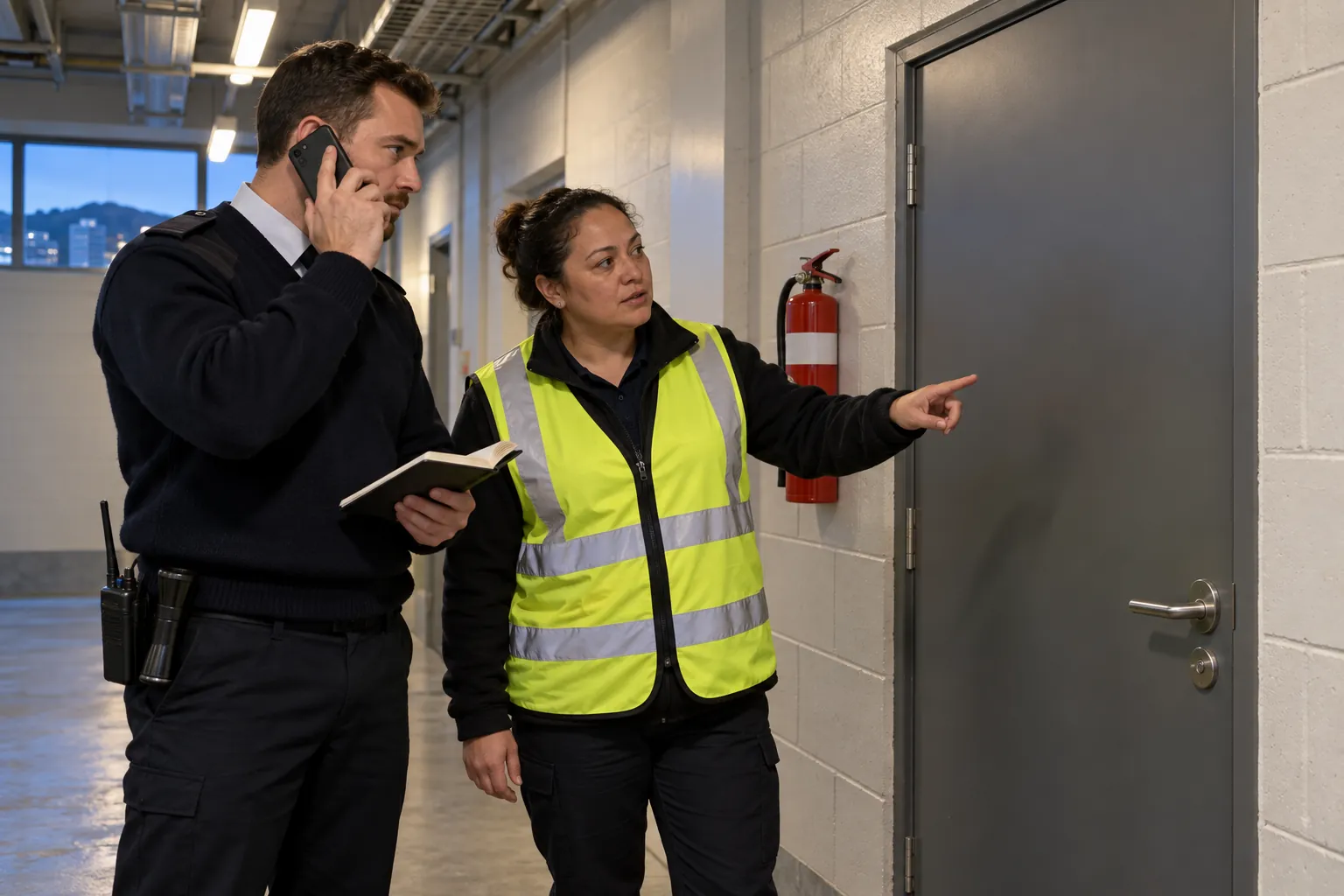
- Make the area safe and leave it alone. Isolate the power or the leak if that is essential, cone or tape off the area, and stop work that could disturb it.
- Tell your supervisor straight away. The supervisor decides with the nominated PCBU whether it is notifiable, using the Notify WorkSafe tool if unsure.
- Notify WorkSafe, by phone where someone has died, otherwise online, as soon as possible after becoming aware. Note who notified, when, and any reference given.
- Write down what happened while it is fresh: the exact place, the time, who was involved and who saw it, the task, the injury or damage, and what was done straight away.
- Keep the scene until WorkSafe says otherwise, and record when work at the site resumed and on whose permission.
An injured worker's ACC claim is a separate process. The Accident Compensation Corporation's page What to do when an employee is injured tells employers to make sure the employee visits "their doctor or health provider to lodge their ACC claim", and "If the injury happened at work, check that it has been reported." An ACC claim is not a notification to WorkSafe.
WorkSafe says each notification goes to its Response team, which may investigate, invite an assisted review of the duty holder's health and safety system, or confirm that no action is required. The quick guide notes that HSWA does not expressly require a PCBU to investigate, but that "investigations of notifiable events form part of good practice to identify and manage work risk", and that PCBUs should consider investigating what happened, "working out what can be changed to prevent it happening again", and "making those changes".
That last step is where records thin out. An investigation ends with actions, such as replacing the stepladders or moving chemical decanting to a ventilated room, and each needs an owner, a date and a check that it was done where it was needed. Talk it through with your health and safety representatives and the workers who do the job.
Lesser events deserve attention too. A near miss on the same stairway or a splash that needed only an eyewash is not notifiable, but it may be the warning before one, and WorkSafe's guidance says to review incidents and near misses to check that your controls are working. Our guide to near miss reporting covers how to catch them.
06
Where the record fails, and what SiteClara does about it
The statutory record is rarely the weak point: a notification to WorkSafe leaves a trail. What fails is everything around it. The warning signs were mentioned to whoever was passing and never written down. Afterwards, the investigation's actions were agreed in a meeting, and six months later nobody can show that the ceiling grid on level 4 was fixed, or that the new decanting routine is being followed.
SiteClara records work and reports at the location. A printed QR poster, with an optional NFC tag behind it, sits at each place where checks are scheduled, such as a plant room, a cleaners' cupboard or a stairwell. Staff scan or tap on their own phone, with no app to install, see what is due there, and mark each check done or explain what stopped them. They can report a problem at that spot, with a photo when one helps, and the report carries the location, the time and the named person. It stays on the team's list of open jobs until someone closes it.
The supervisor sees what is due, done and missed, adds a note and approves a daily report that goes to nominated management or client contacts the next morning, showing what was reported, what was completed and what is still open. After a notifiable event, the corrective actions can become scheduled checks at the places they apply, so the record shows the new routine being carried out, by whom and when, rather than a line in the minutes saying it was agreed.
07
Where to read more, and a list to take away
Start with WorkSafe's web page What events need to be notified? and its quick guide of the same name, which set out the definitions, examples and duties; notifications are made through Notify WorkSafe. For the law, read sections 23 to 25, 34 and 55 to 57 of the Health and Safety at Work Act 2015.
Before you rely on your notifiable event arrangements, check that:
- supervisors on every shift, contractors included, know what a notifiable injury or illness and a notifiable incident are, and what is not notifiable;
- everyone knows to care for people first, make the area safe, then leave the scene alone;
- 0800 030 040 and the Notify WorkSafe tool are known to the people who may need them, including at night;
- the PCBUs in the building have agreed who notifies, who preserves each area and how the others are told;
- each notification is recorded with who made it, when and any reference, and kept for at least five years;
- an injured worker is helped to lodge an ACC claim, separately from the notification;
- every investigation ends in actions with an owner, a date and a check at the place it applies;
- near misses and lesser incidents at the same places are reviewed, not only the notifiable ones.
Sources
Every document this guide quotes or links to, in the order it first cites them.
- Health and Safety at Work Act 2015 legislation.govt.nz
- What events need to be notified? worksafe.govt.nz
- Notify WorkSafe worksafe.govt.nz
- Offences and penalties under the Health and Safety at Work Act 2015 worksafe.govt.nz
- Overlapping duties quick guide worksafe.govt.nz
- What to do when an employee is injured acc.co.nz
- What events need to be notified? worksafe.govt.nz
Related guides
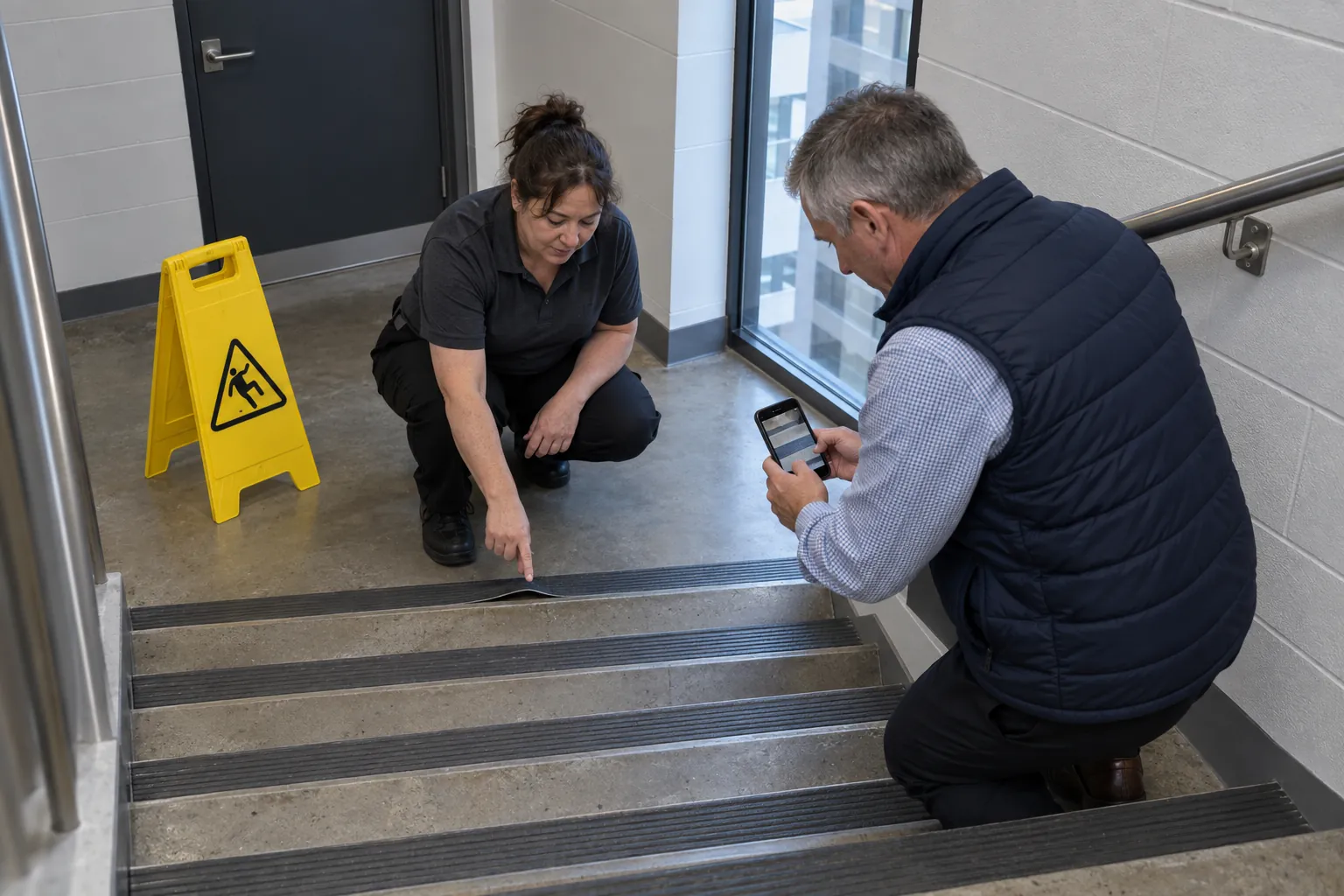 Premises and facilities managementIncident reporting: what HSWA asks for, and a system people will actually useIncident reporting under New Zealand's HSWA: what must be notified to WorkSafe, what records to keep, and how to run incident reporting in a shared building.
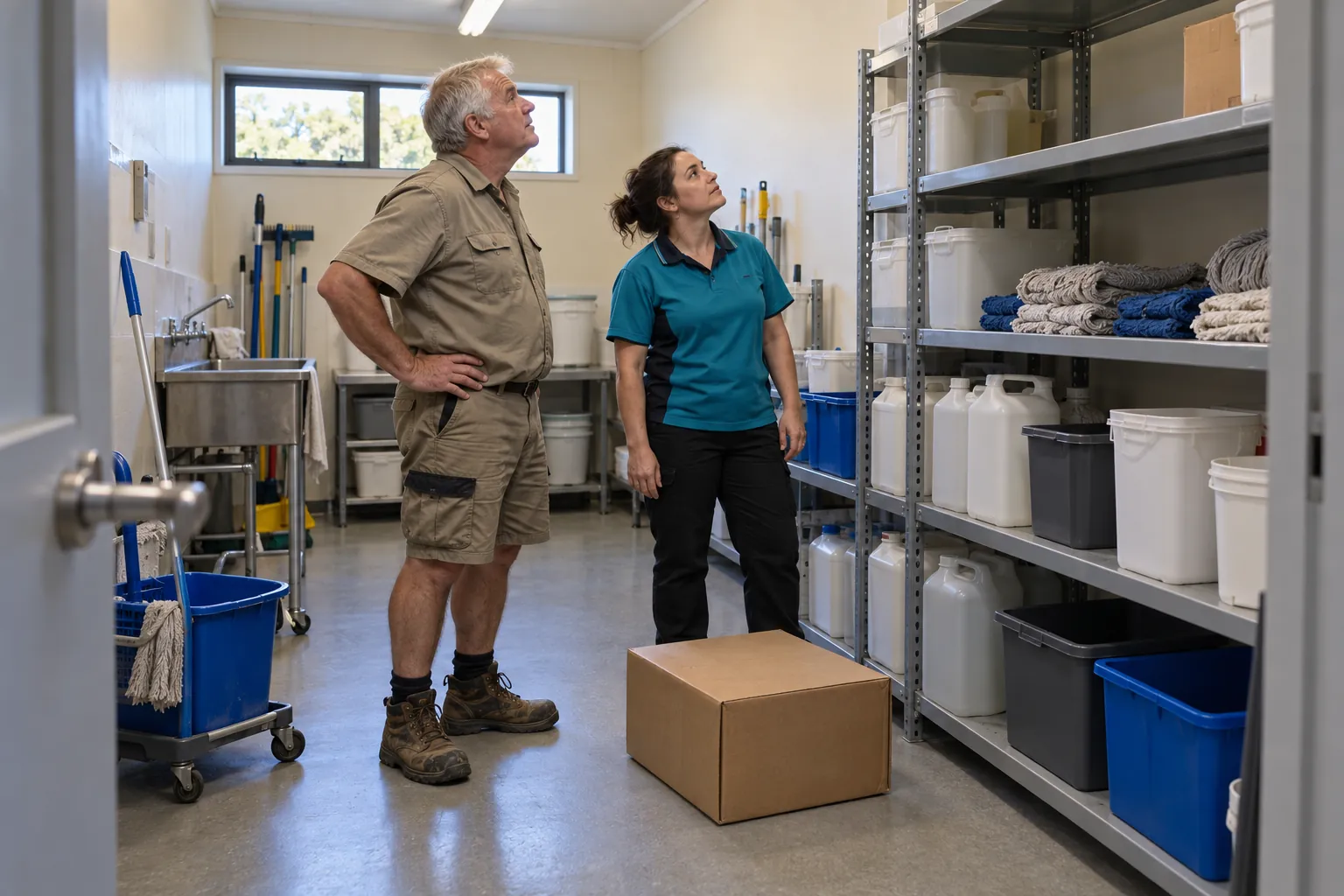 Premises and facilities managementNear miss reporting: learning from the harm that nearly happenedWhat a near miss is under New Zealand's HSWA, when one must be notified to WorkSafe, what a good near miss report records, and how to get near misses reported.
 Premises and facilities managementOverlapping duties: sharing health and safety when several PCBUs work in one buildingOverlapping duties under HSWA 2015: when PCBUs share a building or a contracting chain, how to consult, co-operate and co-ordinate, and how to show it works.
 Premises and facilities managementPCBU duties: what a PCBU is, and what the law expects of one in a buildingWhat a PCBU is under the Health and Safety at Work Act 2015, the primary duty of care, shared duties in one building, and what changes on 1 April 2027.