Premises and facilities management
Near miss reporting: learning from the harm that nearly happened
A near miss is an unplanned event at work that could have injured someone, made them ill or damaged something, but by luck or timing did not.
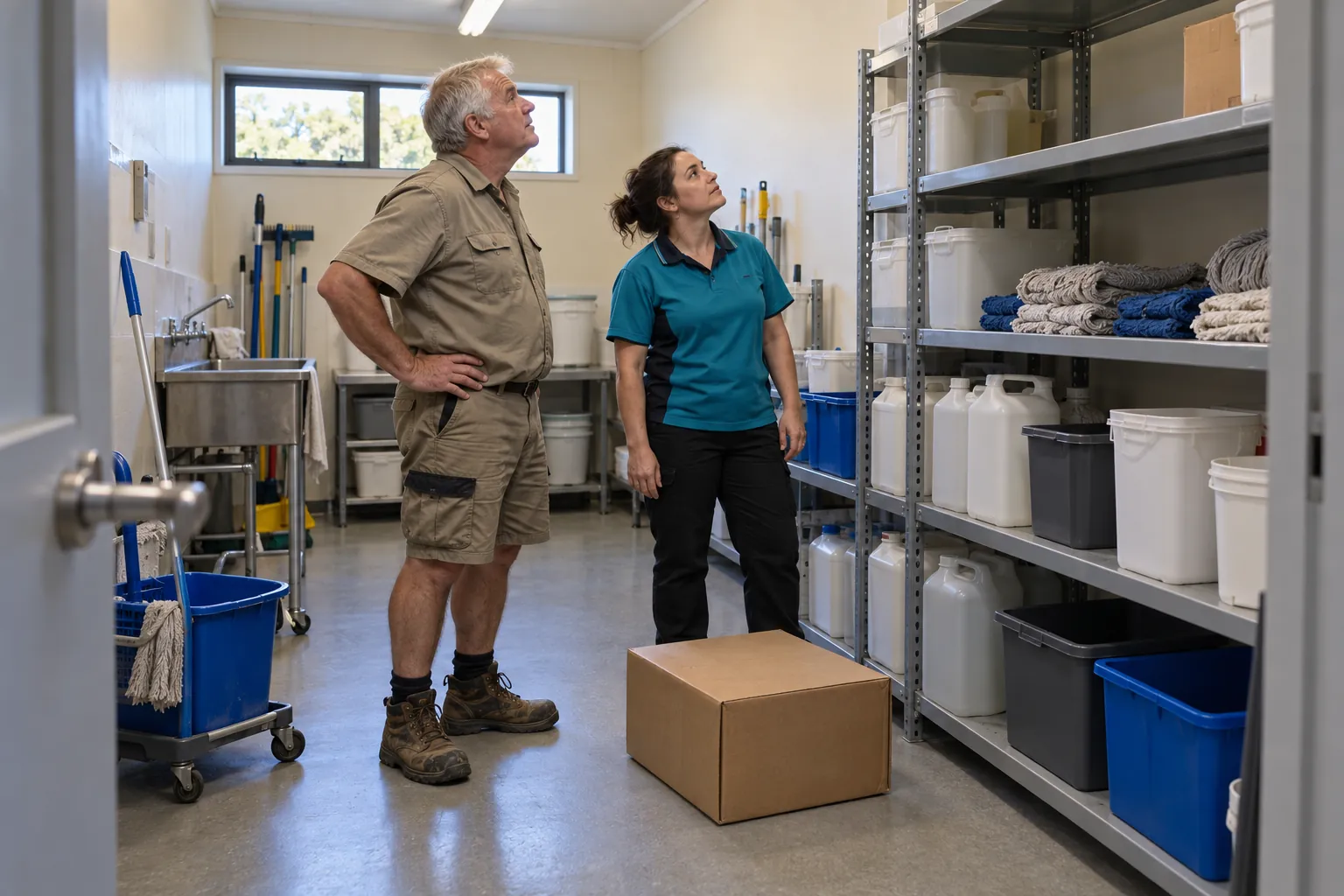
It is the box that fell where someone had been standing a second earlier, the van that stopped a metre short of a cleaner in the car park. Nobody was hurt, so nothing has to be done, and that is exactly why near misses go unreported. In New Zealand some near misses are notifiable to WorkSafe under the Health and Safety at Work Act 2015, and the rest are the cheapest lesson a PCBU will ever be offered. This guide covers what counts, what must be notified, what a useful report records and how to get people to make one.
01
What a near miss is, and where it sits in New Zealand law
A near miss, also called a close call or a near hit, is an unplanned event at work that did not injure anyone, make anyone ill or damage anything, but could easily have done. The difference is usually timing or luck, and the same causes, left alone, will produce the same event with a worse ending.
The Health and Safety at Work Act 2015 (HSWA) does not define "near miss" or require a PCBU (a person conducting a business or undertaking) to keep a near miss register. The expectation comes from the primary duty to keep workers and others healthy and safe so far as is reasonably practicable, and from WorkSafe's guidance. Its fact sheet How to manage work risks (July 2017) tells PCBUs to "implement appropriate means for workers to report incidents, near misses, or health and safety concerns", to "avoid processes that may encourage under-reporting", and to use investigations into incidents and near misses to keep improving control measures.
There is one place where the law does catch a near miss directly. A notifiable incident under HSWA is, in the words of WorkSafe's guidance What events need to be notified?, "an unplanned or uncontrolled work-related incident that exposes the health and safety of workers or others to a serious risk arising from immediate or imminent exposure to" a listed hazard. Nobody has to be hurt: a serious near miss of one of those kinds is a notifiable event, with the same duties as an injury.
WorkSafe takes near misses seriously when it decides what to look into. Its page How we investigate says harm, or the risk of harm, "can be the result of a single event, a pattern or a series of events, a precursor event or a near miss". When a digger struck a live power line at an Upper Hutt site and both workers escaped injury, WorkSafe's 2017 statement Near miss incident sends sharp reminder said "the fact that neither worker was hurt is not relevant in this instance". The company was fined $90,000.
A hazard is a condition, such as the wet floor; a near miss is an event, such as someone skidding on it and catching the rail; an accident is an event with harm, which WorkSafe's report template calls an incident. All three should go through the same reporting route, so nobody has to sort before telling someone.
02
What near misses look like in a building
Near miss examples in guidance tend to come from construction sites and factories. In an office block, school, shopping centre or apartment building, where cleaning, security and maintenance teams work alongside tenants and the public, they look more like this:
- Something falls: a carton slides off a high shelf in the cleaners' store, or a ceiling tile drops in a corridor.
- A slip or trip without a fall: a skid on a freshly mopped floor with no sign out, a foot caught on a lifted stair nosing.
- Vehicles and people: a delivery truck reverses towards a cleaner emptying bins on the loading dock.
- Electricity: a floor scrubber lead with its sheath cut through, or a tingle from a damaged socket.
- Chemicals: two cleaning products mixed in a bucket give off fumes, or a splash of concentrate just misses someone's eyes.
- Fire and escape: a small bin fire put out before it spreads; a fire exit found chained while the building is occupied.
- Working alone: a security officer on a night patrol shut into a plant room when the door closes behind them.
- Plant and equipment: a roller door drops without warning, or a ladder's foot slides and the worker steps off in time.
Some of these can be notifiable incidents as well as near misses. WorkSafe's list includes a substance escaping, spilling or leaking; a fire; gas escaping; electric shock from anything that could cause a lethal shock; the fall from height of any plant, substance or thing; and the collapse of a structure. The test is the serious risk, not the outcome. WorkSafe's quick guide excludes shocks from static electricity and extra low voltage equipment, and notes that people "may be put at serious risk even if they were some distance from the incident, for example, from a gas leak".
Most building near misses fall well short of that line, and are still worth reporting because they cluster. One skid at the main entrance is a near miss; five in a wet week is a problem with the matting or the cleaning schedule.
03
When a near miss must go to WorkSafe
The first question on any near miss report is whether it is notifiable, asked quickly, because the duties start once the PCBU becomes aware of the event. WorkSafe's quick guide What events need to be notified? (March 2024) sets out what follows when the answer is yes:
- Preserve the site. The PCBU who manages or controls the workplace must take all reasonable steps to make sure the site is not disturbed until an inspector gives permission for normal work to resume there, with exceptions such as making the site safe. Work can continue in other parts of the workplace.
- Notify the regulator as soon as possible, by the fastest way possible in the circumstances. If someone has been killed, WorkSafe asks to be told immediately by phone on 0800 030 040, around the clock; every other notification, including a notifiable incident where nobody was hurt, goes through Notify WorkSafe on its website. Only one notification is needed for each event.
- Keep records of the notifiable event for at least five years from the date the regulator was notified.
The guide notes that "notifiable incidents do not include controlled activities that form part of the business or undertaking", and that WorkSafe relies on PCBUs to decide whether an event is notifiable, with its online tool to help.
In a shared building several PCBUs may be involved in the same near miss: the owner or body corporate, a tenant, the cleaning and security contractors. WorkSafe's quick guide says one PCBU should be nominated to notify the regulator, but "all PCBUs are responsible for ensuring a notification is made". Agree in advance who that will be for events in common areas. The full detail, including the table of notifiable injuries and illnesses, is in the guide to the notifiable event.
04
What a good near miss report records
A near miss report is useful when someone who was not there can understand what nearly happened and act on it. WorkSafe's own incident and near-miss report template (April 2016) was written for farms, but its questions carry over to a building. It puts a near miss on the same form as an injury, asks whether the person was trained for the task, whether a significant risk was involved and whether it is on the risk register, and asks the two questions at the heart of any near miss report: what harm could have happened? and steps taken to prevent a similar event happening again, with the actions, the person responsible, by when and the date completed.
For a facilities team, a near miss report should capture:
- Where, precisely: the building, floor and exact location, such as "level 2 east stairwell, by the fire door", not "the stairs".
- When: the date and time it happened, and when it was reported if later.
- What happened: what the person was doing and what nearly went wrong, in plain words. Facts first; no blame.
- What could have happened: the worst credible outcome. It sets the priority, and it is the question most often left blank.
- Who: who reported it and who was involved, with only the personal detail the business needs.
- The condition behind it, and whether it is already on the hazard register.
- What was done straight away: the area coned off, the lead taken out of service.
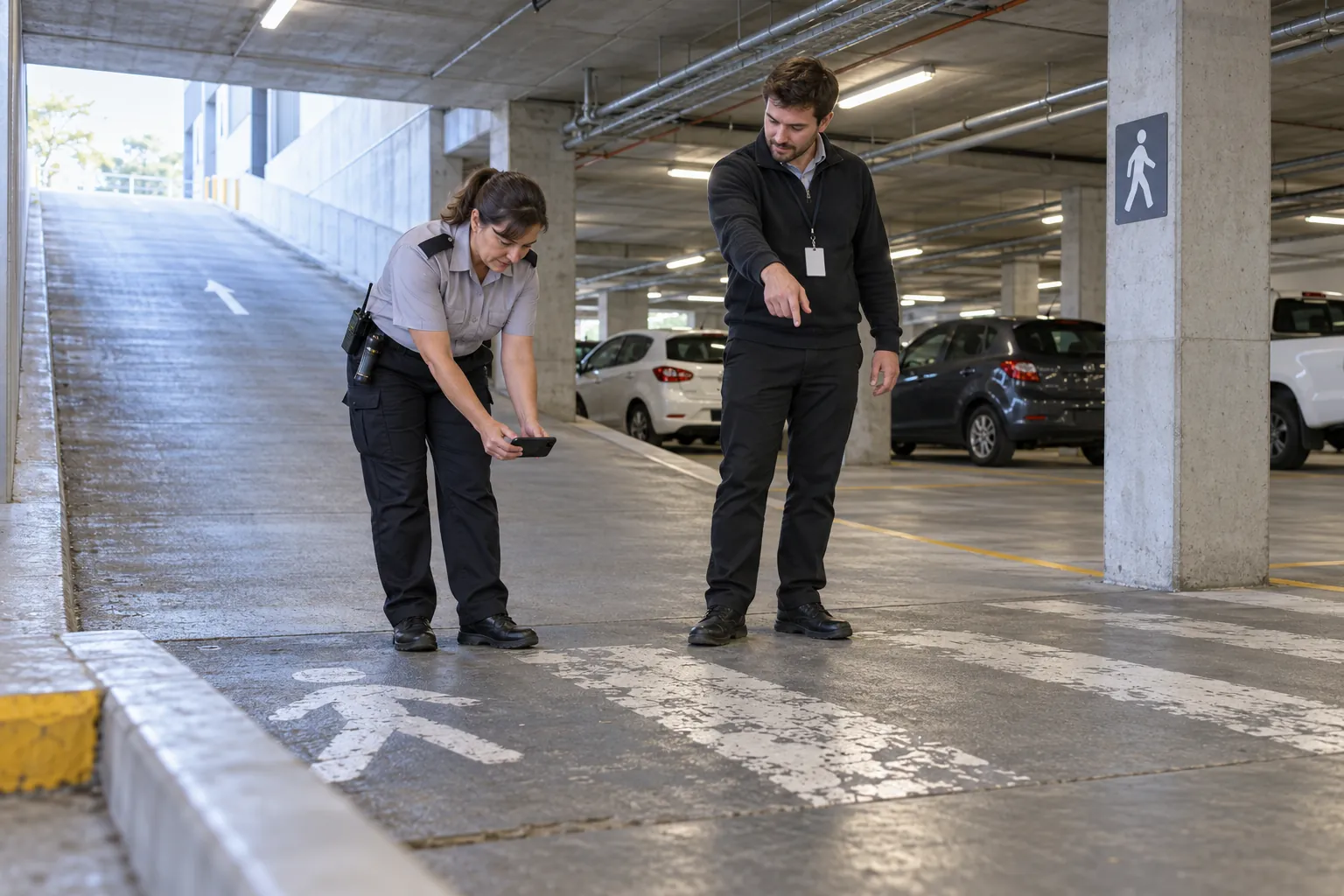
- A photograph, where it is safe to take one and would not disturb a site that has to be preserved.
- Who it was passed to, especially where the risk belongs to another business in the building.
Speed matters more than completeness: a report made on the spot with a photo beats a detailed form filled in from memory at the end of the week.
05
Getting near misses reported, and acting on them
Nobody is legally obliged to report a near miss. WorkSafe's page on workers' rights and obligations says workers should let a supervisor or health and safety representative know about a health and safety concern "even though this is not a legal requirement". So a near miss reporting system is used only when reporting is easy and seen to be worthwhile. What stops people is a form that takes longer than the job, not knowing who to tell, fear of blame, and nothing happening last time. A bonus for a month with no incidents can also teach people to say nothing; a culture in which the person who reports is thanked, not blamed, does the opposite.
Involving workers is a duty, not a courtesy. WorkSafe's quick guide Identifying, assessing and managing work risks (July 2017) describes two duties: to engage with workers on health and safety matters that may directly affect them, and to have worker participation practices that give them reasonable opportunities to help improve health and safety on an ongoing basis. A reporting route that workers helped design, and see acted on, is a practical way to meet both. The guide to worker engagement covers the duties in full.
Health and safety representatives (HSRs) have a part to play. WorkSafe's page on HSR functions and powers lists "investigating complaints and risks to worker health and safety" and "monitoring health and safety measures taken by the PCBU" among their functions. Ask them what is not being reported.
Then act. The quick guide says to "investigate incidents and near misses to identify their causes and what you need to change to prevent them from happening again". In practice:
- Triage every report within a day: is it notifiable, what could have happened, and who owns the fix.
- Look for the cause, not the culprit: why the condition existed and why the control did not stop it.
- Choose the control from the top of the hierarchy. WorkSafe's quick guide puts elimination first and personal protective equipment last. Removing a trip hazard beats a warning sign.
- Update the hazard register, task procedures and training if the near miss exposed something new.
- Tell the reporter what was done, and the whole team when the lesson applies to them. That feedback is what keeps people reporting.
- Review reports together, by location and type, with the workers who do the job.
In a shared building, the fix often belongs to someone else. The quick guide says businesses with overlapping duties, as in a shared workplace such as a shopping centre, must so far as is reasonably practicable consult, cooperate and coordinate activities with each other. A cleaner's near miss on a broken stair nosing is the owner's repair, so the report has to reach the owner.
06
Where near miss reporting fails, and what SiteClara does about it
Near miss reporting rarely fails because people do not care. It fails in the gap between noticing and telling. The cleaner who nearly slipped at 5am has nobody on site to tell and a form in an office she has no key to. The security officer writes "light out, stairwell, nearly fell" in the occurrence book, and the building manager never reads it. The contractor's supervisor hears about it and the building owner does not. Because nothing happened, nobody follows up, and the next near miss goes unreported.
SiteClara puts a printed QR poster, with an NFC tag behind it if staff prefer to tap, at each location in a building. Staff scan or tap with their own phone, with no app to install, and report an issue with a photo on the spot. The report arrives already knowing the building and the location, with the time and the named person recorded as it happens, and goes onto the team's list of jobs until someone closes it. The same tag carries the scheduled checks for that location, so a condition found on a round is reported where it was found.
The supervisor's queue groups open jobs by building and floor, and a supervisor can escalate a job to the building manager, who can answer it. That gives a contractor's report a route to whoever controls the building. Each day the supervisor approves a report that goes to nominated management or client contacts at 8am the next morning, showing what was reported, what was done and what is still open, so an unfixed near miss does not quietly disappear.
07
Questions people ask
What is the difference between a near miss and an accident?
The outcome. An accident injures someone, makes them ill or damages something; a near miss is the same kind of event with no harm done. WorkSafe's incident and near-miss report template records both on one form, with "Near-miss" as the first box on a scale that runs through no treatment, first aid, doctor and hospital to serious harm, and asks of every event what harm could have happened.
Does a near miss have to be reported?
A serious one does. WorkSafe's page What events need to be notified? defines a notifiable incident as an unplanned or uncontrolled work-related incident that exposes people to a serious risk from immediate or imminent exposure to a listed hazard, such as a substance escaping, a fire or something falling from height, whether or not anyone was hurt. The PCBU must notify WorkSafe. For an ordinary near miss there is no legal duty on the worker: WorkSafe's page on workers' rights and obligations says workers should tell a supervisor or health and safety representative about a concern "even though this is not a legal requirement".
How serious is a near miss?
As serious as what could have happened. When a digger struck a live power line and neither worker was hurt, WorkSafe's statement Near miss incident sends sharp reminder said "the fact that neither worker was hurt is not relevant in this instance", and the company was fined $90,000.
08
Where to read the official guidance, and a list to take away
WorkSafe's page What events need to be notified? and its quick guide of the same name (What events need to be notified? quick guide, March 2024) are the starting point for deciding whether a near miss is a notifiable incident. For the everyday near miss, read the fact sheet How to manage work risks and the fuller quick guide Identifying, assessing and managing work risks, both July 2017. WorkSafe's incident and near-miss report template is a sound model once its farm wording is adapted to your buildings.
The law is changing. WorkSafe's page on changes to health and safety law says the changes made by the Health and Safety at Work Amendment Bill come into effect on 1 April 2027, including a distinction between critical risks and other risks and different duties for small and large PCBUs. Check the current position after that date.
Before you rely on your near miss reporting, check that:
- every worker on site, contractors' workers included, can report a near miss in under a minute from where it happened;
- reports carry the building, floor, exact location, time, reporter's name and, where safe, a photograph;
- each report is triaged within a day, starting with whether it is a notifiable incident;
- supervisors on every shift know how to use Notify WorkSafe online, and that a death is phoned through on 0800 030 040;
- the businesses sharing the building have agreed who notifies and who preserves the site in common areas;
- every report asks what harm could have happened, and has an owner, an action and a date;
- nothing in your targets or incentives rewards people for not reporting;
- reporters hear what was done, and near misses are reviewed with workers and their HSRs.
Sources
Every document this guide quotes or links to, in the order it first cites them.
- How to manage work risks worksafe.govt.nz
- What events need to be notified? worksafe.govt.nz
- How we investigate worksafe.govt.nz
- Near miss incident sends sharp reminder worksafe.govt.nz
- What events need to be notified? worksafe.govt.nz
- Incident and near-miss report template worksafe.govt.nz
- Workers' rights and obligations worksafe.govt.nz
- Identifying, assessing and managing work risks worksafe.govt.nz
- HSR functions and powers worksafe.govt.nz
- Changes to health and safety law worksafe.govt.nz
Related guides
 Premises and facilities managementIncident reporting: what HSWA asks for, and a system people will actually useIncident reporting under New Zealand's HSWA: what must be notified to WorkSafe, what records to keep, and how to run incident reporting in a shared building.
 Premises and facilities managementNotifiable events: what WorkSafe must be told, and what to do in the first hourWhat a notifiable event is under HSWA 2015, what to do when one happens in a building, who tells WorkSafe when PCBUs overlap, and the records to keep.
 Premises and facilities managementHazard register: what HSWA expects, and how to keep one that is usedWhat a hazard register is under New Zealand's HSWA, what goes in it, how to assess and control risks, when to review it, and what changes on 1 April 2027.
 Premises and facilities managementHealth and safety representatives: electing an HSR, and engaging workers in a buildingWhat a PCBU must do under Part 3 of HSWA: engaging workers, electing a health and safety representative, the HSR's powers, and health and safety committees.