Fire and water checks
IQPs and specified systems: who inspects what, and what the owner must keep
An IQP, or independent qualified person, is a person or firm approved by the local council in New Zealand to inspect a building's specified systems and see that they are maintained: the sprinklers, fire alarms, emergency lighting, lifts, backflow preventers and the rest listed on the compliance schedule.
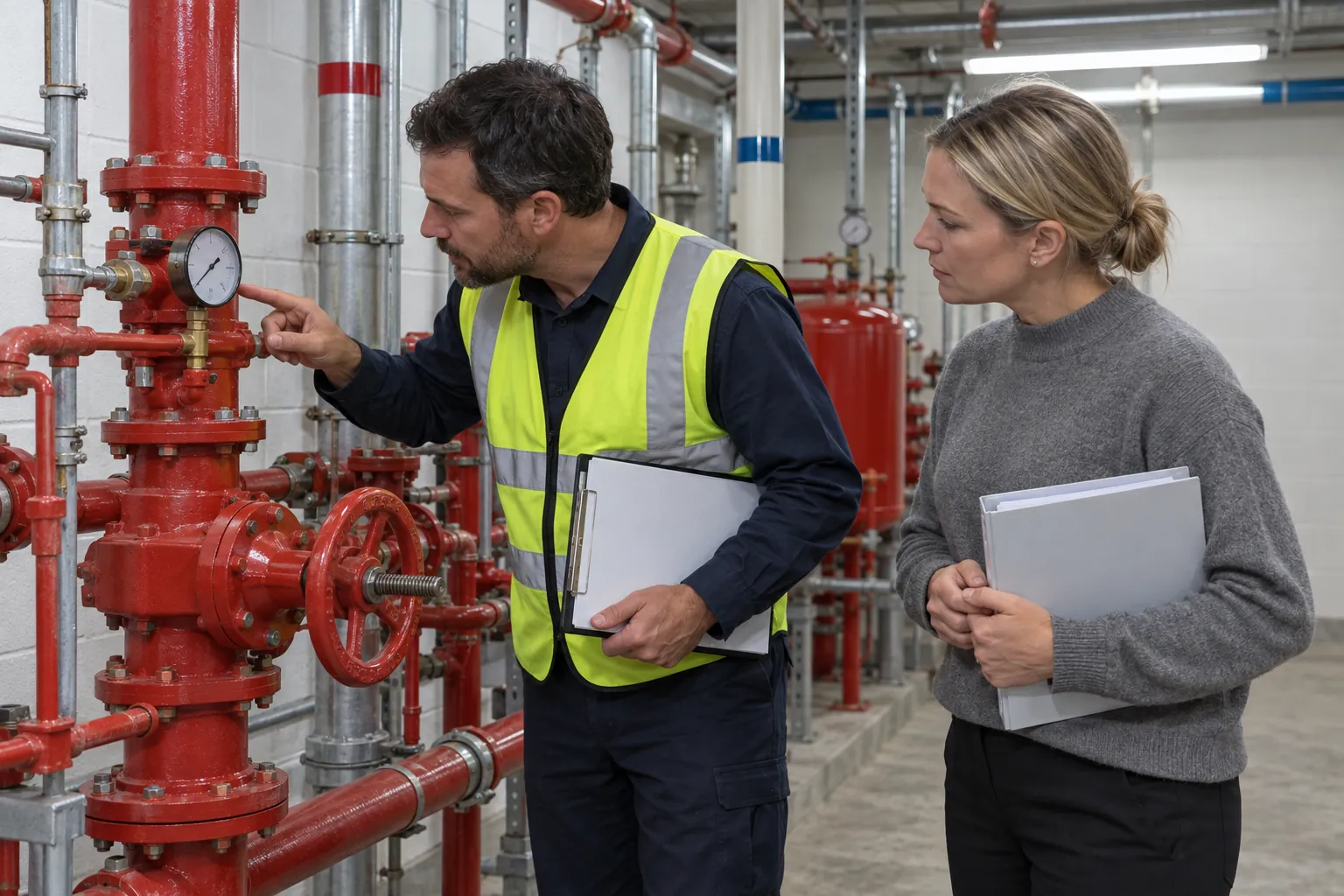
Without their Form 12A certificates there is no building warrant of fitness. This guide explains what an IQP is, which systems count as specified systems, how IQPs are engaged, what they check and what the owner's own staff and contractors are left to check between their visits.
01
What an IQP is, and what specified systems are
Specified systems are a building's safety and essential systems. MBIE's page Buildings with compliance schedules for specified systems puts it plainly: "If they fail to operate properly, they have the potential to affect health or life safety." They are listed in Schedule 1 of the Building (Specified Systems, Change the Use, and Earthquake-prone Buildings) Regulations 2005, made under the Building Act 2004.
Any building other than a single household unit that contains one of them needs a compliance schedule (a household unit needs one only for a cable car), issued by the council, which lists the building's specified systems, the performance standard for each, and the inspection, maintenance and reporting procedures that keep them in order.
An independent qualified person (IQP) is defined in MBIE's guidance on Inspection and maintenance of specified systems (last updated 13 July 2026) as "a person (or firm) approved by the territorial authority as qualified to inspect certain specified systems and ensure that necessary maintenance occurs." The same page is clear on the first word: "'Independent' means they have no financial interest in the building."
Three duties hang together. The owner must see that every procedure on the compliance schedule is carried out and that each system keeps performing to its standard. The IQP carries out or oversees the procedures the schedule gives them and, if every one has been done, certifies it on a Form 12A. The owner then supplies the council with a building warrant of fitness (BWoF) each year, with the Form 12As attached, and displays a copy where building users can see it.
02
The specified systems, SS 1 to SS 16
The handbook numbers the systems SS 1 to SS 16, and its example compliance schedule gives each system in a building its own reference, such as SS 1.1 or SS 3/3.1. The standards named below are ones the handbook gives as possible inspection documents; the procedures that apply to your building are the ones on its compliance schedule, which follow the standard each system was designed and installed to.
- SS 1 Automatic systems for fire suppression: sprinkler and gas flood systems (NZS 4541, NZS 4515 or AS 1851 among the handbook's possible standards).
- SS 2 Automatic or manual emergency warning systems for fire or other dangers: fire alarms, and systems such as carbon monoxide detection in a car park building (NZS 4512 or AS 1851).
- SS 3 Electromagnetic or automatic doors or windows: automatic doors, access-controlled doors on escape routes, and fire or smoke doors that close on alarm.
- SS 4 Emergency lighting systems: AS/NZS 2293, or NZS 6742 for older installations.
- SS 5 Escape route pressurisation systems, which control smoke by pressurising an escape route.
- SS 6 Riser mains for use by fire services.
- SS 7 Automatic backflow preventers connected to a potable water supply; see backflow testing.
- SS 8 Lifts, escalators, travelators or other systems for moving people or goods within buildings.
- SS 9 Mechanical ventilation or air conditioning systems.
- SS 10 Building maintenance units giving access to the exterior and interior walls of buildings.
- SS 11 Laboratory fume cupboards with ducted extraction through the building.
- SS 12 Audio loops or other assistive listening systems.
- SS 13 Smoke control systems.
- SS 14 Emergency power systems for, or signs relating to, any of SS 1 to SS 13, such as a lift load limit sign.
- SS 15 Other fire safety systems or features that form part of a means of escape from fire which contains one or more of SS 1 to 6, 9 or 13: systems for communicating spoken information to help evacuation, final exits, fire separations, evacuation signs and smoke separations.
- SS 16 Cable cars, added in 2008.
A fire door, an exit door or an exit sign becomes a specified system when it is part of a means of escape that contains, say, an alarm or a sprinkler system, so an ordinary office or school building can have many SS 15 items on its schedule. They are also the features that everyday use can quietly defeat: a fire door propped open, a final exit blocked by deliveries, a sign knocked off the wall.
03
Engaging IQPs: the register, independence and who signs what
IQP registration is council by council: each council, as the territorial authority, approves its own IQPs, so the place to start is the council's IQP register. MBIE advises that "the first step in engaging an IQP should be to approach the council for its IQP register (usually on the council's website). This register also identifies which specified systems the IQP is competent to inspect." A building with several kinds of system often needs several IQPs.
When you engage them, settle these points in writing:
- Which systems and which procedures each IQP covers, by the references on your compliance schedule, so that together they cover every procedure.
- Who issues which Form 12A. Usually each IQP issues one for the systems they inspect, but MBIE notes that one IQP may issue a Form 12A covering the procedures of another, and "it is important that the responsibility for issuing the Form 12As is established when the IQP is first engaged."
- Which procedures the owner's side carries out. Decide whether the caretaker, the property manager's staff or a cleaning or security contractor does them, and how the IQP will see that they were done.
- Who keeps the records. The owner is responsible, but the handbook recognises it may be practical for the IQP to keep them on the owner's behalf.
- Timing: the BWoF is due on the anniversary of the compliance schedule's issue, so the Form 12As need to arrive before it.
When a building changes hands, MBIE's page on Buying a building with specified systems suggests asking which IQPs the vendor uses, since they already know the building's systems, and viewing "the maintenance logs and service records for all the specified systems to ensure the compliance schedule has been complied with to date." A procedure missed before settlement can still stop the next BWoF, which covers the previous 12 months.
In a shared building this is also a health and safety matter: WorkSafe's guidance on Overlapping duties explains that "businesses that work together will likely share health and safety duties in relation to the same matter", so the owner, the property manager and each contractor should agree who checks the exits, fire doors and signs.
04
What an IQP checks, and what is left to the owner
MBIE says that "most specified systems require at least an annual inspection by an IQP but in some cases they may inspect more frequently such as 6 monthly or quarterly", and its Managing your BWoF page notes that across the systems the frequency "might be weekly, monthly, 6 monthly or annually".
According to MBIE, "a compliance schedule will usually require the more complex inspection and maintenance procedures to be carried out by an IQP", while "a building owner may be responsible for undertaking some less complex and more frequent inspection tasks." The handbook gives the minimum frequencies it suggests where the nominated standard does not set its own:
- Final exits (SS 15): daily when the building is in use for crowd occupancies (the handbook's CS, CL, CO and CM groups) and where building work may affect an exit; monthly for all other occupancies. The check: the exit can be opened and is not locked, barred or blocked, and the door-locking devices are clearly visible and work without a key.
- Fire separations that bound exitways (SS 15): daily when the building is in use for crowd occupancies and where building work may affect a fire separation, monthly for others (with six-monthly inspections for crowd occupancies and annual ones for others), looking for damage that could affect fire resistance, new penetrations without fire-stopping, and escape doors that are locked, barred or blocked.
- Automatic doors (SS 3/1): daily for crowd occupancies, monthly for others, that the doors can be opened and are not locked, barred or blocked; then an annual inspection and testing of the controller, sensors, safety devices and battery back-up.
- Access-controlled doors (SS 3/2): daily or monthly as above, then six-monthly checks of fail-safe operation in an emergency and a power cut, and of the connection to the alarm system.
These are the handbook's minimums; your schedule may set other frequencies and names who is responsible. If it gives the owner a monthly exit check, somebody on site must do it every month, and the IQP must be able to see that they did.
Maintenance runs alongside inspection. The handbook separates planned preventative maintenance from responsive maintenance after a failure, and notes that a failure "may be identified during inspection, testing, planned preventative maintenance or reported by building users", so staff and contractors need a quick way to report a fault where they find it.

05
The Form 12A, the records, and what happens when a procedure is missed
The Form 12A, Certificate of compliance with inspection, maintenance, and reporting procedures, is on MBIE's page of Forms for building maintenance management. Issued under section 108(3)(c) of the Building Act and signed by the IQP, it states that the inspection, maintenance and reporting procedures of the compliance schedule have been fully complied with during the 12 months before its date, for the specified systems it names.
"Fully" is the word that matters. MBIE's guidance says: "An IQP is prohibited from issuing a Form 12A for a specified system unless all the IMR procedures in the compliance schedule that relate to that system have been fully complied with in that period." It adds that the Building Act "does not provide any flexibility or exemptions to this requirement." A single missed monthly exit check can therefore stop the Form 12A for SS 15 and, with it, the BWoF. MBIE's page on Fines and penalties sets out the IQP's exposure: certifying procedures that were not fully complied with carries a fine of up to $50,000 for an individual and $150,000 for a body corporate.
The owner's records are what let the IQP sign. MBIE says the owner must obtain and keep reports of inspections, maintenance and repairs from the people who did the work, kept with the compliance schedule for at least two years. The handbook's example reporting statement shows what a schedule typically asks those records to include, as a minimum (your own schedule's reporting section is what applies):
- details of any inspection, test or preventative maintenance carried out;
- details of any faults found or maintenance and repair work undertaken;
- for each, the dates, the work undertaken, the faults found, the remedies applied and the person who performed the work.
They are kept with the compliance schedule at the place stated on the BWoF, with the annual written reports signed by an IQP (section 110 of the Building Act) and any log books the schedule requires. The council may inspect the building to check that the BWoF and the IQP reports are correct, and MBIE's guidance for building officials on building warrants of fitness describes a three- to five-year on-site audit cycle as good practice.
06
Where the record fails, and what SiteClara does about it
The weak point is between the IQP's visits: the monthly check of the final exits and fire doors, left to the owner under the compliance schedule and handed on to a caretaker, a cleaning contractor or a security patrol. It is easy to picture how it goes wrong: a sheet in the plant room signed for the quarter in one sitting; an exit chained shut during a tenant's fit-out and found by the IQP, not by the person meant to check it monthly; a damaged fire door mentioned to whoever was passing. When the anniversary arrives, nobody can show the IQP that every monthly check happened, and the Form 12A cannot be signed.
SiteClara records those routine checks at the place they are done. A printed QR poster, with an optional NFC tag behind it, sits at each location with a scheduled check, such as a final exit, a stair lobby or a plant room door. Staff scan or tap with their own phone, with no app to install, see the checks due there, and mark each one done or say what stopped them. The time and the named person are recorded as it happens, with a photo when the check asks for one, and a fault reported at the location goes onto the team's list of open jobs until someone closes it.
The supervisor sees what is due, done and missed, records the reason a check was missed, and approves a daily report that goes to nominated contacts the next morning. Where a cleaning or security company carries out the owner's checks in a building a property manager runs, both can read the same record.
07
Questions people ask
What does IQP mean?
Independent qualified person. MBIE's guidance on Inspection and maintenance of specified systems defines an IQP as "a person (or firm) approved by the territorial authority as qualified to inspect certain specified systems and ensure that necessary maintenance occurs", and says "'Independent' means they have no financial interest in the building." In New Zealand the term belongs to the compliance schedule and building warrant of fitness regime under the Building Act 2004.
What is an IQP inspection?
The inspection of a specified system that the building's compliance schedule gives to an IQP, carried out to the procedures and at the frequency the schedule sets. MBIE's Inspection and maintenance of specified systems says "most specified systems require at least an annual inspection by an IQP but in some cases they may inspect more frequently such as 6 monthly or quarterly." Once every procedure for a system is complete for the 12 months, the IQP can certify it on a Form 12A, which the owner attaches to the building warrant of fitness.
How do you become a registered IQP?
By applying to each council whose register you want to be on, since IQP registration is council by council. Rangitīkei District Council's Independent Qualified Person (IQP) Application for Registration is an example: it asks which specified systems you are applying for and whether you will only inspect them or also maintain and report on them, your professional indemnity and public liability insurance, the courses that show your knowledge of the Building Act 2004 and the Building Code, your answers on the compliance schedule and the Form 12A, your check sheets for each system, and referee evaluations from people who hold IQP status for the same system with another council. It states "This approval is for the Rangitīkei District Council", keeps the right to withdraw registration from an IQP it no longer considers competent, and returns an application that is not complete. Other councils' forms differ in detail, so check with the council concerned.
08
Further reading, and a list to take away
Start with MBIE's Buildings with compliance schedules for specified systems and Inspection and maintenance of specified systems, then Managing your BWoF. The Compliance Schedule Handbook (first edition, amendment 3, February 2014) sets out the scope, inspections and maintenance for each specified system. The Form 11, Form 12 and Form 12A are on Forms for building maintenance management. Your council's website has its IQP register, and the Building Act 2004 and the Specified Systems Regulations 2005 are on legislation.govt.nz.
For a building with specified systems, check that:
- every specified system in the building is on the schedule, including the SS 15 doors, exits and signs;
- each system has an IQP on the council's register for that system, engaged in writing;
- it is agreed which IQP issues which Form 12A, and together they cover every procedure;
- the owner's routine checks in the schedule have a named person or contractor, and a frequency that matches the schedule;
- each routine check leaves a dated record of who did it, what they found and what was put right, kept for at least two years with the compliance schedule;
- faults found between IQP visits are reported, tracked and closed, not just passed on;
- the Form 12As are in hand before the anniversary, and a missed procedure is raised with the IQP straight away, not at renewal.
Sources
Every document this guide quotes or links to, in the order it first cites them.
- Buildings with compliance schedules for specified systems building.govt.nz
- Inspection and maintenance of specified systems building.govt.nz
- Compliance Schedule Handbook building.govt.nz
- Buying a building with specified systems building.govt.nz
- Overlapping duties worksafe.govt.nz
- Managing your BWoF building.govt.nz
- Forms for building maintenance management building.govt.nz
- Fines and penalties building.govt.nz
- Guidance for building officials on building warrants of fitness building.govt.nz
- Independent Qualified Person (IQP) Application for Registration rangitikei.govt.nz
Related guides
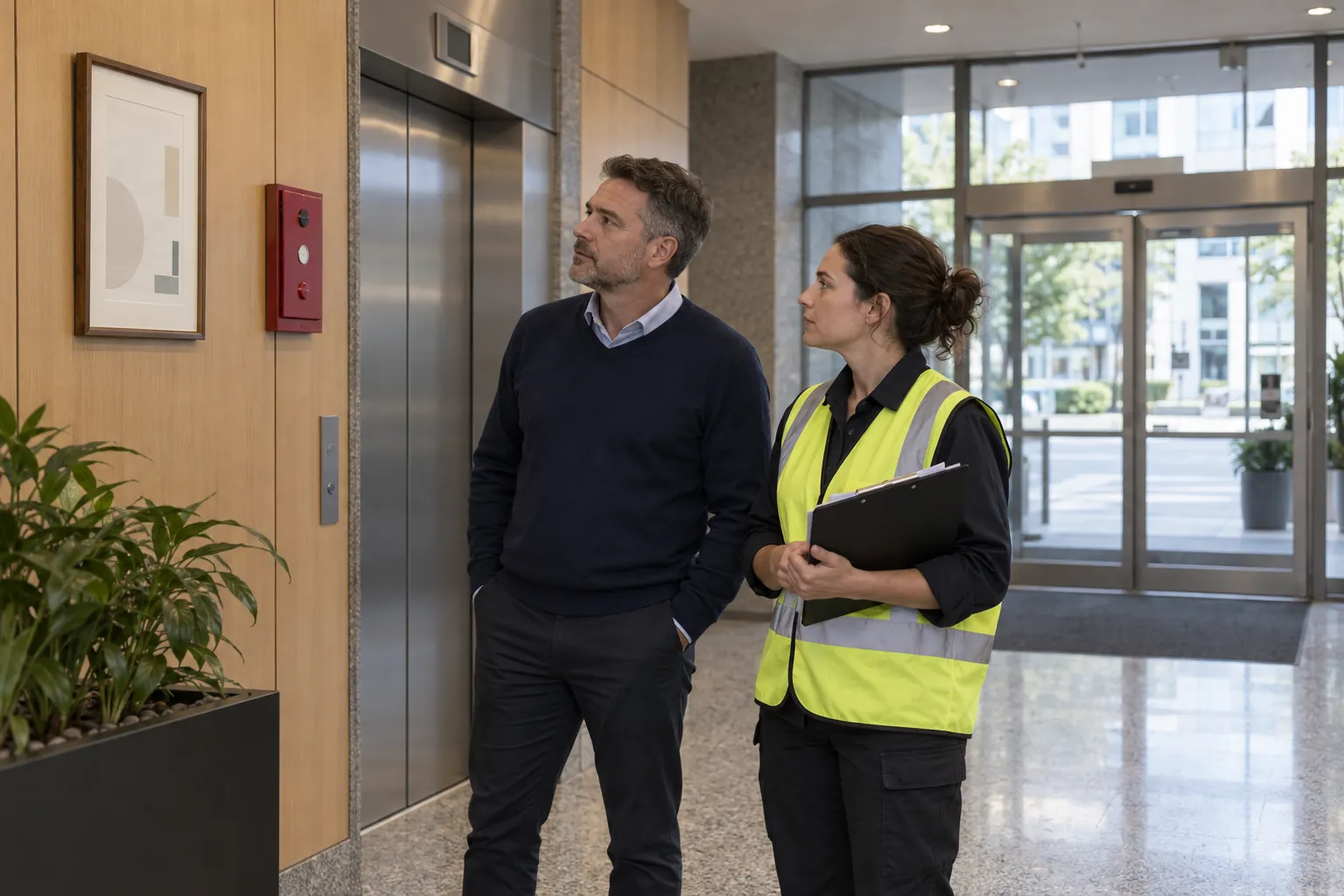 Fire and water checksThe building warrant of fitness: what a New Zealand owner signs each year, and how to make it trueWhat a New Zealand building warrant of fitness declares, who signs it, the Form 12 and Form 12A cycle, the records behind it, and the checks that keep it true.
 Fire and water checksThe compliance schedule: what it lists, and how to keep a building to itWhat a New Zealand compliance schedule lists, which buildings need one, how it is issued and amended, who does the checks and the records behind every BWoF.
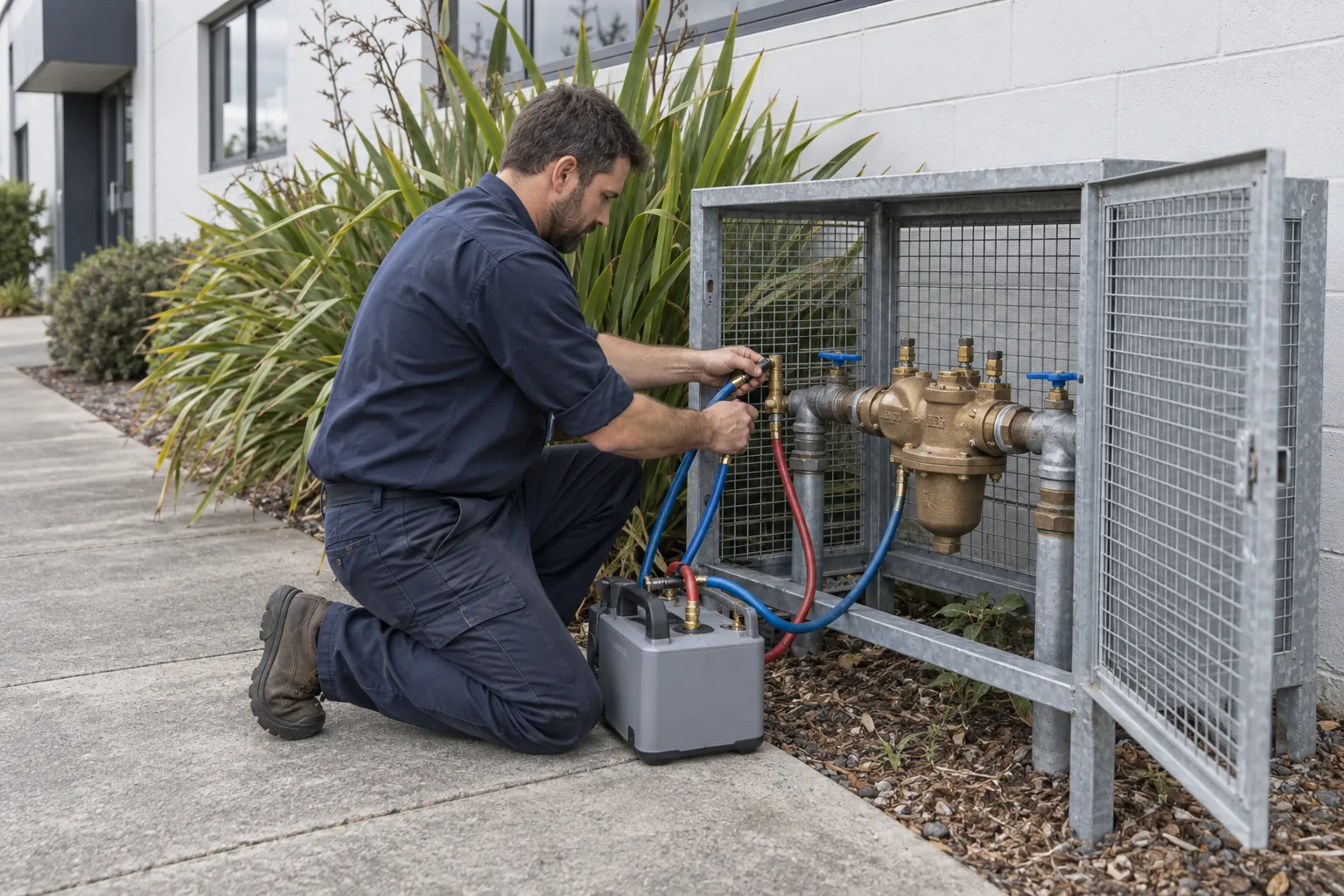 Fire and water checksBackflow testing: which devices, how often, and what the records should showBackflow testing in New Zealand: hazard ratings, boundary and internal devices, SS 7 on the compliance schedule, the annual IQP test, failed devices and the records.
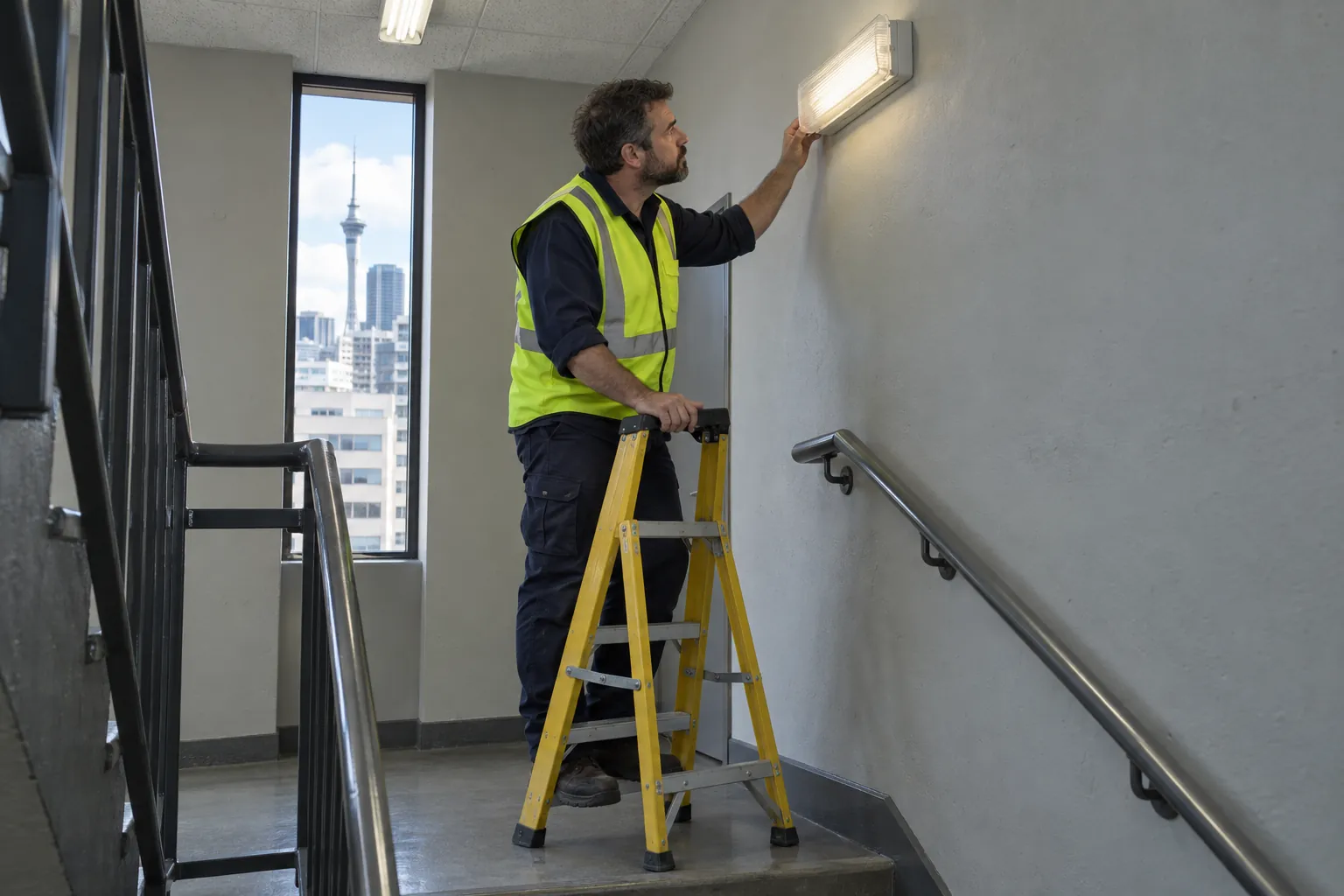 Fire and water checksEmergency lighting testing in New Zealand: what the compliance schedule asks, and what the building team can doEmergency lighting testing in New Zealand: Building Code F6, specified system SS 4, AS/NZS 2293.2, the IQP's six-monthly and annual checks, and the BWoF records.