Cleaning
Cleaning colour coding: the four colours, whose scheme they are, and how to keep to them
Cleaning colour coding is the practice of keeping separate cloths, mops, buckets and gloves for each kind of area, told apart by colour, and the UK's national scheme, set for the NHS, uses red for toilets and washrooms, blue for general areas, green for kitchens and food service, and yellow for isolation areas.
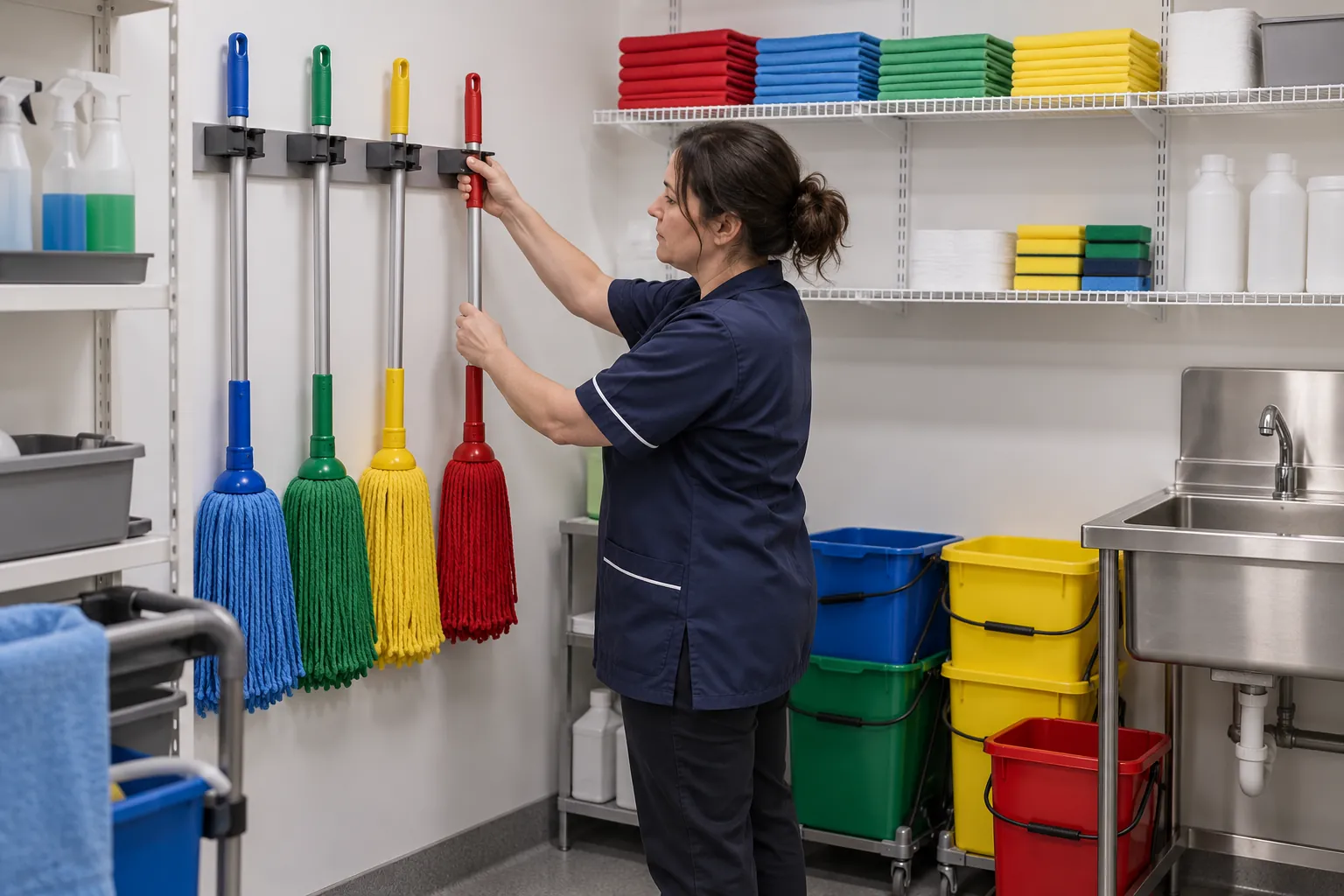
The cloth that cleaned a toilet must never reach a kitchen worktop. Outside healthcare no law fixes the colours, but most cleaning teams use the same four, and a colour chart on the cupboard door is only the start. This guide covers where the scheme comes from, what each colour means, the colours that are often confused with it, and how a supervisor checks that colour coding is really followed.
01
What cleaning colour coding is, and whose scheme it is
A colour-coded cleaning system, often just called colour coded cleaning, gives each type of area its own assigned set of cleaning tools and equipment and marks that set with one colour, a visual cue that lets anyone see at a glance which cloth, mop or bucket belongs where. Its job is preventing cross-contamination: germs spread from a high-risk area such as a toilet into a low-risk or food area on the equipment used to clean them. That makes it a basic infection control measure as well as a cleaning method. A cleaner does not have to remember which cloth was used where; the colour tells them.
No UK law sets cleaning colours for an ordinary workplace. The legal duty is the outcome. Regulation 9 of the Workplace (Health, Safety and Welfare) Regulations 1992 says that every workplace, and the furniture, furnishings and fittings in it, "shall be kept sufficiently clean". Colour coding is one of the ordinary ways a cleaning team meets that duty and keeps a safe, clean environment without spreading dirt from one room to the next.
Healthcare is where the scheme was made national. The four colours began as the National Patient Safety Agency's Safer Practice Notice 15, Colour coding hospital cleaning materials and equipment, issued in January 2007, which hospital cleaning policies still cite. In England the scheme now sits in section 6.2 of NHS England's National Standards of Healthcare Cleanliness 2025, which calls it "a national colour-coding scheme for all cleaning materials and equipment" that is "widely applied throughout healthcare organisations to reduce cross-contamination risk between different types of area". The coding "should be clear and permanent", and any departure from it needs NHS England's approval.
Scotland has the same four colours in the NHSScotland National Cleaning Services Specification (SHFN 01-02), version 6 of July 2025, which says all NHS organisations should adopt the colour code and that the colour coding programme "is a mandatory requirement".
Outside healthcare the scheme is guidance, not law. The British Institute of Cleaning Science (BICSc), in its Colour-coding guidance, notes that "with the exception of the healthcare industry, no national or international compulsory standards exist in the cleaning industry", and that colour-coding systems generally use the basic colours red, blue, green and yellow. Offices, schools, care homes, retail sites and other businesses that use colour coding generally borrow the same four colours.
02
The four colours and what each one covers
The NHS England standards set the colours out like this, and they are the clearest version to adopt anywhere:
- Red: bathrooms, washrooms, showers, toilets, basins and bathroom floors. Red equipment is used only in these areas and never leaves the washroom.
- Blue: general areas including wards, departments, offices and basins in public areas. In an office or school this is the everyday colour for desks, corridors, classrooms, receptions, meeting rooms and stairwells.
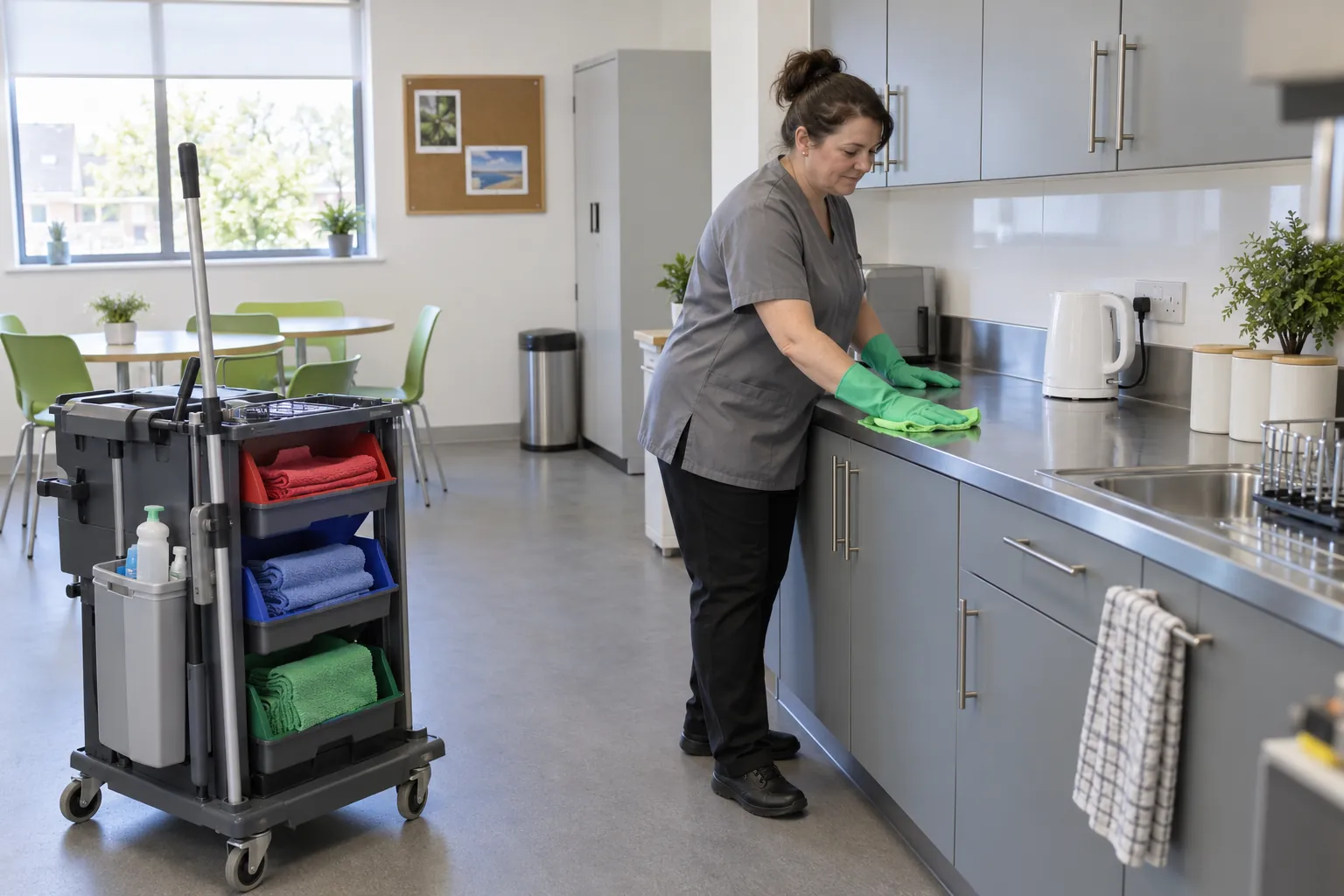
- Green: catering departments, ward kitchen areas and patient food service at ward level. Outside hospitals, green covers kitchens, staff kitchenettes, food preparation areas, canteens and food service counters.
- Yellow: isolation areas. In a hospital this is the room of a patient being cared for apart from others because of infection risk.
The colour goes on the equipment, not the chemicals. NHS England applies the scheme to all cleaning materials and equipment, and gives as an example that cloths (reusable and disposable), mops, buckets and non-disposable gloves colour-coded red are only used in bathroom facilities. It also says that "cleaning products (chemicals and detergents) do not need to be colour coded", and that the coding does not extend to catering equipment such as chopping boards and knives, which have their own food hygiene arrangements.
Scotland's specification adds two practical exceptions from the National Colour Coding Programme of 2012: colour coding is required for flat or conventional mopping systems but not for micro-fibre mopping systems that are single use, and it is not required for single-use disposable aprons and gloves.
03
COSHH colour codes, safety sign colours and food colour codes
Search for cleaning colour coding and you will soon meet charts called "COSHH cleaning colour codes". There is no such scheme in the law. The Control of Substances Hazardous to Health Regulations 2002 require an employer to prevent or adequately control exposure to hazardous substances, such as many cleaning chemicals, and set out the order of control measures, from substitution to personal protective equipment as a last resort. They say nothing about the colour of a mop or a cloth. Colour coding sits beside a COSHH assessment of each cleaning chemical, but it is a cleaning method, not a COSHH requirement.
The same four colours also have a quite different legal meaning on signs. Schedule 1 to the Health and Safety (Safety Signs and Signals) Regulations 1996 gives the safety colours: red for prohibition signs, danger alarms and fire-fighting equipment; yellow or amber for warning signs; blue for mandatory signs, such as wear personal protective equipment; and green for emergency escape and first aid. A yellow wet-floor sign is a warning sign, not a piece of yellow-zone cleaning equipment, and the two systems should not be mixed up in training.
Food areas have a further layer. The Food Standards Agency's E. coli O157 cross-contamination guidance, which applies to England, Wales and Northern Ireland, is about keeping raw and ready-to-eat food apart. Its E. coli O157 cross-contamination caterers factsheet recommends disposable single-use cloths, and where that is not possible, "separately designated cleaning equipment for raw and ready-to-eat areas, for example colour coded cloths". It also suggests utensils such as chopping boards and tongs dedicated to raw or ready-to-eat food and colour coded or otherwise easily identified. Those are the kitchen team's own codes; green cleaning equipment for the kitchen sits alongside them, not in place of them.
04
Setting up a colour-coded cleaning system on a site
A colour-coded system works when everyone on the site uses the same chart in the same way. Implementing one, or taking one over at the start of a contract, usually follows these steps:
- Choose the scheme and write it down. The four NHS colours, or the commercial variant with yellow for washroom surfaces, recorded in the cleaning specification and the site's method statements, so that a new contractor inherits it rather than reinventing it.
- Map the areas. Mark each room or zone with its colour: every toilet and washroom red, kitchens and tea points green, the rest blue, and any isolation, clinical or special area as the scheme says. Odd spaces, such as a cleaners' sink in a washroom or a kitchenette inside a meeting room, need a decision in advance.
- Buy the whole set in each colour. Cloths, mop heads, mop handles or holders, buckets, reusable gloves, and any dustpans or scrubbing pads used in more than one area. Equipment that is "clear and permanent" in its colour is easier to keep right than a white bucket with a coloured sticker.
- Store it apart. Safe storage keeps the colours from touching: hang mops and keep buckets by colour in the cleaners' cupboard, with red kept where it cannot drip onto or touch green or blue. A cupboard on each floor, or a trolley with separate compartments, makes the right choice the easy one.
- Launder by colour. Reusable cloths and mop heads are washed and dried so that red items cannot contaminate the others, and are replaced when worn or stained.
- Put up the chart. A colour chart in each cleaners' cupboard and on the trolley, with pictures or plain words for each area rather than codes.
- Train every operative, including relief and agency staff. BICSc says colour coding should be part of every employee induction or continuous training programme, and that colour identification testing belongs in induction because some people are colour blind without knowing it; it notes that a number system can be linked to the colours to overcome this.
- Work from clean to dirty. BICSc's core rule is to always work from the cleanest area towards the dirtiest, which it says greatly reduces the risk of cross-contamination. Within a washroom that means basins and surfaces before toilets and urinals, then the floor.
05
Checking that colour coding is followed
Colour coding usually fails quietly: the green cloths run out on a busy evening, a relief cleaner covers a floor they do not know, or a mop head comes back from the laundry in the wrong bag. A supervisor checks the system, not only the result, and the useful checks to maintain it are short and frequent:
- The cupboard: each colour present, stored apart, clean and dry, with red kept away from green and blue.
- Stock: enough cloths and mop heads of every colour for the shift, so nobody is tempted to borrow another area's.
- The trolley: the right colours for the areas on today's round, and nothing left over from another site or floor.
- In use: a spot check in a washroom, a kitchen and an open area that the colour in the operative's hand matches the room.
- Laundry and replacement: reusable items washed by colour and worn or stained items taken out of use.
- Training: every operative on the site, including new starters and cover staff, inducted on this site's chart.
These checks fit inside the wider cleaning quality control a supervisor already does, and colour coding is a standard line in a hygiene audit.
Good evidence that colour coded cleaning is followed is ordinary and dated: a record that the cupboard on each floor was checked, by whom and when, what was short, and what was done about it.
06
Where colour coding fails, and what SiteClara does about it
Most sites can show a colour chart. Far fewer can show that the system behind it was kept: that the third-floor cupboard had green cloths on Tuesday night, or that the shortage someone mentioned in passing was put right. The chart is on the wall, the audit sheet says "colour coding OK" once a month, and cross-contamination happens in the gap between them.
SiteClara records those routine checks where they happen. A printed QR poster, with an NFC tag behind it if staff prefer to tap, sits at each place a check is scheduled, such as the cleaners' cupboard on each floor, a washroom or a kitchen. Staff scan or tap with their own phone, with no app to install, and see the checks due there: colours stored apart, stock of each colour, the right kit on the trolley. They mark each one done or explain what stopped them, with a photo when one is asked for, such as the cupboard shelf. The time and the named person are recorded as it happens. A problem found on a check, such as no green cloths left, is reported there and goes onto the team's list of jobs until someone closes it.
The supervisor sees which checks are due, done and missed, and records the reason one was missed. Each day they approve a report that goes to nominated management or client contacts the next morning, showing what was completed, what was reported and what is still open: a working record made at the time, rather than a tick added before the audit.
07
Questions people ask
What is the national policy for colour coding cleaning equipment in the UK?
There is a national scheme for healthcare, not for every workplace. In England it is section 6.2 of NHS England's National Standards of Healthcare Cleanliness 2025: red for bathrooms, washrooms and toilets, blue for general areas, green for catering and ward kitchens, and yellow for isolation areas, with any departure needing NHS England's approval. Other workplaces are not required by law to use any colours, though most follow the same scheme.
What does the NHS colour coding system mean for cleaning purposes?
It means each kind of area has its own cleaning materials and equipment in one colour, such as cloths (reusable and disposable), mops, buckets and non-disposable gloves, so that equipment used in a toilet never reaches a ward, an office or a kitchen. The National Standards of Healthcare Cleanliness 2025 say cleaning chemicals and detergents do not need to be colour coded, and that catering equipment such as chopping boards follows food hygiene arrangements instead.
What are the COSHH cleaning colour codes?
There are none in the law. Regulation 7 of the Control of Substances Hazardous to Health Regulations 2002 requires employers to prevent or adequately control exposure to hazardous substances, such as many cleaning chemicals, and sets no colours for cloths, mops or buckets. Charts sold as "COSHH colour codes" show the ordinary cleaning colour scheme under a misleading name.
What is the BICS colour coding for cleaning?
The British Institute of Cleaning Science's Colour-coding guidance notes that colour-coding systems generally use the basic colours red, blue, green and yellow, and says a system should be part of every induction or continuous training programme, with colour identification testing in induction because some people are colour blind without knowing it. It also says that, outside healthcare, no national or international compulsory standard exists.
Does colour coding apply in schools, care homes and offices?
No law requires a particular colour scheme there, but regulation 9 of the Workplace (Health, Safety and Welfare) Regulations 1992 requires every workplace to be "kept sufficiently clean". Where food is prepared in England, Wales and Northern Ireland, the Food Standards Agency's E. coli O157 cross-contamination caterers factsheet recommends disposable single-use cloths, or separately designated equipment for raw and ready-to-eat areas, "for example colour coded cloths".
08
Further reading, and a list to take away
For the scheme itself, read section 6.2 of NHS England's National Standards of Healthcare Cleanliness 2025 and, in Scotland, section 5 of the NHSScotland National Cleaning Services Specification (SHFN 01-02). The British Institute of Cleaning Science's Colour-coding guidance covers training and colour blindness. For kitchens and food areas, read the Food Standards Agency's E. coli O157 cross-contamination guidance.
Before you rely on colour coding at a site, check that:
- one colour scheme is chosen, written into the specification and shown on a chart in every cleaners' cupboard;
- every toilet, washroom, kitchen and special area has been given its colour, including the awkward spaces;
- cloths, mop heads, mops, buckets and reusable gloves are bought, stored and laundered by colour;
- red equipment is stored where it cannot touch green or blue;
- every operative, including relief and agency staff, has been inducted on this site's chart, with colour identification checked;
- staff work from the cleanest area to the dirtiest;
- supervisors check cupboards, stock and kit in use often enough to catch a shortage before it becomes a short cut;
- each check is recorded with the date, the place and the person who did it.
Sources
Every document this guide quotes or links to, in the order it first cites them.
- Workplace (Health, Safety and Welfare) Regulations 1992 legislation.gov.uk
- National Standards of Healthcare Cleanliness 2025 england.nhs.uk
- NHSScotland National Cleaning Services Specification (SHFN 01-02) nss.nhs.scot
- Colour-coding guidance bics.org.uk
- Control of Substances Hazardous to Health Regulations 2002 legislation.gov.uk
- Health and Safety (Safety Signs and Signals) Regulations 1996 legislation.gov.uk
- E. coli O157 cross-contamination guidance gov.uk
- E. coli O157 cross-contamination caterers factsheet assets.publishing.service.gov.uk
Related guides
 CleaningBICS cleaning: what BICSc training is, and what it showsWhat the British Institute of Cleaning Science is, how its Licence to Practice and skills units work, and what employers and clients use BICSc training for.
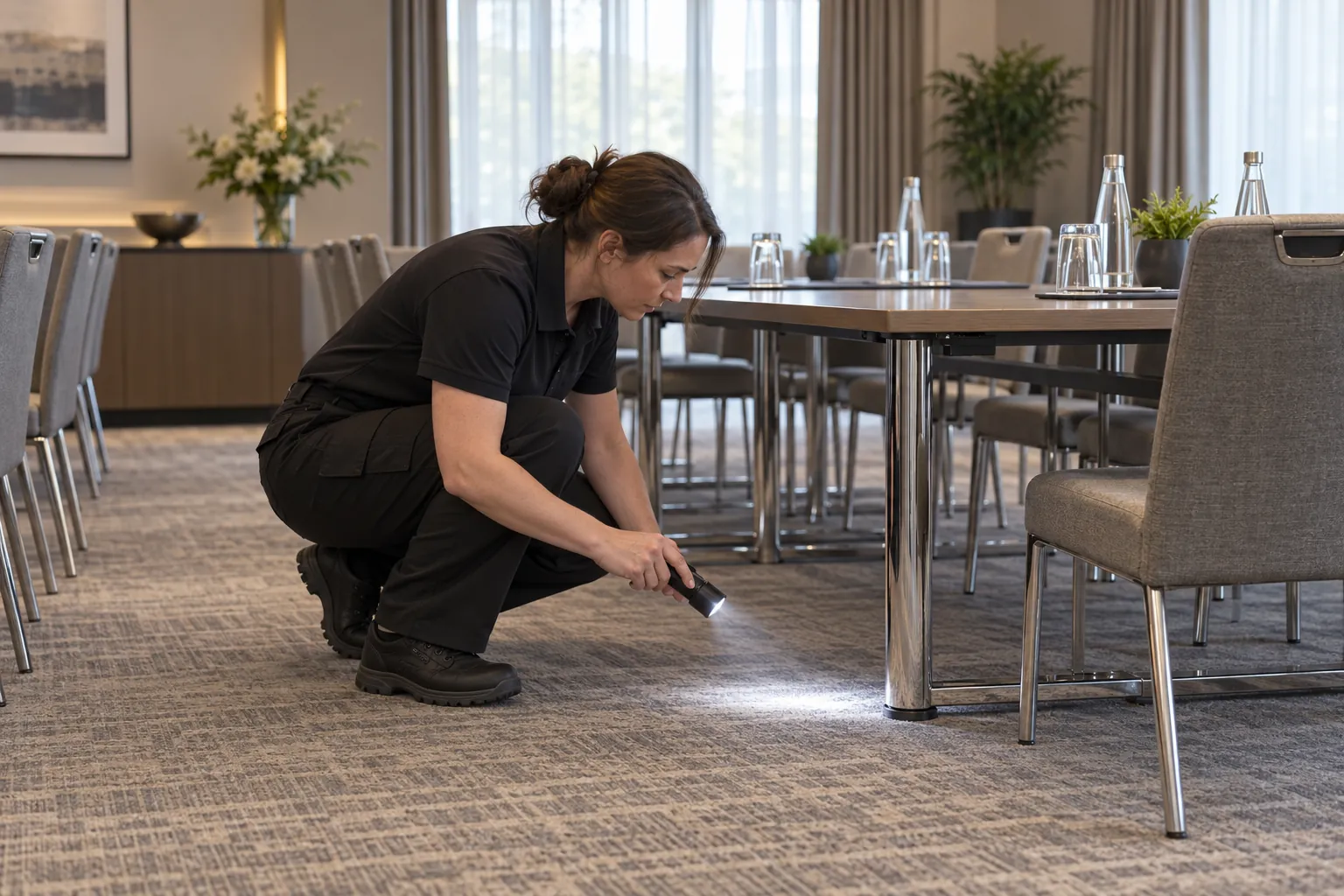 CleaningCleaning quality control: how to inspect, correct and prove the standardHow quality control works in commercial cleaning: QA versus QC, setting standards, running inspections, corrective action and a record that holds up.
 CleaningHygiene audit: what is checked, who does it, and what happens nextHow hygiene and infection prevention audits work in care, healthcare, schools and food areas: what is audited, by whom, how it is scored and what follows.
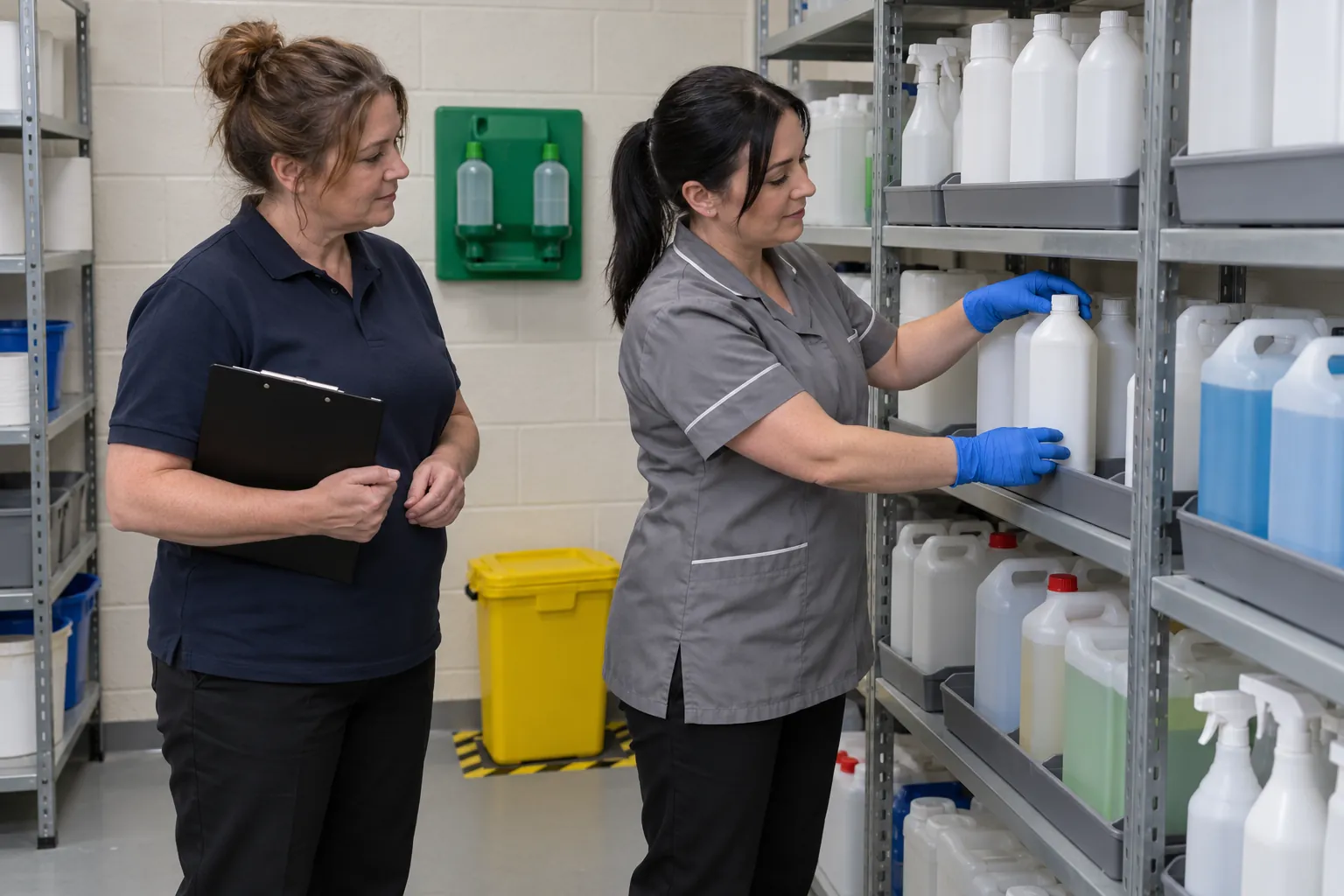 CleaningCOSHH assessment: the five steps, and the checks that keep it trueWhat a COSHH assessment is, the five steps, what to record for cleaning products, how to keep a COSHH register, and the checks that keep the controls working.