Fire and water checks
Waking watch: running the patrols, and showing they happened
A waking watch is a temporary fire safety measure in which suitably trained people continually patrol all floors and the outside of a building to detect a fire, raise the alarm, call the fire and rescue service and help manage an evacuation, used mainly in blocks of flats that have had to move from a stay put to a simultaneous evacuation strategy.
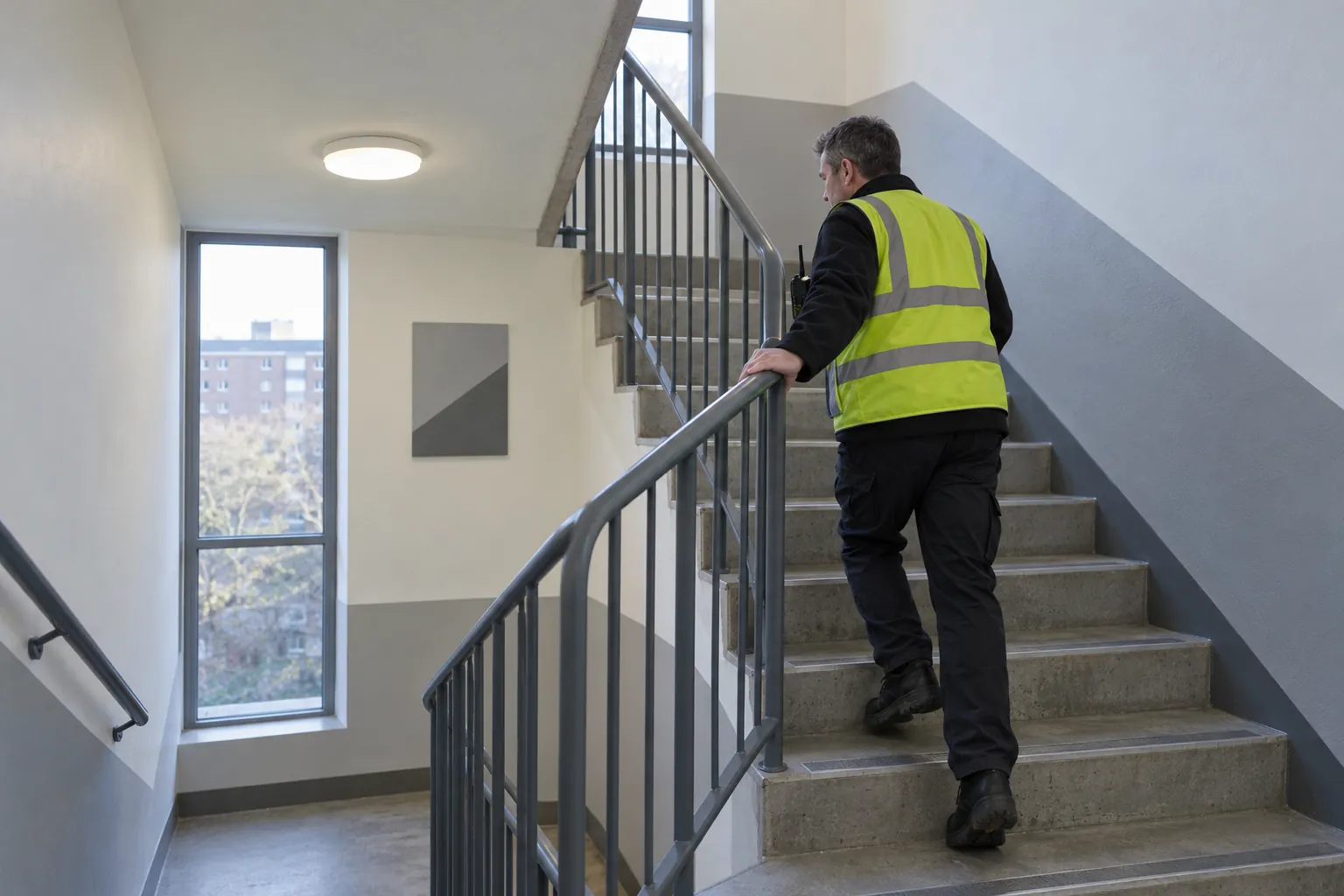
In England and Wales the responsible person arranges it under the Regulatory Reform (Fire Safety) Order 2005, following the National Fire Chiefs Council's Simultaneous Evacuation Guidance, which treats it as an immediate interim measure to be replaced by a fire alarm as soon as possible. This guide covers when a waking watch is used and for how long, what the patrols do, who can do them, how they are monitored, and the records that show each round was walked.
01
What a waking watch is, and the law behind it
The national guidance is the National Fire Chiefs Council's Simultaneous Evacuation Guidance, in full Guidance to support a temporary change to a simultaneous evacuation strategy in purpose-built blocks of flats, fourth edition, issued on 18 August 2022. Its Appendix C defines a waking watch as "a system whereby suitably trained persons continually patrol all floors and the exterior perimeter of the building in order to detect a fire, raise the alarm, and can assist in the management of building evacuations".
The reason for it is the evacuation strategy. A block run on stay put relies on a fire being contained in the flat where it starts. When a fire risk assessment finds that the building can no longer support stay put, for example because of an unsafe external wall system or poor compartmentation, the strategy changes to simultaneous evacuation, and the building needs "some means of detecting a fire, should one occur, and warning residents of the need to evacuate". A waking watch provides that with people, until a common fire alarm is fitted or the building is put right. Waking watches began to be used in some high-rise residential buildings shortly after the Grenfell Tower fire in June 2017, when it emerged that many more buildings had cladding similar to that which contributed to the fire spread there. The guidance's foreword notes the idea is older: a long-standing stopgap for, say, a hotel whose fire alarm has failed.
No statute names a waking watch. The duties come from the Regulatory Reform (Fire Safety) Order 2005, which applies in England and Wales to non-domestic premises and the common parts of blocks of flats. The responsible person, usually the freeholder, landlord or management company, often acting through a managing agent (see our guide to managing agent responsibilities), must assess the risks under article 9, ensure under article 13 that the premises are, where necessary, equipped with "fire detectors and alarms", and record arrangements for the "monitoring and review" of fire precautions under article 11.
Where the risk is serious enough, the fire and rescue service can prohibit or restrict use of the premises, flats included, under article 31 of the Order; the guidance describes a waking watch as what allows residents to stay. The fire service does not choose it: the London Fire Brigade's clarification on waking watches and other interim measures says they are put in place by the person responsible for fire safety in each building, on a competent fire safety professional's advice, and that the Brigade "does not make a decision on which interim measures are put in place".
02
When a waking watch is used, and how long it should last
The guidance is for buildings that pose "a significant and immediate risk to the safety of residents", cannot support stay put, and where short-term interim measures are the only alternative to the building being prohibited. It treats a waking watch as "an immediate interim measure" and says that "an automatic fire detection and alarm system is the most suitable mitigating measure if there is any expected delay in remediation". The decision starts with the fire risk assessment, carried out by a competent person. Once it finds that the strategy must change, the guidance asks for analysis to find the most cost-effective interim solution, weighing the costs to residents, the suitability of each measure for the building and how well it works, and says this may show that installing a common fire alarm system is a better use of the funding available than a waking watch, which it counts among the more costly measures. The aim of the responsible person's actions should be to make the building safe without unnecessary significant additional costs to residents. A waking watch is paid by the hour for every person on duty, often around the clock, so the monthly cost mounts quickly; the government has published cost figures, given in the questions below.
The fourth edition sets a clock, counted from when the need to change the evacuation strategy is identified:
- Immediately: interim fire safety measures go in as soon as the competent person identifies the need through the fire risk assessment.
- Within a month: a transition plan for moving away from the waking watch, with costings, timeframes, a resident engagement strategy and the procurement process.
- No longer than 6 months: more sustainable measures, such as a common fire alarm, in place so the building can move away from the waking watch, "other than in exceptional circumstances".
- No longer than 12 months: a longer-term remediation plan formulated and, where possible, started.
The common fire alarm in Appendix A is designed to BS 5839-1 for a Category L5 system, with 85dB(A) at the open doorway of every bedroom, and installed by a qualified, third-party certificated competent person. Section 8 allows a temporary alternative, such as linked smoke detectors, while it is arranged, tested weekly with the results recorded.
When a waking watch is implemented, the responsible person should explain to residents why, the steps being taken towards the measures needed, such as a common fire alarm system, and what to do in the event of a fire, including contacting the watch if the fire is in their flat, and inform the local fire and rescue service of the change in evacuation strategy. Section 13 says interim measures come off only when the works are complete or a longer-term package is in place, a competent person has reviewed the fire risk assessment, residents and the fire and rescue service have been told, and the building has returned to stay put.
03
What the watch does on each round
The guidance sets no single patrol interval. The fire risk assessment should identify "the areas that need to be patrolled, frequency of patrols, and the means of raising the alarm", and the number of people on the watch is based on how long it takes to warn everyone who needs to evacuate before fire and smoke affect the escape routes. For a building with the highest risk of external fire spread, such as polyethylene core ACM cladding, the time from detecting a fire to alerting every resident who needs to leave and confirming evacuation has started "should not generally exceed a time of 10-15 minutes"; a longer time elsewhere must be justified by a competent person.
Appendix C lists the basic duties:
- continually patrolling the common areas, or the part a member covers, to identify any fire in the common areas and flats, including investigating a smoke or heat detector sounding;
- raising the alarm with the rest of the watch and anyone managing the evacuation, and calling the fire and rescue service;
- raising the alarm within their set area and carrying out any duties under personal emergency evacuation plans (PEEPs); and
- reporting to building management once their area has been alerted.
It adds general duties that anyone who runs a security patrol will recognise:
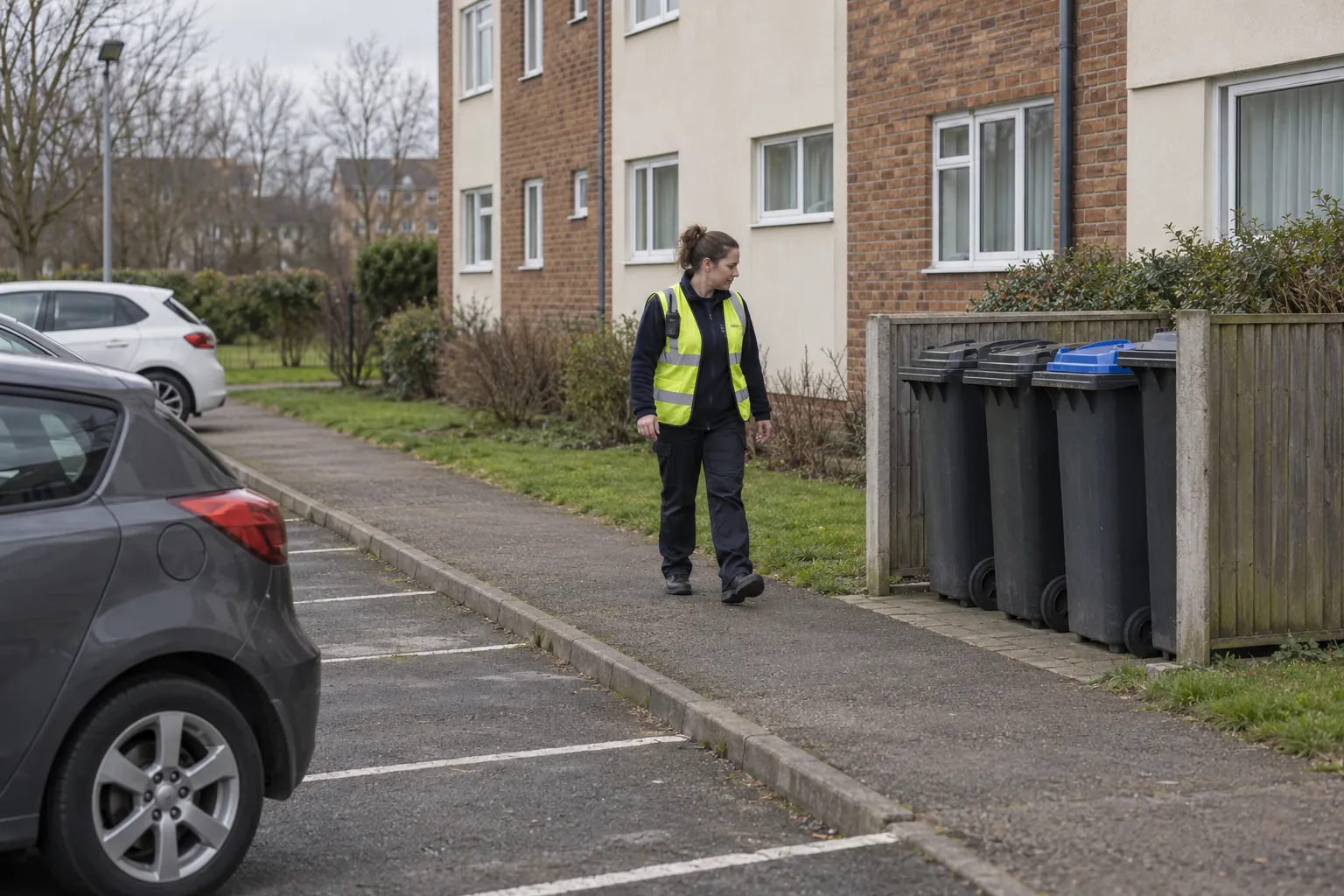
- checking the outside for fire risks, such as a skip or rubbish against the wall, or cars parked close to a combustible external wall or blocking an escape route;
- checking corridors and stairwells are free of combustible materials and obstructions;
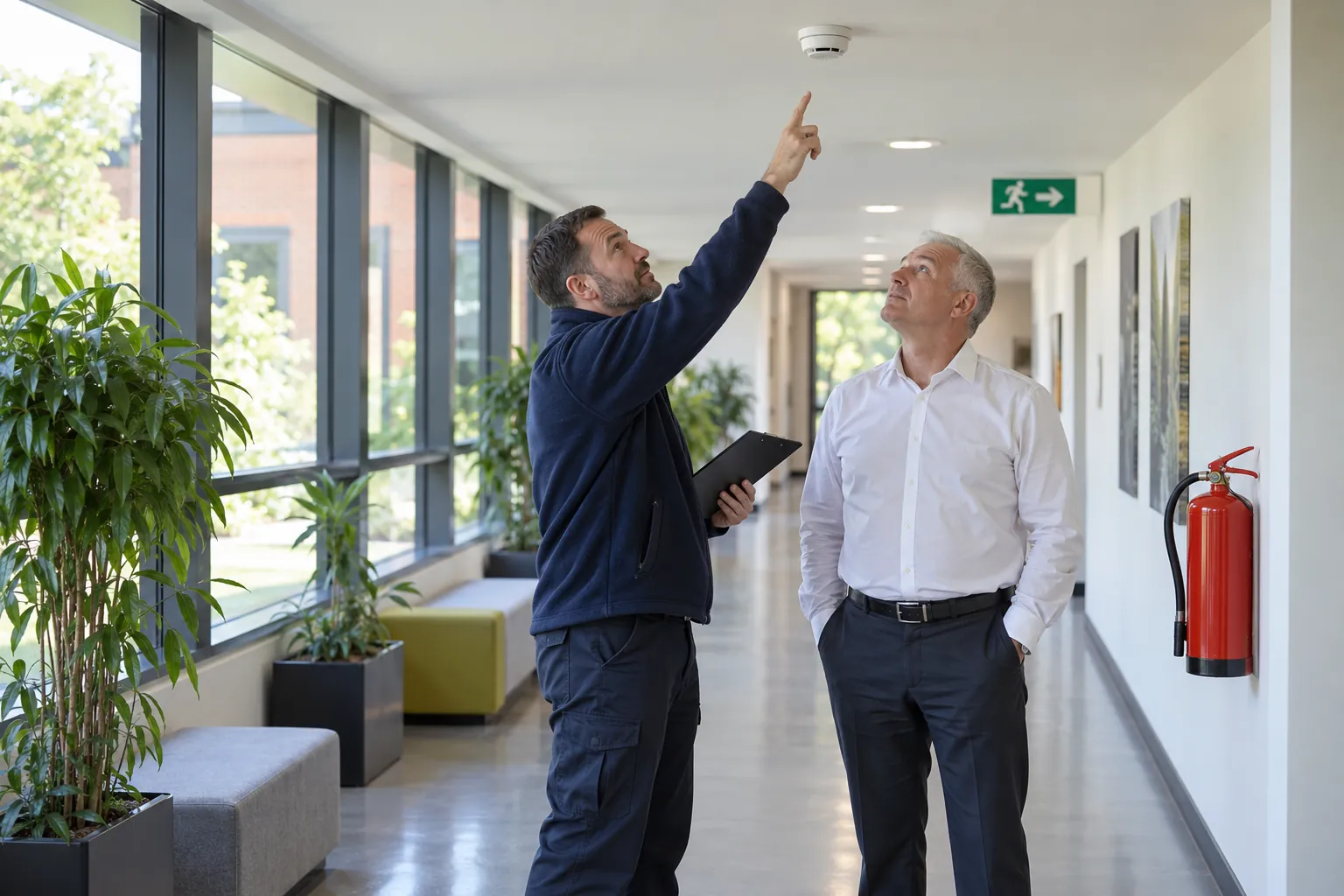
- checking fire precautions, for example that fire doors close fully and emergency lighting units work; and
- reassuring residents.
After calling the fire and rescue service, "the priority for the waking watch is to initiate the evacuation of the building", not to fight the fire. Members should not start an evacuation for a false alarm from a domestic smoke alarm, or a small fire already out, confirmed with the people in that flat.
04
Who can do it: people, training and communication
A waking watch can be residents or volunteers, with residents' full consent, the staff of a third-party contractor, such as a security company, or people employed directly by the responsible person, such as a concierge. There are "currently no specific qualifications applicable to this role", though security, stewarding and fire marshal roles cover some of the same ground. Members should be fit enough to patrol a whole shift, which "may involve long hours and a high degree of repetition", able to give instructions to people of differing abilities and languages, clearly identifiable to residents, and given their duties in writing.
Section 11 of the guidance sets the training requirements for waking watch personnel. Every member must be trained in spotting a fire early, alerting residents, for example by knocking on doors, managing the evacuation, calling the fire and rescue service and briefing it on arrival. Appendix C adds areas the training may cover, including the building's layout and escape routes and how to report defects found on patrol. The responsible person should keep a record of who was trained in what, repeat training when members change, and give refreshers. Where a contractor supplies the watch, the responsible person should make sure Disclosure and Barring Service checks have been carried out.
Appendix B covers communication. Radios are "often the most appropriate way", with set words for checking in and raising the alarm, and a check that the signal works everywhere on the patrol. Mobile phones are unlikely to suit communication between members, because they cannot relay a message to several people at once, though one may be the best way to call the fire and rescue service where there is no landline.
05
Drills, monitoring and the records to keep
Appendix D asks for a quality assurance process with two parts that leave records.
Drills test the watch and building management, not the residents. Hold them at initial training and whenever someone new joins, and more often where the team changes. The responsible person "should be able to demonstrate that effective drills are taking place", and the fire and rescue service may ask for evidence or watch one. Observers check whether members raise the alarm in their own areas and can cover them, and lessons and actions are written up. Our fire drill procedure guide covers drills more widely.
Routine monitoring. Paragraph D.17 asks for "routine recorded monitoring of the actions of any waking watch", because the measure "is reliant on the constant patrolling of the premises and continued vigilance", and monitoring "will help to identify that scheduled actions are taking place and that sufficient cover is being provided". Where a watch runs for a long time, which the guidance does not support, it suggests a patrol monitoring system, such as a guard tour system.
A building with a waking watch should be able to produce:
- the reviewed fire risk assessment, with the areas, patrol frequency, number of people, means of raising the alarm and time to warn everyone;
- the transition plan, made within a month;
- the notification to the fire and rescue service, and what residents were told and when;
- training records and drill reports; and
- the patrol record: for each round, who walked it, when, which floors and areas were checked, and what was found and reported.
The patrol record is the easiest to fake and the hardest to check. A sheet on each landing initialled every round looks the same whether the round was walked or the sheets were filled in at 06:00, and a fire door found wedged open at 03:00 needs to reach someone who will fix it, not sit in a notebook. The fire safety log book remains the place for the building's statutory records.
06
Where the patrol record fails, and where SiteClara fits
A waking watch is a set round of every floor, repeated through every night it is in place, and the responsible person and managing agent paying for it rarely see more than a contractor's invoice and a pile of signed sheets. A missed round is noticed only if something goes wrong.
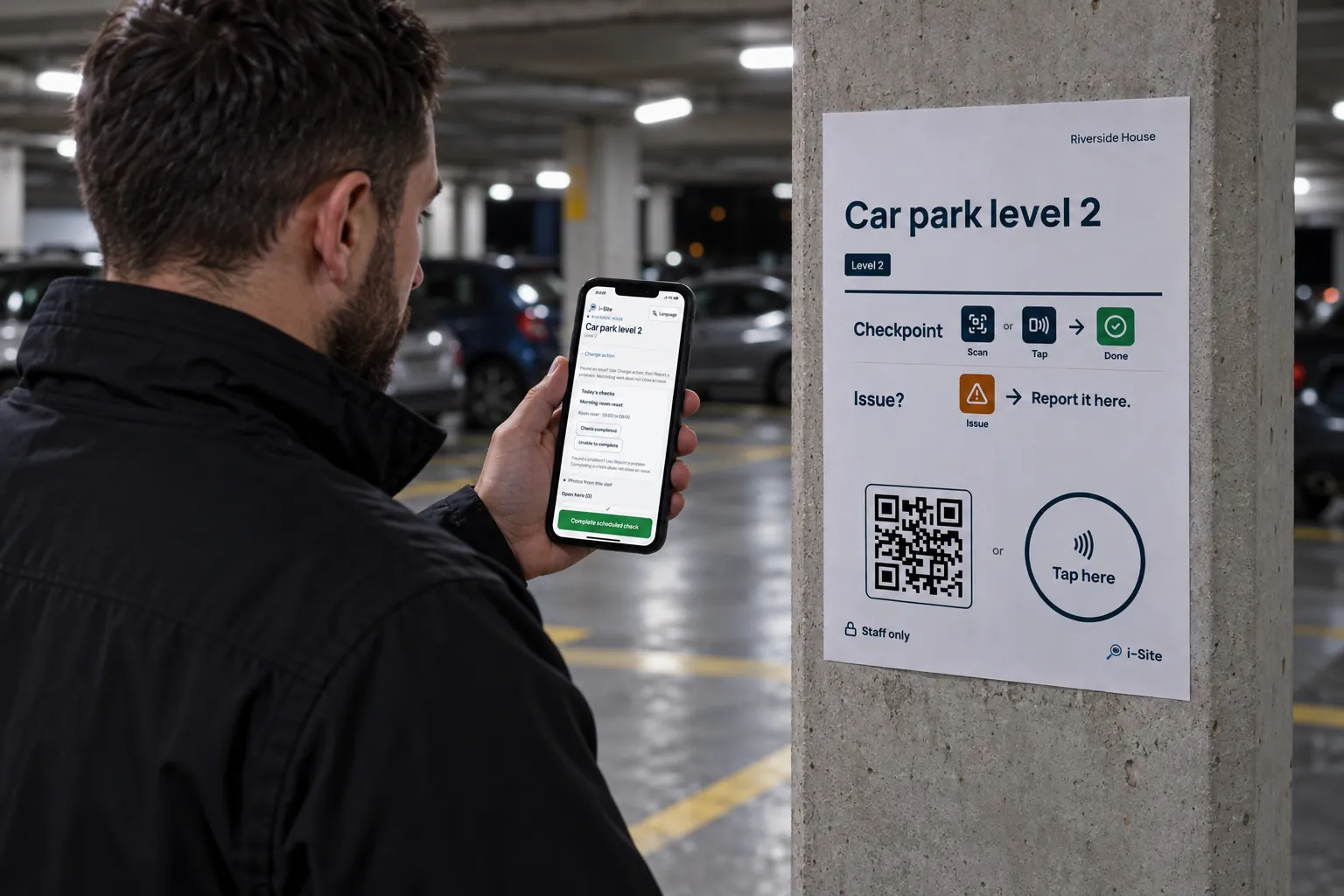
SiteClara records the round checkpoint by checkpoint. A printed QR poster, with an optional NFC tag behind it, goes at each checkpoint: each floor's lobby, the stair cores, the bin store, the perimeter. The officer scans the code or taps the tag on their own phone, with no app to install, sees the checks due there and marks each one done, or explains what stopped them, with their name and the time recorded as it happens. A problem found on the round, such as a damaged door closer, a light out or rubbish on an escape route, is reported there with a photo and goes onto the team's list of jobs until someone closes it, and the supervisor can escalate it to the building manager.
The supervisor sees what was due, done and missed across the block and records why a round was missed. Each day they review and approve a report that goes to nominated contacts, such as the managing agent's property manager, at 8am the next morning, showing what was reported, completed and still open, and how the scheduled rounds went, for example 46 of 48 completed. That gives the guidance's "routine recorded monitoring" a daily source made at the time, and gives the security company something to show for the hours it supplies.
07
Questions people ask
What does a waking watch cost?
The government's Building Safety Programme: Waking Watch costs data, collected in England between June and September 2020, gave a median of £13.99 an hour per person, £11,361 a month per building and £137 a month per dwelling. It warns that the data was not randomly sampled and may not be nationally representative.
Is a waking watch a legal requirement?
Not by name: article 13 of the Regulatory Reform (Fire Safety) Order 2005 requires the responsible person, where necessary, to equip the premises with "fire detectors and alarms", and a waking watch is one interim way of providing detection and warning while a building cannot support a stay put strategy. The NFCC's Simultaneous Evacuation Guidance, fourth edition calls a waking watch "an immediate interim measure", says an automatic fire detection and alarm system "is the most suitable mitigating measure if there is any expected delay in remediation", and expects the building to move away from it within six months of the risk being identified, other than in exceptional circumstances.
Do leaseholders have to pay for a waking watch?
Most qualifying leaseholders in England are protected: the government's leaseholder protections frequently asked questions say costs for interim measures such as a waking watch are covered by the Building Safety Act 2022 protections, with any contribution capped, normally at £10,000 (£15,000 in Greater London) and at zero for a flat worth less than £175,000 (£325,000 in London), and the building owner paying the rest. They apply in buildings over 11 metres high or of at least five storeys, counting the ground floor, to leaseholders whose flat was their main home on 14 February 2022 or who owned no more than three UK residential properties on that date.
Is there funding to replace a waking watch with a fire alarm system?
Yes, in England: the government's Interim Measures Alarm Fund (IMAF) funds the installation of interim fire alarm systems in residential buildings and student accommodation, to avoid relying on a costly waking watch. The responsible person or responsible entity applies, not leaseholders or residents. Since 1 April 2026 new applications go to it rather than the Waking Watch Replacement Fund 2023, which closed to new applications on 31 March 2026; both fund the alarm's installation, not the watch.
08
Further reading, and a list to take away
The National Fire Chiefs Council publishes the Simultaneous Evacuation Guidance, fourth edition, with its Simultaneous Evacuation Guidance frequently asked questions. Our guide to the Fire Safety (England) Regulations 2022 covers the other routine duties in blocks of flats. Your local fire and rescue service is the enforcing authority and the body to notify.
For a building with a waking watch, check that:
- the fire risk assessment records the areas to patrol, the frequency, the number of people and how the alarm is raised;
- the time to warn every resident who needs to leave has been justified by a competent person;
- a transition plan was made within a month, and a common fire alarm is on course within six months;
- the fire and rescue service and residents have been told;
- every member is trained, identifiable, DBS checked if a contractor supplies them, and on a working radio;
- drills are held at the start and whenever someone joins, and written up;
- each round is recorded as it is walked, missed rounds are explained, and defects reach someone who will fix them; and
- the watch ends only on the conditions in section 13 of the guidance.
Sources
Every document this guide quotes or links to, in the order it first cites them.
- Simultaneous Evacuation Guidance nfcc.org.uk
- Regulatory Reform (Fire Safety) Order 2005 legislation.gov.uk
- Article 9 legislation.gov.uk
- Article 13 legislation.gov.uk
- Article 11 legislation.gov.uk
- Article 31 of the Order legislation.gov.uk
- London Fire Brigade's clarification on waking watches and other interim measures london-fire.gov.uk
- Section 78 of the Fire (Scotland) Act 2005 legislation.gov.uk
- Building Safety Programme: Waking Watch costs gov.uk
- Simultaneous Evacuation Guidance, fourth edition nfcc.org.uk
- Leaseholder protections frequently asked questions gov.uk
- Interim Measures Alarm Fund (IMAF) gov.uk
- Waking Watch Replacement Fund 2023 gov.uk
- Simultaneous Evacuation Guidance frequently asked questions nfcc.org.uk
Related guides
 Security patrolsSecurity patrols: how to plan them, run them and show they happenedHow to plan and run security patrols on a site: routes and checkpoints, how often and when, what officers look for, how to record each patrol and hand over.
 Security patrolsGuard tour systems: how they work, what they prove, and how to choose oneHow guard tour systems record security patrols – wands, RFID, NFC, QR codes, GPS apps – what the data shows and does not, and what to ask before choosing one.
 Fire and water checksFire risk assessment: what the law requires, the five steps, and what the record must showWho must have a fire risk assessment, the five steps, what the written record must hold since October 2023, who can carry one out and when it must be reviewed.
 Fire and water checksThe Fire Safety (England) Regulations 2022: what each building must doFire Safety (England) Regulations 2022 explained: what responsible persons must do in blocks of flats of every height, over 11 metres, and 18 metres or more.