Security patrols
Guard tour systems: how they work, what they prove, and how to choose one
A guard tour system is a tool security companies and property managers use to record that security guards reached each checkpoint on a patrol route, and when.
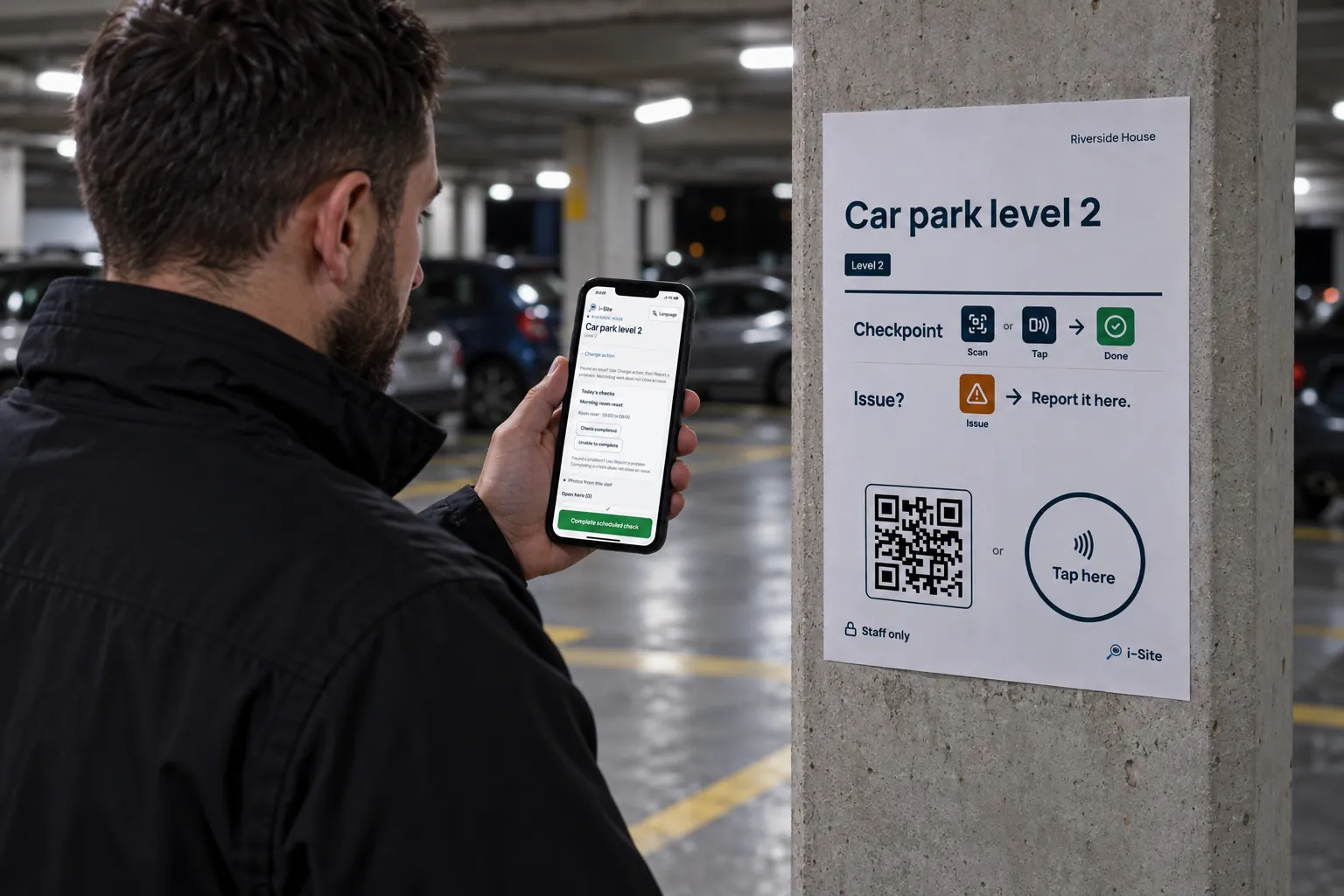
The category runs from rugged handheld wands to phone apps, and the choice matters less than how the checkpoints are placed and what happens to the data. This guide explains the main types fairly, what a patrol record can and cannot show, and the questions to ask before choosing one.
01
What a guard tour system is
A guard tour system, also called a guard tour patrol system or guard patrol system, is a way of recording that a security guard visited set points on a patrol at set times. Each checkpoint on the route carries something the officer must interact with – a metal touch button, a proximity tag, an NFC tag, a QR code or a beacon – and each interaction is logged with the time and, usually, the officer's identity. The result is a patrol log that shows which checkpoints were reached, in what order and when, and which were missed.
The idea is old. For more than a century, night watchmen carried a mechanical watchman's clock and turned a key fixed at each station, which marked a paper tape or dial inside the clock. Electronic systems replaced the clock with a data collector, and more recently with software on a mobile phone, but the question they answer has not changed: did the patrol happen as planned?
No UK law requires a guard tour system. Patrol frequencies and routes are set by the contract and the site's assignment instructions, and providers working to BS 7499, the code of practice for static guarding, are expected to supervise officers and keep records of the service. A guard tour system is one of the commonest ways security companies give clients verification that patrols were carried out, and one of the commonest questions security staff are asked about on a new site.
02
The main types of guard tour system
Most guard patrol systems on the market fall into a few families, some standalone and some built into wider security or workforce management software. Each has a place.
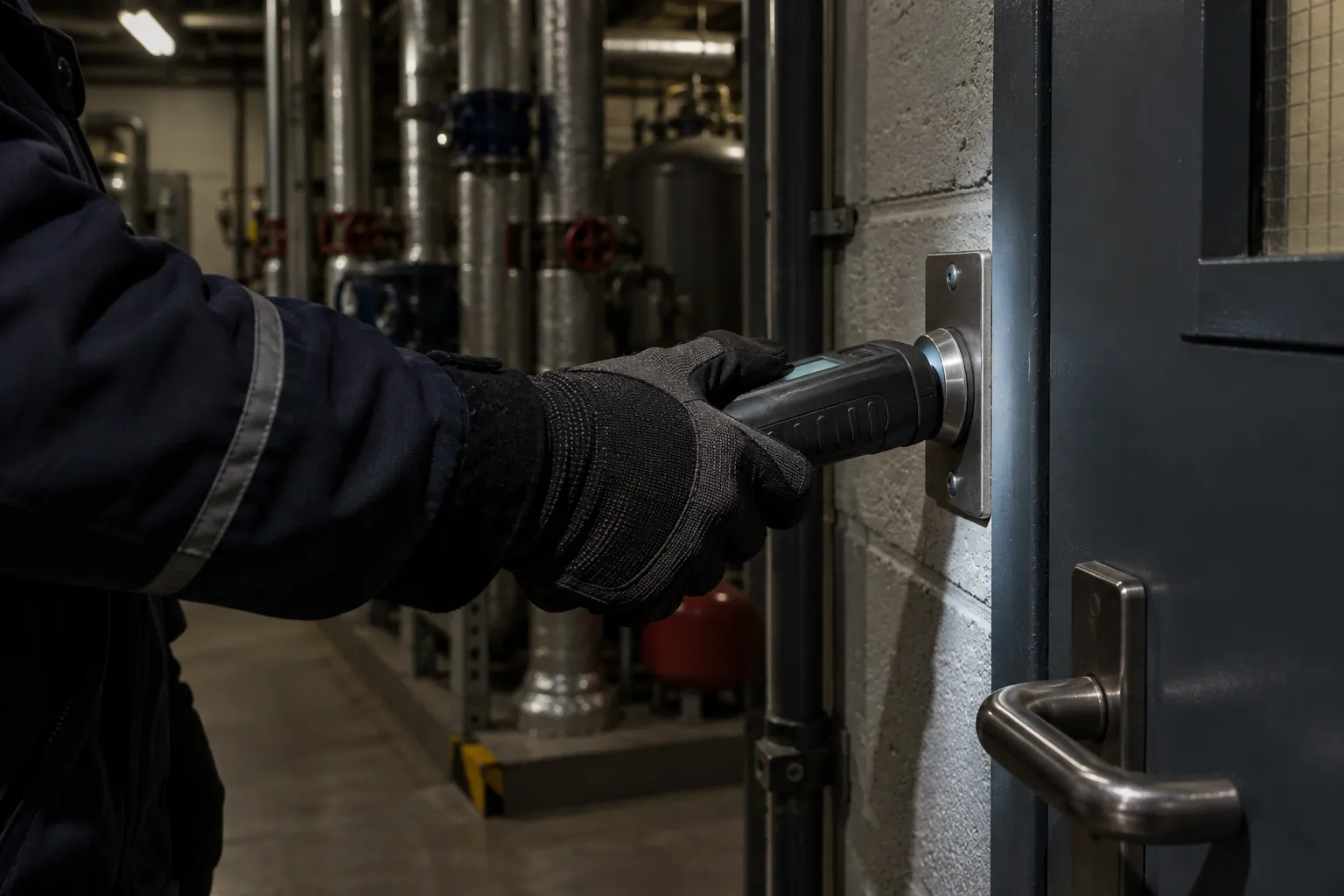
- Touch-button wands: the officer carries a rugged handheld reader, sometimes called a wand or baton, and touches it against a metal button or disc fixed at each checkpoint. The reader stores the data, which is uploaded later through a dock or USB cable. They are simple, very durable and work anywhere, including where there is no mobile signal, but the record is only seen after the upload.
- RFID proximity readers: the same principle with contactless proximity tags, so the officer holds the reader near the tag rather than touching it. Some models upload over a mobile network for near real-time patrol monitoring; others store the data until they are docked.
- Smartphone apps with NFC, QR or beacons: the officer scans a QR code or sticker, taps an NFC tag, or passes a Bluetooth beacon with a phone running the guard tour mobile app. The record is usually sent in real time, and the app can add incident reporting, photos, notes and checklists. Many also use GPS to track the phone's location, particularly for mobile patrols between sites.
- Fixed or online systems: checkpoints wired into the building's access control or a dedicated network, where the officer presents a card at each station and the control room sees each one as it happens. They suit large, permanent sites with an existing security system to integrate with.
- Combined devices: some dedicated handsets add lone worker features, such as an SOS button, man-down or no-movement alerts. That makes them lone-worker devices as well as patrol recorders, which is a different category with its own standard, BS 8484.
03
What a guard tour system should record and report
Whatever the hardware, the useful output is the same. A good system, and the tour management system or reporting software behind it, lets you:
- Define tours: the checkpoints on each route, the order if it matters, and the times or frequency of each patrol.
- Record each checkpoint with the time and the officer, not just the device.
- Show missed checkpoints and late or incomplete tours clearly, rather than leaving them to be spotted in a long list.
- Capture what was found: a note, a photo, a fault or an incident at the checkpoint where it was seen.
- Raise alerts to a supervisor or control room when a patrol is overdue, if the site needs that level of patrol monitoring.
- Report to the client in a form they will read: patrols completed against those scheduled, exceptions, and what was done about them.
- Keep the patrol data for as long as the contract requires, and no longer than needed where it identifies individuals.
The last point matters more than it seems. A client who questions whether an officer actually patrolled the loading bay last night should be able to see an answer in seconds, not after someone downloads a wand and compiles a paper report.
04
Questions to ask before choosing one
Comparisons of patrol systems tend to list features, and a supplier demo will show the best of them. The questions that decide whether a system works on your sites are more practical:
- What does the environment demand? Weather, dust, water, temperature, hazardous areas and how much abuse the device and the checkpoints will take.
- Is there signal everywhere on the route? Basements, plant rooms and large steel buildings often have none. The system needs to work offline and upload later without losing records.
- Whose device? A company handset, a dedicated wand, or the officer's own phone. Each has cost, battery, security and policy consequences.
- Real time or after the shift? Real time costs more to run but lets a control room act on a missed patrol while it still matters. For some sites a next-morning report is enough.
- How are checkpoints fixed? Tags and codes need to be tamper-resistant and placed where they can only be scanned by being there – a tag by the door it proves was checked, not one on the gatehouse wall.
- Do you need lone-worker protection? If officers work alone, the employer must assess and manage that risk. A patrol recorder is not a lone-worker alarm, and if you need one, choose it on its own merits.
- What about location tracking? GPS tracking of workers is personal data. Under the UK GDPR, employers must have a lawful basis, tell workers what is monitored and why, and keep it proportionate; the Information Commissioner's Office publishes guidance on monitoring workers.
- How will the client see the results? A portal nobody logs into is not client reporting.
- What does it cost over the contract? Hardware, per-device or per-user subscriptions, tags, replacements and the time spent compiling reports.
05
Making patrol records mean something
A guard tour system proves that someone was at a checkpoint at a time. It does not prove that they looked properly, tried the door or noticed the smell of smoke. The system is only as good as the patrol design and the supervision around it.
- Put checkpoints where the risk is: fire exits, perimeter gates, plant rooms, stores, the far corner of the car park – the places that would otherwise be skipped.
- Vary the timing within the assignment instructions, so patrols are not predictable to anyone watching.
- Attach a check to each point, such as door secure, lights working, no water on the floor, so the scan records a task and not just a presence.
- Read the data: the security supervisor should review missed and late checkpoints every day and ask why.
- Act on what is found: faults reported on patrol need to reach the people who fix them.
- Keep supervising: unannounced visits remain the best check that patrols are done well, not just done.
Used this way, patrol data improves productivity and accountability without anyone feeling watched for its own sake. It also answers the fire watch question: when a fire alarm system is out of action and the fire risk assessment calls for extra patrols, a record of each one is exactly what will be asked for.
06
Where patrol records fail, and where SiteClara fits
Without a system, patrols are recorded as a line in the daily occurrence book: "patrol completed, all in order". With a wand, the record exists but may not be seen until the end of the week. Either way, a fault found at 02:00 often stays in the log rather than reaching maintenance, and a client asking what happened last night gets a compiled report days later.
SiteClara is a phone-based way to record that a checkpoint was reached and when. A printed QR poster, with an optional NFC tag behind it, goes at each checkpoint. The officer scans the code or taps the tag on their own phone, with no app to install – officers are enrolled by text and sign in with a link. At the checkpoint they see the checks due there and mark them done, or explain what stopped them, and can report an issue or incident with a photo. A reported issue goes onto the team's list of jobs until someone closes it.
The supervisor sees what was due, done and missed, and can record the reason a check was missed. Each day the supervisor reviews the totals and photos, adds a note and approves the daily report, which goes to nominated management or client contacts at 8am the next morning: what was reported, what was completed, what is still open and how scheduled checks went. It is priced per building, with no per-person fees.
07
Further reading, and a list to take away
BSI publishes BS 7499 for static guarding, BS 7984-3 for mobile patrol services, and BS 8484 for lone worker device services. The Health and Safety Executive publishes guidance on protecting lone workers. The Information Commissioner's Office publishes guidance on monitoring workers under data protection law. The Security Industry Authority publishes licensing requirements and the Approved Contractor Scheme standard on GOV.UK.
Before choosing or changing a guard tour system, check that:
- the patrol routes, checkpoints and times are written in the assignment instructions;
- checkpoints are at the places that matter, and can only be scanned by being there;
- the system works where there is no signal;
- missed checkpoints are obvious to the supervisor the same day;
- faults found on patrol reach someone who will fix them;
- lone-worker protection, if you need it, is assessed and provided separately;
- any location tracking is lawful, proportionate and explained to officers;
- the client gets a report they will actually read.
Sources
Every document this guide quotes or links to, in the order it first cites them.
- BS 7499 knowledge.bsigroup.com
- BS 8484 knowledge.bsigroup.com
- Guidance on monitoring workers ico.org.uk
- BS 7984-3 knowledge.bsigroup.com
- Guidance on protecting lone workers hse.gov.uk
Related guides
 Security patrolsSecurity officer duties and responsibilities: what the role involves, and how it is checkedSecurity officer duties in the UK: licensing, patrols, access control, incidents and reporting, what officers cannot do, and how duties are set and checked.
 Security patrolsSecurity assignment instructions: what they should say, and how to keep them workingSecurity assignment instructions (AIs): what they should include, who agrees and signs them, how often to review them, and how to check they are followed.
 Security patrolsDaily occurrence book: what to record, and how to keep one that stands upDaily occurrence book (DOB): what to record, how to write entries that stand up, how it differs from an incident report, and paper or digital.
 Security patrolsSecurity officer report: what to write, and how to make it stand upThe reports a UK security officer writes on shift – incident, patrol, handover – what each should record, and how to write one that stands up later.