Fire and water checks
The Fire Safety (England) Regulations 2022: what each building must do
The Fire Safety (England) Regulations 2022 require the responsible person for a block of flats in England to give residents fire safety instructions and fire door information and, depending on the building's height, to check fire doors, lifts and firefighting equipment and give building information to the fire and rescue service.
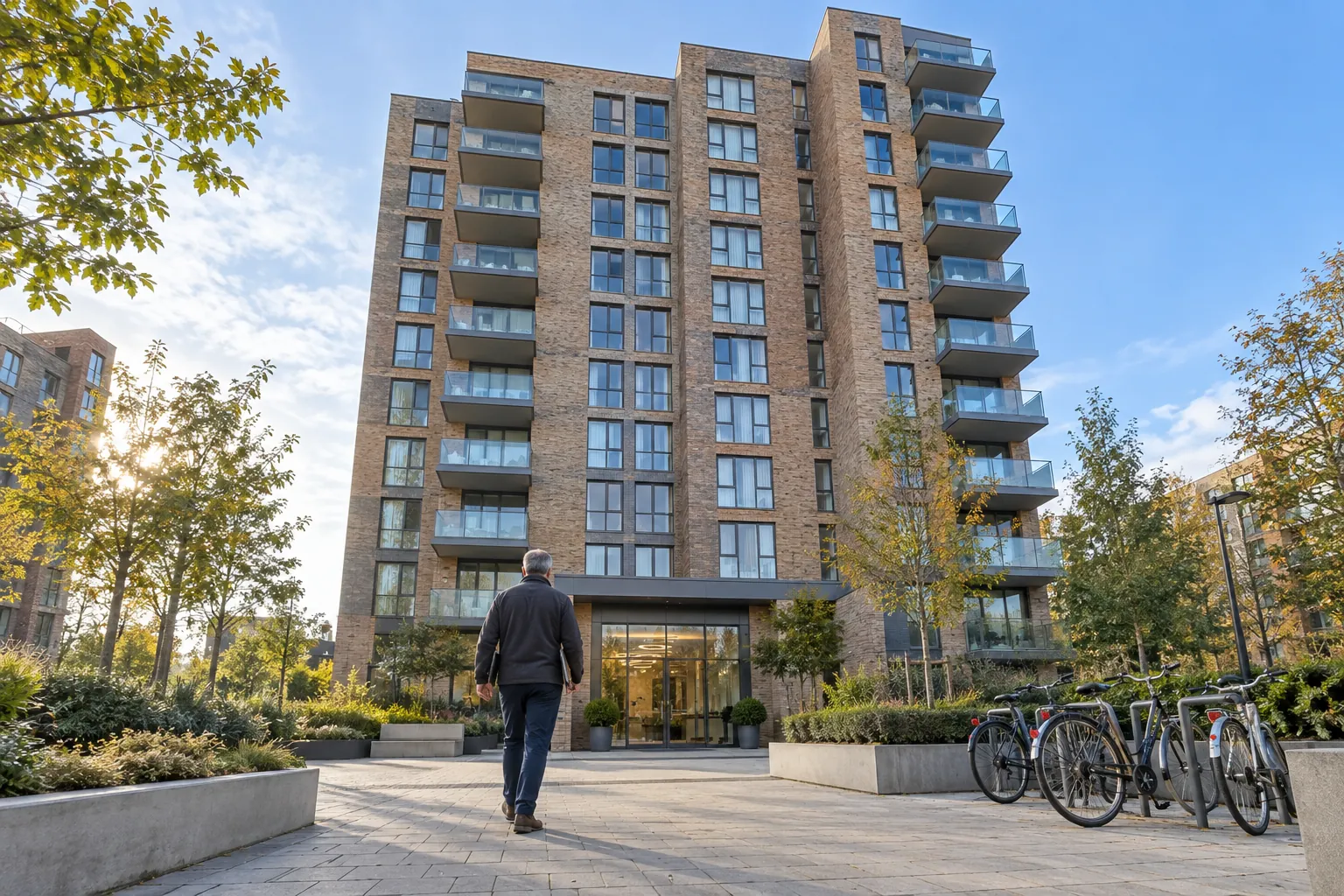
They came into force on 23 January 2023. This guide sets out the requirements for every multi-occupied residential building, what is added above 11 metres, what high-rise buildings must do, and how the regulations sit alongside the Building Safety Act 2022.
01
What the regulations are, and where they came from
The Fire Safety (England) Regulations 2022 are made under article 24 of the Fire Safety Order, the Regulatory Reform (Fire Safety) Order 2005, which is the main fire safety law for non-domestic premises and the common parts of residential buildings in England and Wales. The regulations came into force on 23 January 2023 and apply in England only. They make it a requirement in law for responsible persons of multi-occupied residential buildings to carry out specific tasks, set out duty by duty.
The new regulations put into law most of the recommendations of the Grenfell Tower Inquiry Phase 1 report that needed a change in the law. That report looked at how the fire of June 2017 developed and at the response of the fire and rescue service, and many of its recommendations were about the information fire and rescue services need to assist residents and fight a fire in a tall building, and the information residents need about what to do.
The regulations apply to responsible persons in multi-occupied residential buildings: buildings containing two or more sets of domestic premises, such as blocks of flats, with common parts. The duties fall on the responsible person under the Fire Safety Order, usually the freeholder, landlord, residents' management company or right to manage company, with a managing agent often carrying out the work on their behalf. They are enforced by the local fire and rescue service.
They sit alongside two other pieces of legislation:
- the Fire Safety Act 2021, which clarified the scope of the Fire Safety Order: in buildings containing two or more sets of domestic premises, it covers the building's structure, the external walls of the building, including windows and balconies, and the entrance doors to individual flats;
- the Building Safety Act 2022, which created a new regime for higher-risk buildings and also amended the Fire Safety Order, as section 05 explains.
02
Which duties apply, by building height
The duties build up depending on the height of the building. A duty that applies to a lower band also applies to every taller one.
- Every multi-occupied residential building with common parts: give residents fire safety instructions, and information about the importance of fire doors.
- Buildings over 11 metres in height, measured to the top storey, in addition: check fire doors in the communal areas at least every three months, and use best endeavours to check flat entrance doors at least every twelve months.
- High-rise residential buildings, at least 18 metres in height or at least seven storeys, in addition: share building plans and external wall information with the fire and rescue service, install a secure information box, install wayfinding signage, and check lifts and essential firefighting equipment every month, reporting faults.
Height matters, so measure it properly. The regulations and the government's guidance explain how the height of a building and its storeys is counted, and a responsible person with more than one building should record the height band of each. A block just over 11 metres has very different duties from one just under.
03
Duties in every multi-occupied residential building
Whatever its height, a building with two or more sets of domestic premises and common parts brings two duties to provide information, because what residents do, such as keeping fire doors shut and knowing how to report a fire, affects the risk of fire spreading and what happens when one starts.
Fire safety instructions. Responsible persons must provide relevant fire safety instructions to their residents, in a form they can reasonably be expected to understand. The instructions cover:
- instructions to residents on how to report a fire to the fire and rescue service;
- the evacuation strategy for the building, for example whether residents should stay put unless their own flat is affected, or leave when the alarm sounds;
- any other instruction that tells residents what they must do once a fire has occurred.
The instructions must be displayed in a conspicuous part of the building, and residents must be given a copy when they move in, at least once a year after that, and again when the instructions change, for example because the evacuation strategy has changed.
Fire door information. The regulations also require responsible persons to provide residents with information relating to the importance of fire doors in fire safety: that fire doors should be kept shut when not in use, that residents should not tamper with self-closing devices on fire doors, and that residents should report any fault or damage to fire doors immediately. This goes to residents when they move in and at least once a year.
GOV.UK publishes template information for residents. Many responsible persons send it with the annual service charge paperwork, post it in the common parts and give it with every new tenancy or lease; whatever the method, keep a record of what was sent, to whom and when, because that record is how you show the duty was met.
04
Buildings over 11 metres: fire door checks
In buildings with a top storey more than 11 metres above ground level, responsible persons must:
- carry out quarterly checks of all fire doors in the common parts, including stair doors, lobby doors and doors to service risers and bin stores where they are fire doors; and
- use their best endeavours to check all flat entrance doors at least every twelve months, recording each attempt to get access.
The government's guidance describes these as routine checks that a person with suitable knowledge can carry out, such as a caretaker, estate officer or block manager who has been shown what to look for: whether each door closes fully by itself, whether its seals, hinges and glazing are intact, and whether it has been damaged or altered. Our guide to communal fire door checks covers these checks and the best endeavours duty in depth.
The checks do not replace a periodic fire door inspection by a competent inspector, which the fire risk assessment may call for, and a fault found on a check may need a fire door specialist to put right.
The regulations set the checks but not the form of the record. Keep a record of each check, door by door, with the date, who did it, what was found and what was done about it, so that the checks can be shown to the fire risk assessor or the fire and rescue service.
05
High-rise buildings: 18 metres or seven storeys and over
High-rise residential buildings, at least 18 metres high or at least seven storeys, carry the most duties. Most are about making sure firefighters have the information and equipment they need when they arrive.
- Building plans: provide the local fire and rescue service, by electronic means, with up-to-date floor plans, and a single-page building plan showing the building's surroundings and the key firefighting equipment, and keep hard copies in the secure information box.
- External wall information: give the fire and rescue service information about the design and materials of the building's external wall system, the level of risk they present and any steps taken to reduce it, and tell them of any material change.
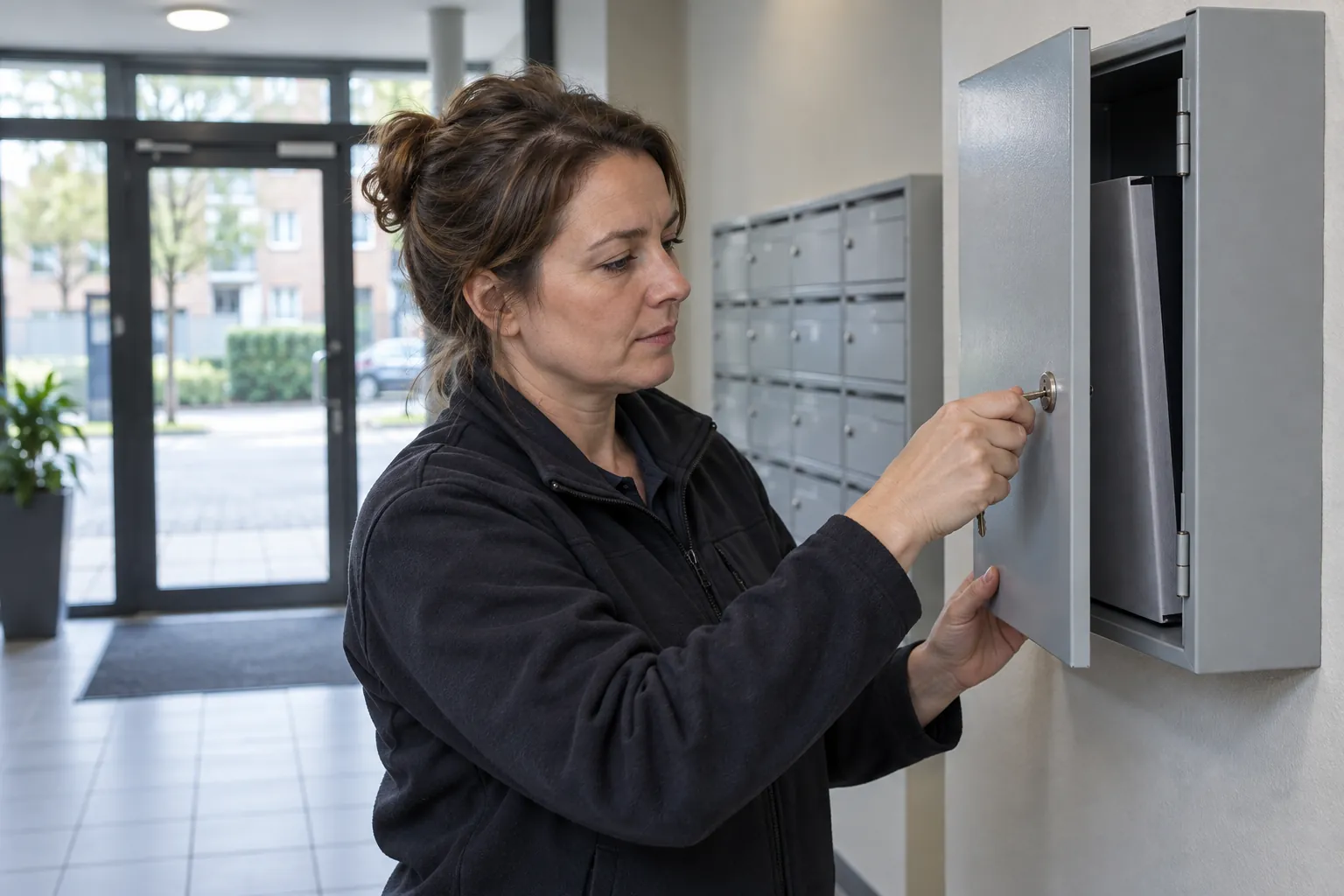
- Secure information box: install and maintain a secure information box in or on the building, accessible to firefighters, holding the name and contact details of the responsible person and the hard copies of the building plans, and keep its contents up to date.
- Wayfinding signage: install signs that show floor numbers and flat numbers on each landing within the stairways and in the lift lobbies, visible in low lighting or when lit by a torch, so that firefighters can find their way.
- Lifts and essential firefighting equipment: check lifts intended for use by firefighters and evacuation lifts, and the other key pieces of firefighting equipment, every month; report defective lifts or equipment that cannot be fixed within 24 hours to the fire and rescue service, and tell them when it is fixed; and make the outcome of the checks available to residents.
Information to fire and rescue services goes electronically, in the way the local service asks for it. The government's guidance explains what counts as essential firefighting equipment, which can include systems such as rising mains and smoke control, and the checks are in addition to the servicing each system already needs by a competent person.
The Building Safety Act 2022. Most high-rise residential buildings are also higher-risk buildings under the Act: at least 18 metres or seven storeys, with at least two residential units. They must be registered with the Building Safety Regulator, which left the Health and Safety Executive in January 2026 to become a standalone body sponsored by the Ministry of Housing, Communities and Local Government, and have an accountable person, and a principal accountable person, responsible for managing the building's structural and fire safety risks. Their duties include assessing those risks, preparing a safety case report, keeping the building's information up to date as the golden thread, having a residents' engagement strategy, and reporting certain safety occurrences to the regulator. These duties sit alongside the Fire Safety Order and the 2022 regulations, not instead of them.
The Act also amended the Fire Safety Order from October 2023 for all premises it covers. Among the changes, every responsible person must record the fire risk assessment in full and record their fire safety arrangements, and in buildings with two or more sets of domestic premises must give residents information about the fire risks identified and the measures in place.
06
Where the record fails, and what SiteClara does about it
Most of these duties are recurring: quarterly door checks, monthly lift and equipment checks, annual information to residents, and plans and box contents that must be kept current. In a managing agent's portfolio they are spread across many blocks and many people, and the evidence that each was done is often a contractor's invoice, an email or a line in a spreadsheet updated from memory. A missed month is found by the fire risk assessor or the fire and rescue service, not by the person responsible.
SiteClara records the routine checks where they happen. A printed QR poster, with an optional NFC tag behind it, goes at each location in the block, such as a stair lobby, the firefighting lift or the secure information box. The person doing the check scans the code or taps the tag on their own phone, with no app to install; they are enrolled by text and sign in with a link. They see the checks due there, such as the quarterly fire door check or the monthly lift check, and mark each one done, or explain what stopped them. A fault, such as a damaged door seal or a missing wayfinding sign, is reported there with a photo and goes onto the team's list of jobs until someone closes it, and the supervisor can escalate it to the building manager, who can answer it.
The supervisor sees what is due, done and missed across the block and can record why a check was missed. Each day the supervisor reviews and approves a report that goes to nominated contacts, such as the managing agent's property manager or the client, at 8am the next morning, showing what was reported, completed and still open, and how the scheduled checks went, for example 12 of 12 completed. It is priced per building, with no per-person fees.
07
Questions people ask
Where can I find the Fire Safety (England) Regulations 2022 in PDF format?
The official text of the Fire Safety (England) Regulations 2022, SI 2022 No. 547, is on legislation.gov.uk, as a web page and as a PDF of the regulations as made. The Home Office's guidance on the regulations, with a fact sheet on each duty, is on GOV.UK.
Is it a legal requirement to have a fire safety policy?
Not in those words, but the law requires the fire safety arrangements a policy would set out: in England and Wales, article 11 of the Fire Safety Order requires the responsible person, including the responsible person for a block of flats, to make arrangements for the effective planning, organisation, control, monitoring and review of the preventive and protective measures, and to record them. Since 1 October 2023, when the Building Safety Act 2022 amended article 11, the duty to record those arrangements has applied to every responsible person; before then it applied only in some cases, such as where the responsible person had five or more employees.
08
Further reading, and a list to take away
GOV.UK publishes the government's guidance on the Fire Safety (England) Regulations 2022 and the other fire safety regulations, with fact sheets on each duty and template information for residents; the regulations themselves are on legislation.gov.uk. The National Fire Chiefs Council, London Fire Brigade and other fire and rescue services publish guidance for responsible persons, and the Building Safety Regulator publishes guidance for higher-risk buildings. The Local Government Association's guide Fire safety in purpose-built blocks of flats is a longer reference on managing fire safety in blocks.
For each block, check that:
- you know its height band, and so which duties apply;
- fire safety instructions and fire door information go to residents on moving in, every year and after changes, with a record kept;
- above 11 metres, communal fire doors are checked every quarter and flat entrance doors every year, door by door;
- for high-rise buildings, plans and external wall information are with the fire and rescue service and kept current;
- the secure information box is installed, accessible and up to date;
- wayfinding signs are in place and legible;
- lifts and firefighting equipment are checked monthly, faults over 24 hours are reported, and results are available to residents;
- higher-risk buildings are registered and the Building Safety Act duties are in hand.
Sources
Every document this guide quotes or links to, in the order it first cites them.
- Fire Safety (England) Regulations 2022 legislation.gov.uk
- Article 24 of the Fire Safety Order legislation.gov.uk
- Fire Safety Act 2021 legislation.gov.uk
- Building Safety Act 2022 legislation.gov.uk
- PDF of the regulations as made legislation.gov.uk
- Guidance on the regulations gov.uk
- Article 11 of the Fire Safety Order legislation.gov.uk
Related guides
 Fire and water checksCommunal fire door checks in blocks of flatsWhat the Fire Safety (England) Regulations 2022 require of communal fire doors and flat entrance doors, who carries out the checks, and how to record them.
 Premises and facilities managementManaging agent responsibilities in residential block managementWhat a managing agent does for a block of flats in England and Wales: service charges, the RICS code, repairs, fire safety in common parts, and records.
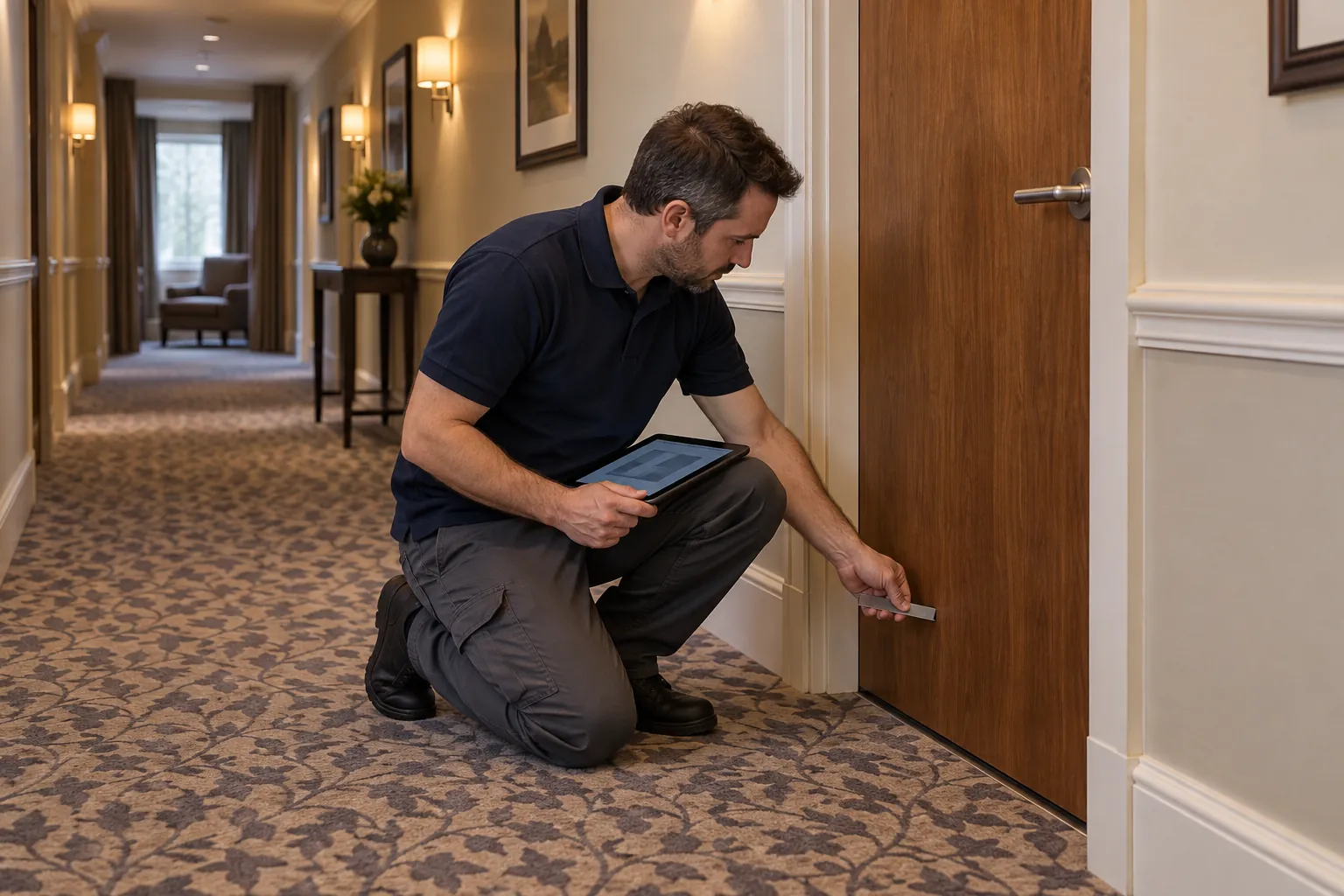 Fire and water checksFire door inspection: what the inspector checks, and what happens nextFire door inspection: what a survey by a competent inspector covers, how often doors should be inspected, the certification schemes, and remedial work.
 Premises and facilities managementBuilding manager responsibilities: the duties, the daily work and the recordWhat a building manager is responsible for in UK commercial and residential buildings: legal duties, daily work, contractors and the records that prove it.