Cleaning
Church cleaning checklist: what to clean, how often, and who signs it off
A church cleaning checklist lists every area of the building, from the sanctuary, restrooms and nursery to the kitchen, fellowship hall and exterior, with the cleaning tasks each one needs and how often: before and after each service, after each event, weekly, and seasonally.
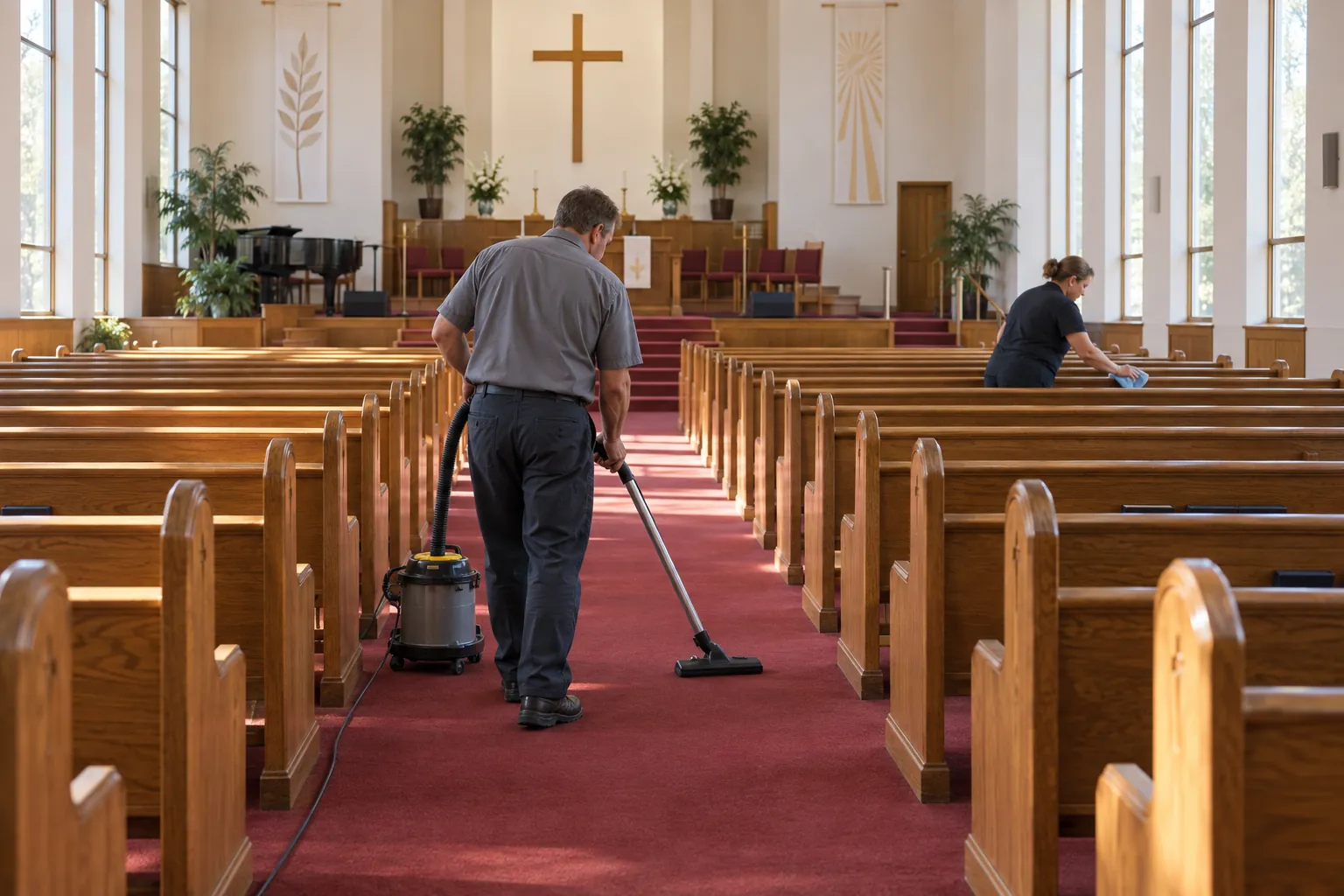
A church is several buildings under one roof: a place of assembly on Sunday morning, a nursery, a commercial-style kitchen, a school or daycare on weekdays, and a meeting space for every group that books the fellowship hall. A church cleaning checklist has to cover all of them, and it has to work whether the cleaning is done by a paid custodian, a janitorial contractor or a rotation of volunteers. This guide sets out what to clean, how often, who does what, and how to know it was done.
01
What rules apply to cleaning a church
No federal law sets a cleaning schedule for a house of worship. What applies depends on who does the cleaning and what the building is used for, and a church often has more obligations than its leaders expect.
OSHA, where the church is an employer. OSHA's coverage rule, 29 CFR 1975.4, says that churches and religious organizations "are considered employers under the Act where they employ one or more persons in secular activities." It gives examples: a school or hospital run by a religious organization is covered, and so are its administrative and office staff, while clergy performing religious services, and choir members, organists and ushers taking part in them, are not. A paid custodian or sexton cleaning the building is doing secular work. Where one of the 22 OSHA-approved State Plans covers private employers, that state program applies instead, so check your state before relying on the federal text.
Where OSHA applies, two general duties bear directly on cleaning. The walking-working surfaces standard, 29 CFR 1910.22, requires that "all places of employment, passageways, storerooms, service rooms, and walking-working surfaces are kept in a clean, orderly, and sanitary condition", and that they are kept free of hazards such as "leaks, spills, snow, and ice." The sanitation standard, 29 CFR 1910.141, requires that places of employment "be kept clean to the extent that the nature of the work allows" and that washing facilities are "maintained in a sanitary condition." Employees who work with hazardous cleaning chemicals are generally covered by the Hazard Communication Standard (29 CFR 1910.1200), which means labels, safety data sheets and training; a household product used as a consumer would use it can be exempt.
Public health guidance. For ordinary buildings, including community settings, the CDC's page When and How to Clean and Disinfect a Facility is the plain reference. It separates cleaning, which "decreases the number of germs on surfaces", from sanitizing and disinfecting, and it asks for high-touch surfaces to be cleaned regularly and disinfection to be kept for when it is needed.
Other uses, other rules. A church that runs a licensed preschool or daycare will find cleaning and sanitizing requirements in its state's child care licensing rules. A kitchen that serves the public may need a permit and inspection from the county or city health department; the rules for occasional church meals vary from state to state. And the building is still a place of assembly under the locally adopted fire code, so the cleaning crew is often the first to notice a blocked exit.
02
The church cleaning checklist, area by area
Walk the building and list every area, then give each one its tasks. Most churches end up with something close to this:
- Sanctuary or worship space: vacuum the carpet and aisles; dust mop hard floors; wipe pew backs, pew rails and chair arms; clear bulletins, tissues and trash from pew racks and hymnal racks; dust the pulpit, lectern, altar rail and communion table; spot clean glass on doors; check the platform and choir loft; empty wastebaskets.
- Narthex, lobby and entrances: clean entrance glass and push plates; vacuum or change walk-off mats; sweep the steps and ramp; wipe the welcome desk, literature racks and any hand sanitizer stands; wipe door handles and panic bars.
- Restrooms: clean and disinfect toilets, urinals, sinks and counters; restock toilet paper and refill the paper towel and soap dispensers; clean mirrors; mop floors; wipe baby changing stations; empty sanitary bins and trash; report leaks and broken fixtures.
- Nursery and children's rooms: clean and sanitize toys, cribs, changing tables and high chairs; wipe low tables and chairs; wash bedding and cloth items; vacuum or mop the floors children sit and crawl on; restock gloves, wipes and diaper bags.
- Kitchen: clean and sanitize counters and food prep surfaces; clean the sink, range and microwave; wipe refrigerator handles and clear out old food; empty trash and recycling; mop the floor.
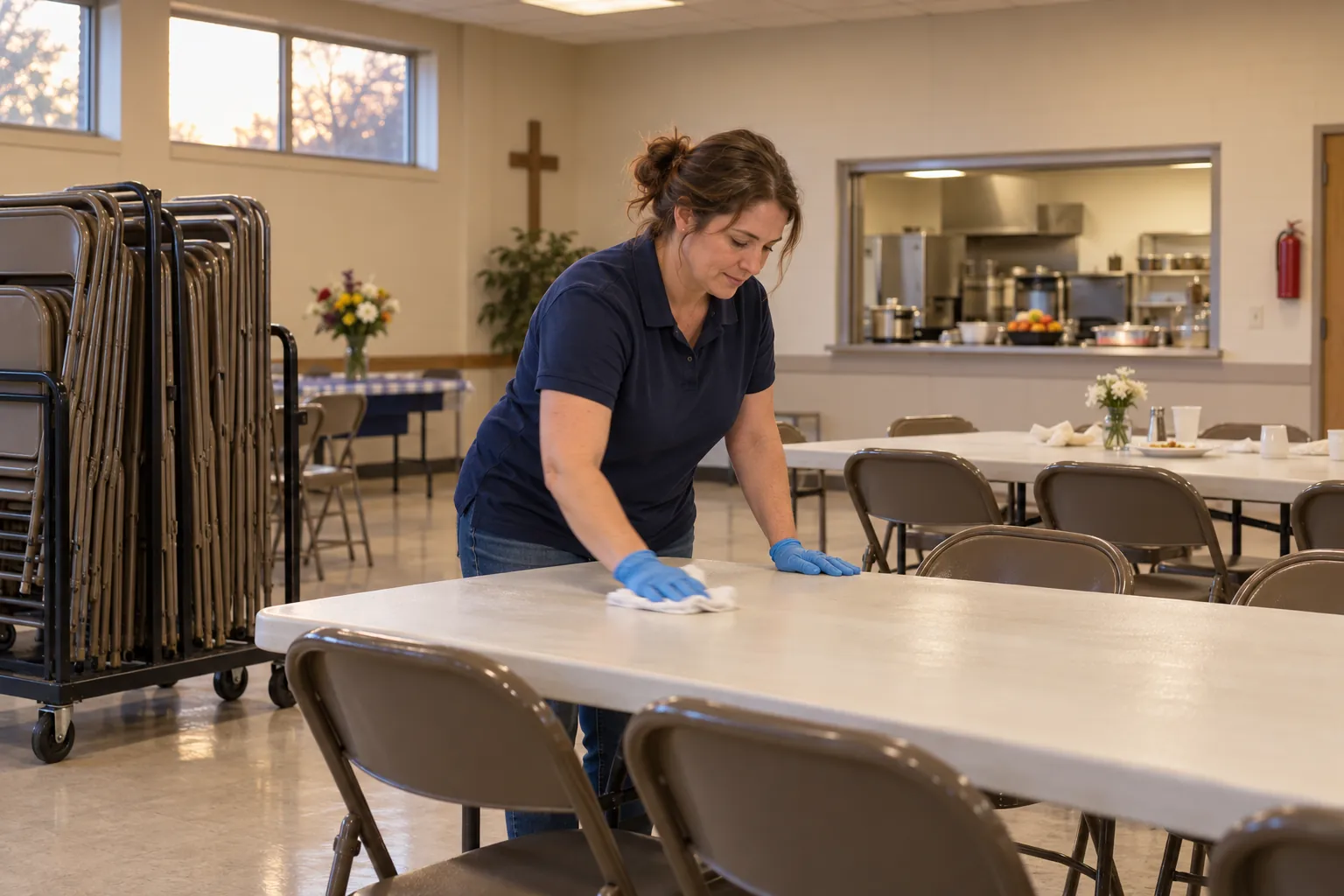
- Fellowship hall and classrooms: wipe tables and chairs after each use; stack or put away furniture; sweep and mop or vacuum; empty wastebaskets; wipe whiteboards, light switches and door handles.
- Offices: empty trash, dust desks and shelves, vacuum, wipe phones and shared equipment.
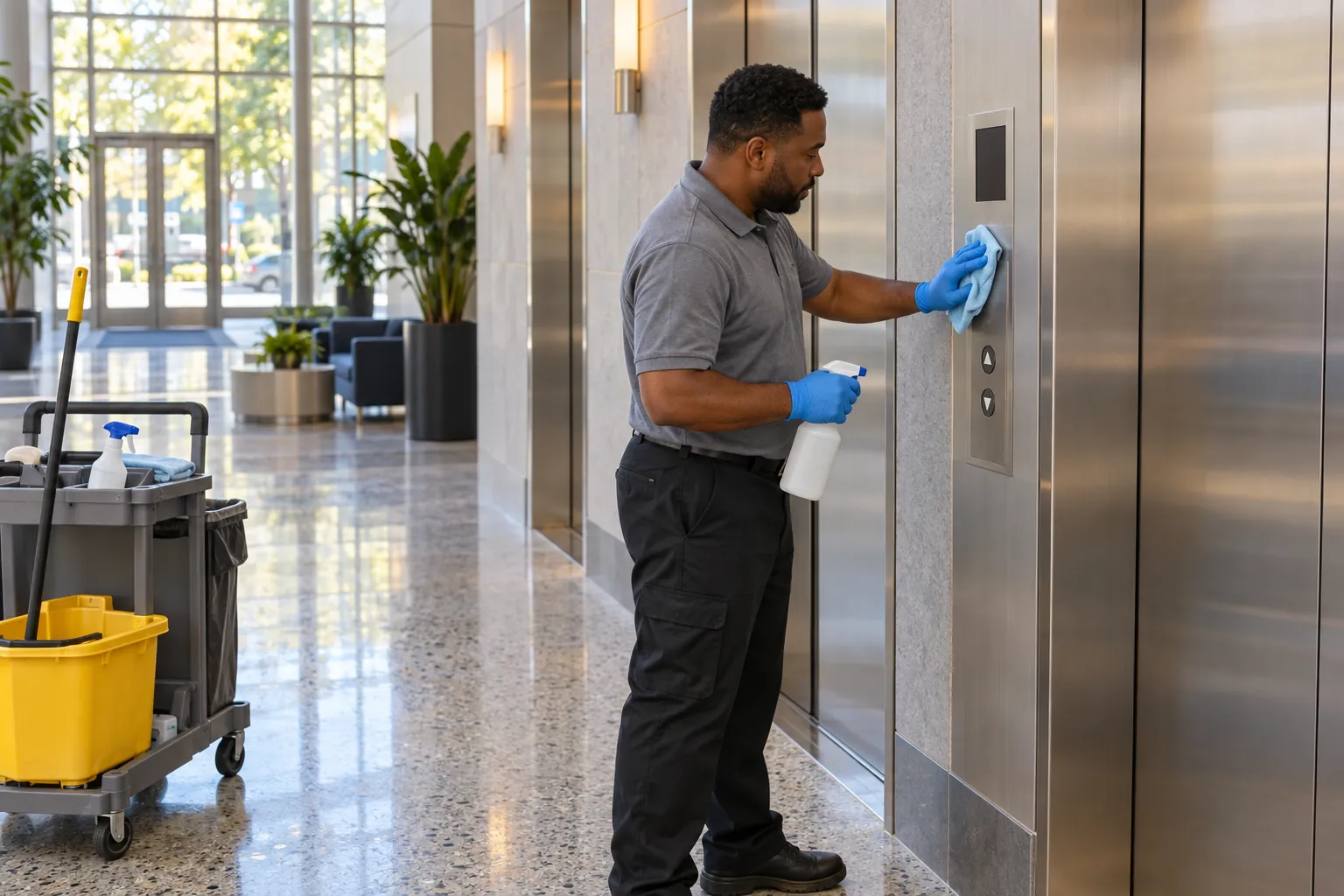
- Halls, stairs and elevators: vacuum or mop, wipe handrails and elevator buttons, and check that exit routes, corridors and exit doors are clear of stacked chairs, tables and donations.
- Exterior and parking lot: pick up litter around the entrances and parking lot; empty outdoor trash cans; sweep walkways; check that exterior lights work and exit doors open onto a clear path.
- Baptistry, sacristy and vesting rooms, where the building has them: clean to the congregation's own practice, and keep any water and chemicals stored as the supplier directs.
Keep the custodial closet on the list too. A clean mop sink, dry mops, labeled bottles, stocked supplies and a tidy shelf of chemicals make every other task on this list easier and safer.
03
How often: daily, weekly, after events and seasonal
Church buildings are used in bursts, so the right frequency follows the calendar rather than a flat daily schedule. A useful way to build it is in four layers:
- Before and after each service. Restrooms checked and restocked, entrances swept, the sanctuary picked up, trash emptied, the nursery reset. On a Sunday with two or three services, restrooms usually need a check between each.
- After each event or booking. Funerals, weddings, youth nights, AA meetings, voting days and community meals each leave the rooms they used to be reset. Tie the task to the booking calendar, so the fellowship hall is checked after every booking, not only on Monday morning.
- Weekly. A full vacuum of the sanctuary, dusting of pews and furnishings, kitchen deep clean, office cleaning, and a thorough clean of the nursery toys and furniture.
- Monthly, seasonal and annual. Carpet extraction, strip and refinish of hard floors, washing walls and windows, high dusting of light fixtures and beams, upholstery cleaning, and the big cleans before Christmas and Easter.
Weekday use changes everything. A church that hosts a preschool, a food pantry or a daily program needs daily cleaning in those rooms and in the restrooms they use, whatever the Sunday schedule says. Check your state licensing rules for how often a licensed program's rooms and equipment must be cleaned and sanitized.
Weather adds tasks. In winter the entrances need mats changed, salt and slush mopped up and steps cleared before people arrive; OSHA's walking-working surfaces rule names snow and ice as hazards to be kept off surfaces where it applies. Summer brings heavier restroom use at camps and vacation Bible school.
04
Who does what: custodian, contractor and volunteers
Most churches clean with some mix of three groups, and the checklist only works when each knows which lines are theirs.
A paid custodian or sexton usually owns the daily and weekly work, the chemicals, the equipment, and the list itself. They know the building best and are the natural person to receive reports of problems.
A janitorial contractor, such as a professional church cleaning services company, may clean on a set night each week or handle the periodic work: floor care, carpet extraction and windows. The contract should include the checklist as its scope of work, with the frequency for each task, so both sides can see what was agreed.
Volunteers often take the Sunday resets, the kitchen after a meal, or a monthly work day. Give them the tasks that need the least training and the fewest chemicals: picking up the sanctuary, wiping tables, restocking. Keep disinfecting, floor machines and anything involving body fluids with trained staff.
Name one person as responsible for the list: usually the custodian, the church administrator or a trustee on the property committee. When nobody owns it, a missed restroom check on Sunday is nobody's fault, and the same thing happens next week.
05
The nursery, the kitchen and the spill nobody planned for
Three areas carry more risk than the rest of the building and deserve their own lines on the checklist.
The nursery. Infants put toys in their mouths, and illness spreads quickly between young children. Clean first and then sanitize or disinfect toys and changing surfaces with a product whose label allows use on surfaces children touch, following the contact time. Set toys that have been mouthed aside until they are cleaned. If the nursery is part of a licensed program, the licensing rules decide the frequency and the products.
The kitchen. Clean and sanitize food contact surfaces before and after use, keep raw and ready-to-eat food apart, clear out the refrigerator after each event, and keep cleaning chemicals stored away from food. If the kitchen prepares meals for the public, ask the local health department what permit or training it expects; the answer varies by county.
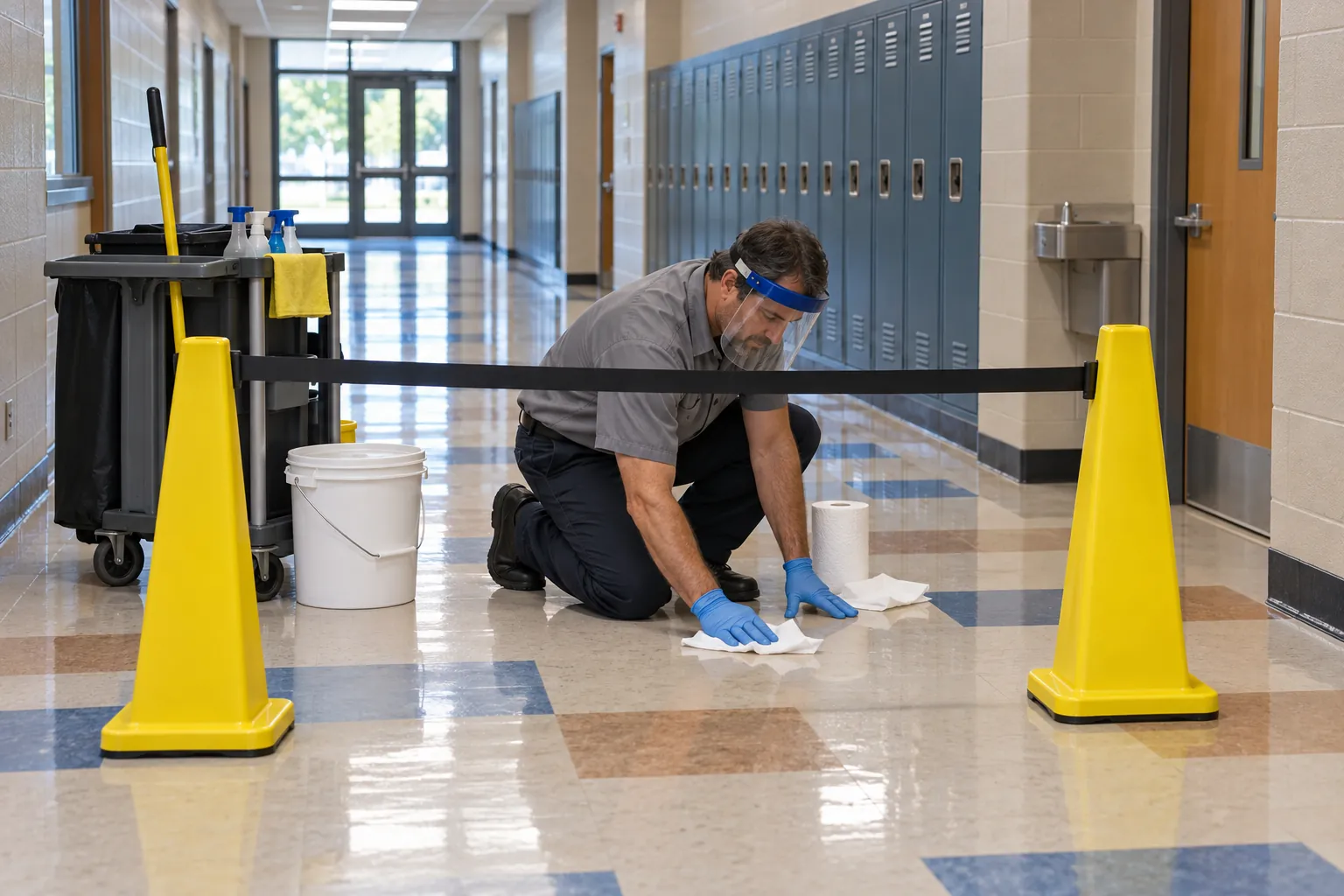
Vomit, blood and other body fluids. Sooner or later a child is sick in the nursery or someone falls on the steps. CDC guidance on How to Prevent Norovirus advises cleaning up vomit and diarrhea and then disinfecting with "a chlorine bleach solution with a concentration of 1,000 to 5,000 ppm (5 to 25 tablespoons of household bleach [5% to 8%] per gallon of water)", or with an EPA-registered product against norovirus, leaving bleach on the area for at least five minutes. Contaminated linens and cloth items should be washed in hot water and machine dried on high heat. Keep a body fluid spill kit in the custodial closet and train the people who will use it.
Where a church employs staff whose duties include cleaning up blood, OSHA's Bloodborne Pathogens standard (29 CFR 1910.1030) may apply; OSHA's own overview names "housekeeping personnel in some industries" among the workers at risk. If it applies, the church needs an exposure control plan, training and the right protective equipment. Get advice from your state plan or OSHA office if you are unsure.
06
Where the checklist fails, and what SiteClara does about it
A church cleaning checklist usually lives on a clipboard in the custodial closet, or a laminated sheet on the back of a restroom door. It struggles in exactly the places a church is busiest. Volunteers change from week to week and nobody knows who did the Sunday reset. A sheet initialed for the whole week at once cannot show whether the restroom was checked between services. The leak under the kitchen sink is mentioned to whoever is passing on the way out, and the property committee hears about it a month later.
SiteClara records the check where it happens. A printed QR code poster, with an optional NFC tag behind it, sits at each place a check is scheduled: the restrooms, the nursery, the kitchen, the fellowship hall. The custodian or cleaner scans it or taps it with their own phone, with no app to install, sees the checks due there, and marks each one done or says what stopped them. The time and the named person are recorded as it happens, with a photo when one helps. A problem they find, such as a blocked toilet, a broken changing table or a stack of chairs across an exit, is reported there and goes onto the team's list of jobs until somebody closes it.
The supervisor, whether that is the custodian, the contractor's supervisor or the church administrator, sees what was due, what was done and what was missed, and records why a check was missed. Each day they review it, add a note, and approve a report that goes to the people the church chooses at 8 a.m. the next morning: what was reported, what was completed, what is still open, and how the scheduled checks went.
07
Questions people ask
What are the responsibilities of a church cleaner?
A church cleaner does the work of a janitor or building cleaner, which the Bureau of Labor Statistics describes in its Occupational Outlook Handbook profile, Janitors and Building Cleaners: gathering and emptying trash, sweeping, mopping or vacuuming floors, cleaning restrooms and stocking them with supplies, cleaning spills and other hazards, washing windows, walls and glass, and cleaning and disinfecting surfaces that are touched frequently. The same profile lists ordering cleaning supplies, making minor building repairs, notifying managers when a building needs major repairs, and locking doors to secure the building, all of which a church custodian or sexton usually does too.
How often should a church be cleaned?
No federal rule sets a frequency for a house of worship. The CDC's When and How to Clean and Disinfect a Facility asks for high-touch surfaces, such as door handles, stair rails, elevator buttons, restroom fixtures and desks, to be cleaned regularly, and other surfaces when they are visibly dirty. In practice that means restrooms and entrances before and after each service, rooms after each event, and a full clean weekly, with daily cleaning in any rooms a weekday program uses.
What are the steps involved in cleaning a church?
Clean first, then disinfect where it is needed. The CDC's When and How to Clean and Disinfect a Facility says to clean surfaces with soap and water or a cleaning product suited to the surface, and, before disinfecting, to clean the surface with soap and water first. After applying a disinfectant, leave it on the surface for the contact time given in the product's directions, keeping the surface wet the whole time, and wash your hands with soap and water for 20 seconds immediately afterward.
08
Where to read the guidance, and a list to take away
The CDC's When and How to Clean and Disinfect a Facility is the plain starting point for cleaning and disinfecting a community building. OSHA's walking-working surfaces standard and sanitation standard set the general housekeeping duties where the church is an employer, and 29 CFR 1910.37 says that exit routes "must be free and unobstructed." For disinfectants, start with the EPA's Selected EPA-Registered Disinfectants. For a preschool or daycare, read your state's child care licensing rules, and for the kitchen, ask your county or city health department.
Before you adopt or revise your church cleaning checklist, check that:
- every area of the building is on it, including the nursery, kitchen, offices and custodial closet;
- each task has a frequency: per service, per event, weekly or periodic;
- event cleaning is tied to the booking calendar, not left to Monday;
- each line says who owns it: custodian, contractor or volunteers;
- disinfecting and body fluid cleanup are kept with trained staff, with an EPA-registered product and a spill kit;
- chemicals are labeled, stored away from food and children, and covered by safety data sheets;
- exit routes and exit doors are part of every check;
- problems found during cleaning are reported to one named person and followed up;
- one person owns the list and reviews it at least once a year.
Sources
Every document this guide quotes or links to, in the order it first cites them.
- 29 CFR 1975.4 osha.gov
- 29 CFR 1910.22 osha.gov
- Sanitation standard, 29 CFR 1910.141 osha.gov
- Hazard Communication Standard (29 CFR 1910.1200) osha.gov
- When and How to Clean and Disinfect a Facility cdc.gov
- Selected EPA-Registered Disinfectants epa.gov
- How to Prevent Norovirus cdc.gov
- Bloodborne Pathogens standard (29 CFR 1910.1030) osha.gov
- Janitors and Building Cleaners bls.gov
- 29 CFR 1910.37 osha.gov
Related guides
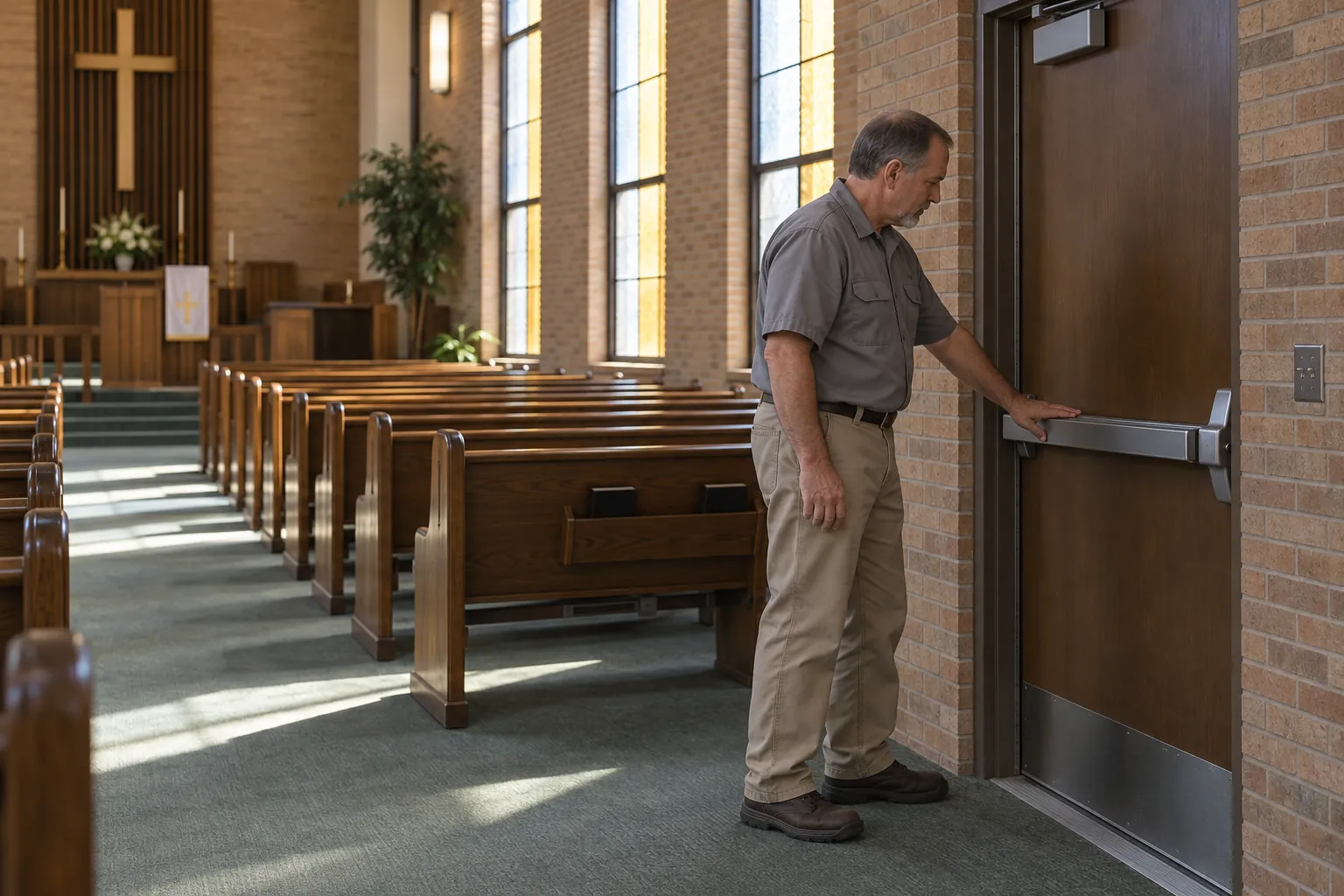 Premises and facilities managementChurch maintenance checklist: keeping the building safe, from Sunday to SundayA church maintenance checklist for US congregations: the life safety rules for assembly buildings, weekly to annual tasks, who does each, and the record.
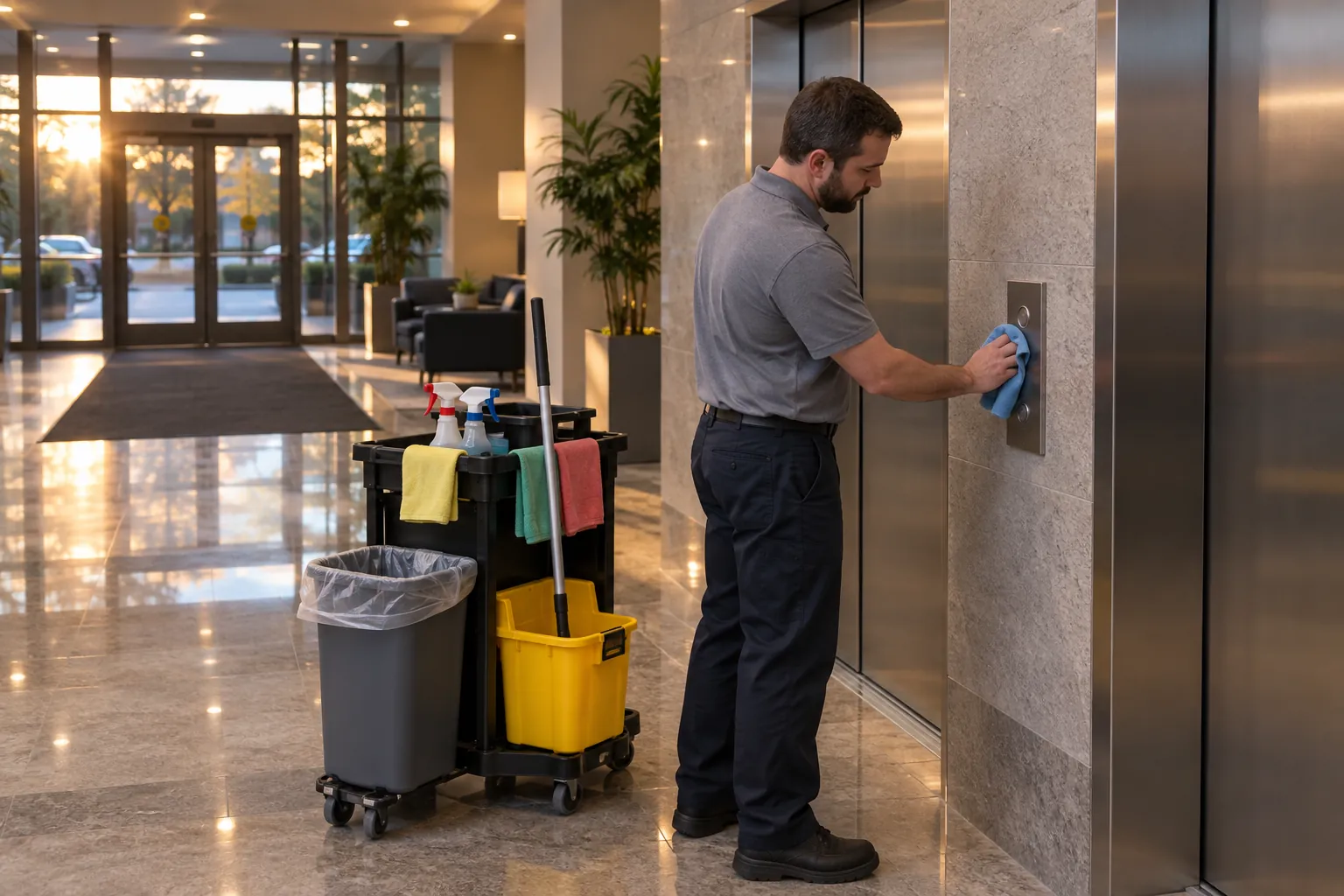 CleaningCommercial cleaning checklist: area by area, and how to use itA commercial cleaning checklist for offices, lobbies, restrooms and shared areas, area by area, with the OSHA rules behind it and how a supervisor checks the work.
 CleaningHigh-touch surfaces: a cleaning routine you can show was doneHigh-touch surfaces as the CDC describes them: which ones to list area by area, how often to clean and disinfect them, the right method, and a record that holds up.
 CleaningNorovirus cleanup: how to deal with vomit and diarrhea without spreading the virusHow to clean up vomit and diarrhea so norovirus does not spread: the CDC steps, bleach strength, EPA List G, the Food Code plan, OSHA duties and the record.