Premises and facilities management
Church maintenance checklist: keeping the building safe, from Sunday to Sunday
A church maintenance checklist lists the tasks that keep a place of worship safe, clean and working, scheduled by frequency from a walk-through before every service to annual inspections by licensed contractors, with a named person for each.
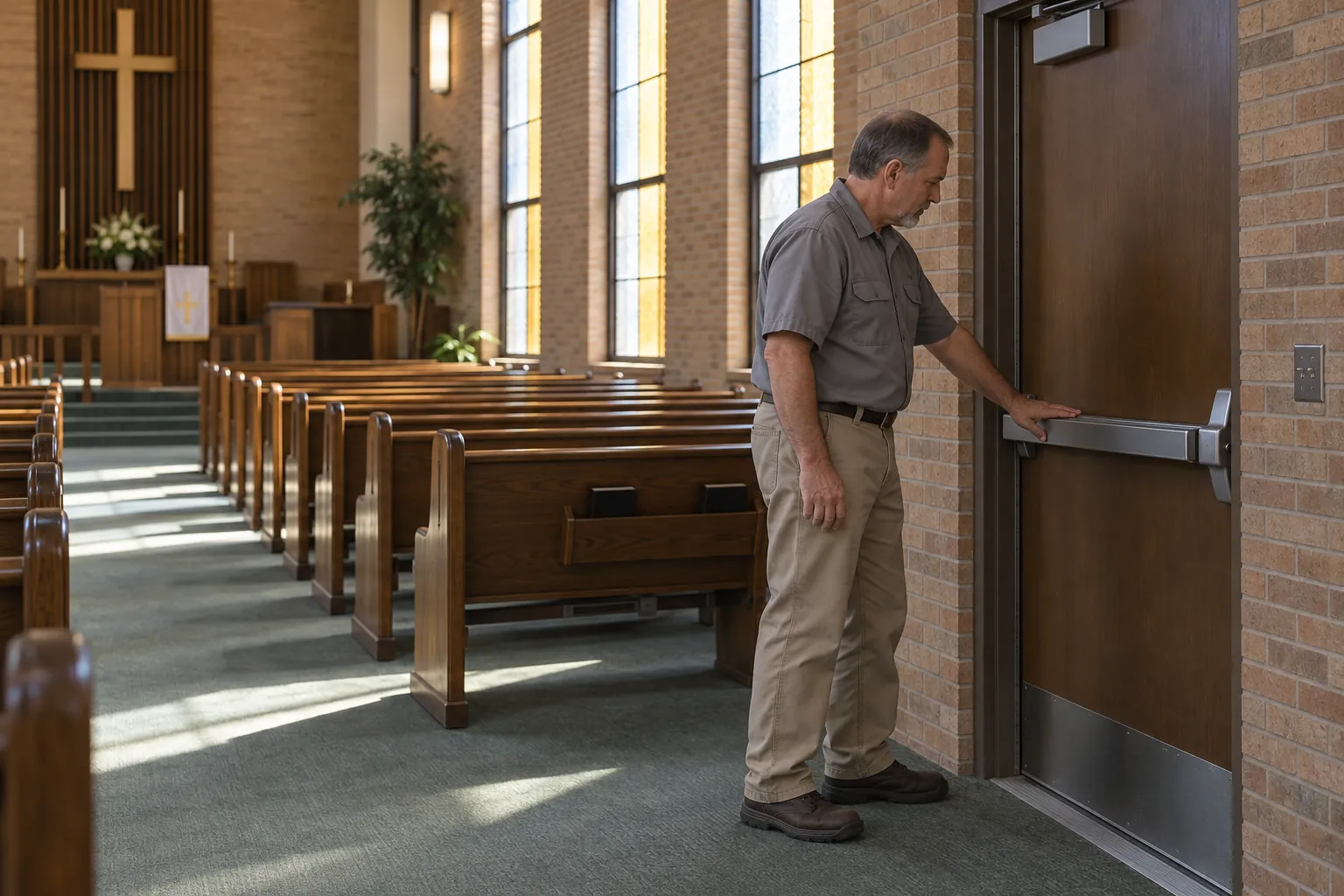
A church building is used hard for a few hours and then sits quiet for days: a full sanctuary on Sunday morning, a fellowship hall kitchen cooking for a funeral lunch, candles at a Christmas Eve service, and a boiler and a sprinkler system nobody looks at from Monday to Saturday. This guide sets out the fire and life safety rules that apply to a place of worship in the United States, a church maintenance checklist from weekly to annual, who does each task, and how to keep a record that shows the checks were really done.
01
What rules apply to maintaining a church building
No single federal law sets out how a church must maintain its building. The duties come from the fire and life safety code your city, county or state has adopted, the workplace safety rules that apply once the church employs people, and the requirements for the systems in the building. Whoever holds title to the property (the congregation, a diocese or a board of trustees) is the owner, and carries the responsibility even when volunteers or contractors do the work.
The model code most often cited for places of worship is the National Fire Protection Association's NFPA 101, Life Safety Code. NFPA describes it as "the only document that covers life safety in both new and existing structures." NFPA lists the 2027 edition as current, but what binds your building is the edition your state or city has adopted, with its local amendments, or the International Fire Code if your jurisdiction uses that instead. A standard is guidance until a jurisdiction adopts it, and the fire marshal or building official, the authority having jurisdiction (AHJ), decides how it applies.
A sanctuary that seats 50 or more people is usually an assembly occupancy, which NFPA's restaurant fire protection basics define as "having an occupant load of 50 or more persons." NFPA's page on nightclubs and assembly occupancies explains why the category is treated strictly: such spaces "contain a large number of people in one main space," and safety "is achieved through the combination of multiple safeguards." Maintenance keeps those safeguards working between inspections.
OSHA applies to a church as an employer. 29 CFR 1975.4, which explains which employers the OSH Act covers, says that "churches or religious organizations, like charitable and nonprofit organizations, are considered employers under the Act where they employ one or more persons in secular activities." A paid sexton, custodian or preschool teacher is covered; clergy leading worship and choir members taking part in a service are not. Check which program covers you: OSHA's State Plans page lists "22 State Plans covering both private sector and state and local government workers," and in those states the state's rules apply instead of federal OSHA.
On accessibility, the ADA Title III regulations (28 CFR part 36) do not apply to "any religious entity," which the rule defines as "a religious organization, including a place of worship." The accompanying guidance explains that this follows section 307 of the ADA and covers "a religious organization or entity controlled by a religious organization." That exemption is from Title III only. Ask your building official whether state or local accessibility rules reach your building, and keep any ramp, handrail or accessible restroom you have in repair.
02
What a church maintenance checklist covers, area by area
Most churches are several very different spaces under one roof. Write the checklist by location, so the person doing it walks a route rather than reading a list of systems:
- Sanctuary and narthex: aisles clear, pews and chairs secure, loose carpet, stair nosings and handrails, chancel steps, cables routed away from walkways, candle stands.
- Exits: every exit door opens from the inside without a key, panic hardware works, exit signs and emergency lights lit, nothing stored in corridors or stairwells. The usual Sunday failure is a stack of folding chairs in front of a side door.
- Fire protection: extinguishers in place and tagged, sprinkler heads clear of banners and decorations, the fire alarm panel showing normal, the riser room free of storage.
- Fellowship hall and kitchen: range hood and its extinguishing system, the Class K extinguisher, grease trap, refrigeration temperatures, floor drains.
- Classrooms, nursery and restrooms: outlet covers, furniture anchored, blind cords, fixtures and leaks, water temperature at the faucet, grab bars secure.
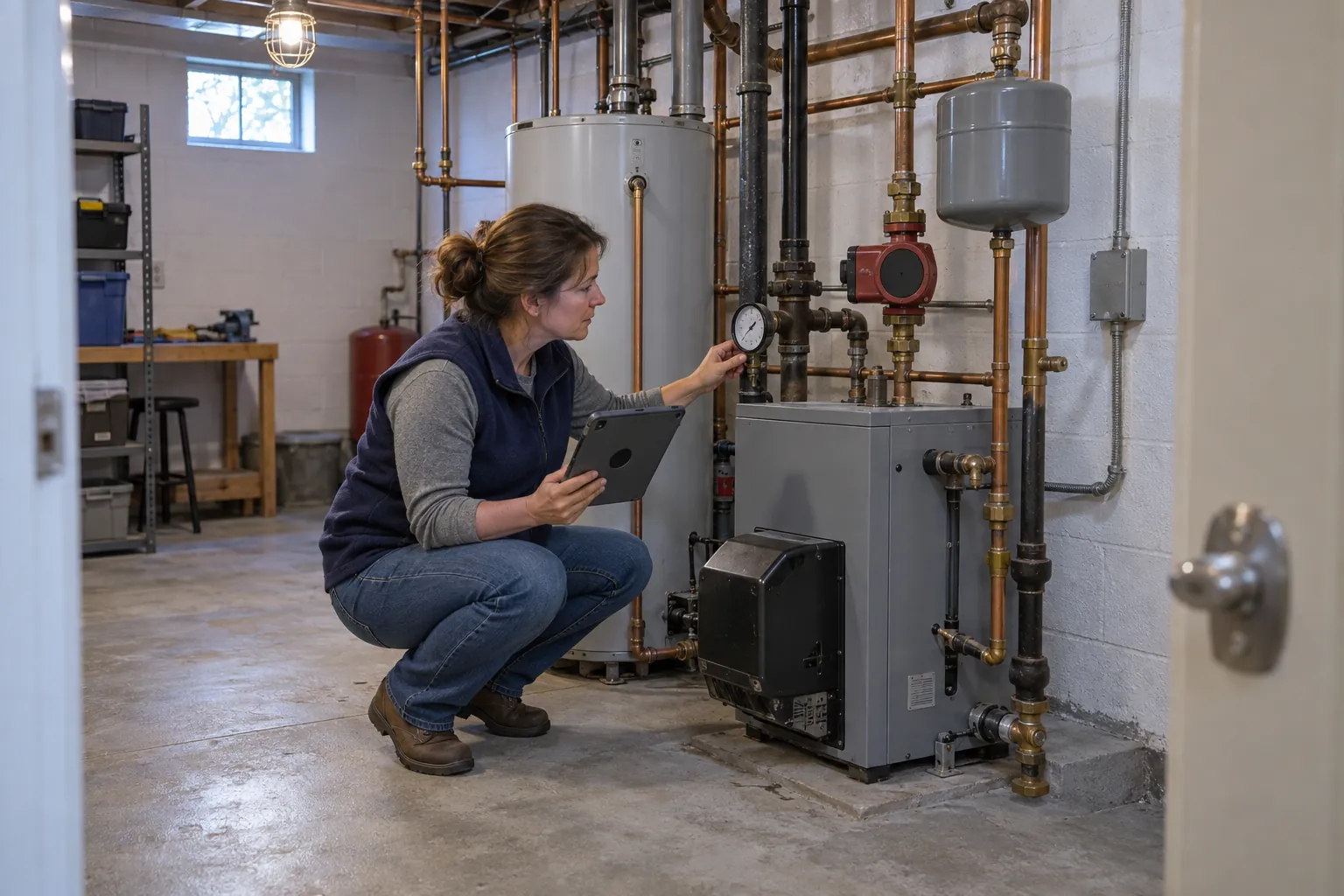
- Mechanical and electrical: boiler or furnace, rooftop units, filters, water heaters, sump pumps, electrical panels clear and closed, the elevator or wheelchair lift.
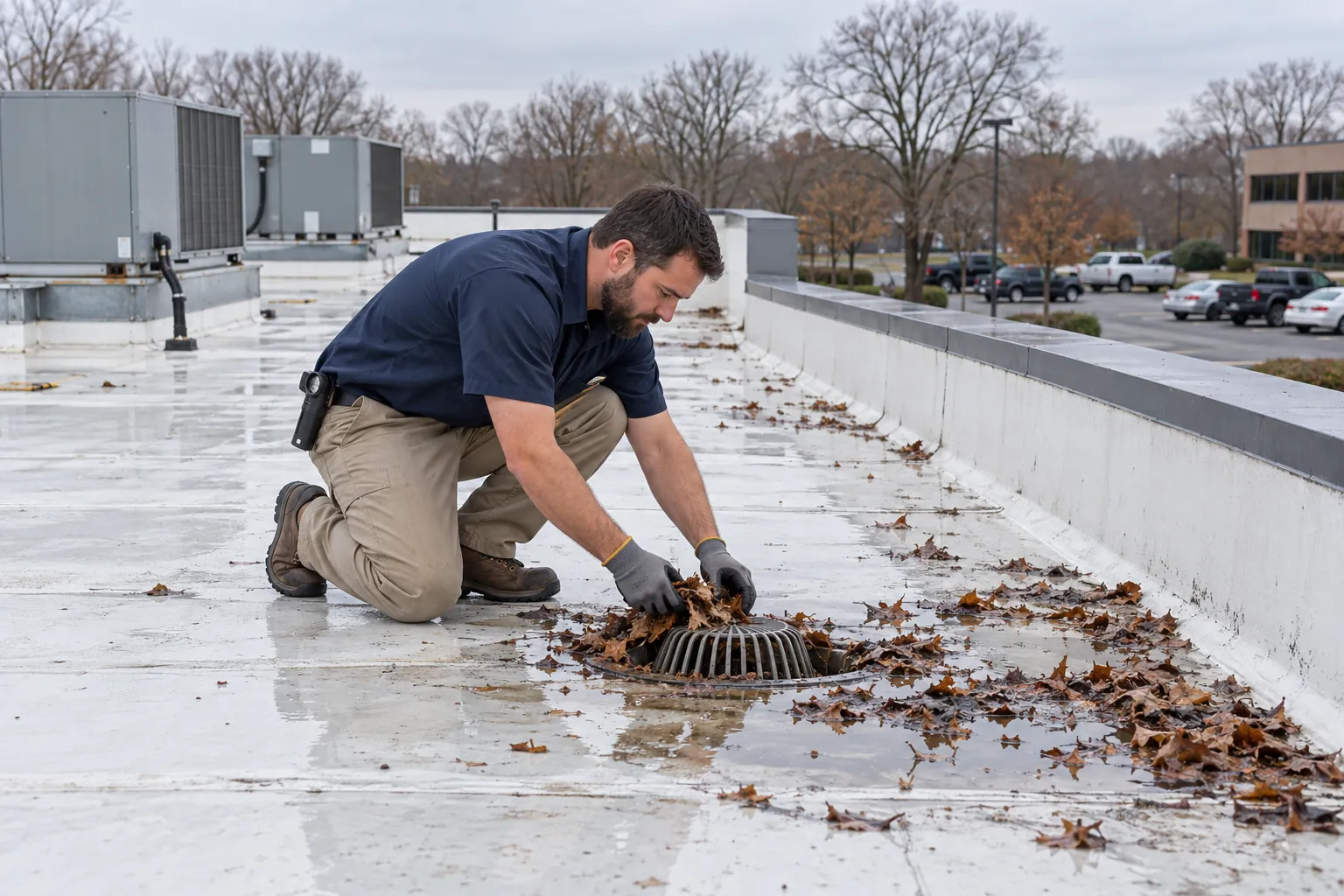
- Roof, steeple and envelope: roof coverings, flashing, gutters and downspouts, bell tower access, stained glass and its protective glazing, masonry and signs of water getting in.
- Grounds and parking: lot surface, curb ramps, walkways, exterior lighting, overhanging trees, drainage, snow and ice, and the playground if the church or its preschool has one.
Anything that needs a license or certification, such as sprinkler and fire alarm testing, boiler service, elevator inspection or electrical work, goes to a qualified contractor. The checklist records that the visit happened and that its report is on file.
03
How often: before services, weekly, monthly, seasonal and annual
Frequency follows use and risk, with the manufacturer's instructions and your adopted code taking precedence wherever they set a different interval.
Before every service or large event, someone walks the building: exits unlocked and clear, lights and exit signs on, aisles free, restrooms working, entry steps clear of ice, wet leaves or water, and the heating or cooling on in time. It takes about ten minutes and protects a full room.
Weekly: the walk-through with a list, restroom fixtures and leaks, high-touch surfaces such as door handles and handrails cleaned, trash emptied and trash areas kept clear, kitchen refrigeration, exterior lighting timers, and anything reported during the week.
Monthly: fire extinguishers. Where the church provides extinguishers for its employees' use, OSHA's 29 CFR 1910.157, portable fire extinguishers requires that they "be visually inspected monthly" and receive "an annual maintenance check," with the annual date recorded. Monthly is also the time for emergency lights and exit signs, filters in heavy-use seasons, sump pumps and roof drains after storms. See the monthly fire extinguisher inspection guide.
Seasonal: before winter, heating service, gutters, freeze protection and snow arrangements (the winterization checklist has the list); before summer, cooling equipment, exterior sealant and paint, and tree work. Plan the big jobs for quiet weeks in the church year, not the two weeks before Easter or Christmas.
Annual and longer: fire alarm and sprinkler inspection and testing by a licensed contractor, boiler and elevator inspections where your state requires them, kitchen suppression service, and a roof and steeple inspection. NFPA's explanation of sprinkler inspection, testing and maintenance frequencies notes that NFPA 25 sets activities from "daily" to "five years," from visual checks of valve positions to full flow tests. Your contractor should give you the schedule for your system; the fire sprinkler inspection guide explains it.
04
Who does what: sexton, facilities committee, volunteers and contractors
Church maintenance usually fails at the handoff between people, not for lack of effort. Write down who owns each part:
- The owner (trustees, vestry, session or parish council, depending on the denomination) approves the budget, the capital plan and the contractors.
- The facilities or property committee sets priorities, keeps the contractors' visit dates and reviews the record. In a small congregation this may be one volunteer.
- The sexton, custodian or facilities manager does the walk-throughs, the weekly and monthly checks and small repairs. As an employee, they need training on the chemicals and equipment they use.
- Volunteers cover mowing, painting and workdays. Ladder work at height, roof access, electrical work and chemical handling are not jobs for whoever turns up on a Saturday.
- Licensed contractors do the fire alarm, sprinkler, kitchen suppression, elevator, boiler and electrical work, and leave a written report or tag.
- Groups that use the building, such as a preschool, a food pantry or another congregation, need to know which checks are theirs and who to call.
Contracting the work does not transfer the responsibility. NFPA's article on the responsibilities of the building owner for fire sprinkler inspection, testing and maintenance says that under NFPA 25 "the ultimate responsibility for ITM falls on the building owner." The owner must provide ready access to the system, notify the AHJ, the fire department if required and the alarm-receiving facility before testing or shutting it down, and make sure deficiencies are corrected. Name a backup for every person, so the congregation does not lose what the retired engineer knew about the boiler when he moves away.
05
The risks particular to churches, and what good evidence looks like
The quiet weekdays. The CDC's Reopening Buildings Guidance warns that "stagnant or standing water in a plumbing system can increase risk for growth and spread of Legionella," and advises flushing hot and cold water through all points of use until the hot water reaches its maximum temperature, ideally 120°F or above. It is written for buildings reopening after prolonged shutdown or reduced operation, which describes a classroom wing left unused over a summer. Flush those outlets when the rooms reopen, and record it.
Heating setbacks. Turning the heat down between services saves money, but NFPA's owner-responsibilities article says areas with water-filled sprinkler piping that has no other freeze protection must be kept "at a minimum temperature of 40°F (4°C)." Balconies, bell towers and attics are where the cold sits.
Candles. NFPA's religious candle safety tip sheet advises that "handheld candles should not be passed from one person to another at any time," that "candles placed on, or near tables, altars, or shrines, must be watched by an adult," and that "places of worship should be equipped with a fire detection and sprinkler system." Before a candlelight service, check holders, the extinguishers near the chancel, and that greenery and banners are clear of flames and sprinkler heads.
The big days. Easter, Christmas, weddings, funerals and concerts fill the building. NFPA's summary of NFPA 101's crowd management rules for assembly occupancies describes an emergency action plan covering "inspection, testing, and maintenance of building facilities that provide for the safety of occupants," drills and trained crowd managers. These rules carry exceptions and local amendments, so ask your AHJ how they apply to your services and events. See the emergency action plan guide.
The kitchen. NFPA's restaurant fire protection basics note that cooking that produces grease-laden vapors needs ventilation and a fire extinguishing system, maintained at least every six months, and at least one Class K extinguisher in the kitchen. With rotating volunteer cooks, post the manual release location and keep the service tags current; the kitchen hood cleaning guide has more.
The playground. The CPSC's Public Playground Safety Handbook says that "inspections alone do not constitute a comprehensive maintenance program. Any problems found during the inspection should be noted and fixed as soon as possible."
Good evidence has four parts: what was checked, where, by whom and when, and what happened to anything that was wrong. A contractor's report covers the annual work. The routine checks need their own record, kept as they happen, because they are what an insurer or a fire inspector asks about after a fall on the steps or a burst pipe.
06
Where the church maintenance record fails, and what SiteClara does about it
Church records fail in the same few ways. A monthly sheet on the boiler room door is initialed for the whole quarter at once. The pre-service walk-through happens but nobody writes it down, so after a fall nobody can say whether the steps were checked that morning. A leaking roof drain is mentioned to the pastor after a service, then to the committee chair a week later, and fixed when the ceiling tile comes down.
SiteClara records the routine checks where they happen. A printed QR poster goes at each location, such as the narthex, a fire exit, the boiler room, the kitchen or the parking lot, with an NFC tag behind it if people would rather tap. Staff and assigned volunteers scan or tap on their own phone, with no app to install, see the checks due there, and mark each one done or say what stopped them. A problem, such as a blocked exit or a broken light, is reported on the spot with a photo and stays on the team's list of jobs until someone closes it.
The person responsible sees what was due, done and missed, and can record why a check was missed. Each day they review and approve a report that goes to the nominated people, such as the facilities committee chair, at 8 a.m. the next morning.
07
Questions people ask
How do you start a church maintenance checklist?
Start with the items the law already expects to work whenever the building is open, then add the rest of the facility location by location. Where a church employs people, OSHA's 29 CFR 1910.37, maintenance, safeguards and operational features for exit routes requires that "exit routes must be free and unobstructed," that each exit route be "adequately lighted," and that each exit be "clearly visible and marked by a sign reading 'Exit.'" Put those checks first, then walk the building room by room and write down each task, how often it is due and who on the team owns it.
What should I include on my church cleaning checklist?
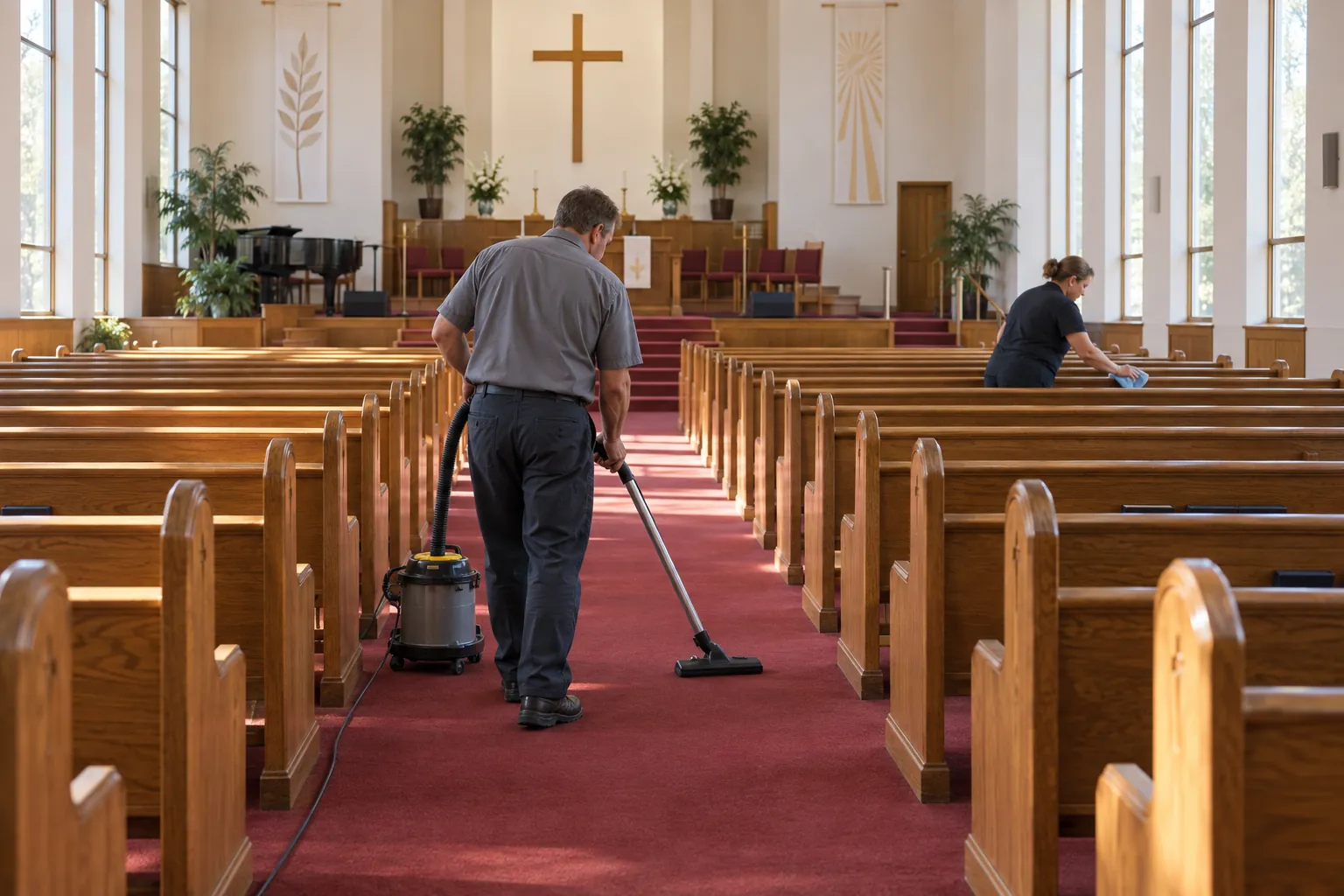
Include the high-touch surfaces that many people handle each week, as well as the floors and trash. The CDC's When and How to Clean and Disinfect a Facility advises that you "clean high-touch surfaces regularly (for example, pens, counters, shopping carts, door handles, stair rails, elevator buttons, touchpads, restroom fixtures, and desks)" and "clean other surfaces when they are visibly dirty." In a church that means door handles, handrails, restroom fixtures and kitchen counters before services and events; the church cleaning checklist guide has the full list.
08
Where to read the guidance, and a list to take away
Start with your local fire marshal or building official: ask which edition of which fire code they enforce and what they inspect in a place of worship. Then read NFPA 101 as adopted locally, 29 CFR 1975.4 for when OSHA applies, and 29 CFR 1910.37, maintenance, safeguards and operational features for exit routes, which requires that "exit routes must be free and unobstructed" and that safeguards such as "sprinkler systems, alarm systems, fire doors, exit lighting" be "in proper working order at all times."
A church maintenance checklist to take away:
- Find out which fire code and edition your AHJ enforces, and whether your state runs its own OSHA plan.
- Write the checklist by location, from the narthex to the parking lot.
- Walk exits, aisles, lights and steps before every service and large event, and record it.
- Check extinguishers, emergency lights and exit signs monthly, and keep the contractors' tags and reports.
- Keep sprinklered areas at 40°F or above when the heat is down, and flush unused outlets when a wing reopens.
- Check candles, decorations and sprinkler clearance before candlelight and seasonal services.
- Name an owner and a backup for every line, and report problems the day they are found, with a place, a photo and a name.
- Review the record at every facilities committee meeting, and move repeated repairs into the capital plan.
Sources
Every document this guide quotes or links to, in the order it first cites them.
- NFPA 101, Life Safety Code nfpa.org
- Restaurant fire protection basics nfpa.org
- Nightclubs and assembly occupancies nfpa.org
- 29 CFR 1975.4 osha.gov
- State Plans page osha.gov
- ADA Title III regulations (28 CFR part 36) ada.gov
- 29 CFR 1910.157, portable fire extinguishers osha.gov
- Sprinkler inspection, testing and maintenance frequencies nfpa.org
- Responsibilities of the building owner for fire sprinkler inspection, testing and maintenance nfpa.org
- Reopening Buildings Guidance cdc.gov
- Religious candle safety tip sheet nfpa.org
- NFPA 101's crowd management rules for assembly occupancies nfpa.org
- Public Playground Safety Handbook cpsc.gov
- 29 CFR 1910.37, maintenance, safeguards and operational features for exit routes osha.gov
- When and How to Clean and Disinfect a Facility cdc.gov
Related guides
 Premises and facilities managementBuilding maintenance checklist: what the code expects, how often to check, and who does itA building maintenance checklist for US commercial buildings, built on the International Property Maintenance Code: daily to annual tasks, who does each, the record.
 CleaningChurch cleaning checklist: what to clean, how often, and who signs it offA church cleaning checklist by area and frequency: sanctuary, restrooms, nursery, kitchen and fellowship hall, with the OSHA and CDC guidance that applies.
 Premises and facilities managementPreventive maintenance checklist: what to check in a commercial building, how often, and how to prove itA preventive maintenance checklist for commercial buildings: HVAC, electrical, fire and life safety, plumbing, how often, and what the record should show.
 Premises and facilities managementDeferred maintenance: what it is, how to measure the backlog, and what cannot waitWhat deferred maintenance means under FASAB, GASB and APPA, how a backlog and FCI are measured, what OSHA says cannot wait, and how to keep the backlog honest.