Premises and facilities management
Pest control in hospitals: running an IPM program that protects patients
Pest control in hospitals is a written integrated pest management (IPM) program of prevention, monitoring and targeted treatment by a certified applicator, which the EPA recommends for healthcare facilities and which helps a hospital meet the CMS Conditions of Participation on a safe physical environment and a clean and sanitary environment (42 CFR 482.41 and 482.42).
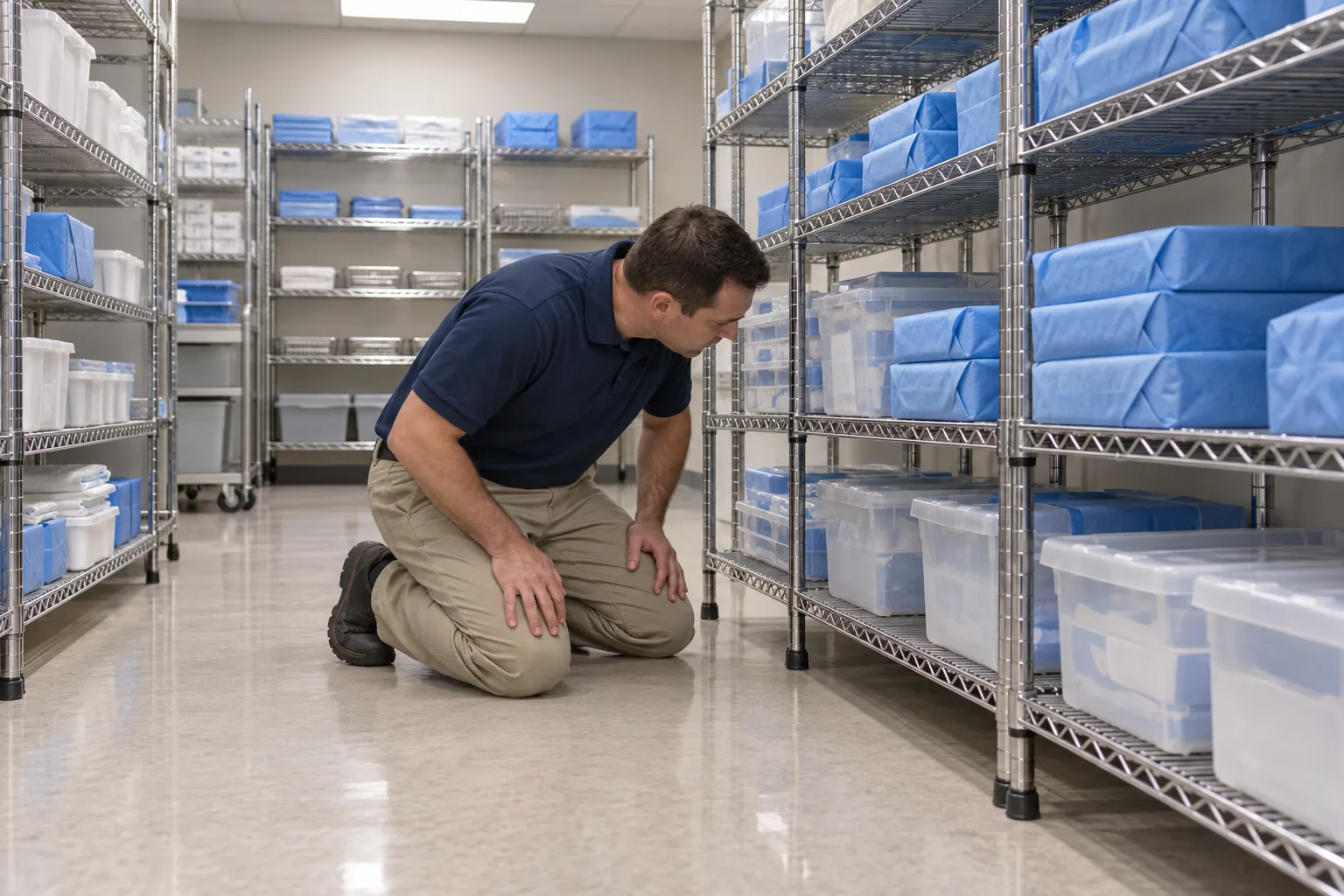
No federal rule sets a visit frequency or a product. What the rules and the CDC's guideline expect is a program that keeps pests out of operating rooms, sterile supply, kitchens and patient areas, finds them early, and deals with what it finds without exposing patients to more pesticide than the problem needs. This guide covers where the duty comes from, where pests turn up, how an IPM program runs, who does what between environmental services, facilities and the contractor, and the records that show it working.
01
What the rules require of pest control in a hospital
No federal rule tells a hospital how often its pest control company should visit or what it may apply. The rules set the outcome, and they reach pest control in any healthcare facility from several directions:
- The physical environment Condition of Participation. 42 CFR 482.41 says "The hospital must be constructed, arranged, and maintained to ensure the safety of the patient", and paragraph (a) that "the overall hospital environment must be developed and maintained in such a manner that the safety and well-being of patients are assured." Paragraph (b)(4) adds that the hospital "must have procedures for the proper routine storage and prompt disposal of trash", which is where many pest problems begin.
- The infection prevention Condition of Participation. 42 CFR 482.42 requires hospital-wide programs that "demonstrate adherence to nationally recognized infection prevention and control guidelines", and paragraph (a)(3) says the program includes "surveillance, prevention, and control of HAIs, including maintaining a clean and sanitary environment to avoid sources and transmission of infection".
- The CDC's guideline. The Guidelines for Environmental Infection Control in Health-Care Facilities (2003), last updated July 2019, is one of those nationally recognized guidelines and has its own pest control section. It says "arthropod and vertebrate pests should be eradicated from all indoor environments, including health-care facilities."
- The Joint Commission. The public version of the Joint Commission hospital standards, effective September 1, 2026, has a Physical Environment (PE) chapter; older contracts and policies cite the Environment of Care (EC) chapter. Check the current standards and elements of performance there before citing a chapter.
- Food service. The kitchen, cafeteria and nutrition rooms come under the state or local food code. The FDA Food Code 2026, section 6-501.111, says "The premises shall be maintained free of insects, rodents, and other pests", partly by "Routinely inspecting the premises for evidence of pests". It binds only as your state or county has adopted it.
- The workplace. OSHA's sanitation standard, 29 CFR 1910.141, paragraph (a)(5), says "A continuing and effective extermination program shall be instituted where their presence is detected." A state with an OSHA-approved State Plan applies its own equivalent.
- Nursing homes and senior living. A Medicare or Medicaid nursing home must, under 42 CFR 483.90, paragraph (i)(4), "Maintain an effective pest control program so that the facility is free of pests and rodents." Assisted living follows state licensing rules.
Together, these mean a hospital needs a pest program it can show working to protect patient safety and keep the building safe for staff and visitors: one that reaches the high-risk areas, finds pests early, fixes what lets them in, and treats only where treatment is needed.
02
Where pests turn up in a hospital, and why it matters
The Environmental Services section of the CDC's guideline lists "Cockroaches, flies and maggots, ants, mosquitoes, spiders, mites, midges, and mice" among the typical pests in healthcare facilities. The EPA's toolkit adds that "Pests can carry diseases, create unsafe conditions, and cause stress to patients and staff." Insects can carry microorganisms, some found in hospitals have carried antibiotic-resistant ones, and "Ants will often find their way into sterile packs of items as they forage in a warm, moist environment." The CDC adds that insects alone likely contribute little to health care associated infection in developed countries, but outbreaks may follow an infestation "coupled with breaks in standard infection-control practices". In healthcare environments, pest control and infection prevention are one job seen from two ends.
Recommendation E.V.A is to "Develop pest-control strategies, with emphasis on kitchens, cafeterias, laundries, central sterile supply areas, operating rooms, loading docks, construction activities, and other areas prone to infestations." The places to plan for are:
- Operating rooms and units for immunosuppressed patients. Insects should be kept out of all areas, "especially ORs and any area where immunosuppressed patients are located."
- Central sterile supply and sterile storage, where cockroaches and ants are frequently found and ants can forage into sterile packs.
- Kitchens, cafeterias, nutrition rooms, break rooms and vending machines, where food scraps feed them.
- The laundry, sink traps, floor drains and janitor closets, and "anywhere in the facility where water or moisture is present".
- Loading docks and receiving. Cockroaches "frequent loading docks and other areas with direct access to the outdoors".
- Trash and regulated medical waste holding. The CDC's recommendation I.III.D is to store regulated medical waste in a ventilated area "that is inaccessible to vertebrate pests".
- Laboratories, where E.V.D says to keep specimens such as fixed sputum smears in covered containers overnight.
- Construction zones, patient rooms and waiting areas. Opened walls disturb harborage, and bed bugs arrive on people and belongings.
- Grounds and windows. E.V.B is to "Install screens on all windows that open to the outside; keep screens in good repair."
Mapping these areas, floor by floor, tells the contractor where to inspect and place monitoring devices, and tells environmental services (EVS) and facilities where their routines matter most.
03
Running hospital pest control as integrated pest management
The EPA's Integrated Pest Management in Health Care Facilities toolkit (EPA Region 7, July 2021) contrasts the two approaches: "Traditional pest control uses calendar-based pesticide treatments rather than non-chemical prevention", while "IPM focuses on pest prevention and least-toxic control methods". The EPA's Integrated Pest Management (IPM) Principles page adds that "Effective, less risky pest controls are chosen first." In a hospital, IPM becomes a proactive, written program:
- An IPM policy and procedures available to all staff, with the reporting and bed bug protocols each department follows. The toolkit's Appendix A is a sample policy.
- Action thresholds by area. The toolkit defines a threshold as "A point at which pest populations or environmental conditions indicate that pest control action must be taken." A hospital might act on one sighting of a cockroach or rodent in an OR, sterile store or kitchen, where the risks to patients are highest, and simply watch a few ants on an outside wall. Write the thresholds down.
- Regular inspection and monitoring, part of what the toolkit calls "a cycle of inspecting, identifying, monitoring, selecting an appropriate method of control, and evaluating the results." Monitoring means looking in vulnerable areas for signs of pests at entry points, food, water and the places pests live, and estimating how many there are.
- Prevention first. "The most common and effective habitat modifications are exclusion, repair and sanitation."
- Targeted control when a threshold is crossed, with the result checked at the next visit.
For pesticides, the toolkit recommends approval by the IPM team leader and application only by "state or tribally certified pesticide applicators"; notice to staff 24 to 48 hours ahead except in emergencies; treated areas marked; and no application when patients or others are present or expected, for the label's re-entry period or at least eight hours, whichever is greater. It prefers baits, gels and crack-and-crevice treatments to sprays, says to "Place all rodenticides into tamper-resistant bait boxes in locations not accessible to patients or staff", and in food areas recommends traps checked daily instead of rodenticides. Food Code section 7-206.12 requires rodent bait to be "contained in a covered, tamper-resistant bait station".
Write the contract to match. The toolkit says service contracts "should include periodic inspections, but pesticides should not be applied unless the pests are actually present and cannot be controlled by other means", and that "routine (e.g., monthly) applications of pesticides are not a component of an IPM program".
04
Who does what: EVS, facilities, food service, nursing and the contractor
The toolkit is blunt that "The pest management professional is not the only person responsible for pest control." A hospital program works when each department knows its part:
- The IPM team leader coordinates; the toolkit says "The role could be filled by a facilities manager or delegated to a staff person." They are the contractor's contact, approve applications, keep the logbook and chase open problems.
- The infection preventionist names the sensitive areas, agrees their thresholds, reviews pest trends beside infection data, and joins the construction risk assessment. Under 42 CFR 482.42, problems the program finds are addressed with the hospital's quality assessment and performance improvement (QAPI) program.
- Environmental services: trash removed before it overflows, food debris cleared from rooms and break rooms, mops and buckets cleaned and dried (the toolkit says to "hang mops vertically on racks above floor drains"), and droppings, gnawing, live insects and other signs of pest activity reported, not just cleaned up.
- Facilities and plant operations: door sweeps, screens, sealed pipe chases ("steel wool vs. caulking"), leaks fixed and drains kept clear. Most pest findings end as their work order.
- Food and nutrition services: food in sealed containers, floor drains in food areas cleaned weekly, and "Never store excess cardboard indoors".
- Nursing and unit staff: report pests on the unit, follow the bed bug procedure, and "treat patients with dignity and respect". The EPA's sample bed bug procedure also has staff tell patients and visitors from a home with bed bugs to bring only essential items, such as a cell phone, wallet and keys.
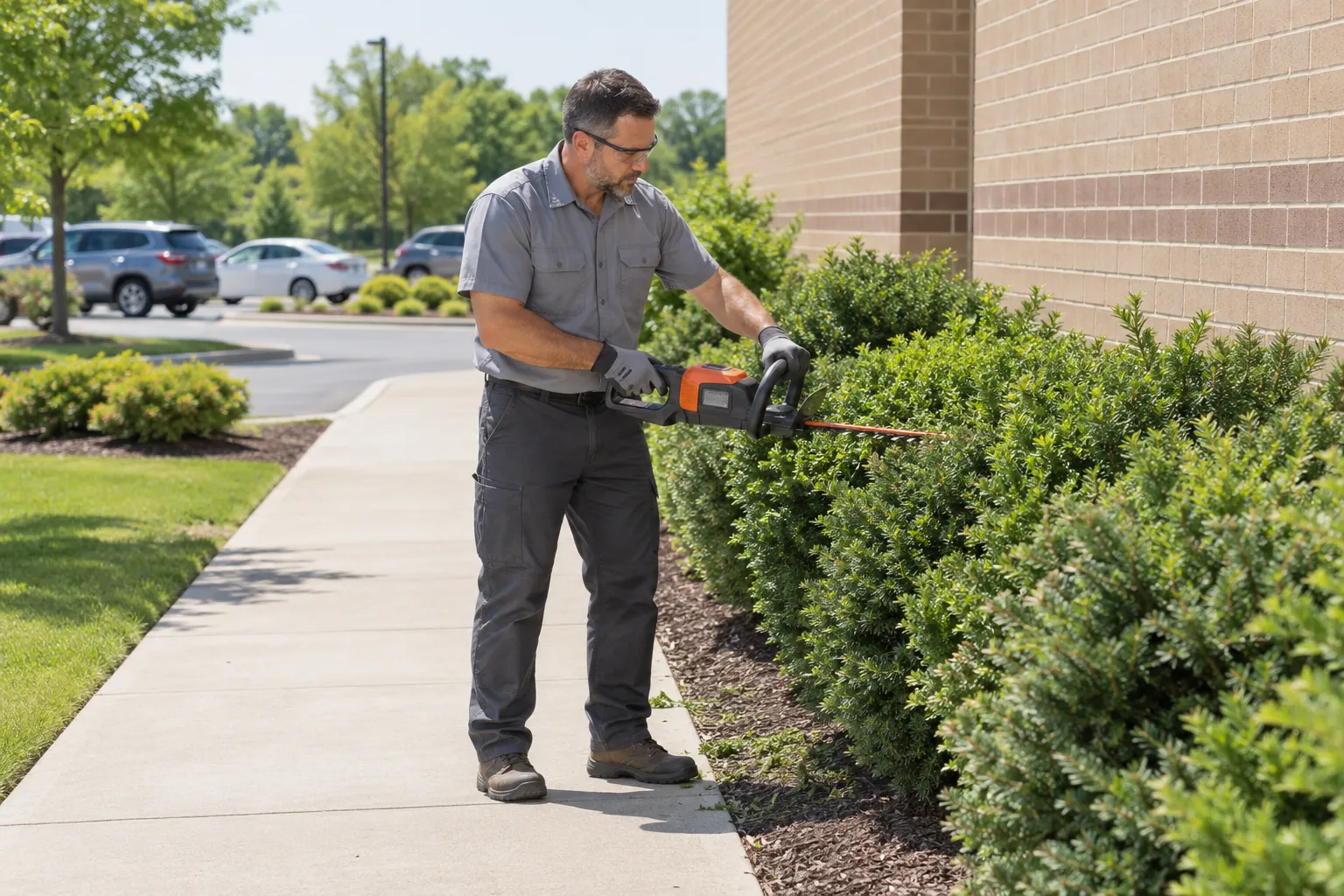
- Grounds: vegetation and mulch at least 12 inches from the building, branches at least 6 feet away, and bulk waste receptacles at least 50 feet from exterior doors.
- The pest management professional: inspects, identifies, recommends fixes, treats when a threshold is crossed, and leaves a service report.
Above all, everyone needs to know how to report a pest. The toolkit says to "Include a procedure for staff to report pest sightings and pest-conducive conditions to the IPM team leader." A sighting that never reaches the team leader is the commonest gap.
05
The records a hospital pest program keeps, and how it is reviewed
The toolkit says "Recordkeeping is critical to determining the efficacy of any IPM program" and that "A complete and accurate pest management log should be maintained for each property and kept in the office of the IPM team leader or facility manager." It lists what the logbook should contain:
- a copy of the IPM policy and procedures;
- pesticide use and service schedules for each property or site;
- the current EPA-registered label and Safety Data Sheet (SDS) for each pesticide used;
- pest surveillance data sheets, recording the type and number of pests or other indicators found by monitoring, with the date, number and location;
- diagrams of pest-vulnerable areas with historical activity and the location of every trap and bait station;
- lists and diagrams of sensitive areas where pesticide use must be avoided or extremely limited;
- copies of all pest management contracts.
Pesticide use records must also meet your state pesticide agency's rules. Most of the logbook comes from the contractor; the hospital's own part is the sighting reports and the follow-up on them.
Review runs on three clocks: a sighting over threshold goes to the team leader and contractor the same day; the technician answers every report at each visit; and once a year the program is reviewed with the contractor, covering, in the toolkit's words, "Pest incident trends (i.e., frequency, location, time of year, etc.)", application records, labels, training needs and the contract. Repeated sightings in one place usually mean a building defect or a housekeeping gap.
Good evidence of compliance, when an accreditor, a state surveyor, the infection prevention committee or your own audit asks, is plain:
- every sensitive area is on the map and inspected at each visit;
- every reported sighting has a place, a time, a name and a dated response;
- structural fixes the contractor recommended show when they were done;
- every pesticide application was approved, notified and recorded;
- routine checks by EVS and facilities in the high-risk areas were done when they were due, and the missed ones are recorded as missed, with a reason.
06
Where the record fails, and what SiteClara does about it
The contractor's side of the record is usually thorough. The hospital's side is thinner. The night EVS technician who finds droppings in a nutrition room tells the charge nurse, and it never reaches the team leader. A cockroach on the loading dock goes on a sheet in receiving that the technician never reads. The kitchen's daily drain check is initialed for the whole week at once. A door sweep recommended in March is still missing in June, because it sat in a service report and never became anyone's job.
SiteClara records checks and reports at the location. A printed QR poster, with an optional NFC tag behind it, goes at each place that matters, such as a nutrition room, a sterile store, the trash holding area or the loading dock. Staff scan or tap on their own phone, with no app to install, and can report what they found with a photo. The report carries the place, the time and the named person, and goes onto the team's list of jobs until someone closes it. Scheduled checks, such as a daily look under kitchen equipment, are marked done at the location, or the person says what stopped them.
The supervisor sees what is due, done and missed, and can record why a check was missed. A job for the building manager, such as a gap under an exterior door, can be escalated to them to answer. Each day the supervisor approves a report that goes to nominated managers or client contacts the next morning, showing what was reported, completed and still open.
07
Questions people ask
How do hospitals control bed bugs?
With a written procedure that keeps the patient's care going and contains the bugs. The sample bed bug procedure in Appendix B of the EPA's health care IPM toolkit says "It is not necessary to cancel or delay scheduled appointments, procedures, surgeries or exams" for patients who report or have bed bugs, and that standard precautions apply, not transmission-based isolation precautions.
If a bug is seen, staff kill and dispose of it, seal non-essential belongings (anything other than a cell phone, wallet, keys and the like) in a patient belongings bag (not a red biohazard or blue linen bag, which may be discarded), change the gown and linens, and keep watching. If bugs are seen again, staff ask EVS for a manager's consultation, and pest control is ordered only after that approval.
What are the 5 steps of IPM?
The EPA's IPM toolkit for healthcare facilities describes IPM as a cycle of five activities: inspecting, identifying, monitoring, selecting an appropriate method of control, and evaluating the results (its program checklist has six numbered steps). Its IPM Principles page groups the same work as four: set action thresholds, monitor and identify pests, prevent, and control.
What is one way to keep an operation pest free?
Inspect routinely. Section 6-501.111 of the FDA Food Code 2026, which applies to a hospital kitchen where the state or county has adopted it, says the premises shall be maintained free of insects, rodents and other pests by routinely inspecting incoming shipments of food and supplies, routinely inspecting the premises for evidence of pests, using methods such as trapping devices if pests are found, and eliminating harborage conditions. Keeping a pest-free environment starts with those regular checks.
08
Where to read more, and a list to take away
Start with the CDC's Guidelines for Environmental Infection Control in Health-Care Facilities (section E.6 and recommendations E.V) and the EPA's Integrated Pest Management in Health Care Facilities toolkit, with its self-assessment and sample policies. The Conditions of Participation are 42 CFR 482.41 and 42 CFR 482.42. For the kitchen, ask your health department which edition of the FDA Food Code it enforces. Your accreditor's manual, your state's hospital licensing rules and your state pesticide agency complete the picture.
- Name one IPM team leader, and make sure every department knows how to reach them.
- Map the sensitive and high-risk areas: ORs, sterile supply, units for immunosuppressed patients, kitchens, laundry, docks, waste holding and construction zones.
- Write down action thresholds by area, so a sighting in an OR or sterile store is acted on the same day.
- Put prevention first: exclusion, repair and sanitation, with each fix tracked until it is done.
- Allow pesticides only by a certified applicator, approved by the team leader, with notice to staff and baits or gels in preference to sprays.
- Make reporting easy from where the pest is seen, on every shift, and give every report a dated answer.
- Keep the logbook complete: policy, schedules, labels and SDS, surveillance data, device maps, sensitive areas and contracts.
- Review trends with the contractor and the infection preventionist at least once a year.
Sources
Every document this guide quotes or links to, in the order it first cites them.
- 42 CFR 482.41 govinfo.gov
- 42 CFR 482.42 govinfo.gov
- Guidelines for Environmental Infection Control in Health-Care Facilities (2003) cdc.gov
- Public version of the Joint Commission hospital standards publicstandards.tools.jointcommission.org
- FDA Food Code 2026 fda.gov
- 29 CFR 1910.141 osha.gov
- 42 CFR 483.90 govinfo.gov
- Environmental Services section cdc.gov
- Integrated Pest Management in Health Care Facilities toolkit epa.gov
- Integrated Pest Management (IPM) Principles epa.gov
- Certification standards for pesticide applicators epa.gov
Related guides
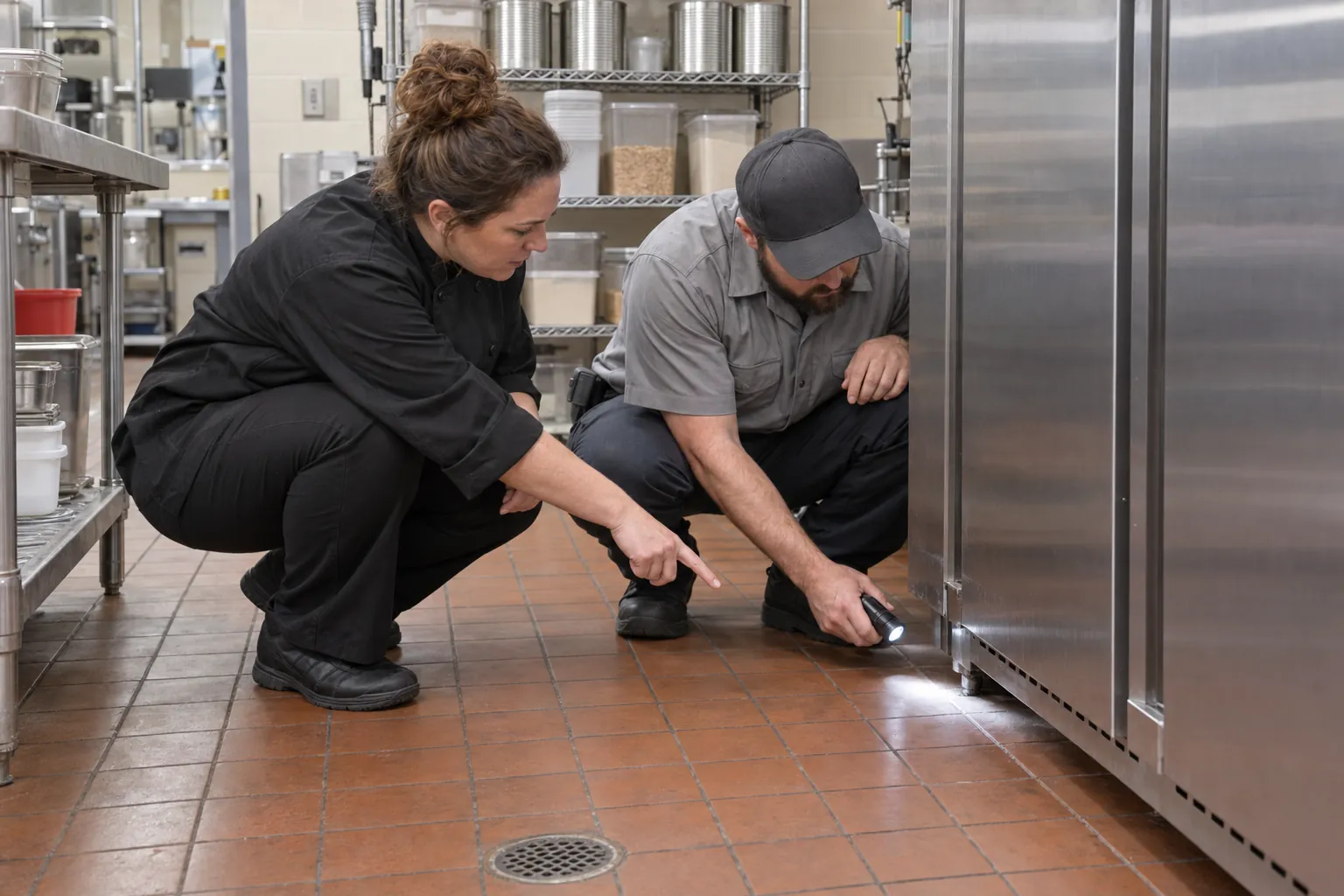 Premises and facilities managementPest sighting log: recording pest activity so it gets dealt withWhat a pest sighting log should record, who fills it in, how sightings reach your pest control provider, and the US rules behind it: FDA Food Code, OSHA and CMS.
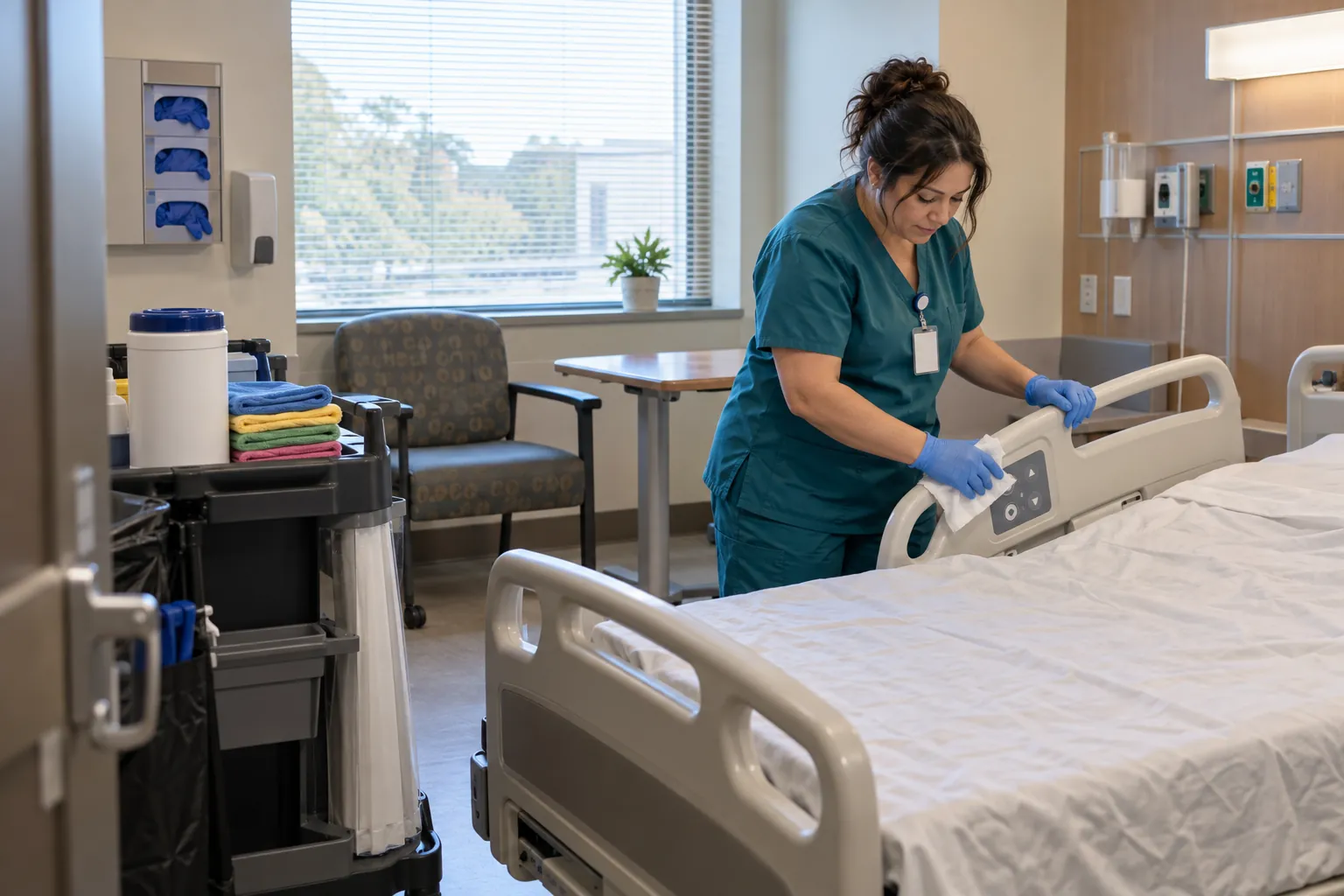 CleaningHospital environmental services: what EVS does, and how to show it was doneWhat hospital environmental services (EVS) does, the CDC, CMS and OSHA rules behind it, cleaning frequencies, who cleans what, and how cleaning is checked.
 Premises and facilities managementEnvironment of care rounds: walking the building, and proving the findings were fixedHow to run environment of care (EOC) rounds in a hospital in 2026: the CMS and Joint Commission basis, what a round covers, who goes and how findings get closed.
 Premises and facilities managementInfection control risk assessment: keeping construction dust away from patientsHow an infection control risk assessment (ICRA) works: the CDC and FGI basis, the ASHE ICRA 2.0 matrix, Classes I to V, the permit and the daily barrier rounds.