Premises and facilities management
Pest sighting log: recording pest activity so it gets dealt with
A pest sighting log is a dated record of every pest or sign of pests that employees see in a building, noting where it was seen, who saw it and what was done about it.
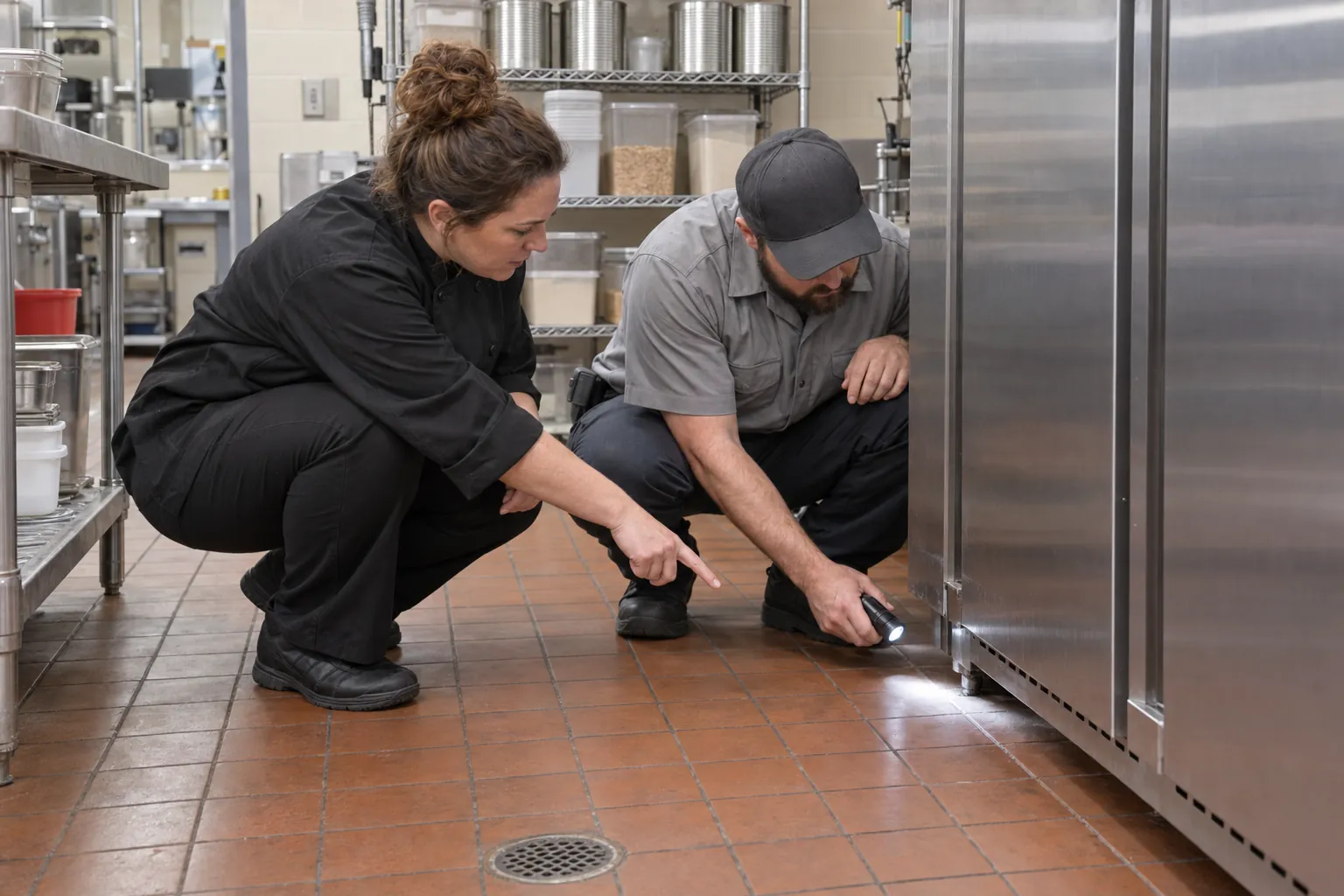
It is how the pest management professional who visits once a month learns what happened in the other twenty-nine days. Kept well, it tells the technician where to look, shows an inspector that the building watches for pests between visits, and turns a string of single sightings into a pattern someone acts on. This guide covers the US rules behind it, what each entry should say, who fills it in, and how a sighting becomes a fix.
01
What a pest sighting log is, and where the duty comes from
A pest sighting log (also called a pest activity log or pest sighting sheet) is a running record of pest evidence seen by the people who use and look after a building: kitchen staff, custodians, day porters, nurses, building engineers, security officers on patrol. It sits alongside, not instead of, the service reports your pest control company leaves after each visit.
No single US rule says "keep a pest sighting log". What the rules require is that the building is kept free of pests and that someone is looking. The log is the most practical way to show both. Which rule applies depends on what the building is:
- Food service and retail food. The FDA Food Code 2026, section 6-501.111, says "The premises shall be maintained free of insects, rodents, and other pests", and that their presence shall be controlled by, among other things, "Routinely inspecting the premises for evidence of pests" and "Eliminating harborage conditions". Section 6-501.112 says dead or trapped pests shall be removed "at a frequency that prevents their accumulation, decomposition, or the attraction of pests". The Food Code is a model: it binds a restaurant, cafeteria or school kitchen only as adopted, sometimes from an earlier edition and with local amendments, by the state or local health department.
- Any workplace. OSHA's sanitation standard, 29 CFR 1910.141, paragraph (a)(5), says every enclosed workplace shall be maintained "so far as reasonably practicable, as to prevent the entrance or harborage of rodents, insects, and other vermin", and that "A continuing and effective extermination program shall be instituted where their presence is detected." In the 21 states and Puerto Rico that run their own OSHA-approved State Plan covering private employers, the plan's equivalent rule applies instead.
- Food manufacturing and warehousing. FDA's current good manufacturing practice rule, 21 CFR 117.35, paragraph (c), says "Pests must not be allowed in any area of a food plant" and that "Effective measures must be taken to exclude pests".
- Nursing homes. The Medicare and Medicaid requirements for long-term care facilities, 42 CFR 483.90, paragraph (i)(4), require the facility to "Maintain an effective pest control program so that the facility is free of pests and rodents."
Hospitals accredited by The Joint Commission meet their environment expectations through its Physical Environment chapter, and a pest program is part of how a hospital shows the environment is safe and clean. Whatever the setting, the question an inspector or surveyor asks is the same: how do you know about pests between the contractor's visits, and what did you do when you knew?
02
What each entry in a pest sighting log should record
A log is only useful to the technician if each entry is specific enough to walk to. "Mice in kitchen" sends someone to search a whole room; "two fresh droppings behind the reach-in cooler, dry storage side, 6:10 a.m." sends them to one spot. The EPA's toolkit for health care facilities describes pest surveillance records that capture the "date, number, location, and any new pest infestations observed or removed", and the same fields work in any building, whether the log is a printed sheet or a digital form. A good entry records:
- The date and time of the sighting, not the time someone got around to writing it up.
- The exact location: building, floor, room or area, and the spot within it, such as under the dish machine, behind the vending machine in the break room, or the loading dock door.
- What was seen: a live pest, a dead one, droppings, gnaw marks, rub marks, cast skins, a nest, or damage to packaging. The CDC's page on controlling wild rodent infestations notes that rodent droppings are "pointed at one end and often contain hair" and that gnaw marks "are often found in the same area as droppings".
- The type of pest, as far as the person can tell, and how many. "Small brown cockroach" is more useful than "bug". If unsure, say so, and add a photo.
- The conditions around it: a door propped open, a gap under a door sweep, a leak, food left out, a trash room not emptied, cardboard stacked against a wall.
- Who saw it, by name, so the technician can ask them.
- What was done right away, such as a supervisor told, food discarded, the area cleaned, or the door closed.
- The follow-up: when the pest control company was told, when they came, what they found, and when the entry was closed.
Keep the sighting and the response on the same line or record. A log that lists sightings but never says what happened next shows an inspector that you noticed the problem and then left it.
03
Who fills it in, and where the log lives
Everyone who might see a pest should know how to log it, not only the person in charge. The EPA's health care toolkit recommends that a facility's pest management procedures cover "How pest sightings should be reported and managed", and that facilities "Include a procedure for staff to report pest sightings and pest-conducive conditions to the IPM team leader." In practice that means:
- Frontline staff in kitchens, custodial closets, stores, loading docks and patient or resident areas report what they see, when they see it.
- Custodians and day porters are often first to find evidence, because they empty trash, move furniture and clean under equipment. Make sure they know droppings are a sighting, not just dirt.
- A named coordinator, often the facility manager, the kitchen manager or a building engineer, owns the log, makes sure the pest control company sees every open entry, and chases the ones that stay open. The EPA toolkit calls this person the IPM team leader and says the role "could be filled by a facilities manager or delegated to a staff person".
- The pest management professional reads the log at the start of every service visit, inspects the places it names, and writes on it, or on the service report, what they found and did.
Where the log lives matters. A single binder in the manager's office is fine for a small restaurant, but in a hospital, school district or multi-tenant office building it means a custodian on the third floor at 5 a.m. has to remember a sighting until they pass the office. Keep a log at each high-risk area, or a sighting form people can reach from where they are, gathered into one record the technician reads.
04
From a sighting to a fix: thresholds, identification and control
The sighting log is the monitoring half of integrated pest management (IPM), the approach the EPA recommends for buildings. The EPA's Integrated Pest Management (IPM) Principles describe four steps: set action thresholds, monitor and identify pests, prevent, and control. The log feeds all four.
- Set action thresholds before a sighting. The EPA defines an action threshold as "a point at which pest populations or environmental conditions indicate that pest control action must be taken". In a food service area or a patient room the threshold for rodents or cockroaches is usually a single sighting; a few ants on an outside wall may only need watching. Write the thresholds down so staff know which sightings mean "call the contractor today".
- Identify the pest. Control depends on knowing what it is. A photo with the entry lets the technician identify it before arriving, and bring the right equipment.
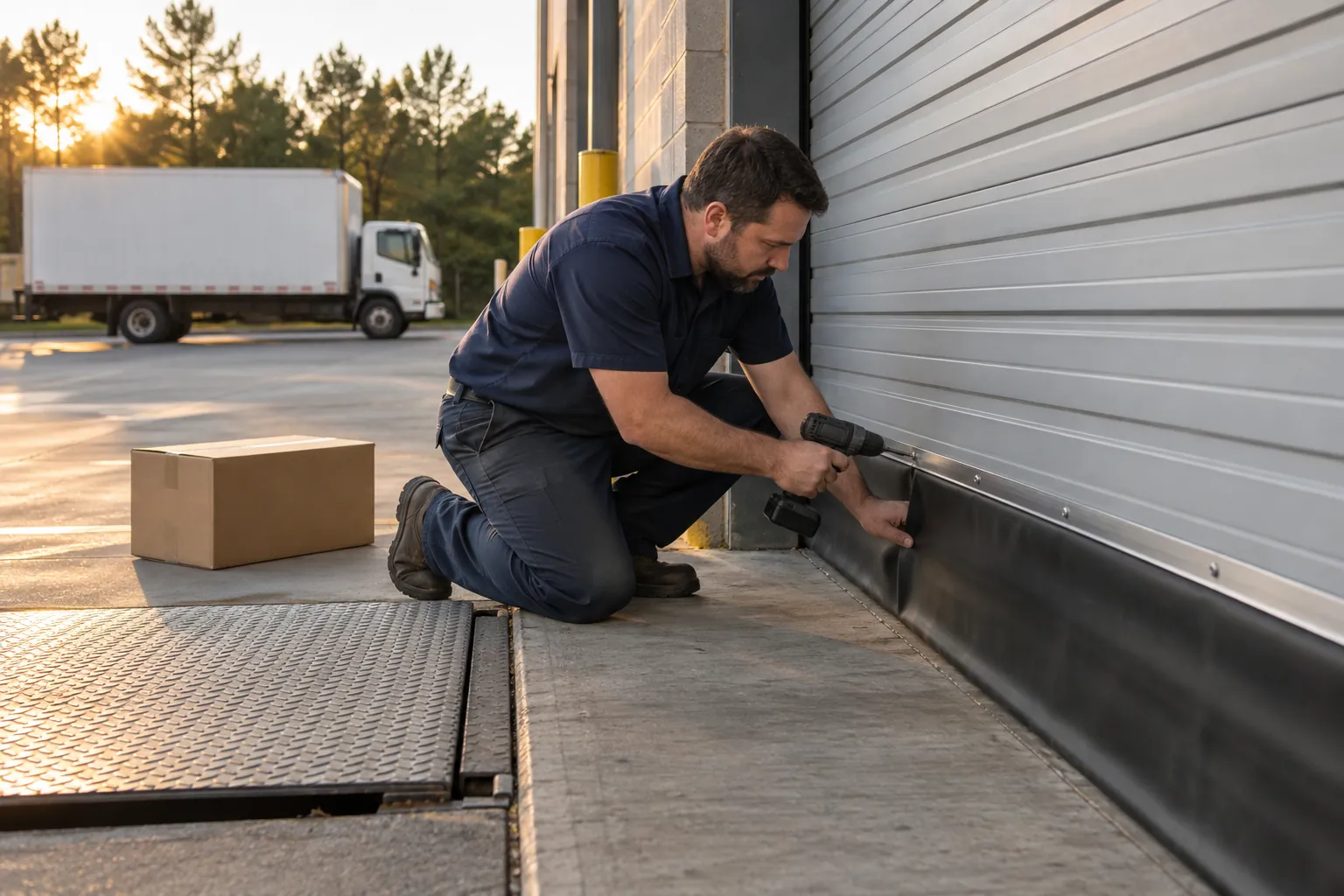
- Prevent. Most fixes are building work, not chemicals: door sweeps, sealed gaps around pipes, screens, closed doors, drains cleaned, clutter cleared, trash removed. The Food Code, section 6-202.15, requires the outer openings of a food establishment to be protected against the entry of insects and rodents by filling or closing gaps, tight-fitting windows and "Solid, self-closing, tight-fitting doors". Those fixes usually become a work order for maintenance, and the log entry should stay open until it is done.
- Control. Traps, bait stations and any pesticide are for the licensed professional, applied to the label. The Food Code, section 7-206.12, requires rodent bait to be "contained in a covered, tamper-resistant bait station", and section 7-202.12 limits restricted use pesticides to a certified applicator or someone under their direct supervision. The EPA's page on certification standards for pesticide applicators explains that "State pesticide regulatory agencies issue certifications".
Staff should not spray their own products on a sighting: it risks contaminating food-contact surfaces and people, and it can interfere with what the technician has put down. Their job is to report, remove the attraction, and keep the area clean.
05
Reviewing the log, and what an inspector looks for
A log nobody reads between visits is a diary. Review it on three timescales:
- The same day. Any sighting over the action threshold goes to the coordinator and the pest control company at once, not at the next scheduled visit.
- Every service visit. The technician reads every entry since the last visit, inspects the named places, and records the result against each entry.
- Quarterly or annually. Look for patterns: the same room, the same pest, the same season, the same door. The EPA toolkit suggests an annual program review that looks at "Pest incident trends (i.e., frequency, location, time of year, etc.)" alongside pesticide application records and the pest management contract. Repeated sightings in one place usually point to a building defect or a housekeeping gap, not a failure of treatment.
Inspectors approach it from the other end. A health inspector checks the premises against the Food Code as adopted locally, and live pests or fresh droppings in a food area are a violation whatever the paperwork says. A CMS surveyor in a nursing home follows the interpretive guidance for tag F925 in the State Operations Manual, Appendix PP, which defines an effective pest control program as "measures to eradicate and contain common household pests", tells surveyors to "look for signs of vermin", and directs them to ask staff, residents and their representatives whether they have seen any pests.
What good evidence looks like to an inspector or an internal audit, then, is simple: every sighting has a place, a time, a name and a follow-up; the follow-up is dated; the entries that needed building work show when the work was done; and the log shows the building was watched every day, not only on the day the contractor came.
06
Where the record fails, and what SiteClara does about it
Pest sighting logs fail in familiar ways. The binder lives in the kitchen office, so the night custodian who saw droppings in the break room on the fourth floor mentions it to whoever is passing and it never reaches the log. Entries say "mouse, kitchen" with no spot, no time and no name. The sighting is written down, but nobody tells the pest control company, and the next entry, two weeks later, is the same mouse in the same place. The technician's service report says "no activity" because they never saw the log. And the door sweep that let the mice in is noted once, then forgotten, because the log is not anyone's list of jobs.
SiteClara records checks and reports at the location. A printed QR poster, with an optional NFC tag behind it, sits at each place that matters, such as a kitchen, a dry store, a trash room, a loading dock or a break room. Staff scan or tap on their own phone, with no app to install, and can report what they found with a photo. The report carries the place, the time and the named person automatically, and goes onto the team's list of jobs until someone closes it, so a sighting cannot sit unread in a binder. Scheduled checks, such as a daily look behind the equipment in a kitchen or a weekly walk of the trash room, are marked done at the location, or the person says what stopped them.
The supervisor sees what is due, done and missed, and can record the reason a check was missed. A job that needs the building manager, such as a gap under a door that is theirs to fix, can be escalated to them to answer. Each day the supervisor reviews and approves a report that goes to nominated management or client contacts at 8 a.m. the next morning, showing what was reported, completed and still open.
07
Questions people ask
Is there a free printable pest sighting log template?
Some local health departments publish one. The City of Nashua Environmental Health Department in New Hampshire publishes a one-page Pest Sighting Log with columns for the date, time, type of pest, location of sighting, who reported it and the action taken, and tells the establishment to "Keep record on file at establishment and share with pest management company for targeted treatment." Ask your own state or local health department whether it prefers a form, and if a template has no room for the exact spot or the follow-up, add those columns.
What else belongs in a pest control log besides pest sightings?
The sighting log is one part of a wider pest management logbook. The EPA's Integrated Pest Management in Health Care Facilities toolkit says a pest management log should be kept for each property "in the office of the IPM team leader or facility manager". It lists what the logbook should contain: the IPM policy and procedures, pesticide use and service schedules, the current label and Safety Data Sheet for each pesticide used, pest surveillance data sheets recording "the type and number of pests or other indicators of pest population levels revealed by the monitoring program", diagrams of pest-vulnerable areas showing traps and bait stations, listings of sensitive areas where pesticide use must be avoided or limited, and copies of all pest management contracts. It adds that "Records should be reviewed as part of the annual IPM program review."
08
Where to read more, and a list to take away
For food service, read Chapter 6 of the FDA Food Code 2026 (sections 6-202.15, 6-501.111 and 6-501.112) and Chapter 7 on pesticides, then ask your state or local health department which edition it has adopted. For any workplace, OSHA's sanitation standard is 29 CFR 1910.141; check whether your state runs its own plan. Food plants should read 21 CFR 117.35, and nursing homes 42 CFR 483.90 with tag F925 in Appendix PP. The most practical single document on running a pest program in a building, logs included, is the EPA's Integrated Pest Management in Health Care Facilities toolkit (EPA Region 7, July 2021), and much of it applies well beyond health care.
- Name one person who owns the pest sighting log and chases open entries.
- Make reporting easy from where the pest is seen, not only from the manager's office.
- Record the date, time, exact spot, what was seen, how many, the conditions, who saw it and what was done.
- Write down action thresholds, so staff know which sightings mean calling the contractor today.
- Have the technician read and answer every entry at every visit.
- Keep an entry open until the building defect behind it is fixed.
- Leave traps, baits and pesticides to the licensed professional.
- Review the log for patterns by place, pest and season at least once a year.
Sources
Every document this guide quotes or links to, in the order it first cites them.
- FDA Food Code 2026 fda.gov
- 29 CFR 1910.141 osha.gov
- 21 CFR 117.35 govinfo.gov
- 42 CFR 483.90 govinfo.gov
- Controlling wild rodent infestations cdc.gov
- Integrated Pest Management (IPM) Principles epa.gov
- Certification standards for pesticide applicators epa.gov
- Cleaning up after rodents cdc.gov
- State Operations Manual, Appendix PP cms.gov
- Pest Sighting Log nashuanh.gov
- Integrated Pest Management in Health Care Facilities toolkit epa.gov
Related guides
 Premises and facilities managementGrease trap cleaning log: what to record, how often, and what the FOG inspector expectsWhat a grease trap cleaning log should record, how often interceptors are pumped, what local FOG programs and inspectors expect, and where the log usually fails.
 CleaningMaster sanitation schedule: building one, running it, and proving it happenedWhat a master sanitation schedule is, how it fits FDA 21 CFR 117 and USDA SSOPs, what goes on it, how often, who signs, and how to keep the record honest.
 Premises and facilities managementEngineering rounds: how to walk the plant, and how to show it was walkedEngineering rounds in a commercial building: what to walk, the readings to take, how often, the rules behind them, and a round log that shows the plant was checked.
 Premises and facilities managementEnvironment of care rounds: walking the building, and proving the findings were fixedHow to run environment of care (EOC) rounds in a hospital in 2026: the CMS and Joint Commission basis, what a round covers, who goes and how findings get closed.