Premises and facilities management
Hotel preventive maintenance checklist: guest rooms, public areas and the systems behind them
A hotel preventive maintenance checklist is the scheduled list of inspections, tests and servicing that a hotel's engineering team carries out on its guest rooms, public areas and building systems, saying what is checked, how often and by whom, so that faults are found by an engineer before a guest finds them.
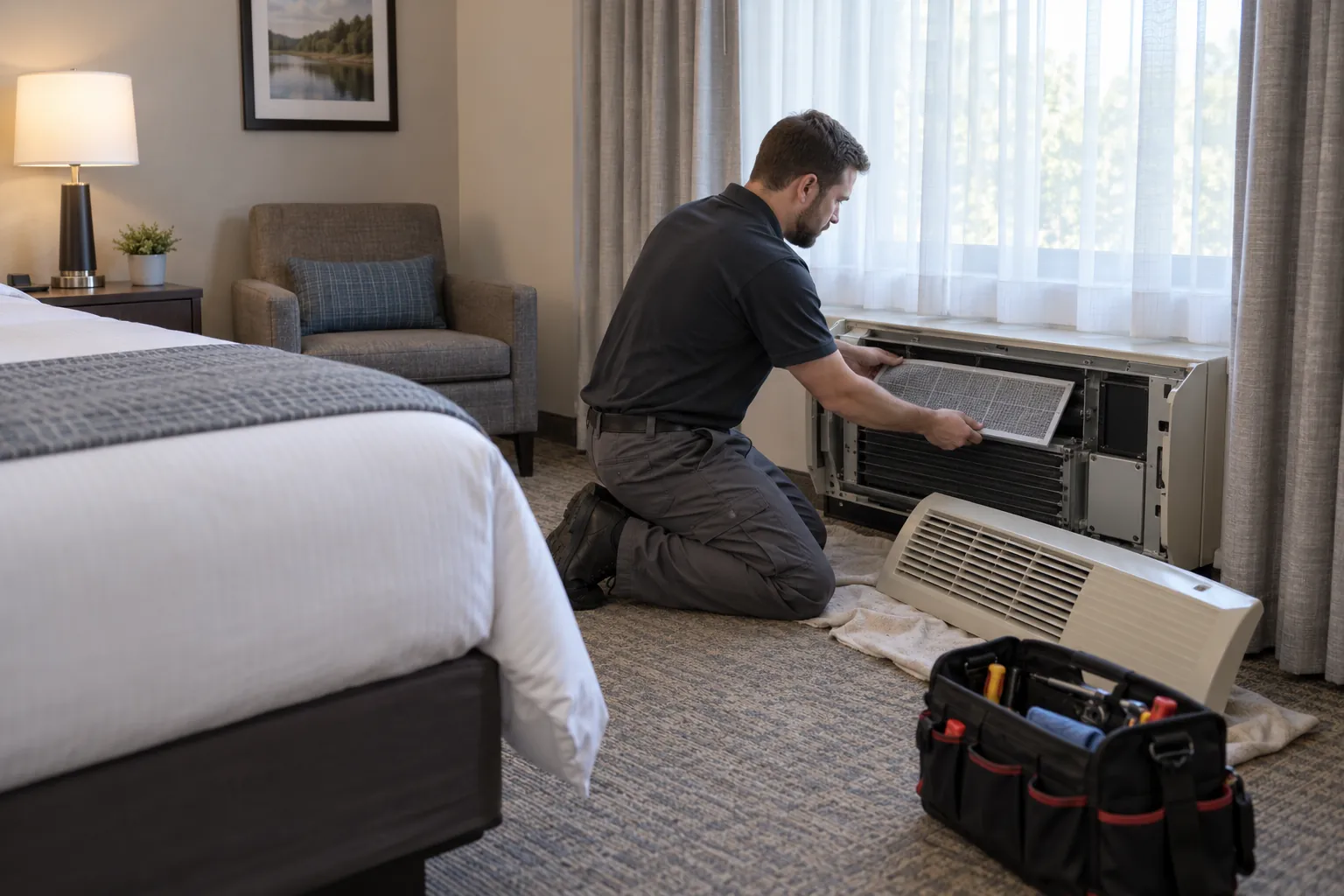
It brings together three kinds of maintenance tasks: the guest room PM cycle, the rounds of the lobby, corridors, pool and back of house, and the inspection, testing and maintenance that fire, elevator, water and pool rules require. This guide explains where those duties come from, what a hotel room maintenance checklist should cover, a sample schedule by frequency, and what the record should show.
01
What hotel preventive maintenance is, and where the duty comes from
Preventive maintenance is defined in Chapter 5 of the U.S. Department of Energy's O&M Best Practices Guide, Release 3.0 as "Actions performed on a time- or machine-run-based schedule that detect, preclude, or mitigate degradation of a component or system with the aim of sustaining or extending its useful life through controlling degradation to an acceptable level." In a hotel that means the PTAC or fan coil in every guest room, the showers and faucets, the door hardware, the elevators, the boilers and the pool, each on a schedule, rather than waiting for the guest in room 412 to call the front desk. Its opposite is reactive maintenance, repairs made only after something fails, which in a hotel usually means after guests have noticed it; the point of the checklist is to prevent that.
No single law tells a hotel to keep a preventive maintenance checklist. The duties come from several places at once, and most of them are set by the state or city where the property stands:
- The state lodging code. Hotels are licensed and inspected by the state. In Florida, for example, section 509.032, Florida Statutes says the Division of Hotels and Restaurants "shall inspect each licensed public lodging establishment at least biannually." Section 509.211, Florida Statutes requires an approved locking device on every guest room door that opens to the outside, an adjoining room or a hallway, and, for a property of three or more stories, "safe and secure railings on all balconies, platforms, and stairways" kept in good repair. Other states set their own rules.
- Fire and life safety codes. Fire alarm, sprinkler and extinguisher inspection, testing and maintenance (ITM) is set by the International Fire Code or NFPA 1 and the NFPA standards they reference, in the edition and with the amendments your state or city has adopted, enforced by the fire marshal or building official, the authority having jurisdiction (AHJ).
- Federal fire safety for travel. Under the Hotel and Motel Fire Safety Act of 1990, the guidelines in 15 U.S.C. 2225 call for "hard-wired, single-station smoke detectors" in each guest room, installed to NFPA 74 or its successor, and an automatic sprinkler system to NFPA 13 or 13R "except those places that are 3 stories or lower."
- OSHA. For the hotel's own employees, OSHA standards apply. 29 CFR 1910.157 says portable fire extinguishers "shall be visually inspected monthly" and are subject to "an annual maintenance check." In a state with an OSHA-approved state plan, check the state's version.
- Accessibility. Under the ADA's Title III regulation, 28 CFR 36.211, a public accommodation "shall maintain in operable working condition those features of facilities and equipment that are required to be readily accessible to and usable by persons with disabilities." The accessible rooms' features belong on the checklist.
- Pools and spas. The Virginia Graeme Baker Pool and Spa Safety Act, 15 U.S.C. 8003, treats a pool open to "patrons of a hotel or other public accommodations facility" as a public pool, and the Consumer Product Safety Commission's guidance on pool and spa drain covers says public pools and spas "must be equipped with anti-entrapment drain covers that comply with 16 C.F.R. part 1450." Water quality and pool operation are set by the state or county health department.
Brand standards and insurers add their own. A comprehensive hotel preventive maintenance checklist is where all of these meet.
02
A hotel room preventive maintenance checklist
Guest room PM is the part of the program guests notice, and the part closest to the guest experience: guests judge a room on its cleanliness and on whether everything in it works. Most hotels take each room out of order for a set time on a cycle, often quarterly, and an engineer works through the whole room in one visit. No code sets that cycle: set it from the manufacturer's instructions, your occupancy and your own history of guest complaints and work orders. A room-by-room checklist usually covers:
- Heating and cooling: the PTAC, vertical unit or fan coil: clean or replace the filter, clean the coils, clear the condensate drain and pan, check the thermostat and remote, listen for noise and rattles.
- Bathroom plumbing: faucets and shower valves for drips and temperature, shower heads descaled or replaced, drains running freely, toilets flushing and refilling properly with their seats secure, caulk and grout around the tub and vanity, and any sign of a leak under the vanity or around the toilet base.
- Electrical: lamps and light fixtures all working, outlets and USB ports live, the bathroom GFCI tested and reset, cords and cover plates undamaged, the television and remote working.
- The entry door: the electronic lock reads and latches, the door closes and latches on its own, the deadbolt or security latch works, the door viewer is clear, and the connecting door, if there is one, locks from both sides.
- Windows and balconies: window locks and opening limiters, sliding door locks and tracks, balcony railings secure.
- Life safety in the room: the smoke alarm's indicator shows power, the sprinkler head is not painted, damaged or hung with anything, the carbon monoxide alarm works where the adopted code requires one, the evacuation plan is on the back of the door, and in an accessible room the visual alarm works.
- Accessible features: grab bars tight, the shower seat folding and locking, the hand-held shower on its slide bar, and the clear floor space at the bed and in the bathroom kept clear.
- Furniture and finishes: bed frames and headboards secure, drawers and wardrobe doors running, the safe, minibar and coffee maker working, and damage and wear and tear to walls, carpet and ceilings noted.
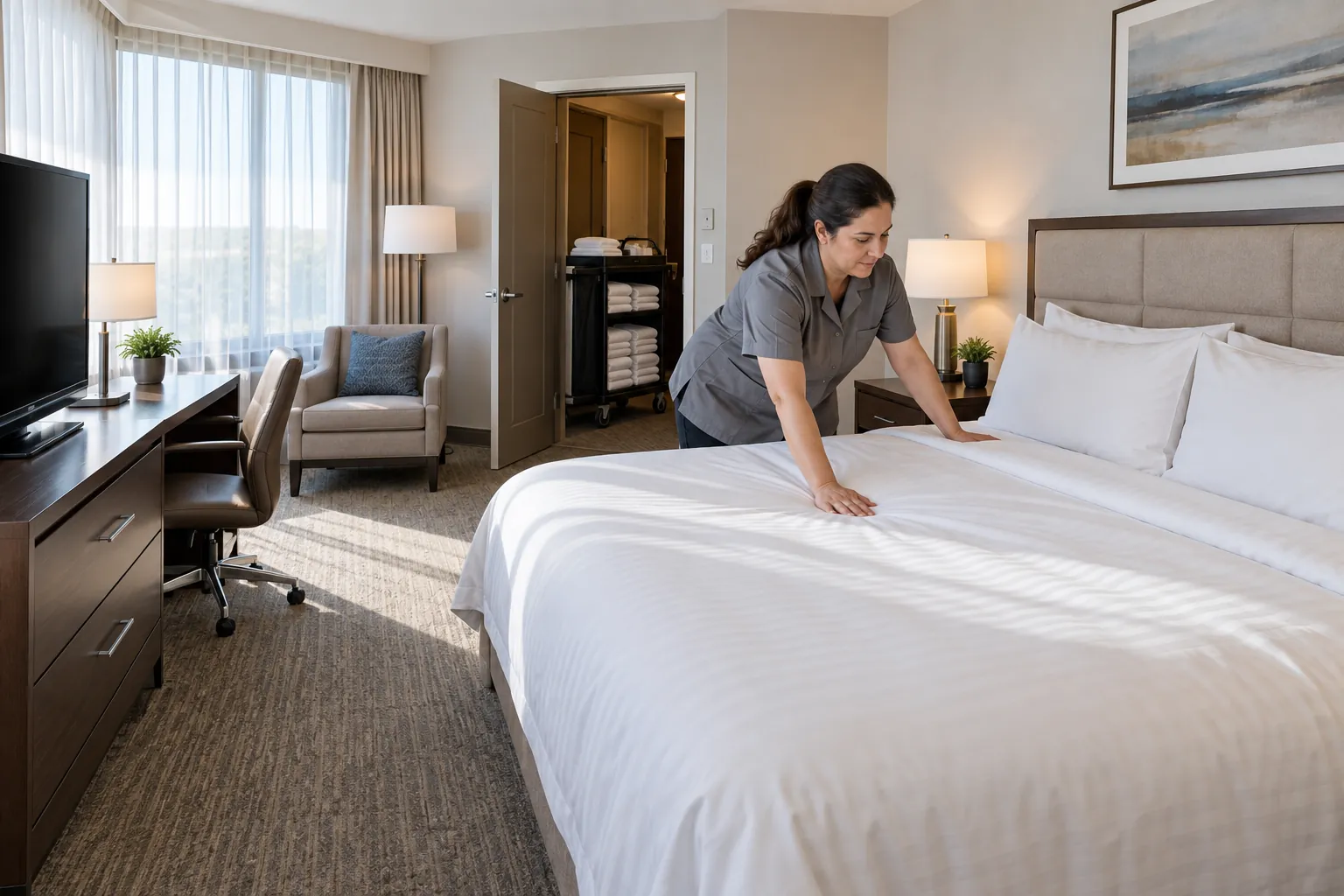
Anything the engineer cannot fix in the visit becomes a work order with the room number on it. Room attendants see every occupied room daily, so ask them to report what they find rather than leaving it for the next cycle.
03
Public areas, back of house and building systems
Beyond the guest rooms, the checklist covers the spaces every guest passes through, the amenities they use and the plant they never see:
- Lobby, corridors and stairs: lighting, carpet seams and trip hazards, handrails, exit signs lit, exit routes and stair doors clear, fire doors closing and latching, and ice and vending machines working and draining.
- Pool, spa and fitness center: drain covers in place and undamaged, the barrier and self-closing gate, water chemistry checks to the health department's frequency, and gym equipment to its manufacturer's instructions.
- Kitchen and laundry: refrigeration temperatures and other kitchen equipment, the hood and its suppression system serviced by a contractor, and dryer lint traps and ducts cleaned.
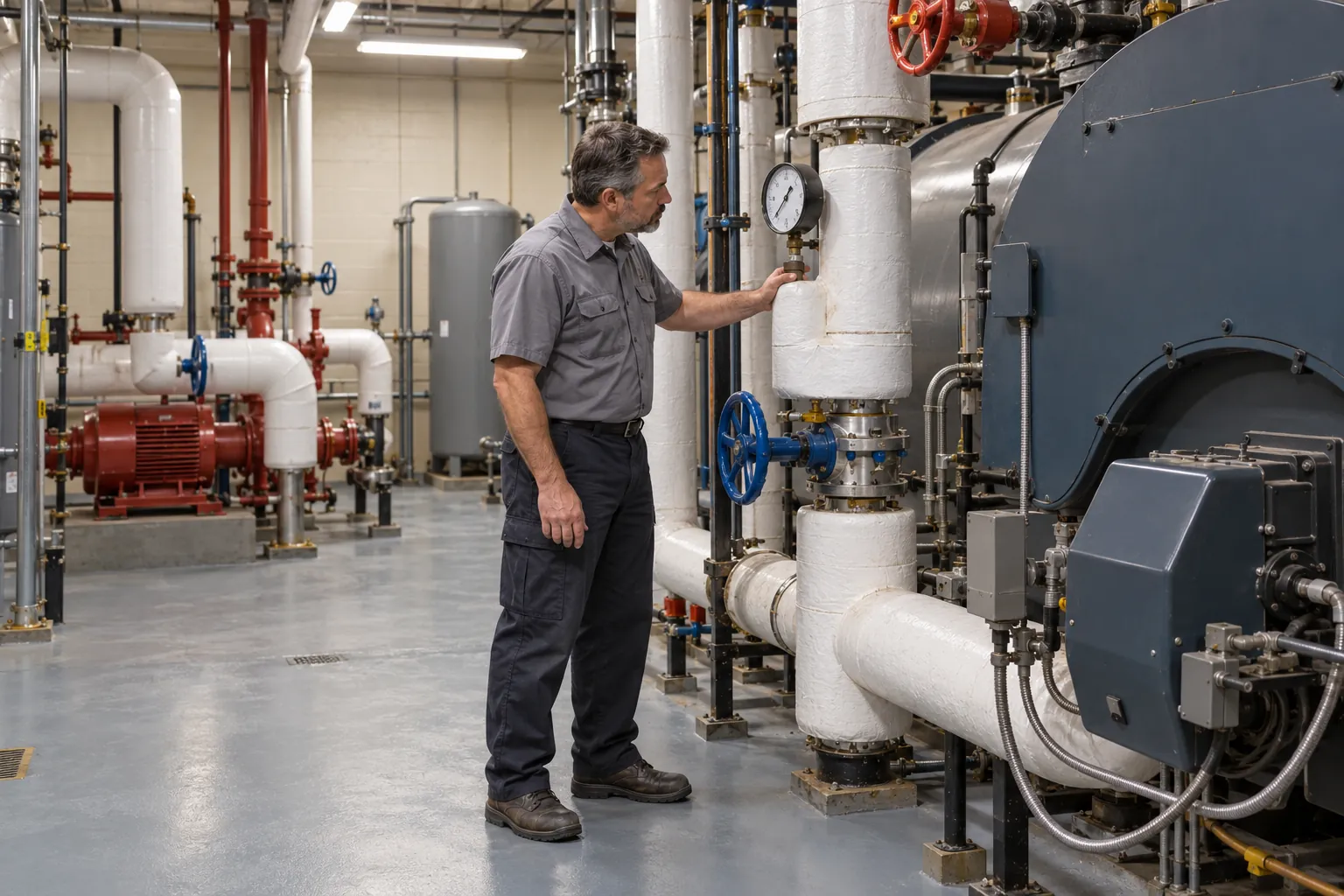
- Central plant, electrical and HVAC systems: boilers, water heaters, chillers, cooling towers, pumps, air handlers and makeup air units, whose filters and outside air settings affect indoor air quality, the building automation system, electrical rooms and panels kept clear and dry, and the emergency generator and transfer switch.
- Elevators: maintained by the elevator contractor under a maintenance control program to ASME A17.1, Safety Code for Elevators and Escalators, which ASME lists in a 2025 edition, though each state or city enforces the edition it adopted, and inspected by the state elevator program.
- Fire protection: the fire alarm system under NFPA 72, National Fire Alarm and Signaling Code, sprinklers, standpipes and fire pumps under NFPA 25, Standard for the Inspection, Testing, and Maintenance of Water-Based Fire Protection Systems, and portable extinguishers under NFPA 10, Standard for Portable Fire Extinguishers, each in the edition your AHJ has adopted.
- Roof, building exterior and grounds: roof drains, flashing, PTAC sleeves and sealants from outside, parking lots, their lighting and surfaces, and walkways.
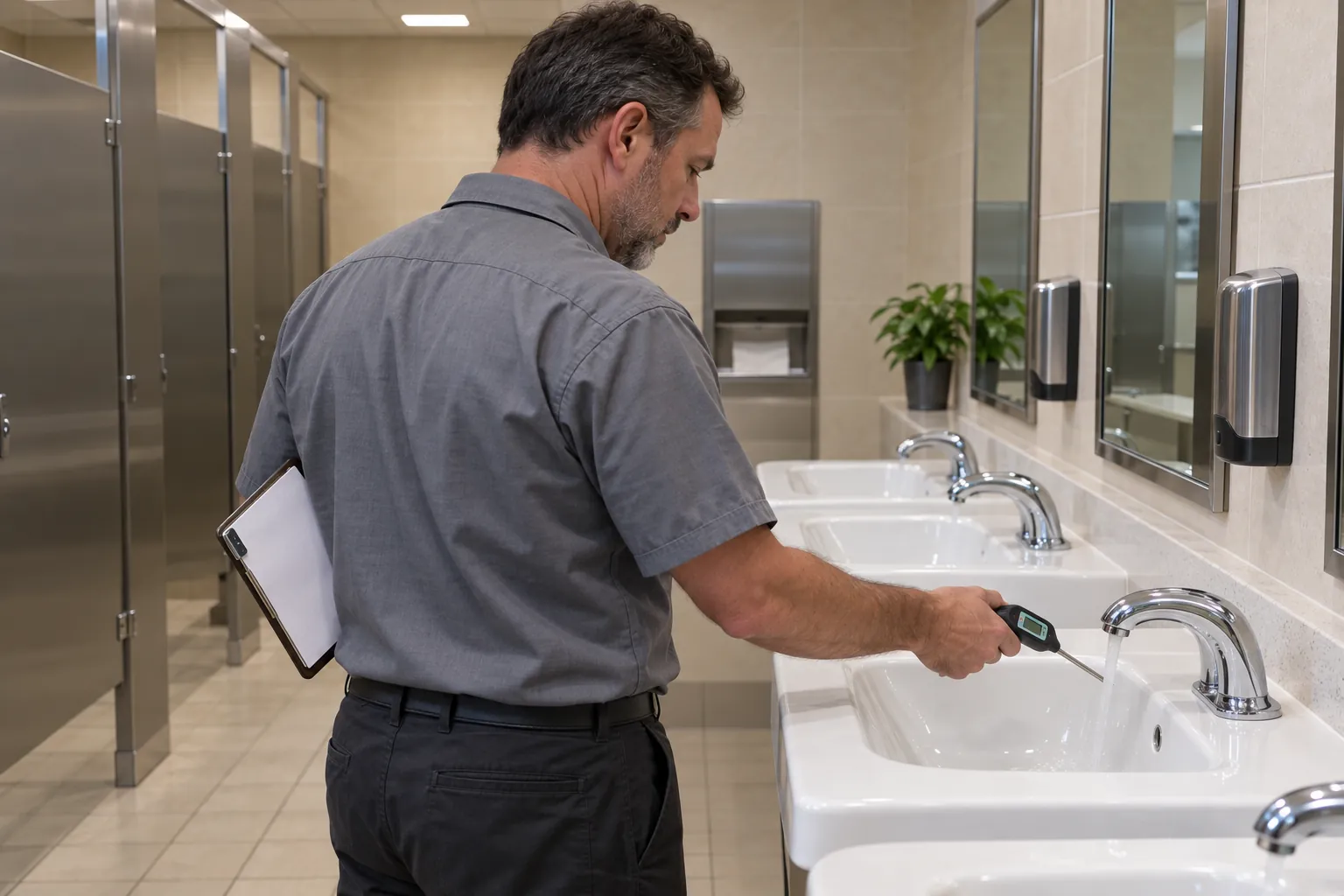
Water deserves its own line. The CDC's page Hotel Owners and Managers says hotels and resorts are frequent settings for Legionnaires' disease outbreaks and names the places in a hotel where Legionella can grow and spread: cooling towers, showers, hot tubs, decorative fountains, and unoccupied floors or rooms, where low occupancy reduces water flow. It says water management programs are now an industry standard for most hotels in the United States, and describes one as "a multi-step, continuous process." ANSI/ASHRAE Standard 188-2021, Legionellosis: Risk Management for Building Water Systems is the industry standard that "establishes minimum legionellosis risk management requirements for building water systems." On the checklist: flushing empty rooms and floors, cleaning shower heads, changing hot tub filters and treating the cooling tower, each with a frequency and an owner.
04
A sample hotel maintenance checklist by frequency
A hotel maintenance checklist is easiest to run when its maintenance tasks are sorted by how often they come round. These frequencies are typical examples, not requirements: take each from the manufacturer, the adopted code and your contractors' and water management programs.
Daily (the engineer on duty's rounds):
- walk the boiler room, mechanical rooms and laundry for leaks, noise, smells and alarms, and log boiler and chiller readings;
- check the building automation and fire alarm panels for alarms, trouble and supervisory signals;
- check that exit signs are lit and exit routes and stair doors are clear;
- check the pool and spa: drain covers, the gate, and water chemistry as the health department requires.
Weekly:
- flush rooms and floors that have stood empty, as your water management program sets.
Monthly:
- visually inspect every portable fire extinguisher and record it (29 CFR 1910.157);
- run the emergency generator and transfer switch as its maintenance program requires;
- test emergency lighting to the frequency your adopted code sets;
- check fire doors, door closers and panic hardware on exit doors;
- check the accessible features in accessible guest rooms and public restrooms.
Quarterly:
- the guest room PM cycle, a set number of rooms each week so every room is done in the quarter;
- PTAC deep cleaning, including coils and condensate drains;
- the fire alarm, sprinkler and fire pump inspections and tests that the adopted editions of NFPA 72 and NFPA 25 set, by the fire protection contractor.
Annually:
- the annual maintenance check on each extinguisher, with the date recorded;
- boiler and water heater servicing, and the state boiler inspection where one applies;
- the state elevator inspection and the contractor's periodic tests;
- a review of the water management program, the PM checklist and the frequencies, against a year of work orders and guest complaints.
Some items run on longer cycles set by state law: in Florida, section 509.2112, Florida Statutes has every public lodging establishment of three stories or more file a certificate every three years that its balconies, platforms, stairways and railways "have been inspected by a person competent to conduct such inspections and are safe, secure, and free of defects."
05
What the record should show
A state inspector, the fire marshal, an insurer or a brand auditor will ask what was done and when. The record is how the hotel shows compliance with the rules above, and how the engineering team and hotel operations see which assets keep needing repairs. It should show:
- The room or asset, by room number or tag number, and the task done.
- Who did it and when, with the date and time, not a week of initials added on Friday.
- What was found: readings, defects and photographs where they help, such as a leak under a vanity or a damaged drain cover.
- What happened next: the work order raised and when it was closed.
- Contractor and code reports: the fire alarm, sprinkler, extinguisher, elevator, boiler and backflow reports, filed against the system they cover and sent to the AHJ where the jurisdiction requires it.
- Statutory records, kept as each rule says: 29 CFR 1910.157, for example, has the employer "record the annual maintenance date and retain this record for one year after the last entry or the life of the shell, whichever is less."
A completion percentage hides which rooms were skipped. A room that has missed two cycles, a defect found on PM and never closed, and the same complaint from the same room three times are the maintenance issues to act on.
06
Where the record fails, and where SiteClara fits
Hotel PM records are usually strongest for the contractor's visit and weakest for everything in between: the engineer's daily round, the flushing of an empty floor, the pool check at seven in the morning. Those live on a clipboard, initialed in a batch, and a fault a room attendant spots is passed to whoever was walking by.
SiteClara records those routine checks. A printed QR poster goes at each location, such as a boiler room, a guest room floor's service closet, the pool equipment room, the laundry or a parking level, with an NFC tag behind it if staff would rather tap. Engineers and room attendants scan the code or tap the tag on their own phone, with no app to install, see the checks due there, and mark each one done or say what stopped them. A fault is reported on the spot with a photo and goes onto the team's list of jobs until someone closes it, so the leak in room 412 has a date, a place, a photo and a name from the first report.
The supervisor sees what was due, done and missed, and can record why a check was missed. Each day the supervisor reviews and approves a report that goes to nominated management or owner contacts at 8 a.m. the next day by default.
07
Questions people ask
How often should hotel rooms have preventive maintenance?
No federal or model code sets a guest room PM frequency, and many hotels work to a quarterly cycle. Chapter 5 of the Department of Energy's O&M Best Practices Guide, Release 3.0, in its steps for initiating reliability centered maintenance, says to determine the type, number and periodicity of maintenance activities using manufacturer technical manuals, machinery history, root cause analysis findings and good engineering judgment, so set the interval from the room equipment's manuals, your brand standards and your own work order history. The fixed frequencies in a hotel come from other rules, such as the monthly visual inspection of portable fire extinguishers in 29 CFR 1910.157 and the fire protection ITM your AHJ has adopted.
What is the 80/20 rule in maintenance?
It is a common industry rule of thumb, not a regulation or a federal figure: aim for about 80% of maintenance work to be planned and no more than about 20% reactive. The Department of Energy's O&M Best Practices Guide, Release 3.0 does not use the 80/20 rule, but it shows why planning matters: it reports a study in which more than 55% of maintenance in an average facility was still reactive, and gives the breakdown of top-performing facilities as under 10% reactive, 25% to 35% preventive and 45% to 55% predictive.
08
Further reading, and a list to take away
For the principles, read Chapter 5 of the FEMP O&M Best Practices Guide. For water, the CDC's Toolkit: Developing a Legionella Water Management Program. For fire protection, the NFPA standards your AHJ has adopted; for lodging rules, the code of the state that licenses your property.
To check that your hotel preventive maintenance checklist is in order:
- every guest room is on the PM cycle, and the rooms skipped because they were occupied are rescheduled, not forgotten;
- every code-required inspection and test is listed with its adopted edition, its frequency and the contractor responsible;
- the water management program's flushing, temperature and cleaning tasks are on the checklist with an owner;
- faults found by engineers, room attendants and guests become work orders that are tracked and closed;
- the record shows who did each task and when, as it happened;
- the checklist is reviewed at least once a year against the work orders and the guest complaints.
Sources
Every document this guide quotes or links to, in the order it first cites them.
- Chapter 5 of the U.S. Department of Energy's O&M Best Practices Guide, Release 3.0 www1.eere.energy.gov
- Section 509.032, Florida Statutes leg.state.fl.us
- Section 509.211, Florida Statutes leg.state.fl.us
- 15 U.S.C. 2225 govinfo.gov
- 29 CFR 1910.157 osha.gov
- 28 CFR 36.211 ada.gov
- Virginia Graeme Baker Pool and Spa Safety Act, 15 U.S.C. 8003 govinfo.gov
- Consumer Product Safety Commission's guidance on pool and spa drain covers cpsc.gov
- ASME A17.1, Safety Code for Elevators and Escalators asme.org
- NFPA 72, National Fire Alarm and Signaling Code nfpa.org
- NFPA 25, Standard for the Inspection, Testing, and Maintenance of Water-Based Fire Protection Systems nfpa.org
- NFPA 10, Standard for Portable Fire Extinguishers nfpa.org
- Hotel Owners and Managers cdc.gov
- ANSI/ASHRAE Standard 188-2021, Legionellosis: Risk Management for Building Water Systems ashrae.org
- Section 509.2112, Florida Statutes leg.state.fl.us
- Toolkit: Developing a Legionella Water Management Program cdc.gov
Related guides
 Premises and facilities managementPreventive maintenance checklist: what to check in a commercial building, how often, and how to prove itA preventive maintenance checklist for commercial buildings: HVAC, electrical, fire and life safety, plumbing, how often, and what the record should show.
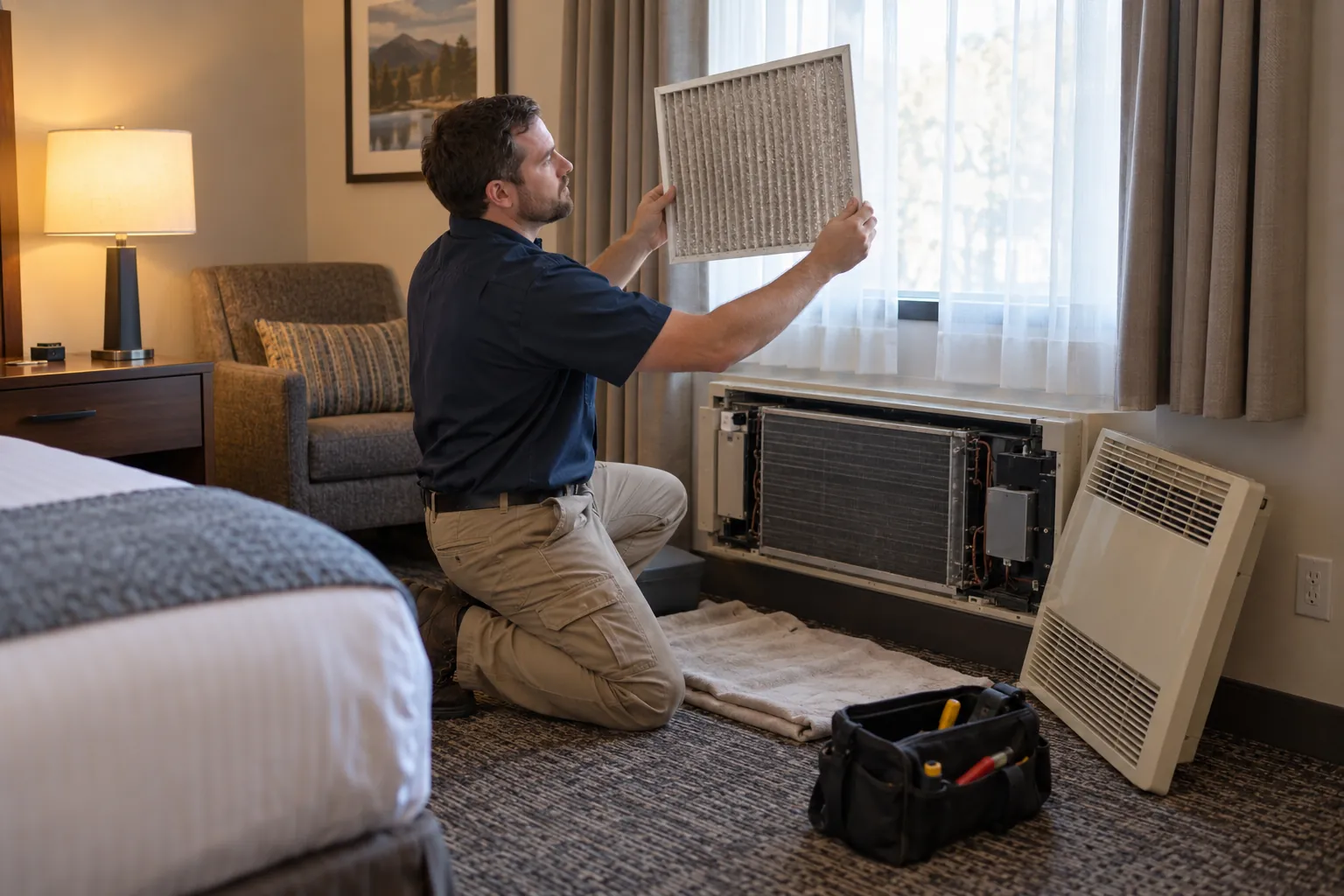 Premises and facilities managementPTAC maintenance: what to clean, how often, and what to record for each unitPTAC maintenance room by room: filters, coils, base pan and drain, how often, who may open the sealed system under EPA rules, and what each unit's record shows.
 Fire and water checksLegionella water management program: the plan, the routine checks, and the record that proves themWhat a Legionella water management program covers under ASHRAE 188 and the CDC toolkit: control limits, routine monitoring, corrective action and the record.
 CleaningHotel housekeeping checklist: what to check, and how to know it was doneA hotel housekeeping checklist for guest rooms, bathrooms and public areas, the OSHA and Cal/OSHA rules behind it, and how to show each check was really done.