Premises and facilities management
Maintenance request form: what to include, with a worked template
A maintenance request form records who needs help, the exact building and location, what has gone wrong, its effect on people or operations, and the information needed to arrange a repair.
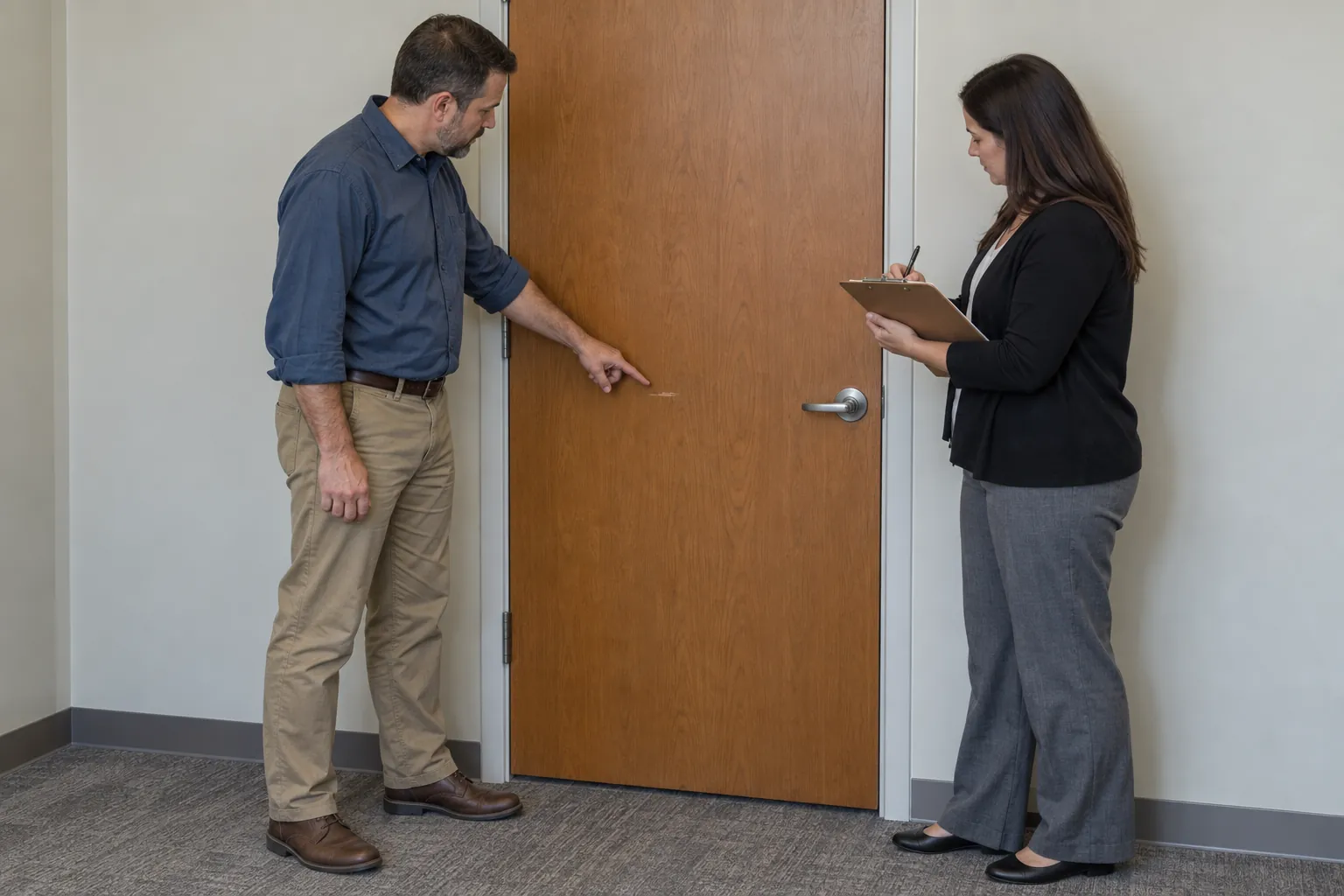
A useful form lets an occupant describe what they can see without diagnosing the fault or choosing the technician. This guide gives a copyable template for offices, schools, campuses and other commercial facilities, explains the fields, and shows how to record a completed repair separately from the original request.
01
What a maintenance request form does
A maintenance request form is the starting record of a building problem. It captures an observation, such as water under a sink, rather than an instruction to replace a part. The facilities team can assess that observation, decide what work is needed and create a work order in its maintenance system. Keep the request and the work order linked, because a request can lead to several visits or no repair at all.
The University of Utah facilities request portal gives a useful example of the distinction: corrective maintenance restores something that has malfunctioned, while changes and projects use a different request route. Its emergency telephone route is separate from its online forms. Those are the university's arrangements, not national response-time standards; a commercial facility should publish its own routes just as clearly.
The form also supports hazard reporting. OSHA 29 CFR 1910.22(d) requires walking-working surfaces to be inspected regularly and as necessary, and unsafe conditions to be corrected before reuse or guarded until correction. Submitting a form does not itself make a leak, damaged floor or unsafe stair usable. The person receiving the request must decide what immediate protection is needed.
This template is for nonresidential building maintenance. An apartment maintenance request involves residential access rules, lease obligations and state or local landlord-tenant law that this guide does not set out. A tenant in a commercial building should identify its suite and contact, while the property manager checks whether the repair is the owner's or tenant's responsibility. Do not turn a general maintenance form into consent to enter any occupied space.
02
The fields a commercial maintenance request needs
Ask for the information that allows someone unfamiliar with the room to find and assess the problem. Make essential fields clear, show people which parts to fill in, keep optional detail optional, and offer a telephone alternative for people who cannot use the online form.
- Requester and reply route: name or team, work email or telephone number, and a preferred way to be contacted. Ask for a role or department where that helps access; do not collect unrelated personal details.
- Location: site, building, floor, room or suite, and a landmark within the room. An equipment identifier is useful if one is visible, but should not stop someone reporting an unlabeled fixture.
- Problem description: what is happening, when it was noticed, whether it is continuing, and what appears to be affected. Include the normal behavior if the difference is otherwise unclear.
- Effect and immediate concerns: whether a route is blocked, a room cannot be used, water is spreading or equipment has stopped. Let the receiving team set the final priority.
- Safe supporting photos: a wide view to locate the fault and a closer view if it can be taken without approaching a hazard. Avoid faces, documents, badges and confidential screens.
- Access arrangements: opening hours, a contact who can meet the technician, and any escort or restricted-area procedure. Do not request door codes or keys in a general description box.
- Previous request: an existing reference if this is an update or the same fault has returned. Keep a new incident distinguishable from a duplicate message.
For common problems, short prompts work better than an exhaustive equipment list. A plumbing request might ask whether the leak is active; an air conditioning request can identify which rooms are affected. Avoid forcing the requester to select a technical diagnosis or a cost code they do not know. The facilities team can add repair classifications, charge approvals and vendor details after review.
Use consistent building and room names on paper and online request forms. A campus with two buildings called Administration needs an additional identifier. A hotel can include the room number and occupancy contact without putting a guest's personal information in the general maintenance report.
03
A copyable maintenance request form template
These form templates can be used on paper or online. Copy the following fields into a document, spreadsheet or online form. Replace every bracketed instruction before putting it into use. The emergency notice belongs at the top, where it can be read before someone starts filling in the form.
Keep the internal handling fields on a separate part of the record: received time, reviewer, agreed priority, person or service responsible, work order reference and next update. A requester should not have to invent an engineer's repair plan to submit the form. If the building charges for some services, explain the approval step before work is authorized rather than implying that clicking Submit approves any cost.
A printable form needs the receiving address or hand-in location, a visible version date and an acknowledgement route. An online form needs a confirmation that submission succeeded and a reference the requester can retain. Test both with a real room name and a mobile phone before distributing them.
04
How to write a request for maintenance
A good description is precise about the observation and modest about the cause. Compare “restroom broken” with “water is dripping from the supply connection under the left-hand sink in the second-floor east restroom.” The second description tells a technician where to look without asserting that a particular valve has failed.
This is a fictional routine example, not a reason to classify every water leak as routine. Water spreading onto a walking surface, near electrical equipment or into an occupied ceiling changes the situation and needs immediate contact with the responsible team. Report what changed and update the original request reference so the new information is not hidden in another inbox.
For an intermittent HVAC complaint, record the rooms affected, the approximate times, any displayed temperature and whether the area remains usable. Do not ask an occupant to open a control cabinet, reset a breaker or run a machine to reproduce a fault. A photo of the normal external display can help; a technical test belongs with someone qualified and authorized.
When requesting several unrelated repairs, separate them by location or defect so each can be followed through. A furniture-moving project should use the service-request route rather than being described as a broken fixture. Keep one request for a single fault affecting several rooms, with those rooms listed. The aim is a clear repair record, not a rule that creates dozens of identical tickets.
05
Emergency instructions, updates and completion
Write the monitored hours beside the submission button and on every paper copy. Tell people how to report an urgent change outside those hours. Use the facility's approved emergency procedure rather than expecting an unstaffed inbox to identify an emergency. Avoid a universal promise that all maintenance requests are fixed within 24 or 48 hours; the fault, access, parts, contract and any applicable duties all affect the response.
For example, OSHA 29 CFR 1910.37(a)(3) requires exit routes to remain free and unobstructed. A blocked exit should therefore be dealt with through the immediate safety response, not left awaiting the normal form review. Keep the emergency instruction simple enough that a person does not have to complete a questionnaire before contacting someone who can act.
Acknowledge receipt, explain who will review the request and give the next update point. Distinguish an acknowledgement from attendance and attendance from a completed repair. If access is unavailable or a part is on order, record that reason and the next action. Do not close a request simply because someone visited the building.
At completion, add the work order reference, what was done, the date and time, who verified the result and whether a return visit or restriction remains. Preserve the requester's original observation. If the repair changed the diagnosis, add the finding as a later entry rather than rewriting what the requester saw.
The OSHA Recommended Practices on worker participation recommend a reporting process and feedback on action taken. These are program recommendations, not a prescribed maintenance-form format. A short reply explaining the repair or why it is pending gives the requester useful feedback and can reveal quickly that the fault is still present.
06
Where the request loses its location and history
The weak point is often the first report: a dripping faucet mentioned to a passing custodian, a photo without a room number, or an email forwarded twice with the useful description missing. A second weakness comes at the end, when “attended” is written as though it means “repaired.” Keep the original observation, location and later completion evidence connected.
SiteClara records issues at tagged locations. Staff scan a printed QR code or tap an NFC tag fitted behind a poster, using their phone without installing an app. The report carries the building and location, with an issue choice, a note and optional photos, and appears in the team's queue. Provider-led sites use Staff only tags; an owner-led account can also provide Open reporting where it is appropriate.
A supervisor can review open jobs and deliberately escalate one to the building manager for help. Routine scheduled checks and work confirmations are recorded separately from the issue. A provider-led report is reviewed and approved before its next-morning delivery; client records identify the provider rather than individual operatives.
07
Questions people ask
What is a maintenance request form?
A maintenance request form captures an observed problem, its location and a contact for follow-up so the facilities team can assess a repair. The University of Utah's request portal distinguishes corrective repairs from changes and projects; make the same distinction clear in your own form.
How long do maintenance requests take?
There is no single completion time for every type of maintenance request. The University of Utah publishes different examples for different work on its own campus; a facility should publish its own response arrangements and give an update when parts, access or further investigation delay the repair.
08
Official guidance and the final form check
Read 29 CFR 1910.22 for walking-surface duties and 29 CFR 1910.37 for exit-route requirements. Check the OSHA State Plans page for the regulator covering the workplace. The University of Utah request portal is an example of published service arrangements, not a service-level promise for another building. For the wider workflow, see the guide to a facilities help desk.
- Put emergency contact instructions and monitored hours first.
- Use a location a technician can find without another call.
- Ask for observations, the effect and safe photos rather than a diagnosis.
- Keep access arrangements separate from unrestricted permission to enter.
- Give a reference and a clear acknowledgement.
- Link the request to the work order and record the actual result before closing it.
Review the form with the people who submit requests and the people who receive them. Remove questions nobody uses, add prompts for repeatedly missing information, and keep a versioned blank template so old copies do not continue directing requests to an unmonitored address.
Sources
Every document this guide quotes or links to, in the order it first cites them.
- University of Utah facilities request portal facilities.utah.edu
- OSHA 29 CFR 1910.22(d) osha.gov
- OSHA 29 CFR 1910.37(a)(3) osha.gov
- OSHA Recommended Practices on worker participation osha.gov
- OSHA State Plans page osha.gov
Related guides
 Premises and facilities managementFacilities help desk: what it does, and how to run one wellWhat a facilities help desk does, how it logs, prioritizes and closes work orders, the people and systems behind it, and how to tell whether it is working.
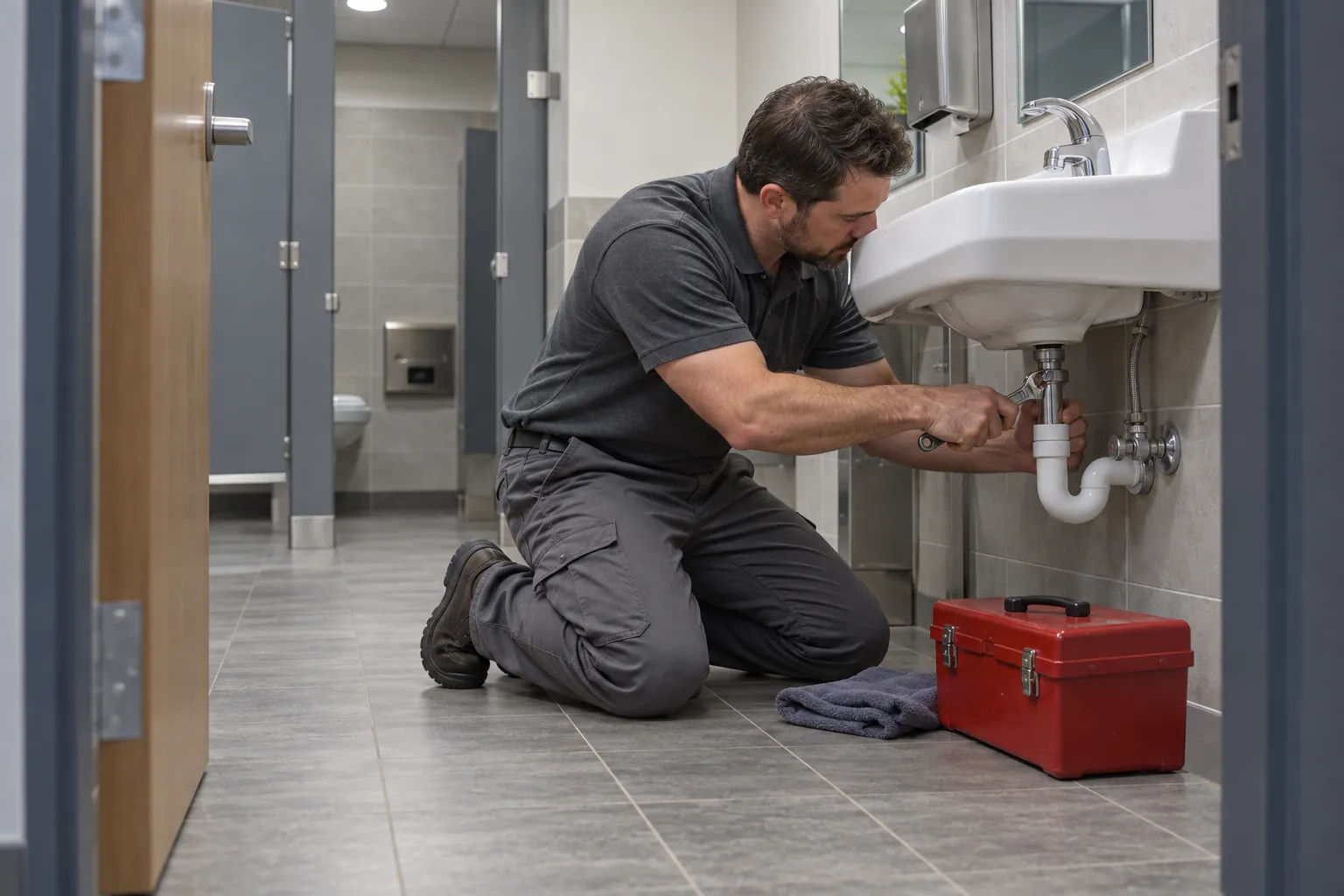 Premises and facilities managementReactive maintenance: how to run it well, and keep it in proportionHow to run reactive maintenance in a US facility: work order priorities, response times, what OSHA expects, the cost against preventive work, and vendors.
 Premises and facilities managementBuilding maintenance checklist: what the code expects, how often to check, and who does itA building maintenance checklist for US commercial buildings, built on the International Property Maintenance Code: daily to annual tasks, who does each, the record.
 Premises and facilities managementFacility management SLA: setting service levels you can actually checkHow to write a facility management SLA: help desk and work order priorities, PM, janitorial and security service levels, credits, and the records behind them.