Premises and facilities management
Near miss reporting: catching the close calls before they become injuries
A near miss report is a short record of a close call, an incident that could have killed, injured or made someone ill but did not, made so that the hazard behind it is fixed before it hurts anyone.
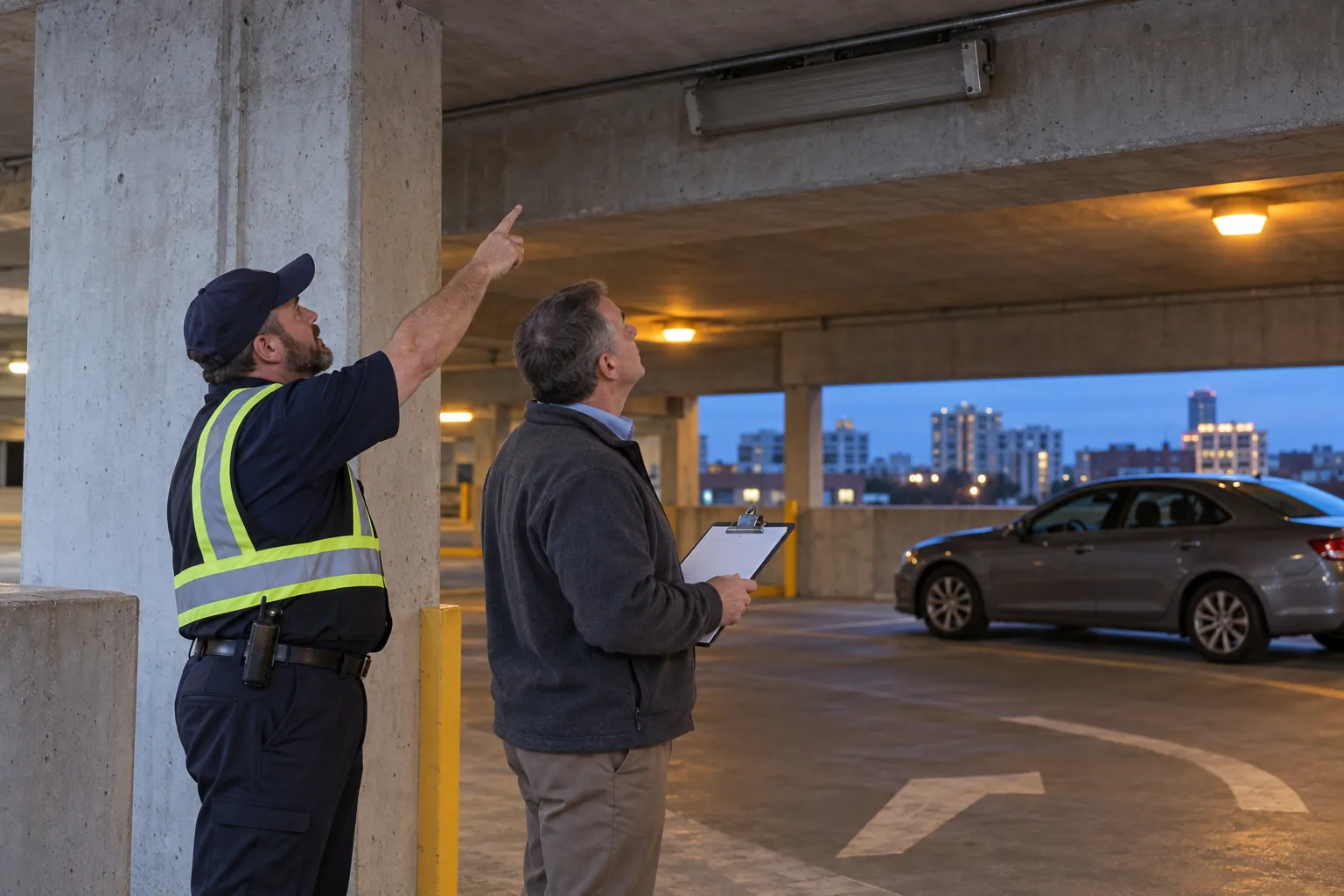
A near miss is the fall that did not happen, the ceiling tile that dropped into an empty hallway, the car that stopped a foot short of the officer on patrol. Nobody is hurt, so nothing has to be written down, and that is exactly why most near misses are lost. This guide covers what OSHA says about close calls, what counts as one in a building, what a near miss report should capture, and how to follow reports up so that people keep making them.
01
What a near miss is, and where OSHA stands
OSHA's Recommended Practices for Safety and Health Programs (OSHA 3885, October 2016) define a close call or near miss as "an incident that could have, but did not, result in death, injury, or illness," and add the reason it matters: close calls "signal that hazards are not being adequately controlled or that new hazards have arisen." OSHA's Incident Investigation page puts it more simply: a situation in which a worker might have been hurt if circumstances had been slightly different.
OSHA prefers incident to accident, and uses it for a fatality, an injury, an illness or a close call. That is the case for near miss reporting: the hazard that nearly hurt someone on Monday hurts someone on Thursday, and the only difference is luck.
There is no general federal OSHA requirement to report or record near misses. The narrow exception is process safety management at facilities handling highly hazardous chemicals (29 CFR 1910.119(m)), which rarely applies to an office, school or residential building. The recordkeeping rule, 29 CFR Part 1904, is about work-related injuries and illnesses, and its employee involvement section, 29 CFR 1904.35, requires "a reasonable procedure for employees to report work-related injuries and illnesses promptly and accurately". It says nothing about close calls. The Recommended Practices are, in their own words, "recommendations only", and nobody is cited for not following them, but they are OSHA's clearest statement of what a working safety and health program looks like, and near miss reporting runs all through them.
02
What counts as a near miss in a building
People under-report close calls partly because they are not sure what qualifies. The test is the one in the definition: could someone have been hurt if things had been slightly different? In offices, schools, hospitals, residential buildings and parking structures, the near misses that janitorial, security, engineering and property staff see every week look like this:
- Slips and trips caught in time: a custodian's foot goes out on a freshly mopped lobby floor with no wet floor sign; a tenant catches a heel on a lifted carpet seam and grabs the handrail.
- Falling objects: a ceiling tile, light diffuser or loose sign falls into a hallway that happened to be empty; a box slides off a high storage shelf in a janitor closet.
- Ladders and heights: a stepladder shifts on a waxed floor while a day porter is changing a lamp; someone stands on a chair or a mop bucket to reach something.
- Vehicles: a security officer on foot patrol is nearly struck by a car reversing out of a parking garage space; a delivery truck backs toward the loading dock with nobody spotting.
- Chemicals: a spray bottle of disinfectant with no label; a splash toward the eyes while decanting concentrate without goggles; two products mixed in a restroom that gave off fumes.
- Electrical and mechanical: a floor scrubber cord with damaged insulation; an electrical panel door that shocks; a guard left off a machine in the mechanical room.
- Stairs and sharps: a stair tread coming loose underfoot; a needle found by feel in a restroom trash bag.
Separate three neighboring things. A hazard is a condition that has not yet come close to hurting anyone: the lifted seam before anyone tripped. A near miss is an event: someone tripped and was not hurt. A first aid case is an injury, however minor, and belongs in the injury route and a full incident report, described in the workplace incident report guide. OSHA's Recommended Practices ask for one simple way to report all of them: nobody on a night shift should have to choose a form before saying that something nearly went wrong. And a report about a person's character ("Jim is careless") is not a near miss; "I nearly fell over a mop bucket in the dark stairwell at 6:40" is, and it points at something fixable.
03
What a near miss report should capture
The third of the "10 easy things to get your program started" in OSHA's Recommended Practices is "implement a reporting system": develop and communicate "a simple procedure for workers to report any injuries, illnesses, incidents (including near misses/close calls), hazards, or safety and health concerns without fear of retaliation", and "include an option for reporting hazards or concerns anonymously." Simple is the operative word. A four-page form gets filled in once, to show it exists.
Whether the report is a paper form or a digital one, it needs only a few fields, and most of them can be captured in under a minute:
- Where, precisely: the building, floor and location, such as level P2 near the east ramp.
- When: the date and time it happened, which may not be when it was reported.
- What happened, in the reporter's own words.
- What could have happened: a fall, a vehicle strike, a chemical in the eye. This sets the priority.
- A photograph of the condition, where it is safe to take one. OSHA's incident investigation guide lists photographs and video among the ways to document a scene, and a picture of a loose stair tread settles questions that a sentence cannot.
- Anything done on the spot: coned off, ladder taken out of service, spill cleaned up.
- Who reported it, unless they chose anonymity, so someone can go back to them with questions and with what was done.
Timing matters more than completeness: details fade within hours, and the next shift may clean up the cause without knowing it was there. Make the report possible from where the person is standing, in the language they write best. OSHA asks employers to "ensure that workers from all levels of the organization can participate regardless of their skill level, education, or language", and a form that only works in English hears from only part of a janitorial or security crew.
OSHA recommends an anonymous option "to reduce fear of reprisal". Its cost is that nobody can go back to an anonymous reporter with a question, or to say it was fixed, so many programs offer both: a named report by default, and an anonymous route for the reports people would otherwise not make.
04
Following up: triage, fixes and investigation
A near miss report is a request for action. OSHA asks employers to "respond to reports promptly" and to "report back to workers routinely and frequently about action taken". The follow-up is what makes the next report happen.
Sort each report by its risk: what could have happened rather than what did. A slip on a floor already signed and being mopped is worth a word at the next toolbox talk; a falling light fixture, a vehicle near miss in a busy garage or a stepladder failing under a porter deserves the same attention as an injury.
OSHA's Hazard Prevention and Control page sets out the hierarchy of controls: elimination, substitution, engineering controls, administrative controls and, last, personal protective equipment. It recommends interim controls "while you develop and implement longer-term solutions" (cones and a sign now, the flooring contractor next week) and a hazard control plan listing hazards in priority order, with who is responsible, a target date, progress tracking and a check that the control worked.
For the close calls with serious potential, investigate. OSHA's Incident [Accident] Investigations: A Guide for Employers (December 2015) "strongly encourages employers to investigate all workplace incidents", both those that cause harm and the close calls that could have caused harm under slightly different circumstances. It lays out a four-step systems approach:
- Preserve and document the scene, with cones, tape or a guard, and with photographs, video and a sketch.
- Collect information: through interviews and document reviews, including maintenance schedules and logs, training records and previous corrective action recommendations.
- Determine the root causes: program shortcomings, not a person.
- Implement corrective actions: the guide says the investigation "is not complete until corrective actions are implemented that address the root causes".
The guide is blunt: "If an investigation is focused on finding fault, it will always stop short of discovering the root causes," and if it is seen as a search for someone to blame, "workers will be afraid of retaliation." OSHA's Incident Investigation page makes the same point: concluding that carelessness or failure to follow a procedure alone was the cause "fails to discover the underlying or root causes." If a custodian stood on a bucket to reach a vent, ask why there was no stepladder on that floor. The accident investigation guide covers the method in more depth.
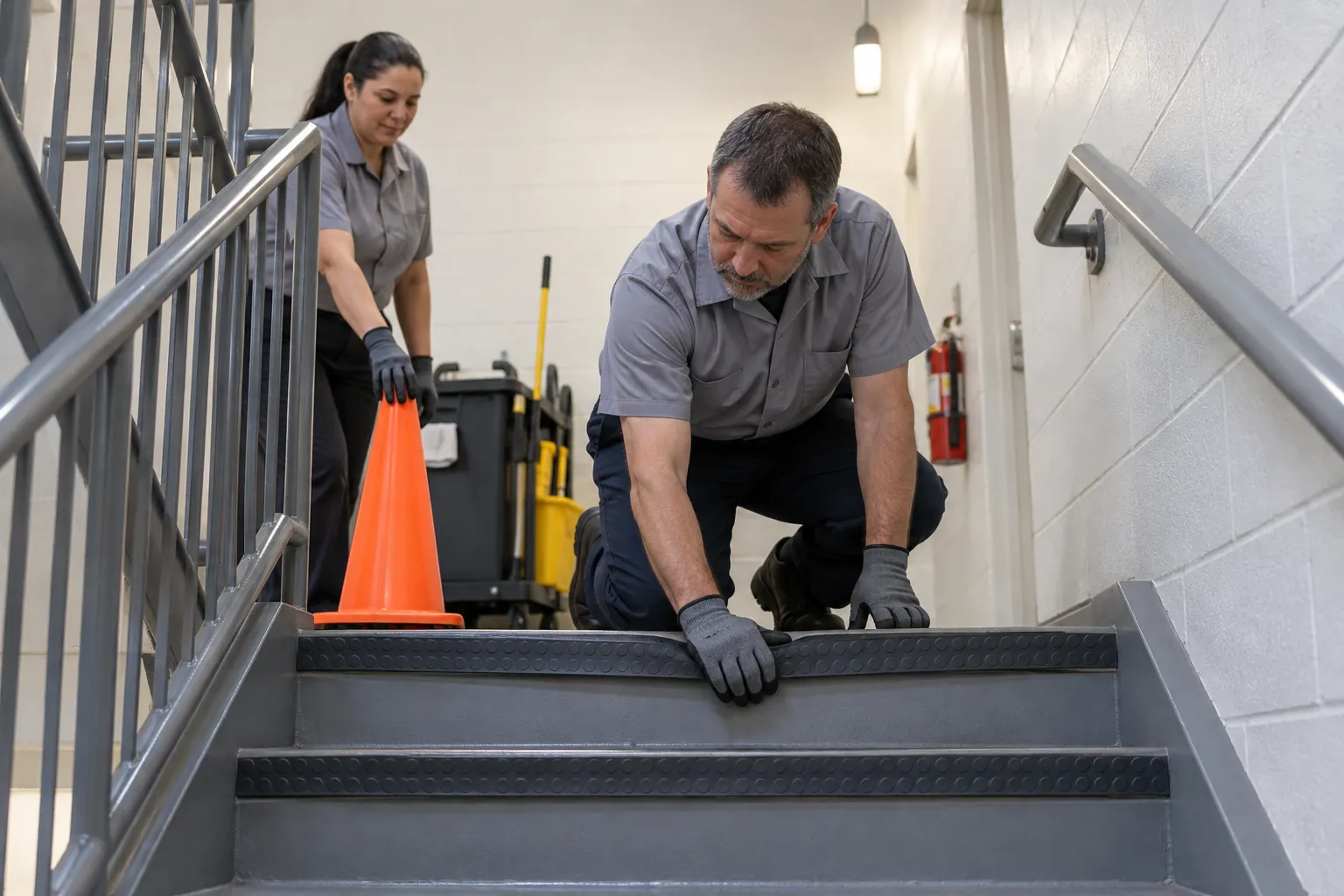
Look across reports as well as at each one. OSHA's Hazard Identification and Assessment guidance asks employers to "investigate injuries, illnesses, incidents, and close calls/near misses to determine the underlying hazards, their causes, and safety and health program shortcomings," and the Recommended Practices add: group similar incidents and identify trends. Three near misses on one stairwell in a month is a finding no single report shows.
05
Making people report: retaliation, incentives and contractors
Near miss programs usually fail on trust, not on forms. If the last person who reported a close call was written up, nobody will report the next one.
For injuries, 29 CFR 1904.35 forbids discharging or discriminating against employees for reporting, and says "a procedure is not reasonable if it would deter or discourage a reasonable employee from accurately reporting a workplace injury or illness." Section 11(c) of the Occupational Safety and Health Act of 1970 prohibits retaliation against employees for exercising their safety and health rights, including raising safety concerns. OSHA's Worker Participation guidance asks employers to "emphasize that management will use reported information only to improve workplace safety and health and that no worker will experience retaliation for bringing such information to management's attention."
Incentives cut both ways. The Recommended Practices warn that incentive programs "should be designed in a manner that does not discourage injury and illness reporting," and note that mandatory drug testing after injuries "can also suppress reporting." OSHA points the other way: recognize the activities that prevent harm, such as "reporting close calls/near misses, attending training, conducting inspections."
Most janitorial, security and engineering staff do not work for the building owner. The Recommended Practices call these "multiemployer" worksites and give "long-term contractors providing building cleaning and maintenance" as an example. Their seventh core element says contractors and their workers should know how to contact the host employer "to report an injury, illness, or incident or if they have a safety concern," and that the host's own people should know how to reach the contractor. In practice, agree in the contract or post orders who a contractor's worker reports to, who owns a fix to the building (a loose tread) rather than the contractor's equipment (a frayed scrubber cord), and how each side hears the outcome.
Measure the reporting, but carefully. OSHA's Program Evaluation and Improvement guidance lists the "number of hazards, near misses and first aid cases reported" and the "amount of time taken to respond to reports" among its leading indicators. More reports after a relaunch is usually good news, and a target to reduce them is a target to stop hearing about them. Response time is the more honest measure, because management controls it.
06
Where the record fails, and what SiteClara does about it
Near miss reporting fails in familiar ways. The form lives in a binder in the security office, so the officer nearly hit on level P3 at 2 a.m. mentions it at pass-down and it goes no further. The custodian who slipped tells whoever is passing. A report reaches the facility manager by email and is forwarded to the flooring contractor, and nobody tells the custodian it was fixed, so next time they do not bother. After someone is hurt on the same stairs, nobody can show whether the hazard was reported or what was done.
SiteClara works where these reports start, in the building itself. A printed QR poster goes at each location, such as a restroom, a stairwell, a loading dock or a level of a parking garage, with an optional NFC tag behind it. Staff scan the code or tap the tag on their own phone, with no app to install, and sign in with a link. At that location they see the checks due and mark each one done, or say what stopped them. A problem, such as a loose stair tread, a failed light or a spill, is reported there with a photo and goes onto the team's list of jobs until someone closes it.
The supervisor sees what is due, done and missed, and can record why a check was missed. A job that belongs to the building rather than the crew can be escalated to the building manager to answer. Each day the supervisor reviews and approves a report that goes to nominated management or client contacts at 8 a.m. the next morning, showing what was reported, completed and still open. After a near miss, that record shows when the condition was reported, where, with what photo, and when the job was closed.
07
Questions people ask
Does OSHA require near miss reporting?
Not in general. 29 CFR 1904.35 requires employers to "establish a reasonable procedure for employees to report work-related injuries and illnesses promptly and accurately" and forbids discrimination against an employee for reporting one, but it says nothing about near misses or close calls. OSHA recommends a near miss reporting process in its Recommended Practices, which are not enforceable, and some State Plans ask for more, as the note above explains.
Is reporting a near miss mandatory?
Only in narrow cases under federal OSHA. The process safety management standard, 29 CFR 1910.119, Process Safety Management of Highly Hazardous Chemicals, requires the employer to "investigate each incident which resulted in, or could reasonably have resulted in a catastrophic release of highly hazardous chemical in the workplace," to start within 48 hours, and to keep the report for five years. Outside that, whether staff must report close calls is a matter for the employer's own program and, in some states, the State Plan.
How do you write a near miss report?
Say where and when it happened, what happened, what could have happened and what would stop it happening again. The Near-Miss Incident Report Form template, produced under an OSHA grant, asks for the department and building or work area, the date and time, optional witnesses, the type of near miss and of concern (an unsafe act, an unsafe condition of an area or of equipment, unsafe use of equipment or a safety policy violation), a detailed description of the potential incident and its possible outcome, why the unsafe act or condition was there, and recommendations to prevent a similar incident. The reporter's name is optional, and a supervisor or the office signs it. It defines a near miss as an event in which, "given a slight shift in time or position, damage or injury easily could have occurred."
What are the 10 most common OSHA violations?
OSHA's Top 10 Most Frequently Cited Standards for fiscal year 2025 are, in order: fall protection general requirements (construction), hazard communication, ladders (construction), lockout/tagout, respiratory protection, scaffolding, fall protection training, powered industrial trucks, eye and face protection (construction) and machine guarding. Several match close calls in buildings: an unlabeled chemical, a ladder that shifts, a machine left unguarded or energized.
08
Where to read more, and a list to take away
Start with OSHA's Recommended Practices for Safety and Health Programs, especially the worker participation, hazard identification and program evaluation elements, each of which has its own page under OSHA Safety Management. For investigating the serious ones, read Incident [Accident] Investigations: A Guide for Employers, which includes a sample investigation form and root cause questions. For the rules on injury reporting and retaliation, read 29 CFR 1904.35. In California, read 8 CCR 3203; elsewhere, check OSHA's State Plans page to see whether your state runs its own program.
Before you relaunch near miss reporting in your buildings, check that:
- everyone on site, contractors' staff included, knows what a near miss is, with examples from their own work;
- there is one simple way to report, on the spot, in the languages your crews use, and an anonymous route;
- a named person triages every report by its potential and sets interim controls the same day;
- serious close calls are investigated for root causes, not blame;
- each reporter hears what was done;
- the contract or post orders say who a contractor's worker reports to and who owns a fix to the building;
- incentives reward reporting, never a clean injury count;
- someone looks for patterns each month and tracks how long reports take to answer.
Sources
Every document this guide quotes or links to, in the order it first cites them.
- Recommended Practices for Safety and Health Programs osha.gov
- Incident Investigation osha.gov
- 29 CFR 1904.35 osha.gov
- State Plans osha.gov
- 8 CCR 3203 dir.ca.gov
- Hazard Prevention and Control osha.gov
- Incident [Accident] Investigations: A Guide for Employers osha.gov
- Hazard Identification and Assessment osha.gov
- Worker Participation osha.gov
- Program Evaluation and Improvement osha.gov
- 29 CFR 1910.119, Process Safety Management of Highly Hazardous Chemicals osha.gov
- Near-Miss Incident Report Form osha.gov
- Top 10 Most Frequently Cited Standards osha.gov
- OSHA Safety Management osha.gov
Related guides
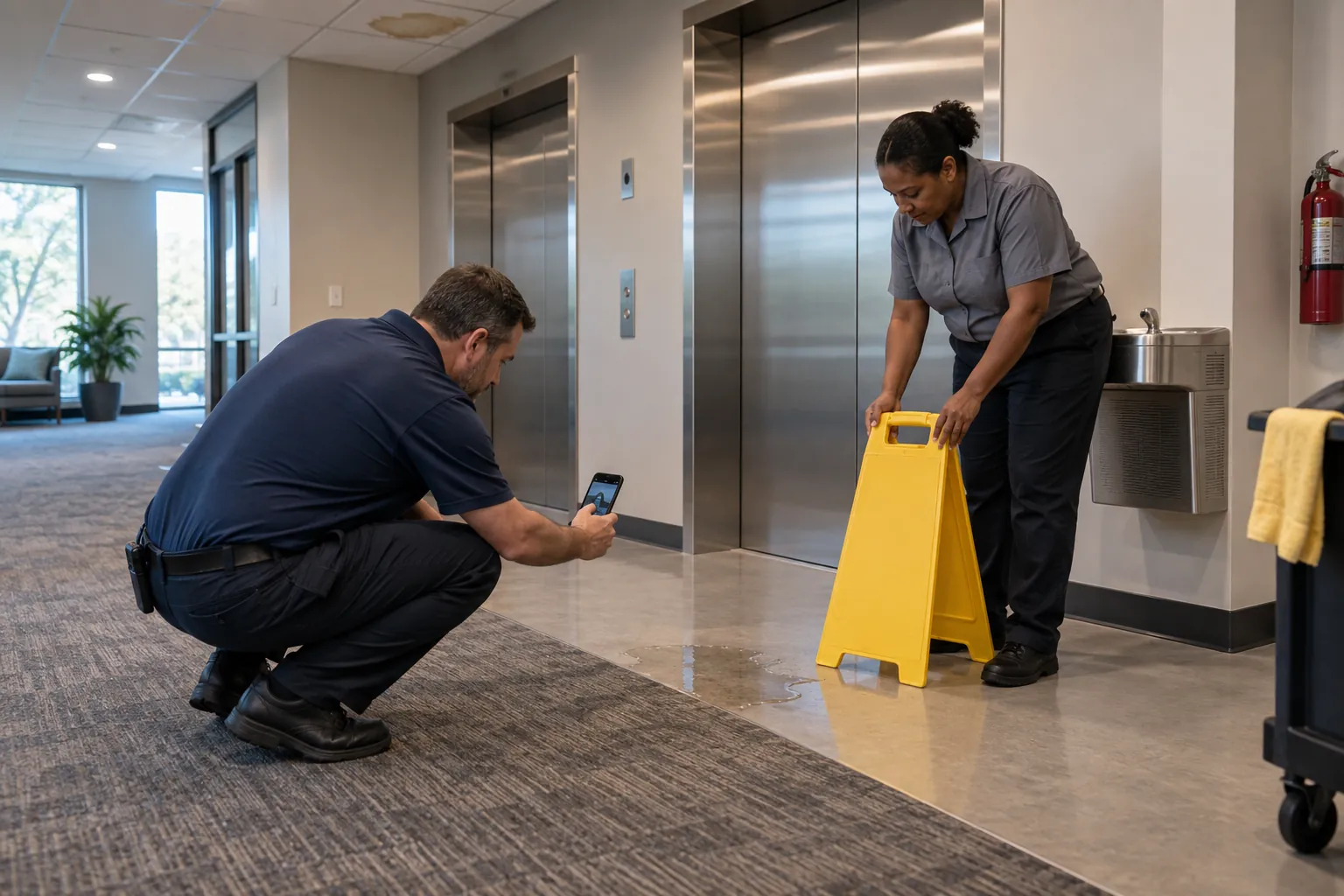 Premises and facilities managementThe workplace incident report: what to write, when, and who needs to see itHow to write a workplace incident report: what to include, the OSHA 301 and its seven-day rule, the 8- and 24-hour calls to OSHA, and what happens next.
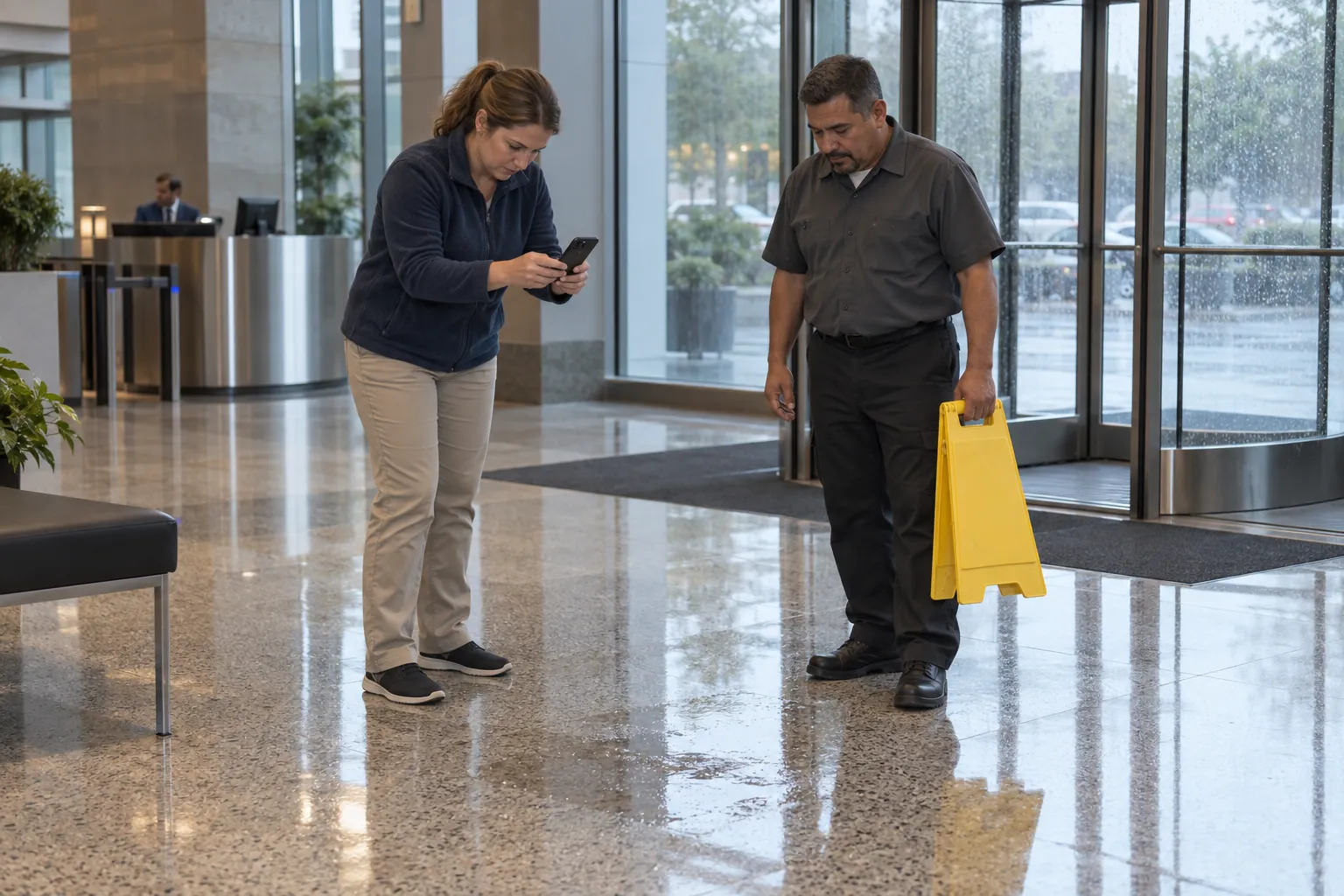 Premises and facilities managementAccident investigation: finding out why it happened, not who to blameHow to investigate a workplace accident in a U.S. building: OSHA's four steps, the scene, interviews, root causes, corrective actions and the records that matter.
 Premises and facilities managementSafety walkthroughs: how to walk a building, talk to the crew and fix what you findWhat a safety walk is under OSHA's Recommended Practices, what to look at in a commercial building, how often to walk, how to record findings and close them out.
 Premises and facilities managementThe OSHA 300 log: what to record, when, and how to keep it honestWho must keep the OSHA 300 log, which injuries are recordable under 29 CFR 1904, the seven-day rule, the 300A posting and what the working record needs.