Premises and facilities management
The workplace incident report: what to write, when, and who needs to see it
A workplace incident report is the first written account of something that went wrong at work: an injury, an illness, or a close call that could have hurt someone.
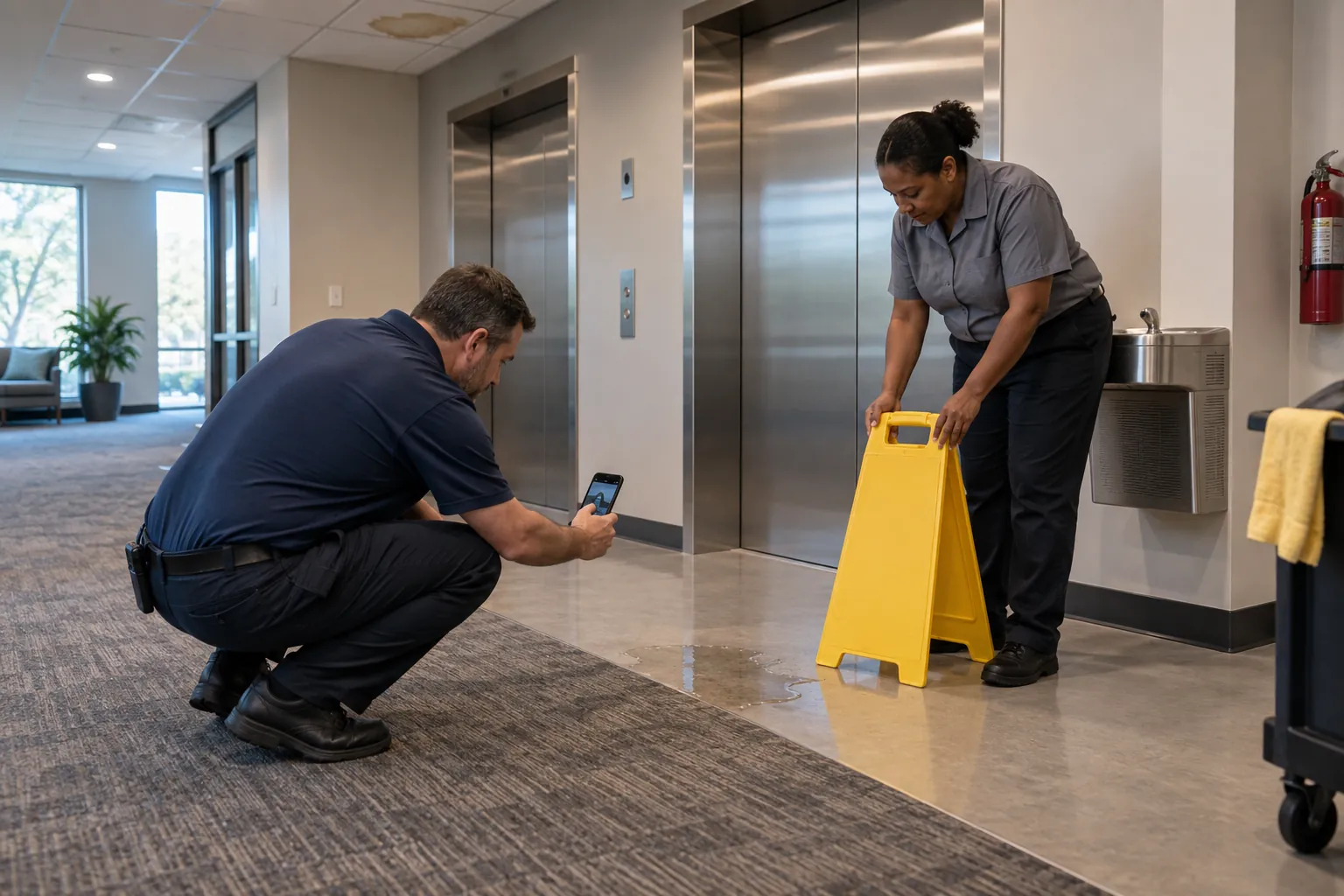
For many U.S. employers it becomes the OSHA 301, which federal rules require within seven calendar days of learning of a recordable case, and a severe injury also has to be phoned in to OSHA within hours. This guide covers what the rules require, what a good report contains, the deadlines that start the moment you hear about it, and what should happen after the report is filed.
01
What a workplace incident report is, and what the law requires
An incident report records who was involved, where and when it happened, what they were doing, what went wrong and what was done about it. OSHA deliberately says incident rather than accident. Its guide Incident [Accident] Investigations: A Guide for Employers (December 2015) defines an incident as "a work-related event in which an injury or ill-health (regardless of severity) or fatality occurred, or could have occurred", and explains that "the vast majority of harmful workplace events do not 'just happen.'"
No federal rule makes every employer keep an internal incident form for every event. The federal requirement is narrower and firmer. Under OSHA's recordkeeping rule, 29 CFR 1904.29, "you must complete an OSHA 301 Incident Report form, or an equivalent form, for each recordable injury or illness entered on the OSHA 300 Log", and both must be done "within seven (7) calendar days of receiving information that a recordable injury or illness has occurred." An equivalent form is one that "has the same information, is as readable and understandable, and is completed using the same instructions as the OSHA form it replaces." The instructions in OSHA's recordkeeping forms package (Forms 300, 300A and 301) add that "some state workers' compensation, insurance, or other reports may be acceptable substitutes", but only if they contain everything the 301 asks for.
Three things narrow or widen that duty:
- Size and industry. Under 29 CFR 1904.1, a company with ten or fewer employees at all times during the last calendar year does not need to keep OSHA injury and illness records unless OSHA or the Bureau of Labor Statistics tells it in writing to do so. Some low-hazard industries listed in appendix A to 29 CFR 1904.2 are partially exempt as well.
- Severe injuries. The same section is clear that every employer covered by the OSH Act, including the small and the partially exempt, must still report a work-related fatality, in-patient hospitalization, amputation or loss of an eye to OSHA.
- State plans. OSHA's State Plans page lists 22 state plans covering private employers and state and local government workers, and seven covering only public-sector workers. State plans must be "at least as effective as OSHA", and several have their own reporting rules. Check which applies to your building before you rely on the federal text.
Workers' compensation adds a separate set of forms, set by each state. California is one example: California Labor Code section 5401 requires the employer to provide a claim form "within one working day of receiving notice or knowledge of injury" where the injury causes lost time beyond the shift or medical treatment beyond first aid. Your insurer or third-party administrator will tell you which of its own reports it needs and when.
02
What should be reported, and by whom
The OSHA 301 is only required for recordable cases, but a good internal reporting system asks for more than that, because you often cannot tell on the day whether a case will become recordable. A sprain treated with an ice pack is first aid; the same sprain becomes recordable if a doctor later prescribes medication or keeps the worker off their normal duties. Most employers ask for a report on:
- Any injury, however minor, including cuts, strains, slips and falls, burns from hot water or chemicals, and needlestick or sharps injuries, for example from a sanitary napkin disposal bin in a restroom or a trash bag.
- Any work-related illness or symptom, such as a rash after using a cleaning chemical, breathing trouble after mixing products, or signs of heat illness on a rooftop or in a mechanical room.
- Close calls, also called near misses: the ceiling tile that fell into an empty hallway, the ladder that slipped with nobody on it. OSHA's guide "strongly encourages employers to investigate all workplace incidents", including close calls.
- Violence, threats and assaults on staff, and threats made against them.
Anyone should be able to report, and in a building with contractors that includes the janitorial crew, the security officers, the day porter and the building engineer, not only the direct employees of whoever runs the facility. OSHA requires employers to make that easy. Under 29 CFR 1904.35 you must set up a reasonable procedure for employees to report work-related injuries and illnesses promptly and accurately, and "a procedure is not reasonable if it would deter or discourage a reasonable employee from accurately reporting a workplace injury or illness." You must tell employees how to report, tell them they have the right to report, and you "must not discharge or in any manner discriminate against any employee for reporting a work-related injury or illness."
In practice that rules out reporting routes that only work on a day shift. A night custodian who has to find a supervisor who went home at five has been given a procedure that discourages reporting, whatever the policy binder says.
03
What to include in a workplace incident report
The OSHA 301 is a sensible model even for incidents that will never be recordable, because it asks the questions an investigator, an insurer and OSHA all need answered. Its case section asks for the date, the time the employee began work, the time of the event, and four questions in plain words:
- What was the employee doing just before the incident occurred? The form asks for the activity and the tools, equipment or material, with examples such as "climbing a ladder while carrying roofing materials."
- What happened? How the injury occurred, for example "When ladder slipped on wet floor, worker fell 20 feet."
- What was the injury or illness? The part of the body and how it was affected, for example "strained back" or "chemical burn, hand."
- What object or substance directly harmed the employee? For example "concrete floor" or "chlorine."
The form also records the treating health care professional, any emergency room visit and any overnight in-patient stay. The 301 asks that its four narrative answers carry no personally identifiable information, such as names, phone numbers or Social Security numbers.
An internal report should add what the 301 does not ask for but an investigation will need:
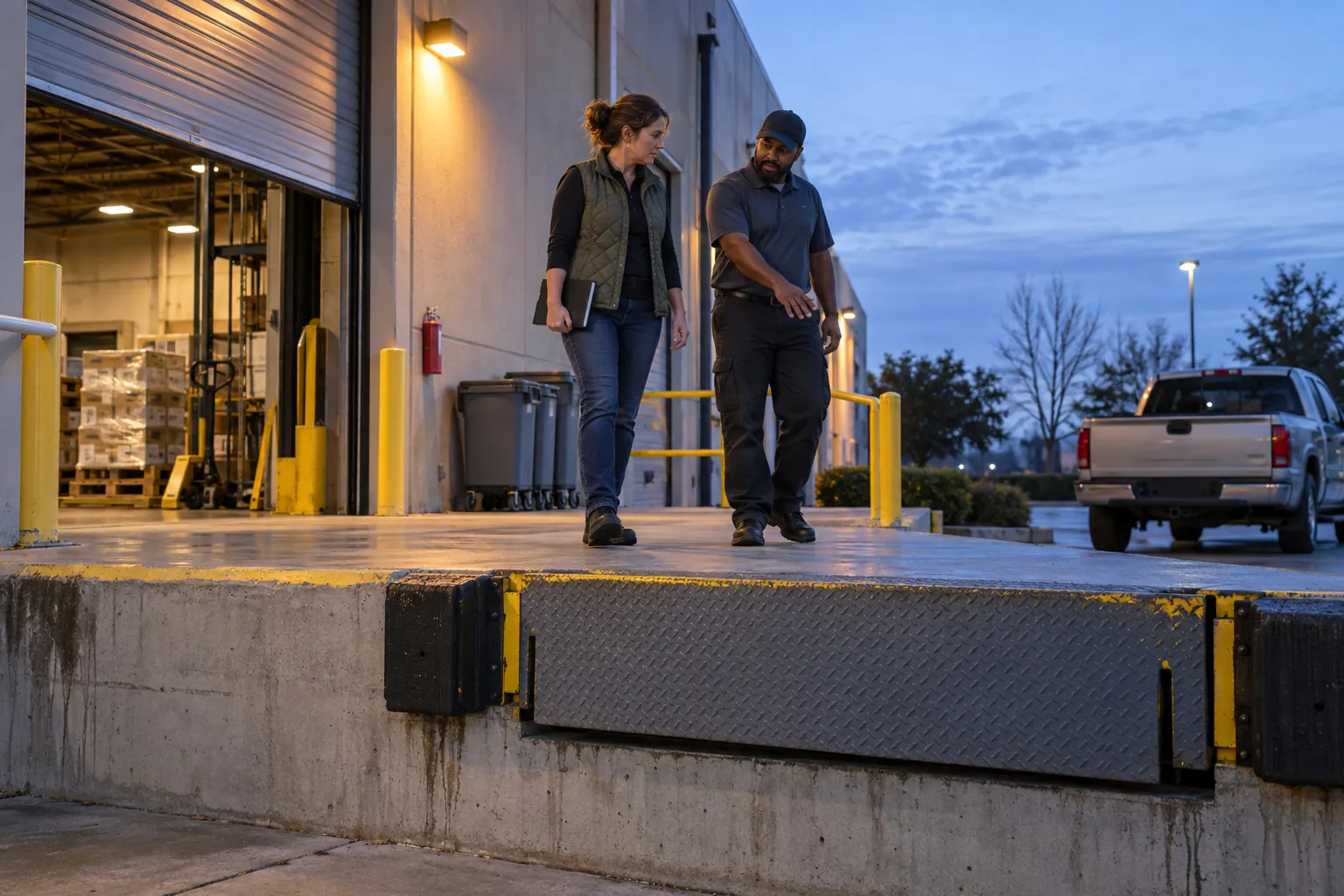
- The exact location, as specific as the OSHA 300 log's own example, "Loading dock north end": the building, floor, room or area, and the fixed point nearest to where it happened.
- Conditions at the time: lighting, a wet floor and whether a wet-floor sign was out, the state of the equipment.
- Witnesses, with how to reach them, and a short account from each in their own words.
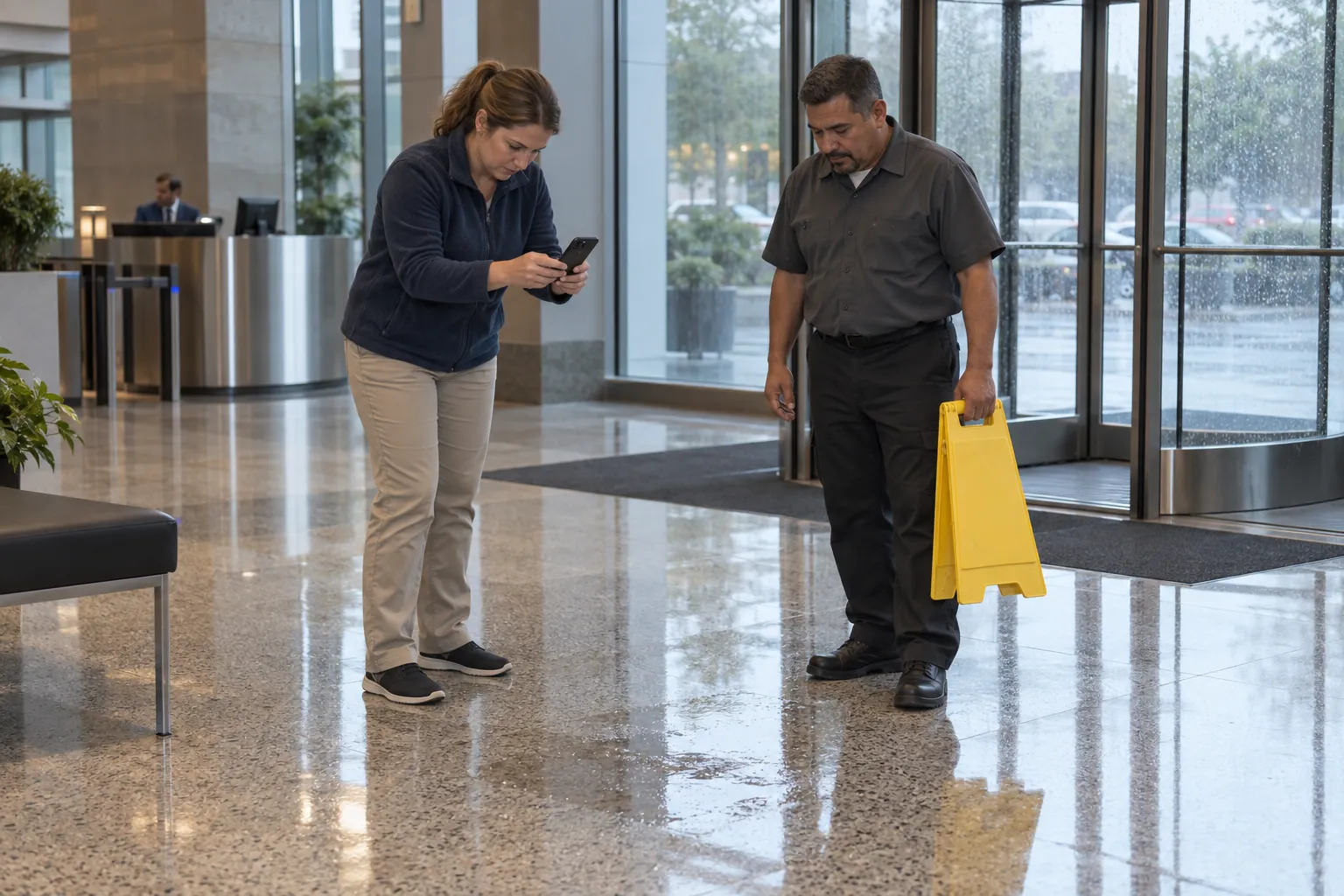
- Photographs of the scene, the equipment and the hazard, taken before anything is moved or cleaned where that is safe.
- What was done immediately: first aid given, the area coned off, the equipment tagged out, who was told and when.
- Who wrote the report and when, as distinct from when the incident happened.
Write facts, not conclusions. "Worker was careless" is not a cause; OSHA's guide quotes the safety researcher Sidney Dekker: "Human error is not the conclusion of an investigation. It is the starting point." Record what was seen and said, and leave the why for the investigation.
04
The clock: from the first hour to the seventh day
Several deadlines start from the moment the employer learns of an incident, which in a building with contractors may be later than the moment it happened. That gap is where most late reports come from. In order:
- First, care and safety. Get the injured person help, and make the area safe. OSHA's guide is explicit that before investigating "all emergency response needs must be completed and the incident site must be safe and secure."
- Preserve and document the scene. This is step one of OSHA's four-step approach: photographs, a sketch and notes before the spill is mopped or the ladder is put away, as far as safety allows.
- Within 8 hours: a fatality. Under 29 CFR 1904.39, a work-related death must be reported to OSHA within eight hours. It applies to a death within 30 days of the incident, and the eight hours run from when you learn of it.
- Within 24 hours: in-patient hospitalization, amputation or loss of an eye. The same section requires a report within 24 hours where the event happens within 24 hours of the incident. OSHA's page Report a Fatality or Severe Injury gives the options: the nearest area office, the 24-hour line at 1-800-321-OSHA (6742), or the online form. Under 29 CFR 1904.39 you must give the establishment name, the location and time of the incident, the type of reportable event, the number of employees who suffered it, their names, a contact person and phone number, and a brief description.
- State rules may be tighter. In California, Title 8, section 342 requires a serious injury, illness or death to be reported to Cal/OSHA immediately, meaning "as soon as practically possible but not longer than 8 hours", using the state's own definition of serious injury or illness.
- Within 7 calendar days: the OSHA 300 log entry and the 301. For recordable cases at establishments that must keep records.
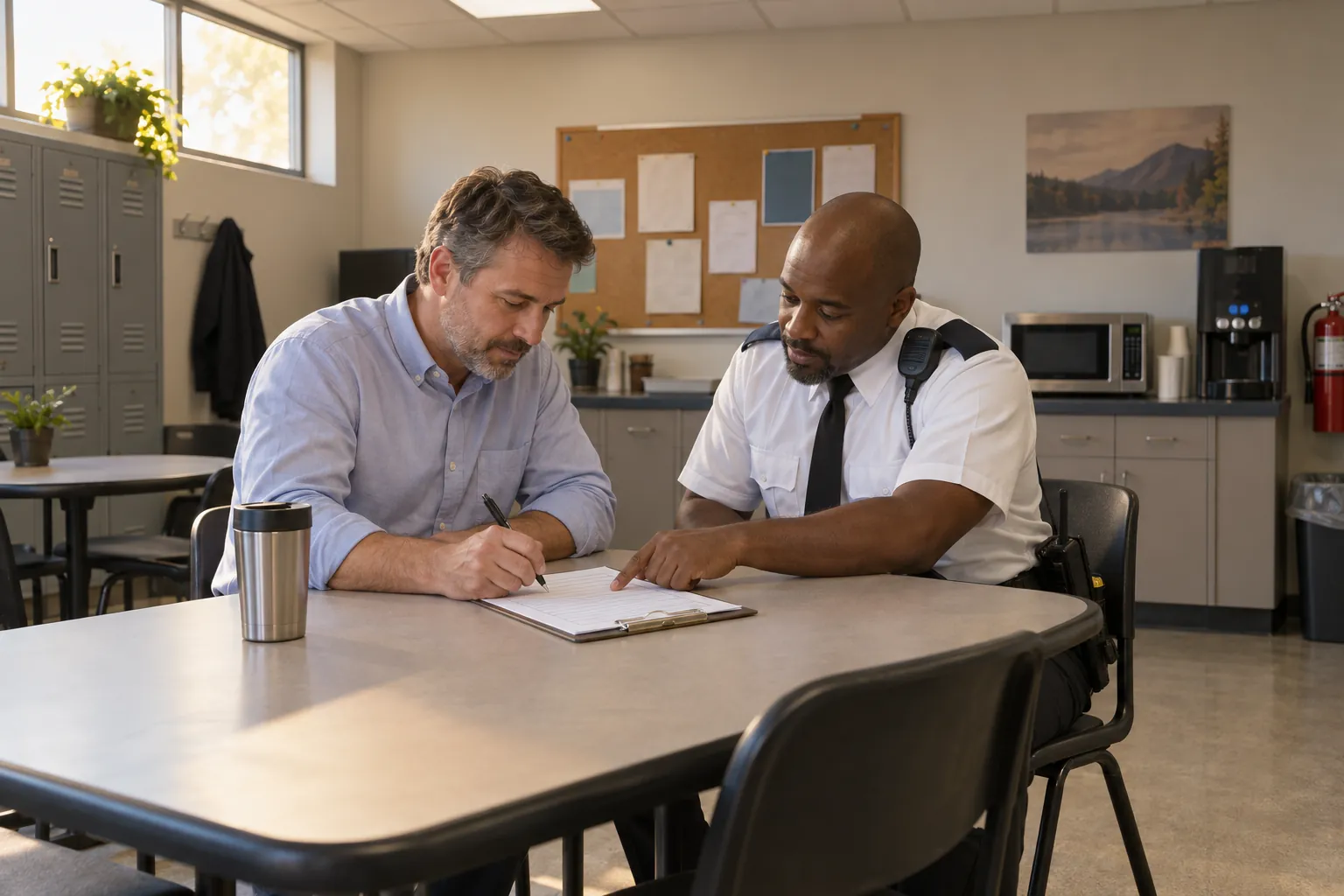
The seven days are generous when the report arrives on the day. They are not when the first the office hears of it is a doctor's note a week later. The practical deadline for the person on the floor is therefore the end of the shift: report the incident before you leave, even if the details are incomplete, and add to it afterward.
05
After the report: investigation, confidentiality and retention
A report on its own prevents nothing. OSHA's guide sets out a four-step systems approach: preserve and document the scene, collect information, determine the root causes, and implement corrective actions. It recommends that investigations be "conducted by a team in which managers and employees work together" and warns that "if an investigation is focused on finding fault, it will always stop short of discovering the root causes." A wet-floor fall is rarely just a wet floor: why was it wet, and why was nobody told about the leak? See our guide to accident investigation for the method in more detail.
Contracted services add a complication. The same guide says that where a staffing agency's temporary worker is involved, "both the staffing agency and the host employer should conduct an incident investigation", and that on a multi-employer worksite it "should be shared with each employer at the worksite." In an office tower that can mean the property manager, the janitorial contractor and the security company.
Confidentiality matters because the 301 carries health information. The form itself says it "must be used in a manner that protects the confidentiality of employees." Under 29 CFR 1904.29, privacy concern cases, such as a sexual assault, a mental illness or a contaminated needlestick, leave the employee's name off the log and on a separate confidential list. At the same time, 29 CFR 1904.35 gives an employee, a former employee or their personal representative the right to a copy of their own 301 by the end of the next business day, and an authorized employee representative is entitled to certain parts of the 301 forms, which you must provide within seven calendar days.
Keep the records. Under 29 CFR 1904.33, the OSHA 300 log, the privacy case list, the annual summary and the 301 forms must be kept "for five (5) years following the end of the calendar year that these records cover." You must update the stored 300 logs during that time; updating the 301 is optional. Internal reports for cases that never became recordable are not covered by that rule, but keeping them as long shows the patterns.
06
Where the record fails, and what SiteClara does about it
Incident reports usually fail before anyone picks up the form. The hazard that caused the injury had been noticed and mentioned to whoever was passing, but nobody wrote it down. The report itself is written days later from memory, with the location given as "the second floor" and the time as "afternoon." A night-shift officer tells the relief officer about a fall on the stairs, and the office hears about it when the doctor's note arrives. The sheet that should show the stairwell light was checked was initialed in advance.
SiteClara works upstream of the incident report, on the routine checks and the problems reported in the building. A printed QR poster goes at each location, such as a restroom, a stairwell, a loading dock or a mechanical room, with an optional NFC tag behind it. Staff scan the code or tap the tag on their own phone, with no app to install, and sign in with a link. They see the checks due at that location and mark each one done, or say what stopped them. A hazard, such as a leak, a loose handrail or a light out, is reported at the location with a photo, time-stamped and tied to the place, and goes onto the team's list of jobs until someone closes it.
The supervisor sees what is due, done and missed, and records why a check was missed; a job that needs the building manager can be escalated to them to answer. Each day the supervisor reviews and approves a report that goes to nominated management or client contacts at 8 a.m. the next morning, showing what was reported, what was completed, what is still open, and how the scheduled checks went. After an incident, that record helps an investigation answer the questions that matter: had the hazard been reported, when, and what was done about it.
07
Questions people ask
What accidents need to be reported at work?
Two federal duties apply. Under 29 CFR 1904.39, a work-related death must be reported to OSHA within eight hours, and an in-patient hospitalization, amputation or loss of an eye within 24 hours; a hospital stay only for observation or diagnostic testing does not have to be reported. Separately, 29 CFR 1904.7 makes a work-related case recordable, and so due an OSHA 301 where the employer keeps records, if it results in "death, days away from work, restricted work or transfer to another job, medical treatment beyond first aid, or loss of consciousness", or is a significant injury or illness diagnosed by a physician or other licensed health care professional. Good incident reporting procedures ask for more than the law does, including close calls.
Is there a free workplace incident report template or PDF?
Yes. OSHA's Recordkeeping Forms page offers Forms 300, 300A and 301 as fillable PDFs to download, in English with instructions and in Spanish. It adds that equivalent forms "may be maintained in any file format (e.g. Excel, CSV)", so your own incident report form can stand in for the 301 if it asks everything the 301 asks. Appendix A of Incident [Accident] Investigations: A Guide for Employers is a sample Incident Investigation Form for the follow-up.
How do you write a report about an incident at work?
Answer the questions on the OSHA 301 in the recordkeeping forms package (Forms 300, 300A and 301): what the employee was doing just before the incident occurred, what happened, what the injury or illness was, and what object or substance directly harmed them, with the date, the time work began and the time of the event. Then add the exact location, the conditions, each witness and how to reach them, photographs and the action taken at once. Keep the documentation accurate and factual, and leave the causes to the investigation.
08
Where to read more, and a list to take away
OSHA publishes the recordkeeping rule, 29 CFR Part 1904, section by section on its own site. The recordkeeping forms package includes the 301 with its instructions, and Incident [Accident] Investigations: A Guide for Employers includes a sample incident investigation form. In a state plan state, start from OSHA's State Plans page and read your state's own rule. For the log the 301 sits beside, see our guide to the OSHA 300 log, and for close calls, near miss reporting.
Before you rely on your incident reporting, check that:
- every employee and contractor on site knows how to report, on every shift, and that reporting will not be held against them;
- the form asks what the 301 asks, plus the exact location, conditions, witnesses, photographs and the immediate action taken;
- reports are made before the end of the shift, even if incomplete;
- someone on every shift knows the 8-hour and 24-hour calls to OSHA or your state plan, and who makes them;
- recordable cases reach the person keeping the 300 log well within seven calendar days;
- incidents are investigated for root causes, not blame, and with the other employers on a shared site;
- health information is kept confidential, and employees can get their own 301 by the next business day;
- 301 forms are kept for five years after the end of the year they cover.
Sources
Every document this guide quotes or links to, in the order it first cites them.
- Incident [Accident] Investigations: A Guide for Employers osha.gov
- 29 CFR 1904.29 osha.gov
- Recordkeeping forms package (Forms 300, 300A and 301) osha.gov
- 29 CFR 1904.1 osha.gov
- 29 CFR 1904.2 osha.gov
- State Plans page osha.gov
- California Labor Code section 5401 leginfo.legislature.ca.gov
- 29 CFR 1904.35 osha.gov
- 29 CFR 1904.39 osha.gov
- Report a Fatality or Severe Injury osha.gov
- Title 8, section 342 dir.ca.gov
- 29 CFR 1904.33 osha.gov
- 29 CFR 1904.7 osha.gov
- Recordkeeping Forms page osha.gov
Related guides
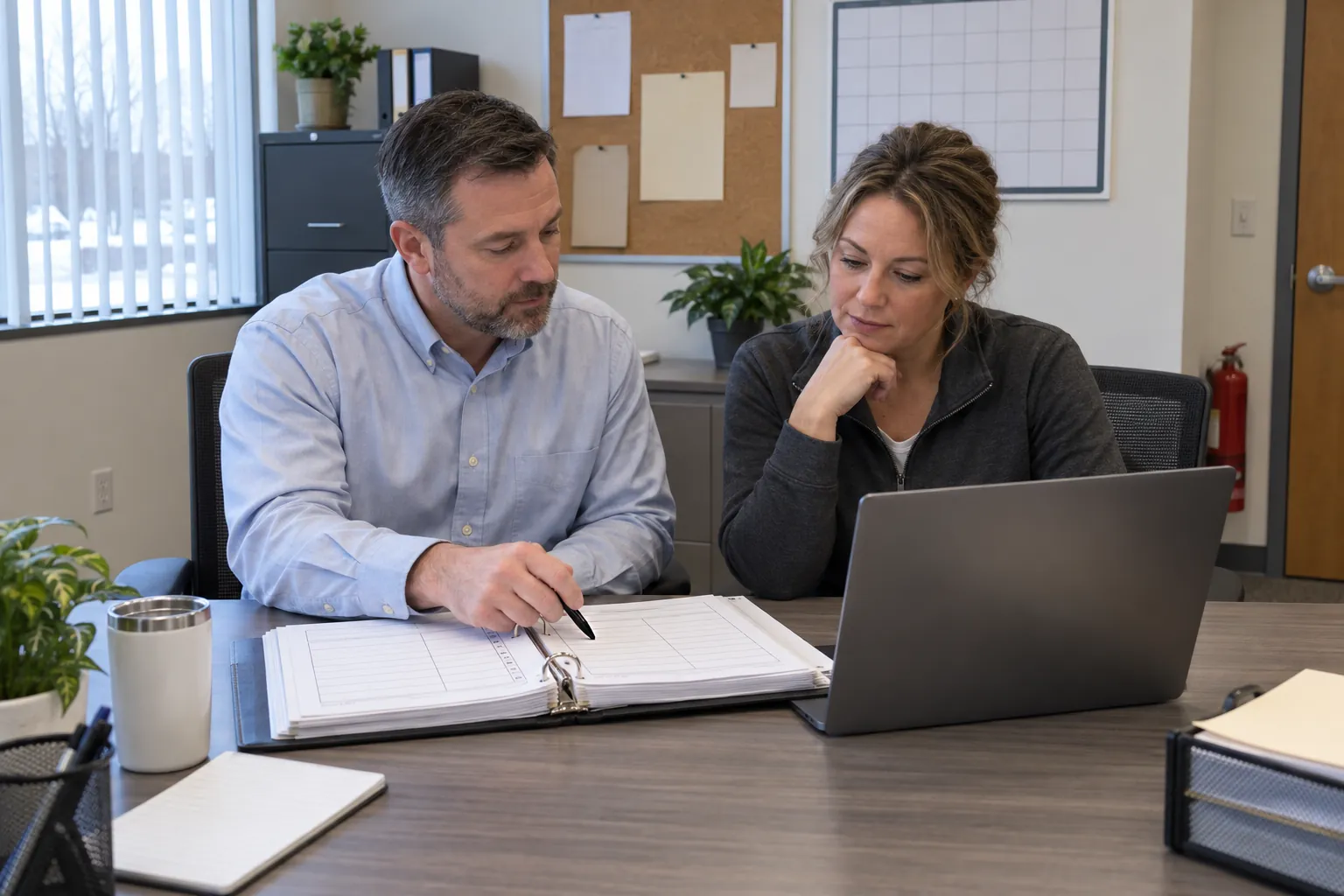 Premises and facilities managementThe OSHA 300 log: what to record, when, and how to keep it honestWho must keep the OSHA 300 log, which injuries are recordable under 29 CFR 1904, the seven-day rule, the 300A posting and what the working record needs.
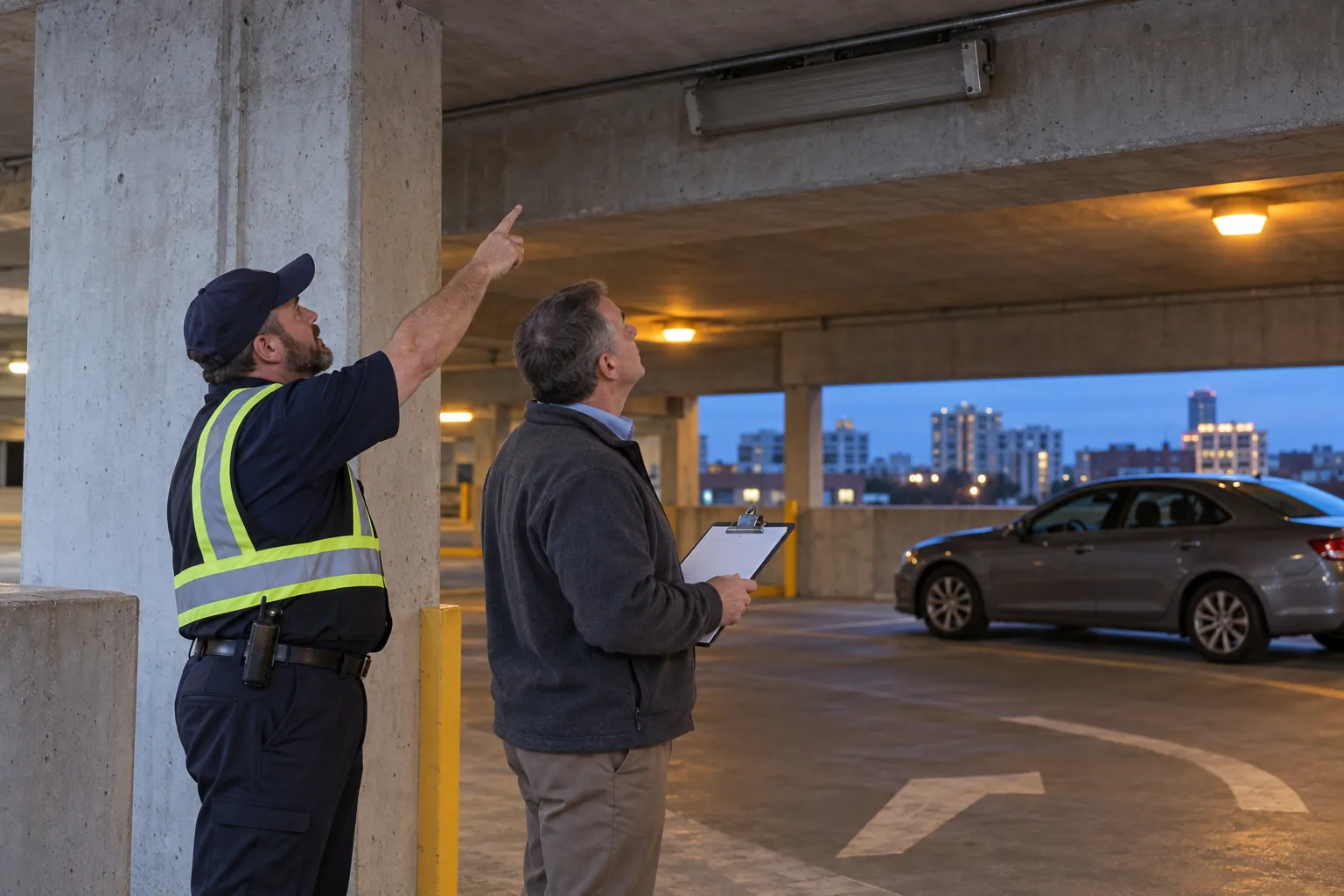 Premises and facilities managementNear miss reporting: catching the close calls before they become injuriesWhat counts as a near miss, what OSHA recommends, what a near miss report should capture, and how to follow it up so people keep reporting in your buildings.
 Premises and facilities managementAccident investigation: finding out why it happened, not who to blameHow to investigate a workplace accident in a U.S. building: OSHA's four steps, the scene, interviews, root causes, corrective actions and the records that matter.
 Premises and facilities managementSafety walkthroughs: how to walk a building, talk to the crew and fix what you findWhat a safety walk is under OSHA's Recommended Practices, what to look at in a commercial building, how often to walk, how to record findings and close them out.