Premises and facilities management
The OSHA inspection process: what happens, and what to have ready
An OSHA inspection is a visit by a federal or state compliance officer to check a workplace for unsafe conditions and for compliance with the Occupational Safety and Health Act and OSHA standards, and it usually comes without advance notice.
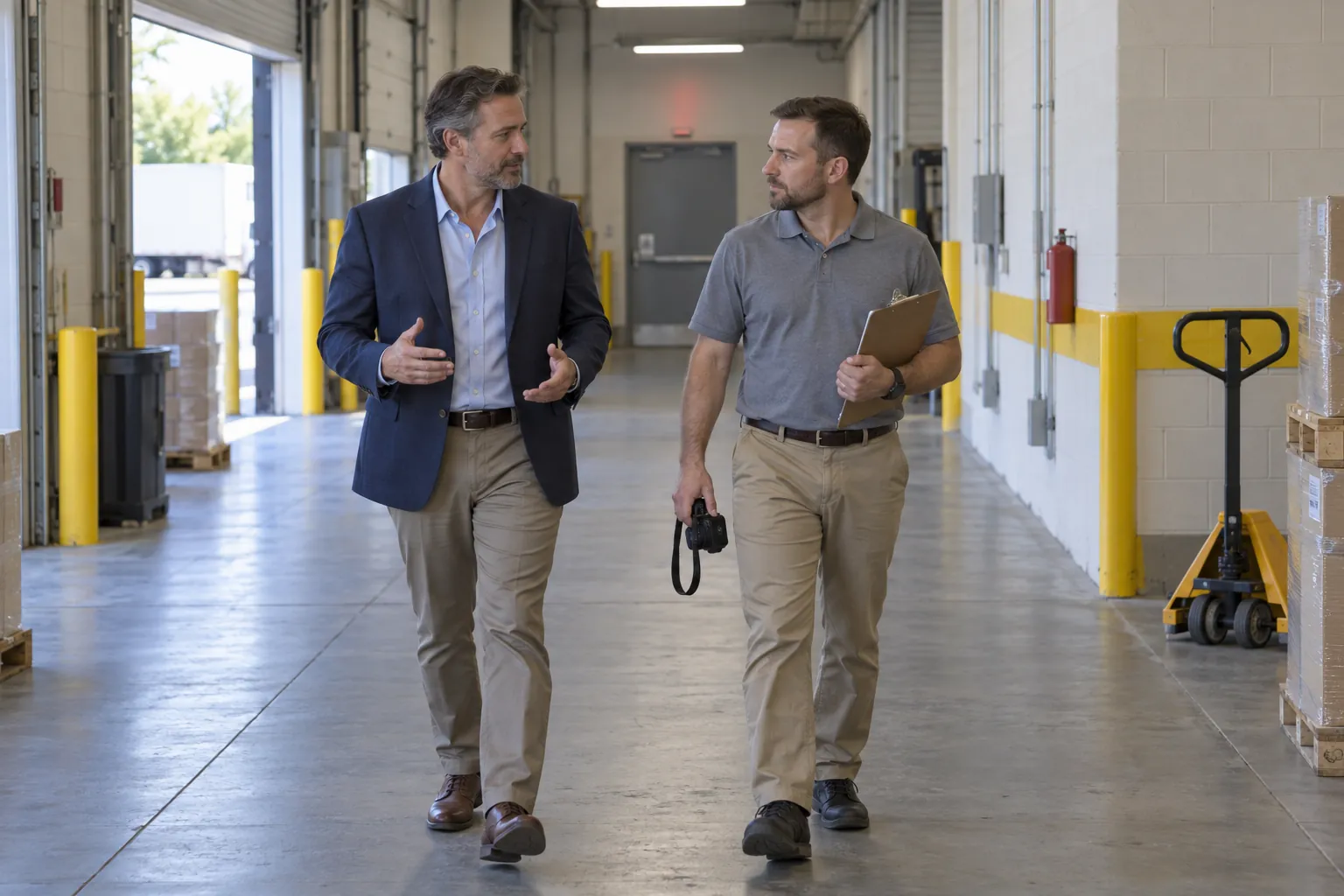
It often starts with a compliance officer at the front desk, credentials in hand. What happens next follows the OSH Act, 29 CFR Part 1903 and OSHA's Field Operations Manual, and most of it is predictable. This guide covers why OSHA inspects, what happens on the day, how citations, penalties and the 15-working-day contest period work, and how to show that a cited hazard was fixed, with a note on facility and building services teams working in someone else's building.
01
What an OSHA inspection is, and where the authority comes from
An OSHA inspection is a visit by a compliance safety and health officer (CSHO) to check a workplace against the Occupational Safety and Health Act of 1970 and the standards made under it. The power to inspect is in section 8 of the OSH Act: the Secretary of Labor, "upon presenting appropriate credentials to the owner, operator, or agent in charge, is authorized" to enter and inspect. The same section gives a representative of the employer and a representative authorized by employees "an opportunity to accompany" the inspector during the physical inspection.
The detail is in 29 CFR 1903.3, which lets compliance officers enter "without delay and at reasonable times" any place where an employee works, inspect "within reasonable limits and in a reasonable manner", question employers and employees privately, and review the records the Act requires and "other records which are directly related to the purpose of the inspection". How inspectors apply all this is set out in OSHA's Field Operations Manual (CPL 02-00-164), the enforcement directive in effect since April 14, 2020, with some chapters updated since.
Two points surprise people. First, there is normally no warning. Under 29 CFR 1903.6 advance notice "may not be given" except in narrow cases, such as apparent imminent danger or where special preparations are needed, and even then generally no more than 24 hours ahead. Second, the employer can ask for a warrant. OSHA's own OSHA Inspections fact sheet says employers "have the right to require compliance officers to obtain an inspection warrant before entering the worksite". Under 29 CFR 1903.4 a refusal leads the officer to stop or narrow the inspection and report it to the Area Director, who consults the Regional Solicitor about compulsory process.
02
Why OSHA comes: the inspection priorities
OSHA has jurisdiction over approximately 7 million worksites, so it focuses its inspection resources on the most hazardous workplaces. Its OSHA Inspections fact sheet gives the order of priority:
- Imminent danger: hazards that could cause death or serious physical harm.
- Severe injuries and illnesses: employers must report every work-related fatality within 8 hours, and every inpatient hospitalization, amputation or loss of an eye within 24 hours.
- Worker complaints alleging hazards or violations. Section 8(f)(1) of the OSH Act lets any employee who believes a violation threatens physical harm, or that an imminent danger exists, request an inspection.
- Referrals from other federal, state or local agencies, individuals, organizations or the media.
- Targeted inspections aimed at high-hazard industries or at individual workplaces with high rates of injury and illness.
- Follow-up inspections to check that violations cited earlier have been abated.
For lower-priority complaints, the fact sheet describes a phone and fax route instead of a visit: OSHA contacts the employer, sets out the alleged hazards, and the employer must respond in writing within five working days with the problems found and the corrective action taken or planned. If the response is adequate and the complainant is satisfied, OSHA generally will not go on site.
The reason for the visit sets its scope. The Field Operations Manual, chapter 3 distinguishes a comprehensive inspection, "a substantially complete and thorough inspection of all potentially hazardous areas of the establishment", from a partial one, limited to certain areas, operations, conditions or practices. Inspections that come from a complaint, referral or reported incident are generally partial.
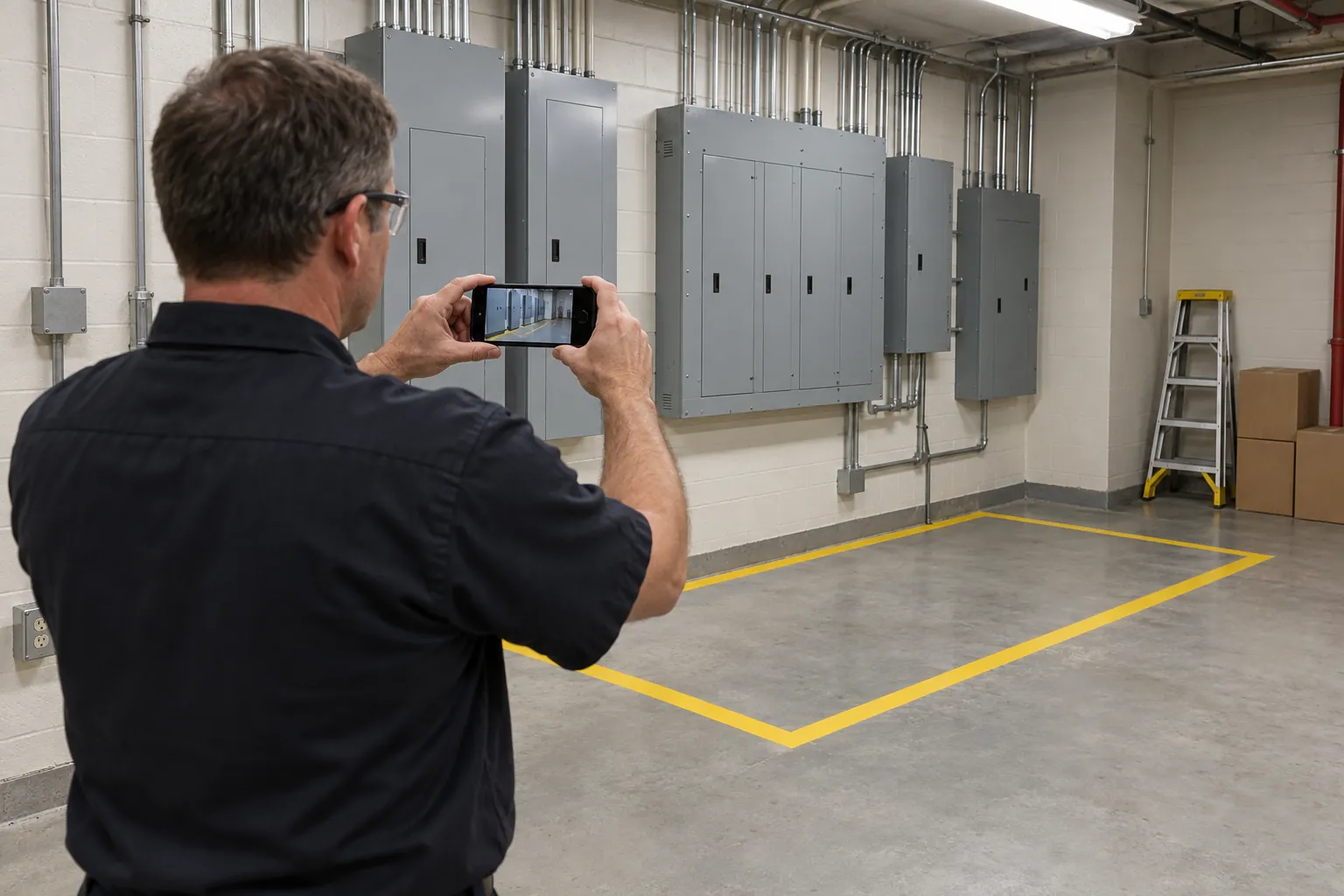
In ordinary commercial buildings, many of the conditions an officer could find are everyday ones: blocked or locked exit routes, missing guards on equipment, wet or damaged floors, chemicals with no safety data sheets or training, obstructed electrical panels, poor ladders, and injuries that were never logged.
03
On the day: credentials, opening conference, walkaround and closing conference
Under 29 CFR 1903.7, at the start of an inspection the officer presents credentials, explains "the nature and purpose of the inspection", and indicates its scope and the records to be reviewed. The fact sheet notes that credentials include a photograph and a serial number. The Field Operations Manual says the inspection "shall not be delayed unreasonably" to await the employer's representative, and that if the representative is coming from off site the wait should not exceed one hour.
- Opening conference. The officer explains why the workplace was selected, the scope, the walkaround and employee interviews. The employer picks a representative to accompany the officer. Under 29 CFR 1903.8 a representative authorized by employees also has an opportunity to accompany; the current text allows that representative to be an employee or, where the officer finds good cause, a third party. If there is no authorized representative, the officer consults a reasonable number of employees.
- Records review. Chapter 3 of the manual says that at the start of each inspection the officer reviews the injury and illness records, including the OSHA 300 logs, 300A summaries and 301 incident reports, for the three prior calendar years.
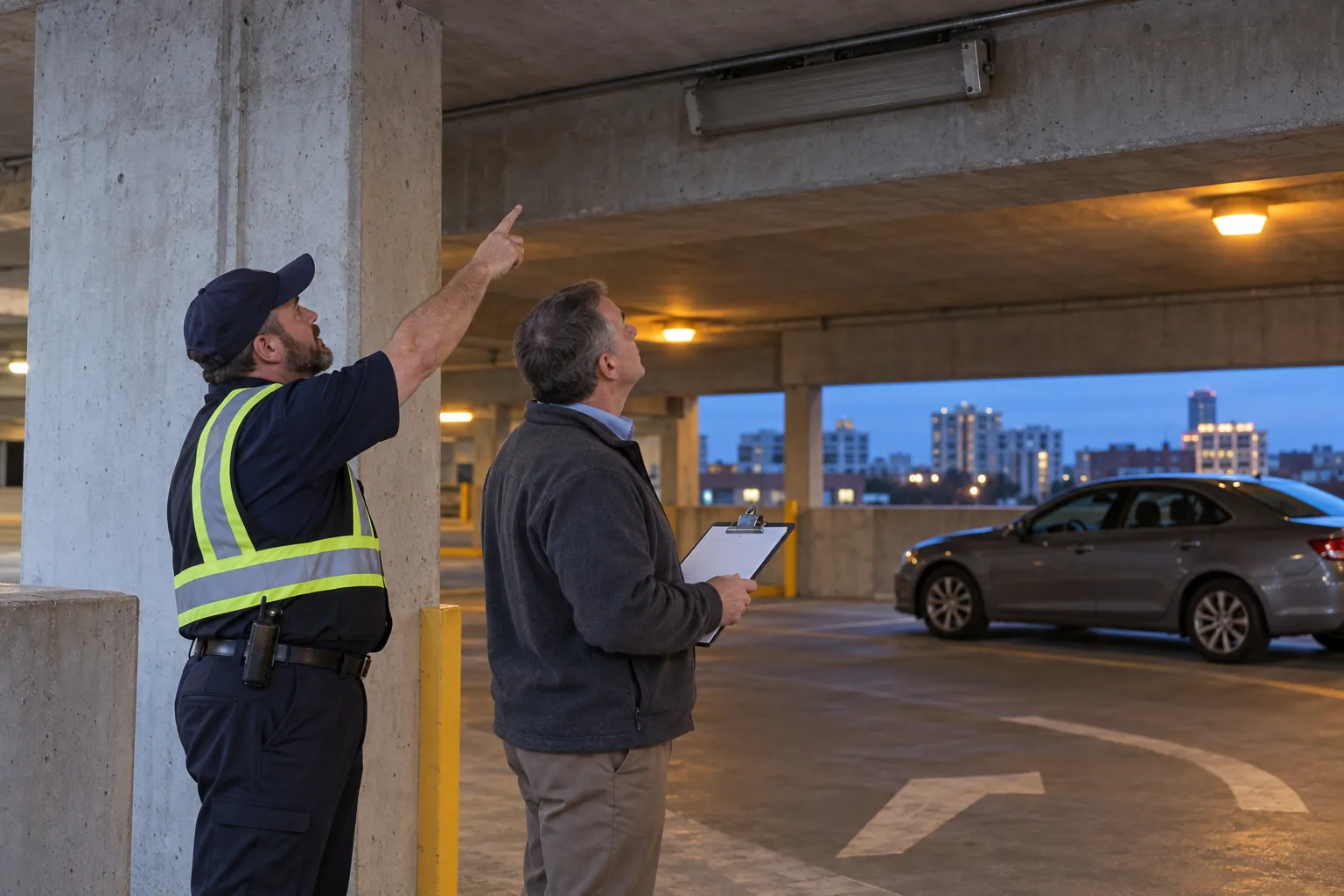
- Walkaround. The officer and the representatives walk the areas covered, looking for hazards. Section 1903.7 lets the officer take photographs and environmental samples and question people privately. The officer also checks that the official OSHA poster is displayed. The fact sheet notes that apparent violations corrected on the spot must still be cited, but "prompt correction is a sign of good faith".
- Employee interviews. Officers interview a reasonable number of employees, and section 1903.7(b) lets them do so privately.
- Closing conference. Under 1903.7(e) the officer informally advises the employer of apparent violations, and the employer can bring "any pertinent information regarding conditions in the workplace" to the officer's attention. The manual allows the closing conference to be held on site or by telephone, jointly or separately with employer and employee representatives.
Practical conduct on the day is mostly common sense. Be courteous, and ask for the officer's name and the reason for the visit. Take the same photographs the officer takes, and note what was said and seen. Fix what can be fixed safely while the officer is still there, and write down what was fixed and when.
04
Citations, penalties and the 15 working days
If the officer finds violations, OSHA can issue citations and proposed penalties. The fact sheet says OSHA must issue a citation and proposed penalty within six months of the violation. Each citation describes the requirement allegedly violated, lists any proposed penalty and sets an abatement date, the deadline for correcting the hazard. The Field Operations Manual, chapter 4 sets out the classifications:
- Serious: where there is "a substantial probability that death or serious physical harm could result", unless the employer did not know and could not have known with reasonable diligence.
- Other-than-serious: the most likely result would not be death or serious physical harm, but there is a direct and immediate relationship to safety and health.
- Willful: intentional disregard for the Act's requirements or plain indifference to employee safety and health.
- Repeated: a citation for the same or a substantially similar condition that has become a final order. By OSHA policy, generally within five years of the earlier final order or final abatement date, whichever is later.
- Failure to abate: a cited hazard that was not corrected by the abatement date.
- De minimis: a departure from a standard with no direct or immediate relationship to safety or health.
Maximum penalties are adjusted each year for inflation. OSHA's OSHA Penalties page lists, for penalties assessed after January 15, 2026, up to $16,550 per violation for serious, other-than-serious and posting violations, $16,550 per day beyond the abatement date for failure to abate, and $165,514 per violation for willful or repeated violations.
Once the citation arrives, three things matter.
- Posting. Under 29 CFR 1903.16 the employer must immediately post the citation, unedited, at or near each place the alleged violation occurred, or in a prominent place where affected employees will see it. It stays up "until the violation has been abated, or for 3 working days, whichever is later", even while the citation is being contested.
- Informal conference. The employer, any affected employee or the employees' representative can ask for an informal conference under 29 CFR 1903.20. The Field Operations Manual, chapter 7 says the Area Director or a designee holds it within the contest period and that it does not stop the clock.
- Contest. Under 29 CFR 1903.17 a notice of intention to contest must be in writing and postmarked within 15 working days of receiving the citation. Working days are Monday to Friday, excluding federal holidays. Chapter 7 is clear that oral notice does not count and that OSHA "has no authority to modify the contest period". A contest goes to the independent Occupational Safety and Health Review Commission. Anything not contested or settled becomes a final order.
The 15 working days pass quickly. Note the date of receipt and work out the deadline that day.
05
Abatement, and proving the hazard was fixed
An inspection is not over when the officer leaves. The Field Operations Manual says the case file "is not closed until the Agency is satisfied that abatement has occurred", and 29 CFR 1903.19, the abatement verification rule, sets what the employer must send.
- Certification. Within 10 calendar days after the abatement date, the employer certifies to OSHA that each cited violation has been abated, with the date and method of abatement and a statement that affected employees and their representatives have been informed. Certification is not needed where the officer saw the hazard corrected within 24 hours and noted it in the citation.
- Documentation. For each willful or repeat violation, and for serious violations where the citation says so, the employer sends documents showing abatement is complete. The rule gives examples: "evidence of the purchase or repair of equipment, photographic or video evidence of abatement, or other written records".
- Abatement plans and progress reports. Where abatement will take more than 90 calendar days, the citation may require a plan, due within 25 calendar days of the final order date, and periodic progress reports.
- Telling employees. The employer posts a copy or summary of each document sent to OSHA near the place where the violation occurred, and tells employees they may examine and copy it.
If the work genuinely cannot be finished in time despite a good-faith effort, an employer can file a petition for modification of abatement date under 29 CFR 1903.14a. Chapter 7 of the manual says it must be in writing, with the Area Director, no later than the close of the next working day after the original abatement date.
Good abatement evidence is ordinary evidence, made at the time: a dated photograph of the cleared exit route or the new guard, the work order or invoice, the name of whoever did the work, and a record that people were told.
06
Where the record fails, and what SiteClara does about it
Most inspection trouble starts well before the officer arrives. A blocked fire exit was mentioned to whoever was passing, and nobody wrote it down. A restroom check sheet on the back of the door is signed for the whole week by Tuesday. When OSHA asks what the employer knew and did, the answer is rebuilt from memory and email.
SiteClara works on that everyday record. A printed QR poster goes at each location, such as a restroom, a stairwell, an electrical room or a loading dock, with an optional NFC tag behind it. Staff scan the code or tap the tag on their own phone, with no app to install, and see the checks due at that location. They mark each one done, or say what stopped them. A problem, such as a blocked exit, a trip hazard or a missing guard, is reported there with a photo and goes onto the team's list of jobs until someone closes it, and a job that needs the building manager can be escalated to them to answer.
The supervisor sees what is due, done and missed, and records why a check was missed. Each day the supervisor reviews and approves a report that goes to nominated management or client contacts at 8 a.m. the next morning, showing what was reported, what was completed, what is still open, and how the scheduled checks went. If a complaint comes in, that record shows when a hazard was reported, who dealt with it and when it was closed, and a dated photograph of the fix can support your own abatement evidence.
07
Questions people ask
What does OSHA do during an inspection?
OSHA's OSHA Inspections fact sheet describes four stages on site: the compliance officer presents credentials, holds an opening conference to explain the scope, walkaround procedures and employee interviews, walks the covered areas inspecting for hazards and reviewing injury and illness records and the OSHA poster, and then holds a closing conference with the employer and employee representatives "to discuss the findings".
What can trigger an OSHA inspection?
The OSHA Inspections fact sheet lists six triggers in order of priority: imminent danger, reported fatalities and severe injuries or illnesses, worker complaints, referrals, targeted inspections of high-hazard industries or workplaces with high injury and illness rates, and follow-up inspections to check that earlier violations were abated.
How long can an OSHA inspection process take?
There is no fixed length. The Field Operations Manual, chapter 3 sets no overall time frame, and the visit depends on its scope: a comprehensive inspection covers "all potentially hazardous areas of the establishment", while a partial one is limited to certain areas, operations, conditions or practices. The process can run on after the visit, because the OSHA Inspections fact sheet says OSHA must issue a citation and proposed penalty within six months of the violation's occurrence, and the case stays open until abatement is verified.
What should I do if I feel an OSHA inspection is needed?
File a complaint. OSHA's File a Safety and Health Complaint page says a worker or their representative can file a confidential complaint "and request an OSHA inspection of your workplace if you believe there is a serious hazard or if you think your employer is not following OSHA standards". It can be filed online, by phone to a local OSHA office or 800-321-6742, by fax, mail or email, or in person, and as soon as possible after noticing the unsafe condition.
What are the 10 most common OSHA violations?
OSHA's Top 10 Most Frequently Cited Standards for fiscal year 2025 are fall protection (construction), hazard communication, ladders (construction), lockout/tagout, respiratory protection, scaffolding, fall protection training (construction), powered industrial trucks, eye and face protection (construction) and machine guarding. The list reflects OSHA citations after federal inspections across all industries, so many of the entries come from construction sites rather than occupied buildings.
08
Where to read more, and a list to take away
Start with OSHA's OSHA Inspections fact sheet, a two-page summary of the whole process. The rules are in 29 CFR Part 1903, Inspections, Citations and Proposed Penalties, and the inspector's own procedures are in the Field Operations Manual, especially chapters 3, 4 and 7. If you are in a state plan state, read your state agency's own inspection pages, found through OSHA's State Plans page. OSHA's On-Site Consultation Program offers no-cost, confidential help, primarily for smaller businesses, "separate from OSHA enforcement".
Before an officer arrives, check that:
- you know whether federal OSHA or a state plan covers each workplace;
- front desk, security and night staff know who to call when an inspector arrives, and that person can be there within the hour;
- one person is named to accompany the officer, and knows to stay within the stated scope;
- the OSHA 300 logs, 300A summaries and 301 reports for the last three years are complete and on hand;
- the OSHA poster is displayed where employees see it;
- there is a way for anyone to report a hazard, and every report is recorded, assigned and closed;
- you have a camera, a notebook and a plan to record what the officer photographs, samples and says;
- someone owns the 15-working-day deadline, the posting rule and the 10-day abatement certification.
Sources
Every document this guide quotes or links to, in the order it first cites them.
- Section 8 of the OSH Act osha.gov
- 29 CFR 1903.3 osha.gov
- Field Operations Manual (CPL 02-00-164) osha.gov
- 29 CFR 1903.6 osha.gov
- OSHA Inspections fact sheet osha.gov
- 29 CFR 1903.4 osha.gov
- State Plans page osha.gov
- Field Operations Manual, chapter 3 osha.gov
- 29 CFR 1903.7 osha.gov
- 29 CFR 1903.8 osha.gov
- Field Operations Manual, chapter 4 osha.gov
- OSHA Penalties page osha.gov
- 29 CFR 1903.16 osha.gov
- 29 CFR 1903.20 osha.gov
- Field Operations Manual, chapter 7 osha.gov
- 29 CFR 1903.17 osha.gov
- 29 CFR 1903.19 osha.gov
- Multi-Employer Citation Policy (CPL 2-0.124) osha.gov
- File a Safety and Health Complaint page osha.gov
- Top 10 Most Frequently Cited Standards osha.gov
- 29 CFR Part 1903, Inspections, Citations and Proposed Penalties ecfr.gov
- On-Site Consultation Program osha.gov
Related guides
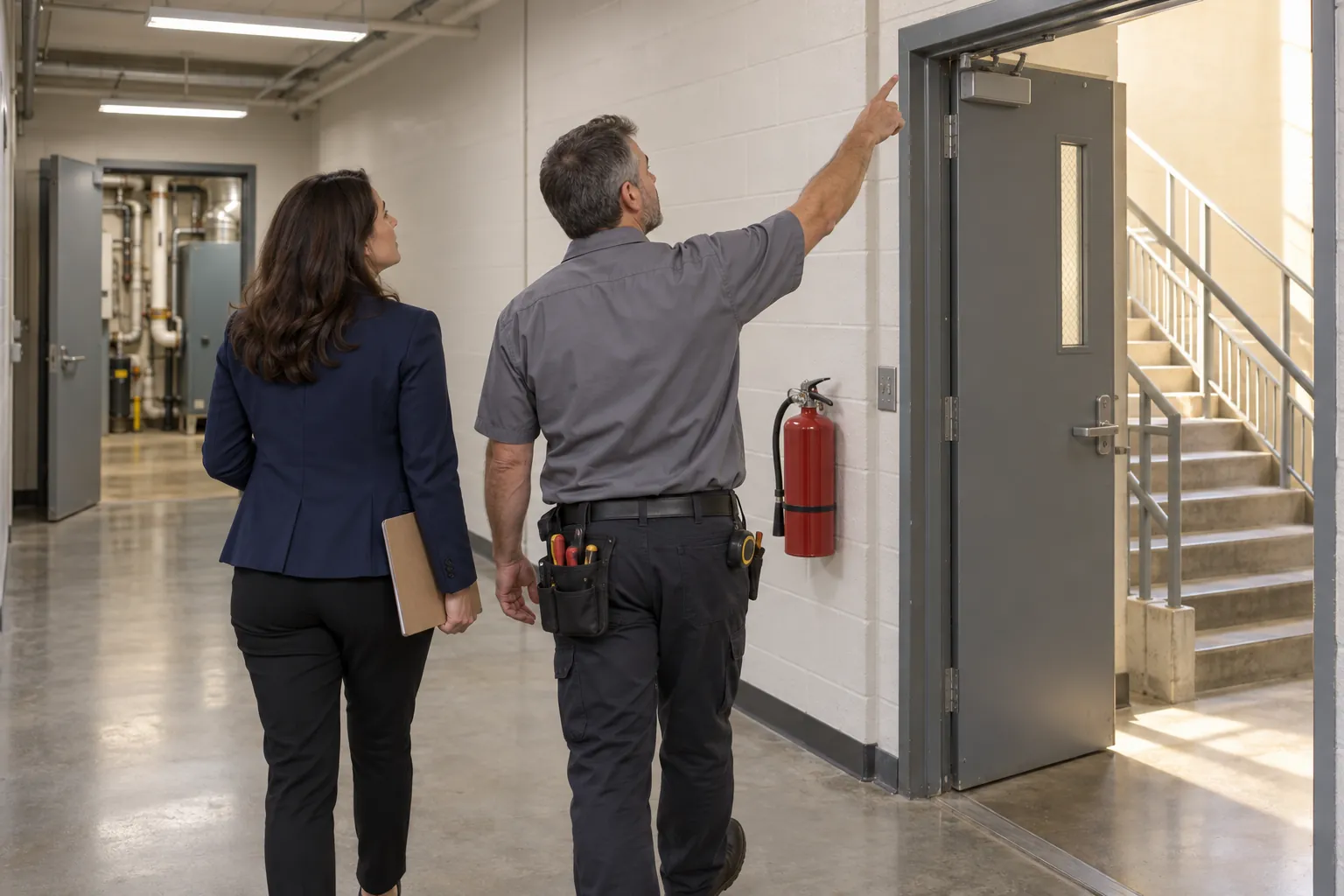 Premises and facilities managementOSHA inspection checklist: what to check before OSHA doesAn OSHA self-inspection checklist for a building: the duty behind it, what to check under each standard, how often, and how to record hazards through to correction.
 Premises and facilities managementThe OSHA 300 log: what to record, when, and how to keep it honestWho must keep the OSHA 300 log, which injuries are recordable under 29 CFR 1904, the seven-day rule, the 300A posting and what the working record needs.
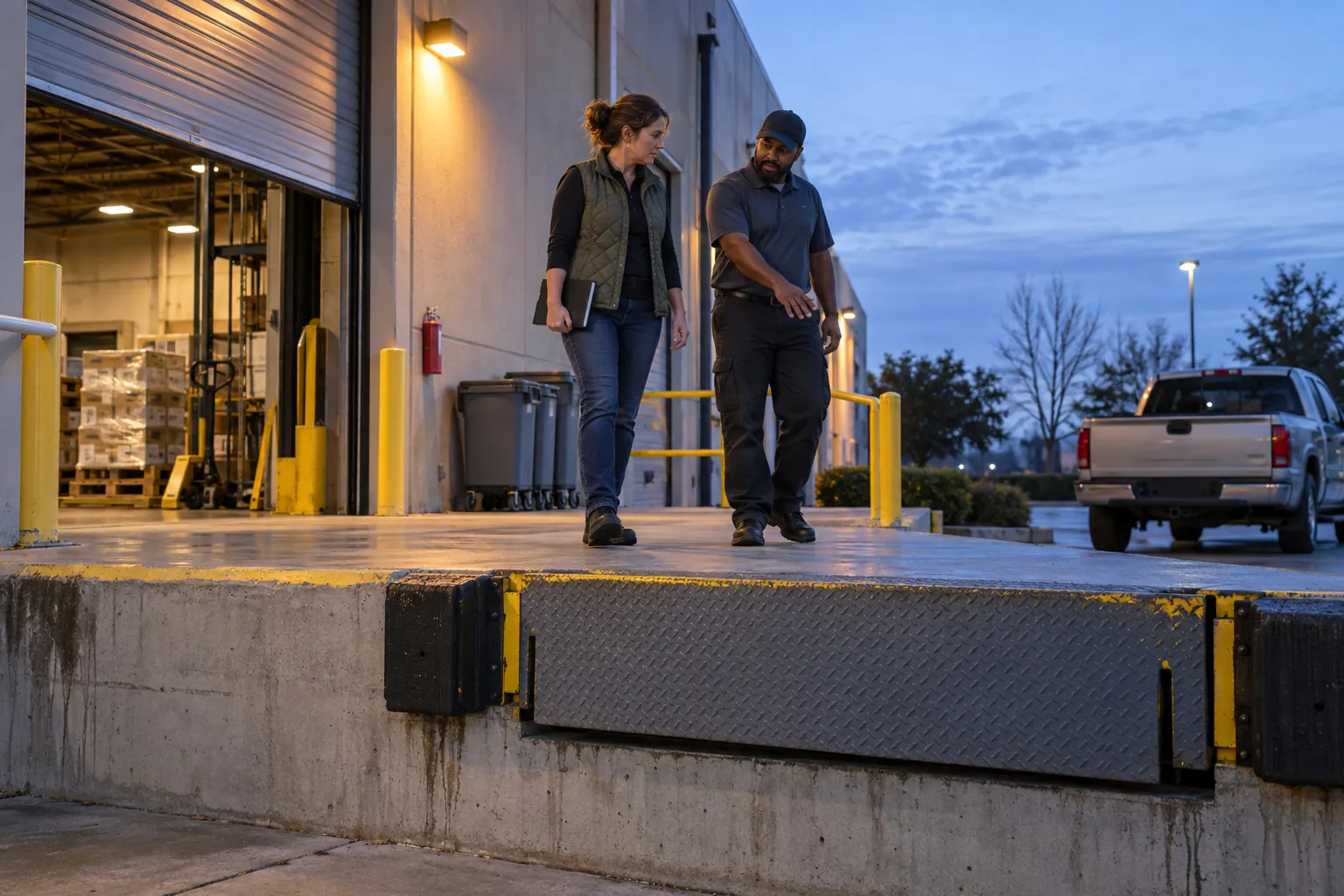 Premises and facilities managementSafety walkthroughs: how to walk a building, talk to the crew and fix what you findWhat a safety walk is under OSHA's Recommended Practices, what to look at in a commercial building, how often to walk, how to record findings and close them out.
 Premises and facilities managementNear miss reporting: catching the close calls before they become injuriesWhat counts as a near miss, what OSHA recommends, what a near miss report should capture, and how to follow it up so people keep reporting in your buildings.