Premises and facilities management
OSHA inspection checklist: what to check before OSHA does
An OSHA inspection checklist is a list of the hazards and OSHA standards an employer checks on a walk of its own workplace, such as exit routes, fire extinguishers, electrical panels, hazard communication and personal protective equipment, so that hazards are found and fixed before a compliance officer or an injured worker finds them.
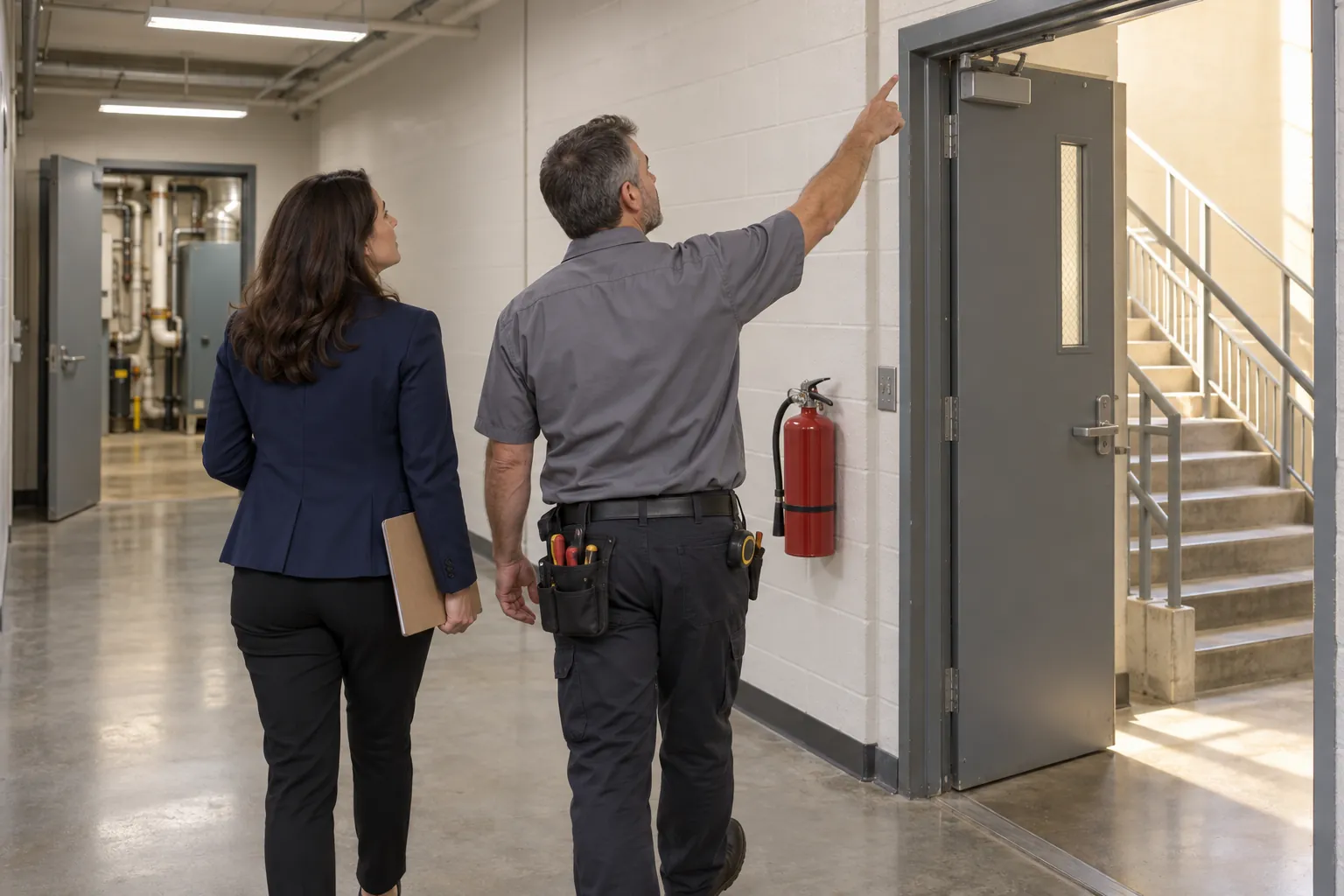
This guide covers the duty behind a self-inspection, what to check under each OSHA standard that usually applies in a building, how often, how to record findings through to correction, and how it works when your crew is in someone else's building.
01
The duty behind an OSHA self-inspection
Section 5 of the Occupational Safety and Health Act of 1970, Section 5: Duties gives every covered employer two duties. Under Section 5(a)(1), the General Duty Clause, each employer must furnish "employment and a place of employment which are free from recognized hazards that are causing or are likely to cause death or serious physical harm" to its employees. Under Section 5(a)(2), it must comply with the OSHA standards that apply to its work. Section 5(b) puts a matching duty on each employee to comply with the standards and rules that apply to their own conduct.
No general industry standard in 29 CFR Part 1910 tells an employer to walk the whole workplace on a set schedule. But an employer cannot keep a workplace free of recognized hazards without looking for them, and several standards do require specific inspections (see the next section). Other rules go further:
- Construction. 29 CFR 1926.20 requires safety programs that "provide for frequent and regular inspections of the job sites, materials, and equipment to be made by competent persons designated by the employers." A renovation or fit-out in your building brings that rule with it.
- California. Cal/OSHA's Injury and Illness Prevention Program rule, Title 8, section 3203, requires "scheduled periodic inspections to identify unsafe conditions and work practices," and more when the program is first set up, when new substances, processes or equipment bring new hazards, and when the employer learns of a hazard it had not recognized. It also requires records of those inspections.
- Other State Plan states. 22 State Plans cover private and public employers in their states and seven more cover only state and local government workers, according to OSHA's State Plans page. Their rules must be at least as effective as federal OSHA's and can go further, so check your state before relying on 29 CFR alone.
OSHA's own guidance fills in the rest. The Recommended Practices for Safety and Health Programs (OSHA 3885, October 2016) lists "Inspect the workplace for safety hazards" as an action item under hazard identification and assessment, and tells employers to "Conduct regular inspections of all operations, equipment, work areas, and facilities" and to "Use checklists that highlight things to look for." The recommended practices are advisory, not a standard, but they describe what OSHA expects a working safety program to look like.
02
What an OSHA inspection checklist covers, standard by standard
Most buildings, whether an office tower, a school, a warehouse or a store, come under the same handful of general industry standards. Tie each item to the OSHA standard and the requirement behind it, so whoever walks knows why it is there.
- Walking-working surfaces (29 CFR 1910.22): floors "clean and, to the extent feasible, in a dry condition"; surfaces free of "sharp or protruding objects, loose boards, corrosion, leaks, spills, snow, and ice"; and, as the building's own additions, stairs, handrails, entrance mats and loading docks in good repair.
- Exit routes (29 CFR 1910.37): routes "free and unobstructed," with nothing placed in them "either permanently or temporarily"; each exit marked by a sign reading "Exit"; the route "adequately lighted."
- Portable fire extinguishers (29 CFR 1910.157): mounted, identified and "readily accessible"; the monthly visual inspection done; the annual maintenance date recorded.
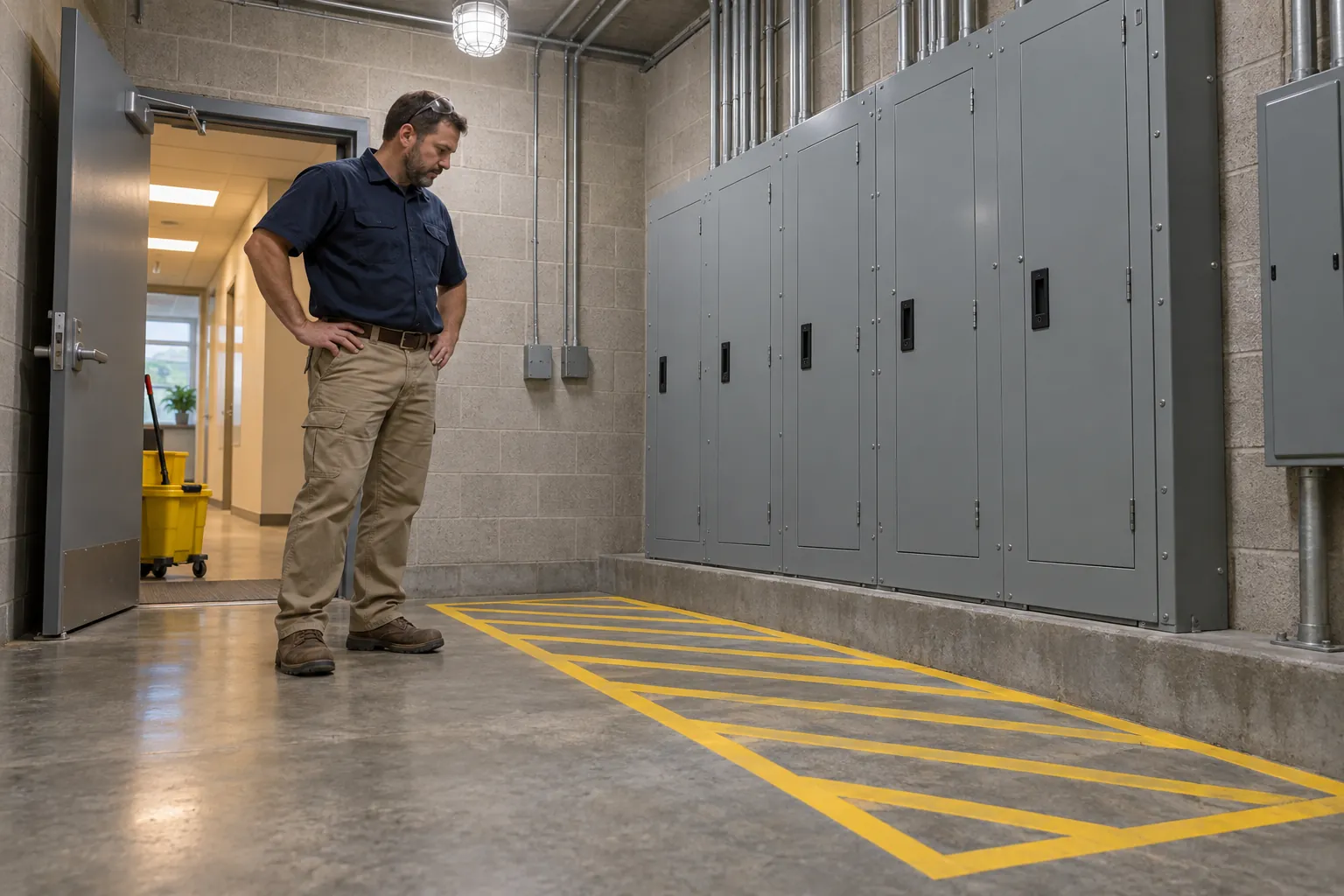
- Electrical (29 CFR 1910.303): the working space in front of panels "may not be used for storage"; unused openings in boxes and panels closed; extension cords and cord-and-plug equipment visually inspected before use on any shift and taken out of service if damaged (29 CFR 1910.334).
- Portable ladders (29 CFR 1910.23): inspected before use in each shift; a defective ladder tagged "Dangerous: Do Not Use" and taken out of service.
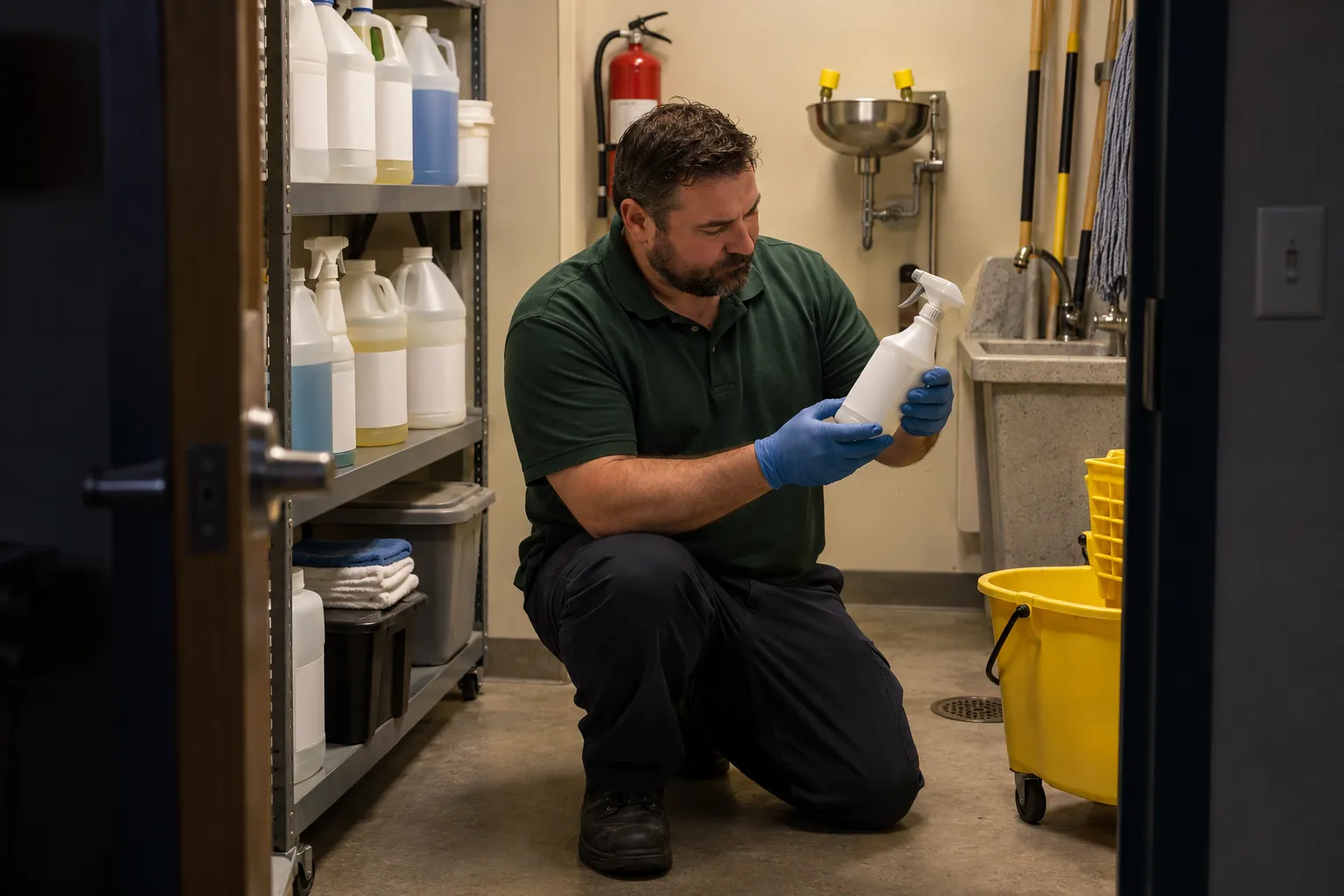
- Hazard communication (29 CFR 1910.1200): a written hazard communication program; secondary containers such as spray bottles in the custodial closet labeled; safety data sheets "readily accessible during each work shift."
- Personal protective equipment (29 CFR 1910.132): a written, certified hazard assessment; gloves, eye protection and other PPE provided and in good condition, since "defective or damaged personal protective equipment shall not be used."
- Sanitation (29 CFR 1910.141): the workplace "kept clean to the extent that the nature of the work allows"; restrooms working; lavatories with running water, hand soap and towels or dryers.
- First aid and eyewash (29 CFR 1910.151): someone adequately trained in first aid, with first aid supplies readily available, where there is no clinic or hospital in near proximity; a quick-drench or eye-flushing facility within the work area wherever someone's eyes or body may be exposed to injurious corrosive materials, such as concentrated floor strippers.
- Postings (29 CFR 1903.2): the official OSHA workplace poster (OSHA 3165), or the State Plan equivalent, where employees see notices; the OSHA 300A summary posted from February 1 to April 30 where the employer keeps a 300 log (29 CFR 1904.32).
Some recognized hazards have no specific standard, and OSHA's recommended practices name them among the categories to look for: workplace violence, ergonomic problems and "lack of emergency procedures." In a building that means a lobby with no way to call for help, or a night custodian working alone with no check-in.
Then add what is particular to the building, such as the loading dock, the mechanical room, the roof hatch and the parking garage. The recommended practices say to include "all areas and activities," including the work of on-site contractors.
03
How often to inspect, and who should do it
Where a standard sets a frequency, it is the minimum:
- Every shift: portable ladders, before initial use in each work shift, under 1910.23(b)(9); extension cords and cord-and-plug equipment, a visual check before use on any shift, under 1910.334(a)(2).
- Monthly: portable fire extinguishers, a visual inspection under 1910.157(e)(2).
- Annually: extinguisher maintenance, with the date recorded and kept, under 1910.157(e)(3).
- Regularly and as necessary: walking-working surfaces, under 1910.22(d)(1). The standard does not give a number; the building does. An entrance in a snowstorm needs looking at by the hour.
For the general walk, pick a frequency by risk and write it down. A common pattern is a daily look at what changes fastest (entrances, exit routes, loading docks), a monthly walk of each floor, and a fuller quarterly inspection with a manager and a worker from the area. Add one whenever something changes: new equipment or chemicals, a remodel, an injury or a near miss. In California those triggers are part of the rule, not a suggestion.
The person inspecting needs to know the building and what a hazard looks like. The Small Business Handbook suggests "knowledgeable and experienced workers" conduct routine self-inspections, and the recommended practices say to "have workers participate on the inspection team, and talk to them about hazards that they see or report." The custodian who works the building every night knows which exit door sticks and which outlet sparks. Vary who inspects: a supervisor on the same floor every week stops seeing the mop bucket in the stairwell.
Specialist systems stay with specialists. The walk notes a painted-over sprinkler head or a missing panel cover; the licensed contractor or electrician does the inspection their code requires.
04
Recording findings and proving the fix
A self-inspection is only worth what gets corrected. OSHA's recommended practices say to "document inspections so you can later verify that hazardous conditions are corrected" and to "take photos or video of problem areas." Cal/OSHA's section 3203 sets out what the record must show there: the person who inspected, the unsafe conditions and work practices found, and the action taken to correct them, kept for at least one year (an employer with fewer than 10 employees may keep them only until the hazard is corrected). That is a sound model anywhere. A useful record captures:
- The inspection: the date, the building and area, and who inspected.
- Each hazard: what it is, exactly where, the standard or category it falls under, and a photo.
- How serious it is: so that the blocked exit is dealt with before the scuffed stair nosing.
- What was done on the spot: the cart moved out of the exit route, the ladder tagged, the spill coned off.
- The correction: what will be done, by whom and by what date. OSHA's hazard prevention guidance calls this a hazard control plan with "a target completion date."
- Close-out: when it was fixed and who confirmed it.
Two standards say what "on the spot" means. Under 1910.22(d)(2), a hazardous walking-working surface is corrected before anyone uses it again, or guarded until it is. Under 1910.23(b)(10), a defective ladder is tagged and removed from service immediately. For anything else that cannot be fixed at once, OSHA's guidance is to "use interim controls while you develop and implement longer-term solutions."
Read the findings together every few months. The same finding month after month, such as boxes in the same stairwell, has a cause the inspection will never fix on its own: too little storage, or a delivery schedule that clashes with cleaning. Fixing that is the "program evaluation and improvement" part of the recommended practices.
05
Inspecting when your crew works in someone else's building
Janitorial, security and facility services teams usually work in a building their employer does not own. The owner, the property manager, the tenant and the contractor each control part of the checklist, and a hazard falls through the gap when each assumes another has it. OSHA's recommended practices give this its own element, communication and coordination for host employers and contractors: the host shares hazard information before work starts and when conditions change, and the parties agree who runs which parts of the safety program, which can go in the contract.
In practice, agree these before the first night of work:
- Who inspects what. The contractor usually inspects its own equipment, chemicals, closets and PPE; the property manager or building engineer inspects the building's systems, exits and common areas. Write it down.
- Who fixes what. A custodian can move a trash cart out of an exit route; they cannot repair a door closer or re-lamp an exit sign on a 20-foot ceiling. Each checklist item should name who corrects it.
- Where a finding goes. A hazard the night crew finds in the tenant's space needs a named contact who will act on it, not a note left on the front desk.
- What the crew is told. The building's own hazards, such as a roof with no guardrail, reach the people who clean and patrol it.
Make reporting between inspections easy. The custodian, the day porter and the officer on patrol see hazards long before the quarterly walk. The recommended practices ask employers to "encourage workers to report safety and health concerns" and to "remove barriers to participation." Retaliating against an employee for raising a safety concern is illegal under Section 11(c) of the OSH Act, and a program that punishes the messenger soon has nothing reported to it.
06
Where the record fails, and what SiteClara does about it
Self-inspection records fail in familiar ways. The clipboard checklist is ticked at the end of the shift for areas nobody walked. The quarterly inspection finds eleven hazards, the spreadsheet goes into a shared drive, and three months later the same eleven are found again. And what the night crew notices between inspections, the exit sign out or the pallets in front of the panel, is mentioned to whoever is at the desk and never written down.
SiteClara works on those gaps for the routine checks that sit alongside an inspection program. A printed QR poster at each location, with an optional NFC tag behind it, lets staff scan or tap with their own phone, with no app to install, and sign in with a link. They see the checks due there, such as a daily walk of an exit route (see exit route requirements) or the monthly extinguisher look, and mark each one done or say what stopped them. A hazard they find is reported there with a photo and goes onto the team's list of jobs until someone closes it, and the supervisor's queue groups open jobs by building and floor.
The supervisor sees what was due, done and missed, and can record why a check was missed. A job the team cannot fix, such as a door closer or a tenant's storage in a stairwell, can be escalated to the building manager to answer. Each day the supervisor reviews and approves a report that goes to nominated management or client contacts at 8 a.m. the next morning, showing what was reported, completed and still open.
07
Questions people ask
What does OSHA look for during an inspection?
Hazards, records and the poster. OSHA's fact sheet Occupational Safety and Health Administration (OSHA) Inspections says that on the walkaround the compliance officer and the representatives "walk through the portions of the workplace covered by the inspection, inspecting for hazards that could lead to employee injury or illness," and that the compliance officer "will also review worksite injury and illness records and the posting of the official OSHA poster." The compliance officer also consults privately with a reasonable number of employees. Hazards that can be corrected on the spot must still be cited, but the fact sheet says "prompt correction is a sign of good faith on the part of the employer."
What are the 10 most common OSHA violations?
OSHA's Top 10 Most Frequently Cited Standards for fiscal year 2025 (October 1, 2024, to September 30, 2025) are, in order: fall protection, general requirements, in construction (29 CFR 1926.501); hazard communication (1910.1200); ladders in construction (1926.1053); control of hazardous energy, or lockout/tagout (1910.147); respiratory protection (1910.134); scaffolding (1926.451); fall protection training in construction (1926.503); powered industrial trucks (1910.178); eye and face protection in construction (1926.102); and machine guarding (1910.212). The number one violation is fall protection, and the three most cited are fall protection, hazard communication and ladders. OSHA says it publishes the list "so they can take steps to find and fix recognized hazards addressed in these and other standards before OSHA shows up."
What documents are required for an OSHA inspection?
The injury and illness records come first. Under 29 CFR 1904.40, "When an authorized government representative asks for the records you keep under part 1904, you must provide copies of the records within four (4) business hours." OSHA's inspections fact sheet adds that the compliance officer reviews the posting of the official OSHA poster. Beyond that, have ready the written programs and records your standards require, such as the written hazard communication program and the extinguisher maintenance dates covered above.
What does OSHA forbid employers from doing?
Among other things, retaliating against workers who use their rights. Section 11(c)(1) of the Occupational Safety and Health Act, Section 11: Judicial Review says "No person shall discharge or in any manner discriminate against any employee because such employee has filed any complaint or instituted or caused to be instituted any proceeding under or related to this Act," or for testifying in such a proceeding or exercising any right the Act gives them. Under Section 11(c)(2), an employee who believes they have been retaliated against may file a complaint "within thirty days after such violation occurs."
08
Where to read more, and a list to take away
Start with OSHA's Hazard Identification and Assessment page, part of the Recommended Practices for Safety and Health Programs, and its companion page on Hazard Prevention and Control. The Small Business Safety and Health Handbook has ready-made checklists to adapt, each ending with a link to further resources on its topic. In California, read Title 8, section 3203; in another State Plan state, find its rules through OSHA's State Plans page. For fire codes, ask your fire marshal which edition applies.
Before your next self-inspection, check that:
- the checklist covers every area and activity, including back-of-house, and each item names the standard or hazard behind it;
- the frequencies the standards set, such as ladders each shift and extinguishers monthly, are built in as the minimum;
- the general walk has a written frequency, by risk, plus a trigger for new equipment, chemicals, remodels and incidents;
- workers from the area take part, and whoever inspects changes from time to time;
- whoever inspects has the training to recognize the hazards in that area, and the procedures for reporting and correcting what they find are written down;
- immediate dangers are made safe or guarded on the spot;
- every finding has a photo, an owner and a target date, and is closed out;
- host and contractor have agreed who inspects, who fixes and where findings go;
- anyone can report a hazard between inspections without fear of retaliation;
- repeat findings are reviewed and their causes fixed.
Sources
Every document this guide quotes or links to, in the order it first cites them.
- Occupational Safety and Health Act of 1970, Section 5: Duties osha.gov
- 29 CFR 1926.20 osha.gov
- Title 8, section 3203 dir.ca.gov
- State Plans osha.gov
- Recommended Practices for Safety and Health Programs osha.gov
- Small Business Safety and Health Handbook osha.gov
- 29 CFR 1910.22 osha.gov
- 29 CFR 1910.37 osha.gov
- 29 CFR 1910.157 osha.gov
- 29 CFR 1910.303 osha.gov
- 29 CFR 1910.334 osha.gov
- 29 CFR 1910.23 osha.gov
- 29 CFR 1910.1200 osha.gov
- 29 CFR 1910.132 osha.gov
- 29 CFR 1910.141 osha.gov
- 29 CFR 1910.151 osha.gov
- 29 CFR 1903.2 osha.gov
- 29 CFR 1904.32 osha.gov
- On-Site Consultation Program osha.gov
- Occupational Safety and Health Administration (OSHA) Inspections osha.gov
- Top 10 Most Frequently Cited Standards osha.gov
- 29 CFR 1904.40 osha.gov
- Occupational Safety and Health Act, Section 11: Judicial Review osha.gov
- Hazard Identification and Assessment osha.gov
- Hazard Prevention and Control osha.gov
Related guides
 Premises and facilities managementThe OSHA inspection process: what happens, and what to have readyHow an OSHA inspection works under 29 CFR 1903: why OSHA comes, the walkaround, citations and penalties, the 15 working days, and proving abatement.
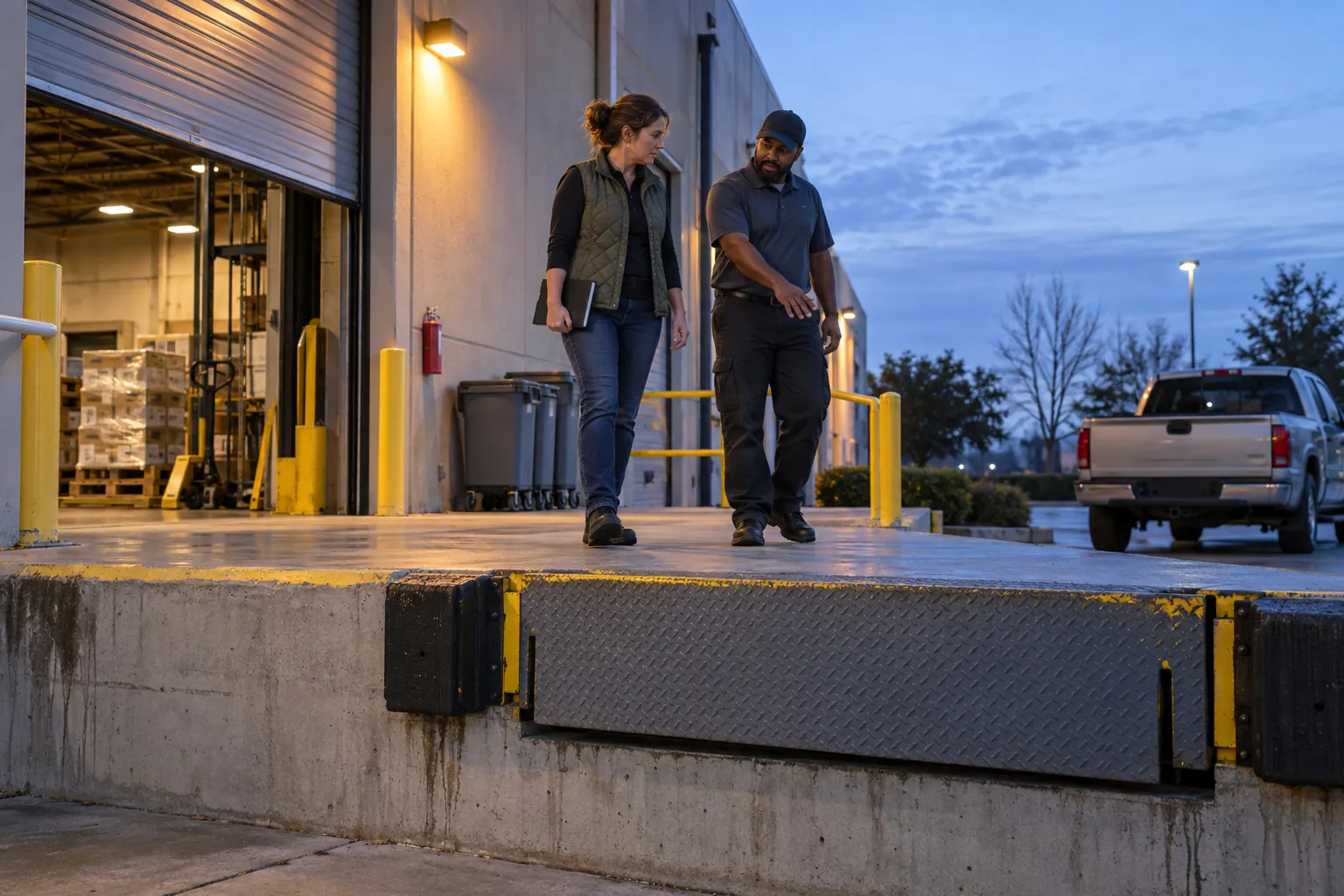 Premises and facilities managementSafety walkthroughs: how to walk a building, talk to the crew and fix what you findWhat a safety walk is under OSHA's Recommended Practices, what to look at in a commercial building, how often to walk, how to record findings and close them out.
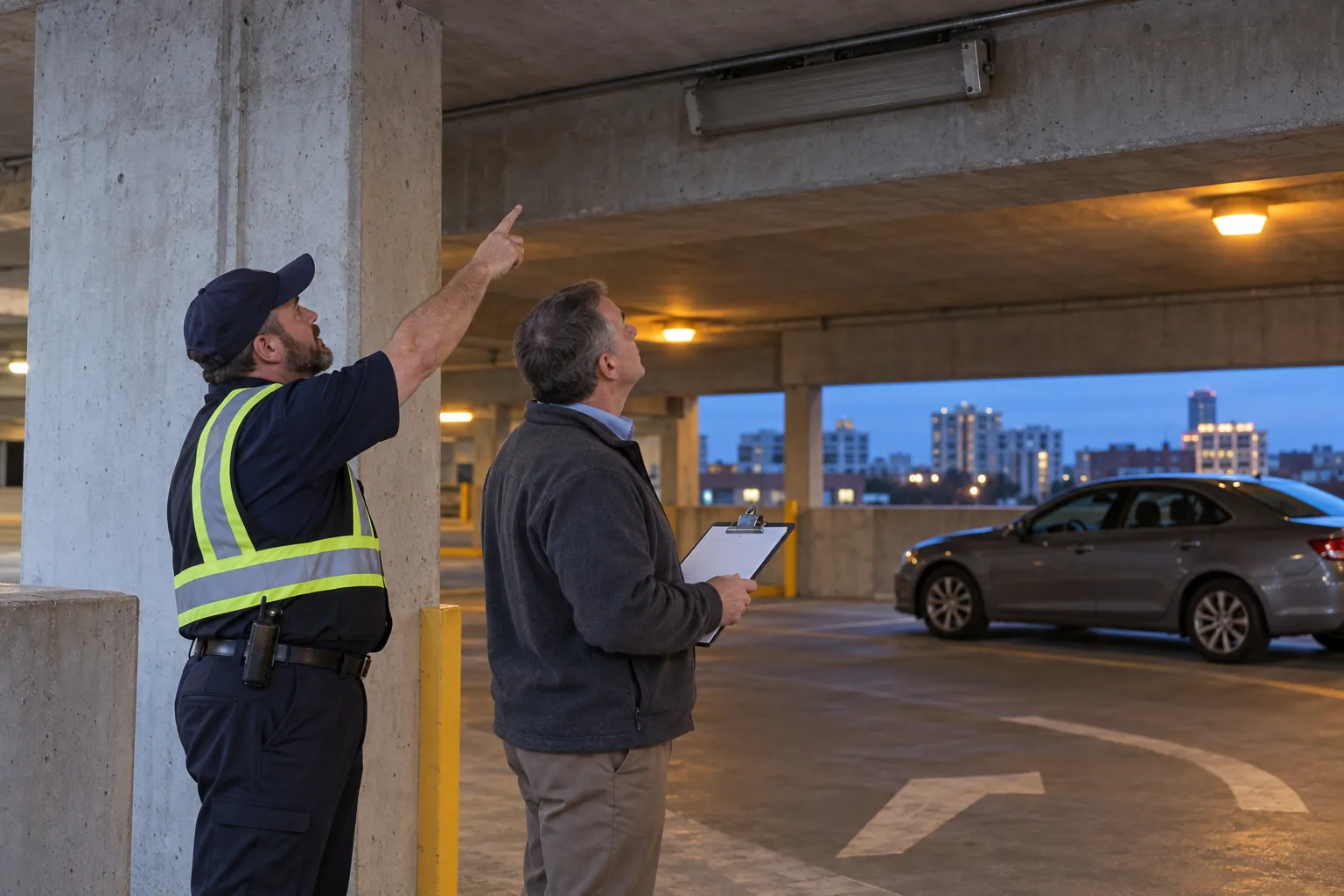 Premises and facilities managementNear miss reporting: catching the close calls before they become injuriesWhat counts as a near miss, what OSHA recommends, what a near miss report should capture, and how to follow it up so people keep reporting in your buildings.
 Premises and facilities managementElectrical panel clearance: the working space rules, and how to keep the space clearElectrical panel clearance under OSHA 29 CFR 1910.303(g) and NEC 110.26: the 36-inch depth, 30-inch width and headroom, why storage is out, and how to keep it clear.